
The Moral Crisis of Politics in Turkey
This essay argues that Turkish politics has devolved from serving the common good into a realm of self-interest, opportunism, and moral decay, undermining public trust and societal well-being.
This essay argues that Turkish politics has devolved from serving the common good into a realm of self-interest, opportunism, and moral decay, undermining public trust and societal well-being.

This essay explores the historical relationship between the CHP and the Kurdish question, arguing that the party must overcome its state-centric reflexes to embrace a truly social democratic vision for all of Turkey.
In developing countries like Turkey, politics often revolves around the distribution of rent and patronage rather than ideological struggle, leading to a system where state resources are exploited for personal or group gain.
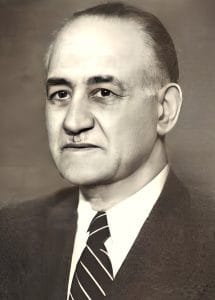
This essay examines the two enduring ideological lines in Azerbaijani politics, represented by Rasulzade–Elchibey's romantic nationalism and Narimanov–Aliyev's pragmatic statism, and their impact on the nation's history.
This article explores why social democracy has struggled to become a lasting social project in Turkey, examining historical, structural, and political obstacles.
This open letter to the President of Turkey argues for constitutional protection and support for education in Kurdish and Zaza languages, asserting it as a fundamental human right independent of political conditions.
This article examines the complex trajectory of social democracy in Turkey, particularly within the Republican People's Party (CHP), highlighting its divergence from Western European models and its struggles with issues like the Kurdish question.
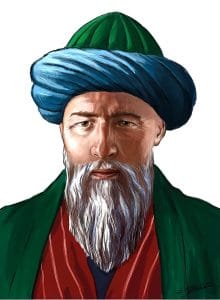
This essay explores three seminal texts—Kutadgu Bilig, Şerefname, and The Prince—to compare different civilizations' approaches to political and moral guidance for rulers across various historical periods.
This essay critically examines the plight of intellectuals in Turkey, highlighting their failure to fulfill societal responsibilities, connect with the public, and maintain a critical stance against authority.
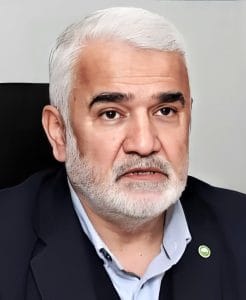
This essay discusses Zekeriya Yapıcıoğlu's proposal to remove Article 4 of the Turkish Constitution, which prohibits changes to its first three articles, and reviews the historical context of Turkey's four constitutions.
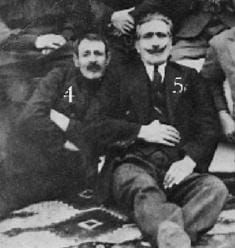
This article defines "Yaşar Kaya Syndrome," a political phenomenon in Kurdish politics, tracing its origins through the life of Yaşar Kaya and outlining its symptoms and lack of known cure.