Two Lines in Azerbaijani Politics: Rasulzade–Elchibey and Narimanov–Aliyev
This essay examines the two enduring ideological lines in Azerbaijani politics, represented by Rasulzade–Elchibey's romantic nationalism and Narimanov–Aliyev's pragmatic statism, and their impact on the nation's history.

Dear Readers,
Azerbaijan's modern political history has been shaped not only by struggles for independence and regime changes but also by the distinct intellectual and leadership traditions that guided these processes. At the beginning of the 20th century, two separate lines, represented by Mehmed Emin Rasulzade and Nariman Narimanov, emerged as fundamental ideological currents determining the country's destiny. While Rasulzade's nationalist-democratic vision, centered on freedom and independence, expressed Azerbaijan's spirit, ideals, and romantic expectations for the future; Narimanov's statist, pragmatic, and centralist approach offered a realistic political strategy for the country to survive under challenging geopolitical conditions.
Upon regaining independence in 1991 with the collapse of the Soviet Union, Azerbaijan faced modern representatives of this same historical duality. Abulfaz Elchibey briefly appeared on the scene as a leader who revived Rasulzade's independence-oriented romanticism and the ideal of the Turkic world; Heydar Aliyev, with his state experience from the Soviet tradition and pragmatic policies, carried Narimanov's legacy into the present day. The conflict and complementary aspects of these two lines—the "nationalist-romantic" and the "statist-pragmatic"—formed the fundamental dynamic of Azerbaijani politics.
The purpose of this article is to examine the continuity of these two lines in Azerbaijan's modern political history, to comparatively analyze the Rasulzade–Elchibey line with the Narimanov–Aliyev line, and to reveal the contemporary reflections of these ideological legacies. Because understanding Azerbaijan's political journey is not merely about knowing the biographies of its leaders. It is also key to grasping the continuity of the historical currents they represent, and to deeply comprehending the country's search for independence, stability, and identity.
First, let's take a brief look at the biographies of these four great figures:
FROM RASULZADE TO ALIYEV: BIOGRAPHICAL TRACES OF FOUR LEADERS
Mehmed Emin Rasulzade (1884–1955)
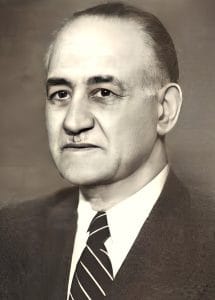
Born in 1884 in the village of Novkhany near Baku, Mehmed Emin Rasulzade went down in history as one of the most important figures in the construction of Azerbaijani national identity. He entered political struggle at a young age, participating in freedom movements against Tsarist Russia. In 1918, he became the intellectual father and one of the leading figures of the Azerbaijan Democratic Republic. Rasulzade's vision was based on independence, democracy, and integration with the Turkic world. His saying, "A flag once raised shall never fall," became a symbol of the ideal of independence in the memory of the Azerbaijani people. After the Soviet occupation in 1920, he was forced to leave his country, living in exile in Turkey, Poland, Germany, and Iran. Rasulzade, who passed away in Ankara in 1955, left behind the most powerful symbol of the struggle for independence.
Nariman Narimanov (1870–1925)
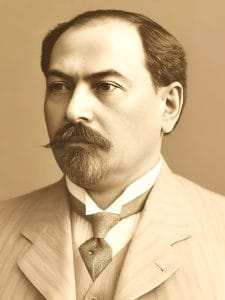
Born in Tiflis (Tbilisi) in 1870, Nariman Narimanov is known for his identity as a physician, writer, and politician. After studying medicine, he worked as a teacher and doctor, and also penned literary works. With Azerbaijan's incorporation into the Soviet Union in 1920, he became one of the country's prominent political figures. He served as the first chairman of the Council of People's Commissars of Soviet Azerbaijan. Narimanov's political approach was based not so much on ideals of independence, but on a pragmatic strategy aimed at preserving Azerbaijan's identity and existence within the Soviet system. He adopted a statist and centralist understanding, pursuing a policy in harmony with Moscow to ensure Azerbaijan's survival. Narimanov, who died in Moscow in 1925, is remembered in Azerbaijani history as one of the pioneers of "state reason."
Abulfaz Elchibey (1938–2000)
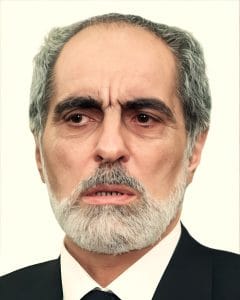
Born in 1938 in the village of Keleki in Nakhchivan, Abulfaz Elchibey was an intellectual who stood out as a dissident during the Soviet era. He studied Arabic language and literature at Baku State University, working as a translator and lecturer. In 1989, he founded the Azerbaijan Popular Front, playing a significant role in the struggle for independence. In the 1992 elections, he became Azerbaijan's first popularly elected president. Elchibey's political vision was closely tied to the ideals of Mehmed Emin Rasulzade: independence, democracy, and integration with the Turkic world. However, heavy defeats in the Karabakh War, internal conflicts, and deteriorating relations with Russia made his rule fragile. His political life was short, but he was etched into memory as a leader who represented the enthusiasm of the people and the desire for independence. When he passed away in Ankara in 2000, he was remembered as a figure who had revived Rasulzade's idealistic legacy in the modern era.
Heydar Aliyev (1923–2003)
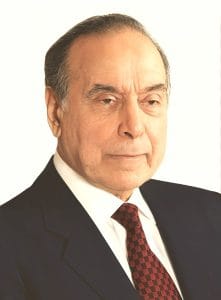
Born in Nakhchivan in 1923, Heydar Aliyev was one of the rare Azerbaijani politicians who rose to the highest echelons of the Soviet Union. He served in the KGB, became the first secretary of the Azerbaijan Communist Party in 1969, and was elected to the Politburo of the Communist Party of the Soviet Union in 1982. This background provided him with unique experience in state administration. When he came to power in independent Azerbaijan in 1993, the country was on the brink of civil war, the army was disorganized, and the economy was on the verge of collapse. Aliyev disciplined the state with a centralist and pragmatic policy, ensured stability, and brought Azerbaijan to the center of energy diplomacy with oil projects known as the "Contract of the Century." His administration ensured long-term stability and the institutionalization of the state, but was also criticized for suppressing opposition and narrowing the political space. Heydar Aliyev, who passed away in 2003, was remembered in Azerbaijan as the "architect of the state," and his legacy continues to influence the country's political structure today.
PART TWO
MEHMED EMIN RASULZADE: INDEPENDENCE-ORIENTED ROMANTICISM
Mehmed Emin Rasulzade, one of the most brilliant figures of Azerbaijani political thought at the beginning of the twentieth century, is considered the founding father of modern Azerbaijani national identity. His most famous saying, "A flag once raised shall never fall," is not merely a slogan for independence but also an ideal etched into the collective memory of the people. Rasulzade's political vision integrated Azerbaijan's quest for freedom with a romantic idealism.
The Azerbaijan Democratic Republic, declared in 1918, presented a republican model based on parliamentary democracy, a first in the Turkic and Islamic world. Rasulzade was the intellectual architect of this state. For him, independence was not just a political status but also a guarantee of a nation's honor and existence.
Unlike many leaders of his time, Rasulzade envisioned a political order based on the will of the people. His emphasis on pluralism, parliamentary representation, and freedom of expression demonstrates that his romantic idealism rested on a democratic foundation. In this respect, Rasulzade was a pioneer of modernization and freedom of thought not only for Azerbaijan but for all Eastern peoples.
The idea of integration with the Turkic world held an important place in Rasulzade's ideas. He considered Azerbaijan's destiny not only within its own borders but as part of a broader Turkic geography. This approach formed the roots of an ideal that Elchibey would later reclaim.
However, Rasulzade's romantic vision remained fragile in the face of the geopolitical realities of the time. The dominance of Soviet Russia in the region and international power balances led to the collapse of the Azerbaijan Democratic Republic in 1920. Nevertheless, this short-lived experience permanently instilled the idea that "independence is possible and legitimate" in the memory of the Azerbaijani people.
NARIMAN NARIMANOV: SOVIET PRAGMATISM
The other major current of Azerbaijani political thought was represented by Nariman Narimanov. In contrast to Rasulzade's liberal romanticism, Narimanov's line was more focused on the survival of the state, the preservation of social order, and maintaining a balanced relationship with Moscow. His legacy most clearly reflects the tension between national ideals and geopolitical reality in Azerbaijan.
When the Azerbaijan Democratic Republic collapsed in 1920, Narimanov's preference was for the country to continue its existence under the umbrella of the Soviet Union. Although this choice meant abandoning the ideal of independence, it can be seen as a strategy that prevented Azerbaijan from being completely erased from the stage of history. In his eyes, pursuing a policy in harmony with Moscow was the only way to preserve the cultural identity and a certain autonomy of the Azerbaijani people.
In Narimanov's politics, the central authority of the state was paramount. According to him, social disunity, tribal structures, or romantic ideas of independence could lead the country to fragmentation. Therefore, establishing a disciplined state structure within the Soviet order guaranteed both social stability and the continuation of existence in international balances.
Narimanov stood out for his pragmatism rather than ideological rigidity. He was not an absolutely loyal figure to Moscow, and at times he clashed with the center to protect Azerbaijan's interests. However, ultimately his strategy was one that prioritized balance over conflict. This pragmatic aspect appears much more strongly in Heydar Aliyev's political legacy later on.
Narimanov's centralist approach did not align with the nationalist expectations of the broad masses. Compared to Rasulzade's romantic ideal of independence, Narimanov's line was aimed more at disciplining the people rather than mobilizing their enthusiasm. Therefore, his legacy is remembered more as "state reason" than "the spirit of the people."
ABULFAZ ELCHIBEY: RASULZADE'S MODERN REFLECTION
When Azerbaijan declared its independence again in 1991 with the collapse of the Soviet Union, two different roadmaps emerged for the people. One of these was represented by Abulfaz Elchibey, who sought to revive the independence-oriented romanticism and the ideal of the Turkic world left by Mehmed Emin Rasulzade. Elchibey's political persona can be seen as a "second chance" to realize Rasulzade's unfinished ideals.
In the 1992 elections, Elchibey became the first democratically elected president of independent Azerbaijan with the votes of the Azerbaijani people. This situation carried a symbolic meaning, reviving the memory of the democratic republic led by Rasulzade in 1918. In Elchibey, the people had once again embraced Rasulzade's ideals.
One of Elchibey's strongest points was placing the ideal of integration with the Turkic world at the center of his political discourse. His vision of "Turkic unity" began to guide the foreign policy of newly independent Azerbaijan. Rapprochement with Turkey and attempts to establish ties with the Central Asian Turkic Republics were practical steps of this vision. In this respect, Elchibey became the modern representative of Rasulzade's line.
However, Elchibey's rule was short-lived. Heavy losses in the Nagorno-Karabakh War, the weakness of the army, deteriorating relations with Russia, and internal political conflicts made his administration fragile. The nationalist enthusiasm of the people was not enough to sustain the state. This fragility shows a great parallel with Rasulzade's short-lived republican experience between 1918 and 1920.
Elchibey was a charismatic figure who represented the ideal of independence and freedom of Azerbaijani society. However, he proved inadequate in establishing the state apparatus, disciplining the army, and considering geopolitical balances. Thus, his legacy remained as a "spirit of the people" in Azerbaijani politics but could not transform into "state reason."
HEYDAR ALIYEV: CONTINUATION OF NARIMANOV
After Azerbaijan regained its independence, one of the most important figures who determined the country's destiny was Heydar Aliyev. Coming to power in 1993, Aliyev went down in history not only as a politician but also as a "state architect." His political line was the product of his experience gained during the Soviet era and his centralist understanding of the state. This line can be historically regarded as a modern reflection of Nariman Narimanov's pragmatic and statist legacy.
Aliyev was one of the most powerful Azerbaijani cadres who rose in the Soviet Union. His KGB background, his service in the upper echelons of the Communist Party, and his rise to Politburo membership provided him with extraordinary experience in state administration. This background ensured that "state reason" was embodied in Aliyev in independent Azerbaijan.
Aliyev made pragmatism his fundamental strategy to keep Azerbaijan afloat amidst geopolitical encirclements. While balancing relations with Russia, he also opened up to the Western world. Especially the oil agreements known as the "Contract of the Century" made Azerbaijan a powerful actor in the international arena through energy diplomacy. This approach recalled Narimanov's policy, which was in harmony with Moscow but also protected Azerbaijan's interests.
Aliyev sought to rebuild a fragmented and fragile country. For this, he established a strong and centralist state structure. The bureaucracy, army, and security apparatus were disciplined during his period. In this respect, Aliyev became the guarantor of long-term stability in Azerbaijan. However, this process also led to the narrowing of the political space and the weakening of the opposition.
Unlike Elchibey, Aliyev was not a leader who mobilized the enthusiasm of the people, but a "founding" figure who sustained the state. His legacy was built not so much on the romantic ideal of independence, but on the idea of the "continuity of the state." In this respect, he drew not from the Rasulzade–Elchibey line in Azerbaijani politics, but directly from Narimanov's statist-pragmatic line.
COMPARATIVE ASSESSMENT
The last century of Azerbaijani politics has actually been shaped by the continuous encounter and, at times, mutual completion of two major ideological currents. The Rasulzada–Elchibey line and the Narimanov–Aliyev line appear as two distinct political traditions, rising from different grounds but coexisting on the same social foundation.
Rasulzada and Elchibey represented the Azerbaijani people's desire for independence, national identity consciousness, and the ideal of integration with the Turkic world. Their line was built more on a romanticism that mobilized the "spirit of the people." In contrast, Narimanov and Aliyev prioritized a centralist and pragmatic "state reason" that aimed to sustain the state under Azerbaijan's challenging geopolitical conditions.
The Rasulzada–Elchibey line was a path where ideals and the desire for freedom guided politics. However, this path was often interrupted due to geopolitical realities and military-political fragilities. The Narimanov–Aliyev line, on the other hand, considered realities more than ideals. This approach provided stability but sometimes created a distance from the expectations of the people.
Elchibey's short-lived rule shared a similar fate with Rasulzada's collapsed republic: high ideals, but a fragile structure. In contrast, Aliyev's long rule recalls Narimanov's maneuvering space within the Soviet system: a state model that provided stability but limited freedoms.
Although these two lines have always been seen as opposing poles, they actually carry complementary aspects for the maturation of Azerbaijani politics. Idealism that awakens the enthusiasm of the people and pragmatism that sustains the state, when coexisting, produce both social energy and institutional stability. Azerbaijan's future depends on its capacity to establish a healthy balance between these two currents.
CONCLUSION
Azerbaijan's modern political history can be understood not only through the personal stories of its leaders but also through the historical legacies these leaders represent. The two different paths opened by Mehmed Emin Rasulzade and Nariman Narimanov at the beginning of the 20th century reappeared in the post-1991 period in the persons of Abulfaz Elchibey and Heydar Aliyev. This continuity offers a unique opportunity to decipher the deep structure of Azerbaijani politics.
The Rasulzade–Elchibey line is built on romantic nationalism, independence, and the ideal of democracy. This line has kept the people's identity alive and their desire for independence vibrant in every period. However, historical experiences show that this idealism alone has not been sufficient to sustain the state, remaining fragile and short-lived.
The Narimanov–Aliyev line, on the other hand, represents statism, pragmatism, and a centralist understanding of governance. This line has sustained Azerbaijan under challenging geopolitical conditions, ensuring long-term stability. However, the cost of this has been the narrowing of political freedoms and the widening gap between the enthusiasm of the people and state reason.
Today, for Azerbaijan to build its political future healthily, these two lines must not exclude each other but rather complement each other. When the ideal of independence that invigorates the spirit of the people and the pragmatic reason that sustains the state come together, Azerbaijan can both preserve its identity and maintain its existence as a powerful actor in the international arena.
Therefore, the essence of Azerbaijani politics is actually a search for synthesis rather than a tension: the balance to be established between Rasulzada's flag and Narimanov's state reason, between Elchibey's enthusiasm and Aliyev's stability, is the most important factor that will determine the country's future.