Three Books, Three Civilizations, Three Conceptions of Power: Kutadgu Bilig, Şerefname, and The Prince
This essay explores three seminal texts—Kutadgu Bilig, Şerefname, and The Prince—to compare different civilizations' approaches to political and moral guidance for rulers across various historical periods.

Dear Readers,
In this essay, I want to take you into the depths of history and to three different periods where the fundamental values of modern political science emerged. Throughout history, questions about how rulers should govern, what they should remain loyal to, and what they should abandon have found different answers in different civilizations. These answers reflect not only political theories but also a society's understanding of morality, history, and humanity. In this essay, I aim to comparatively examine the tradition of political and moral guidance for rulers, focusing on three great texts—Kutadgu Bilig, Şerefname, and The Prince—written in three different periods of three distinct civilizations. Yusuf Has Hacib's Kutadgu Bilig, written in the 11th century, presents Islamic-Turkic political thought within a framework imbued with wisdom, justice, and morality; Şerefhan Bidlîsî's Şerefname, penned in the 16th century, warns Kurdish beys (chieftains) with an understanding of political unity and dignity based on historical memory. In the same period, Machiavelli's The Prince, written in the secularizing political landscape of Western thought, coolly and realistically reveals how power can be maintained. Although these three works differ in genre, form, and purpose, they converge around a common issue: Who is the ruler, what should they do, and how should they use power? YUSUF HAS HACİB’S WORK: KUTADGU BİLİG Yusuf Has Hacib was born in the first half of the 11th century in Balasagun (Burana, Kyrgyzstan), the capital of the eastern branch of the Karakhanid State. Although his exact birth date is unknown, it is known that he completed his work Kutadgu Bilig between 1069 and 1070. During this period, the Karakhanids, a Turkic dynasty that had embraced Islam, were undergoing a political and cultural transformation in Central Asia. Yusuf Has Hacib became one of the figures representing the intellectual and moral aspects of this transformation.
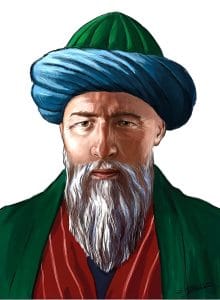
Yusuf, a well-educated intellectual who had learned Arabic, Persian, and the advanced sciences of his time, wrote not only with literary skill but also with political responsibility. He presented Kutadgu Bilig to Tabgaç Buğra Kara Khan, one of the Karakhanid rulers, and in return for this service, he was given the title "Has Hacib," meaning "chief palace advisor." This title indicates that he was not only a poet but also a statesman, political theorist, and moral philosopher. Yusuf Has Hacib's understanding of politics is framed by a blend of Islamic moral principles and Turkic state tradition. For him, governance should be conducted not merely with power, but with wisdom; not merely with law, but with conscience and divine responsibility. In this respect, it establishes strong ties with both Farabi's idea of the "virtuous city" and Islamic moral philosophy. However, the language and style of the work also make it an original source of Turkic Islamic political thought. Kutadgu Bilig is considered the first known political treatise in Turkic literature and one of the most important foundational works of Islamic-era Turkic thought. Its meaning can be interpreted as "Knowledge that Gives Happiness" or "Wisdom that Will Make the State Blessed." Written in the mesnevi (rhyming couplet) poetic form, the work consists of approximately 6645 couplets and was composed in the Aruz meter.
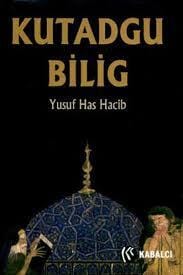
The primary purpose of the work is to teach a ruler how to govern justly, wisely, moderately, and morally. However, it presents this not through dry advice but within a philosophical dialogue structure that unfolds through symbolic characters. Four main characters represent political and moral virtues: Kün-Toğdı-Justice: Represents the ruler. Justice is the foundation of the state. Ay-Toldı-Happiness, felicity: The vizier. Symbolizes prosperity and worldly success. Ögdülmiş-Reason and knowledge: The vizier's son. Represents the necessity of reason and consultation in state affairs. Odgurmış-Asceticism and wisdom of the afterlife: The dervish. Reminds the ruler of the transience of the world. Through these characters, Kutadgu Bilig grounds state administration in principles of wisdom, reason, justice, and spirituality. In Yusuf Has Hacib's thought, politics cannot be separated from morality; the ruler's success lies not merely in compelling obedience from the people, but in encompassing them with justice, knowledge, and goodness. The work frequently addresses themes of turning to God, prayer, reliance on divine providence (tevekkül), and the transience of the world. This positions the ruler not as an irresponsible power-holder, but as a servant entrusted with a sacred duty. Thus, Kutadgu Bilig functions as a book of advice (nasihatnâme), a political theory, and a moral philosophy, synthesizing both Turkic state tradition and Islamic political-moral thought. ŞEREFHAN BIDLÎSÎ’S WORK: ŞEREFNAME Şerefhan Bidlîsî was a historian and political intellectual who lived during the period of the Kurdish Principalities. He was born in 1543 in the present-day province of Bitlis. Born into the Bitlis Dynasty as a bey (chieftain), Şerefhan became one of the leading political intellectuals of his era due to both his ruling-class background and his excellent madrasa education. Because his father, Şemseddin Khan, cooperated with the Safavids, the dynasty's position was occasionally jeopardized; therefore, Şerefhan had the opportunity to experience both Safavid and Ottoman court culture in his youth.
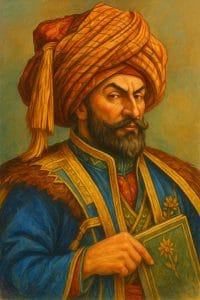
Later, Şerefhan, who grew closer to the Ottomans, received great support from the Ottoman administration during the reigns of Selim II and Murad III. He became the Bey of Bitlis and also penned Şerefname, the first historical work directly about Kurdish beys. Şerefhan not only wrote history but also aimed to instill political consciousness in Kurdish beys and guide them towards a more unified and dignified understanding of politics by bringing them together through historical memory. In this regard, he was both a historian and a political guide of his time.
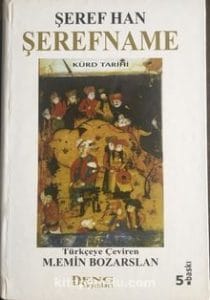
Şerefname, completed in 1597, is a comprehensive history book written in Persian, consisting of four main sections. This work is considered not only a cornerstone of Kurdish historiography but also one of the earliest ethnically-based historical narratives in the Middle East. The first section of Şerefname recounts the origins and history of the Kurdish emirates; subsequent sections detail their relations with Iran, the Ottomans, and the Turkmens, respectively. Although Şerefname is not a book of advice (nasihatnâme) in the classical sense, it clearly contains political warnings, evaluations, and expectations of leadership. The author critically addresses, in particular, the inability of Kurdish beys to unite due to conflict and rivalry, and their vulnerability to external powers. In this respect, the work attempts to construct an ideal ruler typology through historical figures. For example, it offers political analyses between the lines on how a strong Kurdish principality could be established. The ruler should not only be a warrior but also just, far-sighted, and at peace with their people. At the same time, Şerefhan emphasizes that Kurds, like Turks and Arabs, possess the cultural and historical heritage to form a political unity. In the work, religion is not central as it is in Kutadgu Bilig; rather, the educational role of history and exemplary figures is highlighted. According to Şerefhan, politics is not a sacred but a worldly duty with historical responsibility. Accordingly, the ruler's legitimacy should derive not only from lineage but also from justice and popular support. Unity and order should take precedence over personal ambitions. A ruler who does not learn from history also oppresses their people. Şerefname, under the guise of a history book, is one of the rare works that both gives identity to the Kurdish political tradition and aims to build a critical consciousness. Between Yusuf Has Hacib's wisdom-centered politics and Machiavelli's naked power-centered realism, it is a collective political warning text shaped by history, memory, and unity. MACHIAVELLI’S WORK: THE PRINCE Machiavelli was born in Florence, Italy, in 1469. He is considered one of the founding figures of modern political theory. He studied law, history, and diplomacy; between 1498 and 1512, he served in the office of the Second Chancellor of the Florentine Republic, dealing with foreign relations and military organization.
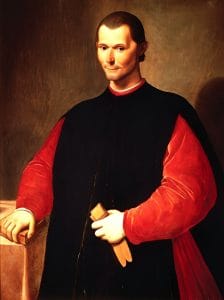
During this period, when Florence was constantly under internal and external threats, Machiavelli had the opportunity to closely observe both the fragility of the Italian city-states and power-based political relations. In 1512, when the Medici family regained control of Florence, Machiavelli was dismissed from his post, briefly imprisoned, and removed from political life. It was during this period, hoping to return to politics, that he wrote his work “Il Principe” (The Prince) in 1513. The Prince is Machiavelli's most famous work. Most political thinkers consider this work to be the foundational text of the modern secular state concept. The work is structured like a classical book of advice (nasihatnâme); that is, it addresses a ruler. However, in terms of content, it differs completely from Kutadgu Bilig and Şerefname: Machiavelli teaches the ruler not how to be virtuous, but how to gain and maintain power.

Throughout the work, Machiavelli defends the fundamental view that a ruler, if necessary for success, should lie, break promises, become cruel, but never lose power. In this context, Machiavelli's understanding of politics defines human nature as self-serving, cowardly, selfish, and deceitful. Therefore, the person governing the people must act according to these realities. Being "feared" by the ruler is seen as more effective than being "loved." Because people quickly lose their love when it goes against their interests, while they maintain the obedience created by fear for a longer time. Machiavelli also views religion not as a belief system, but as a political tool that directs the behavior of the masses. This distinguishes him from traditional Christian political philosophy in the West. In his eyes, morality is not a principle that defines the boundaries of politics; it is an element that can be bent according to the functioning of power. The prominent concepts in The Prince are: Virtù: The ruler's personal skill, will, and determination (power, not virtue) Fortuna: Fortune, fate; the coincidences the ruler encounters Distinction between appearance and reality: The ruler should appear honest but know how to betray if necessary Autonomy of politics: Politics operates by its own rules, outside of religion and morality The Prince presents not the concept of an ideal ruler, but the typology of a successful ruler. Unlike Kutadgu Bilig's search for virtuous power and Şerefname's historical morality, in Machiavelli, politics is reduced to a naked power strategy. In this respect, The Prince is the philosophical foundation not only of Renaissance Italy but also of the modern state idea and realism. CONCLUSION Three books, three civilizations, and three political minds... Yusuf Has Hacib advocated a virtuous order where political power was enveloped by morality; Şerefhan Bidlîsî, based on historical experience, tried to unite the people and the beys around political unity; Machiavelli, on the other hand, treated politics as a naked reality, making the preservation of power the fundamental principle. Although these three thinkers addressed their own societies and times, each was concerned with a universal issue: How should politics be conducted, and how should the right to govern people be justified? Kutadgu Bilig is still an example of a political ethic whose absence is felt in the Islamic world. It reminds us that the ruler bears responsibility towards God, their people, and their own conscience. Considering today's corrupt bureaucratic structures and rulers surrendered to interest groups, Yusuf Has Hacib's call is a timeless warning. Şerefname is a reminder text not only for Kurds but for all peoples who have lost their political memory. It explains that a people cannot survive without unity, and that division will only lead to defeat. If Şerefhan Bidlîsî's warnings, woven with historical consciousness, had been heeded in today's ethnic and sectarian political conflicts in the Middle East, perhaps a different fate would have been possible. The Prince represents the cool-headed and secular mind of the modern state. Machiavelli, who states that politics drifts into instability as it moves away from realism, still serves as an "instructive guide" for most of today's world leaders. However, the problem is that while The Prince establishes the legitimacy of instrumental reason, it also paved the way for the absolute validation of immoral power, as seen in some authoritarian regimes today. It needs to be understood; but applying it unquestioningly can turn into an acceptance that corrupts politics. These three works, when brought together, show this: Politics becomes lasting only when it meets not just power, but justice; not just history, but virtue; not just reality, but truth. Idealism, memory, and realism... Unless all three are present, neither the people will find peace nor the state will endure. Today, the world needs both the conscience of Kutadgu Bilig, the memory of Şerefname, and the reality of The Prince. It is neither right to be content with one nor to exclude the other. Because politics no longer needs a single mind; it needs a multiple and balanced consciousness.