Cohabitation
This article explores the concept of cohabitation, both in its original social sense and its political application in semi-presidential systems like France, before analyzing Turkey's presidential system and the potential for a "partial cohabitation" scenario in future elections, drawing
Dear Readers;
First, if you wish, let me present the explanation of the word in the title: The Latin-derived word "Cohabitation" emerged from the combined use of two words. The prefix "Co" means "Together." The word "Habitation" means "Life." Thus, it is possible to translate the word "Cohabitation" into Turkish as "LIVING TOGETHER."
The word "Cohabitation" was initially used for couples who lived together and formed a family without being officially married. In France, with the Fifth Republic, the word "Cohabitation" first entered political terminology.
As you know, France has a semi-presidential system. Normally, the President and the Prime Minister are expected to be from the same party. However, in some cases, when the President is elected from a party that is in the minority in parliament, a strange situation arises. If the President, elected by popular vote, chooses the Prime Minister candidate from their own party, which is in the minority in parliament, this situation is seen as contrary to political ethics and general trends. Therefore, the President is forced to choose the Prime Minister candidate from the party that represents the majority in parliament, i.e., the party that received the most votes among the opposition parties. The French have named this situation, where the President and the Prime Minister are from different parties, "Cohabitation," or "Living Together."
Here, I would like to warn my readers about the two different pronunciations of the word "Cohabitation." The word "Cohabitation" is pronounced "koebiteyşın" in English and "koabitasyon" in French. Although it means "Living Together" in Turkish, the expression "Kohabitasyon" has taken its place in political literature. (The French do not pronounce the letter H.)
COHABITATION GOVERNMENTS IN FRANCE
To ensure a better understanding of my article, I want to briefly review the Semi-Presidential system in France and the Presidential system in the USA, and then discuss the form of government in Turkey.
The main features of the Semi-Presidential system in France are as follows:
- The President is elected by popular vote.
- There is a Prime Minister and a cabinet.
- The government must receive a vote of confidence from parliament.
- The President can appoint a member of parliament or an outsider as Prime Minister at their discretion.
- The President also exercises legislative power through decrees.
- Parliament can issue a motion of no confidence against the government.
When François Mitterrand was elected President by popular vote in 1981, opposition parties held the majority in Parliament. Mitterrand did not want to choose a new Prime Minister candidate from the opposition parties. He used his authority and led the country to early elections. In the elections held, the Socialist Party secured a majority in parliament. Mitterrand chose the new Prime Minister candidate from the Socialist Party. The Socialist government received a vote of confidence from parliament.
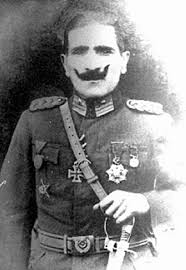
However, in the 1986 elections, an interesting situation arose. Mitterrand was re-elected President by popular vote, but the Socialist Party lost its majority. Mitterrand was forced to appoint Jacques Chirac (jak shirak), the leader of the UMP (Union for a Popular Movement), which received the most votes in the opposition, as Prime Minister (1986-88). French voters watched with astonishment the power struggle between Socialist President Mitterrand and Chirac, the leader of the conservative UMP. Mitterrand often vetoed the laws proposed by Chirac.
A similar situation occurred in the 1993 elections. Mitterrand was elected President by popular vote, but the opposition gained an 80% majority in parliament. Mitterrand was forced to appoint the conservative politician Édouard Balladur, of Armenian origin, as Prime Minister (1993–1995).
Years later, this time the conservative Chirac was elected President by popular vote, but since the Socialist Party secured a majority in parliament, he appointed Lionel Jospin, the leader of the Socialist Party, as Prime Minister, thus France was governed under the cohabitation system between 1997 and 2002.
Meanwhile, let's look at the main features of the Presidential system in the USA:
- The President is indirectly elected by the people (two-stage).
- The President chooses cabinet members from their own circle.
- Ministers must be individually approved by the Senate. The Cabinet as a whole is not subject to a vote of confidence.
- The President also exercises legislative power through decrees.
- There is no motion of no confidence or vote of confidence, but there is a House of Representatives and a Senate that strictly control the President. They can remove the President from office with a vote in both chambers.
TURKEY'S PRESIDENTIAL GOVERNMENT SYSTEM
The Presidential Government System is a presidential-type government system adopted by the referendum on April 16, 2017, and implemented as of July 9, 2018. With the transition to this system, the powers of the Grand National Assembly of Turkey (TBMM) were restricted, and the President's powers were increased, making them the head of the executive branch.
We can list the features of the new system as follows:
- The President is directly elected by popular vote. (France)
- The President can be a party member. (France / USA)
- The President can appoint cabinet members from outside parliament. (USA)
- Cabinet members consist of the President, the Vice President, and 17 ministers. The President can, in a sense, exercise legislative power through the authority to issue decrees. (A situation contrary to the principle of separation of powers - legislative, executive, and judicial!)
- If a member of parliament is appointed to the cabinet, their parliamentary membership is revoked.
- There is no Prime Minister. The President is the head of the government and the state. (USA)
- The government is not obliged to receive a vote of confidence from parliament. (USA)
- There is no strong mechanism to supervise the government or to which the government is accountable. There is no chance to issue a motion of no confidence against the government.
- There is no mechanism to control or limit the President's power.
- Parliament and members of parliament have been rendered insignificant. (There is an understanding that the country can be governed even without them.)
PRESIDENTIAL CABINET
President Recep Tayyip Erdoğan AK Party Chairman
Vice President Fuat Oktay AK Party Member
Minister of Justice Abdulhamit Gül Gaziantep MP
Minister of Family and Social Services Derya Yanık AK Party MYK Member
Minister of Labor and Social Security Vedat Bilgi AK Party MP
Minister of Environment and Urbanization Murat Kurum From outside
Minister of Foreign Affairs Mevlüt Çavuşoğlu AK Party Founding Member
Minister of Energy and Natural Resources Fatih Dönmez From outside
Minister of Youth and Sports Mehmet M. Kasapoğlu From outside
Minister of Treasury and Finance Lütfi Elvan AK Party Karaman MP
Minister of Interior Süleyman Soylu AK Party Trabzon MP
Minister of Culture and Tourism Mehmet Nuri Ersoy From outside
Minister of National Education Mahmut Özer From outside
Minister of National Defense Hulusi Akar From outside
Minister of Health Fahrettin Koca From outside
Minister of Industry and Technology Mustafa Varank From outside
Minister of Agriculture and Forestry Bekir Pakdemirli From outside
Minister of Trade Mehmet Muş AK Party Istanbul MP
Minister of Transport and Infrastructure Adil Karaismailoğlu From outside
In the political history of the Republic of Turkey, every Prime Minister and now the President has a cabinet preference. For example, Mr. Demirel and Ecevit preferred cabinets dominated by bureaucrats (civil servants), while Mr. Özal preferred technocrat (engineers and scientists) governments. Mr. Erdoğan, when forming his cabinet, bases his choice on the candidates' experience in business life, thus forming a cabinet with a business-oriented inclination.
I would like to give an example. Although Minister of Health Fahrettin Koca is a doctor, it would be more accurate to describe him as a businessman-doctor. Mr. Koca is the founder of the Education and Health Research Foundation, Medipol Hospital, and Istanbul Medipol University. Mr. Koca was appointed as a minister due to his entrepreneurial spirit and experience in business life. For this reason, Mr. Erdoğan prefers to form his cabinets with individuals who have "business or commercial acumen."
It is a matter of debate which type of cabinet is more successful. In my opinion, to create synergy, a cabinet composed of individuals from all three aforementioned segments would be appropriate.
When Donald Trump, one of America's biggest entrepreneurs and businessmen, was elected President, it was thought that business life would gain momentum, but he could not do better than Bill Clinton or Obama, who had no business experience. Sometimes ordinary individuals who lack business acumen or have not managed large corporate businesses can be much more successful ministers and pave the way for important decisions. Unfortunately, it is not possible to think of and manage the state like a "business." If it were, the late Mr. Sabancı or Koç would have to be made Prime Minister constantly.
TURKEY'S COHABITATION DILEMMA IN A NEW ELECTION
The previous elections in Turkey were held on June 24, 2018. Since elections are held every five years, the normal time for the next election is June 18, 2023. Whether it is an early election or a normal election, a scenario that will lead Turkey's political life into chaos seems inevitable.
As you know, when the legal obstacles to party alliances in Turkey were removed, two main alliance blocs emerged: the People's Alliance (Cumhur İttifakı) and the Nation Alliance (Millet İttifakı). In the 2018 elections, the parties in the two alliances and the number of deputies they elected are as follows:
People's Alliance: (344 Deputies / 53.6% of votes)
AK Party: 295
MHP: 49
BBP: 0
Nation Alliance: (189 Deputies / 33.8% of votes)
CHP: 146
İYİ Party: 43
Parties participating in the election alone:
HDP: 67 (11.7% of votes)
HÜDA-PAR: 0
TOTAL: 600 Deputies
In the upcoming early or normal elections, the following scenario is gaining traction:

Mr. Recep Tayyip Erdoğan will be elected President in the second round. On the other hand, the number of deputies of the Nation Alliance + HDP will exceed 300, meaning the opposition will gain a majority in parliament. In this situation, since the President's cabinet is not obliged to receive a vote of confidence from parliament, the President will form his cabinet from trusted individuals and immediately begin executive action. Since there is no Prime Minister, a situation that we can call "Partial Cohabitation" will arise.
That is, the President will use his authority to issue decrees, and the opposition, holding the majority, will object to these decrees and pass laws on the same subject from parliament. According to the Constitution, laws passed by the Assembly have priority and superiority over decrees issued by the President. Often, there will be a conflict between presidential decrees and laws passed by the Assembly, and the Constitutional Court will constantly convene to resolve the objections as the final decision-making body.
In this situation, the system will enter a deadlock, and Turkey will experience a tense political period. Even new elections may come onto the agenda to overcome this chaos. Since it seems difficult for the opposition parties (Nation Alliance + HDP) to reach a total of 360 deputies, regardless of how successful they are, the decision to hold early elections will only be at the President's initiative, which will trigger political crises. This is because to lead the country to early elections, either the President can use his authority alone, or it can happen with the votes of 3/5 of the deputies in the Assembly, i.e., 360 deputies.
Currently, the only way for the country to go to early elections requires the President to use his authority alone. Although, even if such a proposal came to the Assembly, the number 360 would easily be exceeded.
IS AN EARLY ELECTION POSSIBLE THIS YEAR OR IN SPRING?
It is possible to say that this possibility is gaining strength. Turkey gives the impression of reliving a period it experienced in the past. It is possible to say that there is a great similarity between what happened during Mr. Menderes's premiership between 1957-60 and what is happening today.
When Mr. Menderes first came to power (1950), he was tempted to hang İnönü, the leader of the opposition CHP, with the fabricated story of "Boraltan Bridge" by Tekirdağ Deputy Şevket Mocan. This, in a sense, meant settling scores for what happened during the Second World War. When the army sided with İnönü, this issue was not put on the parliamentary agenda. The "Boraltan Bridge" fabrication was placed at the center of emotional exploitation. In 1965, the then Prime Minister Süleyman Demirel brought the issue back to the agenda to discredit İnönü in the eyes of the public. Unfortunately, our President Erdoğan also fell into this trap. In 2015, at a meeting, President Erdoğan could not hold back his tears while recounting the "Boraltan Bridge tragedy (!)." His aim was to put Mr. Kılıçdaroğlu, whom he assumed had taken İnönü's place, and the CHP in a difficult position. (Readers curious about the Boraltan Bridge lie can find more information by clicking on the links: http://hunacademy.com/boraltan-koprusu-efsanesi-yalanlar-ve-gercekler/ and http://hunacademy.com/ikinci-dunya-savasi-ve-nazi-musluman-lejyonlari/.)
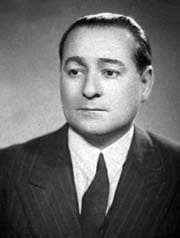
In 1959, this time, Asım Eren, a military-origin Niğde Deputy of the CHP, took the floor in parliament, reminding of the Turkmens killed in Kirkuk, and asked Prime Minister Adnan Menderes, "Do you intend to kill as many Kurds here as the Turkmens killed by Kurds in Iraq?" Following this, Kurdish students and intellectuals living in big cities like Ankara and Istanbul protested Asım Eren with telegrams. With the suggestion of MAH (MIT), Prime Minister Adnan Menderes moved with the desire to "hang" "1000" Kurdish students and intellectuals. The country was suddenly shaken by anti-Kurdish sentiment. 50 Kurdish students and intellectuals were arrested and imprisoned in single-cell wards in Harbiye. When Mehmet Emin Batu died of tuberculosis, 49 people remained, and this trial entered political literature as the "Movement of the 49."
Today, unfortunately, an anti-Kurdish sentiment is also rising in the country. The killing of a young girl named Deniz Poyraz in an attack on the HDP İzmir Provincial Headquarters on June 17, 2021, by a racist ultra-nationalist assailant, and then, very soon after, on July 31, 2021, the killing of a family in Meram by another racist ultra-nationalist individual, and their horrific burning after being doused with gasoline, in a sense, evokes the "Movement of the 49" that occurred in 1959. The inadequacy, silence, and indirect anti-Kurdish stance of government members are infiltrating daily life, and discrimination is growing like an avalanche.
For example, even in a simple apartment meeting, an apartment manager who cannot tolerate giving the insulation job to a company owned by a person of Kurdish origin, drawing strength from the existing discrimination in the country, finds the courage to say, "I won't give work to dirty Kurds!" This anti-Kurdish stance, unfortunately, is spreading like waves across our country and harming our integrity.
On the other hand, we know that our army, shaken by the FETÖ coup attempt, is striving to return to Atatürkist values and wants to regain the trust of the public, as it was once the most trusted institution by the Turkish people in public opinion polls. As you know, with the new regulation, the General Staff has been connected to the Ministry of National Defense. Since the army knows that it cannot return to Atatürkist values by remaining in the shadow of the government, it may want to adopt an independent stance.
Adnan Menderes, considering the possibility of a military coup, organized a resistance movement, formed a front, and even secretly armed the party's local organizations (Ocak-Bucak teşkilatları). The late Menderes assumed that these civilian forces would resist the army in a possible coup and succeed. Unfortunately, Menderes, who received the news of the coup in Kütahya, wanted to go to İzmir and seek refuge under the protection of the people but was caught and detained before he could do so.
This year, on the anniversary of the July 15, 2016, coup attempt, the convoys of civilians wildly chanting slogans and touring the city in the evening, unfortunately, brought to mind the Ocak-Bucak organizations. The possibility of these civilians being armed is also gaining strength.
In the last years of his premiership, Mr. Menderes had moved away from NATO and Western countries and entered into a rapprochement with Moscow. This situation created deep disappointment and anger, especially in the US administration.
On April 11, 1960, a statement made by the Moscow and Ankara governments had the effect of a bomb in diplomatic circles. The statement was as follows:
"Prime Minister Adnan Menderes will pay an official visit to Moscow on July 12, 1960. Some time later, the President of the USSR (Soviet Union), Nikita Khrushchev, will pay a return visit to Ankara. Announced to the public." Prime Minister Menderes was removed from office by a military coup on May 27, 1960, before he could realize this dream, and was later executed.
Today, our President is also confronting NATO, the USA, and the European Union, purchasing S-400 missiles from Russia, and even giving sensitive projects like the construction of a nuclear power plant to Russian companies. Foreign powers, who see a Turkey confronting the USA in the Eastern Mediterranean and Syria as contrary to their interests, are not standing idly by and are probably seeking a way out that suits their own interests.
In short, our President, foreseeing the discomfort in the army and to prevent more serious events, can and, in my opinion, should use his authority to lead the country to early elections. No democrat or intellectual will be happy if the phrase "History repeats itself!" comes true. We must remember that getting our country out of the political chaos it is in and not allowing possible interventions lies in the decisions our President will make and the sensitive policies he will pursue. Even if we do not vote for or like the AK Party, it should be our duty to give our President full support in this matter.
PART TWO
LAWS OF THERMODYNAMICS AND POLITICS
Dear Readers!
Our country is burning. News of forest fires is coming from everywhere. Fires suddenly appear, some are brought under control, some burn down houses, villages, and settlements, rapidly advancing towards cities. If you wish, before pointing our finger at someone and saying, "Culprit, stand up!", let's look at some fundamental laws.
Oh, these laws of thermodynamics! If only you knew how ruthless they are! They don't listen to humans and act on their own accord. As if that weren't enough, they fundamentally shake the political world of countries, causing the spread of unfounded rumors and even the emergence of hundreds of interesting CONSPIRACY theories. If we say it without exaggeration, the laws of thermodynamics, with a "spoiled" attitude, sometimes creep into the political world like a poisonous snake, to the extent of forcing countries into EARLY ELECTIONS. They skillfully hide their guilt, watching with pleasure as people panic and run around, as forests and thousands of species of animals and insects burn, trying to prove their existence to us mortals with an air of pride and arrogance, as if to say, "I will teach you what it means to mock my power."
WHAT IS THERMODYNAMICS?
As I mentioned in my previous article, it is impossible to avoid the use of Latin and Greek words when writing a scientific article. The word "Thermodynamics" is one of them. Thermodynamics is derived from the Greek words "thermos," meaning heat, and "dynamic," meaning energy. Pure Turkish speakers would force themselves to use the expression "ısıl devingi" instead of "termodinamik," but of course, they don't know how ridiculous they look.
Thermodynamics deals with the relationship between heat, temperature, and energy. Its whole secret lies in containing the fundamental laws of the transformation of energy from one place to another or into a different form (mechanical motion).
THE MILK BOILED OVER!
My family was involved in animal husbandry. My mother would milk the cows, empty buckets of milk into large cauldrons carefully placed on three-stone stoves, and boil it. My job was to stir the milk with a huge wooden ladle. If the milk wasn't stirred, it would boil over even though the milk at the bottom of the cauldron was still cold. The zeroth law of thermodynamics commands: If there is no mechanical intervention from outside, there will be no thermal equilibrium in the liquid (boiling milk); the heated milk at the bottom moves to the surface due to expansion, cold milk sinks, and soon the milk boils over even though not all of it is at the same temperature.
Since the temperature of the milk had to be the same everywhere for delicious cheese and yogurt, I was given a wooden ladle and asked to stir the milk slowly and at a constant speed. This way, the boiling milk wouldn't boil over immediately and would continue to heat for a longer time. Childish mind! When I saw that the milk wasn't boiling over while stirring, I would sneak away, sit on a nearby stone, and start reading my indispensable Texas and Tommix comics. To my utter astonishment, the milk, which I believed wouldn't boil over for a long time, would suddenly boil over if not stirred for even 15-20 seconds, and the foam would spill from the edges of the cauldron onto the fire of the stove, the sizzling sound of the milk reaching my mother's ears. She would immediately appear on the balcony, exclaiming, "May you be blind!", rush out, first bring the milk under control, and then mercilessly administer the punishment I "deserved."
Years later, when I read these words by the famous English writer William Somerset Maugham, it was, of course, too late for me to understand the disasters that had befallen me: "Don't cry over spilled milk; all the forces of the Universe (the laws of thermodynamics) had once made up their mind to spill the milk."
When I read this sentence, I couldn't help but say to myself, "My dear brother! If only you could have explained this reality to Mrs. Naco (my late mother) in time!"

DRY HAY TRADE
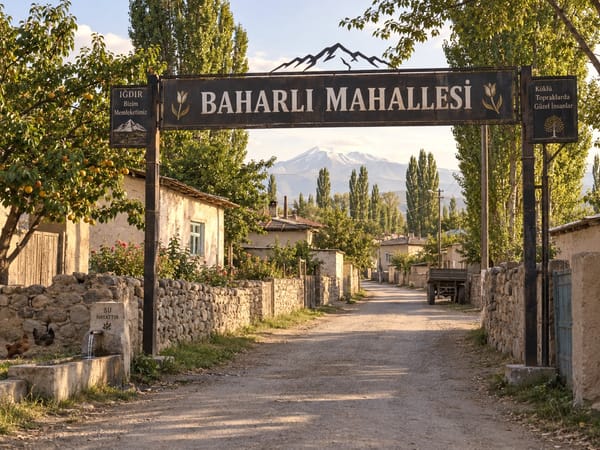
Another source of income for my family was selling dry hay. Initially, we would load dry hay onto tractors or trucks without baling it, in an open state, and sell it to the Gendarmerie Cavalry Unit in Iğdır. In those years, Gendarmerie cavalry units would patrol villages, ensure security, prevent fights, and apprehend criminals. If I'm not mistaken, Gendarmerie cavalry units were abolished starting from 1969. The Gendarmerie now reached villages with motorized military Jeeps and ensured security.
This meant we had more hay than we needed. In winter, dry hay was needed in Rize and surrounding areas. Sending such a long distance from Iğdır to Rize as open hay was not efficient. An open hay truck could carry a maximum of 2 tons. It wasn't worth the transportation cost. In those years, machines that collected and baled hay cut and left to dry in the fields were not yet available on the market. Dry hay on the ground was collected with a rake and gathered into small piles.
Later, small hay piles loaded onto a tractor's trailer would be transported to a suitable location, and massive hay piles called "lots" would be made. Baled hay was made from open hay using a baling machine powered by a belt attached to the tractor's pulley. This way, a truck could carry 8-10 tons of hay. Furthermore, baled hay could not burn.

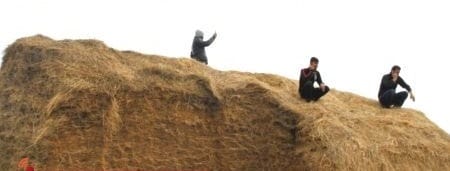
You must be wondering why I presented all this preliminary information. I want to start my narrative with the hay drying in the field being gathered into small piles. In the terrible July and August heat of Iğdır, care was taken to ensure that the hay drying on the ground was gathered into piles of a certain size.
Of course, the workers had learned a truth not because they knew the laws of thermodynamics, but through life experience: Hay that had dried or, in a sense, roasted on the ground could catch fire if piled up beyond a certain height. The reason for this was the law of thermodynamics. According to this law, there was a relationship between pressure and temperature. If the hay pile was large, the hot hay at the very bottom could spontaneously ignite due to weight and pressure.
The hay piles collected in the field were left for a few days to cool down the bottom and middle parts, then transported by trailer and stacked in "lots."
FIRE TRIANGLE
We can define fire as follows: It is a chemical reaction that occurs when FLAMMABLE MATERIAL, HEAT, and OXYGEN come together under suitable conditions and in the required proportions. The combination of these three elements is called the "Fire Triangle."
We would sell baled hay to Rize, but we would store the hay we would give to the animals throughout the winter in open piles. In my childhood, I would carry hay with a pitchfork (şene) to the barn and distribute it by hand into the trough where the cattle ate hay and straw. Often, I would see that the very bottom of the huge hay pile was pitch black like tar and couldn't make sense of it. My father would be saddened when he saw the blackened hay: "The hay at the bottom burned because the hot hay piles in the field were hastily collected and made into lots!"
Of course, it was impossible for me to make sense of this event. After learning the laws of thermodynamics, if the hay at the very bottom was still hot and tons of hay were piled on top of it, despite the lack of oxygen, the hay would carbonize due to the heat generated, meaning it would turn into a tar-like consistency. Since animals would not eat this hay, great losses would occur due to carelessness. If the lot was not very high, a more serious situation would arise; the heat generated below would combine with the oxygen coming through the hay pile, and a fire could spontaneously start.
YOU BURNED MY HAY!
Villagers, of course, were unaware of the laws of thermodynamics. They couldn't understand why the hay piles in front of their houses would burn down for no reason, believing that someone had committed sabotage, and they would look for a culprit. This habit still continues.
Without revealing their names, a cousin of mine accused another relative of burning the hay pile in front of his house. The poor young man accused of burning the hay worked in construction in big cities and rarely visited the village. It was, of course, meaningless for my cousin, whose hay had burned, to claim that the young man who had just arrived in Iğdır had burned his hay. He spread the word, "Either he pays this much money, or I will kill him!"
The young man was in a panic. He explained what had happened and asked for help. I investigated; when the hay burned, the young man was busy with other work in the city center of Iğdır. It was impossible for him to be in two places at once! From my cousin's perspective, whose hay had burned, it was also impossible for his hay to burn spontaneously. The two seemingly "impossible" situations made the matter inextricable. Since it was impossible for me to say, "Cousin, your hay can also burn by itself," by reminding him of the laws of thermodynamics, I took action to solve the problem without paying money or killing each other. Thank God I succeeded!
FOREST FIRES
Dozens of reasons can be cited for forest fires. Forest fires are generally divided into two categories:
A: Fires caused by humans: These types of fires are due to reasons such as sabotage, negligence, railways or high-voltage power lines passing through areas close to forests. Even the slightest spark can be enough to trigger large fires.
B: The cause of other fires should be sought in nature itself. From lightning strikes to any kind of friction and collision that can cause a spark, the heat generated can be enough to ignite bone-dry leaves. Even the heat generated when dry branches rub against each other in the wind can create a spark. Rock fragments with a glass-like structure can focus light like a lens at one point and cause a fire. If you have a magnifying glass, you can try burning a piece of dry paper by holding it up to the sun.
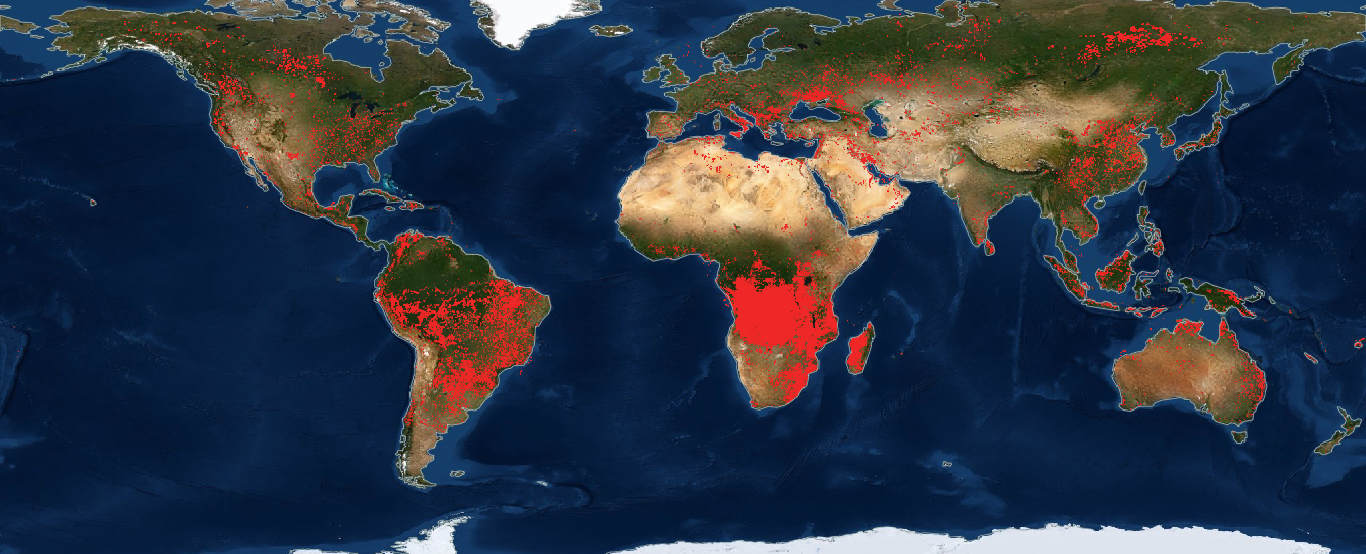
Last week in Greece, 60 forest fires broke out in a single day. Some fires occurred near Athens, others on islands like Rhodes.
The laws of thermodynamics prove that forests can ignite with a spark in extremely dry cold weather, just as they do in summer. The largest known forest fire to date occurred in Siberia in 1915 and spread over an area as wide as Southern Germany.
CONCLUSION
When looking for culprits in forest fires, the laws of thermodynamics should first be considered, and then the human factor, i.e., sabotages, should be brought to the forefront. In forest fires, the government should be open to all kinds of aid offers from outside, and the politics pursued in foreign relations and tensions with countries should be kept separate from forest fires.