The End of Class Society and the Future of Humanity
This essay explores how the traditional concept of class society, as defined by Marx, has evolved, arguing that humanity now lives in a hybrid state that is both class-based and classless, primarily due to the equalizing power of information access.

THE END OF CLASS SOCIETY AND THE FUTURE OF HUMANITY
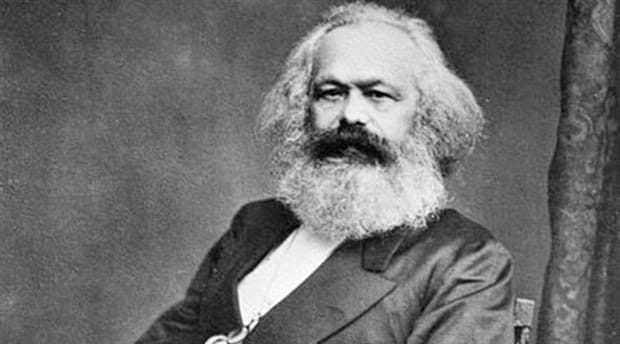
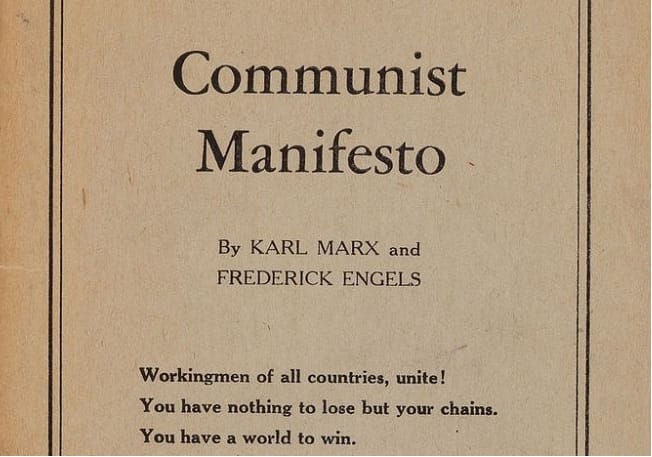
Since the 19th century, humanity has explained the development of history, particularly with the publication of the Communist Manifesto, co-authored by Marx and Engels in 1848, as a "class struggle." From that day forward, the human mind has focused on the "class society-classless society" dichotomy, leading us to the present. The Communist Manifesto explains humanity's developmental thesis with the following sentence: "The history of all hitherto existing society is the history of class struggles."
Today, no country in the world has a class society in the classical sense, as described by Marx. In this situation, you might ask, "Are we living in a classless society?" And I would answer, "No!" Understandably, your mind would be confused.
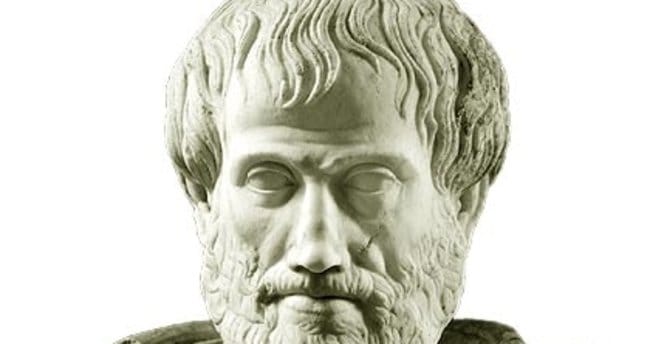
Actually, it's not me who's confusing your mind. What's confusing your mind is a specific part of Aristotelian logic, which has shaped humanity's systematic way of thinking for over 2000 years. Aristotle (384-322 BCE) is undoubtedly one of the greatest intellects humanity has ever produced. He has made very significant contributions in philosophy, logic, physics, biology, zoology, astronomy, metaphysics, ethics, aesthetics, soul, psychology, linguistics, economics, politics, and rhetoric. However, a simple proposition in the science of logic he developed has limited humanity's power of thought, in a sense, building walls around the human mind, like a "prison."
Aristotle says:
"2 x 2 (two times two) either equals four or it does not. There is no other option."
I feel as if many of you agree with Aristotle right now. If we apply the same logic to society:
"A society either has a class structure or it is classless. There is no other option."
A GENIUS NAMED EINSTEIN
Towards the end of the 19th century, two different views emerged among physicists researching the nature of light. Some claimed that light consists of particles called photons (a stream of particles), while others argued that light has wave-like properties. Consequently, a logic like the following became generally accepted in the world of physics:
"Light is either a particle or a wave. There is no other option!"
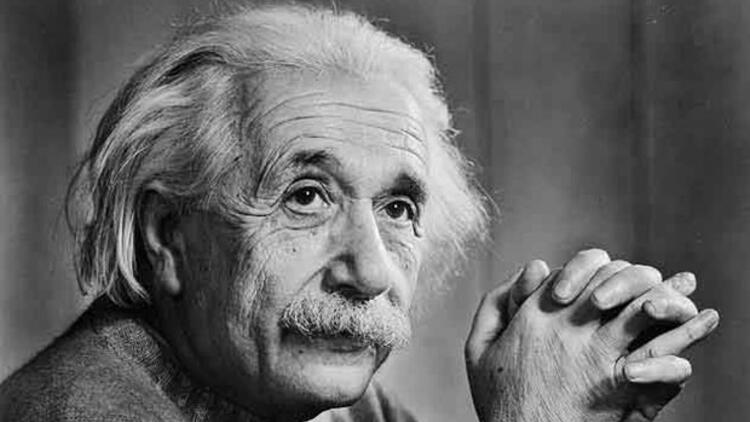
A genius named Einstein (1879-1955) pondered this dilemma presented to him: "Why am I limiting myself to two options?" he asked, pushing aside the classical thinking pattern. Freeing his mind from the "prison" dilemma of Aristotelian logic, he resolutely continued his experiments and research. He soon realized a truth:
"Some substances, when light fell on them, emitted electrons. Brighter lights emitted more electrons, but their energy did not increase. Yellow and red lights emitted very few electrons."
Classical physics could not explain this phenomenon with either the wave theory or the particle theory alone. Einstein applied Planck's theory to this problem. He soon discovered that the nature of light possesses both particle and wave properties. Einstein won the Nobel Prize in Physics in 1921 for this work.
BOTH CLASS-BASED AND CLASSLESS SOCIETY
Stepping outside of Aristotelian logic, when we examine the society we live in today, we can say that it has both a class-based and a classless structure. It is certain that we have reached the end of thinking about society in the classical sense, by dividing it into components such as "peasants/workers on one side, bourgeoisie on the other." We all know that this model of thinking has resulted in failure.
In the last 20 years, especially with the intensive use of the Internet and media, all humanity in the world has been equalized in one respect. A very privileged and wealthy person can access trillions of articles on Google, just like an ordinary peasant. Poor and rich alike can now easily afford smartphones like iPhones with Internet connectivity. Today, everyone has a smartphone in their pocket, meaning humanity has been equalized in terms of ACCESS TO INFORMATION. In this sense, we have a classless society.
On the other hand, some people drive Ferraris, some have lower-model cars, and some have no car at all. Some can access health and education services more easily due to their financial power, some have this opportunity at a more modest level, and some have none at all. In terms of the distribution of FINANCIAL POWER, we have a class-based society.
Since we currently possess both of these realities simultaneously, we live in neither a class-based nor a classless society. The correct proposition should be: WE EXPERIENCE BOTH SIMULTANEOUSLY. That is, we are equal in terms of access to information but unequal in terms of living standards. Here, the question becomes important: IS THE POWER OF EQUAL ACCESS TO INFORMATION MORE IMPORTANT THAN THE EQUALITY OF LIVING STANDARDS? The answer to the question is: YES!
THE FUTURE OF HUMANITY

This new era humanity finds itself in has been described by the Japanese-American Francis Fukuyama (born 1952) and his colleagues as "the end of history." This is not correct! Fukuyama used an expression like "the end of history" by considering the era of "equality" in terms of access to information. Thus, two systems of thought, namely class society and information society, have been treated separately in terms of explaining the structure of society. The truth and logical explanation is to accept that both exist simultaneously, and therefore humanity has entered a new era.
The class society, built on the classical worker-bourgeoisie dichotomy, has undergone a transformation since the 1980s, parallel to the increase in computer use. Labor unions and parties, which were the main force for revolution, have now lost their importance. When was the last time we witnessed large unions coming together to organize a "strike" or "resistance" on any issue in Türkiye? Unions or the working class today neither can undertake such a mission in terms of "making a revolution" nor do they possess the objective conditions and power to make this breakthrough.
Every union, beyond being a civil society organization, has adopted an understanding based on self-interest and profitability, just like a capitalist enterprise, and has abandoned its vision of transforming society. Unions primarily focus on negotiating the wage conditions of their own members, and with the collected membership fees, union bosses gain more power, living a life no different from a factory owner. The political and sociological problems facing Türkiye are no longer the problems of the working class and unions. An organization like FETÖ plays a more effective role than labor unions in convincing society to adopt a new way of life because FETÖ, instead of seizing power based on class society dynamics, organized its members using smartphones with BlackBerry Messenger, the highest product of the information society, and attempted to seize power. This shows that power is no longer changing hands through the classic worker-employer conflict; the possibility of seizing power through the strength of the information society is gaining ground.
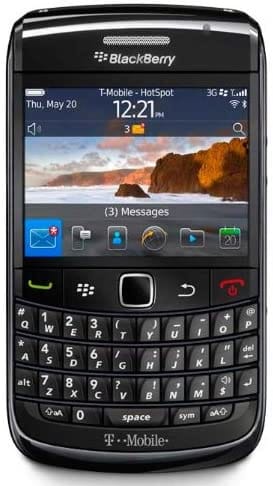
It is in such conditions of an emerging and gaining value INFORMATION SOCIETY that we witness people fighting against all kinds of injustices and inequalities in the world, regardless of class differences, by communicating via the Internet (smartphones). Often, the rich and the poor agree on an important issue, and this solidarity transforms into a social solidarity force in society through smartphones.
Political parties have now eroded. Just as unions have moved away from their primary duties, i.e., the mission of making a revolution, parties have also eroded. Instead of transforming society as a whole, they have entered a race to convince voters of the understanding, similar to unions, "my interests and benefits will be secured if I align myself with which party." As you can see, class society and information society dynamics coexist, and society is now transforming with the simultaneous existence of these two components. Class society in the classical sense has lost its sole dominance. The universal value of access to information and the equalization of humanity in this sense have given a new dimension to the class struggle, and we have stepped into the first phase of a new societal model.