From Simon Bolívar to Maduro: The Historical Continuity of the Culture of Intervention in Latin America
This article explores the historical continuity of intervention in Latin America, from Simon Bolívar's warnings against external influence to the recent US actions against Venezuelan President Nicolas Maduro, highlighting the enduring struggle for sovereignty against foreign powers.

Dear Readers,
A few days ago, the US officially announced that Venezuelan President Nicolas Maduro had been apprehended as part of an international operation, taken to the US on charges of cocaine trafficking and organized crime, and would be tried in American courts. According to Washington, this was a legitimate legal and security operation against drug trafficking.
The Venezuelan government, however, described the events as the forcible detention of the sitting president of a sovereign state. Numerous international legal experts also emphasized that, regardless of the content of the accusations, the capture of a head of state by another country using actual force is incompatible with the fundamental principles of international law. The discussion quickly transcended Maduro's person, centering on issues such as sovereignty, immunity, and the prohibition of the use of force.
This event alone is globally shocking. However, considering the long-standing tension between Venezuela and Bolivia with the US, it becomes clear that these events are not merely a current crisis but are rooted in a deeper historical and ideological background. At the heart of this background is a powerful name from two centuries ago: Simon Bolívar.
Simon Bolívar: The military and intellectual architect of independence
Simon Bolívar was not merely a soldier who fought against Spanish colonialism. He was a thinker who envisioned the destiny of Latin America not as fragmented states, but as a unified political consciousness and union. As much as he was the military leader of the wars of independence stretching from Venezuela to Peru, he also put forth a strong intellectual framework for the future of this geography.
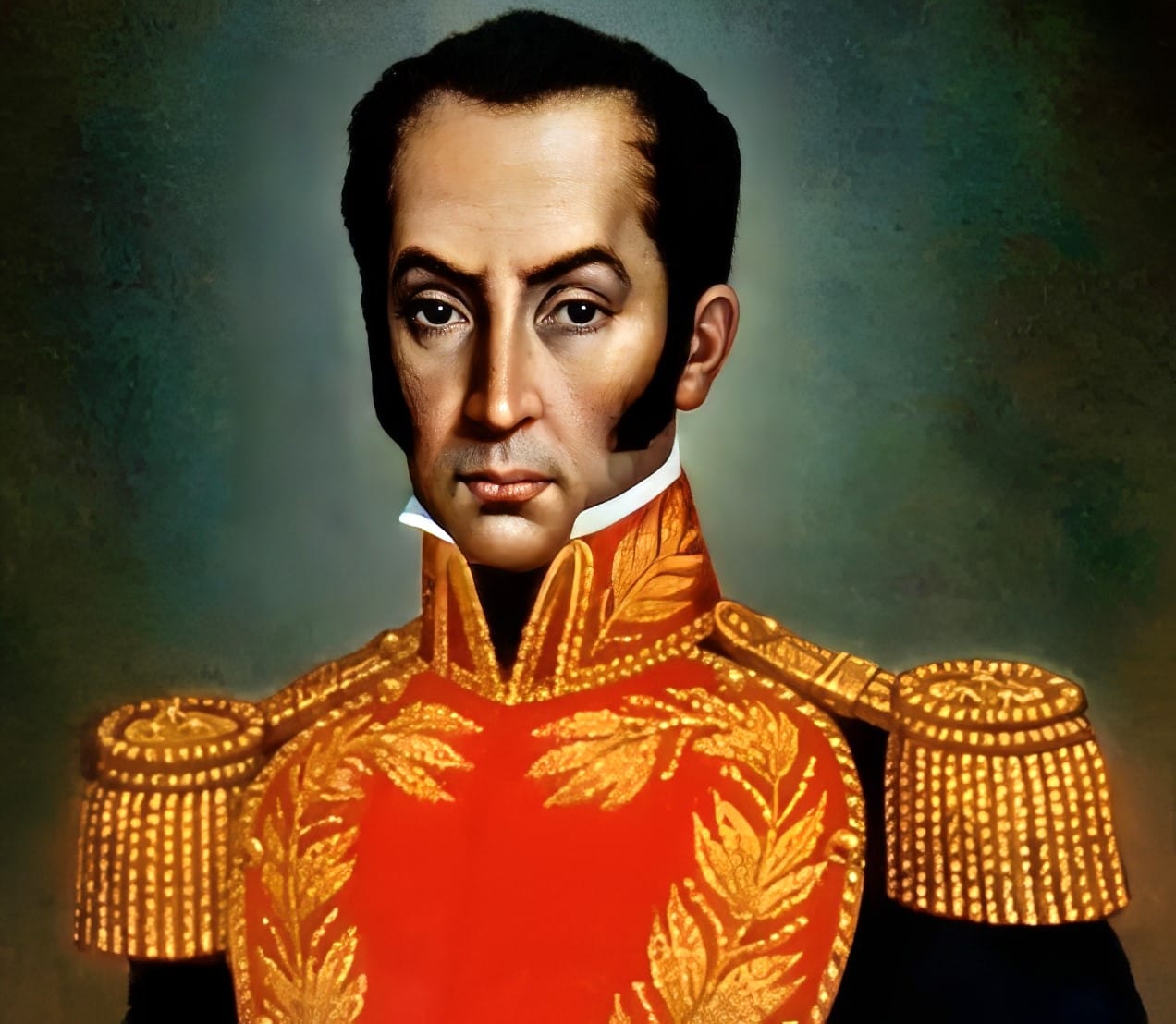
Bolívar's life was marked by victories as well as defeats, exiles, and solitude. When independence was achieved, he realized that the real struggle had just begun. According to him, the withdrawal of the old colonizer did not guarantee true freedom. A fragmented Latin America would always be open to new and stronger external influences.
For this reason, Bolívar advocated for the political unity of the continent. In the same context, he issued remarkable warnings about the rising power of the US at the time. He did not see the US as an overt enemy, but as a power that could establish a sphere of influence through its rhetoric of freedom. This observation remains relevant two centuries later.
What does "endless intervention" mean?
The phrase "historical continuity of the culture of intervention in Latin America" that I use in this article does not mean that there has been actual military occupation or continuous hot conflict in every period. What I mean here is a recurring political reflex and method that has persisted for approximately two centuries.
In Latin American history, external intervention has not always manifested in the same way.
In the 19th century, this intervention was seen more in the form of overt military pressure and diplomatic coercion, while during the Cold War, coups, support for military juntas, and covert operations came to the fore. In the 21st century, the method has changed, and intervention has taken the form of sanctions, economic blockade, diplomatic isolation, and criminalizing leaders through accusations.
Therefore, continuity should not be sought in the uninterrupted nature of the action, but in the reproduction of the logic of intervention through different means. Intervention is not always visible. However, it manifests itself as an ingrained foreign policy habit that re-emerges during crises, changes in government, or searches for independent policies.
Venezuela and Bolivia: The current politics of a legacy
Venezuela is the land where Simon Bolívar was born and where his legacy is most strongly embraced. It is no coincidence that in the modern era, the "Bolivarian" discourse has transformed into a political identity. Statism, emphasis on independence, and resistance to external intervention are contemporary reflections of this legacy.
Bolivia, on the other hand, is one of the rare countries named directly after Simon Bolívar. The political power of the indigenous people, state control over natural resources, and a stance distant from external dependence have presented a different interpretation of Bolivarian thought here.
A common point for both countries is their open tension with the US, which has long viewed Latin America as its sphere of influence. Therefore, the target is often not just the current leaders, but this historical legacy and the very idea of independence.
To understand why Venezuela is important to the US, it is useful to look at the world's oil reserves.
Proven oil reserves (billion barrels)
- Venezuela 304
- Saudi Arabia 259
- Iran 209
- Canada 170
- Iraq 145
- Kuwait 102
- United Arab Emirates 98
- Russia 80
- Libya 48
- USA 44
Is Washington's problem a person or an idea?
The US often defends its policies towards Venezuela and Bolivia through the lenses of democracy, human rights, and security. Each of these topics is, of course, debatable. However, looking at the historical picture, it is clear that Washington's approach in Latin America is shaped not by individuals, but as a regional reflex.
Energy resources, the increasing influence of China and Russia in the region, and the pursuit of independent foreign policies are among the current reasons for this tension. But above all, there is an element that the US finds difficult to control: the idea of political independence inherited from Simon Bolívar.
Therefore, what is happening today cannot be explained solely by Maduro's person. The fact that Bolivia is also under pressure at the same time clearly shows that the issue is more about ideals than individuals.
From "The Abduction from the Seraglio" to "The Abduction of the President from the Palace": An allegory
In Mozart's opera The Abduction from the Seraglio, the story takes place in an Ottoman palace. In this setting, which the European imagination attributed to the "Orient," an expectation of power and arbitrary authority prevails. However, the opera's finale thwarts this expectation. Pasha Selim chooses mercy over revenge. Power is limited by measure.
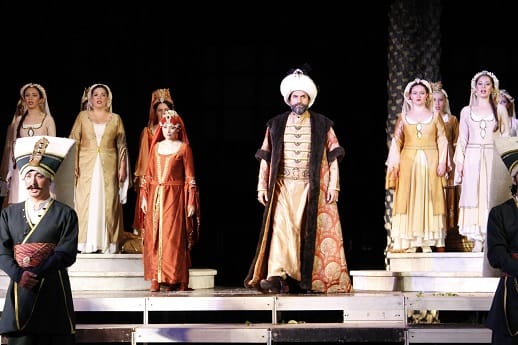
Maduro's forcible detention from his own country, however, is like a reversed scene of this narrative. This time, the palace is not an exotic fantasy, but the official premises of a sovereign state. The abducted person is not a woman, but a sitting head of state. There is no mercy or moderation; only naked power.
The allegory is clear. While in Mozart's scene the "Orient" teaches humanity to Europe, in today's scene, the power that presents itself as the bearer of law and freedom is suspending the very principles it teaches. This reversal signifies not only a political but also a moral breakdown.
Conclusion: Unlawful methods and a dangerous precedent
Although the US argues that Maduro was apprehended and will be tried for cocaine trafficking, the fundamental problem from an international law perspective is the method, rather than the content of the accusation. The detention of a sitting head of state by another state using actual force openly contradicts the principles of sovereignty and immunity.
Such practices set a dangerous precedent where the powerful can suspend the law in their favor. The method used for Maduro today could be legitimized for other countries and other leaders tomorrow. This makes the international system more fragile and unpredictable.
This was precisely the danger Simon Bolívar sensed two hundred years ago. Individuals come and go, governments change. But unlawful interventions leave behind wounds that do not heal for a long time.
In this respect, Maduro's detention goes down in history as a wrong and bad example that concerns not only Venezuela but the entire international order.