The Rosetta Stone and Corporal Hasan
This essay contrasts the Rosetta Stone's role in illuminating ancient history with the "Corporal Hasan" myth, which the author argues obscures historical truth, particularly concerning Iğdır.
Dear Readers!
Before I begin my article, I want to extend my best wishes to my dear elder brother Mahmut Alınak, who I learned has been diagnosed with cancer. I spoke with him on the phone. As always, his tone was full of confidence, hinting that he was fearlessly preparing for a new struggle. He said he would go to Izmir for treatment. I wish my dear brother a speedy recovery and hope he gets well and continues his struggle for democracy where he left off.
Introduction
Humankind is a strange creature! On the one hand, it makes an extraordinary effort to explain the "unknown," while on the other, it makes a meaningless endeavor its profession to render an "obvious, clear" reality "unknowable." What can we say? Our duty must always be to defend reality and enlighten society. This duty, of course, belongs not just to a few individuals but to the entire society. Therefore, I invite you to be aware of your responsibilities.
Today's article will consist of two parts:
First; the Rosetta (Rashid) Stone, as an example of the extraordinary effort made to make the "unknown" comprehensible;
Second; the "Corporal Hasan fairy tale," as an example of the extraordinary effort made to render the "known" incomprehensible.
THE ROSETTA (RASHID) STONE
My mind goes back to my childhood years. I was an elementary school student. The 10-volume Hayat Encyclopedia, the first comprehensive work in the history of the Republic, published by journalist Zekeriya Sertel and his friends, was one of the bedside books in my father's library. Due to a fire in our house in the hamlet of Aliköçek, the edges of the encyclopedia's pages were either burned or yellowed. In this state, the encyclopedia was even more valuable in my eyes.
In those years, without the internet or a library, the encyclopedia was a window to the world for me. Interestingly, no one else in the household but me bothered to consult the encyclopedia volumes.
My greatest pleasure was to be alone in the large living room we used as a "guest room" and to leaf through the pages of the encyclopedia. It was a work prepared with great effort.
Some pages were folded. When you opened a page, a huge colorful picture would appear, winking at you from a mysterious world. I would get lost in the colors, drifting into the past.
One of the sections that interested me most was Egyptian Civilization. Pyramids, pharaohs, strangely dressed soldiers… Even in those years, I had seen a picture of the Rosetta stone in the encyclopedia, but I couldn't have known then that years would have to pass before I understood its importance.
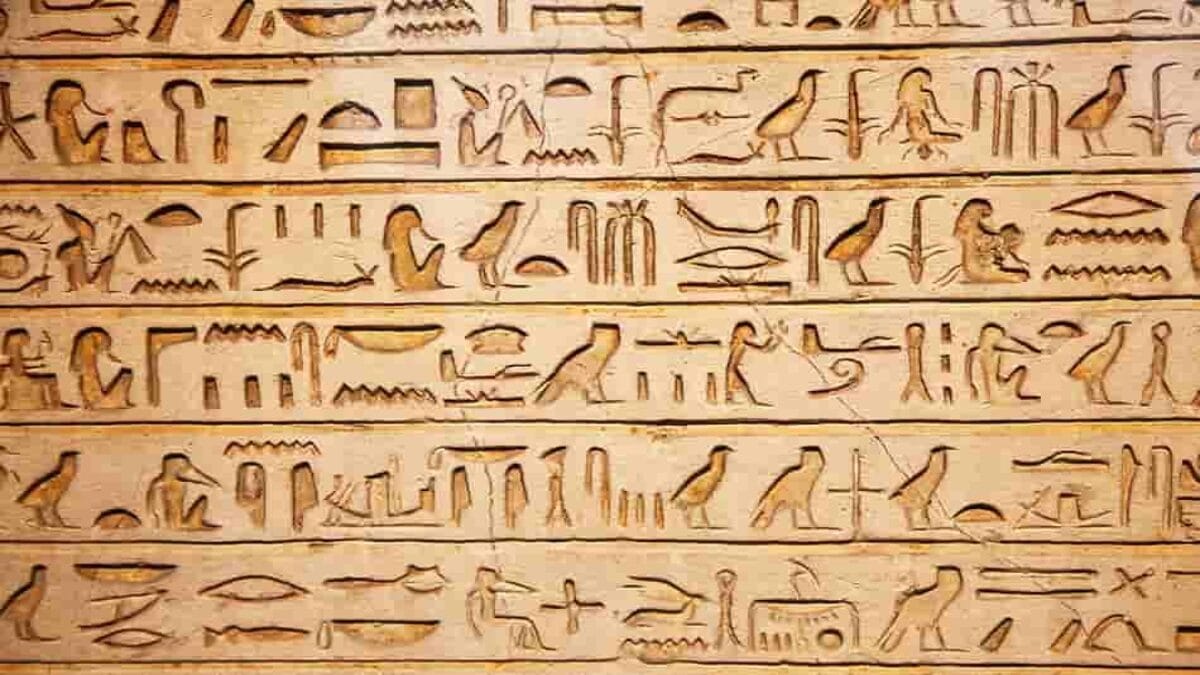
We all know that ancient Egyptians used hieroglyphic writing.
Egyptians first began to use hieroglyphic writing around 3100 BCE. Considering that the last texts in the hieroglyphic alphabet were written in the 5th century CE, it is understood that Egyptians used hieroglyphic writing for 3500 years. I leave it to you to appreciate how long a period this is.
Over time, hieroglyphic writing was replaced first by the Demotic writing system and then by the Greek alphabet. As a result, the hieroglyphic writing system fell out of use, and after approximately 1400 years (in the 18th century), no one could understand hieroglyphic writing anymore. Thus, 3500 years of immense Egyptian history were plunged into darkness. Until the Rosetta Stone was found…
University of California, Berkeley
In 1992, I left my job in Paris and headed to the USA to continue my master's and doctoral studies. My first stop was Berkeley. I rented a small student apartment. While improving my English at a language school during the day, I attended the "Extension" program at Berkeley University in the evenings, designed for adults and working professionals. At Extension, it was possible to take courses in everything from sociology to literature, economics to psychology. Many adults followed these courses and changed jobs with the certificates they received.
I had enrolled in several courses simultaneously. All my evenings were full. Being in the same class as Americans accelerated my language learning and self-improvement.
One of the courses I took was archaeology. A famous British archaeologist was our instructor. He was an expert on the subject. He showed slides that captivated our interest and talked about archaeological excavations he had personally participated in.
Our topic was ancient Egyptian civilization. Our instructor asked the class:
"What is the most important discovery in the history of Egyptology (Egyptian Science)?"
Silence fell in the classroom. A few faint voices offered guesses, but they were incorrect.
The instructor turned on the slide projector. When I saw the Rosetta stone on the screen, my heart almost stopped. I had known this stone since elementary school, but I was unaware of its significance.
The Rosetta (Rashid) Stone
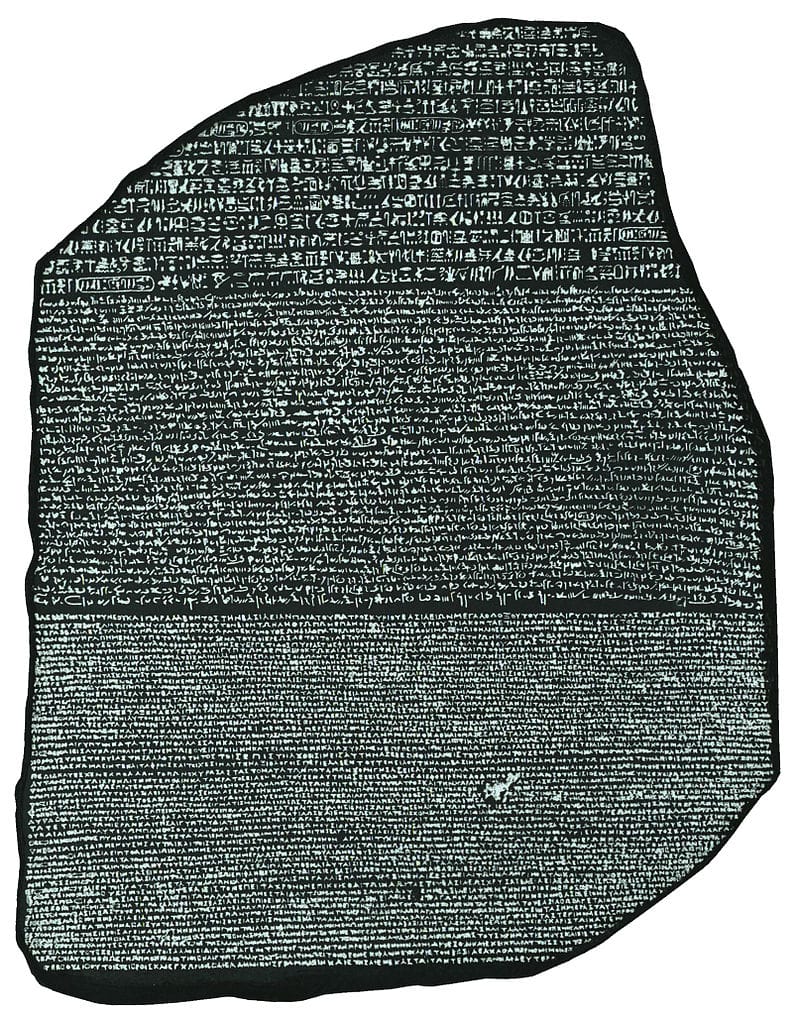
The Rosetta Stone is a piece of granite approximately 1.123 meters high, 0.757 meters wide, and 0.284 meters thick. The same text is inscribed on it in three different alphabets. These alphabets are, in order, Hieroglyphic, Demotic, and Ancient Greek. It began to be called by this name because the place where it was found was named Rosetta (Rashid).
Napoleon set out to conquer Egypt. Napoleon was a far-sighted statesman. He formed a scientific team to study Egyptian civilization.
One day, Napoleon's soldiers found a piece of granite in a town called Rosetta (Rashid) near Cairo. Realizing from the inscriptions that it was an ancient stone, they handed it over to the Egyptology team.
Examinations revealed that the inscriptions on the stone belonged to the period of Ptolemy V, who reigned between 205-180 BCE. Copies of the text on the stone were made and sent to scientists interested in archaeology and philology. One of these was a linguist named Champollion.
Who was Champollion?
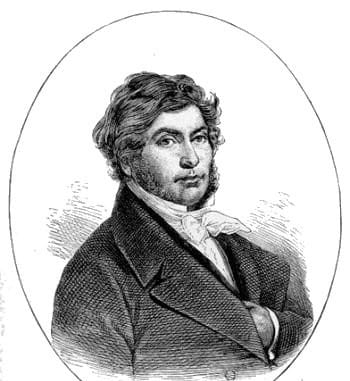
Jean-François Champollion was born on December 23, 1790, into a family with seven children. From a young age, he developed an extraordinary interest in languages. By the age of 16, he could read and understand more than twelve languages. By 20, in addition to his native French, he could fluently speak Latin, Greek, Hebrew, Ge'ez (Eritrean), Sanskrit, Avestan, Pahlavi, Arabic, Syriac, Chaldean, Persian, and Chinese.
Champollion worked day and night. He examined the trilingual text. Thanks to his extraordinary intuition and knowledge of languages, he deciphered the secret of hieroglyphic writing, thus bringing 3500 years of ancient Egyptian history to light.
Champollion died in 1832 at the age of 41. He is buried in Père Lachaise cemetery in Paris.
Dear readers!
As you can see, sometimes humankind can illuminate 3500 years of history based on a small piece of stone with a surface area of 0.85 square meters, just as it can very well obscure a clear reality, plunging hundreds of years of history into darkness. There are many examples of this:
Especially for my readers from Iğdır, there are the well-known: "Boraltan Bridge lie," "Martyr Mehmet Çavuş lie," "Independence Medal lies," "National Councils with tens of thousands of soldiers lies," "Fake heroes lies"… and now the "Corporal Hasan fairy tale"…
THE "CORPORAL HASAN OF IĞDIR" FAIRY TALE
I addressed the lies of the Boraltan Bridge; Martyr Mehmet Çavuş; Independence Medals; and National Councils with tens of thousands of soldiers in my works titled IĞDIR 1919 and WHITE, GRAY AND BLACK: HÜSNÜ BİNGÖL. I have no intention of revisiting them…
The Corporal Hasan Fairy Tale Comes to the Fore
These were the days when the USA recognized Jerusalem as the capital of Israel. President Recep Tayyip Erdoğan spoke at a mass opening ceremony in Sivas on December 10, 2017:
"Oh Trump, oh Netanyahu, even if you do these things, we will not fall into the same helplessness as you. If we are expected to remain spectators to this, no one should be offended. We cannot bear such a disgrace on our backs. We are right, and therefore we are strong. But America probably relies on its muscles. No, you are not. Because you are wrong. Do not forget this. Jerusalem is our first qibla. Because Jerusalem is the holy place where our Prophet ascended to Miraj.
Journalist and historian İlhan Bardakçı tells a story as follows:
'In the courtyard of Al-Aqsa Mosque, an Ottoman soldier stands like a monument. After exchanging greetings, this person introduces himself as; "20th Corps, 36th Battalion, 8th Company, 11th Heavy Machine Gun Battalion Commander Corporal Hasan."
He has been there since December 9, 1917. He is the corporal on guard left behind by the last departing unit. This hero from Iğdır did not abandon his post and waited there. While this brave man stood guard there for half a century on the word of his commander, how can we, as the great Turkish nation, turn our backs on God's command and the legacy of our ancestors and say, 'What does Jerusalem have to do with us?'"
As you know, our President had previously been made to believe the Boraltan Bridge lie, and he, too, had burst into tears while reciting the Boraltan Bridge poem. Of course, this was a grave situation. Undoubtedly, incorrect information had been conveyed to our President.
On the other hand, why did our President again favor the "Boraltan Bridge" lie, which Adnan Menderes used in the 1950s and Süleyman Demirel in the 1960s to send İsmet İnönü to the gallows or to humiliate him in the eyes of the public? After reciting the "Boraltan Bridge" poem, our President this time attacked Kemal Kılıçdaroğlu instead of İsmet İnönü; in a sense, history repeated itself.
The repetition of the lie was unacceptable, but it had happened once…
Journalist İlhan Bardakçı first brought Corporal Hasan to the agenda. He published his article in a newspaper column titled FROM HISTORY TO TODAY. The original article is as follows:
"FROM HISTORY TO TODAY
Written by: İlhan Murad (İlhan Bardakçı's pseudonym)
I met him in Al-Aqsa Mosque, allow me to introduce him
Location: Jerusalem
Place: Al-Aqsa Mosque
Date: Friday, May 21, 1972
My journalist friend, the late Said Terzioğlu, and I toured this blessed place with the help of Israeli Foreign Ministry guides.
If you walk a little in the Jerusalem Covered Bazaar, without bumping into the hangers of the robe-clad coffee sellers who dart around like the wind, the door that appears before you leads to the Al-Aqsa Mosque. To our first Qibla, where the miracle of Miraj took a breath… Right there, there is the first courtyard, which is still known by our nickname: they call it "the courtyard of 12,000 candelabras." When Yavuz Selim annexed Jerusalem to the state on Tuesday, December 30, 1517, darkness fell. He performed the night prayer in that courtyard. He and the entire army together. They lit the candelabras. Exactly 12,000 candelabras… That name comes from there. If you step up the wide staircase of eight or ten steps, you reach the second courtyard where that sacred Mosque sits cross-legged.
I saw him at the top of that staircase. Nearly two meters tall. A strange garment on his skeletal body. A coat?.. No.. A greatcoat, an overcoat, or a caftan? No. Something like that…
Was it a kalpak, a skullcap, a fez on his head? None of them. He stood there, ramrod straight. I looked at his face and was startled. Like barren soil from which the harvest had just been gathered.
Hundreds of lines, wrinkles, and the remnant of a parched skin.
Next to me is Yusuf, Head of Department at the Israeli Ministry of Foreign Affairs. Our former citizen. From Istanbul. "Who is this man?" I asked.
He shrugged indifferently. "I don't know," he replied. "Just a madman. As long as I've known, he's been standing here for years. Still standing there like he's stuck… No one asks him anything. He doesn't look at anyone, doesn't see anyone…"
Did my blood drain or what?
How, why, I still don't know. I went up to him. In Turkish, I said, "Peace be upon you, father."
Behind his bagged eyelids, his dull eyes, as if drawn with a razor, opened, as if shielded. His face tightened. He answered me in our beautiful Anatolian Turkish:
"And upon you be peace, son…"
I was stunned. I grabbed his hands, kissed them again and again.
"Who are you, Father? I asked."
He told me, and I will tell you.
But first, know this. As that beautiful State collapsed, we left Jerusalem after 401 years, 3 months, and 6 days of rule. The day was Sunday, December 9, 1917. It was impossible to hold it. The army was broken, retreating. The State was at the brink of ruin. We left a rearguard unit there so that it would not be plundered until the British entered. It is customary that the victorious army occupying the city does not treat the soldiers of the defeated army performing security duties as prisoners.
He told me, as I said. Let me complete the rest.
"I," he said, "am the rearguard unit left here on the day we lost Jerusalem…"
He paused. Then, as if firing the cartridges he loaded into the barrel of his weapon, he hammered out:
"I am Corporal Hasan, commander of the 11th Heavy Machine Gun Platoon, 8th Company, 36th Battalion, 20th Corps, left here that day…"
Oh God. I looked, and his head, tense like a minaret's balcony on his shoulders, was like a flag to be kissed…
I reached for his hands once more. He rumbled like thunder.
"I have a trust for you, son. I have kept it for many years. Will you deliver the trust?"
"Of course," I said, "tell me…"
He spoke:
"If your path takes you to the Sanjak of Tokat on your return to the homeland… Go, find my commander, Kolağası (Senior Captain) Musta Efendi, who entrusted this place to me. Kiss his hands for me. Tell him…."
Then, he thundered like the machine gun of the platoon he commanded:
"Tell him not to be disheartened. Tell him, 'Corporal Hasan of Iğdır, Commander of the 11th Machine Gun Platoon, has been at his post where you left him since that day. My report is complete, my commander,' you will say."
I almost died.
Then he stood up again. He turned to stone. I looked again. His closed eyes… then, he was like the border guard of our army, the Prophet's Hearth, for four thousand years. He was watching the horizons. He was at his post. For 57 years, despite our ignorance in forgetting him, he was not resentful of his state."
END of Journalist İlhan Bardakçı's article
Dear Readers!
Before writing my opinions on the above article, I must interject two points:
- Who is İlhan Bardakçı and when did he write this article?
Journalist and writer İlhan Bardakçı was born on February 22, 1926, in Burhaniye. He studied law at Istanbul University. He began his journalism career in 1948. He was accused of espionage for allegedly leaking documents related to Turkey to Iraq and Libya and was tried for treason by the Ankara Martial Law Command. As a result of this trial, he was sentenced to 17 years in prison. To avoid imprisonment, he fled to Germany. He spent the last 14 years of his life in Bonn.
While in Germany, he wrote a column titled Tarihten Bugüne (From History to Today) in the Zaman newspaper. In this newspaper, he used the pseudonym İlhan Murad. He wrote the article you read above during his years in Germany. İlhan Bardakçı, the father of journalist Murat Bardakçı, passed away on February 27, 2004, in Giessen, Germany.
- What is Emotional Exploitation?
Humankind is a creature that balances emotion and common sense, says a philosopher. However, my personal opinion is that humankind cannot always maintain this balance. Sometimes emotion, sometimes common sense, weighs more heavily.
What happens when the "emotional pan" weighs heavily on the scales of the mind?
Human history is full of examples of this. To give an example from our own history, Enver Pasha prioritized "emotion," while Atatürk prioritized "common sense."
Likewise, Adnan Menderes adopted "emotion" as his principle, while İsmet İnönü adopted "common sense." Hundreds of such examples can be given.
What we know is this: Administrations that based their policies on emotion, that is, engaged in "emotional exploitation," existed magnificently on the political stage but also left the political stage with the same "magnificence."
The Corporal Hasan Article
There was only one reason why an article written in 1972 suddenly entered the political agenda in 2017: the USA's recognition of Jerusalem as the official capital of Israel….
Was it right to bring Corporal Hasan to the agenda? This is a choice, but I would like to remind you that politics is too sensitive an area to be governed by "emotional exploitation."
AND DISTORTION…
Before logically analyzing the article, let's take a look at how the article was distorted over time…
In his original article, İlhan Bardakçı wrote "Kolağası Musta Efendi." Supposedly, the journalists who published the original article, for some reason, were not comfortable with the word "Musta" and preferred to write either "Mustafa" or "Musa" instead. After all, distortion is free, and the tongue has no bones… I ask, in this situation, which name will a researcher take as primary?
In the second stage, a new fairy tale is invented. A picture of Corporal Hasan is published.
The newspaper headline reads:
"Photo of the last Ottoman soldier in Jerusalem found in a museum in Palestine" Tuesday, November 19, 2019, 14:49
The photo of the last Ottoman soldier who did not leave his post in Jerusalem after the collapse of the Ottoman Empire was found in a museum in Palestine. Efforts are underway to find the lost grave of Corporal Hasan, who continued his duty until his death in 1982.

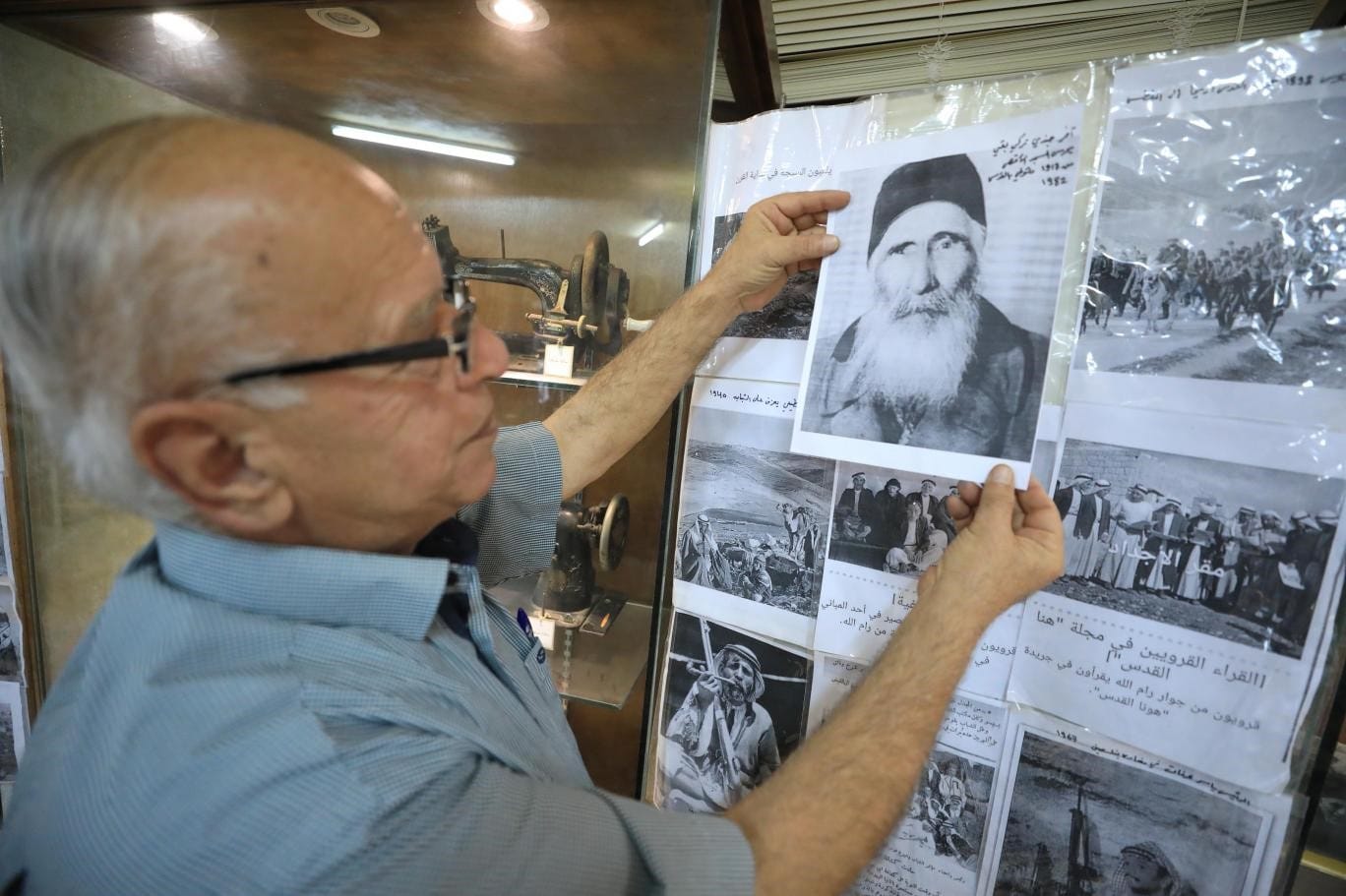
A photograph of Corporal Hasan of Iğdır, an Ottoman soldier who, despite the collapse of the Ottoman Empire, did not leave Jerusalem and continued his guard duty at Al-Aqsa Mosque until his death in 1982, was discovered in a private museum in Palestine.
Reha Ermumcu, Director of the Yunus Emre Institute Jerusalem Turkish Cultural Center, who found the photograph, explained that they met Palestinian businessman Bessam Bedran, the owner of the museum where Corporal Hasan's photograph was located, through a painting exhibition jointly organized by Tulkerm Municipality in the West Bank and the Yunus Emre Institute, and thus the photograph came to light.
Dear readers:
I would like to draw your attention to the seriousness (!) of the news above. The person claiming to have found the photograph is not an ordinary individual. As you can read in the news, he is the head of a prestigious institution. Furthermore, there is the inscription of Anadolu Agency, an important institution of our state, under the photographs.
Whose photograph was the one circulated and claimed to belong to Corporal Hasan of Iğdır?
ANSWER: Seyid Hasan Efendi, an Alevi Dede from Başköy, Erzincan.
Moreover, books have been published about Alevi Dede Hasan Efendi. I present the cover image of one of these books below for your attention.
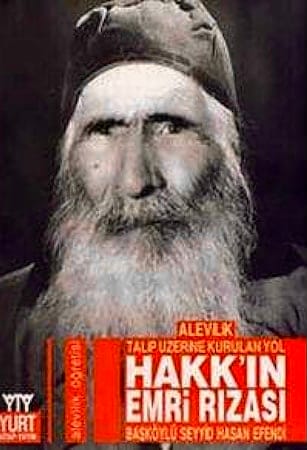
The fraudsters release the picture as if they just found it, and shamelessly, they even add a note supposedly written in Ottoman (the script is Arabic) in the upper right corner of the picture. The date they claim to have found the picture is 2019; however, the Alevi Dede's book was published in 2008…
A NOVEL
One of those who fell victim to the "Corporal Hasan of Iğdır" tale is a writer. He released a book titled "The Last Ottoman in Jerusalem" in June 2020. It's a novel, after all! Invent as much as you can… Supposedly, Corporal Hasan's family is from Iğdır, but they left Iğdır during the 93 War (1877-78 Ottoman-Russian War) and settled in Erzurum. So, Corporal Hasan never saw Iğdır, but for some reason, in the novel, he constantly remembers Iğdır, as if he had lived there… The author skillfully blends the fairy tale with reality. In the novel, Sheikh Sabri, a real-life character, hands Corporal Hasan's notebook to his nephew (the protagonist of the novel) (In reality, no such notebook exists!). In short, the author tries to make us swallow a fairy tale through a novel, that is, through emotional exploitation. Clever calculations…
LOGIC
The issue is not whether a person named "Corporal Hasan" lived or not; the issue is whether he was from Iğdır. Our Iğdır has been drowned in lies and fairy tales for years. It cannot tolerate another one. I condemn everyone who is instrumental in this.
I learned from the press that the foundations of a mosque named "Iğdırlı Hasan Onbaşı Mosque" were laid in Iğdır. Building a mosque is a sacred duty. The religious beliefs of our people are one thing; using religious beliefs to impose a lie on Iğdır or to make our Iğdır instrumental to a lie is another.
If Iğdır values the lies attributed to it, then a Boraltan Bridge should be built without delay; a mint should be established, and the alleged dozens of Independence Medals should be minted and distributed to the public… Although Azerbaijani President Ilham Aliyev and the senior executives of our state are more than filling the necessary void in medal distribution, I still think our Iğdır urgently needs a mint that produces medals, because every year at the "Liberation of Iğdır" ceremonies, someone's father or grandfather is declared a hero, and the need to award medals arises…
Before and after the 1877-78 Ottoman-Russian War, the Sürmeli Region (Kulp, i.e., Tuzluca; Başkent, i.e., Aralık; and Iğdır) was under Russian administration. The Muslim (Azeri and Kurdish) population was not conscripted into the army. It is not possible for someone born in the Sürmeli district to have served in the Ottoman State army. The Sürmeli district was part of the Erivan Governorate (province).
Let's assume the invented tales are true: Corporal Hasan's family migrated to Erzurum. When the locals of Erzurum asked such a family, "Where are you from?", the first possibility would be, "We are from Revan"; the second possibility would be, "We are from Sürmeli." In those years, there were very few Muslim inhabitants in central Iğdır; no one would introduce themselves as, "I am from Iğdır."
As you know, there is a village named "İğdir" in the Zile district of Tokat. In his narrative, Corporal Hasan uses the phrase, "in the Sanjak of Tokat…" If a person named Corporal Hasan lived, he was most likely from Tokat.
I spoke with Murat Kara, the headman of the village of İğdir. He said that no one in their village knew this name.
Only one possibility remains: Either İlhan Bardakçı told us a fairy tale, or we are forcing ourselves to believe a fairy tale; look, one writer has already written a book that turns emotional exploitation into money without wasting any time… Well done! That's talent!
CONCLUSION
My suggestion would be this: If the mosque under construction in Iğdır is a Sunni Mosque, let's name it "Caliph İbrahim Güneş"; if it is a Shiite Mosque, let's name it "Sheikh Hamza Göleli." Both personalities hold a much more important place in the spirituality of Iğdır.
As you know, IHH (Humanitarian Relief Foundation) built a mosque in Jerusalem and named it "IĞDIRLI HASAN ONBAŞI." I think it was three years ago… I warned them; the mosque was named "HASAN ONBAŞI."
Iğdır must also fulfill its duty. Otherwise, our beautiful city will turn into a "graveyard of fairy tales." Furthermore, I would like to remind you that we should stay away from this name and picture polemic out of respect for our Alevi citizens.