Ramadan Anecdotes
This article shares several anecdotes about Hamit Hun, a respected figure from Iğdır, offering a glimpse into his wisdom, humor, and the cultural nuances of his time.
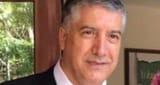
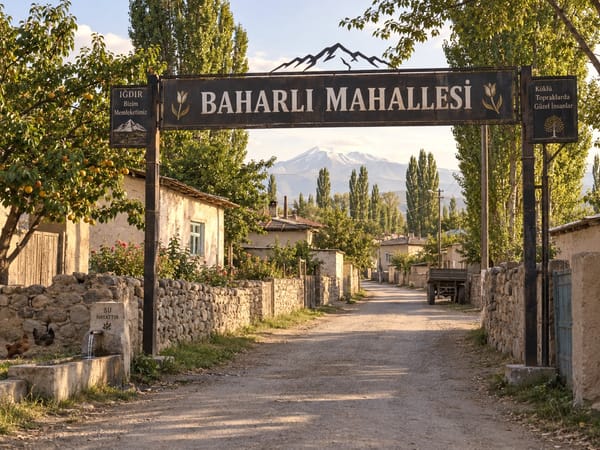
In my childhood, newspapers and magazines always featured Ramadan Anecdotes. I used to read them with pleasure. I didn't fast, but like a fasting person, I eagerly awaited Iftar time, fixing my gaze on the minaret of the Iğdır Central Mosque from our front balcony. When I saw the lights come on, I would shout, "Iftar! Iftar!" announcing the good news to everyone at home.
Alas, neither the old Ramadans nor that excitement remain! I dedicate today's article to the beautiful Ramadan days of my childhood.
WHO IS HAMİT HUN?
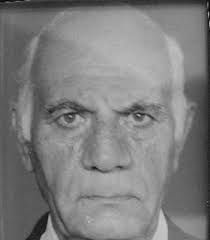
Hamit Hun, born in Iğdır in 1921, was the son of Ahmed Şemo, leader of the Geloî Tribe, and the elder brother of Mecit Hun. He left his high school education in Istanbul unfinished and returned to Iğdır, earning a living through trade. He passed away in Iğdır in 1997 and was buried in the Karakuyu Village cemetery. May God have mercy on him!
(NOTE: The following anecdotes are published for the first time.)
I WILL KILL SOMEONE
Once upon a time, in a mountain village connected to Iğdır center, a fight broke out over land and pasture sharing, and one person died. Fearing that the events would escalate further, one of the village elders mounted his horse, took a spare horse with him, and went to Hamit Hun, a respected member of the same tribe:
"Hamit Bey, there is a very dangerous situation in our village. There was an armed conflict. One person died. The relatives of the deceased have dug an empty grave and sworn, 'We will not rest until we kill one of you and put him in this grave.'"
Hamit Hun was certainly not pleased to travel such a long distance by horse, but he considered it his duty to help his relatives. He mounted his horse, and they arrived at the village together. Hamit Hun went to the house of the deceased's family, offered his condolences, sat on a cushion in a corner, sipped his tea, and tried to shake off the fatigue of the journey.
A brother of the deceased was walking in the courtyard with a weapon in his hand, shouting like crazy:
"Ez ê yekî bikujim! Ez ê yekî bikujim!" (I will kill someone! I will kill someone!).
His voice echoed through the heavens and earth. Those who had come to offer condolences quietly left the room, fearing what might happen. Hamit Hun remained alone in the room with the father of the deceased, but the deceased's brother kept shouting in the courtyard.
Hamit Hun made a request to the father:
"Please, bring a shroud for one person from the Mosque Imam!"
The man couldn't understand but couldn't refuse Hamit Hun's request either. Soon, he returned with a roll of shroud cloth and handed it to Hamit Hun. Hamit Hun stood up, undressed, leaving only his underwear. He covered himself with the shroud cloth and made another request:
"Your son in the courtyard has been shouting 'I will kill someone' since morning. There's already a grave dug. I washed myself this morning. I've put on my shroud. Your job is easy! Let him come and kill me, at least he'll feel a little relieved. The poor fellow is very tired!"
ADANA WATERMELON
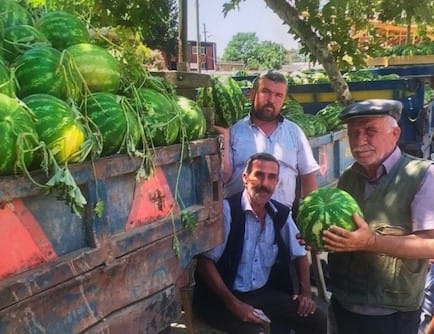
It was almost evening in Iğdır. In those years, newspapers would arrive in Iğdır by evening bus. Hamit Hun, with a bundle of newspapers under his arm, was walking home when he saw a truckload of watermelons brought from Adana being sold by the roadside. It was the first watermelon of the season. He hesitated whether to buy it or not. He sighed, "It won't be easy to carry it home," but his desire prevailed, and he bought a medium-sized watermelon offered by the seller without needing to check it.
Struggling with a bundle of newspapers under one arm and a watermelon under the other, a young relative fortunately rushed to his aid, asking permission to carry the watermelon. Hamit Hun was pleased to be rid of the watermelon. He chatted with the young man. He asked about his family's situation. He inquired about the health of his father, who had broken his back falling from a horse last year.
They walked for a while. Hamit Hun broke the silence again:
"What do you do?"
"Uncle, I don't have a job! I spend my days at the association."
"What association?"
"Iğdır People's Association."
"What do you do at the association?"
"We are preparing to make a revolution in Turkey."
"If God wills, when will the revolution happen?"
"Uncle, we'll have to wait a little longer. Lenin says that a revolution is like a watermelon. If you eat it before it's ripe, it won't taste good; moreover, your money, that is, your labor, will be wasted. Everything has its time. Just as we tap a watermelon with our finger to decide if it's ripe, we will tap the working class with our revolutionary fingers to decide if it's ready."
As the conversation continued in this vein, they arrived at Hamit Hun's house. As the young man handed the watermelon to Hamit Hun, he fumbled, and the watermelon fell to the ground, splitting in two. Its color was pure white. Clearly, it was not yet ripe.
Hamit Hun muttered to himself:
"From now on, it's worth reading Lenin before going shopping!"
BYZANTINE GOLD
Hamit Hun started high school in Kars. One day, an unpleasant incident occurred between him and the school principal. His certificate was given on the condition that he would not attend any state school. His father, Ahmed Şemo, was saddened by the incident but, wanting his son to continue his education, enrolled him in a private high school in Istanbul.
Korhan Village, at the foot of Mount Ağrı, is in a sense the eagle's nest of Mihê Kazak, one of the legendary leaders of the Geloylu Tribe.
One day, a relative from Korhan village came to Hamit Hun. He said he wanted to discuss an important matter. They sat alone at a distant table and talked. The villager secretly slipped a gold coin into Hamit Hun's palm:
"Our shepherd found this in the snowmelt. What is this?"
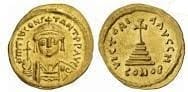
Hamit Hun took off his glasses, turned the coin over and over, examined the markings on it, and then sadly shook his head from side to side:
"He wronged me! Now you will take this coin and shove it in his eye!"
The villager couldn't understand the conversation and asked:
"Whose eye?"
"My History Teacher's eye in Istanbul!"
"What happened?"
"One day he called me for an oral exam. He asked about the borders of the Byzantine Empire. I said, 'It extends all the way to Mount Ağrı.' My teacher got angry and said, 'The Byzantine Empire never existed on Mount Ağrı, sit down, ZERO,'. My morale was broken because of this injustice from the teacher, I neglected my studies, left high school halfway, and returned to Iğdır."
The villager fell silent but couldn't help but ask:
"What should I do with this coin now?"
"Please, take a bus and go to Istanbul. I'll give you the teacher's name. If you find him, shove the coin in his eye. If you can't find him, go to the Grand Bazaar and sell the coin. It's worth a lot of money. Buy me a shirt, a pair of shoes, and a scarf for my wife Fatma, and bring them back."
HAFIZ-I SHIRAZI (HAFIZ OF SHIRAZ)
Hafiz of Shiraz, who lived in the 14th century, is one of the greatest poets and writers of the Islamic world. He is considered one of the greatest philosopher-poets of the entire Eastern world, as well as Iran. For Iranians, Hafiz is an important and respected name. During the Nowruz holiday, the HEFT SİN ceremony is performed as a symbol of abundance. That is, seven items starting with the Arabic letter SİN (i.e., the letter S) are placed on a tray:
- Sib Apple
- Sir Garlic
- Senced Oleaster
- Sabze Green wheat sprouts
- Samenu Wheat pudding
- Sikke Coin
- Somak Sumac
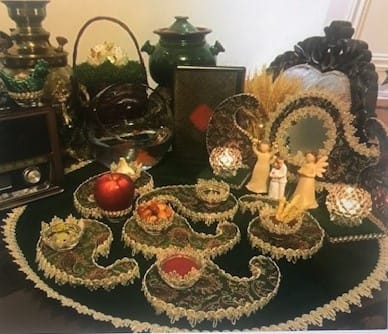
Next to the tray, Hafiz's Divan is also carefully placed. Sometimes, a page with a beloved poem is left open.
Hamit Hun also possessed the soul of a philosopher-poet. He was an admirer of Hafiz. He already had hundreds of poems from Iranian and Ottoman literature memorized. In difficult moments, he enjoyed explaining his point with poetry and capturing the attention of the audience.
One day, Hamit Hun was invited to a meeting held for one of the notorious blood feuds to make peace. The leading figures of both sides sat on floor cushions in a large hall. Both sides were sharpened against each other, ready to reject any proposal to thwart peace, waiting for the conversation to begin with serious expressions on their faces.
Hamit Hun gave an introductory speech. He spoke of goodness, beauty, peace, and tranquility, but both sides were so consumed by their hatred that they couldn't hear what was being said.
Hamit Hun found an opportunity and recited a couplet from Hafiz in Persian:
Âsâyiş-i do gîtî tefsîr-i in do harf est
Bâ dûstân mürüvvet, bâ doşmenân mudârâ.
Hamit Hun's deep and melodious voice echoed in the room. The parties composed themselves a little. Someone stepped forward and asked for the meaning of the poem. Hamit Hun then translated the poem into Kurdish. The Turkish translation of the poem is as follows:
The peace of two worlds is hidden in these two words:
Kindness to friends, forbearance to enemies
Both sides seemed affected by the philosophical meaning of the poem. Some even bowed their heads, lost in deep thought. Hamit Hun believed he had won, that he would now convince the parties to make peace. He returned to the subject. However, as ill luck would have it, the atmosphere heated up again, and the parties loudly accused each other. Hamit Hun asked to speak again and recited a second couplet from Hafiz.
Der kûy-i nîknâmî mâ râ gözer nedâdend
Ger tu nemîpesendî, tağyir kun kazâ râ.
Hamit Hun's deep and melodious voice echoed in the room again. Silence fell once more. Again, someone stepped forward and asked for the meaning of the poem. Hamit Hun then translated the poem into Kurdish. The Turkish translation of the poem is as follows:
They did not give us passage in the neighborhood of good name
If you do not like it, then change fate
Then he stood up, put on his shoes, got into the taxi that brought him, and quietly drove away.
According to legend, the parties were so impressed by Hamit Hun's poem that they made peace in his absence and sent two rams as a gift to Hamit Hun's house.
HEAVEN OR HELL?
Hamit Hun's wife, Fatma Hanım, would adopt a stern and harsh demeanor on days when she was busy. It was one such day.
Hamit Hun walked towards his private plane, climbed the stairs. He took off his fedora, greeted the journalists and enthusiastic crowd who had come to see him off, and bid farewell. The plane took off, and after a long journey, landed in the capital of the USA. President Kennedy and his staff enthusiastically welcomed Hamit Hun. Hamit Hun spent several unforgettable days in the capital.
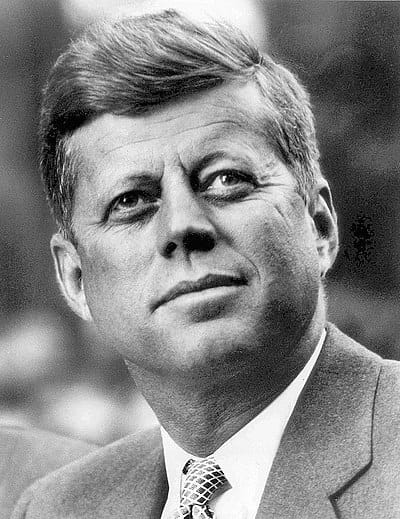
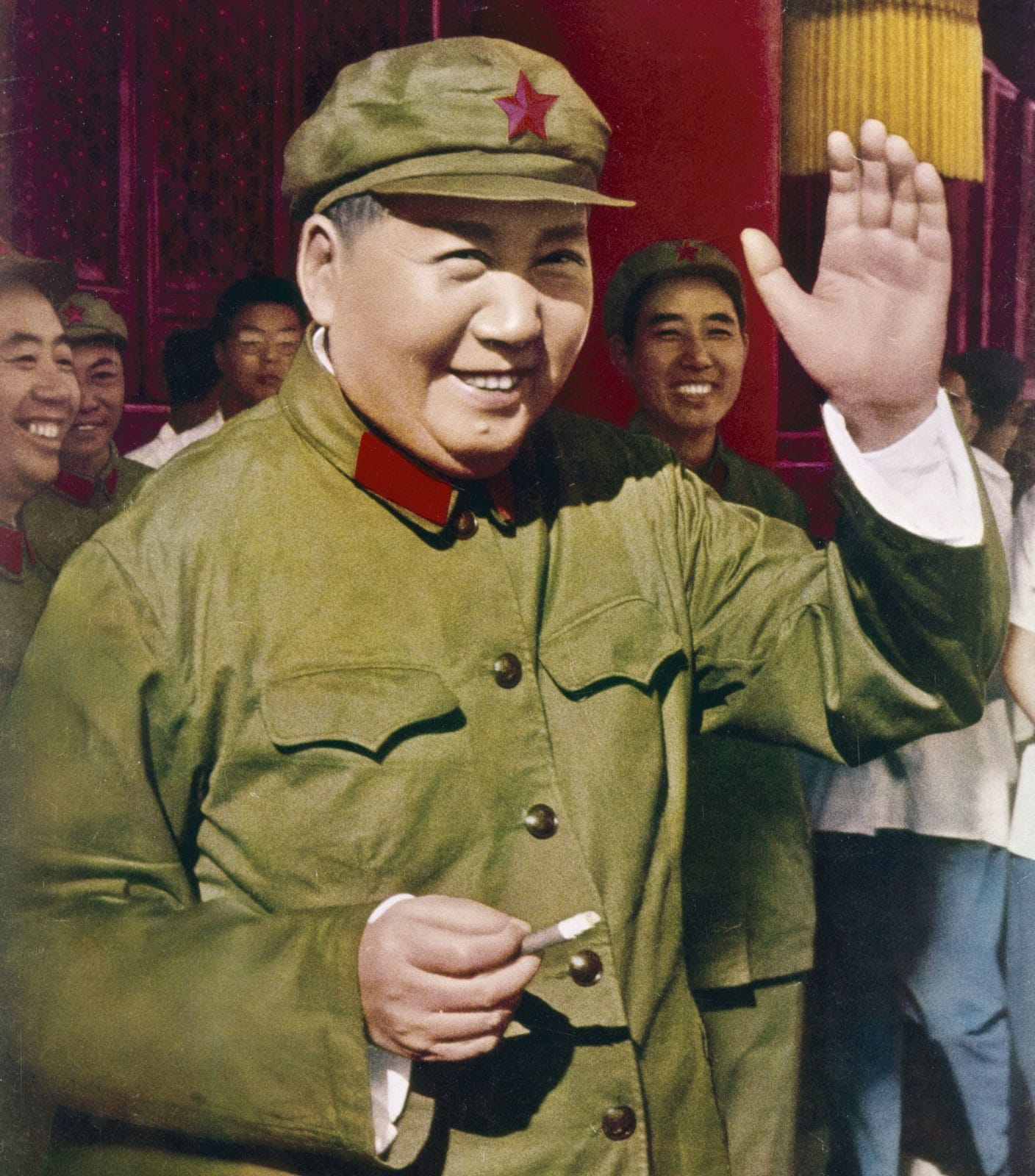
He boarded his private plane again, took off his fedora, greeted President Kennedy and the crowd who had come to see him off, and bid farewell. After another long journey, the plane this time landed at Beijing airport. Mao Zedong, with his broad forehead, red star on his cap, and cigar in hand, and his staff enthusiastically welcomed Hamit Hun. Hamit Hun was having magnificent days in Beijing.
At that moment, Hamit Hun received an elbow to his side, woke up from his dream, and Fatma Hanım warned him sharply: "Move over a bit! There's no room to sleep in the bed!" Hamit Hun moved a little to the right. Soon, he found himself back in the realm of dreams, but the quality of the dream had somewhat declined.
This time, he was a horseman in the Mongol Army, heading from Central Asia to Baghdad. Amidst wars and deaths, they finally reached Baghdad, the pearl of the world. Hamit Hun was overjoyed. Unseen palaces, vineyards, gardens, food...
Then he received another elbow to his side. He woke up from his dream. His wife again warned him sharply: "Move a little further to the right!"
Hamit Hun moved to the right, and soon returned to the realm of dreams, but the quality of the dream had declined even further.
This time, he was walking on the Sirat Bridge, thinner than a hair, sharper than a sword. At a crossroads, a demon appeared before him. He was rolling tobacco, looking at Hamit Hun with a nasty grin:
"Ooh! Welcome, Hamit Bey! Would you like to go right or left?"
"What's on the right and what's on the left?"
"Heaven is on the right, Hell is on the left."
As Hamit Hun continued to dream, he involuntarily stepped to the right, fell out of bed, and found himself on the floor. He woke up from his dream. He looked around. His wife was sleeping soundly. He muttered to himself:
"It's a good thing I stepped to the right; if I had stepped to the left, my situation would have been worse than Hell."
AZERI AND KURDISH MATHEMATICS
Memo, a Kurd, was going to the high pastures in April. He made a suggestion to his Azeri neighbor, Yunus:
"Yunus, my friend! I'm going to the high pastures, and depending on the weather, I'll stay there for 5-6 months. If you buy ten sheep, I'll look after them. They'll have lambs and so on. You'll profit from this in the autumn."
Yunus bought ten sheep and handed them over to Memo.
Autumn arrived. Memo and Yunus were sitting at a table in a teahouse, arguing heatedly. Yunus kept repeating, "What profit did I get from this deal?" Unable to resolve the issue, they decided to seek help from Hamit Hun, who was sitting a little further away.
Hamit Hun made his guests comfortable and listened to their problems. Yunus explained what had happened, adding: "I believed Memo, my friend, and bought and gave him 10 sheep. The 10 sheep lambed, and there were 10 female lambs. Instead of giving me 20 sheep, he's giving me 10. What's my profit from this deal?"
Hamit Hun smiled:
"Yunus, my friend, you have a profit of 10 sheep from this deal, but you're not aware of it!"
"How?"
"Azeri mathematics and Kurdish mathematics are not the same. You calculate by adding, Kurds calculate by subtracting."
"I don't understand!"
"Memo stayed in the high pastures for six months. He saw that you would have 20 sheep in the autumn, so to make the math work out perfectly, he slaughtered and ate one of your lambs every month. He also kept four lambs as 'shepherd's due.' The remaining 10 sheep you gave him, he brought them back and delivered them to you safe and sound. Be thankful that Memo didn't perform the final subtraction. What if he had said the sheep jumped off a cliff and died! Then you would have been empty-handed."
AŞAĞI ÇAMURLU VILLAGE
In our Iğdır, there are two villages known as Aşağı (Lower) and Yukarı (Upper) Çamurlu, located in the Aralık district. The late Hacı Ömer Şark owned large lands in Aşağı Çamurlu village. In those years, they were not used as fields; naturally growing pastures were cut, baled, and sent by trucks, mostly to the Black Sea region. Since a part of the region was marshy, due to both the pasture and the swamp, huge mosquitoes would fill the air towards evening, buzzing around one's ears, biting as if tearing flesh from a person.
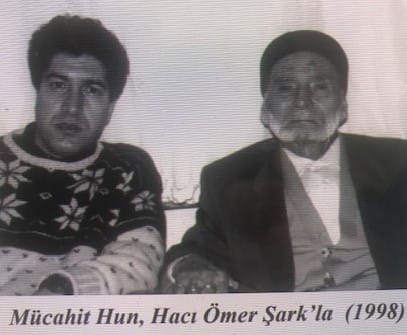
One day, Hacı Ömer Şark (whose son, brothers, and grandchildren adopted the surname Alagöz) invited his beloved Hamit Hun to spend a night in Aşağı Çamurlu village. Hamit Hun, smelling the aroma of kebab, gladly accepted the offer.
After noon, they walked in the mown pasture. However, Hamit Hun couldn't stand the heat, so they retreated to the shade. They drank ayran and chatted. The sun was slowly setting.
When Hacı Ömer Şark ordered a lamb to be slaughtered and kebabs to be served, Hamit Hun was filled with happiness. By the time the kebabs were ready, the sun had slowly set with its faint light. The mosquitoes, which had been sleeping all day, slowly woke up and began to fly around in search of victims.
Just as the kebabs were about to be served, mosquitoes descended on Hamit Hun in a colony, like a downpour. Hamit Hun tried to ward off the mosquitoes tearing flesh from him with one hand, while trying to snack on his beloved kebab with the other.
However, as time passed, the mosquitoes multiplied so much and attacked so brazenly that Hamit Hun forgot the kebab and began to wrestle with the mosquitoes with both hands. While all this was happening, Hacı Ömer Şark, accustomed to mosquitoes, ate his kebab with appetite, unconcerned.
The next day, they returned to Iğdır. A few days passed. As Hamit Hun was walking home, Hacı Ömer Şark, who was sitting on a stool in front of his factory, invited Hamit Hun for tea. A stool was also brought for Hamit Hun. Hacı Ömer Şark proudly asked:
"Was the meat of our lambs delicious? Were you satisfied?"
"Hacı, your mosquitoes tore and ate more meat from me than I ate. You should ask the mosquitoes themselves. Were they satisfied with Hamit Hun's meat?"
I wish you all blessed and happy Ramadan days. Sincerely,