The Ararat Rebellion in 20 Questions with Mücahit Özden Hun
This interview with researcher, writer, and academic Mücahit Özden Hun explores the background and complexities of the Ararat Rebellion, a significant event in Kurdish history.
Special interview: Serpil Güneş
BasNews – Following the declaration of the Republic of Turkey, Kurds in the geography of Northern Kurdistan rebelled in various regions at different times. One of these uprisings, all of which ended in defeat and massacre, was the Ararat Rebellion.
We spoke with researcher, writer, and academic Mücahit Özden Hun about the background of the Ararat Rebellion, which erupted after the defeat of the Sheikh Said Rebellion and the subsequent Exile Law initiated by the young Republic of Turkey to prevent other potential Kurdish uprisings by exiling Kurdish Aghas and Beys.
Many historians and researchers have written books about the Ararat Rebellion, a significant period in Kurdish history. However, Mücahit Özden Hun's book distinguishes itself from other researchers and historians by highlighting different topics and bravely evaluating historical events.
In his book "Iğdır Sevdası ve Ağrı Dağı İsyanı" (The Love of Iğdır and the Ararat Rebellion), which he penned after extensive research and direct interviews with witnesses of the Ararat Rebellion in the region, Mücahit Özden Hun meticulously examines the rebellion's background. His comprehensive assessment of the region's geopolitical position before the rebellion, the attitudes of Russia, Iran, and Turkey towards the rebellion, the role of the British in the rebellion, and the positions of the Kurdish leaders and tribes involved in the rebellion, serves as an important source for Kurdish history.
We aimed to explore the Ararat Rebellion in 20 questions with Mücahit Özden Hun. I hope this interview, which will undoubtedly spark many discussions on the Ararat Rebellion, will shed some light on Kurdish history.
1- What was the geopolitical position of the Ararat region before the rebellion?
It is useful to look at the geopolitical position of Mount Ararat in 1926, when the spark of the rebellion first ignited. Greater Mount Ararat was within the borders of the newly established Republic of Turkey, while Little Mount Ararat was within Iranian borders. One side of Greater Mount Ararat bordered the Soviet Union (Armenia), and the other side bordered Iran. On the Iranian border, that is, in Iranian territory, there were the Helikan Tribe and the Mala Bozo Tribe (affiliated with the Sakan Group). They had been in armed conflict with the Iranian government for years.
2- Which tribes were settled on Mount Ararat and its immediate vicinity before the rebellion?
Before the rebellion, all tribes in the Korhan settlement of Mount Ararat, as well as those in Iğdır, Doğubayazıt, and on the Iranian side, belonged to the Celali Confederation. This is the first circle. In this sense, I need to provide some information about the Celali Tribal Confederation. The Celali Confederation consists of three main branches:
1- Helikan Group (Xelkî)
2- Sakan Group (Sakî)
3- Hesesori Group / Birxkî Group
Within these three groups, there are dozens of different tribes. I do not deem it necessary to mention all these names here now. There is no single leader or leadership governing these three groups of the Celali Tribe. The unity of the Celali Tribe is a "voluntary" unity. Any tribe can join or leave. Each of these three groups has its own understanding of leadership. For example, since Sheikh Abdülkadir is the leader of the Sakan Group, religious elements come to the forefront in this group. The Hesesori Group does not have a Sheikhdom institution within itself, but there are religious institutions like Sheikh Ibrahim whose authority they respect. The Helikan Tribe does not have a Sheikhdom institution. Small families, who were given the title "Sheikh," came from distant places like Hakkari and lived in the same village with the tribes within the Helikan Group, but they never assumed leadership. They offered help in situations such as Quranic teaching or death.
In the second tribal circle on Mount Ararat were the Zilan Tribe, Haydaran Tribe, and other tribes. In short, the Celali Tribe formed the nucleus, or the first circle, of the Ararat Rebellion.

3- How did the Ararat Rebellion begin?
How the first seed of the Ararat Rebellion was sown is quite interesting. Everything is linked to the Sheikh Said Rebellion, which began in 1925 and was suppressed. After the Sheikh Said Rebellion was put down, Mustafa Kemal and his comrades, who were striving to establish a nation-state, knew that it would be impossible to establish a nation-state without dismantling the tribal system in Eastern and Southeastern Anatolia (Northern Kurdistan). The ideal of a nation-state is based on the principle of "one language, one homeland." The conclusion reached by Mustafa Kemal and his comrades was this: Kurds are very loyal to their leaders. If we exile the aghas and beys to Western Anatolia, the leaderless tribes will disintegrate, and their assimilation will be easier. With this in mind, they enacted the Exile Law in 1926 to forcibly send the tribal beys and aghas they deemed important to the West. The gendarmerie, governorship, and district governorship began to gather the names on the lists they were given.
On such a day, Biro Heskî Tellî, a draper in the then-named Beyazıt Province, closed his shop and was heading home. Beyazıt Deputy Şevket Bey met his beloved Biro Heskî Tellî on the road. He warned him: "Biro, your name is on the list too. Flee and hide in your village!" I say this without exaggeration: if Şevket Bey had not met Biro Heskî Tellî in the market that day, the Ararat Rebellion would not have happened.
Biro Heskî Tellî went to Örtülü village and asked his men to keep watch on the bridge leading to the village. A group of gendarmerie had set out for Örtülü to capture Biro Heskî Tellî. A clash ensued. A gendarme was wounded. Especially after the Sheikh Said Rebellion, defying the gendarmerie was something the state could not tolerate. Biro Heskî Tellî realized that his ties with the state were now severed. He took 40-50 fighters with him and hid on Mount Ararat.
Meanwhile, I want to make a note: the aghas and beys whose names were on the Exile Law list were either captured or fled abroad. The only name who did not flee and resisted was Biro Heskî Tellî.
Soon, army deserters, bandits, and those fleeing common crimes gathered around Biro Heskî Tellî, forming a serious armed force of 200-300 people. The gendarmerie underestimated Biro Heskî Tellî's strength. A gendarmerie team of 50 went to Mount Ararat to capture Biro Heskî Tellî, but most of them died in the clash. This increased Biro Heskî Tellî's fame.
4- Did Biro Heskî Tellî have a political consciousness regarding the Kurdish Cause or the establishment of Kurdistan?
Before answering this question, I would like to briefly mention Biro Heskî Tellî's past. The present-day provinces of Kars, Ardahan, and Iğdır were under Tsarist Russian rule until 1917. Kars and Ardahan had been under Russian rule since 1877, and Iğdır since 1829. After the 1917 Russian Revolution, Lenin demanded that Russian soldiers, who had advanced as far as Sivas, evacuate both Anatolia and the South Caucasus. Russian soldiers gave their weapons to Armenian Dashnak soldiers who had helped them in the war. A power vacuum emerged in Iğdır. In 1918, the Republic of Armenia was declared in the region, including Iğdır. The new Republic forced the Kurdish and Azerbaijani Muslim population living in its territories to recognize the Republic. When the Muslim population resisted, a civil war broke out in the Iğdır region between Armenians and Yazidis on one side, and Azerbaijanis and Kurds on the other. The Armenians were more organized and powerful. They massacred Azerbaijani and Kurdish civilians in the plain who resisted them. The Brukan tribe, whose villages were located in the plain, migrated to Van, and the Redkan Tribe to Muş. Only the Azerbaijanis and Kurds living in the mountainous region resisted. On such a day, Armenian committees prepared to raid and massacre the village of Melekli, where 3000 Azerbaijani civilians had gathered. The leader of Melekli village, Hacı Ali Ekber Tufan, went to Ağrı and asked for help from Kazım Karabekir Pasha's army, but there were not enough soldiers. He asked for help from Ibrahim Bey, the Hamidiye Regiment Commander in Beyazıt province. Ibrahim Bey sent a cavalry unit of 1000 men under the command of Biro Heskî Tellî to Melekli village in the Iğdır plain, rescued the civilians from the siege, and enabled them to cross into Iranian Azerbaijan. This was Biro Heskî Tellî's first service to the Grand National Assembly. When the Sheikh Said Rebellion ended in 1925, some of the rebels tried to take refuge in Iran from the eastern border. The state asked Biro Heskî Tellî for help. Biro Heskî Tellî, who was a Kurmanji Sunni, captured many of the fleeing Zaza Sunni rebels and handed them over to the state. When Biro Heskî Tellî learned that his name was on the exile list, he became very angry and swore, "I served this state with all my heart. And I swear that I will hold this state accountable for the betrayal they committed against me until my last drop of blood." In short; Biro Heskî Tellî did not go to the mountains as a conscious Kurdish nationalist or with the aim of establishing a Kurdistan State.
5- How did the lack of a homogeneous religious and linguistic structure among Kurds within the borders of the Republic of Turkey affect such uprisings?
I would like to bring to your attention a reality that Kurdish nationalists and intellectuals have always tried to overlook: When Mustafa Kemal arrived in Anatolia on May 19, 1919, the Kurds in Turkey belonged to four different sociological categories in terms of language and religion:
1. Kurmanji-Alevi: Koçgiri Rebellion 1918-1921
2. Kurmanji-Sunni: Ararat Rebellion 1926-1932
3. Kirmanj (Zaza)-Alevi: Dersim Rebellion 1937-38
4. Zaza-Sunni: Sheikh Said Rebellion 1925
The Kurds were divided into four main parts among themselves in terms of religion and language. When one rebelled, the others remained silent and even helped the state. In short, it is possible to say this: For example, if all Kurds were Zaza-Sunni or Kurmanji-Alevi, etc., then a Kurdistan would definitely have been established. Since our topic is the Ararat Rebellion, I can definitely say that not a single person from the Kurmanji-Alevi, Zaza-Sunni, or Zaza-Alevi segments came to help the Ararat Rebellion, which was a Kurmanji-Sunni uprising.
6 – When did the rebellion started by Biro Heskî Tellî turn into a Kurdish Independence Rebellion?
Biro Heskî Tellî's resistance and determination created excitement among Kurdish intellectuals. On October 5, 1927, at the request of the British, Dashnak Armenians and Kurdish intellectuals united to form the Xoybûn (Independence) organization. The British aim was to create an independent Kurdish State in Ağrı and its surrounding provinces, to make this state, which they hoped would be under their control, a strategic base, and to reach the Baku oil fields. Not long ago, in the White-Red civil war in Russia, Britain, which supported the Whites and lost, had not given up on Baku, the only place where oil was produced at that time. If Britain had viewed the establishment of a Kurdish state within the framework of the "right of nations to self-determination," why was it destroying the Kurdish state established by Sheikh Mahmud Barzanji in Iraq with its planes? On the other hand, how was it that the Dashnak Armenians, who largely blamed the Kurds for the Armenian Genocide in 1915, chose to make an agreement with the Kurds in Xoybûn? It was Britain, the most powerful state in the world at that time, that brought Kurds and Armenians together for its own interests. According to this; the Kurds would fight on Mount Ararat and establish a Kurdish State, the Armenians would provide financial and diplomatic support, and after the state was established, the Armenians in the diaspora would return, and a referendum would decide where Armenia and where Kurdistan would be. Everyone seemed happy with this agreement. The Xoybûn Society honored Captain İhsan Nuri with the rank of "General, i.e., Pasha" and assigned him, along with Zilan Bey of Armenian origin, to transform the ordinary resistance movement on Mount Ararat into a national Kurdish Rebellion. İhsan Nuri Pasha arrived on Mount Ararat with a few comrades in the spring of 1928. He took command. He organized guerrilla strike forces called "deste." He declared Kurdava village the capital. He hoisted the Kurdish flag. He printed a limited number of brochures on a mimeograph machine. He gave ranks to the soldiers. For example, he appointed Biro Heski Telli as the Governor of Ağrı. In this way, he tried to bring a modern understanding of administration to the rebellion. From then on, Biro Heskî Tellî's revenge resistance turned into a national resistance, that is, a war of independence.

Xoybun Society
7- Who participated in the rebellion? Who were the prominent leaders in the rebellion? Were there any women in the rebellion?
There were two types of participation in the rebellion: individuals and tribes. As individuals, we can name figures such as Ferzende Beg, the sons of Kör Hüseyin Pasha, and Halis Bey (Öztürk). However, the tribes that participated in the rebellion were predominantly the Sakan and Hesesori tribes, i.e., the Celali tribes. The Celali Tribe formed the first and fundamental circle. In the second circle were the Haydaran, Brukan, Zilan, and Sipkan tribes. I would like to draw your attention to this distinction in particular: for example, large groups of fighters from the Haydaran, Brukan, etc. tribes did not take part on Mount Ararat. All the ordinary fighters in the first and most important circle of the Ararat Rebellion were members of the Celali Tribe. The leaders of the Sipkan, Haydaran, and other tribes (such as Nadir Bey, Halis Bey) may have been in the leadership cadre on Mount Ararat, but their ordinary tribal fighters did not go to Mount Ararat; they remained in their locations and organized resistance to slow down the Turkish army advancing towards Mount Ararat. The most important of these leaders was Reşoya Sılo. You will understand the situation better if I say that Reşoya Sılo's foot never touched the headquarters area on Mount Ararat. Furthermore, some of the Keskoi tribe guided the soldiers during the Ararat Rebellion and played an important role in the rapid advance of the Turkish army.
There was not a single armed Kurdish woman in the Ararat Rebellion. There were some important names, but they did not take on any role other than being by their husbands' side. If we look at Kurdish history in general, the first truly conscious Kurdish female fighter was Leyla Kasım, who was executed in Iraq in 1974. Before that, Kurdish women did not participate in rebellions with weapons in their hands. Except for a few women, such as Zarife Hanım, the wife of Alişer in the Koçgiri Rebellion, or a few wives of the leading cadres, Kurdish women did not participate as fighters in the Ararat Rebellion, as in other rebellions. Some writers list many female names as if they had conducted research in the region. This is not a reality, but merely a wish.

Reşoya Sılo
8- Did all branches of the Celali Tribe participate in the Rebellion?
A significant portion of the Celali Tribe did not participate in the Rebellion. The Kotan tribe from Beyazıt Province and the Gêloî and Gıskan tribes from Iğdır did not participate in the Rebellion. An amnesty was issued in 1928 for the Kurdish notables who had been exiled to the West by the Agha and Bey Exile Law enacted in 1926. The aim was to control the Ararat Rebellion before it grew. The amnesty, on the contrary, had an adverse effect. Almost all the leaders who had been exiled took part in the Ararat Rebellion. Some Kurdish Aghas and Beys who participated in the Ararat Rebellion had once been at the commander level in the Hamidiye Regiments (1914-1922), which were revived. They had ranks and special uniforms. They received salaries from the state. These aghas and beys, upon their return from exile, joined the Ararat Rebellion with the desire to turn this resistance into a bargaining chip, to ensure the establishment of the Hamidiye Regiments, and to return to their former opulent lives.
9- Were there any past feuds and conflicts among the tribes belonging to the Celali Tribe during the rebellion?
On the Beyazıt side, there was a long-standing feud between the Kotan tribe and the Sakan tribe. In the 1929 Tendürek clash, the Kotan tribe, receiving logistical support from the Turkish army, could not hold its ground, and the entire tribe supported the Ararat rebels. On the Iğdır side, again based on past animosities, a serious conflict occurred in 1929 between the Gêloî tribe and the Kızılbaşoğlu tribe. Since the Kızılbaşoğulları, who were part of the Sakan Group, received support from the rebels, the Gêloî tribe left the region in the spring of 1930.
10- How did weapons and supplies reach the rebels?
On the Iranian border of Mount Ararat, in Iranian territory, the Helikan and Mala Bozo tribes were the most important logistical source for the rebels. The money and gold collected by Iranian Armenians were handed over to the leaders of these two tribes, who then procured supplies and weapons with this money. In addition, two mobile hospitals were established within these two tribes. The wounded were treated there. Since it was in Iranian territory, the Turkish army could not intervene. Iranian soldiers also wanted to intervene but were unable to.
11- How did Sheikh Abdülkadir's participation in the rebellion affect the leadership balance?
Sheikh Abdülkadir went to Mount Ararat with a large armed group. On the one hand, having the strongest armed group, and on the other hand, the prestige conferred by the title of "Sheikh," leadership gradually shifted from İhsan Nuri Pasha to Sheikh Abdülkadir. In meetings, Sheikh Abdülkadir had the final say.

Sheikh Abdülkadir Kotan (Bottom right)
12- Did the famous British agent Lawrence come to Mount Ararat?
One issue that Kurdish nationalist and intellectual writers deliberately try to cover up is Lawrence's presence on Mount Ararat. Both my research in the Moscow archives and my interviews with elderly people who remember that period (including the late İbrahim Çoktin, son of Biro Heskî Tellî) have unequivocally confirmed Lawrence's presence. Soviet agents have reports indicating Lawrence was in the city of Maku. Lawrence spoke individually with the leaders of the Ararat Rebellion, assessed the situation, and, as we understand it, did not write encouraging reports.

Famous British agent Lawrence
13- What was the attitude of the Soviet Union and Iran?
The Soviet Union knew that the Ararat Rebellion was under British control since the establishment of Xoybûn. Lawrence's appearance in Maku reinforced this belief. The Soviet Union, disturbed by the existence of a state that would be established like a British mandate next to the Baku oil fields, did not evaluate the Ararat Rebellion within the framework of "the right of nations to self-determination" at the Communist International meeting, but rather saw it as a "reactionary" movement. The belief that Kurdish rebellions were "reactionary" was used against Kurds within the Turkish left for many years. Not content with this, the Soviet Union gave full support to Turkey. Soviet planes also bombed the rebels, and even, when necessary, the Red Army crossed the Aras River to support the Turkish army.
Similarly, Iran also supported Turkey. To eliminate the Helikan and Mala Bozo, who provided logistical support to the rebels, Iran cooperated with Turkey, and while building up military forces, it also launched a counter-attack that caused the Helikan tribe to take refuge in Turkey. The Helikan tribe took refuge in Turkey and their families were dispersed to villages in Thrace and the Aegean region. The leader of the Mala Bozo tribe was honored with a rank and neutralized.
Here I would like to draw your attention to an important point: Kurdistan and Armenia are two regions bordering the Soviet Revolution. Already at the end of the 19th century, Socialist groups formed among Armenians and established the Hunchak Organization. There was not a single Socialist among the Kurds in those years. If a Socialist Kurdish organization like the Hunchaks had been established, they would have had the chance to establish good relations with the Soviets, receive support, and have a say in the Communist International. The first truly conscious Kurdish Socialist was Kemal Burkay, who fought within the Workers' Party of Turkey in 1962. In short, Kurds remained distant from the rising dynamic of Socialism for almost 100 years.
Another interesting point is that Mullah Mustafa Barzani and his comrades stayed in the Soviet Union as asylum seekers for more than 15 years, but for some reason, not a single Socialist emerged from among them. Hatred of Socialism is a black stain on Kurdish history, because during the years when Socialism was strong, there could have been a chance to take steps in favor of the Kurds. At a time like this, when everyone is fleeing Socialism, being a Socialist has no strategic meaning either.

Mullah Mustafa Barzani and Stalin
14- Why did Mustafa Kemal assign Salih Pasha to suppress the Rebellion?
Salih (Omurtak) Pasha was assigned to suppress the rebellion starting in the spring of 1930. During these years, due to a conflict between Kazım Karabekir Pasha, who was popular among Kurdish leaders in Eastern Anatolia, and Mustafa Kemal, Kazım Karabekir Pasha was held under house arrest in Istanbul. Mustafa Kemal, believing that previous commanders were friends of Kazım Karabekir Pasha and that a defeat on Mount Ararat would accelerate his own downfall, assigned Salih Pasha, who was also born in Thessaloniki and whom he trusted, to suppress the rebellion.
15- Where did Mustafa Kemal's fear that the Rebellion needed to be suppressed immediately come from?
According to the agreement made when the Xoybûn Society was established, Armenians would provide financial and diplomatic assistance. İhsan Nuri Pasha had declared the Ararat Kurdish Republic by name. It had a capital. It had a flag. It had a national anthem. Armenians mobilized diplomatic lobbies in America to recognize this Republic and gained considerable support in the League of Nations, which was the United Nations of that time. Mustafa Kemal wanted the Rebellion to be suppressed immediately, thinking that things would become even more difficult if a few countries recognized the Ararat Kurdish Republic.
16- What was İhsan Nuri Pasha's biggest mistake?
İhsan Nuri Pasha did not have many Kurdish intellectuals around him. His most trusted person was Numan Efendi, a member of the Gêloî Tribe who worked as a lawyer in Iğdır and was a graduate of Istanbul Faculty of Political Sciences. Numan Efendi was, in a sense, the rebellion's window to the world. Since he knew Russian, Armenian, French, and Ottoman Turkish, Numan Efendi handled all correspondence. However, İhsan Nuri Pasha was a lonely man at the center of the rebellion. The tribal forces loyal to Biro Heski Telli, Sheikh Abdülkadir, and other leaders did not see him as their true leader because they were not in harmony with İhsan Nuri Pasha's intellectual character. In the spring of 1930, İhsan Nuri Pasha received an order from Xoybûn to launch a general rebellion. İhsan Nuri Pasha sent a letter to tribal leaders near Mount Ararat, such as Van, Muş, Bitlis, Ağrı, Erzurum: "This summer we will declare the Republic of Kurdistan. Civilians, animals, and fighters should come en masse to Mount Ararat and join us."
This letter caused animosity among many tribes. For example, Kinyas Kartal prevented members of his tribe from going to Mount Ararat, and even a armed conflict broke out among tribal elders at a meeting, resulting in many deaths. The tribes that responded to İhsan Nuri Pasha's call set out in convoys towards Mount Ararat. The largest group set out through the Zilan Valley. Planes rained bombs on the convoys, and machine guns spewed death from both sides of the valley. In my opinion, İhsan Nuri Pasha should be held responsible for the Zilan Massacre. Instead of being glorified with the name "Eagle of Mount Ararat," he should be remembered along with his major military strategic mistake.

İhsan Nuri Pasha and his wife Yaşar Hanım
17- What was the attitude of the Kurds in the region, such as Iğdır, Kağızman, Tuzluca, Aralık, Digor, Sarıkamış, Göle, which were once under Tsarist Russian rule and later became part of the Republic of Turkey?
It is very interesting that the Kurds in this region, who were influenced by and remained under Tsarist Russian culture and administration, remained silent. For example, Kurdish leaders in Iğdır such as Ahmed Şemo, Ali Mirze Bey, Kerem Bey, Abdürrezak Bey, and even Kinyas Kartal, the leader of the Brukan tribe, originally from Iğdır and later settled in Van, who was educated at the Russian Military Academy, did not support the Ararat Rebellion.
18- What are the common misconceptions about the Ararat Rebellion?
Firstly; it is claimed that the Ararat Rebellion was a planned rebellion. This is not true. An ordinary act of revenge resistance was transformed into a conscious rebellion.
Secondly; it is said that Sheikh Zahır started the Ararat Rebellion. This is also not true. What happened was this: During the Sheikh Said Rebellion that broke out in 1925, the soldiers in the Iğdır, Tuzluca, and Kars regions were dispatched to the rebellion area, creating a power vacuum there. On the Iğdır side, Sheikh Zahır, with armed forces, raided Kurdish villages, drove their sheep to Iran via Özalp, and sold them. The spoils were hidden in a cave in Özalp. Of course, the gendarmerie, upon complaint, clashed with Sheikh Zahır and his forces many times. Because he was successful in many clashes, Sheikh Zahır's name quickly spread in the region. In reality, while Sheikh Zahır was taking advantage of the situation and plundering, his clashes with the gendarmerie made people forget his plundering side, and he was treated as a folk hero. A Brukan-origin writer in Yerevan published a book in 1926 under the name Sheikh Zahır, depicting Sheikh Zahır as a "hero." However, in 1926, not even the first seed of the Ararat Rebellion had been sown. Many books mention Sheikh Zahır's leadership in the Ararat Rebellion, but this is not true. Especially Biro Heskî Tellî hated Sheikh Zahır and saw the harm he caused to poor Kurdish villages as betrayal. Sheikh Zahır's foot never touched the General Headquarters on Mount Ararat. While the rebellion continued, many bandit gangs, gathering 40-50 armed men, raided poor Kurdish villages and seized their sheep. Many writers ignore these acts of banditry, their aim being to idealize the Rebellion.
Thirdly; the famous Kurdish writer Mehmed Uzun, in his book "In the Shadow of a Lost Love," depicts Memduh Selim, one of the founders of the Xoybûn Society, as "İskender" (Alexander) among the rebels on Mount Ararat. This information is also not true. Memduh Selim did not actively participate in the Ararat Rebellion.

From left to right: Armenian Zilan Bey - Biro Heski Telli
19- Did the leadership change hands in the Ararat Rebellion?
The first leader of the Ararat Rebellion or resistance was Biro Heskî Tellî. In 1928, İhsan Nuri Pasha became the leader by order of the Xoybûn Society. In the autumn of 1929, when Sheikh Abdülkadir joined the Rebellion, the de facto leadership passed to Sheikh Abdülkadir. A few months before the Rebellion was suppressed, when İhsan Nuri and Sheikh Abdülkadir left the region, the leadership remained with Biro Heskî Tellî. In this sense, there is only one determined hero who remained from the beginning to the end of the Ararat Rebellion and resistance: Biro Heski Telli.
20- How did the Rebellion end?
Salih Pasha knew that he could not end the Rebellion without completely encircling Mount Ararat. He involved the Ministry of Foreign Affairs. Little Mount Ararat was included within Turkey's borders. In return, a region from Van was given to Iran. Thus, the 60,000-strong Turkish Army completely surrounded Mount Ararat. Salih Pasha had a strict order: "Not a single living soul will remain!" However, at that moment, there were nearly 500 armed fighters and nearly 2000 civilians on Mount Ararat. Biro Heski Telli lined up the deste leaders and asked for the leader of the group that would break the encirclement to step forward. After some hesitation, Ferzende Beg volunteered. His comrades would break the encirclement, and the other fighters would follow them. Indeed, that is what happened. Only civilians remained behind. They were all killed by the soldiers and left in the open field for wild animals.
I wish neither İhsan Nuri Pasha, nor Sheikh Abdülkadir, nor the other fighters had left the region; I wish they had fought and died with the civilians. On the last day of the war, not a single deste leader or fighter was wounded, captured, or killed. All of them crossed into Iran and surrendered to the Iranian soldiers. The only person who did not surrender and continued the guerrilla warfare until 1932 was Biro Heskî Tellî. He was killed in a clash with the Turkish army.
What happened to the rebel cadres who surrendered to Iran? The Iranian government arrested all of them and put them in prison. İhsan Nuri Pasha was sentenced to house arrest in Tehran. His departure from Tehran was subject to special permission. He was only allowed to go to Mahabad for the establishment of the Mahabad Kurdish Republic. The name that most bothered the Iranian government was Ferzende Beg. He was tortured on the grounds that he had caused the death of several soldiers in a previous clash with Iranian soldiers. His arms and legs were tied. His eyes were gouged out with the words, "Did you fire at Iranian soldiers with these eyes?" The others were released after serving various prison sentences.
The other unacceptable aspect is that the Xoybûn Society never engaged in self-criticism and blamed the Turkish government for knowingly abandoning civilians in the Zilan Valley and on the slopes of Mount Ararat to their deaths.

From left to right: Front row (Halis Beg, İhsan Nuri Pasha, Ferzende Beg)
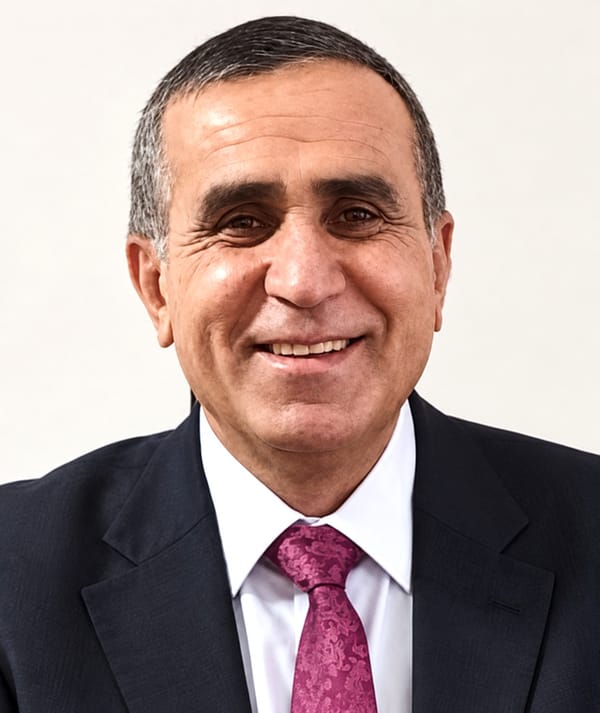
Who is Mücahit Özden Hun?
Born in Iğdır in 1958, Mücahit Özden Hun completed his primary and secondary education in Iğdır and high school at Kabataş Erkek Lisesi in Istanbul. He graduated as an "Electronics Engineer" from the Istanbul Technical University, Faculty of Electrical Engineering. After completing his military service at the Mamak Signal School, Hun started working as an engineer at Istanbul TELETAŞ (ALCATEL). He then worked as a Software Engineer at the international BELL TELEPHONE company in Belgium. He served as an IT Manager at ALLIANCE FRANÇAISE in France for seven years and completed Electrical Engineering Equivalency and Political Economy certificate programs at SORBONNE and PARIS XI Universities.
Hun, who received the French Government's "SPECIAL MISSION AWARD," went to the USA with a scholarship and earned his Master of Business Administration (MBA-Finance) from the WHARTON BUSINESS SCHOOL at the University of Pennsylvania. In the USA, he worked as a Financial Specialist, Planner, and Manager at various international energy companies. He pursued a two-year Doctoral and Economics Specialization program at the University of Freiburg in Germany and simultaneously worked at consulting firms. He later completed his Ph.D. in Economics at Bishkek University. For a short period, Hun served as an English Editor/Translator at various organizations in Ankara and as an Instructor at the Turkish American Association. He also served as the General Manager of the İmişli Sugar Factory in Azerbaijan for 6 months. Hun, who ran as an Independent Social Democrat candidate from Iğdır in the 2007 elections, also holds an Associate Degree in Justice from Anadolu University Open Education Faculty. Hun has over ten book projects, published articles on professional and political topics, and speaks over ten languages, mostly Western languages.
Mücahit Özden Hun's Published Books:
Iğdır Sevdası I-II-III (The Love of Iğdır, City Novel, Başak Yayınları, March 2002)
Ararat Ararat Chemşid (Novel, KKM Yayınları, January 2012)
Aras Aras Goodbye Sona (Novel, KKM Yayınları, February 2012)
Mizah Ansiklopedisi I Cilt (Humor Writings, KKM Yayınları, March 2012)
Endülüs Güneşi Ziryap (The Sun of Andalusia Ziryap, Novel, KKM Yayınları, March 2012)
1400 Temel Sınav Kelimesi (1400 Essential Exam Words, English Dictionary, KKM Yayınları, March 2012)
Benim Adım Gurci (My Name is Gurci, Novel, KKM Yayınları, March 2013)
Mizah Ansiklopedisi II Cilt (Humor Writings, KKM, March 2014)
Ticaret, Finans ve Hukuk Sözlüğü (Dictionary of Commerce, Finance and Law, KKM Yayınları, March 2014)
Kürt-Azeri Iğdır Cumhuriyeti (Kurdish-Azeri Iğdır Republic, Anecdotes & Jokes, KKM Yayınları, 2017)
Iğdır Sevdası I-II (The Love of Iğdır, Expanded Second Edition. Alter Yayınları, March 2018)
Iğdır ve Ağrı Dağı İsyanı (Iğdır and the Ararat Rebellion, Alter Yayınları, June 2019) Aras Aras Goodbye Sona (Kurdish Novel, KKM Yayınları, September 2019)