He Was Kurdish, Shiite, Azeri: Abbasgulu Bey and Being From Iğdır
This article explores the life of Abbasgulu Bey Shadlinski, a multi-faceted historical figure from Iğdır, who embodied the region's diverse ethnic and religious identities, and whose legacy offers a path to unity amidst contemporary divisions.

Dear Readers,
First, I would like to briefly answer the question, “Why was this article written?”
Iğdır is not just an ordinary city built on the banks of the Aras; it is the name of a sacred spirit born from the unity of peoples, languages, beliefs, and memories. In these lands, Kurds and Azeris have lived side by side for centuries, danced at the same weddings, mourned in the same sorrows, and prayed to the same sky. However, unfortunately, there have also been times when this brotherhood was shaken, and usually, the perpetrators of these tremors were not the people themselves, but the administrators sent to govern them.
Throughout history, many district governors or provincial governors appointed to Iğdır from outside have chosen to govern by hiding behind one ethnic group instead of representing the state impartially; thus, they have harmed not only public order but also the soul of the people. In recent years, this situation has become even more pronounced, inflicting deep wounds on the Kurdish-Azeri balance in our Iğdır. The mere thought of a governor who, as soon as he took office, escalated anti-Kurdish sentiment to the highest level, shamelessly and unhesitatingly declaring, "I am the governor of one segment," fills me with dread and disgust. This approach undermines the brotherhood in Iğdır, turning Kurds and Azeris into silent enemies.
This article was written to stop this trend.
This article is a call for people to come closer to each other, against those who want to separate them. This article reminds us that where the state is not represented with justice, the people must act with conscience. And this article was written to make the following call to everyone living in Iğdır:
No governor, no official, no hidden agenda has the right to turn us against each other.
Sunni Kurd, Shiite Kurd, Shiite Azeri, Sunni Terekeme, Sunni Ahiska Turk, Sunni Bulgarian immigrant... We are all from Iğdır. And being from Iğdır is not just the name of a place; it is the name of a sense of justice, a camaraderie, a shared destiny.
INTRODUCTION
The mornings in this fertile plain, where the Aras River flows gently, are illuminated not only by the rising sun but also by prayers offered in different languages. Along with the call to prayer rising in the same sky, a Kurdish folk song echoes in one house, and an Azeri lullaby is sung in another. Dough kneaded by a Shiite mother at the tandoor meets a pastry brought by her Sunni neighbor at the same table. This is how it has been lived in these lands for a long time: side by side, intertwined, separately yet together.
Iğdır is not just the name of a geography, but the name of lives intertwined for centuries. It is the name given to a shared destiny where the Karapapak shepherd and the Kurdish farmer, the Shiite and the Sunni, Azeri and Kurmanji, flow together. And it is precisely from within this commonality that a name rises from the dusty roads of the past: Abbasgulu Bey Shadlinski. In this plain, where our different identities are a richness, not a conflict, multi-layered personalities like Abbasgulu Bey offer us a common spirit.
Today, while Abbasgulu Bey's name is honored like a hero in the streets of Baku, his memory in Iğdır remains silent. Yet that memory silently calls out to what we need most in these lands today: the spirit of unity. Because Abbasgulu Bey's identity is not the identity of a single people, but the identity of a geography, a destiny. And this destiny is Iğdır.
WHO IS ABBASGULU BEY SHADLINSKI?
Abbasgulu Bey emerged as a natural popular leader in the South Caucasus during the tumultuous years of transition from Tsarist Russia to the Soviet revolution, a time rife with crisis, hunger, and war. His family belonged to the Shadli Kurdish tribe, one of the oldest Kurdish tribes that established the "Shaddadid" state in Azerbaijan. Abbasgulu Bey took his place in history as an ethnically Kurdish, culturally and politically Azeri figure.
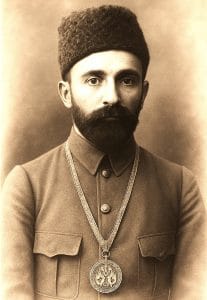
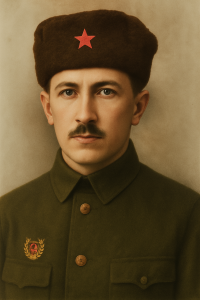
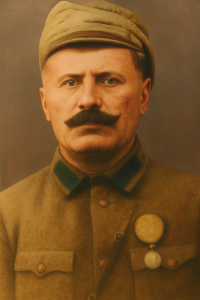
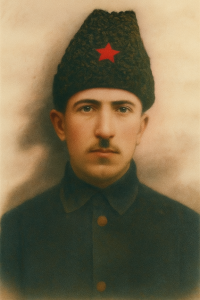
Abbasgulu Bey was born on February 24, 1886, in the village of Boyuk Vedi (Büyük Vadi), part of the Erivan Governorate. He lost his father at a young age. In 1894, he started attending the two-year Russian-Tatar school in his village but left before finishing. He inherited large lands from his father. In 1902, he began to cultivate these lands. He was influenced by revolutionary movements in Russia and Iran, especially after the February Revolution of 1917, dedicating his life to communist thought and struggle.
Towards the end of World War I, as a power vacuum emerged in the South Caucasus, he established a voluntary self-defense unit in Vedibasar against the attacks of Armenian Dashnak gangs on the Muslim population. This voluntary militia unit, led by Abbasgulu Bey Shadlinski, would later be known as the "Red Battalion" (Qırmızı tabor).
In early 1918, Armenian Dashnak forces intensified their attacks against the Muslim population and Azerbaijanis in Nakhchivan, Erivan, Dereleyez, Zangezur, and surrounding areas. Throughout 1918-1919, he fought against the Dashnak gangs. In the spring of 1920, the Red Battalion, led by Abbas Kulu Bey, made a name for itself by taking part in the front lines of the conflicts in the Nakhchivan region during the Russian Civil War. This movement also marked the beginning of communist organizing in Nakhchivan. The Red Battalion, initially consisting of 200 people, grew with participation from other nations. Qamberali Ismailoğlu Abbasov, known as "Qemlo," a hero in Azerbaijan, also fought under Shadlinski's command. Initially showing great resistance against the Dashnaks, the Red Battalion, unable to hold its ground against the superior forces of regular Dashnak units, crossed into Iranian territory with the local population and stationed itself around the cities of Khoy and Marand.
On July 28, 1920, after Soviet rule was declared in Nakhchivan, he accepted the invitation of the Revolutionary Committee and Nariman Narimanov, arriving in Nakhchivan with 200 comrades from the Red Battalion. Abbasgulu Bey initially served in the protection of Nakhchivan's borders. Later, he led the struggles against the Dashnaks in the vicinity of Zangezur. He established Soviet rule in Nakhchivan, ending the Dashnak occupation. In return for these services, he was awarded the Order of the Red Banner by Nariman Narimanov.
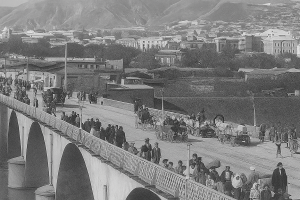
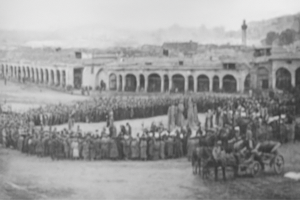
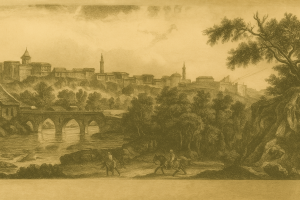
The town of Büyük Vedi where Abbasgulu Bey was born and raised
After returning to Vedi, he worked in some industrial enterprises in Armenia. Finally, he was appointed as a manager at a cement plant. He was killed in 1930 by Dashnak forces who had harbored enmity against him since the 1920s. The following verses, which remain on the lips of the people, are his legacy:
The mountains of Vedi are in mourning,
The Dashnaks want to conquer Vedi,
I will write a letter to my lord Abbas,
The nation is sacrificed for you, Bey Abbasgulu,
Long live, flourish, Bey Abbasgulu.
UNITY FROM WITHIN HISTORY
Iğdır, throughout history, has not only been a place where borders were drawn but also a gateway where identities intertwined and different peoples mingled. The centuries-long struggle for dominance between the Safavids and the Ottomans shaped this plain not only through military campaigns but also through relationships established between peoples and sects. The fact that both Sunni Kurdish families and Shiite Kurdish communities are still found in Iğdır's villages today is living proof of this historical legacy. Karapapaks (Terekemes), Azeris, and Kurds drank tea in the same coffeehouses, toiled in the same threshing grounds, and prayed to the same sky with different words.
This difference existed not to conflict, but to complement. Just like Abbasgulu Bey... He was born a Kurd belonging to the Shadli tribe, but he cared about the troubles of all the people of the region, not just the Kurds. He grew up with the Shiite faith without being fixated on sectarian differences, but he is also the son of the Sunni people. His language was Azeri, but his heart language was equally distant to every people.
The chaos that swept through the South Caucasus between 1918 and 1920 played into the hands of those who wanted to pit ethnic identities against each other. Armenian Dashnak gangs burned villages, forced people to migrate, and took lives. It was at such a time that the "Red Battalion," formed under the leadership of Abbasgulu Bey, was not just an armed resistance but also a solidarity of peoples. This battalion included Kurds, Azeris, and Terekemes. What brought them together was neither language, nor sect, nor origin; only a common destiny, a common land, a common threat. Qemlo, who showed great heroism in Abbasgulu Bey's "Red Battalion," was a Sunni Celali tribal Kurd; Kelbelayı İsmail Bey was a Shiite Azeri.
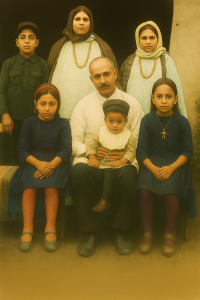
Abbasgulu Bey with his family
This resistance reminds us of something: the boundaries that sometimes try to divide us become meaningless when we stand together. Abbasgulu Bey, the national hero of Azerbaijan, did not ask anyone "who are you?" while defending the Muslim population against Armenian Dashnak oppression. His question was: "Is your trouble the same as mine?"
A SILENT LEGACY SPEAKING TO TODAY
Today in Iğdır, unfortunately, sometimes the language we speak, the sect we belong to, or the surname we carry can turn into identity markers that distance us from each other. Yet, Abbasgulu Bey's life shows us that belonging gains meaning when it is unifying, not divisive. His story is one of the rare examples that demonstrate how ethnic and sectarian differences can be used for solidarity, not conflict.
Abbasgulu Bey, who came from a Kurdish tribe but became a national hero of Azerbaijan, is a very special answer left to us by history: Your roots may be different, but if your land is the same, your destiny is also shared. This answer can also be a compass for today's youth in Iğdır. Because in a generation forced to define their identities on a single axis, a figure like Abbasgulu Bey is living proof that multiple identities can coexist without conflict.
Sectarian difference, language distinction, or cultural affiliation; none of them need to evolve into enmity. Abbasgulu Bey grew up with the Shiite faith but fought shoulder to shoulder with the Sunni people. He was of Kurdish origin but dedicated his heart to Azerbaijan's struggle. He pursued the truth of what one does, not the question of who one is.
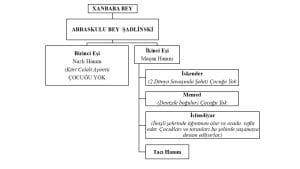
Abbasgulu Bey's family tree
Today in Iğdır, just like in his time, there are common threats: unemployment, discrimination, youth hopelessness, social distrust. These problems recognize no Kurdish, Azeri, or Terekeme identity. Just like the Dashnak oppression of 1920, these threats affect us all together. So why shouldn't we seek the solution together?
Abbasgulu Bey's multi-layered identity can be a compass for a new social consciousness to be established in Iğdır. He showed us that to love one people, it is not necessary to exclude another. He was at peace with his sect, but he did not engage in sectarianism. He was proud of his ethnic origin, but he did not claim ethnic superiority. This attitude can open a path for us today: an identity based on conscience, nourished not by the shadow of the past, but by the light of a common future.
TO BE FROM IĞDIR IS TO REMEMBER WITH CONSCIENCE
Abbasgulu Bey's life is not only a story of war and struggle but also a memory of the possibility of living together. That memory tells us a lot today: that identity is built not only by birth but by stance, courage, and justice... And that true belonging is written not on the land but in the heart...
In Iğdır, no matter what language we speak, what sect we believe in, or what tribe or neighborhood we come from, we all look at the same sky. Under that sky, we have a common destiny nourished by the waters of the Aras. In this destiny, just like Abbasgulu Bey, there are traces of people who stood up for their people, regardless of their origin. Those traces offer us a roadmap today: cultivate brotherhood, not division. Embrace, do not judge. Own, do not exclude.
Perhaps what we need most today is "Abbasgulu Bey Consciousness." This consciousness is an understanding where the Kurd considers the Azeri, the Shiite considers the Sunni, and the youth in the mountain village considers the one in the plain as their own. This consciousness connects us not only to the past but also to a future we can build together. Because Iğdır is not the homeland of a single people; it is the homeland of those with many pasts, many voices, and many stories.
Let's write this story together. Let February 24, Abbasgulu Bey's birthday, be "Iğdır Brotherhood Day." On that day, let Kurdish and Azeri folk songs play in our streets. Let bozbaş, kebab, tandoor bread, and ayran unite at the same table. Let young people run together in a tournament they call "The Spirit of Abbasgulu Bey." And let's leave a one-sentence monument in three languages in Iğdır:
"Long live, flourish, Abbasgulu Bey"
Because what makes Iğdır Iğdır is not just its place on the map; it is its place in hearts, the heart that peoples open to each other. And today, the time has come to hear the rhythm of this heart, extending from the past to the future, once again.
Let us not forget that Iğdır cannot exist without Kurds or without Azeris. Living together in peace and tranquility is not a choice for us, but a historical necessity.
NOTE: The life of Abbasgulu Bey Shadlinski was the subject of Ferman Kerimzade's novel "Qarlı Aşırım" (1970) and the 1971 film "Axırıncı Aşırım" directed by Kamil Rüstembeyov; in these works, his struggle is recounted in an epic language.
However, I would like to make an important reminder: In the film, Kelbelayı İsmail and Qemlo are held responsible for Abbasgulu Bey's murder. This does not reflect the truth. Abbasgulu Bey was ambushed and killed in Karabakh in 1930 by Dashnak Armenians, who had harbored revenge against him since the 1920s, with the support of some informants. When the film was made in 1971, this truth was covered up, thinking it might pit two peoples in the Soviet Union against each other, and Qemlo and Kelbelayı İsmail were held responsible for Abbasgulu Bey's murder.
Qemlo, as depicted in the film, was not cruel and a violator of honor. He was brave and fearless. One day after Abbasgulu Bey's death, Qemlo was invited to a meeting and assassinated in a treacherous ambush.
Kelbelayı İsmail (Çimen) sought asylum in Turkey. He settled in Taşburun. He passed away there in 1948 at the age of 78. His monumental tomb is in the Taşburun cemetery today. May God have mercy on him.
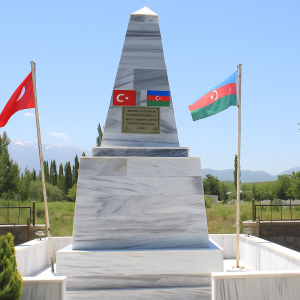
Kelbelayı İsmail's (Çimen) monumental tomb in Taşburun village
In 2006, during my years as General Manager of the Imishli Sugar Factory, I had the chance to meet a descendant of Abbasgulu Bey. They said that after the film was released, Abbasgulu Bey's family repeatedly met with the novelist and screenwriter Ferman Kerimzade, stating that the film's depiction of Abbasgulu Bey being killed as a result of a trap set by Kelbelayı İsmail and Qemlo did not reflect the truth, and that Abbasgulu Bey was killed by Dashnak Armenians who continued their past feelings of revenge, but they did not get any results.