The Silent Architect of the Kurdish Language: Îsahak Marogûlov
This article explores the life and work of Îsahak Marogûlov, a Syriac teacher and linguist who, alongside Erebê Şemo, created the first Latin-script Kurdish alphabet in 1928, officially adopted in 1929.

Dear Readers:
Today is May 15th. For the Kurdish people, it is not just a calendar day, but the anniversary of a matter of existence. Because language is identity. And May 15th is the day this identity began to be written with alphabets, verses, and resistance. With the publication of the magazine Hawar in Damascus in 1932, this date has been accepted as "Language Day" for Kurds. However, before this date, there was another alphabet born within the borders of the Soviet Union: a teacher and linguist of Syriac origin, Îsahak Marogûlov, who, together with Erebê Şemo, prepared the first Latin-script Kurdish alphabet in 1928 and ensured its official adoption in 1929.
This article is dedicated to the life and work of Îsahak Marogûlov, who played a great but silent role in the modernization of the Kurdish language, and to his love for language that began in the village of Zor (today Karaçomak) in Iğdır.
HIS IDENTITY AND ORIGIN
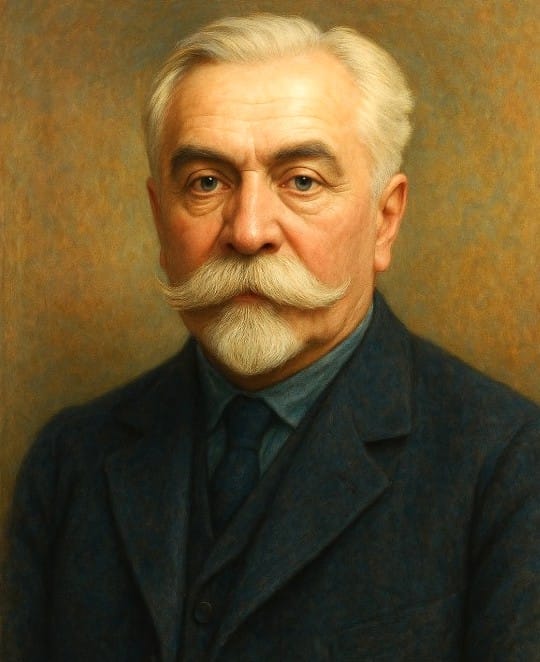
Îsahak Fagradovich Marogûlov was born in 1868 in the village of Dıvin (Divin) in Yerevan, then part of the Russian Empire. He was of Syriac (Assyrian) origin. His father, Fagrad, was a Syriac who had migrated from Iran to the Caucasus in the mid-19th century. He lost his mother when he was five years old. His father, who raised him alone, taught his son both his own culture and sensitivity to the languages and traditions of the surrounding peoples.
EDUCATION AND TEACHING LIFE
After completing teacher training college in Yerevan, Marogûlov began teaching in the village of Shakhtakhty in Nakhchivan in 1888, and in the village of Kemerli in 1893. These villages were densely populated by Kurds. Marogûlov, who lived an educational life intertwined with Kurdish children, did not just learn Kurdish; he felt it, assimilated it.
ZOR VILLAGE (KARAÇOMAK): THE LAND WHERE THE ALPHABET FERMENTED
In 1905, he was assigned to the village of Zor (today called Karaçomak), which was part of the Sürmeli district. This village was one of the places where Kurdish identity was vividly lived, both geographically and culturally. Here, he taught both Russian and Kurdish. According to Marogûlov's son, his father's idea of preparing an alphabet for Kurdish was born precisely during this period, in Zor village. The years he spent in this village were not only crucial for his teaching career but also fateful for the Kurdish language. Although Zor village seems forgotten today, it witnessed the first sparks of ideas that brought Kurdish together with the Latin alphabet.
LATIN-SCRIPT KURDISH ALPHABET: A LANGUAGE GAINS ITS WRITING
In the late 1920s, policies were being developed in the Soviet Union to transition minority languages to the Latin alphabet. Marogûlov actively participated in this process. In 1928, together with the Kurdish writer Erebê Şemo, he developed the Latin-script Kurdish alphabet. The alphabet was officially adopted by the Soviet Union on February 25, 1929. It was designed to suit the phonetic structure of Kurdish and quickly began to be used in Kurdish schools in Armenia, Azerbaijan, and Turkmenistan.
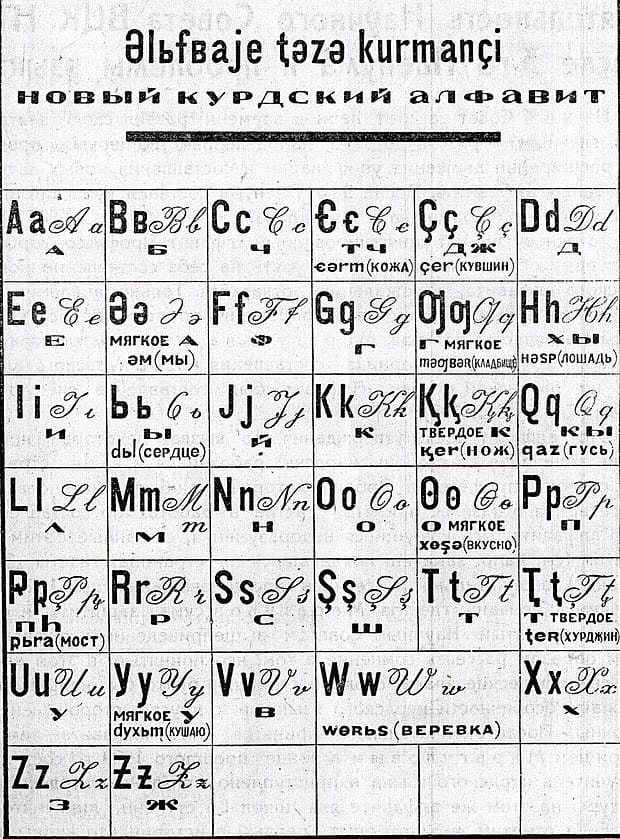
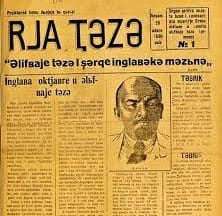
The Marogûlov-Şemo Kurdish Latin Alphabet and the newspaper Riya Teze (New Way) written with this alphabet
TEACHER TRAINING AND PUBLISHING ACTIVITIES
Following the adoption of the alphabet, Marogûlov organized seminars to train Kurdish teachers. He wrote books titled "Learn by Yourself." In total, he authored five Kurdish books. Furthermore, he took a special interest in Kurdish folk literature. He tried to create a written memory of the Kurdish language by compiling the epics of the Dengbêj (Kurdish bards), legends, and songs told among the people.
He worked at the Kurdish Higher School established in Soviet Armenia. He taught in the Kurdish department and was also an active member of the new alphabet commission. As both an educator and editor, he advocated for the right to education for Kurds living in the Soviet Union.
FAMILY LIFE
Marogûlov married Elena Fedorovna Efremidi, who was of Greek origin. They had two children:
Konstantin Marogûlov (born 1901), worked on Assyrian and Arab culture. He served as the editor-in-chief of the Aysor newspaper published in Moscow. In 1938, he was arrested and shot during the Stalinist purges.
Leonid Marogûlov (1903–1964), was a renowned psychiatrist.
The family owned vineyards near Dıvin village before the October Revolution. However, these properties were confiscated by the state after the revolution.
DEATH AND SUBSEQUENT RESPECT
Îsahak Marogûlov passed away on September 6, 1933, in Yerevan. After his death, Kurdish intellectuals in Armenia mourned deeply. The Riya Teze newspaper dedicated a two-page memorial article to him. The following decisions were made to honor him:
- The first new Kurdish school to be opened would be named after him,
- His wife Elena would receive a lifelong pension,
- The writings in his archive would be published.
LASTING LEGACY
Today, a large portion of Kurds learn to read and write using Latin-script alphabets. The first foundation of this system was laid by Îsahak Marogûlov. Even the Hawar alphabet prepared by Celadet Bedirxan in Syria bears traces of the system he implemented in the Soviets in 1929. Therefore, Marogûlov's name should be mentioned not only with Soviet Kurds but with all Kurdish people.
CONCLUSION AND RECOMMENDATION
Îsahak Marogûlov was the first person to prepare an alphabet for the Kurdish language. His silent but historical contribution enabled the Kurdish people to be reborn through their language. In times when the language was forbidden and suppressed, the path he opened shone like a light. If Kurds today can write, read, and express themselves in their own language, it is thanks to his foresight and the efforts of people like him.
Therefore, I recommend:
The village of Karaçomak (formerly Zor), located within the borders of Iğdır province, is the place where Îsahak Marogûlov began his linguistic work. Organizing Kurdish Language Day events in this village every May 15th would be of great significance, both to keep his memory alive and to refresh the memory of the Kurdish language's resistance.