Kurdish Language Day, the Bedirkhan Family, and the Truth
This article celebrates Kurdish Language Day, highlighting the contributions of Celadet Ali Bedirkhan and the Bedirkhan family, while also acknowledging the earlier work of Isahak Marogulov and Ereb Shamo in developing the Latin script for Kurdish.
Dear Readers:
Every year, May 15th is celebrated as KURDISH LANGUAGE DAY. Celadet Ali Bedirkhan, a Kurdish nationalist, linguist, writer, diplomat, and politician, launched the magazine HAWAR on May 15, 1932. In its first 23 issues, Celadet Ali Bedirkhan used Latin letters alongside Arabic script, but from the 24th issue onwards, he exclusively used Latin letters.


The Latin-character Kurdish alphabet used today is the alphabet Celadet Ali Bedirkhan first employed in HAWAR magazine. Due to its significance, May 15th (1932), the date HAWAR magazine was first published, is celebrated as KURDISH LANGUAGE DAY.
On Kurdish Language Day, various events are organized to celebrate the Kurdish language, its history, literature, grammar, and cultural heritage. These include language conferences, discussions on language and literature, poetry and literary readings, theater and music performances, language competitions, and exhibitions.
This day is seen as an opportunity to preserve and develop the Kurdish language. I believe it helps emphasize the importance of language and culture within the Kurdish community. It also aims to advocate for the language and cultural rights of the Kurdish people and to demand official status for the language.

Cejna Zimanê Kurdî Pîroz Be!
Before elaborating on my writing, I sincerely congratulate everyone on KURDISH LANGUAGE DAY, wish for the removal of all obstacles to the development of independent Kurdish languages (Kurmanji, Sorani, Zazaki, Kalhori, Laki, and Gorani), and hope that new generations will use their languages freely and effectively.
I specifically emphasize the term "Kurmanji" because Sorani, Kalhori, Lurish, and Gorani, which are independent Kurdish languages, are still written in Arabic script. Furthermore, in the Kurdistan Region of Northern Iraq, Kurmanji is still written using Arabic script. In former Soviet Union countries, Kurmanji is written in Cyrillic and Latin scripts. Currently, the only independent Kurdish language that exclusively uses Latin script is Zazaki.
On the occasion of KURDISH LANGUAGE DAY, I would like to make an appeal to all Kurdish intellectuals and writers worldwide: Please, let us not trivialize our own languages by using terms like "dialect / zarava" for independent Kurdish languages. Do not worry, by doing so you will not be fragmenting Kurdistan; you will merely be removing a psychological barrier to the development of languages. Kurdistan has, throughout its thousands of years of history, peacefully embraced different languages, religions, and cultures, thus taking its honorable place in history. Let us not forget that a psychological barrier is more serious than a legal one, and its destructive power is greater. When we define our own independent languages as "dialects," governments also include Kurmanji and Zazaki in the "living languages and dialects" classification and list, thereby in a sense denying their existence.
Today, Zazaki and Kurmanji are spoken 24/7 in thousands of villages and towns. Are Circassian, Abkhaz, Laz, Georgian, Albanian, and Bosnian, which are included in the same list, spoken 24/7 in thousands of villages in Turkey? Zazaki and Kurmanji are the modes of existence for the Kurdish people; all societal values rise and gain meaning upon these two languages.
Noam Chomsky, the famous cognitive and linguist who explains the process of learning a mother tongue through biological and innate mechanisms, defines the greatest punishment that can be inflicted on a child as preventing them from freely developing the language they acquired within the family in later years.
In conclusion, it is not possible to set effective and results-oriented goals without knowing the historical importance, diversity, and characteristics of one's own language. In such a case, every Language Day does not go beyond a show, presenting a supposed bill that is sure to be rejected or holding a few meetings.
THE FIRST KURMANJI LATIN ALPHABET
The first Kurmanji Latin Alphabet is not, as commonly believed, Celadet Ali Bedirkhan's. The first Kurmanji Latin Alphabet is the Marogulov-Shamo Alphabet, created in 1928 through the collaborative work of Isahak Marogulov, of Assyrian origin, and Ereb Shamo, a Kurd from the Caucasus.
As a debt of gratitude, I would first like to honor these two important figures:
WHO IS ISAHAK MAROGULOV?
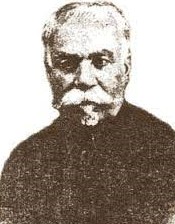
When the Kurdish Latin alphabet is mentioned, the first name that comes to mind is Isahak Marogulov. Born in 1868, Isahak was of Assyrian origin. His father migrated from Iran to Armenia in the 19th century, settling in the village of Dvin in Yerevan. Isahak, who lost his mother at the age of five, was educated by his father, Fahred. After graduating from teacher's college, Isahak worked as a teacher in the village of Shaxtaxte in Nakhchivan in 1888, and later in the village of Qemerli in 1893. Isahak Marogulov learned to speak Kurdish as a child. He spoke Kurdish like his native language because he lived with Kurdish children for months in the Alagöz highlands, where his family went every year. Isahak first translated Kurdish into the Latin Alphabet in 1928.
According to Isahak's son Victor, his father's idea of preparing a Kurdish alphabet emerged during the years he taught Russian in Zor (today Karaçomak village), a Kurdish village connected to Sürmeli (Iğdır). He continued his work on the Kurdish alphabet and culture until his death on September 6, 1933.
The alphabet prepared by Marogulov was approved in 1929 by a special alphabet commission consisting of Kurdish and Armenian scholars. The adoption of the alphabet was announced in many newspapers of the time, and interviews were conducted with Marogulov. Many of these interviews and much of the information about him can be found in Reye Teze. Marogulov produced works on Kurdish language and culture.
Some Kurdish writers attribute the alphabet prepared by Marogulov to Erebê Şemo. Not only Erebê Şemo but also many Armenian and Kurdish writers assisted Marogulov in preparing the alphabet. But history is a science and relies on documents. The person who prepared the Kurdish alphabet for Soviet Kurds is Isahak Marogulov.
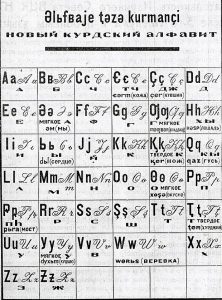

He worked with all his might to popularize the alphabet. He prepared a book titled "Learn by Yourself" for teachers who would teach the Kurdish alphabet, and published many articles and writings on the subject.
After Isahak Marogulov's death, Kurdish intellectuals gathered and made the following decisions:
- The first Kurdish school to be opened would bear his name.
- His wife would be granted a pension.
- The writings in his archive, on which he had worked for years, would be published.
EREB SHAMO (Erebê Şemo)
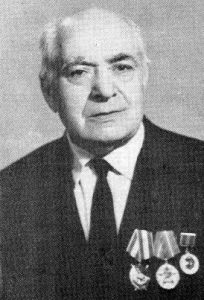
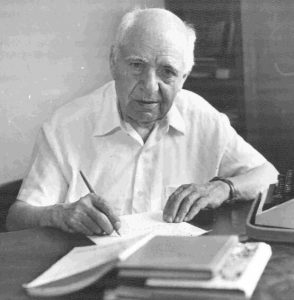
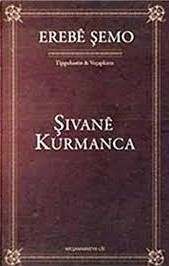
Erebê Şemo, considered the father of the Kurdish novel, was born on October 23, 1897, in Susuz village (today a district) in Kars Oblast, under Russian rule. He worked as a shepherd. In 1916, while working on a railway construction, he met Bolsheviks. He was arrested for speaking in favor of Bolshevism at a rally and imprisoned in Sarıkamış Prison. After his release, at the party's request, he was assigned to propaganda work in his village. When he was pursued by the Tsarist police, he fled to Stavropol (North Caucasus). Between 1917 and 1920, during the height of the Civil War, he participated in the war as a Red Guard in the North Caucasus. Erebê Şemo wrote about the early years of his life in his famous novel "Şivanê Kurmaca (The Kurdish Shepherd)."
Erebê Şemo became a member of the Russian Communist Party in 1918. In 1920, he enrolled in the Lazaryan Institute in Moscow. After four years of education, he returned to Armenia. Between 1924 and 1931, he worked in the National Minorities department of the Central Committee of the Communist Party of Armenia. Between 1931 and 1932, he became an associate professor in the Department of Kurdology at the Leningrad Institute of History, Philosophy, Linguistics, and Literature.
In 1927, by decision of the Armenian Commissariat of Culture and Education, it was decided to create a Latin alphabet for Kurds. This task was given to Erebê Şemo and the Assyrian Kurdologist Isahak Marogulov. This alphabet, known as the Şemo-Marogulov Alphabet, was successfully completed a year later. This was also the first Latin Kurdish alphabet. With this alphabet, the first issue of Riya Teze (New Way) newspaper was published on March 25, 1930. (Celadet Elî Bedirxan's Latin alphabet came into use in 1932 with the publication of Hawar Magazine.) Erebê Şemo served as the first director of the Kurdish Teacher Training School opened in Yerevan on January 1, 1931.
Years of Exile
Erebê Şemo experienced an unfortunate event in 1937. For some reason, the General Secretary of the Communist Party of Armenia was arrested. When a letter from Erebê Şemo was found among his documents, he was arrested in Leningrad, on the assumption that he was a close friend, and exiled to Siberia. Erebê Şemo, who had his first marriage with a German woman, married a Russian woman in exile, and they had two daughters named Asê and Zinê. He continued his life in difficult conditions in exile for 19 years. He worked on railways. In conversations with his friends, even jokingly, he was known to say, "Half of the railways in that region are my work." It is said that to avoid forgetting his native Kurdish, he would tell himself stories in Kurdish before going to sleep in the evenings.
After Stalin's death, he returned to Armenia in 1956.
Erebê Şemo had the opportunity to meet the great Russian writer Maxim Gorky. When Gorky came to Yerevan, he evaluated Erebê Şemo's manuscript novel "The Kurdish Shepherd" and praised it, commenting, "The Kurdish people speak through the language of their writer Erebê Şemo."
Erebê Şemo passed away in Yerevan on May 21, 1978. Today, on the wall of the house where he lived on Abovyan Street in Yerevan, it is written in Russian on a marble plaque: "In this house lived the Kurdish writer, public figure Arab Shamoevich Shamilov from 1963 to 1978."
Erebê Şemo could speak and write Armenian, Ottoman Turkish, Russian, Georgian, German, and Azerbaijani as fluently as his native Kurdish.
His Works:
- Şivanê Kurmanca (The Kurdish Shepherd) (1935)
- Berbang (Dawn) (1958)
- Kela Dimdim (Dimdim Castle) (1966)
- Jiyana Bextewar (Happy Life) (1959)
- Hopo (1969)
In Kurdistan, there are important families such as Malbata Bedirxaniyan, Malbata Barzaniyan, Malbata Babaniyan, Malbata Geylaniyan, and Malbabata Cemilpaşa. The Bedirkhan family is one of them.
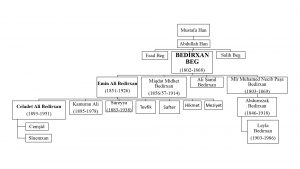
When Bedirkhan Beg, the namesake of the Bedirkhan Family, passed away, it is known that 21 sons and 21 daughters were alive. Considering that the actual number was much higher, I have limited the above genealogy to showing only the important figures who emerged from this family.
CELADET ALI BEDIRKHAN
Celadet Ali Bedirkhan's grandfather, Mir Bedirkhan (1851-1926), was the last emir of the Cizre-Botan Principality. In 1846, he rebelled against the Ottoman Empire but was defeated. This defeat marked a turning point for both Kurdistan and the Aziziyan family, which Mir Bedirkhan represented. Mir Bedirkhan and his family were taken from Cizre and exiled to Istanbul, then to the island of Crete. Mir Bedirkhan died in Damascus in 1868, where he was in exile. His four wives, children, and grandchildren also suffered exile. Family members were exiled to Istanbul and other regions of the Ottoman Empire.

Celadet Ali Bedirkhan was born in Istanbul on April 26, 1893. His family was in exile when he was born. His father, Emin Ali Bedirkhan, was the most prominent member of the family. His mother, Seniha Hanım, was Circassian. His father, Emin Ali Bedirkhan, was an inspector at the Istanbul Courthouse. He also held an important position within the Kurdish movement in those years.
Since the Ottoman State forbade the Bedirkhan family from going to Kurdistan, Emin Ali Bedirkhan brought storytellers and language teachers from Kurdistan to introduce his children to Kurdish culture and language. One of these teachers was the famous Kurdish poet Hêcî Qadirê Koyi, who served as the chief tutor for his children.

The Ottomans were suspicious of the Bedirkhan family. Therefore, they gave them official jobs and constantly changed their locations. Celadet Ali Bedirkhan's childhood was spent in exile with his father. For this reason, he became acquainted with cities such as Istanbul, Isparta, Edirne, Konya, Acre, Nahlus, and Thessaloniki.
At the age of 18, Celadet began attending the Military Academy in Istanbul. During World War I, he served as an officer instructor and fought against the Russians on the Caucasian front.
Following the defeat of the Ottoman Empire in the war and the organizing process among Kurdish patriots, Celadet Ali Bedirkhan became involved in political affairs in Istanbul, becoming one of the founders of the Kurdish Têali Cemiyeti (Society for the Advancement of Kurdish Society).

After the war, England made some efforts in Kurdistan. Celadet Ali Bedirkhan, along with his brother Kamuran, Ekrem Cemil Pasha, and Faiq Tevfik, went to Kurdistan in 1919. Among them was British Intelligence Officer Major Edward Noel.
The Kemalists, aware of Celadet Ali Bedirkhan and his companions' journey, sent cavalry after them, forcing them to turn back. During this journey, Celadet Ali Bedirkhan traveled as far as Malatya, having the chance to closely observe the general situation of the country. He also collected proverbs and stories among the tribes.

When the Kemalists came to power and seized Istanbul in 1923, death warrants were issued for Kurdish leaders, including the Bedirkhan family. Consequently, Celadet Ali Bedirkhan, along with his brothers Kamiran, Safter, Tevfik, and his nephew Haqi, went to Germany in 1923 and began his university education. He earned a doctorate in law. When the Sheikh Said rebellion began in 1925, Celadet Bedirkhan secretly went to Kurdistan to join the rebellion, but by the time he arrived, the rebellion had been suppressed. With the help of nomadic tribes, he once again left Kurdistan and returned to Germany.
Celadet Ali Bedirkhan participated in many nationalist activities throughout his political life. In 1927, he was among the founders of the Xoybûn Society.

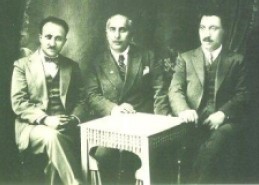
Xoybûn Society: (Standing from left to right) Yado, Sadîn Telha; (seated from left to right) Memduh Selim, Celadet Ali Bedirkhan, Kamuran Ali Bedirkhan
Celadet Ali Bedirkhan is known as the pioneer of Kurdish writing in Latin script. He worked in the field of Kurdish language research, publishing the magazines Hawar and Ronahi in exile. Celadet Ali Bedirkhan's works form the foundation of contemporary Kurdish literature.
Celadet Ali Bedirkhan knew English, French, German, Turkish, Persian, Arabic, Russian, and Greek, in addition to Kurmanji.
His younger brother Safter died of illness in Germany. His other brother Tevfik returned to Turkey. He changed his surname to "Çınar." Tevfik Çınar's nephew, Vasıf Çınar, served as Minister of National Education for a period.
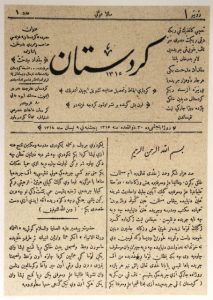
After settling in Damascus, Celadet Ali Bedirkhan obtained permission from the French government in 1931 to publish a magazine in Syria. Following preparations, the first issue of Hawar was released to readers on May 15, 1932. Celadet Ali Bedirkhan's goal was to spread the Latin alphabet throughout Kurdistan through this magazine. In the same year, Celadet Ali Bedirkhan published his grammar book "Fundamentals of Kurdish Grammar."
Celadet Bedirkhan lived in poor conditions in Damascus, in a single room on Salihiye Street. This room served as the headquarters of Hawar, a guesthouse, and a place to sleep. He married in 1935. He had two children named Cemşîd and Sinemxan.
With the outbreak of World War II, political pressure on Kurdish intellectuals in Syria resumed. The French government forced Celadet Ali Bedirkhan to live in Damascus between 1943 and 1946. This forced residence in Damascus was maintained by the Syrian regime until 1948. Celadet Ali Bedirkhan, who began journalism after the start of World War II, launched Ronahi Magazine in Damascus in 1942. The first five issues of Ronahi were related to World War news.
In his intellectual life, Celadet Ali Bedirkhan penned many books in addition to magazines. Due to financial difficulties, he started farming in the village of Hejan, near Damascus, in 1950. He had to do such work to support his family. Although he had many wealthy friends who wanted to help him, he refused their assistance. He had a large well dug in Hejan village to irrigate his cotton field. In letters to his family, he said he named the well "Qeder Kuyusu" (Well of Fate).
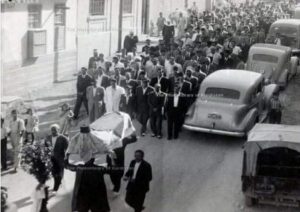
Mir Celadet passed away on July 15, 1951, in the village of Hejan, Damascus. His body was buried next to his grandfather Bedirkhan Beg in the Mevlana Halid Naqshbandi Cemetery in the Kurdish quarter of Damascus.

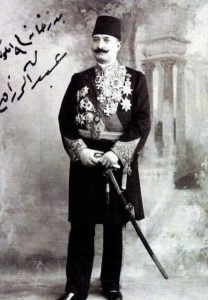
(Bedirkhan Family/1880) (Front row from left to right) Emin Ali Bey, Ali Şamil Pasha, Bahri Bey; (Back row from left to right) Murat Remzi Bey, Hasan, Miqdad Midhat Bey, Kamil Bey
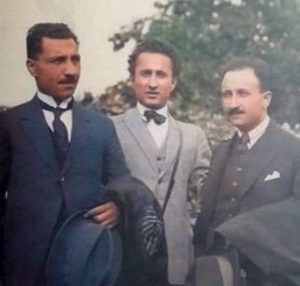
(Three brothers) (From left to right) Kamuran Ali Bedirkhan, Sureyya Bedirkhan and Celadet Ali Bedirkhan


IN SALUTATION OF KURDISH LANGUAGE DAY AND AS A CONTRIBUTION TO KURMANJI, I AM ADDING A SHORT KURMANJI-TURKISH-ENGLISH MEDIA/NEWSPAPER DICTIONARY:
| KURMANJI | TURKISH | ENGLISH / ENGLISH | |
| 1 | Angaşt kirin | İddia etmek | Claim (kleym) |
| 2 | Asê man | Mahsur kalmak | Be stuck (bi stak) |
| 3 | Asteng | Engel | Obstacle (abstıkıl) |
| 4 | Axaftan | Konuşmacı | Speaker (spikır) |
| 5 | Bangeşî | Propaganda | Propaganda (propıgende) |
| 6 | Barhilgir | TIR | Trailer truck (treylır trak) |
| 7 | Bênavber | Aralıksız | Nonstop (nanstap) |
| 8 | Berbijêr | Aday | Candidate (kendideyt) |
| 9 | Berjewendî | Menfaat, çıkar | Interest (intirist) |
| 10 | Berovvajî | Ters, zıt | Opposite (apızit) |
| 11 | Bertek dan | Tepki göstermek | React (riekt) |
| 12 | Betal bûn | İptal etmek | Cancel (kensıl) |
| 13 | Bihêz | Güçlü, kuvvetli | Powerful (pavırful) |
| 14 | Bûka baranê | Gökkuşağı | Rainbow (reynbou) |
| 15 | Cemawerî | Kitlesel | Mass (mes) |
| 16 | Cihê bûyerê | Olay yeri | Scene of accident (sin ov eksidınt) |
| 17 | Cihêgarî | Ayrımcılık | Discrimination (diskrimineyşın) |
| 18 | Coş | Coşku | Enthusiasm (entuziayzm) |
| 19 | Çarenûs | Kader, akıbet | Destiny (destini) |
| 20 | Çareser | Çözüm | Solution (solışın) |
| 21 | Çirûsk | Kıvılcım | Spark (spark) |
| 22 | Çiyager | Dağcı | Mountain climber (mauntın klaymır) |
| 23 | Dabeşker | Bölücü | Separatist (sepırtist) |
| 24 | Dadperwer | Adil | Fair (feyr) |
| 25 | Darizandin | Yargılamak | Judge (cac) |
| 26 | Dêr | Kilise | Church (çörç) |
| 27 | Derhêner | Yönetmen | Director (dayrektır) |
| 28 | Desthilat | İktidar | Rulership (rulırşip) |
| 29 | Dever | Yöre, bölge | Region (ricın) |
| 30 | Dîmen | Manzara | Landscape (lenskeyp) |
| 31 | Dorpêç kirin | Etrafını sarmak, kuşatmak | Surround (sırraund) |
| 32 | Erkê welatiyan | Vatandaşlık görevi | Civic duty (sivik dyuti) |
| 33 | Ezmûndar | Tecrübeli | Experienced (eksperinst) |
| 34 | Gendelî | Yolsuzluk | Corruption (kırrapşın) |
| 35 | Geş | Canlı, hareketli | Vibrant (vaybrınt) |
| 36 | Geşbîn | İyimser | Optimist (aptimist) |
| 37 | Geştyar | Turist | Tourist (turist) |
| 38 | Helwest | İnanç, kanı | Conviction (kınvıkşın) |
| 39 | Herwiha | Ek olarak, ayrıca | Besides (bisayds) |
| 40 | Hestiyarî | Duygu | Sentiment (sentimınt) |
| 41 | Hevahengî | Uyum | Harmony (harmoni) |
| 42 | Hevbeş | Ortak | Joint (coint) |
| 43 | Hevgirtî | Tutarlı | Consistent (konsistınt) |
| 44 | Hevrikî | Yarışma | Competition (kompetişın) |
| 45 | Hevseng | Dengeli | Balanced (belınst) |
| 46 | Hezaz | Göçük, heyelan | Landslide (lendslayd) |
| 47 | Hişmendî | Bilinç | Consciousness (kanşısnıs) |
| 48 | Hûrgilî | Detay | Detail (diteyl) |
| 49 | Kelecan | Heyecan | Excitement (eksaytmınt) |
| 50 | Kesayetî | Şahsiyet | Personality (pörsıneliti) |
| 51 | Lêçûn | Bütçe | Budget (bacıt) |
| 52 | Lihevkirin | Anlaşma, uzlaşma | Agreement (ıgrimınt) |
| 53 | Madeyên hişbir | Uyuşturucu madde | Narcotic (narkotik) |
| 54 | Mafdar | Haklı | Right (rayt) |
| 55 | Malnişîn | Emekll | Retired (ritayırt) |
| 56 | Mazûbanî | Ev sahipliği (maçlarda) | Host (host) |
| 57 | Mêtingeh | Sömürge | Colony (kalıni) |
| 58 | Metirsîdar | Korkulu, tehlikeli | Dangerous (dencırıs) |
| 59 | Mikur | İtiraf | Confession (kınfeşın) |
| 60 | Mûçexor | Ücretli | Wage earner (vueyç örnır) |
| 61 | Navborî | Söz konusu | In question (in kuesçın) |
| 62 | Nepenî | Gizlilik | Confidentiality (konfidenşielıti) |
| 63 | Nifş | Kuşak | Generation (cenereyşın) |
| 64 | Nîqaş | Tartışma | Debate (dibeyt) |
| 65 | Nuçevan | Muhabir | Reporter (riportır) |
| 66 | Pêdivî | Gerekli, ihtiyaç | Necessity (nesesiti) |
| 67 | Pêngav | Teşebbüs, girişim | Enterprise (entirprayz) |
| 68 | Pesend kirin | Onaylamak | Ratify (redifay) |
| 69 | Pêşangeh | Sergi | Exhibition (eksibişın) |
| 70 | Pêşniyar | Teklif, öneri | Proposal (propozıl) |
| 71 | Pêşwazî kirin | Karşılamak (misafir) | Welcome (vuelkım) |
| 72 | Pêwendî | İlişki | Relationship (rileyşınşıp) |
| 73 | Pexşan | Düz yazı, nesir | Prose (proz) |
| 74 | Peywendîdar | İlgili | Relevant (relıvınt) |
| 75 | Pîrozbahî | Kutlama | Celebration (selebreyşın) |
| 76 | Pişaftin kirin | Asimile etmek | Assimilate (esimileyt) |
| 77 | Piştrast | Emin | Assured (eşurt) |
| 78 | Qelibîn | Çarpışmak | Clash (kleş) |
| 79 | Qerebû kirin | Tazminat, telafi etmek | Compensation (kompenseyşın) |
| 80 | Qinyat dan | Teselli etmek | Console (kınsol) |
| 81 | Radest kirin | Teslim etmek | Deliver (delivır) |
| 82 | Raman | Fikir, düşünce | Opinion (opinyın) |
| 83 | Raperîn | Ayaklanma | Uprising (aprayzin) |
| 84 | Rapirsî | Anket | Survey (sörvey) |
| 85 | Rêje | Oran | Ratio (reyşiyo) |
| 86 | Req bûn | Donmak, sertleşmek | Harden (hardın) |
| 87 | Rêveber | Yönetici | Administrator (edministreytır) |
| 88 | Rikeberî | Rekabet | Competition (kompetişın) |
| 89 | Rojimêr | Takvim | Calendar (kelındır) |
| 90 | Serdem | Dönem | Term (törm) |
| 91 | Sosret | İlginç, acayip | Strange (streync) |
| 92 | Şênî | Ahali | Public (pablik) |
| 93 | Şerê navxweyî | İç savaş | Civil war (sivil vor) |
| 94 | Şêrxane | Altyapı | Infrastructure (infrastrakçır) |
| 95 | Şêwakarî | Güzel sanatlar | Fine arts (fayn arts) |
| 96 | Şêwirmend | Danışman | Consoltant (kınsaltınt) |
| 97 | Şûnwarnas | Arkeolog | Archeologist (arkiyolocist) |
| 98 | Tax | Mahalle | District (distrikt) |
| 99 | Teyrok barîn | Dolu yağmak | Hail (heyl) |
| 100 | Tundraw | Aşırı, radikal | Radical (redikıl) |