Kars's Silent Memory: The Molokans and Doukhobors
This article explores the history of the Molokans and Doukhobors, two spiritual Christian communities exiled from Russia to Kars, who built villages, cultivated the land, and later embarked on new migrations.

Dear Readers, in today's article, I will bring to your attention the story of two communities who, due to their beliefs, were removed from the inner regions of Russia, established villages in Kars, put down roots in the land, and then, at another point in history, once again found themselves on migration routes.
When you come across a thick-walled stone house, a wooden veranda, a watermill that no longer turns, or a tombstone with Russian inscriptions fading away in the old villages of Kars, you might encounter traces of a different world that once lived on these lands. A significant portion of these traces belongs to the people whom the people of Kars knew as Molokans and the Doukhobors who settled in the region at the same time.
These two communities have often been confused with each other. Both emerged from Spiritual Christian movements that developed in Russia against the authority of the Orthodox Church, were exiled to the Caucasus due to their beliefs, and settled in Kars after the 1877–1878 Ottoman-Russian War. They resembled each other in their rejection of icons, ornate churches, and the clergy; however, their approaches to sacred texts, inner revelation, military service, and violence were not the same.
Their adventure in Kars is not merely a story of migration. It is the story of an empire finding people it deemed undesirable in its center useful on its borders, of exiles transforming the land they were sent to into a homeland over time, and of having to hit the road again when political borders changed. They were brought to Kars by state will; however, they did not remain as temporary settlers. They established villages, cultivated the land, produced goods, developed neighborly relations, and became a part of Kars's collective memory.
The people of Kars called Molokans
The actual name of the community that the people of Kars called Molokans is Molokan. This name is believed to come from the Russian word moloko, meaning "milk." The Russian Orthodox Church forbade the consumption of animal products, including milk, during certain fasting and abstinence periods. However, the Molokans did not comply with this prohibition, which they did not see explicitly in the Bible, and continued to drink milk on fasting days. For this reason, they were called Molokan, meaning "milk drinkers," by those around them. The word eventually took the form of Malakan in the language of Kars and remained in the popular memory by this name.
Initially given from outside and in a derogatory manner, this name was eventually adopted by the community. The Molokans began to emphasize the biblical metaphor of "spiritual milk," explaining that their true nourishment was the word of God. Thus, an accusation directed at them transformed into a name expressing their community identity.
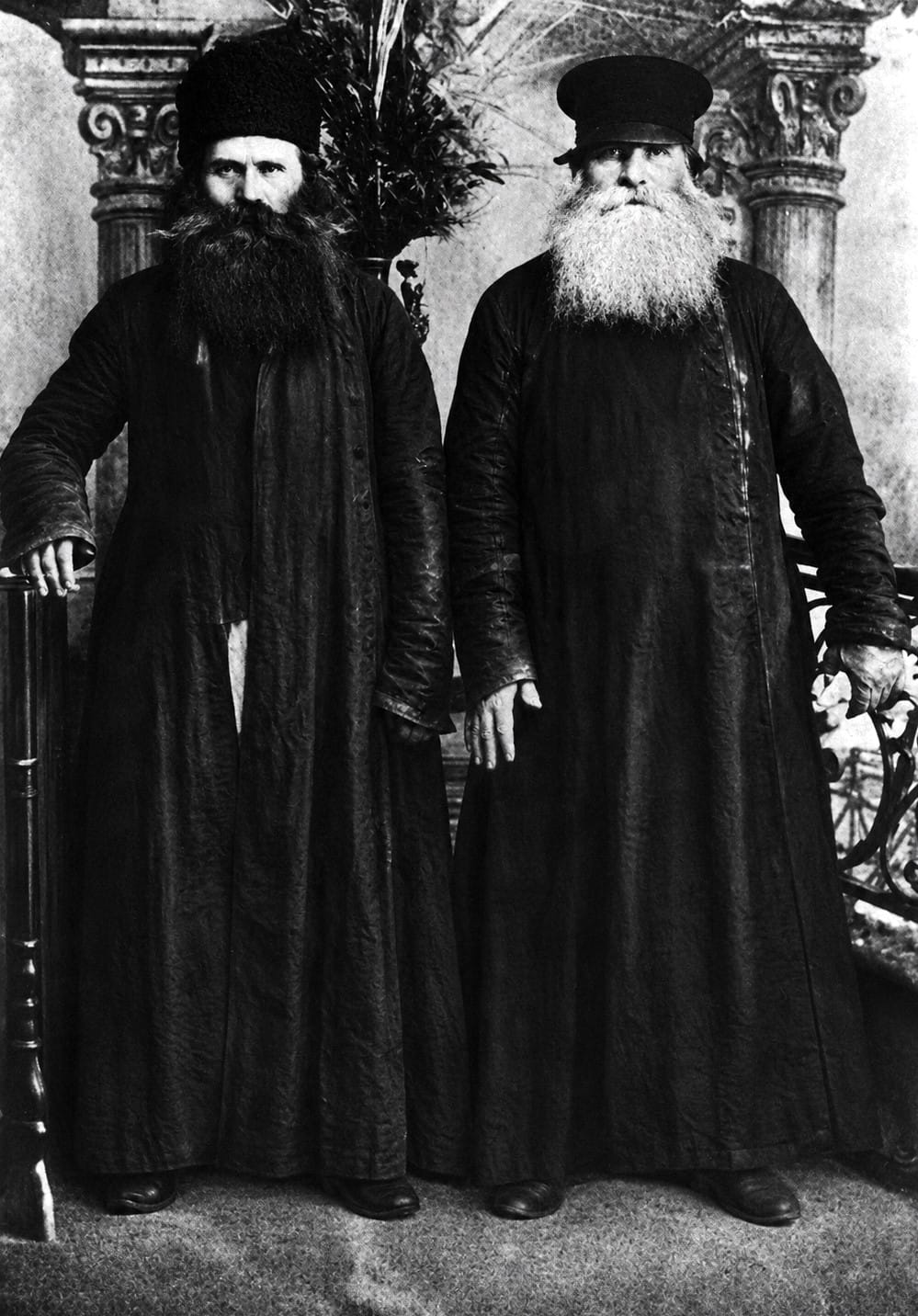
The Molokans were not a separate nation but a Spiritual Christian community, mostly composed of Russian peasants. They did not accept the icons, the cult of saints, the elaborate rituals, and the paid clergy of the Orthodox Church. According to them, there was no need for a powerful church organization, official priests, and complex ceremonies to come between man and God. They advocated for the direct reading of the Bible, a simple life, and the conduct of religious life within the community.
Their simple meeting houses where they worshipped were called sobranie. These structures did not contain altars, icons, or ornate religious objects. Community members would gather, read passages from the Bible, sing psalms, pray, and discuss community matters. Religious guidance was not in the hands of an official priestly class but of elders whose knowledge, morality, and life experience were trusted.
Not all branches of the Molokans held the same views on baptism, the Trinity, and holy sacraments. Some groups rejected infant baptism in the Orthodox style, while others advocated for conscious adult baptism. They had also developed different interpretations regarding the nature of God. Despite this, the fundamental idea that united them was clear: they sought faith not in the splendor of the church, but in the sacred text, in the human conscience, and in a simple communal life.
Who were the Doukhobors?
The Doukhobors were also a Spiritual Christian community that opposed the institutional authority of the Russian Orthodox Church. Their name is interpreted as "spirit warriors" or "those who struggle for the spirit." Initially used as a derogatory name implying that they opposed the Holy Spirit, this name was eventually adopted by the Doukhobors. They began to see themselves as people who fought against evil and violence through the spirit.
The Molokans and Doukhobors were similar in many ways. Both rejected icons, the clerical hierarchy, and elaborate church ceremonies. However, their ways of interpreting sacred authority differed. While the Molokans adhered more strongly to the written Bible, the Doukhobors placed more importance on the spirit of God living within man and on inner revelation.
In the religious life of the Doukhobors, hymns, prayers, and community memory passed down orally from generation to generation held an important place. According to them, sacred truth could be found not only on the pages of a book but also in the conscience of a person living a righteous and pure life. For this reason, while the "bookish" aspect of the Molokans was more prominent, the Doukhobors' understanding of faith had a more internal and mystical quality.
One of the most important differences between the two communities emerged regarding war and military service. Among the Molokans, there was a strong inclination against bloodshed and violence; however, not all Molokan branches were absolutely anti-military. Some rejected military service, while others could serve in the Russian army.
Among the Doukhobors, opposition to military oaths, weapons, and killing was much more definite and organized. They believed that no state order could legitimize killing. This difference would separate the historical paths of the Doukhobors and Molokans in later years.
Why did Tsarist Russia exile them?
In 19th-century Russia, the Orthodox Church was not merely a religious institution. It was one of the fundamental pillars of the Tsar's authority, state order, and social obedience. Rejecting the authority of the Church, from the state's perspective, could mean not only believing differently but also challenging the existing political order.
There was concern about the spread of Molokan and Doukhobor ideas among Orthodox peasants. Their non-participation in official rituals, their non-acceptance of the authority of priests, and especially their objections regarding military service, turned them into suspicious communities in the eyes of the Tsarist administration.
During the reign of Tsar Nicholas I, a decision taken in 1830 made the sending of these communities, considered "harmful," to Transcaucasia a systematic state policy. Molokans, Doukhobors, and similar communities were removed from the central regions of Russia and settled in the newly conquered lands of the Caucasus.
However, this practice was not solely for punishment. The Russian administration wanted to establish Russian-speaking agricultural villages in the Caucasus, cultivate the land, improve border roads and logistics, and create a loyal population. People considered dangerous in the center were seen as hardworking farmers and useful settlers on the border.
The great contradiction in the history of the Molokans and Doukhobors lay here. Their own state ostracized them because of their beliefs, but the same state exploited their labor in its expansion and settlement policies. They were both victims of exile and settlers used in the empire's border policy.
Their arrival in Kars
After the 1877–1878 Ottoman-Russian War, known among the people as the 93 War, Kars and its surroundings came under Russian rule. A new administrative structure called the Kars Oblast was established in the region. The Russian administration launched a large-scale settlement movement to connect this border region with the Ottoman Empire militarily, economically, and demographically.
In addition to Orthodox Russians, Molokans and Doukhobors were also settled in Kars. The first Molokan families arrived in the region in the autumn of 1878. However, a significant portion of these people did not come directly from within Russia. Families previously sent to Georgia, Yerevan, and other parts of the South Caucasus were moved to Kars in a second wave.
Therefore, Kars was not an ordinary place of migration for them. They had been sent from within the Caucasus, where they had previously been exiled, to another newly conquered border region. Kars, in a way, was a second homeland of exile established after the first exile.
By 1888, there were 6,612 Molokans distributed among 12 villages and 2,973 Doukhobors living in six villages in the Kars Oblast. The Molokans were more numerous; however, the Doukhobors also formed a distinct community within the Russian-era population of Kars.
Among the villages where Molokans settled were present-day Sulakyurt, Çakmak, İncesu, Yalınçayır, Yolboyu, Boğazköy, Yolaçan, Kümbetli, Çamçavuş, and Boğatepe. These settlements had Russian names such as Nikolayevka, Blagodarnoe, Malaya Vorontsovka, Romanovo, Vladikars, and Zavod. Among the identifiable Doukhobor settlements were Şahnalar, Karahan, and Kuyucuk around Akyaka, and Porsuklu, affiliated with Susuz. Although six Doukhobor villages are mentioned, their current names cannot all be definitively determined.
Daily life in a Molokan village
Molokans and Doukhobors mostly established villages away from city centers, close to vast agricultural lands and water sources. Water meant both fields, animals, and mills for them. Therefore, they preferred to live around rivers, in wide plains, and in areas close to pastures.
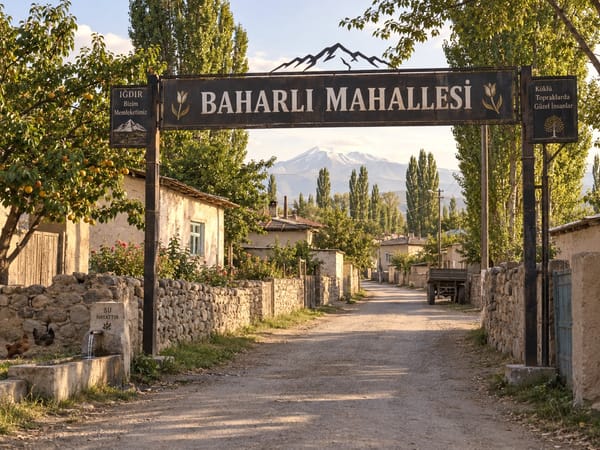
In the middle of the villages, there was often a long and wide main road, and houses were arranged in a certain order on both sides of this road. Passages were left between houses for animals to reach fields and pastures, and some parts of the streets were paved with stone. In front of the houses, there were small gardens, wooden verandas, and open areas where daily tasks were performed.
Kars's harsh climate directly determined the architecture of the houses. Thick stone walls, wooden-beamed roofs, doors opening to the south, and high-set windows helped retain heat. In the center of the houses was a large stove called a pech. This stove could heat not only the room it was in but also other parts of the house through the walls.
During long winter nights, family life revolved around the pech. Meals were eaten here, children were cared for, clothes were mended, wool was spun, and the day's events were discussed. Tea brewed in a samovar was an indispensable part of both daily life and entertaining guests.
The house was not only a shelter but also a small production center. There were large ovens for baking bread, cellars for storing food, sections for preparing dairy products, and workshops for repairing agricultural tools. Carpentry, blacksmithing, weaving, brick-making, and soap production were part of many families' daily lives.
Women played a fundamental role in milking, making butter and cheese, weaving, baking bread, preparing vegetables, and managing the household. Men's days were mostly spent in fields, barns, mills, transportation, and repair work. Children also became part of the family labor from a young age, learning to care for animals, plant seeds, harvest crops, and various crafts.
On Sundays, the work rhythm in Molokan villages slowed down, and families gathered in simple meeting houses. Passages from the Bible were read, psalms were sung, prayers were offered, and community matters were discussed. In Doukhobor meetings, communal prayers, religious chants, and oral teachings passed down from generation to generation held a more prominent place.
Both communities valued cleanliness, an orderly home life, and moderation. Hard work was not only an economic necessity for them but also part of their religious ethics. Products such as bread, grains, potatoes, vegetables, milk, cheese, butter, and eggs featured prominently in their diet. They kept their distance from alcoholic beverages and considered a simple and disciplined life an element of their community identity.
Although community life was based on strong solidarity, it was not entirely closed off from the outside world. They traded with Turks, Kurds, Karapapakhs, Armenians, and other communities in the region, marketed their products, and opened their mills to the surrounding populace. However, they maintained a more closed attitude regarding marriage. Their emphasis on marrying within their own faith communities would become a difficult problem to solve as their population dwindled.
Even after the great migrations, Molokan life in Kars continued for some time. Weddings were held, children were raised, beekeeping and agriculture continued, samovars were set up, and community meetings took place. In villages like Atçılar and Yalınçayır, a vibrant village life with schools, cemeteries, horse-drawn carriages, weaving tools, and simple meeting houses persisted for many years.
Their mark on Kars's production life
The most distinct mark left by the Molokans in Kars was seen in agriculture, animal husbandry, and milling. They cultivated larger areas using heavy plows and strong draft animals. They developed vegetable farming, poultry farming, and more diverse forms of agriculture where different products were grown on the same farm.
The fact that some large and sturdy draft horses in Kars were popularly called "Molokan horses" indicated the community's influence on agricultural and transportation life. The use of wagons and phaetons also brought a different order to freight and passenger transport.
The mills they built along rivers did not only serve their own villages. Villagers living in the vicinity also ground their grains in these mills, giving products, money, or labor in return. Thus, contact that began around production gradually turned into trade, neighborly relations, and cultural interaction.
Beekeeping, dairy farming, carpentry, soap production, and small workshop activities were also areas where they excelled. While the Molokans were more visible in these activities, Doukhobor villages were also part of the same regional economy based on agriculture and animal husbandry. The villages established by these two communities laid an important foundation for the dairy production and cheesemaking system that developed in Kars during the Russian period.
Kars Gruyère is not the product of a single community
It is often said that Kars Gruyère was brought by the Molokans. While this statement highlights their role in dairy farming and cheesemaking, it does not reflect the entire historical truth.
The Molokans and Doukhobors contributed to the formation of a strong dairy economy. Regular animal breeding, quality milk production, and village cheesemaking provided the necessary raw materials and working order for cheese production. The old name of Boğatepe, "Zavod," is also a memory of this production world; the word meant factory or production facility.
However, among those who brought the technical knowledge of Swiss-type Gruyère production to the region were also Swiss and German cheese masters. By the beginning of the twentieth century, numerous Swiss-type cheese dairies had been established around Kars and Ardahan.
Production did not cease after the departure of the Molokans, Doukhobors, and foreign cheese masters. Local producers, especially Karapapakh (Terekeme) families, took over the dairies, tools, and production knowledge, continuing the tradition.
Therefore, Kars Gruyère cannot be seen as the invention of a single people. The dairy farming developed by the Molokans and Doukhobors, combined with the technical knowledge of masters from Europe and the labor continued by the local people for generations, formed the current Kars cheese tradition.
The night the Doukhobors burned their weapons
One of the most important events that separated the paths of the Molokans and Doukhobors occurred in 1895. Doukhobor communities in the Caucasus collectively burned their weapons, declaring their refusal of military service and killing in the name of the state.
This act was not merely avoiding military service. The Doukhobors stated that no worldly authority could force a person to kill another person. The Tsarist administration regarded this stance as open rebellion; arrests, exiles, beatings, and economic pressures followed one another.
As the pressures increased, thousands of Doukhobors were allowed to leave Russia and emigrate to Canada. In 1898–1899, approximately 7,500 Doukhobors moved from the South Caucasus to Canada. This great journey did not happen solely with the community's own resources; peace activists and aid organizations in different countries contributed to covering the migration costs.
Leo Tolstoy was not a Molokan or a Doukhobor. However, due to his views against killing and state violence, he was closely interested in the oppression suffered by the Doukhobors. He transferred a significant portion of the royalties he earned from his last great novel, Resurrection, to the fund established for the Doukhobors' relocation to Canada. Income from his other works and aid collected around him were also used for the same purpose.
Tolstoy did not cover the entire cost of the migration alone; however, he played an important role in the Doukhobors' reaching Canada. This historical migration was primarily the migration of the Doukhobors, not the Molokans. The attribution of the weapon-burning act and the journey to Canada to the Molokans from time to time stems from the confusion of the histories of the two communities.
The Doukhobors who reached Canada mostly established villages in the Saskatchewan region. They tried to maintain their communal living arrangements from Russia and the Caucasus, cultivate the land together, and preserve their anti-military beliefs. This great migration weakened the Doukhobor presence in Kars and the South Caucasus much earlier than that of the Molokans.
The Molokans' connection to Kars
The Molokans' presence in Kars was not limited to fields, mills, and village life over time. These people, who came to the region in 1878 as border settlers of the Russian administration, transformed within forty years into a settled community interested in the future of the land they lived on.
After World War I, there was a Molokan representative in the Assembly of the Provisional National Government of the Southwestern Caucasus, also known as the Kars Republic among the people, which was established in Kars. This person was Matroi Radjinski.
Radjinski's presence in the assembly showed that the Molokans were no longer merely foreign peasants settled in the region by the Russian administration. Their having a say in a political structure trying to determine the future of Kars was an important sign that their lives, which began with exile, had gradually turned into a sense of belonging.
When British forces disbanded the administration in Kars on April 19, 1919, Radjinski was among the arrested assembly members and administrators. He later joined those exiled to Malta. Radjinski, who came to Kars as a member of an exiled community, serving in the assembly of the land he lived in and being exiled again due to his political choice, is one of the most striking scenes in Molokan history.
As the Empire collapsed
World War I and the 1917 Russian Revolution removed the foundation upon which the Russian settlement system in Kars rested. Kars changed hands between different armies and administrations within a few years; in 1921, it remained within the borders of Turkey with the signed treaties.
A significant portion of the Doukhobors had previously gone to Canada. The Molokans remaining in Kars, however, faced military service obligations under the new state order. Not all Molokans were absolutely anti-military; however, the strong opposition to violence and bloodshed within the community turned conscription into a serious issue of faith.
Calls for return from Soviet authorities, the decrease in the Russian population in the region, economic uncertainty, and concerns about the future accelerated migration. In 1921–1922, most of the Molokans left Kars. By the end of 1922, approximately 90% of the community had left the region.
Despite this, Molokan life in Kars did not end immediately. Hundreds of Molokans continued to live in Yalınçayır, Atçılar, Çakmak, İncesu, and other surrounding villages. In 1933–1934, there were 801 Molokans in Kars. They continued to cultivate their fields, raise animals, produce milk, and trade with the surrounding population.
Some Molokan families who remained in Kars eventually intermarried with the surrounding peoples and adopted other religions. Nevertheless, old dishes, Easter traditions, family habits, and ties with migrated relatives did not completely disappear. Life that began with exile transformed over time into a strong sense of Kars identity and homeland.
The last Molokan migration
By the 1960s, the problem facing the Molokans was no longer just military service or state policy. The community's population had gradually shrunk, making it extremely difficult for young people who wanted to marry someone of their own faith to find suitable partners. Within a few generations, most families had become related to each other.
The youth's distancing from traditional life, decreasing interest in community meetings, and a desire for greater integration with the surrounding society increased the concerns of the older generation. The issue was not solely economic conditions. The real question was whether the Molokan community could continue to exist as a separate community in Kars.
Calls from the Soviet Union, ties established with Molokan communities abroad, and the hope of building a new life strengthened the migration trend. The last major migration began on November 22, 1961, with the departure of ten families, a total of 60 people, from Atçılar village. Other families followed them throughout 1962.
While some went to the Soviet Union, some families later settled in the United States. It is understood that the migrants dispersed to different regions of Saratov, Stavropol, and the North Caucasus. Since not all groups went to the same place, it is not possible to say that the Kars Molokans were settled in a single region.
Even after these migrations, ties with Kars were not completely severed. Years later, Molokan descendants living in America and other countries came to Kars, searching for their grandparents' homes, family gardens, old cemeteries, and meeting places. Some were able to find their ancestors' homes based on details they heard from their elders. People had left Kars, but Kars had not left their family memory.
They left, but they were not erased from Kars
Today, the old village structure where Molokans or Doukhobors lived collectively no longer exists in Kars. Nevertheless, the tombstones in Sulakyurt, the old meeting structure in Eşmeyazı, the traditional houses in Çakmak, the mills around the Kars Stream, and the dairy buildings in Boğatepe continue to remind us of their presence.
Although the material traces of the Doukhobors are fainter, their memory also exists in the past of some villages around Akyaka and Susuz. The descendants of Doukhobors who settled in Canada and Molokans who migrated to different countries keep these historical ties alive through family narratives and old photographs.
The legacy they left behind is not only stone houses, stoves, mills, and cemeteries. There are fragments of their labor in Kars's agriculture, animal husbandry, beekeeping, village architecture, dairy farming, and cheese tradition. Some methods they brought from outside became part of Kars's local culture as they were shared with the surrounding peoples.
To describe the Molokans and Doukhobors merely as "colonists brought by the Russian occupation" would be incomplete. To transform them entirely into heroes of an innocent and romantic peace story also does not show the whole truth. They were settlers used in the border policy of Tsarist Russia; but at the same time, they were people whom the same state ostracized, exiled, and oppressed because of their beliefs.
They did not come to Kars as if to a homeland they had freely chosen. Nevertheless, they built homes here, raised their children, cultivated the land, established mills, and developed neighborly relations. The Doukhobors burned their weapons and headed for another continent; the Molokans stayed longer in Kars, participated in the political life of the region, and dispersed across the world in two major waves of migration.
In the end, the organized life of both communities in Kars came to an end. They left behind not only empty houses, silent cemeteries, and mills that no longer turned. They settled into the collective memory of Kars with their labor, beliefs, resistance, and neighborly relations.
To remember the Molokans and Doukhobors is not to commemorate foreign communities that no longer live here. It is to remember the multi-layered history of Kars, formed by the labor, suffering, faith, and memories of different peoples.
Sincerely, Mücahit Özden Hun