The Triumph of Will in the Sky: Yusuf Akgün
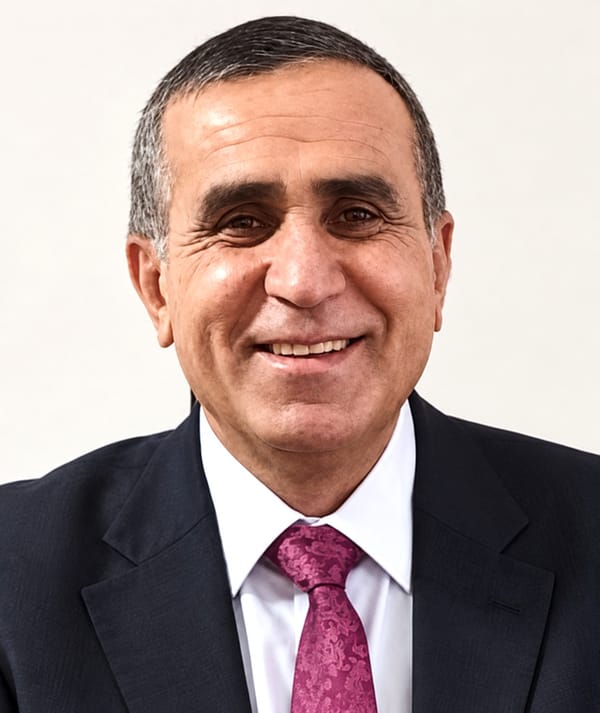
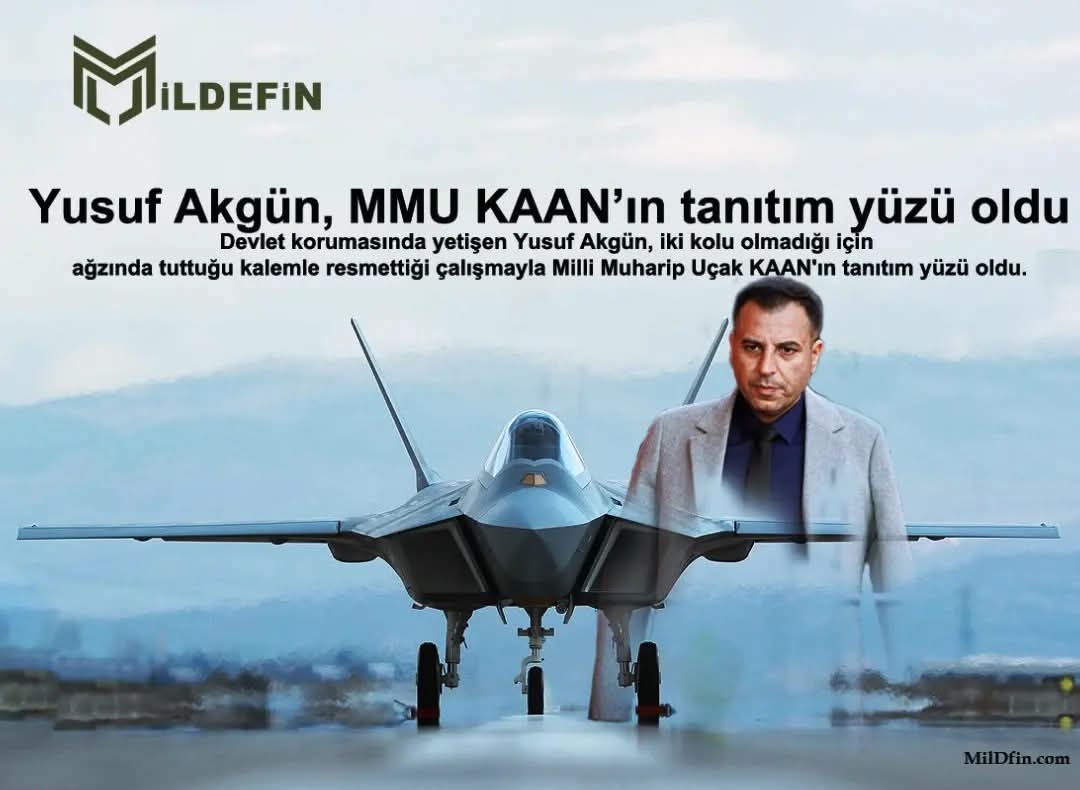
Yusuf Akgün, an Iğdır native who once filled exam papers with a pen held in his mouth, now uses the same pen to draw Turkey's national combat aircraft, KAAN.
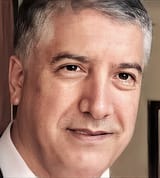
Dear Readers,
Yusuf Akgün, from Iğdır, who once filled out exam papers in class with a pen held in his mouth, is now using that same pen to draw Turkey's national combat aircraft, KAAN. This journey, stretching from orphanages to global sports arenas, from art studios to TUSAŞ hangars, is not just a success story; it is the name of a great struggle against one's own destiny.
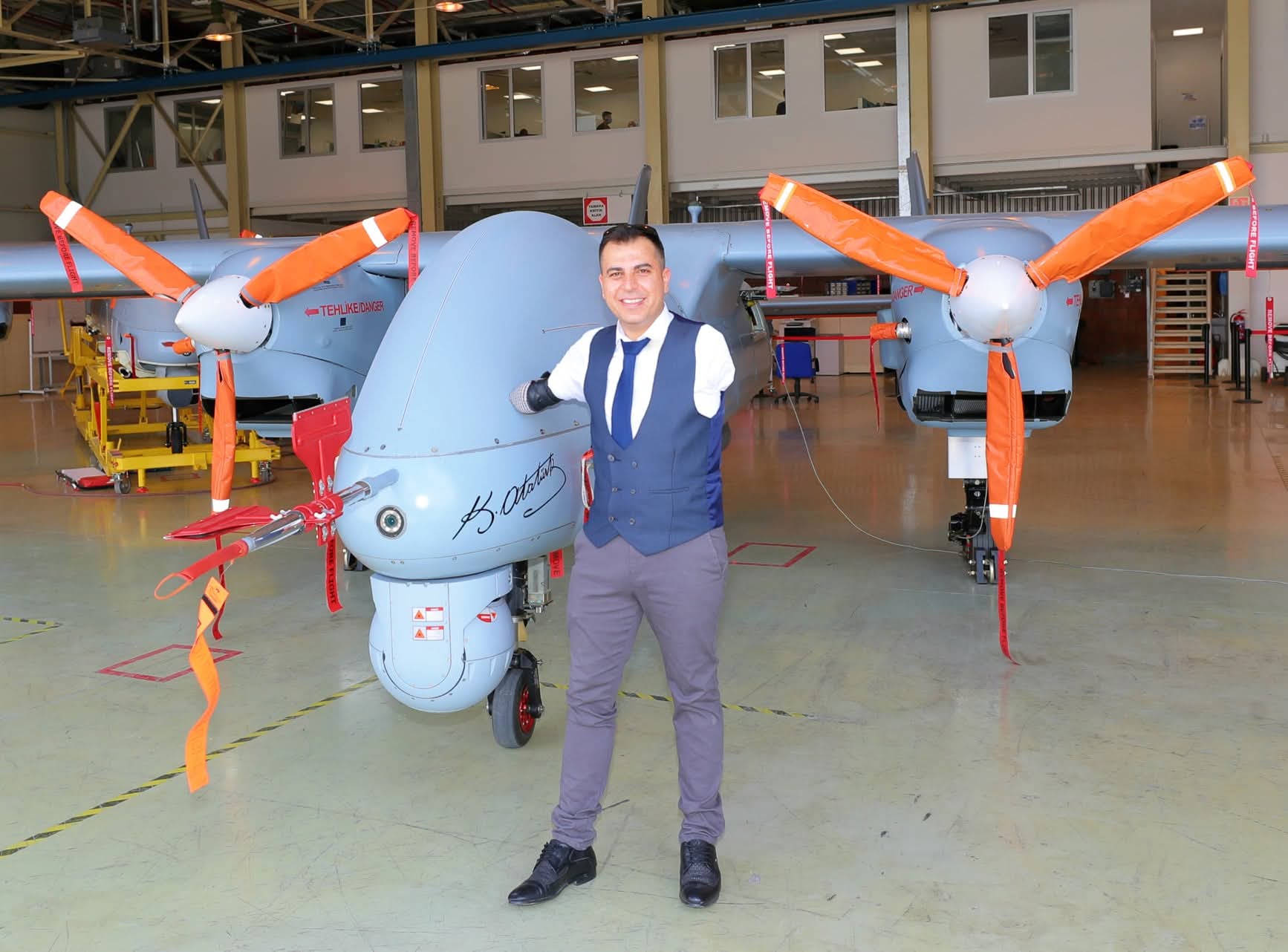
Yusuf Akgün is my relative. However, the reason I want to write about him is not solely our kinship. Yusuf possesses one of the most inspiring life stories of our time, demonstrating what human will is capable of.
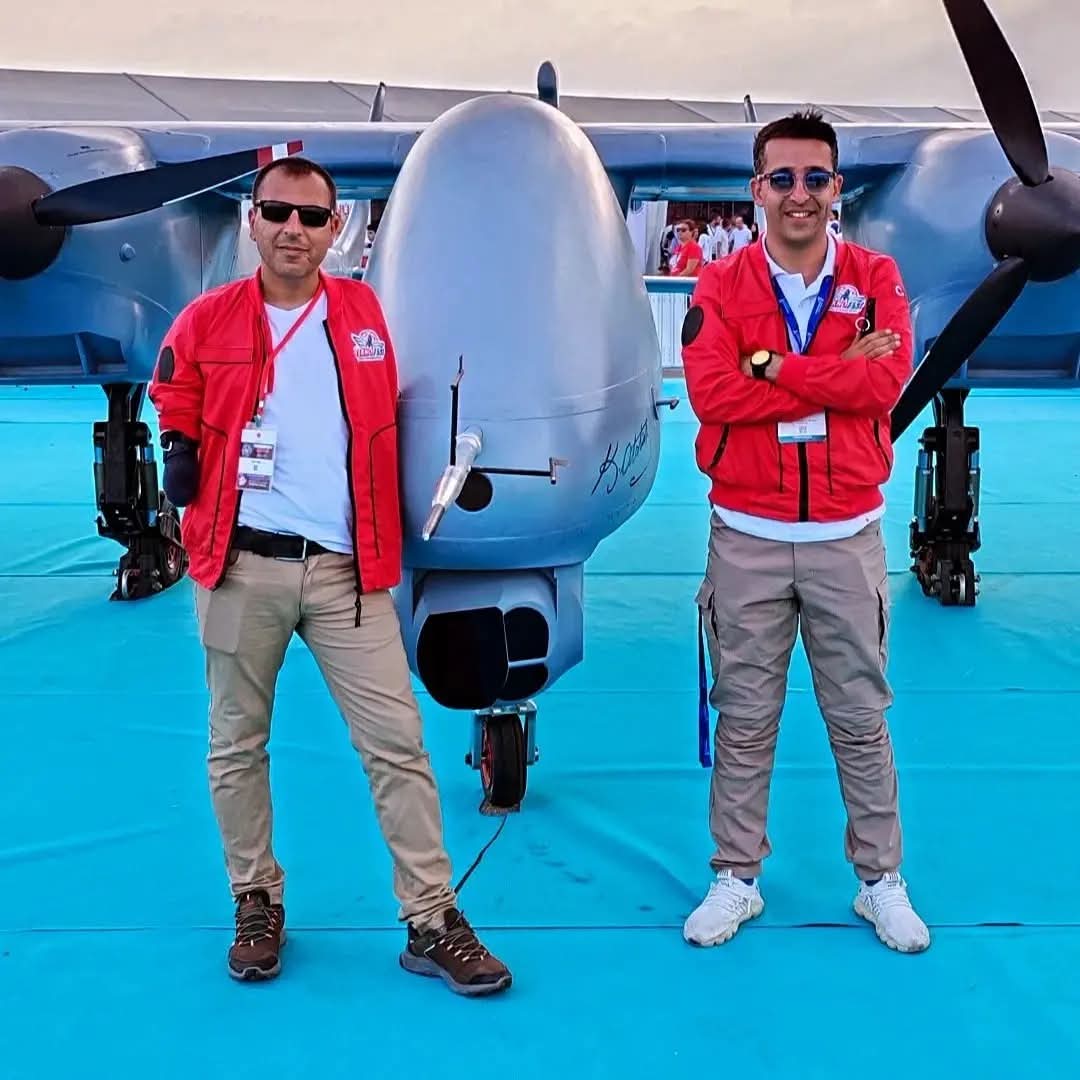
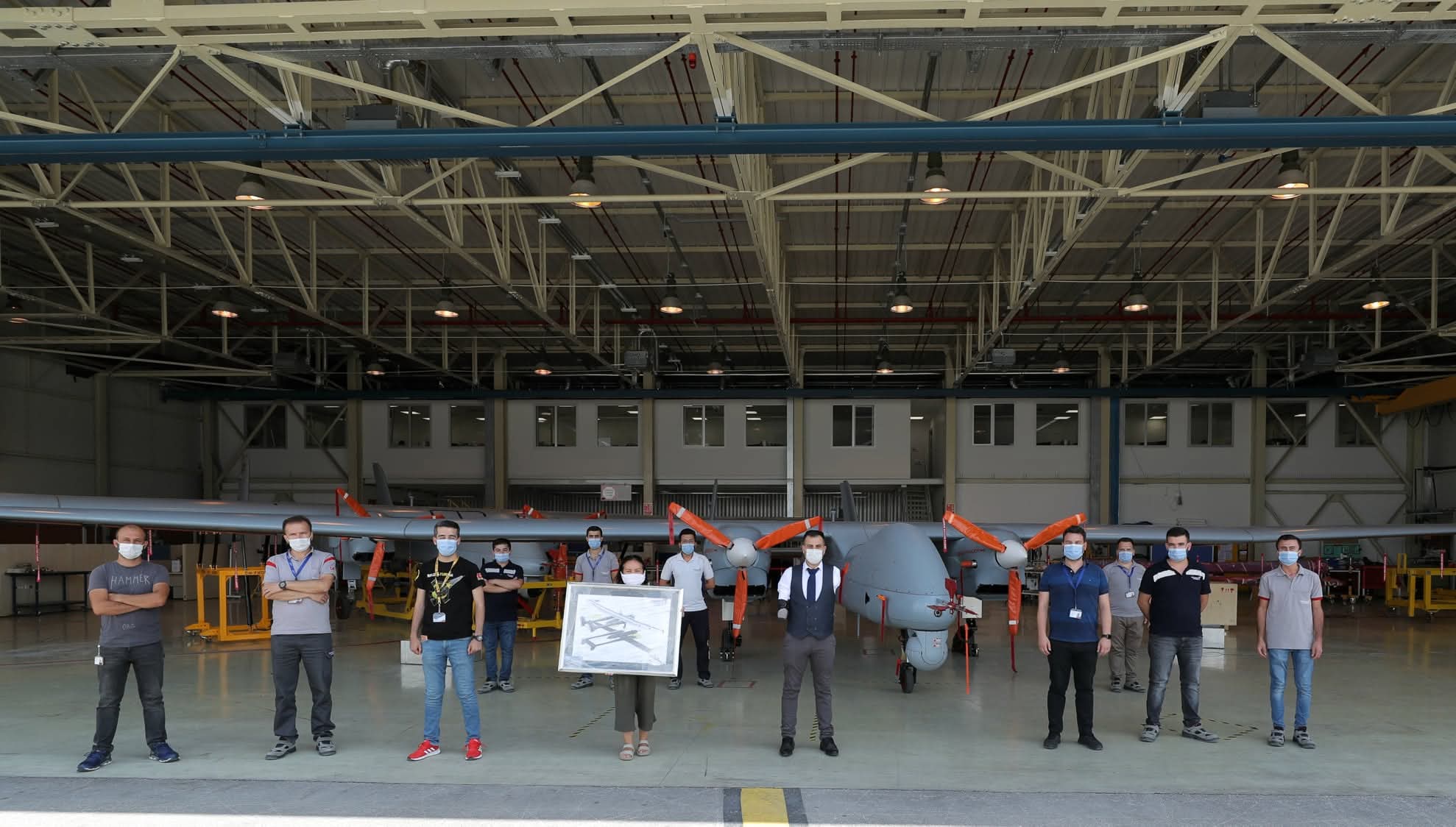
In his recent photographs, we see him in front of Turkey's national aircraft. In one frame, he stands beside AKSUNGUR in the TUSAŞ hangar. In another photo, he smiles at the camera in his red jacket at a defense industry promotional event. In yet another, he is with TUSAŞ employees, standing in front of a drawing he prepared with a pen in his mouth instead of his hands.
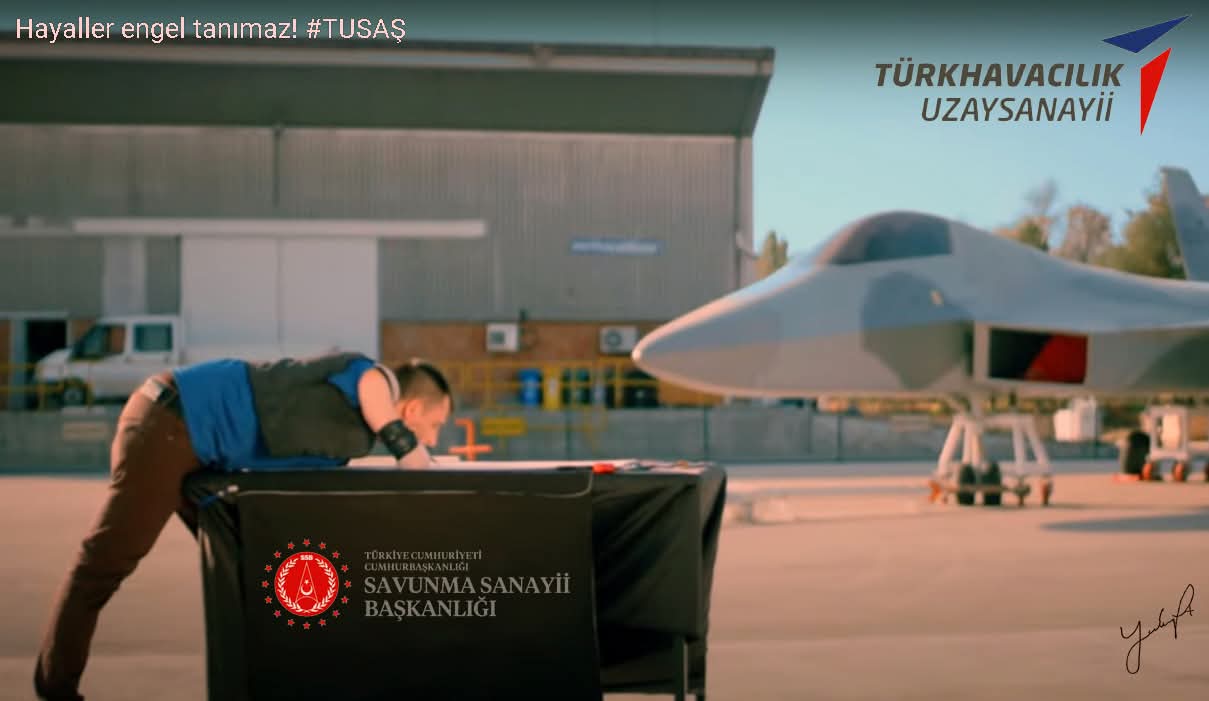
But among all these photos, there is one that alone suffices to summarize Yusuf's life:
Turkey's national combat aircraft KAAN stands in the background. Yusuf leans over a table in front of him, holding a pen in his mouth, drawing the aircraft.
The words TUSAŞ placed on that photograph are extremely meaningful: "Dreams know no bounds."
In Yusuf's life, this sentence is not a promotional slogan but a lived reality.
A Life Beginning at the Foot of Mount Ararat
Yusuf Akgün's childhood was spent in the village of Karakuyu, in the shadow of Mount Ararat (Ağrı Dağı). His family's roots extended to Aliköçek, known today as Alibey village. His father, Yahya Akgün, worked as a stonemason, building houses with his own hands; his mother, Emine Hanım, carried the heavy burden of village life on her shoulders.
As a child, Yusuf roamed the mountains, plains, and rocky areas, following sheep and lambs. He didn't speak Turkish, only Kurdish. He was a curious, active, and restless child. He examined insects under stones, spent hours by ant nests, and led his flock further and further each time.
This boundless curiosity led to a disaster that would completely change his life at the age of five.
One day, he climbed a high-voltage pole with his friends. He couldn't read the danger sign on the pole. When he approached the wires, he was electrocuted. Little Yusuf, severely injured, suffered extensive burns and fractures. He lost both his arms.
This small child, whom doctors did not expect to live, clung to life.
His real struggle began that day.
It would not be right to evaluate Yusuf's life solely through the loss of his two arms. He faced things much heavier than losing his limbs. He was separated from his family, placed under state protection, and sent from one orphanage to another. He grew up in dormitories in Pursaklar, Keçiören, Etimesgut, Trabzon, Ağrı, and Ankara.
He experienced violence. He was ostracized. He was belittled. He encountered pitying glances. He ran away countless times. He lived on the streets. He slept under the warm engines of trucks on cold winter nights. But he never accepted himself as an outcast from life.
Because submission was not in Yusuf's nature.
A Destiny Changed by a Pen
One of the biggest turning points in Yusuf's life occurred during his primary school years.
The teachers and students in his class thought this child, who had no arms, could not write. They often saw him not as a talented student, but as a child in need of protection.
Yusuf, however, hated being pitied.
One day, the teacher gave a multiple-choice test. As the papers were distributed, an exam paper was placed in front of Yusuf. Everyone in the class waited curiously to see what he would do.
Yusuf took the pen in his mouth.
He bent his head towards the paper.
He began to answer the questions.
He answered all 25 questions on the exam correctly. He was the only student in the class to get all the questions right.
That day, the pity in his teacher's eyes was replaced by admiration. Yusuf also realized that the pen was not just a writing tool for him.
The pen was his independence.
The pen was his gateway to the world.
The pen was his way of saying, "I exist too."
Over the years, he learned to use the pen held in his mouth with great mastery. He drew portraits. He depicted Yeşilçam artists, statesmen, and historical figures. His lines matured gradually. The pen that once only marked the correct answer on an exam now transferred the finest details of people's faces onto paper.
Today, that same pen draws the body of KAAN.
From Orphanages to World Sports Arenas
Yusuf's struggle was not limited to art. He decided to rediscover the possibilities of his own body.
He started swimming.
Since he had no arms, he developed his own unique swimming technique. He propelled himself through the water using his feet, shoulders, and entire body. He worked for hours. Over time, he reached the level of a national athlete and won third place at the World Disabled Swimming Championships in Finland.
He engaged in athletics and kickboxing. He represented Turkey in international competitions.
At a May 19th event, he carried the flag of honor, which was transported from Samsun to Ankara, in his teeth because he had no arms, ascended the Gölbaşı hill, and delivered it to Anıtkabir.
This image also became one of the symbols of Yusuf's life.
Because whenever he was asked, "How will you do this?", he answered by doing it, instead of giving long explanations.
From Aksungur to KAAN
Yusuf Akgün's encounter with the defense industry marked the beginning of a new era in his life.
In 2018, he was invited to a program organized at the Presidency. Later, he prepared the drawing of the AKSUNGUR unmanned aerial vehicle, developed by TUSAŞ engineers. This work, which he did with a pen held in his mouth, attracted great attention on social media and in national and international publications.
A strong meaningful connection was established between Yusuf's life story and Turkey's national technology initiative.
On one side, there was a person who rebuilt his life despite all impossibilities.
On the other side, there was the will of a country, dependent on foreign sources for years, to produce its own aircraft.
This process, which began with Yusuf's AKSUNGUR drawing, extended to KAAN. From 2021 onwards, he began to participate in the visual design, external modeling, patterning, logo design, and promotional activities of national defense industry products.
His contribution differs from the work of engineers who prepare the aircraft's aerodynamic calculations or flight systems. Yusuf contributes to the visual narrative of national aircraft and the emotional bond they establish with society.
While engineers give the aircraft flight capability, Yusuf makes the spirit of struggle carried by that aircraft visible through his drawings.
Therefore, the photograph of him drawing in front of KAAN with a pen in his mouth is not an ordinary promotional shot. That photograph is the meeting of two separate wills.
KAAN represents Turkey's will for independence in its own skies.
Yusuf, on the other hand, represents humanity's struggle for independence over its own life.
One has wings.
The other has no arms.
But both are moving towards the sky.
Not Pity, But Production
To confine Yusuf Akgün's story solely to the cliché of "a person who achieved success despite their disability" would be to tell his struggle incompletely.
What Yusuf truly opposed was not the absence of his two arms. It was being pitied, belittled, having others decide for him, and being seen only as a person in need of help.
In his youth, when he was told, "Let the state take care of you for life," he did not accept it.
His answer was clear: "I can work. Give me a job."
Yusuf did not want to be an object of care. He wanted to live as a productive, decision-making, working individual who contributed to society.
Today, he meets with young people; he participates in seminars, workshops, and morale-boosting programs. He not only encourages young people with disabilities but also explains that they should be able to make their own decisions and achieve economic independence.
Because the real lesson to be learned from Yusuf's life is not an easy saying like, "If a person wants something, they can do anything."
The real lesson is this: Instead of pitying people, we must give them opportunities.
Instead of deciding for them, we must remove the obstacles in their way.
Instead of ignoring their talents, we must enable them to participate in production.
Iğdır's Son Rising to the Sky
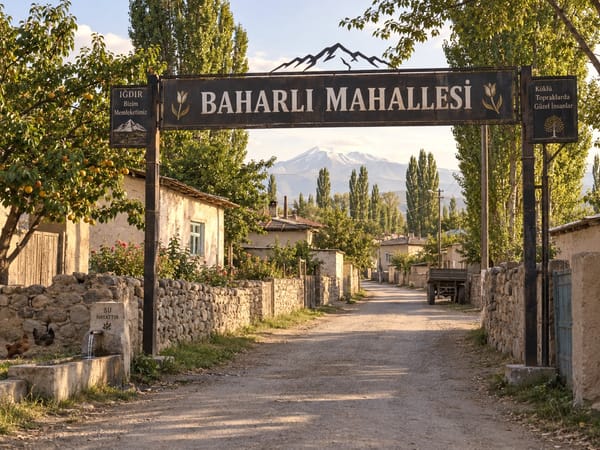
Yusuf Akgün is a son of Iğdır. His childhood was spent among the volcanic stones of Karakuyu, in the shadow of Mount Ararat. He journeyed from the lands where he herded sheep to orphanages, from orphanages to the streets, from the streets to university, sports halls, and art studios.
Today, he stands beside national aircraft in one of Turkey's most advanced technology centers.
Therefore, Yusuf's success belongs not only to himself or his family. His success is the shared pride of Iğdır, of children who grew up in orphanages, of individuals with disabilities, and of everyone who strives to make a place for themselves in life.
Yusuf utters a very important sentence when telling his own story: "Nothing was given to me as a gift."
Indeed, nothing was given to him easily.
He relearned to walk.
He learned to eat by himself.
He learned to hold a pen.
He learned to swim, run, draw, get an education, and survive in life.
Each time, he made possible something that others deemed impossible.
Once, when he held a pen in his mouth in class, everyone turned to look at him with great astonishment.
Today, that same pen draws KAAN, and all of Turkey looks at Yusuf.
At the tip of that pen are not just the lines of a fighter jet.
There is the future that a child, thought to be cast out of life at the age of five, drew for himself.
There is a path stretching from the stony lands of Karakuyu to the TUSAŞ hangars.
There is a great victory won against pain, exclusion, and despair.
And at the tip of that pen, there is a vast sky that Yusuf Akgün built without his own hands.
Sincerely, Mücahit Özden Hun