A Young Man in Pursuit of Revenge: Misto
A tragic 1941 story recounts a nomadic family in Eastern Anatolia encountering a mysterious horseman, whose visit leads to unsettling events amid the chaos of World War II.
Dear Readers,
The story you are about to read is based on a true event. Since my childhood, I have heard several different versions of this tragic tale, and I found myself hesitant about which version to take as the basis. Imagine this scenario:
At the request of the apartment management, an official enters every building to spray pesticides. The next day, if you knock on your neighbors' doors and ask whether an official came the day before to spray and, if so, what color his clothes were, the answers you receive will likely be something like: "Yes, an official came. His clothes were brown, I think," or "Yes, an official came. His clothes were gray, I believe." As you can see, everyone agrees that the official came, but there are differing opinions about the color of his clothes.
<
The event I will describe below is similar to this. The reality of the event is true, but the inevitable intrusion of fiction in the transitions has occurred.
*
The year is 1941. World War II continues at full strength, especially in Europe. Nazi Germany has occupied Greece and is ready to attack Turkey at any moment. Since the Turkish army expects this attack to come via Edirne, its most significant forces have been deployed to Thrace, and dozens of deep, wide trenches have been dug to hinder the advance of German tanks. The Turkish Army stands ready to repel the first assault of the stormtroopers—Sturmabteilung—as the Germans call them. Since the Soviet Union has not yet entered the war, there is little reason to station many troops on the Eastern Front. At a time like this, when security is lax in Eastern Anatolia, a tragic event occurs in the region between Iğdır and Doğubayazıt.
As I mentioned earlier, while Europe is drowning in war, life in Eastern Anatolia is tranquil. Tribes prepare for the highlands with the arrival of May, taking refuge, as is their custom, in the coolness of the highlands to protect their livestock from the scorching summer heat.
Generally, each tribe has its own highland. Occasionally, a few families arriving from distant places prefer to set up their felt tents alone, away from the larger tribes, spending the highland season with their small flocks of sheep without disturbing anyone.
It is the summer of 1941. One such family, coming from the direction of Diyadin, sets up their tent in open land, away from the main road, near the village of Karabulak on the route from Iğdır to Doğubayazıt.
The family has two donkeys, ten to fifteen sheep, and two dogs. A mouser cat also accompanies them. Since the man of the house was killed in an unfortunate blood feud in Diyadin, the family, estranged from their tribe, chose to move far from Diyadin. The poor family’s small felt tent, propped up with four or five poles, barely stands, offering shelter only on rainy days.
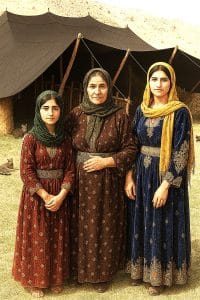
The felt tent, the mother, and her two daughters
One day, a horseman approaches the tent. The dogs bark at him in greeting. A fourteen-year-old boy emerges from the tent, shoos the dogs away, and approaches the traveler.
The horseman asks for a cup of water. One of the young girls inside fills a ladle and hands it to him. As he drinks, the horseman does not take his eyes off the girl. She is a stunning beauty with green eyes. Soon, her sister and mother also step outside the tent, eyeing the stranger shyly from a distance.
The horseman asks the boy:
“What’s your name?”
“Mısto!”
“Which tribe are you from?”
“Badoyî!”
“Where is your original settlement?”
“Diyadin!”
“Why did you come here?”
“My father was killed in a blood feud within the tribe. We left in anger and came here.”
“Are there only four of you?”
“Yes! My two sisters, my mother, and me!”
The horseman stares intently at the girls and the woman, then sharply cracks his whip against the horse’s flank. “Goodbye! May God bless your bounty!” he says as he rides away.
A Coffeehouse in Iğdır
The horseman soon arrives in Iğdır. He enters the coffeehouse where he always sits to drink tea and meet friends. Two of his friends are sitting in a dark, smoke-filled corner, sipping tea and chatting as if waiting for him. The horseman reaches for the tobacco pouch as soon as he sits down. He rolls a cigarette with care. By the time he exhales the first puff, tea is already served before him. He takes a few quiet drags from his cigarette. Suddenly, he leans in as if to share a secret with his two friends. They, too, lean in curiously.
“How about spending some pleasant time with the most beautiful girls in the world?”
The other two listen eagerly. One of them asks:
“A brothel or someone’s house?”
“No! No!” replies the horseman. He recounts what happened and describes the two girls he saw—and their still young and beautiful mother.
“Our job is easy! We’ll tie up the boy! No one will come to help no matter how much they scream. What do you say?”
“Where’s the tent?”
“Not far! If we leave now, we’ll be there in three hours. Just beyond the Çilli Pass.”
The three companions waste no time, mounting their horses and setting off. The sun has just set, casting a reddish glow over the land.
Murder in the Tent
As the three horsemen cross the Çilli hill, they spot a light in the distance. A sailor’s lantern hangs from one of the tent poles. The surroundings are pitch black. Even from afar, the riders can make out the dim glow of the lantern. Along the way, the horseman who had been handed the ladle of water keeps describing the beauty of the girl, stirring an uncontrollable lust in his companions. Like hungry wolves cornering their prey, the three horsemen advance eagerly toward the faint light.
*
The dogs are the first to notice the horsemen’s approach. They howl long and loud to announce the strangers. Mısto sits up from his bed, takes the sailor’s lantern hanging from the pole, and walks toward the front of the tent. He peers curiously into the darkness at the black shadows moving and drawing closer.
One of the horsemen lowers his gun from his shoulder, loads two shells into the breech. He takes aim at one of the dogs charging at him ferociously and fires. The dog collapses with a whimper. The other dog retreats in fear.
At the sound of the gunshot, the mother and her two daughters, sharing the same bed, quickly straighten their clothes and rush outside. Mısto, who had wandered some distance away, runs back toward the tent in fear. The mother and her three children cling to each other, staring wide-eyed at the approaching horsemen. The horseman who had visited earlier shouts:
“Mısto, come here!”
Mısto approaches the man with timid steps. The three strangers dismount. They tie their reins to the stakes in front of the tent. One of the men grabs Mısto, throws him to the ground, binds his hands and feet tightly, and tosses him into a dark corner behind the tent.
The two girls begin to cry. The mother gathers her courage and starts shouting, “What are you doing? Who are you?” She assumes this is a continuation of the blood feud that arose after her husband’s murder.
Two men seize the woman, drag her, and tie her tightly to the central pole of the tent. To silence her screams, they gag her with a scarf. The two young girls huddle together in fear on the bed.
The three men turn toward the girls simultaneously. They tear off the girls’ clothes by force. The two sisters, now naked, cling to each other, sobbing. One of the men pulls the nearest girl away from her sister. Another has already removed his pants. He calls out to his friend in a strong voice:
“Beko! Hold the girl’s hands tight!”
Beko clasps the young girl’s hands behind her head and pins her down with his knee. The naked man throws himself onto the fifteen-year-old girl. Her screams and cries shake the earth. Beko slaps her hard across the face. She falls silent. The man holding her hands shouts:
“Beko, enough! Hesso’s turn!”
This time, the half-naked Hesso, waiting his turn, pounces on the girl. Soon, the man holding her hands calls out again:
“Hesso, my turn!”
Zeko also rapes the girl. Then they bring the second girl. Everything repeats mercilessly.
Mısto, bound hand and foot, watches the horror unfold in the dark, too afraid of being killed to make a sound. In the sooty light of the sailor’s lantern, he studies each man, memorizing their voices and silhouettes. The man named Beko has a large scar on his right leg. He notes the facial features of the other two. Zeko is bald. Hesso keeps shouting:
“Hurry up! Tomorrow morning, I have to take a truckload to Istanbul. Oruç Vurgun fires drivers who deliver goods late.”
The other asks:
“Where’s Oruç Vurgun from?”
“Iğdır. He settled in Istanbul. He has hundreds of trucks and drivers working for him.”
Here is the translated HTML fragment with all tags preserved exactly as in the original: ```html
Mısto could see the large oriental boil on Hesso's right cheek even from a distance. Mısto was trying to commit everything he heard and saw to memory so he would never forget again. His mother, her head tied to the post, was weeping uncontrollably.
The three men put on their trousers and sat cross-legged. Zeko threw the tobacco pouch he took from his pocket onto the ground. One by one, with serene expressions, they rolled and lit their cigarettes. As thick smoke rose from the middle of the tent, all three wore shameless smiles of cruelty.
Beko spoke up:
"Should we leave them like this and go?"
Zeko intervened:
"No! Best we cover our tracks. Let's kill them and throw them in a pit."
Hesso agreed. Zeko stood up and aimed his pistol at the two girls. He fired. Reloading, he shot them in the head this time. He wanted to make sure they were dead. The mother had already fainted from the pain she witnessed. Zeko then pressed the gun against the woman's drooping head and fired.
As they pondered where to bury them, Hesso, who knew the area well, pointed to the distant Iğdır-Doğubayazıt road:
"There are deep pits along the highway. We can dig a bit more. We'll bury the bodies and cover them with dirt. That way we won't have to dig much."
They tied the corpses with rope and dragged them away with their horses. They didn't forget to take the shovel and pickaxe from the house.
Hesso was right. The highway was in terrible condition. They found a deep pit. They dug a little more. They threw the mother and two girls in together. They covered them with gravel and dirt. They topped it off with larger stones. No one could tell three bodies were buried there.
Mısto watched everything unfold by moonlight from a distance. As soon as he saw the horsemen leave, he crawled to the kitchen area, grabbed a knife from the ground with his mouth, and crawled toward the stone wall. His hands were tied behind his back. With difficulty, he wedged the knife's handle between the stones. He positioned the rope binding his wrists against the blade. Moving his hands up and down, he cut the rope. His hands were covered in blood. Without wasting time, he cut the rope on his feet too. He put out the lantern. Taking the lantern with him so they wouldn't find him by its light, he hurried down toward the valley. He squeezed himself between two large rocks to hide safely. The other dog was whimpering as if mourning its dead companion.
Beko suddenly remembered Mısto:
"Let's go kill that boy we tied up too. No witnesses!"
The horsemen rushed to the tent. Mısto wasn't where they'd left him. Everything was pitch black. After searching a bit more, they gave up. They rounded up the two donkeys and sheep waiting nearby and set off toward Iğdır.
Mısto's mind was in turmoil. Crouched between two rocks, he waited. When morning light filled the area, Mısto emerged from hiding. The surviving dog had found Mısto and was loyally lying before him, whimpering. Mısto crawled toward the felt tent.
The horsemen were gone. At daybreak, he saw the pooled blood of his siblings and mother inside the tent. As he crawled to retrieve the knife, his clothes became stained with his siblings' blood. He acted without much thought. He changed his shirt but had no spare pants - nothing he could do about that. His black pants had absorbed the blood, making the stains less visible.
The house cat kept meowing. Mısto's eye caught the tobacco pouch on the ground. He picked it up and put it in his pocket. He also retrieved the knife he'd used to cut his bonds from between the stones. He put on his father's coat. The coat was too big. He rolled up the sleeves. He put the knife in his side pocket. He dismantled the tent and poles. He piled everything together. He sprinkled kerosene from the lantern all around. He lit a match and threw it on the felt tent. Flames quickly rose. Nothing remained of his family now. Mısto picked up his cat. The dog followed him. He came to the roadside where his mother and two sisters were buried. He piled stones to mark the spot so he wouldn't forget. He repeated to himself a thousand times that he would take revenge. Silently, he set off toward Doğubayazıt.
Mısto's Days in Doğubayazıt
When Mısto reached a neighborhood on the outskirts, he stopped in front of a house. There was no one around. During the summer pasture season, the town's population halved.
Mısto continued toward the city center. He saw a garden where children were playing. When the house dogs and his own dog growled at each other, the poor cat jumped onto the wall in fear and disappeared. A woman who came out at the dogs' barking shouted from a distance:
"Who are you? What do you want?"
Mısto wanted to speak but realized his tongue was tied. He couldn't talk. He gestured to say "I'm hungry." The woman went inside and came back with two flatbreads.
The woman asked questions but got no answers. Mısto tried to explain what happened through gestures, but the woman couldn't understand his strange movements.
Mısto sat on the ground. He split the bread in two. He threw half to his dog. He ate the other half himself. He hid the second bread inside his shirt. He left through the garden gate and disappeared into the crowds. When he looked back at one point, he couldn't see his dog. It was gone.
Mısto stopped in front of a teahouse. He sat on the curbstone. The waiter serving tea to customers was also the owner. His apprentice had gone to the summer pastures, leaving him alone. When he saw Mısto sitting quietly on the curb some distance away, he called out:
"Hey! Young man!"
Mısto turned his head to look. The teahouse owner asked:
"Do you want to work?"
Mısto stood up and approached hesitantly. The teahouse owner made an offer:
"My apprentice went to the summer pastures. I can't manage alone. You'll just bring tea to tables and take away empty glasses. Agreed?"
Mısto nodded to say "Yes!" "What's your name?" the man asked. Mısto pointed to his tongue to indicate he couldn't speak.
The man didn't mind this much:
"You don't need to talk anyway! You'll serve tea and collect empty glasses. Let me give you a name: Halis. It was my late grandfather's name."
Mısto slightly bowed his head as if agreeing. The man asked again:
"Do you have a place to stay?"
Mısto shook his head to say "No!" The owner was practical. He took Mısto to one of the back rooms. "Halis, this room is yours! You'll open the shop before I arrive in the morning and clean it. Start working now!"
In his first days, Mısto's clumsiness made him drop glasses and spill tea. But he soon learned to do his job perfectly. The shop owner was pleased and would proudly call out:
"Halis, the teas are ready!"
Mısto threw himself into his work, clearing empty glasses and keeping tables clean without being told.
Mısto had now mastered his job. At night he slept on the small room's mattress, woke early to clean the shop, arranged tables and chairs outside, and even sprinkled water on the shop front and street. When the owner arrived to find everything done better than expected, he'd praise: "Bravo Halis! You've learned quickly!"
Every evening, to not forget, Mısto repeated these words in his mind:
"Zeko, Hesso, Beko, Oruç Vurgun!"
Then he'd take out his knife and sharpen it at length on a whetstone.
Sometimes his mind wandered to his father's murder. His father was a peddler. He had five donkeys. He'd go to Ağrı city center, buy various household goods and fabrics for women, then travel to Terekeme villages like Mengeser, Suçtağı, and Yoncalı to sell them. Kurdish villages had no cash. He wasn't willing to barter goods for butter or cheese either.
From age ten, Mısto would follow his father's donkey caravan, load goods bought in Ağrı onto the donkeys, and travel through Terekeme villages. Doing this job nonstop for four years, Mısto had also learned Turkish. Sometimes when his father was ill, he had the confidence to manage the business alone.
One day, Mısto and his father had sold their goods and were heading home to their village near Diyadin for a few weeks' rest. Two armed horsemen appeared. One shouted:
"Do you recognize me?"
Mısto's father simply said "No!"
The horseman continued:
"Twenty years ago, your father killed mine."
Then came a harsh command:
"Hand over the money!"
Mısto's father was tall, lean, and strong:
"I have money but won't give it!" he retorted.
```
One of the horsemen fired his weapon. Mısto's father, wounded in the chest, collapsed to the ground. Mısto stood frozen, unsure what to do. The only thing he remembered was crying out "Bavo! Bavo!" between sobs. The shooter dismounted, collected all the money from Mısto and his father's pockets, then rode off with his companion.
Mısto was left alone with his father's corpse. With great effort, he lifted the body onto one of the donkeys. In this state, he reached the village. The wails of his mother and two sisters filled the air. From that day forward, Mısto harbored an indescribable hatred and thirst for revenge against humanity. Witnessing the deaths of his mother and sisters only deepened his silent resentment toward people.
*
Mısto worked as a tea server for three years. Now seventeen, he worked at a place in the city center. Military police patrolled the streets, rounding up young men of conscription age for registration. While cleaning tables, Mısto suddenly found two military policemen looming over him:
"Have you completed your registration?"
Mısto gestured that he couldn't speak. His boss, noticing the commotion, approached:
"This is my son! He's mute!"
"Get a medical report certifying his speech disability and take it to the Recruitment Office."
The boss had an eighteen-year-old son who handled all the work in the highlands. His goal was to get Mısto medically exempt to prevent his own son from being drafted.
They immediately locked up the shop and stopped by Mısto's place. Grabbing his son's birth certificate, they headed to the State Hospital. The boss explained the situation to the doctor, claiming Mısto was his son but had forgotten to register him due to his speech disability.
The doctor examined Mısto, asking questions he couldn't answer. Sitting at his desk, the doctor said he could issue the exemption if the boss brought two witnesses. Leaving Mısto at the hospital, the boss quickly rounded up two acquaintances. He instructed them that the boy's real name was "Mustafa," not "Halis," since his own son was also named Mustafa.
They entered the doctor's office together. The doctor asked how long the witnesses had known Mustafa. They swore they'd known him for years and confirmed his speech disability. After obtaining their signatures, the doctor handed the document to the shop owner:
"Now you can take this to the Recruitment Office to get your son exempted."
The boss was elated. It was wartime, and military service lasted five to six years. This way, he'd spared his own son from conscription.
At the Recruitment Office, the reviewing doctor requested Mustafa's birth certificate after reading the report. Typing up the official document: "The bearer of this document... born in... Mustafa... is medically exempt due to speech disability."
The military clerk handed the official paper to the boss, who left quickly without showing his joy. On the way back, he gave the document to Mısto:
"Keep this! Show it if the military police stop you." Mısto carefully folded the paper and put it in his pocket.
That evening, after closing the shop, Mısto retreated to his room. Lighting his sailor's lantern, he retrieved the knife he'd carried for years from under his bed, as he did every night. As he sharpened it with a whetstone, thoughts of his sisters and mother fueled his furious strokes. With the exemption paper in his pocket, he could now travel freely to Iğdır. The fire of vengeance burned in his heart.
He dressed, carefully placing the knife in the side pocket of his father's coat. He didn't forget the whetstone and tobacco pouch either, and carried his exemption paper. At midnight, he opened the shop's shutter, locking it from the outside. The boss had another key and could reopen it without issue.
Revenge on Beko
Mısto set off briskly toward Iğdır, avoiding the main Iğdır-Doğubayazıt road. He took the route through Örtülü village to Gevro village, then descended into the Iğdır plain. Though three years had passed, the killers' names and faces remained etched in his memory like words carved in stone.
Upon reaching Iğdır, he wandered the town center. Entering a teahouse frequented by Kurds, he sipped his tea while scanning the crowd. His sole thought: How would he find those three murderers? Reaching into his coat pocket, he placed a silver tobacco pouch—belonging to one of the killers—on the table. Rolling a cigarette, he hoped the distinctive silver pouch might catch someone's eye.
Toward evening, he turned onto the side street with the bathhouse, searching for an empty or abandoned building to sleep in. Though he had money for an inn, he preferred to avoid crowds. Behind the bathhouse stood a two-story mudbrick building, half-collapsed and uninhabited. He curled up in a second-floor room and fell asleep.
At dawn, the pungent smell of sulfur woke him. Exploring the area, he spotted the bathhouse. With most young men conscripted, the owner needed help. The job was simple: removing ashes, carrying coal, and keeping the large boiler heated. Spotting Mısto's strong build, the owner called out in Azeri:
"Hey boy! Come here!"
It was Mısto's first encounter with the Azeri language. The owner made his offer:
"Want to work?"
Mısto simply nodded. When asked his name, he handed over his exemption paper. Seeing "speech disability," the owner understood. "No matter. I'll show you the work. We have lodging too. So your name's Mustafa!"
On his second day in Iğdır, Mısto had both a job and a place to stay. His tasks—emptying ashes from under the giant boiler and feeding the fire with coal—weren't overly strenuous. The kind owner even brought him lunch personally.
One day, the owner called Mısto over:
"Mustafa, let me show you the baths. Few customers today—you can bathe too!"
Entering the bathhouse for the first time, Mısto saw men in the lobby undressing, others dressing to leave, and some lounging on couches wrapped in towels, leisurely sipping tea.
The bath attendant showed Mısto where to undress, then wrapped a waistcloth around him, tucking one end securely. Removing his underwear, Mısto stepped into wooden clogs. The steamy heat was a new experience. Following the attendant through a thick wooden door, a blast of dense vapor momentarily blinded him. Laughing, the attendant guided him to a washbasin, handing him soap and a scrub.
"Bathe at your leisure! No rush—plenty of hot water in the tank."
As his eyes adjusted, Mısto began making out the shapes of semi-naked bathers nearby and farther off.
Turning on a faucet, he began washing, feeling happier and more at peace than ever before. After thoroughly soaping and scrubbing, curiosity led him to explore other chambers. Outside two small rooms with waistcloths hanging at their entrances, men queued for shaves. To the right was a stone slab where a man lay face down as another vigorously scrubbed him.
When the scrubber told the man to turn over, Mısto's heart leaped—he recognized the scar on the man's right leg. It was the wound from Beko, the man who'd raped his sisters! There was no mistake—this was Beko! As the scrubber moved to the hairless, scarred area, Beko snapped, "Don't touch there! I got that falling down a cliff as a boy."
Mısto recognized Beko's voice too. He rushed from the steam room, drying hastily without waiting for the attendant. The owner approached kindly:
"First time in the baths is tough. You'll get used to the steam!"
Mısto nodded as if to say "Yes!"
Dressing quickly, he bolted without drinking the tea the owner brought. In his adjacent lodging room, he donned his father's coat and hat. Taking his knife, whetstone, tobacco pouch, and exemption paper, he slipped out. Crossing through poplar trees, he hid in the vineyard opposite the bathhouse (later the site of Şark Cotton Gin Factory).
It was impossible for anyone outside to see him. His eyes fixed on the bathhouse door, he waited for Beko to emerge. Nightfall was nearly upon them. Suddenly, his heart leaped. Beko stepped out of the bathhouse with a bag in his hand. He moved with slow steps, then turned into a side street. Without wasting a moment, Mısto began to follow him. Beko, weary from the bathhouse, took small steps and kept swinging the bag in his hand.
Beko turned into a side street leading to Baharlı Neighborhood. It had grown dark. Mısto gripped his knife. He glanced around. There was no one coming or going. With the speed of a panther, he plunged the knife into Beko’s back, aiming straight for his heart. At first, Beko felt nothing. This time, Mısto pressed the blade to his throat. The knife, sharpened with years of hatred, slit Beko’s throat in one swift motion. Blood gushed like a fountain. Beko collapsed to the ground. Mısto severed his head and flung it far away. He took the wallet from Beko’s pocket and swiftly vanished into the darkness. Passing through poplar trees and vineyards, he returned to the half-ruined house behind the bathhouse where he had stayed on his first day. Lying down, he breathed deeply. He wanted to sob uncontrollably, but fearing someone might hear in the silence of the night, he held back.
When Mısto awoke, it was already noon. He left the house without showing himself to the bathhouse keeper. The keeper had already hired someone else in Mısto’s place. An old man struggled to carry coal.
Mısto headed toward İdirmava. Unnoticed by anyone, he washed his knife in the ditch. He checked if there were any bloodstains left on it.
The news of a decapitated man found in a side street of Baharlı Neighborhood reached National Security Chief Hüsnü Bingöl. Hüsnü Bingöl arrived at the scene shortly after. Lighting his pipe, he listened to the police chief’s report:
“Sir, the incident must have occurred last evening. It looks like a robbery! The man’s wallet is missing!”
Hüsnü Bingöl glared at the police chief:
“Since when do thieves cut off heads?”
“Then it must be a blood feud!”
Having learned Beko’s identity, Hüsnü Bingöl glared again:
“Kurds don’t decapitate in blood feuds. They shoot and leave. Where will he be buried?”
“In Baharlı Neighborhood’s cemetery!”
“Keep a close eye on anyone visiting the grave. The killer might be among them.”
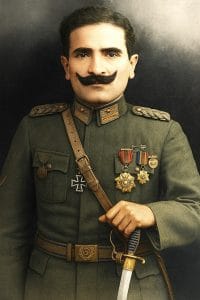
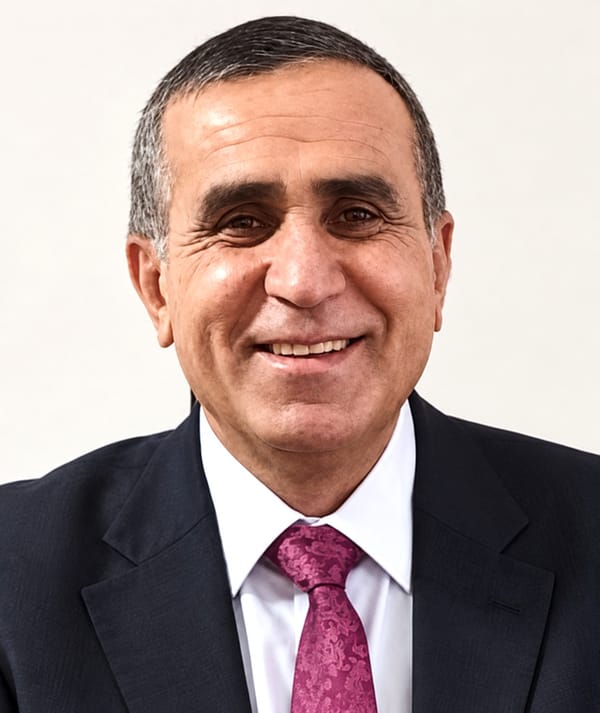
Hüsnü Bingöl, the legendary MIT Chief of Iğdır
Revenge on Zeko
Mısto entered one of the coffeehouses frequented by Kurds in the city center. He hungrily devoured the bread and halva he had bought from the grocer and sipped his tea. Eavesdropping, he heard everyone discussing last night’s murder. He learned the funeral would be held at Baharlı Neighborhood’s cemetery. Would Zeko and Hesso also attend? This might be a good opportunity, he thought. But he couldn’t speak. How could he ask where the cemetery was? He gave up.
He wandered around the town center, ate lunch, and as evening approached, bought some supplies before returning to the shabby house behind the bathhouse. Mısto had already forgotten about Beko’s murder. Now, his mind fixated on Zeko, the bald-headed man, and Hesso, the truck driver with a large oriental sore on his right cheek. He knew the silver tobacco tin he carried belonged to Zeko. That was all the information he had.
For a month, Mısto visited the coffeehouses where Kurds gathered, deliberately placing the silver tin on the table, rolling cigarettes, and watching passersby with rapt attention.
Then, one day, a man at the next table asked to borrow the tin to roll tobacco. Mısto handed it over. The moment the man took it, he exclaimed in surprise to his friend, “This is our Zeko’s tobacco tin!” He questioned Mısto about where he got it, but Mısto gestured that he was mute, leaving the questions unanswered.
The man stood up and hurried outside. Mısto knew what this meant—he had gone to fetch Zeko. Mısto paid for his tea and rushed out. Hiding in a corner, he watched the coffeehouse entrance. Soon enough, Zeko, his bald head visible even under his hat, entered with the man who had borrowed the tin. Mısto waited patiently, keeping watch.
Zeko burst outside, scanning the area. Clearly, he was looking for Mısto. When he found nothing, he started walking away. Mısto stealthily followed. Turning into a side street and emerging onto the main road, Mısto saw Zeko enter a shop in the distance—a fabric store.
Mısto crouched, waiting for closing time. Dusk had just fallen. Zeko noisily shut the shop’s shutter, locked up, and started walking down the main street. Mısto rose and tailed him. Zeko entered a grocery store, finished his shopping, his arms full of items. He tried to hail a carriage, but each driver shook their head—no one wanted to work at this hour when everyone was closing shop and heading home.
Realizing he had no choice but to walk, Zeko headed toward Halfeli Street. Mısto stalked him like a tiger unwilling to lose its prey. Zeko stopped at a garden gate, knocking loudly several times. A woman opened the door, took his groceries, and they exchanged words. Zeko then turned back toward the market—he had forgotten to buy kerosene. In those years, Iğdır had no electricity. Pitch darkness fell swiftly, everyone retreated indoors, and the side streets grew desolate.
Zeko bought a bottle of kerosene. On his way back, he ran into friends and stopped for a long chat. Then he resumed his journey home. It was now dark, and seeing even five meters ahead was difficult. Mısto clutched his knife. Zeko’s house was close.
Mısto glanced around—no one was there. Like a tiger, he lunged, driving the knife into Zeko’s back, straight to the heart. Without hesitation, he yanked it out and pressed it to his throat. Blood sprayed like a fountain. Zeko collapsed. Mısto severed his bald head and flung it away. Taking the money from his pocket, he disappeared.
He slipped into a large apricot orchard, navigating past barking dogs into side streets. He washed the knife in a roadside ditch. He felt no hunger. Returning to his room behind the bathhouse, he picked up a whetstone. As he sharpened the knife with forceful strokes, he reflected on the day’s events. Two lives taken, yet the fury and vengeance inside him hadn’t diminished one bit.
“Now it’s that dog Hesso’s turn. The truck driver. Works for Oruç Vurgun’s trucking company.”
Mısto had repeated these words for three years. Forgetting was impossible.
The next day, Inspector Hüsnü Bingöl returned to the crime scene. Sipping his pipe, he listened as the police chief listed their findings.
“Sir! The method is identical. Stabbed from behind first, then decapitated. Took the money from his pocket. Sir, I think this is one ruthless thief!”
Hüsnü Bingöl managed a faint smile:
“Assuming it’s theft—how could the killer know how much money the victim had? What if there was none? Muhlis Bey, we’re dealing with someone consumed by hatred and vengeance. This isn’t theft! Say the killer confronted him, demanded money at knifepoint. If the victim resisted, he’d stab him from the front, not the back. The killer must be from outside Iğdır. Tighten identity checks, round up all outsiders, line them up. Inform me! One look, and I’ll know who the killer is.”
When Mısto ventured into the city center the next noon, he found it swarming with police. IDs were being checked, searches conducted. He sensed danger. The net was tightening. Capture seemed imminent.
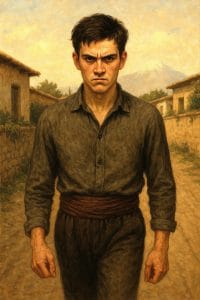
Mısto, prowling Iğdır’s streets with the fire of vengeance
Revenge on Hesso
Mısto cut through orchards to find the road to Tuzluca. His stomach growled, but there were no shops along the way. He was no stranger to hunger.
Mısto walked all night, remembering the days he had trekked from Doğubayazıt to Iğdır.
By dawn, he reached Tuzluca. After eating, he noticed a truck from Iğdır stopping outside a teahouse. Eavesdropping on the driver and the owner, he learned the truck was headed to Kars.
Mısto approached the driver and tried to convey with hand gestures that he wanted to travel together. When the driver said, “I’ll take a little money from you, it’s not free!” Mısto gestured with his fingers, “How much?” The driver raised all ten fingers in the air to mean “Ten.” Mısto walked away. He took ten liras from the money he had hidden in a secret compartment and handed it to the driver. They set off together.
The highway was full of deep potholes. To prevent the load from tipping over, the driver sometimes got out and filled the deep holes with stones. In such moments, Mısto’s throat would tighten, his mind would be in turmoil, and he couldn’t help but think of his mother and sisters buried beneath that highway.
At one point, the driver asked:
“Will you stay in Kars or go further?”
Mısto waved his hand in a gesture meaning “further.”
The driver continued:
“Ankara?”
Mısto shook his head to say “No!”
“Istanbul?”
Mısto nodded his head with half-joy to confirm. The driver stopped for a break at one point. He took out a piece of paper and wrote: “I am mute. I cannot speak. I cannot read or write. I want to go to Istanbul. Please help me!”
“When you get to the station, show this paper to the man at the ticket counter. They’ll understand you’re going to Istanbul.”
“Do you know anyone in Istanbul?”
Mısto shook his head to say “No!”
“Are you going to work?”
Mısto nodded in agreement.
“Go to Sirkeci! All the trucks load and unload there. You can work as a porter!”
The driver stopped the truck. He took back the paper he had given Mısto and wrote on the back: “I want to go to Sirkeci. I will be a porter!”
“When the train arrives in Istanbul, show this, and people will tell you what to do. Istanbul is a big city. I also go there from time to time to pick up goods from Sirkeci and bring them to Kars, Ağrı, and such. Only Oruç Vurgun’s trucks carry goods to Eastern Anatolia. He’s from Iğdır. A good man. Go to him.”
When Mısto heard the name “Oruç Vurgun,” his heart nearly stopped. Hesso had been a driver for Oruç Vurgun. That name had been in his memory for years.
The driver stopped the truck again. He wrote at the bottom of the paper: “I am looking for Oruç Vurgun, the owner of Iğdır Warehouse.”
“When you reach the truck market in Sirkeci, show this paper to the drivers! They’ll point you to Oruç Vurgun’s office. Eastern youths are strong and sturdy. They’ll give you work right away.”
When Mısto arrived in Kars, his first task was to find the train station. He handed the piece of paper the driver had given him to the old man at the ticket counter. The clerk took out 40 liras and showed it to him. Mısto handed over the money. The old man pointed to the watch on his wrist and gestured to the number five. Mısto understood the train would depart at 5 o’clock.
*
After a long journey lasting five days, the train arrived at Haydarpaşa Station. Mısto’s mind was elsewhere, so he didn’t even notice how the five days passed. Thanks to the driver he had met in Tuzluca, he felt lucky. He had even learned where Oruç Vurgun was.
When the train arrived at Haydarpaşa Station, Mısto stepped onto the platform like everyone else. He approached an elderly man struggling with a heavy suitcase and handed him the paper:
“Son, I’m also crossing over. Follow me!”
Mısto took the suitcase from the old man. They boarded the car ferry. Mısto watched the sea and Istanbul with admiration. They disembarked at Eminönü. The old man stopped a minibus heading to Sirkeci.
“Driver, this young man is mute. He’s getting off at Sirkeci. How much is the fare?”
“50 kuruş!”
The old man handed over 50 kuruş. Mısto sat in one of the empty seats. As the minibus struggled through heavy traffic, Mısto stared in bewilderment at the crowds. When they reached Sirkeci, the driver signaled for Mısto to get off.
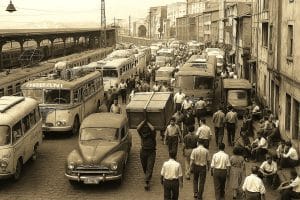
Sirkeci (1940s)
Mısto saw the trucks and headed toward them. A simit seller appeared in front of him. He gestured to ask the price. “25 kuruş!” the seller shouted. Mısto sat on a bench and began eating the simit hungrily. He listened to the seagulls and stared in awe at the towering minarets in the distance. Istanbul had enchanted Mısto. It was a big city. A very big one!
He approached the drivers’ shack and handed over the paper randomly. One driver took the paper, turned it over, stood up, and said:
“Oruç Vurgun’s office isn’t far. Go down that main street. Turn right! Ask the men there.”
Mısto did as told. After turning right, he handed the paper to a middle-aged man who appeared before him. Realizing Mısto was a mute stranger, the man took him to Oruç Vurgun’s office. He stepped inside and greeted him.
“Oruç Bey! This young man can’t speak. He’s a stranger here. Your name is written on the paper. I brought him to you. Well, goodbye!”
Oruç Vurgun was settling accounts with a driver. He told Mısto to sit on a chair. After the driver left, Oruç Vurgun gestured for Mısto to come closer. Mısto handed him the paper. Oruç Vurgun nodded.
“Do you have an ID?”
Mısto handed over the ID he had carried in a plastic bag since Doğubayazıt.
“So your name is Mustafa! You want to be a porter, right?”
Mısto nodded.
Oruç Vurgun called his assistant:
“Ahmet, this young man looks sturdy. You know, finding porters is easy, but we struggle to find drivers for long-distance hauls. He’s mute, but it doesn’t matter. If he made it here from Doğubayazıt, he knows his way around. Plus, he’s exempt from military service. Teach him how to drive for a few weeks. Then go to our Fehmi Bey and get him a license! Find him a place to stay in one of the small inns!”
Ahmet listened carefully to the instructions.
“Come on, Mustafa, let’s go!” he said.
Mısto was overjoyed. He was going to be a driver. Before leaving, he handed the silver cigarette case from his pocket to Oruç Vurgun. Oruç Vurgun, thinking it was a family heirloom, accepted it with a humble demeanor. He turned it over in his hands.
“Thank you! May God help you,” he said.
Mısto received a month of driver training. He was thrilled when he got his license. Oruç Vurgun covered his food and lodging expenses at the inn.
While taking his first steps into the profession of driving, Mısto kept his eyes on the drivers. He was searching for Hesso, the man with a large oriental sore on his cheek.
Mısto made several trips to Gaziantep and Diyarbakır to transport goods. His roommate at the inn had taught him a bit of reading and writing. He could read signs easily. He had even managed to sound out newspaper articles at times.
In Sirkeci, there was a large restaurant where drivers ate lunch. Whenever he had the chance, Mısto preferred to eat there. Their kebabs were delicious.
One day, while eating with his friend, he saw Hesso—the man with the large oriental sore on his cheek, whose face he could never forget—sitting at a table across from them. The food seemed to stick in his throat. He paid and went outside. He sat at a distance and waited for Hesso to leave the restaurant.
Hesso stepped out of the restaurant cheerfully, a toothpick in his mouth. He parted ways with his friends and headed toward the street with the inns. Mısto began to follow him. Hesso entered one of the inns.
Mısto was happy to have found Hesso. He went to his own room, took out his knife, and began sharpening it. He put on his father’s coat, which he had worn for years, and started pacing in front of Hesso’s inn.
It was late in the evening. Hesso left the inn and walked toward the shore. Then he changed direction and entered a side street. He planned to take a shortcut to the brothel. Mısto knew these streets well. Whenever he felt restless, he would wander aimlessly to distract himself from the pain haunting his mind. Hesso stopped at one point and quickly rolled a cigarette. He took a deep breath and continued on his way.
Hesso entered the brothel on Yüksek Kaldırım. Mısto waited outside, his eyes fixed on the door. He didn’t know how much time had passed. His mind was focused on the man he would kill. Suddenly, he saw Hesso step out.
It was midnight. The narrow streets were even more deserted. He knew the perfect spot to strike. Hesso turned into a dark, narrow alley. Mısto lunged forward like lightning and stabbed the knife into his back. With the same speed, he pressed the knife to his throat. Hesso asked in fear:
“Who are you?”
“I am Mısto. You killed my mother and two sisters.”
Blood gushed from Hesso’s throat as he collapsed to the ground. Mısto stepped back. Then he approached, severed Hesso’s head, and flung it away. He half-ran down to the shore and threw the knife into the dark waters of the Golden Horn.
Mısto rejoiced in two things at once. He had killed the last murderer, Hesso, and his tongue had been loosened. As he approached the inn, he washed his hands, face, and shoes at the fountain. He entered the inn quietly.
Mısto’s roommate was from Lice. He was asleep. Mısto lay down on his bed but didn’t sleep a wink until morning.
The news of Hesso's brutal murder in one of the side streets spread rapidly by word of mouth among the drivers. When Oruç Vurgun heard the news, he was both saddened by Hesso's death and panicked upon realizing he needed to find a new driver for the cargo truck that was supposed to go to Iğdır the next day. He called Mısto to his side. He asked him to take the cargo to Iğdır. Mısto nodded his head in agreement.
That evening, Mısto lay on his bed, repeatedly thinking over what had happened. His friend from Liceli entered the room. He lay on his bed and smoked a cigarette.
Mısto immediately spoke up: "Ahmet, my tongue has loosened. I'm talking to you first. I'll be setting off for Iğdır tomorrow. You're a dear and trusted friend of mine. In fact, I've never had any other friend besides you in my life. Would you like to hear what's happened to me since childhood? You must promise. You won't tell anyone what I say. Also, I don't want anyone to know I can speak."
Ahmet suddenly grew very curious. Mısto recounted in detail everything that had happened to him since childhood. He confessed that he had also killed Hesso two days earlier.
By the time Mısto finished speaking, the morning light was breaking. Ahmet was filled with strange emotions. He asked curiously:
"Why do you cut off their heads? Isn't killing them enough?"
"Perhaps because of the hatred and desire for revenge that's been choking me for years! Besides, my father used to say that those buried without their heads go to hell in the afterlife."
Ahmet felt tired and, without realizing it, fell asleep. Mısto went to his truck, sat in the seat, and started the engine. A long journey to Iğdır awaited him.
After five days of travel, Mısto arrived in Doğubayazıt. His heart began to race. The teahouse where he once worked was still open. The road connecting Doğubayazıt to Iğdır, just past the village of Karabulak, narrowed and wound like a snake along the edges of cliffs. No one dared to drive a truck on this road in the dark of night. Mısto knew he had to cross the Çilli Pass before nightfall.
Mısto got back into his truck and continued on his way. After passing Karabulak, his throat tightened. He was approaching the graves of his mother and two sisters. Soon, he saw the stones he had laid himself. He stopped the truck. He had reached the place where his family was buried. He began to sob uncontrollably. "Rest in peace! I've avenged you on those dogs! Soon, I'll drive over you with my truck—forgive me!"
Evening was falling fast. Mısto drove his truck and began ascending toward the Çilli Pass. His crying hadn't stopped. His tears flowed so heavily that he could barely see ahead. As the truck rounded the bend and reached the top of the hill, the Iğdır plain appeared in the distance, dotted with faint lights. Mısto was still crying. When he carelessly turned the steering wheel sharply, the truck lost balance and tumbled down the cliff. The massive truck flipped over five or ten times. Mısto died instantly.
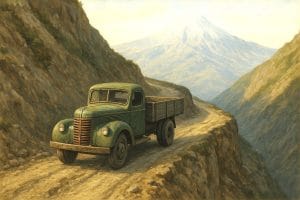
Mısto, driving his truck through the Çilli Pass
Weeks later, when his Liceli roommate heard of Mısto's death, he told Oruç Vurgun everything he knew. Oruç Vurgun took out the silver tray he had hidden in his drawer and handed it to the Liceli driver: "Take this and sell it! It brings bad luck!"
From that day on, various versions of this story circulated by word of mouth. It is said that whenever a car passes over the road where the mother and two daughters are buried, three "Ah!" sounds are heard.
Two Real Heroes in the Story
Who is Oruç Vurgun? (From the account of the late Hamza Aygün)
Oruç Bey was originally from the Iğdırmava neighborhood. He was engaged in trade in Iğdır. In the 1930s, he migrated to Istanbul and left Iğdır. He never returned, not even to visit. In Istanbul, he founded a company called "Iğdır Warehouse" and quickly made a name for himself in the eastern region. In those years, all eastern provinces were connected to Istanbul via Trabzon, conducting trade through this route. Iğdır Warehouse transported goods for all provinces along this route, especially Erzurum, Kars, Iğdır, Ağrı, and Van. Thus, Oruç Bey quickly made good money and became wealthy.
Merchants or tradesmen traveling from the east to Istanbul would stop by Oruç Vurgun Bey. Sometimes, Oruç Bey would extend a helping hand to fellow townsfolk who ran out of money in Istanbul, ensuring they returned home safely.
Oruç Bey served as a gateway for the people of Iğdır. He was a trusted address. Families sending their children to school or the military would send money by addressing it to Iğdır Warehouse.
Oruç Vurgun, who never married, began to age and brought his relative Ayhan Özmen to Istanbul to manage his affairs. Ayhan Bey, a talented young man, quickly grasped the business. After Oruç Bey's passing, he expanded the business further and became wealthy. Originally based in Sirkeci, Iğdır Warehouse now continues its operations in a new location designated by the municipality.
Who is Hüsnü Bingöl?
Image 4: National Security Inspector Hüsnü Bingöl
Who was Hüsnü Bingöl? Very little has been written about him, but much remains buried in minds and hearts. Who was he—a man who left his mark on an era, fiercely devoted to his duty as if sacrificing his life for his country, yet leaving behind tearful and heartbroken people? Was he just an ordinary intelligence agent, an officer? Or a government official who abused his authority? Unfortunately, these ordinary and perhaps trivial questions will never suffice to understand him. To some, he was a hero; to others, a tyrant. To the state, he was a hero whose value was later recognized—forgotten and rediscovered.
The events he lived through and the responsibilities he undertook prove that comparing Hüsnü Bingöl to today's intelligence directors or undersecretaries is impossible. Doing so would belittle Hüsnü Bingöl and overshadow his impressive and fascinating personality. Today, one undersecretary leaves, another comes. There is an established and smoothly functioning national security and intelligence organization. But Hüsnü Bingöl was not so fortunate. The conditions he faced were extraordinary. With great dedication and resolve, Hüsnü Bingöl quickly adapted to these extraordinary circumstances. In this remote corner of the country, he painstakingly built a counter-espionage network, as if carving rock with his nails. He won over the hearts of some of the local people and made them part of this struggle.
In the history of the Republic of Turkey, no intelligence officer in any era or region has ever been as deeply involved with the people as Hüsnü Bingöl, nor convinced ordinary citizens to become part of a counter-espionage project, nor awakened the sentiment, "We must protect this homeland entirely." He entered the worlds of people from different ethnic and religious backgrounds, winning them over while taking his own measures to eliminate those he deemed "harmful." In short, Hüsnü Bingöl was not an intelligence officer who merely collected his salary, waited out his days, and eagerly anticipated promotions. On the contrary, he was a patriot and civil servant who cared little for money or comfort but sought to fulfill his duty. Particularly in certain periods, his reports and timely briefings to his superiors on potential developments broadened the horizons of important statesmen like the President and Prime Minister, helping them skillfully navigate international politics and diplomacy.
In short, Hüsnü Bingöl was an extraordinary figure in an extraordinary era. With his sins and virtues, he held the fate of Iğdır and the country in his hands for many years (1932–1954). On days when he was angry, he scattered Zeus's thunderbolts of wrath around him; at other times, he embraced people with the compassion and generosity he carried deep in his heart.