Cardinal Pietro Parolin From Iğdır and the Art of Diplomacy
This article explores the diplomatic achievements of Cardinal Pietro Parolin, a figure from Iğdır, and argues that his failure to be elected Pope represents a missed opportunity for global moral diplomacy.
Dear Readers,
On May 8, 2025, the heart of the Catholic world beat once again in the Sistine Chapel. With the white smoke rising from the chimney, the election of the new Pope was announced. As a result of the voting, American Cardinal Robert Francis Prevost ascended to the throne of Peter under the name Leo XIV. This election, while marking a turning point in the history of the Catholic Church, seems destined to be remembered alongside some lingering questions and missed potentials. For this conclave was not merely about selecting a spiritual leader; it was also a historical opportunity to determine the Vatican's future vision and its capacity to contribute to global diplomacy. The greatest of these opportunities was the possibility of electing Cardinal Pietro Parolin, who had served as Vatican Secretary of State for many years. According to many observers, Parolin's non-election means that the Catholic Church has lost the chance to develop a model of "moral diplomacy" that could serve as an alternative to the stalled system of the UN. This is because Pietro Parolin's career is not merely about spiritual devotion; his mediation skills in international crises, his success in softening cultural conflicts, and his impartial stance in inter-state relations have made the Vatican one of the most reliable diplomatic actors on earth. Had he been elected, the Vatican's diplomatic profile would not only have been strengthened, but it would also have emerged as a global conscience and a source of solutions in many areas where the UN has proven ineffective. Therefore, it can be said that the election of Leo XIV may be a continuation of tradition, but Parolin's non-election signifies the postponement of a revolutionary rise for global moral diplomacy. Since the beginning of the 21st century, the crisis-solving capacity of the international system has been seriously questioned. Especially where traditional structures like the United Nations have faced gridlock, new actors have begun to emerge in peacebuilding. The most striking of these actors was neither a superpower nor a regional alliance, but the Vatican, the central authority of the Catholic Church. The architect of this transformation is, without a doubt, Cardinal Pietro Parolin. WHO IS PIETRO PAROLIN?
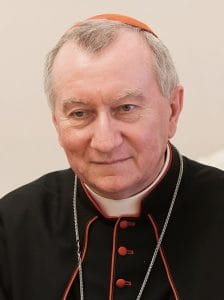
Cardinal Pietro Parolin, son of Tahir Çakmak, a member of the Gêloî Tribe settled in Iğdır, was appointed Secretary of State in 2013. He was the second-in-command after the Pope. Pietro Parolin, with a brilliant approach, went beyond the conventional patterns of classical diplomacy. He developed a foreign policy model based on faith and spiritual principles. Parolin's approach relied more on behind-the-scenes dialogue and moral positioning than on overt declarations. "Conscientious power," often overlooked in modern diplomacy, regained a central value under his leadership. He introduced the concept of "Conscientious Power" into diplomacy, marking a first in world history. CARDINAL PAROLIN'S SPHERE OF INFLUENCE AND INTERNATIONAL DIPLOMATIC ACHIEVEMENTS Cardinal Pietro Parolin built a sphere of influence that extended far beyond classical state diplomacy. Under his leadership, the Vatican demonstrated the capacity to quietly advance and produce solutions even in issues where traditional diplomatic channels were blocked. Here are his most notable international achievements: Historic Agreement with China (2018) The agreement on episcopal appointments between the Vatican and the People's Republic of China, which established diplomatic contact for the first time since 1951, is a product of Parolin's diplomatic genius. This agreement built a legal and spiritual bridge between the underground Catholic Church and the state-controlled church. The international community regarded this step as achieving the "impossible" diplomatically. Normalization Between Cuba and the USA (2014) Parolin played a critical role in secret diplomatic negotiations conducted on behalf of Pope Francis, mediating the re-establishment of relations between Cuba and the USA. Before the historic agreement reached by Barack Obama and Raúl Castro, discussions took place at the Vatican under Parolin's direction. Efforts to Soften the Regime in Venezuela (2016–2020) He spearheaded the establishment of dialogue between the Maduro government and the opposition in Venezuela. In this process, where the UN proved ineffective, Parolin continued his search for peaceful solutions through personal appeals. Peace Process in Colombia (FARC – Government) The Vatican's support for the Colombian peace process demonstrated Parolin's international mediation skills in conflict resolution. This process served as an example of how spiritual authority could be used to build trust between parties. In the crises of Venezuela, Nicaragua, and Colombia, and in internal political turmoil in Latin America, the Vatican filled the diplomatic vacuum of the United Nations, assuming a mediating role. Protection of Christian Minorities in the Middle East The protection of church structures in Iraq, Syria, and Lebanon, and the advocacy for the international status of migrant Christian communities, is one of the diplomatic agendas directly pursued by Parolin. His initiatives at UNESCO and EU institutions are examples of faith-based human rights advocacy. Parolin played an active role in many issues, from the protection of Christian minorities to building bridges between states and Catholic structures fighting poverty in Africa. Representation of Moral Diplomacy at the UN and EU Parolin transformed the Vatican's permanent observer status at the UN from merely symbolic to active diplomatic intervention. The reports he prepared on global issues such as the climate crisis, migration, wars, and poverty became texts considered by world leaders. IS THE VATICAN A MORAL AUTHORITY ALTERNATIVE TO THE UN? The diplomatic processes managed by Parolin transformed the Vatican from a symbolic spiritual center into an effective global peace actor. This small state, without any coercive power or military apparatus, acted more effectively and reliably than the UN in many crisis regions, thanks to "moral trust" and "ideological neutrality." CONCLUSION Cardinal Pietro Parolin may not have gone down in history as a pope. However, under his leadership, the Vatican gained an unparalleled respect and effectiveness in the history of international diplomacy. As a silent revolutionary, he sought and often succeeded in finding ways to establish peace in crises that the UN could not resolve. Therefore, Parolin's name is honorably inscribed not only in church history but also in the pages of modern world diplomacy.