History of Iğdır (1945-65) – Part 4
This part of the Iğdır history series delves into the complex political landscape of Iğdır between 1945 and 1965, focusing on the interplay between political parties and the Cotton Agricultural Sales Cooperative (PTSK-BİRLİK), and featuring anecdotes and biographical sketches of key
Dear readers!
I must reiterate a point I have emphasized several times before. The period between 1950 and 1960 did not proceed along a single line in Iğdır. In my article in the THIRD SECTION, I delved into another factor that marked this period, namely the Cotton Agricultural Sales Cooperative-BİRLİK, and shared the conflicts of interest with you. In short, during the 1950-60 period, while political parties experienced upheaval, the conflicts of interest within PTSK-BİRLİK continued relentlessly, inevitably having direct repercussions in politics.
In today's article, I will examine the events in both political parties and PTSK-BİRLİK, sometimes in parallel, sometimes intertwined. These abrupt transitions may cause discomfort and overshadow your reading pleasure, but unfortunately, the reality of Iğdır in those years existed and continued in a spiral structure.
Dear readers!
A difficult, complex, and arduous article awaits you. This is not my fault! The fault lies with Iğdır, which on the one hand rapidly transitioned to democracy in the 1950s, separating into groups with ambition and jealousy within different political parties, and on the other hand, became acquainted with money (PTSK). Before delving into weighty topics, since politics has been mentioned, let's start with a humorous anecdote by Hamit Hun:
THE POODLE ELECTION
Hamit Hun was chatting with a friend who had come from Ankara as a "Çantacı" (bagman/fixer) and was elected as a member of parliament:
"I can't help but admire you. You come to the city two weeks before the elections, collect the votes, and leave. What's the secret?"
The MP grins cleverly but arrogantly:
"You need to keep your distance from the public. You'll find two or three men who are like poodle dogs, whose leashes are in your hand. When you walk down the street, they'll bark, attracting the attention of the voters, and you'll walk with pride and arrogance."
"Is that all?"
"Not yet. If you're Kurdish, you'll engage in Kurdish nationalism; if you're Azeri, Azeri nationalism."
"Is that all?"
"Not yet. If your poodles get tired, you'll replace them. A poodle that doesn't bark is useless."
"Do the poodles do this for free?"
"For free? We tie ropes around their necks and treat them like people, what more could they want, Mr. Hamit!"
After these explanations, Hamit Hun thinks and mutters to himself:
"I should get a few poodles and prepare for the next elections."
INTRODUCTION
In last week's article, I tried to present the PTSK-BİRLİK issue to your attention in as much detail as possible. The cotton sales cooperative, which was cooperativized from 1937 onwards and took the name PTSK-BİRLİK by 1950, continued its existence until 1960. For 23 years, the most prominent figure in cotton cooperativization was undoubtedly Eşref Başaran.
He skillfully evaded the Ministry Inspectors, Ziraat Bank Managers, and PTSK controllers like Nurettin Kirman and Mecit Hun who came to Iğdır for investigations into abuse. It has become necessary to provide a little more information about Eşref Başaran, who cleverly swept reports written against him under the rug.
Being a Terekeme, he knew how to gain the full support of Hüsnü Bingöl, and with his subtle intelligence, he outsmarted the Ministry of Commerce Inspectors and Ziraat Bank managers, while also trying not to reveal his allegiance in the CHP-DP rivalry, always making his presence felt. Eşref Başaran undoubtedly left a deep mark on the politics and commerce of that period. Now, I leave you with the memoirs written about him by Mecit Hun, one of his closest friends who knew him best.
EŞREF BAŞARAN IN MECİT HUN'S MEMOIRS
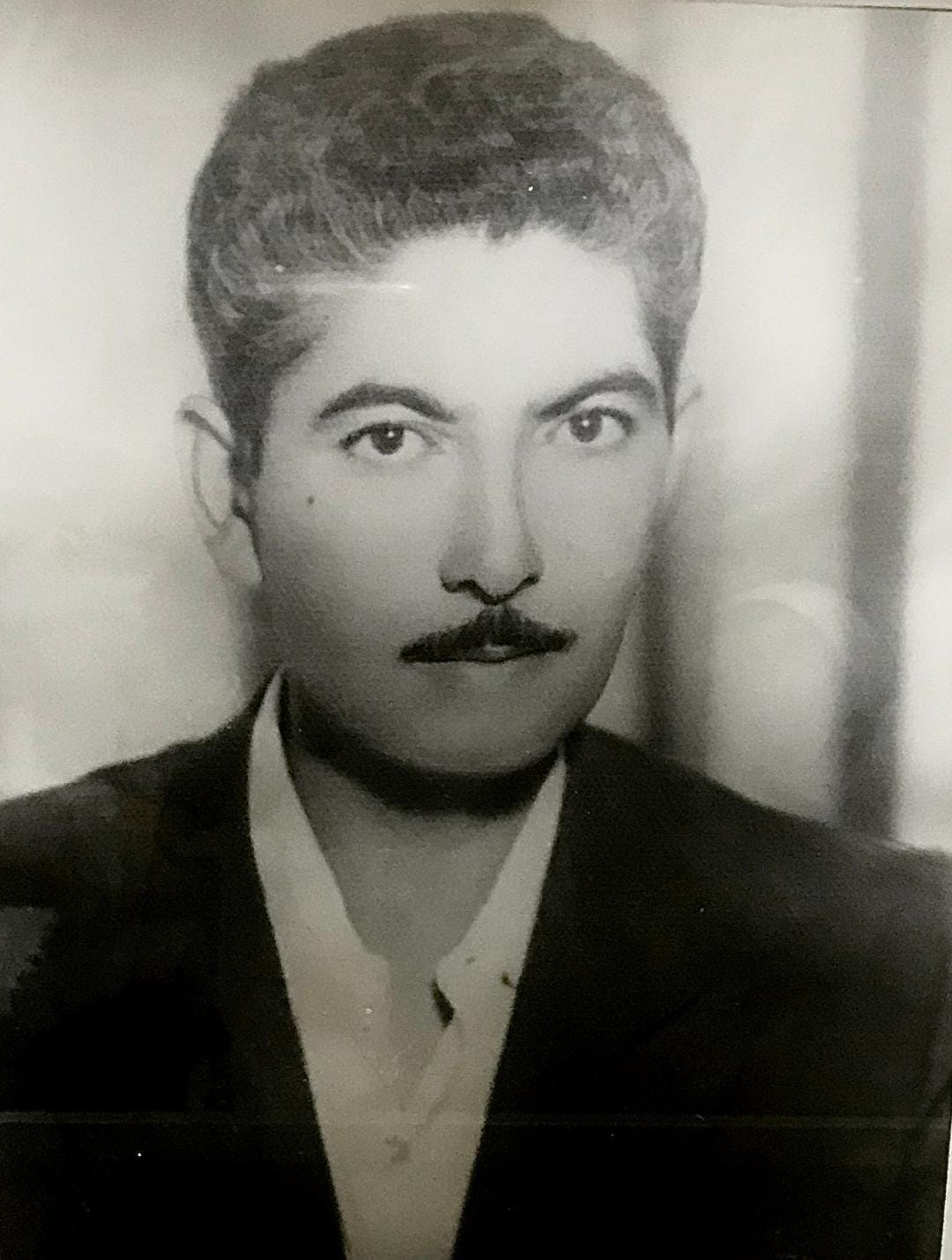
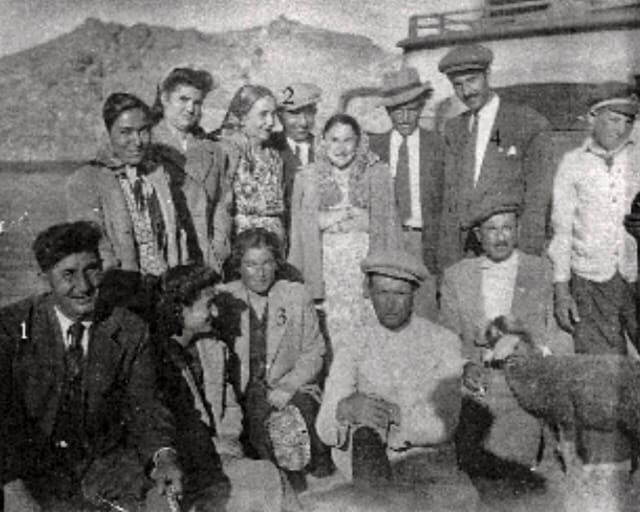
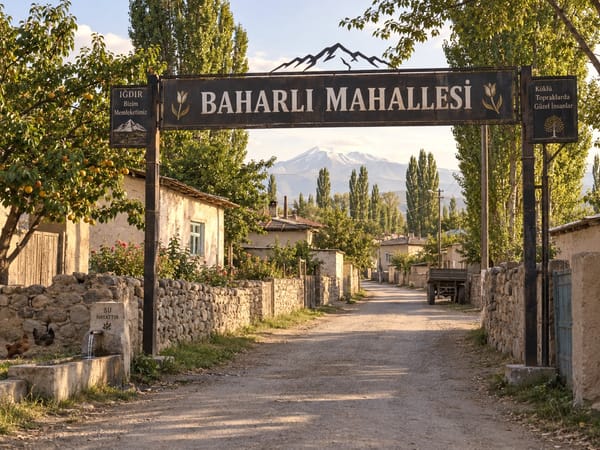
"One of the colorful personalities of Iğdır is Eşref Başaran. Of Terekeme (Karapapak) origin, he came as an immigrant from the Caucasus with his relatives and settled in the villages of Mengeser and Yoncalı in Karaköse, Baharlı Neighborhood in Iğdır, and Pirço (Saraçlı) village in Aralık district. Despite being uneducated, he had an intelligent, enterprising, and sympathetic nature. He undertook various duties in Iğdır and managed to stay in the public eye constantly.
He served in roles such as neighborhood headman, municipal council and committee member, Cotton Agricultural Sales Cooperatives board member and chairman, and political party executive committee member.
He managed to establish relationships and remain friends with people from all walks of life. His life is full of interesting and humorous events. During the years he was involved in politics, he tried to manage both sides without offending his friends in the Democratic Party and the Republican People's Party.
A comical incident occurred at an election meeting when judicial oversight was introduced for primary elections. Eşref Başaran's name was on the delegate lists of both the Justice Party and the Republican People's Party, which were held under the supervision of a judge in the same hall. Realizing his deception would be exposed, Eşref Başaran hid. Our mischievous friends, who noticed what was happening, convinced Eşref Bey that he would be immediately imprisoned if he didn't vote. He trusted me greatly. In difficult times, I was one of the first friends he turned to. He came to me and asked me to find a solution. I made a decision immediately. Eşref Bey would pay for the lunch of the primary election board and the officials of both parties, and he would vote in the party of his choice. Eşref Başaran, who accepted our conditions to avert disaster, chose to vote in the C.H.P. ballot box and cast his vote for Muzaffer Şamiloğlu, who was of Karapapak origin. We were having fun with Eşref Bey, whom we had tricked despite all his cunning, and wanted to know the cost of the meal. Eşref Bey answered us with a very calm demeanor. "I swear, I don't know, because I made Muzaffer Bey's men pay for it..."
Eşref Başaran, who was very proud of being Karapapak, was serving his paid military service in the "paid conscripts" company attached to the Infantry Regiment in Iğdır when a new commander arrived in the company. To get to know his surroundings, he gathered the company and lined them up in a single file. He ordered those of Azeri origin to step forward 5 paces, and those of Kurdish origin 3 paces. Only one person remained behind. This was Eşref Başaran. The commander asked, "What are you?" Eşref Bey got excited. Instead of saying Karapapak, he said "Alapapak." The commander slapped him across the face. "I don't want any ala bula, you'll be one color..." he said. Eşref Bey, who told us this incident, started using the word TEREKEME instead of Karapapak after that date...
In 1950, he was the chairman of the board of directors of the Iğdır Cotton Agricultural Sales Cooperatives Union. The managers of this giant organization, which produced 3000 tons of cotton annually and had 7000 members, were always subject to justified and unjustified complaints. Similar complaints were made to the Ministry of Commerce about Eşref Bey, and an investigation inspector was sent to Iğdır. The inspector's behavior and the questions he asked raised suspicions and prompted Eşref Bey to seek a solution.
That year, the D.P. came to power, and Samet Ağaoğlu, the son of Ahmet Ağaoğlu, who was of Azerbaijani origin and a Manisa Deputy, was appointed to the cabinet as Minister of State and Deputy Prime Minister some time after the first D.P. government was formed. This event coincided with the inspector's arrival in Iğdır. Eşref Başaran did not miss the opportunity. He carefully and skillfully filled out a blank telegram paper obtained from the post office and turned it into a telegram addressed to himself. He gave it to Şevket Efendi, one of the post office delivery staff, and arranged for the telegram to be brought while he was with the inspector. When the telegram was handed to him, he extended it to one of the cooperative officials present and asked him to read it aloud, as he did not have his glasses with him. The content of the telegram was as follows:
Dear Eşref BAŞARAN
President of Agricultural Sales Cooperatives IĞDIR
I received your congratulatory telegram on the occasion of my appointment as Minister of State and Deputy Prime Minister. I confirm my feelings of love and loyalty towards you, express my thanks, and offer my respects. Your cousin Samet AĞAOĞLU
The inspector, who listened carefully to the telegram, immediately changed his demeanor. He made Eşref Bey sit next to him. After being thoroughly convinced of his kinship (!) with Samet Bey, he stated that the complaints were merely deliberate rumors, as understood from his two-day investigation, and requested that a seat be reserved for him on tomorrow's bus.
Eşref Bey convinced the inspector. The next day, while the people of Iğdır and the complainants were still asleep, he saw the inspector off to Ankara in a taxi in the early hours of the morning.
Eşref Başaran was a good evening drinker. He enjoyed being with his unchanging table companions. In addition to his evening drinking, he never missed the Tarawih prayers on Fridays and during Ramadan.
He had endeared himself to everyone with his helpfulness and generosity. He was a valuable fellow townsman whose place could not be filled. May God have mercy on him."
If you wish, I would like to present to your attention an article, albeit a joke, by Mecit Hun, who published FIRILDAK, Iğdır's FIRST and LAST humor newspaper in 1952, summarizing the games played at PTSK-BİRLİK.
FIRILDAK NEWSPAPER September 1, 1952
OWNER AND WRITER: MECİT HUN
(The Minister of Interior at the time, İbrahim Ethem Menderes, went on a tour of the country. His path led him to Iğdır. He was specifically going to investigate abuses in PTSK. Nurettin Kirman was not allowed in. Mecit Hun, the owner of the humor newspaper FIRILDAK, secretly slipped in. His aim was to eavesdrop on the conversations. Mücahit)
Since Kirman's (Nurettin) name was not in the protocol book, I entered the municipality between glances, in violation of the passport law, to record the conversations of the esteemed minister and the protocol officials, and hid under the table.
During the meal, two gentlemen were talking:
"Perhaps the minister is a good man."
"He is good, but he cannot be as good as our district governor. Because the minister treats everyone the same. However, our district governor, if necessary, invents laws according to the person, or does not even listen to the law. And the most important part is that the minister will start work at 6 in the morning, yet our district governor comes to work every day at 11:30 and leaves without sitting down. Can't you see this small difference?"
"You are right, but I don't see a time difference between the minister's arrival and departure from Iğdır, and the district governor's arrival and departure from his office. For this reason, they are very similar to each other."
"Yes, that's true, but our district governor has a good side. He doesn't do business without a companion, and secondly, his seats are wide. A carload of watermelons can fit. If you can place them, you can get your work done."
"Well, I don't see any of the opposition. Were they not invited?"
"The esteemed gentleman who was doing the ushering had suffered from the distribution he had made while he was a farm foreman at the cooperative. This time, since he intends to make the municipality his farm, he is reluctant to let someone else hold the end of the rope."
"Well, then, isn't he afraid of Eşref (Başaran)?"
"He is currently busy with his personal farm."
At this point, the meal was over, and the coffee conversation had begun. A DP member, who was trying to butter up and trap the district governor with the aim of reviving the settlement laws for himself once again, said,
"My dear minister, law and order are well established throughout the East, especially in Iğdır. The newspapers are lying."
Voices from outside:
"We are content with our situation. Thank God, none of us are without weapons. If God wills, thanks to the government, there will be no need for police and gendarmerie. Since the subject did not please the esteemed minister, they asked who the mayor was, whom they had not met until then. Someone from the congregation introduced Eşref. Eşref, without giving the minister a chance to speak,
"Sir, I am Samet Bey's (Samet Ağaoğlu) cousin. When Tezer Hanım comes here, she stays with us. No one in the Ministry of Commerce doesn't know me. I am a cooperative expert."
"What kind of animals are raised in Iğdır?"
"We have all kinds of animals, camel, camel colt, calf, foal, kid, chicken..."
The minister did not understand any of these names. He looked at the district governor. Eşref continued:
"Sir, thank God we have many animals. Thieves and wild animals bother us. We all have guns, but if the government gives us some heavy weapons, it will be better."
It was getting late. The minister had to leave Iğdır before the birds woke up. The meeting was concluded without an answer to Eşref. I also found myself in the duplicating room."
AZERBAIJANI DIASPORA
The word "Diaspora" is a Greek word. By itself, it means "fragment." However, in political literature, it takes on another meaning. For a very long time, it has meant the living of a people, nation, or members of a faith as a minority in other places, having broken away from their homelands. The word refers to both the act of breaking away and the people who have broken away and live as a minority.
It is not possible for us to evaluate Iğdır and Kars politics without understanding the Azerbaijani Diaspora. In the previous section, I explained the concept of "O Taylı-Bu Taylı" (from that side-from this side), which is widely used among the people, and gave examples. However, when we consider the issue not only in Iğdır but throughout Turkey, it would be more appropriate to use the word "Diaspora" instead of "O Taylı." Because we now need to evaluate events from a Turkey-wide perspective, transcending the borders of Iğdır and Kars.
There are two personalities who left their mark on the period between 1950-60 as the Azerbaijani Diaspora: the Ahmet Ağaoğlu Family and Mehmet Emin Resulzade. However, since our subject is Iğdır and Kars politics, we will focus more on the Ağaoğlu family.
AHMET AĞAOĞLU
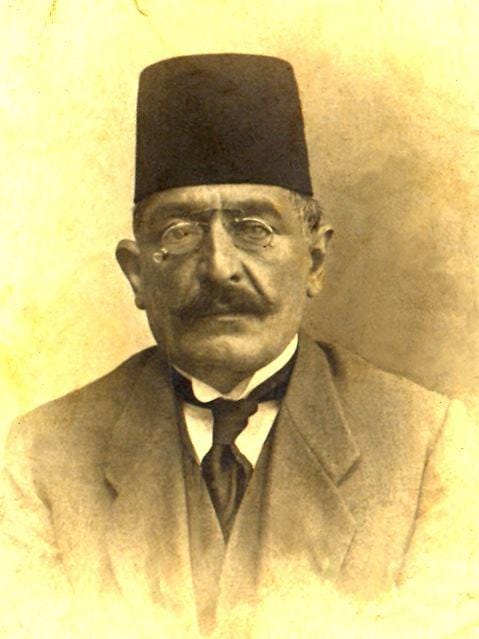
Ahmet Ağaoğlu was born in 1869 in the city of Shusha. If you ask where Shusha is, then an explanation is needed: Shusha is the name of a city in Azerbaijan, but unfortunately, it was occupied by the Armenian Armed Forces in 1992 and is still under the administration of the Nagorno-Karabakh Republic, which is not recognized by any country today. Ahmet Ağaoğlu passed away in Istanbul in 1939, the year World War II began. This means that Ahmet Ağaoğlu lived and continued his life in the diaspora, considering the places of his birth and death. He served as a lawyer, writer, and journalist.
The movement that brought Ahmet Ağaoğlu to prominence in a political sense emerged in 1930. Mustafa Kemal Atatürk supported the establishment of the Free Republican Party (Serbest Cumhuriyet Fırkası) as an attempt to transition to pluralistic democracy. Ahmet Ağaoğlu was the theoretician of this political movement. He followed a liberal and Turkist path.
During the ten-year period he spent in Baku, Ahmet Ağaoğlu worked for the development of nationalistic and Turkist consciousness among Azerbaijani Turks. After the declaration of the Second Constitutional Era, he came to Istanbul and was among the founders of the Turkish Homeland (Türk Yurdu) and Turkish Hearth (Türk Ocağı) societies; he became one of the leaders of the Turkism movement alongside figures such as Ziya Gökalp and Yusuf Akçura.
Ahmet Ağaoğlu, who went to Ankara during the War of Independence to support the struggle and served as a Member of Parliament in the II and III terms of the Grand National Assembly of Turkey, was the most important figure alongside Fethi Bey, the founder of the Free Republican Party, due to his influence, views, and activities within the party in 1930. After the party closed, Ahmet Ağaoğlu withdrew from active politics and continued to advocate for nationalism and liberal thought through his writings until his death.
Here, I would like to draw your attention to an important point: Ahmet Bey, who married Sitare Hanım from Azerbaijan, had five children from this marriage.
He is the father of Süreyya Ağaoğlu, Turkey's first female lawyer; Tezer Taşkıran, an educator and Member of Parliament; Abdurrahman Ağaoğlu, an electrical engineer and businessman; Samet Ağaoğlu, a politician, writer, and lawyer; and Gültekin Ağaoğlu, a medical doctor. Two important figures we will consider later are Tezer Taşkıran and Samet Ağaoğlu.
Ahmet Ağaoğlu also served as the first chairman of the board of directors of Anadolu Agency. In later years, Anadolu Agency became a center for diaspora Azerbaijanis. In 1923, Ahmet Ağaoğlu served in the Grand National Assembly of Turkey as a Member of Parliament for Kars in the II and III terms.
In 1933, he began publishing the newspaper "Akın," known for its opposition to the government. The newspaper criticized the government's statist and economic policies. Akın was shut down after 119 issues. Ağaoğlu retired from his university position during the university reform that took place shortly after the newspaper's closure.
SAMET AĞAOĞLU
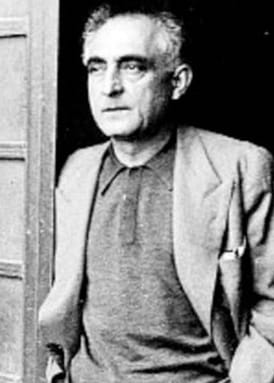
Samet Ağaoğlu was born in Baku in 1909 and passed away in Istanbul in 1982. He was a politician and writer. Samet Ağaoğlu was the fourth child of the Ağaoğlu family, who immigrated from Azerbaijan to Turkey. After completing his primary and secondary education at Bayazıt Fevziye High School, he graduated from Ankara High School in 1929. After graduating from Ankara Law Faculty in 1931, he pursued postgraduate studies in Strasbourg.
He left civil service in the 1946 General Elections. While working as a lawyer, he entered politics within the ranks of the Democrat Party. He served as a Member of Parliament for Manisa in the 1950, 1954, and 1957 elections. He held positions as Minister of Labor, Industry, and State. He was arrested and convicted during the military coup of May 27, 1960. He was sentenced to life imprisonment. He was detained in İmralı and Kayseri prisons. In 1964, he was released with a special amnesty while serving his sentence in Yassıada.
Dear readers!
Samet Ağaoğlu, while serving successively as Minister of Labor, Industry, and State during the Democrat Party era, also assumed the leadership of the Azerbaijani Diaspora in Turkey. When we list Turkey, Kars (province), and Iğdır (district), the names of the Azerbaijani Diaspora Leaders are listed below:
Turkey : Samet Ağaoğlu
Kars : Abbas Çetin
Iğdır : Hacı Nağdali Parlar / Sadık Tezel / Ali Karasu
TEZER TAŞKIRAN
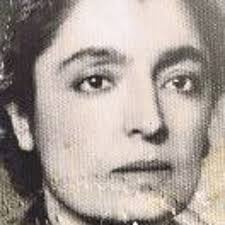
Ahmet Ağaoğlu's daughter, Tezer Taşkıran, was born in Baku in 1907 and passed away in 1979. Tezer Taşkıran worked as an educator, and a philosophy and sociology teacher. She entered politics. The table below lists the parties Tezer Taşkıran represented as a Member of Parliament.
Tezer Taşkıran's Terms as Member of Parliament (Years)
7th Term 1944-1946 CHP Kastamonu Member of Parliament
8th Term 1946-50 CHP Kars Member of Parliament
9th Term: 1950-54 CHP Kars Member of Parliament /Independent
10th Term 1954-57 DP From Kars list, not elected
11th Term 1957-60 DP From Kars list, not elected
POLITICAL ACTORS IN IĞDIR BETWEEN 1950-60
Representing Ahmed Şemo MECİT HUN
Representing Ali Mirze Bey İSA YİĞİT
Representing H.A.Ekber Tufan and Melekli (This side) TALAT TUFAN /KADİR EROL
Representing the Güneş Family ABDÜRREZAK GÜNEŞ
Representing Şamil Ayrım (This side) NURETTİN KİRMAN
Representing the Terekemes EŞREF BAŞARAN / EŞREF KAYA
Representing THOSE FROM THAT SIDE NAĞDALİ PARLAR / SADIK TEZEL/ALİ KARASU
Representing the Brukan Tribe AHMET ARMAĞAN /MEHMET GÜLTEN
Representing the Gelturan Tribe MUSA TURAN
Representing Karakoyunlu (This side) RIZA YALÇIN
Representing İdirmava (This side) BAĞIR ARAS / ALİ IŞIK
Representing the Sheikhs and the Ataman family MUSA DOĞAN
Alikamerli village ENVER SEVER
Mayor ALİ URAL (1950-60) / FAZIL BAYKAL (1955-57)
Dear readers!
I would like to draw your attention to one point. The names above are the figures who shaped Iğdır politics between 1950 and 1960. For example, Hamit Hun and Aziz Güney were not involved in politics during this period. They did not serve as district chairmen of any party, nor were they part of their executive boards, municipal councils, or Provincial General Assembly memberships. They were also not involved with PTSK. Similarly, many names such as Cemalettin Güneş, Enver Güneş, Cihangir Turan, Ziya Ayrım, Hüseyin Akbulut were not actively involved in parties during these years. These names would gradually emerge onto the political scene and make themselves known after 1960. There were important figures like Esat Ogan and Mecit Yılmaz, but they served as village headmen. I have not included presidents of civil society organizations such as the Chamber of Commerce in this list.
As I said before, since PTSK-Birlik and Iğdır politics were intertwined, it is not possible for us to consider the importance of PTSK-Birlik in the same category as the Chamber of Commerce, the Red Crescent, or the Drivers' Association. The political contact of Red Crescent President Vahap Akar with political parties and his district presidency would emerge in later years. Similarly, wealthy and well-to-do merchants from Iğdır's gentry such as Hüseyin Yaycılı, Hacı Ömer Şark, Tağı Demirel, Hacı Ekber Çöllü, Hacı Şebap Şek, Musa Başkent, Abbas Odoğlu, Hacı Haşem Çakmaz (Haşimoğlu), Hasan Tezel, Zöhrap Makinist, Kerem Zengi, Gulem Çağlar, Yasin Bademci, Ağayar Sürmeli, and Hüdaverdi Aras were observing politics from a distance. (There are certainly merchants whose names I have forgotten. I ask that no ill intent be sought in this.)
The most interesting part is that Osman Ataman, the unchanging Mayor of Iğdır in the 1930s, fell silent between 1950-60 and observed political parties from a somewhat distant perspective. For a while, he served as the District President of the Republican Nation Party but could not be effective. He took on the role of People's House President but did not get deeply involved in politics. It is surprising that Osman Ataman suddenly returned as Mayor after a 50-year hiatus following the 1980 Military Coup. (He was appointed Mayor by the coup plotters.)
DISTRICT PRESIDENTS OF THE DEMOCRAT PARTY
- Edip Koçkaya (1946-50) From Erzurum (came to Iğdır in 1935)
- Nurettin Kirman (1950-53) Local
- Hacı Nağdali Parlar (1954) Local
- Mehmet Gülten (1955) Kurdish origin (Brukanlı)
- Feyzullah İnan (1955-56) From Kağızman
- Hacı Nağdali Parlar (1956-57) Local
- Eşref Kaya (1957-1960) Local (Terekeme)
DISTRICT PRESIDENTS OF THE CHP
- Resul Taner (1946-1950) Local
- Bağır Aras (1950-52) Local
- Rıza Yalçın (1952-54) Local
- Mehmet Ali Kutlay (54-55) Chief Clerk of the High Criminal Court (from Bilecik)
- Fazıl Baykal (1955-56) Local
- Musa Turan (1956-57) Kurdish (Gelturan Tribe)
- Mecit Hun (1957-1980 Kurdish (Gêloî Tribe) (Aziz Güney briefly served as district president in 1977 due to Mecit Hun's candidacy for parliament)
NATION PARTY (closed in 1954)
- Mecit Hun (1950-53)
REPUBLICAN NATION PARTY
- Osman Ataman (1954)
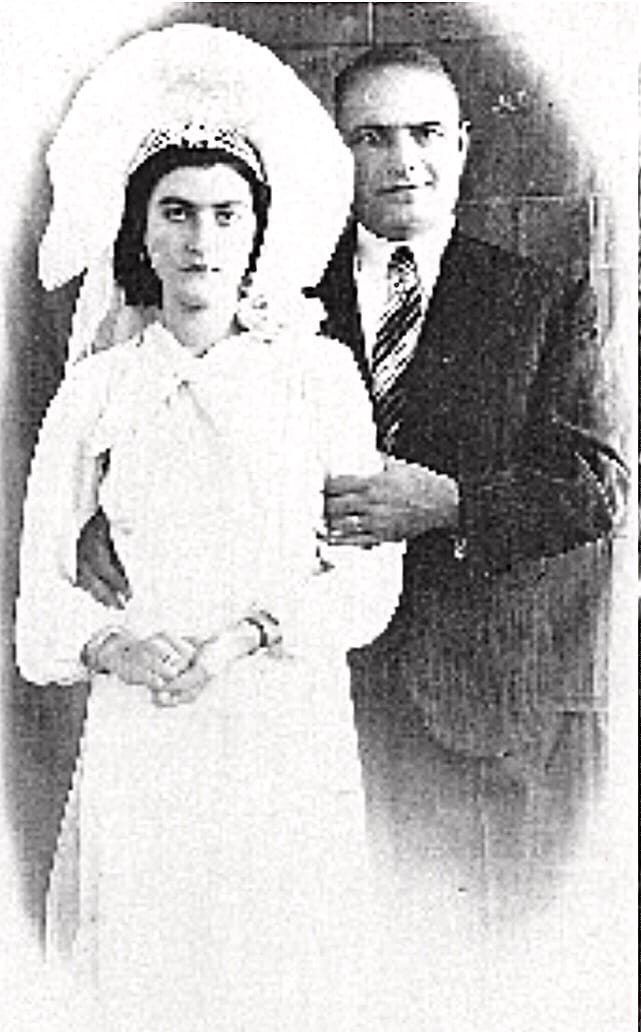
REPUBLICAN NATION PARTY
The Republican Nation Party was a political party active between 1954 and 1958. It was founded on February 10, 1954, to replace the Nation Party, which had been closed on January 27, 1954. Its founders included Osman Bölükbaşı, Ahmet Tahtakılıç, Hasan Koçdemir, Enis Akaygen, and Suphi Batur. Osman Bölükbaşı was appointed as its general chairman. In the general elections held on May 2, 1954, it received 4.85% of the votes and won 5 parliamentary seats. On October 27, 1957, it won 4 parliamentary seats with 7.13% of the votes. On October 16, 1958, it merged with the Turkish Peasant Party to form the Republican Peasant Nation Party (CKMP). In 1969, it changed its name to the Nationalist Movement Party.
EKİNCİ NEWSPAPER March 25, 1954
OWNER AND WRITER: CENGİZ EKİNCİ
The Iğdır Organization of the Republican Nation Party has been established (1954)
President: Hasan Öztürk (Contractor),
Vice President: Osman Ataman (Manufacturer)
Secretary: Lawyer Kâzım Kuyucak
Members: Salih Çöllü (merchant), Hüseyin Erdem (merchant)
CHAMBER OF COMMERCE PRESIDENTS
- Resul Taner (1946-50)
- Abdürrezak Güneş (1950-55)
- Cemalettin Güneş (1955-60)
- Turgut Sungar (1960)
PTSK-BİRLİK PRESIDENTS
- Eşref Başaran (1946-49)
- Rahim Yadigar (1950-51)
- Eşref Kaya (1952)
- Mustafa Sağlamer (Director of Ziraat Bank) (1953)
- Talat Tufan (1953-56)
- Cezmi Öztekin (1957 Trustee)
PTSK-BİRLİK CONTROLLERS
- Mecit Hun / Nurettin Kirman 1950
- Hamit Çiftlik (1952)
PROVINCIAL GENERAL ASSEMBLY MEMBERS
- Musa Doğan (1950-54)
- Eşref Kaya (1950-54)
- Timur Toksöz (1950-54)
MAYORS
- Ali Ural (1950-54) CHP
- Fazıl Baykal (1954-57) Independent
- Ali Ural (1957-60) CHP
RAHİM YADİGAR, ONE OF THE FIRST PRESIDENTS OF PTSK-BİRLİK
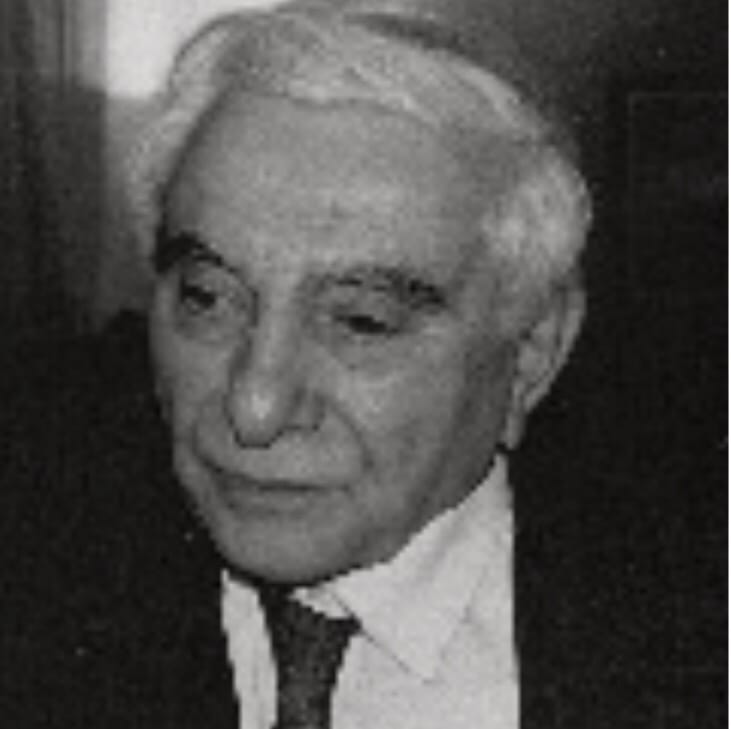
HAMZA AYGÜN NARRATES:
"I had finished my military service and was returning to Iğdır by train. When we made a 'water stop' (necessary for steam trains) in Sivas, I got off and started pacing on the platform. Rahim Yadigâr, whom I knew well, and his wife Saltanat Hanım, called out to me from the window of their sleeping compartment, 'Hamza! Hamza!' Rahim Yadigâr was my math teacher in middle school. We also knew each other's families.
When he asked, 'Where are you going?' I replied, 'To Iğdır.'
'What will you do in Iğdır, my son? Your coffeehouse and restaurant have been sold!' he said. I was sad. 'I'll stop by Iğdır to see the situation. If I can't find a job, I'll go to Istanbul or somewhere,' I said. Saltanat Hanım interjected:
'You're not going anywhere. Rahim will give you a job!'
Rahim Yadigâr was from the Caucasus. While an officer in the Russian army, he had come from Tbilisi to Kars during the war years, and from there to Iğdır, where he settled. He came from a respected and important family. Years later, when I visited Tbilisi, I had seen his ancestral home. Rahim Yadigâr had worked as a Russian translator in Iğdır. Tezer Taşkıran, a Member of Parliament from Kars of Caucasian origin, had once promised Rahim Yadigâr a job at the Agricultural Sales Cooperative. Thus, Rahim Yadigâr was appointed as the accounting manager of the Agricultural Sales Cooperative, which was founded and chaired by Şükrü Kasapoğlu – later the owner of Paksoy company – in Iğdır in 1937. When Süleyman Bey left Iğdır, Rahim Yadigâr became the general manager in his place and continued in this position for two years.
Three days later, I went to Rahim Yadigâr's office at the Agricultural Sales Cooperative. With a hasty decision, he said, 'I've made you an office clerk.' For this reason, I would like to remember Rahim Yadigâr and Saltanat Hanım with respect and reverence for extending a helping hand to me in my most difficult time."
DİL NEWSPAPER OWNER: MECİT HUN FEBRUARY 4, 1953
MUNICIPAL COUNCIL MEETING
(I present the following news to your attention to get an idea of who the members of the Municipal Council were in 1953. Mücahit)
Ali Ural (Mayor), Celil Cantürk, Ali Işık, Hüseyin Yaycı, Asker Yıldırım, Eşref Başaran, Tevfik Solmaz, Nebi Yaşar, Muharrem Aslan, Musa Turan, Haydar Tekin, Eşref Kaya, Timur Toksöz attended the meeting.
ATTENTION: My dear readers! Eşref Kaya, with the support of Hüsnü Bingöl, is both the PTSK manager, a Provincial General Assembly Member, and a Municipal Council member. Furthermore, when Mayor Ali Ural leaves the district, Eşref Kaya acts as his deputy. The news below conveys this information to us:
ŞARKIN DİLİ NEWSPAPER OWNER: MECİT HUN JUNE 5, 1953
WRITTEN BY: MECİT HUN
It is observed with satisfaction that Eşref Kaya, who is acting as deputy mayor due to our Mayor Ali Ural's trip to Ankara on official duty, is showing positive activity in matters falling within the scope of municipal regulations.
Within a short period of 20 days, in addition to the improvement of the main road in the bazaar and the construction of the pool and coffee stand in the municipal park, the old square, which was in a neglected state, has been converted into a garage, and the purchase of a trailer for the clean transportation of meat has been decided.
DİL NEWSPAPER OWNER: MECİT HUN OCTOBER 18, 1952
Our esteemed governor, Mr. Niyazi Akı, who completed his inspections yesterday in our sub-district of Başköy (Aralık was not a district in those years), has departed from Iğdır en route to Kars. Following discussions on the Balıklı Lake water, the yarn factory, and canning issues, positive results were achieved in the inspections regarding aid to citizens affected by the disaster and the Iğdır-Başköy road, and other needs of the town were reviewed with the relevant officials. (Dear readers! The district of Aralık, until April 1, 1960, was one of the sub-district centers of Iğdır district under the name "Başköy," but on this date, it was elevated to a "district" administrative unit and connected to the province of Kars.)
DİL GAZETESİ OWNER: MECİT HUN October 18, 1952
EŞREF KAYA ARRIVED
Eşref Kaya, the director of the Cotton Agricultural Sales Cooperative, who went to Ankara some time ago, returned to Iğdır a few days ago. During this trip, Kaya ensured the harmless sale of last season's cotton and obtained the necessary credit for the new year's purchase. The cooperative will begin purchasing cotton from November 1st.
KARS MEMBERS OF PARLIAMENT IN THE 1950 GENERAL ELECTIONS
My dear readers!
I want to make an important reminder again. Between 1946 and 1960, the Plurality System was in effect. This meant that the party that received the majority of votes in a province was considered to have won all parliamentary seats. After the 1960 Revolution, the Proportional Representation system was introduced. Parties had the right to elect Members of Parliament in proportion to the votes they received. Please be careful not to confuse these two periods.
The 1946 elections were contested by the CHP and DP. Since the CHP received more votes in Kars, it elected the following Members of Parliament:
TBMM 9th TERM KARS MEMBERS OF PARLIAMENT (CHP) 1950
1. Fevzi Aktaş
2. Mehmet Rüstem Bahadır
3. Ali Akif Eyidoğan
4. Aziz Samih İlter
5. Şerafettin Karacan
6. Esat Oktay
7. Zihni Orhon
8. Alay Abdurrahman Azizağaoğlu
9. Tezer Taşkıran
10. Hüsamettin Tugaç
I want to highlight the name of Tezer Taşkıran, daughter of Ahmet Ağaoğlu, who was elected from the CHP list, because it will become important in my subsequent narratives.
1950 GENERAL ELECTION RESULTS FOR TURKEY
PARTY NAME VOTE PERCENTAGE NUMBER OF DEPUTIES
Democrat Party (DP) % 52.7 408
Republican People's Party % 39.4 69
Nation Party %3.11 1
Independents 9
Total: 487 Deputies
Here, I would like to inform my readers about one point. As the May 14, 1950 elections were taking place, the question of who were the Iğdır District Chairmen of these three parties might have crossed your mind:
1. Republican People's Party Bağır Aras
2. Democrat Party Nurettin Kirman
3. Nation Party Mecit Hun
Iğdır Mayor Mir Ali Ural
When we look at the CHP Kars list, four "O Taylı" Deputies stand out:
1. Abbas Çetin (Azeri born in Yerevan)
2. Latif Aküzüm (Azeri born in Kars / acted with the O Taylı group)
3. Veyis Koçulu (Karapapak born in Tbilisi)
4. Tezer Taşkıran (Azeri born in Karabakh)
Note: Latif Bey's sister, Nazlı Hanım, is the wife of Şamil Bey's son, Ziya Ayrım Bey.
KARS GAZETESİ NOVEMBER 5, 1953
UNFAIR TREATMENT OF EŞREF KAYA IN IĞDIR
The general sorrow felt over the dismissal of Eşref Kaya, manager of the Cotton Agricultural Sales Cooperative, by an inspector is increasing day by day.
ATTENTION: Dear readers! As I mentioned before, Eşref Kaya is under the protection of Hüsnü Bingöl. Unfortunately, probably in October 1953, Hüsnü Bingöl, in violation of regulations, went on a market tour in a Major's uniform. The "O Taylılar/Diaspora" Azeris, who hated Hüsnü Bingöl, filed a criminal complaint with the Public Prosecutor's Office. The mighty Hüsnü Bingöl, like an ordinary citizen, gave a sheepish statement to the Public Prosecutor. He returned home and never left his house again. Cigarette, cigarette, cigarette…. Then, in 1954, he suffered a heart attack and retired. When Hüsnü Bingöl lost his power, the Diaspora Azeris immediately dismissed Eşref Kaya without showing any abuse or justification. In such cases, the manager of Ziraat Bank acts as interim manager until a new management is elected. Talat Tufan was elected in the 1954 elections.
WHO IS EŞREF KAYA?
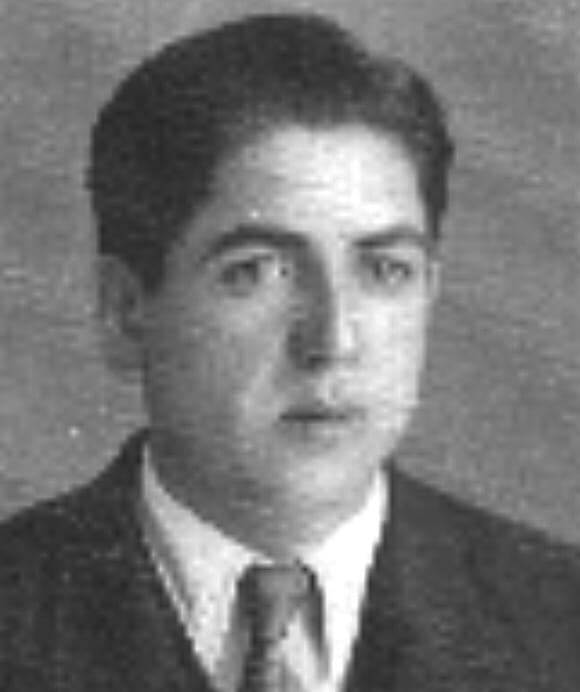
His wife, Fatma Kaya, recounts:
“Eşref was born in 1340 (Rumi) as the youngest child of a Terekeme family in the village of Işıklı, in the region called Kazak, near Baku, the capital of Azerbaijan. Three brothers became orphans when their father died at a young age and grew up under the care of their uncles. His elder brother fell in love with the daughter of an Armenian priest and followed her to Iran, where he was shot and killed by the girl's relatives.
After high school, Eşref enrolled in the Faculty of Agriculture in Baku and attended school for about a year. When Stalin's terror was on the rise, the two brothers decided to flee to Turkey. They went to a village near the Ardahan provincial border and waited for a suitable time to escape. There was a mountain in front of them. Eşref, before the dangerous crossing, suggested to his elder brother, "You go on this side of the mountain, and I'll go on the other side. If one of us gets caught, at least the other has a chance to escape!" The two brothers hugged and said goodbye.
As Eşref followed the side of the mountain towards the border, he heard gunshots from afar. Thinking that his brother had probably been killed, he continued on his way. He was also shot at the point where he crossed the border, and one of the bullets grazed his leg. Despite his injury, Eşref managed to cross the border. He stayed in Kars for a few months with distant relatives and friends, receiving treatment; he went to Eleşkirt and found small jobs there. Eşref, believing his remaining brother was dead, did not think of tracking him down. However, border security had caught his brother and sent him back to Azerbaijan. Unfortunately, I learned that his brother was alive long after Eşref's death, by chance, and got to know his family through correspondence.
EŞREF KAYA'S BENEFACTOR: HÜSNÜ BİNGÖL
Hüsnü Bingöl, somehow met Eşref, who was of Terekeme origin like himself, and arranged for him to come to Iğdır and work in the Police Department. With Hüsnü Bey's special interest and protection, Eşref quickly made friends in Iğdır, a place he had never known, and thus started a new life. He simultaneously served as the manager of the Cotton Sales Cooperative and, by entering politics, as a member of the provincial general assembly and the municipal council. Eşref came to the forefront as one of the respected and admired notables of the town.
A few years after his marriage (1945), Eşref moved our house to Kars and went into the hotel business with his relatives. He continued this duty without interruption until 1950.
Eşref loved people and cared for his friends. When he came home, he would retreat to his room, read his newspapers and books, and help with household chores when needed. What made him happiest was when I prepared dishes from his region for him. In the beginning, he would give me the recipes himself, thus ensuring that everything was prepared to his desired consistency and taste. He was particularly fond of Mantı, Küşpere, Borç, and Bozbaş.
Eşref's best friends were Mecit Hun, Abdullah Çınar, Eşref Başaran, and Aziz Güney.
Eşref served as the DP Iğdır district chairman for 4-5 years (1957-1960). In those years, Mecit Hun was the CHP's district chairman. Despite being at the head of two different parties, they would walk arm in arm like brothers. In fact, once, we were sitting at the same table with our families at a casino, having fun. An Iğdır local came to our table and, with curiosity, said, "I don't understand you two. You're the district chairmen of two enemy parties, yet you're sitting at the same table, enjoying yourselves!" Eşref, without batting an eyelid, replied, "Politics is one thing, friendship is another."
Throughout my entire married life, I only argued with Eşref once. He was preparing to go to Kars because he was a member of the provincial general assembly. I had asked him to take me with him. When he said, "No!" I confronted him and gave him a good verbal dressing-down.
THREE "FROM THE OTHER SIDE" DEPUTIES JOIN THE DEMOCRAT PARTY FROM THE CHP
Between 1920 and 1937, Azerbaijanis living on the Soviet side crossed the Aras River and sought refuge in Turkey. For this reason, for many years, there was a distinction of "o taylı, bu taylı" (from the other side, from this side) among the Azerbaijanis living in Iğdır. The Azerbaijanis referred to as "o taylı" supported the Democrat Party in 1950, while the "bu taylı" Azerbaijanis preferred to remain with the CHP. This situation was true not only for Iğdır but for Kars in general.
As I wrote earlier, the CHP won the 1950 elections with a full slate in Kars. Soon after, Latif Aküzüm, Abbas Çetin, and Veyis Koçulu, who were elected as deputies from the CHP list, resigned from the CHP and joined the DP (18.03.1952).
The three deputies stated their reasons for resignation as follows: "That the chief system still continues in this party (CHP), that honest and upright citizens are being harassed by being tied to files, that a sectarian and divisive mentality has been adopted in the People's Party, and that in the last Kars provincial congress, General Secretary Gülek himself, in cooperation with the criminals of the past and present, tried to revive the old mentality..."
To better explain the situation to you, I must provide the deputies' sectarian and ethnic affiliations. Please do not consider this discrimination or sectarianism. The facts I will explain were openly experienced in the 1950s. There was nothing hidden or secret about them.
1. Latif Aküzüm: Azerbaijani (born 1912 in Şöregel, Armenia)
2. Abbas Çetin: Azerbaijani (born 1914 in Yerevan, Armenia)
3. Veyis Koçulu: Karapapak (born 1891 in Tbilisi, Georgia)
Considering their birthplaces, we can see that all three deputies were "o taylı" (from the other side). In fact, Tezer Taşkıran, the daughter of Azerbaijani-born statesman Ahmet Ağaoğlu, also wanted to act with them because her brother Samet Ağaoğlu was elected as a DP deputy from Manisa. However, since she had served as a CHP deputy from Kastamonu and Kars for two terms, perhaps succumbing to a sense of loyalty, she did not immediately resign from the CHP. But Tezer Taşkıran resigned from the CHP before the 1954 elections, became an independent deputy, and subsequently ran as a DP candidate. In this way, the Azerbaijani diaspora took its place in the Democrat Party.
When the DP came to power, its most important goal was to hold the single-party era and the national pact supporters accountable. The representative of this in the West was İnönü, and in the East was Hüsnü Bingöl. For this reason, the three "o taylı" deputies who resigned from the CHP and joined the DP implemented a special policy of pressure and intimidation on Hüsnü Bingöl. In those years, if the Democrat Party had had the power, they could have easily sent İnönü and Hüsnü Bingöl to the gallows by accusing them of a crime. Indeed, for this purpose, DP Tekirdağ Deputy Şevket Mocan invented the "Boraltan" lie and took action to have İnönü tried, but when someone whispered in Şevket Mocan's ear, "Those who were handed over were not political refugees but war criminal prisoners. If you make too much noise, Turkey will have to pay war reparations," Mocan abandoned his request for a parliamentary inquiry. In fact, the "Boraltan" lie continued to be used as political fodder in later years. Before the 1965 general elections, the Justice Party's publication, Adalet Gazetesi, brought this incident back to the agenda to put İnönü in a difficult position.
Latif Aküzüm, Abbas Çetin, and Veyis Koçulu served as deputies until the elections to be held in 1954, as they joined the DP on 18.03.1952. These were also the years when the Diaspora Azerbaijanis targeted Hüsnü Bingöl, who had once caused them pain, and at the first opportunity, pounced on him and erased him from the stage of history. The DP, unable to execute İsmet İnönü with the Boraltan Bridge lie (a significant portion of the military was against it), burned and destroyed all reports, documents, files, pictures, etc., related to Hüsnü Bingöl. Hüsnü Bingöl was materially and spiritually erased from the archives, but he continued to live in the memory of the people with all his characteristics. When I started writing the book Iğdır Sevdası in 2000, there was not a single line of information about him in libraries, official institutions, or parliamentary records. Through interviews, I rediscovered Hüsnü Bingöl's true identity and personality. Thus, in 2002, Hüsnü Bingöl was reborn. In later years, MIT applied to me and, with the information in the book and my guidance, prepared a documentary titled "The Light on the Border." Getting rid of Hüsnü Bingöl was perceived as a victory for the diaspora Azerbaijanis.
EKİNCİ NEWSPAPER April 21, 1953
OWNER AND WRITER: CENGİZ EKİNCİ
MILLET PARTY IĞDIR BRANCH RESIGNED
The Millet Party Iğdır Branch dissolved itself. All members collectively left the party. The only important event I wished for during my visit to Iğdır was the self-dissolution of the Millet Party Iğdır branch. According to the information I received from Mecit Hun, the Chairman of the Initiative Committee, the dissolution and mass resignation are based on very fundamental compelling reasons, and the resignations will be submitted to the Party General Executive Board in due course. According to our investigation, the most important reason that led Mr. MECİT HUN and his friends to this decision is that the Millet Party acted with a committee-like spirit and openly engaged in Atatürk hostility.
CLOSURE OF THE MILLET PARTY (1954)
The Millet Party was founded in 1948. In Iğdır, Mecit Hun took over the party's district organization and district chairmanship. One of the most important reasons for the party's establishment was that the Democrat Party did not offer strong opposition to the Republican People's Party.
The Nation Party (Millet Partisi) was founded in Ankara on July 20, 1948, by a group of members who had been expelled from or had resigned from the Democrat Party (Demokrat Parti) due to their opposition within it. Among the party's founders were prominent figures such as Fevzi Çakmak, Osman Bölükbaşı, Enis Akaygen, and Yusuf Hikmet Bayur. While Marshal Fevzi Çakmak served as the honorary chairman, Hikmet Bayur became the party's first general chairman, with Osman Nuri Köni as the first deputy general chairman and Mustafa Kentli as the first general secretary.
From its inception, the party directed harsh criticisms at both the ruling Republican People's Party (Cumhuriyet Halk Partisi, CHP) and the opposition Democrat Party (DP). Strongly opposing the CHP's understanding of religion and secularism, the party claimed that the DP was a collusive (secretly agreed upon) party and that they themselves were the ones offering genuine opposition. Their criticisms of the National Chief (Milli Şef), who had been considered a taboo and beyond criticism for years, garnered considerable attention. The party's program included views such as establishing a democratic administration, removing the Six Arrows from the constitution, expanding individual freedoms, preparing a general development program, and pursuing a liberal economic policy. The party also advocated for the president to be elected for a single term and for the adoption of a bicameral system.
The party did not participate in the by-elections held in 1948, deeming the changes made to the election law insufficient. Under the leadership of Yusuf Hikmet Bayur, the party nominated candidates from 22 provinces for the 1950 general elections but did not achieve much success, receiving 250,414 votes nationwide, which amounted to 3.11% of the total. Of its nominated candidates, only Osman Bölükbaşı managed to enter the Grand National Assembly of Turkey from Kırşehir. The Nation Party was shut down in 1954 on the grounds that it produced policies contrary to secularism. Despite the party's vote share increasing to 8% in the 1951 by-elections, none of its nominated candidates won the elections.
After holding its first congress in 1950, Mustafa Kentli was appointed general chairman following the party's congress a year later. In the third congress held in 1952, Enis Akaygen took over the general chairmanship. During this congress, a group of party delegates refused to lay flowers at Atatürk's tomb, leading to various disagreements within the party. These disagreements escalated into an open conflict at the party's fifth grand congress, held from June 27-29, 1953, and the first general chairman, Hikmet Bayur, resigned from the MP, claiming that the party had fallen into the hands of religious fundamentalists and reactionaries. Hikmet Bayur's resignation was treated as a criminal complaint, and an investigation was launched against the party. One day after the homes of party executives were searched and their statements taken on July 7, 1953, party activities were temporarily suspended to ensure the healthy conduct of the investigation. As a result of the lawsuit filed in the Ankara 3rd Criminal Court of Peace, it was concluded that the party was "a society based on religious principles and concealing its true purpose," and the party was officially closed on January 27, 1954.
When the Nation Party was closed, Mecit Hun was left without a party. He joined the Independent Democrats group. In his newspaper, Pamukova, he wrote articles targeting Nağdali Parlar, the DP District Chairman in Iğdır. He joined forces with Nurettin Kirman, who, like him, was an independent Democrat, to fight against the DP.
PAMUKOVA NEWSPAPER October 29, 1954
OWNER AND WRITER: MECİT HUN
PEOPLE OF IĞDIR WANT A HOSPITAL
On this occasion, the following telegram was sent to the Provincial Authority two days ago:
To the Esteemed Authority of the Kars Governorship
KARS
The health centers' instruction manual, which aims to staff health centers with general practitioners and henceforth to not perform surgeries in health centers, instead referring such patients to the nearest hospitals, will be put into effect today at the district public health council. STOP. Considering Iğdır's population density and its distance from hospital centers, especially the impassability of roads during winter, the application of the aforementioned instruction manual to our health center will be a disaster and ruin for the health of the people of Iğdır. STOP. For this reason, we are seriously concerned about our health. STOP. We respectfully request and implore the esteemed Provincial Authority, acting as the voice of the people of Iğdır's feelings and thoughts, and based on the authority granted by the aforementioned instruction manual, to initiate efforts with relevant parties to transform the Iğdır Health Center into a small-scale hospital:
Mayor: Ali Ural
DP Chairman: Nağdali Parlar
Chamber of Commerce Chairman: Abdurrezak Güneş
Municipal Council Member: Hasan Tezel
General Assembly Member (Provincial General Assembly Member): Eşref Kaya
General Assembly Member (Provincial General Assembly Member): Musa Doğan
Manufacturer: Osman Ataman
Council Member: Ali Işık
Council Member: Eşref Başaran
Union Chairman: Talât Tufan
Merchant: Fazıl Baykal
Journalist: Mecit Hun
BİRLİK NEWSPAPER (KARS) 1955
FAZIL BAYKAL BECAME IĞDIR MAYOR
(Dear readers! While all this commotion was going on, mayoral elections were held in Iğdır in 1955. The Democrat Party did not nominate a candidate. Mehmet Gülten was the DP District Chairman. There were two strong candidates: Ali Ural from the CHP and Fazıl Baykal, the candidate of the independents, including Mecit Hun. Fazıl Baykal and Mecit Hun won the election. One became mayor, the other deputy mayor. However, this did not last long. The objections were re-examined, and Ali Ural continued as mayor again in 1957. Mücahit)
As a result of very long objections, counter-objections, and their examination, the Iğdır Municipal elections were decided in favor of the independents by the Supreme Election Board, and the Iğdır municipality, which was being administered by proxy by the district governor, was handed over to the new independent council.
The independents, who took over the municipal administration, brought Fazıl Baykal to the mayoralty. In this election, the former mayor Ali Ural's concession in favor of Fazıl Baykal further increased the sympathy for him in our region.
PAMUKOVA NEWSPAPER February 13, 1953
OWNER: MECİT HUN
(Dear readers! One of the most important figures who left their mark on 1950s politics was Nurettin Kirman. He was the first to organize the DP in Iğdır and served as district chairman until 1953. He fell into disagreement with Hacı Nağdali Parlar and Sadık Tezel (O Taylılar) and resigned from the party and the district chairmanship.
I am providing the full text of this historically important resignation letter, written by Nurettin Kirman himself, who is considered the first martyr of democracy in Iğdır's political history and one of its most significant figures. Mücahit)
WE ARE PROVIDING THE TEXT OF NURETTİN KİRMAN'S RESIGNATION
In 1948, believing in its statutes and program, I joined the Democratic Party (DP) and worked in opposition with my party colleagues until 1950, under the most difficult conditions and in tough struggles with politicians who today claim to be Democrats. In Iğdır, one of the remotest corners of the country, free from political activities, we succeeded in establishing the Democratic Party organization in districts, sub-districts, and villages, often on foot, day and night, without regard for time, enduring all kinds of material and moral sacrifices with my very limited number of friends, for the establishment of democratic principles, for the people to be able to govern themselves, and to freely express their political opinions, in short, for the organization of the Democratic Party in our region.
When my friends Musa Doğan, Hamit Dönmez, and Yusuf Aksu and I walked to Zülfikar village, the villagers told us exactly this:
“Gulem Parlar and Nağdali Parlar say the government will turn those who join the Democratic Party into soap, kill them, etc.”
Despite all these negative propagandas, we were able to establish a hearth in Zülfikar with the help of Meydan Emi and Talip and their friends. It is natural that the politicians who today wear DP badges on their chests and appear to be embracing the DP with all their might were then members and active elements of the ruling party (CHP).
After the DP came to power in the 1950 general elections, which were held as a result of our arduous work, the political situation changed. Politicians began to appear before the public with DP badges, hiding the badges of their historical party (CHP) under their lapels. It is from this date that our sincere partisanship gave way to a feigned and self-serving politics.
Despite this, I persevered with the determination to work for the DP until today. In 1950, the DP Iğdır organization, which I chaired, became detestable due to the intrigues and factional mentality of those who sought refuge in the party after May 14th. At a time when the party chairmanship was the sole aim of these fake politicians, I resigned from the chairmanship of my own free will, seeing my self-respect above all else, despite the repeated insistence of the true party circles that I should not leave. This is a truth that indicates that I am not a person obsessed with chairmanship.
During one congress period, I did not withhold maximum service to the party as merely a party member, and at the district congress held a year ago, which included eighty delegates prepared by the District Administrative Board (of which I was not a part, at the general request), despite all opposition, I was brought to the chairmanship by the votes of the appreciative party delegates, with one abstention and two votes against me, and the rest of the general body voting in my favor. (Ismail Alaca and Tanrıverdi Gökçay, who were present as provincial observers, know very well how this congress proceeded.)
Today, many of the fake Democrats assigned to the provisional administrative board, although they wanted to stir up trouble at that time, were expelled from party congresses at every level.
Following the district election, we participated in the provincial congress. At the congress, two inconsistent factions were struggling. On one side, İsmail Alaca, on the other, Nervuz Gündoğdu.
As Democrats, without letting ourselves get carried away by any service, we elected an enlightened, principled, and truly worthy administrative board to lead the party. In this election, Zeki Aras and his entourage, who lost the election due to their lack of representational ability, caused undesirable incidents by sowing discord among the new Provincial Administrative Board members.
For example, the resignations from the Provincial Administrative Board of principled individuals like Alaca and İbrahim Taşdemir, whose necessity for the party I truly believed in, are a result of this attempt. The instigators did not stop there. They influenced the newly joined DP deputies and secured the dissolution of the Kars Provincial Administrative Board at the General Headquarters. It is from this date that the Kars Democratic Party organization was dragged into a real disaster.
How sad it is that the members of the General Administrative Board, the deputies from Erzurum, Mustafa Zeren and Rıfkı Salim Barçak, who were unable to resolve the party dispute in their own province of Erzurum, were supposedly assigned to resolve the dispute in Kars.
Here I must mention the peculiarities of the events in Kars. Indeed, Mr. Zeren, who acted with the aim of making Mr. Rıfkı Salim Burçak, a truly valuable person for the party and the country, conform to his own wishes, after resorting to all kinds of measures, raised his glass at a dinner organized by Nusret Metan at the Şerefler City Club with these insincere words in honor of Rıfkı Salim Burçak: "Very soon we will see esteemed Mr. Rıfkı as our Minister of Foreign Affairs, I congratulate him in advance and raise my glass to his honor."
After this brief but insincere and meaningful address, Zeren, having achieved the desired result, immediately dissolved the old administrative board the next day and succeeded in bringing to power the current Provincial Administrative Board, chaired by Zeki Aras, the majority of whom were his supporters.
I would also like to add that what Mustafa Zeren Efendi did to Rıfkı Selim Burçak, Zeki Aras had done to Mustafa Zeren. Our friend Zeki Aras, who would go to any lengths to become chairman, had promised Mustafa Zeren, with the aim of enticing him, that if he became chairman, he would nominate his son Edip Zeren as a DP deputy candidate from Kars in the 1954 elections.
Mustafa Zeren proved his loyalty, and the Kars organization was established within this comedy. How strange it is that the dissolution of the genuine Provincial Administrative Board, chaired by Cengiz Ekinci, by the General Presidency, and the appointment of people who were not brought to power by the votes of the delegates, at a time when it had just begun its activities, remained a mystery for that day.
Today, this mystery has been solved, and the matter has entered an undeniable phase. The event is as follows: The three newly joined DP deputies and other ambitious individuals, considering the 1954 situation dire for themselves, felt the need to overthrow the Administrative Board chaired by Ekinci.
In fact, these ambitious individuals of 1954 had not foreseen the adverse effect of this action, which further corrupted their own persons, and could not appreciate the magnitude of the mistake they had made.
As a result, Zeki Aras and his circle, taking advantage of the fact that some of the provincial board members had gone to Istanbul, were able to assert their influence on the board. They began to implement principled decisions aimed at undermining party members who might pose a threat to them in a normal congress. Meanwhile, the Aras faction, considering me a primary threat, acted like Mustafa Zeren and, without any investigation, in a mere half-hour, dissolved our non-temporary board, which had come into power with the votes of representatives from all DP circles (environments) in Iğdır. They thus knowingly and deliberately committed a second disgraceful error in the history of the DP Kars. (Zeki Aras came to Iğdır upon receiving a telegram from his relative Sait Güneş, the content of which is written below: "We wrote to you recently, and you promised to come and do that job, but you didn't. If you don't come, you are no longer our relative.")
The other strange aspect of the matter is the inclusion of Zeki Aras's two closest relatives in the newly formed temporary board. The error was so great and regrettable that a significant number of our fellow citizens, who were elected to the temporary administrative board for the first time, immediately resigned, thus responding to the Aras faction. A temporary board could only be formed with the addition of a few discarded members (those who had lost their value) from the People's Party, in addition to Zeki Aras's two close relatives, and a Haji who was resentful because he could not lease his idle factory to the cooperative for 35 thousand liras due to my personal intervention. Unfortunately, it was named the DP District Administrative Board. (Those who wish to read my articles about this Haji will be able to do so in the Kars, Ekinci, and Dil newspapers when the time comes, and then they will learn about his reputation in Iğdır.)
We, the dissolved administrative board, relying on the right granted by the provisions of the current regulations, drew the attention of the general presidency with urgent telegrams from the three existing sub-district administrative boards regarding the resolution of the dispute or an investigation by an inspector on site, stating that nearly a hundred branch chairmen, party leaders, and provincial general assembly members did not approve of the situation and that this arbitrary decision, aimed at collapsing the party, should be rectified in accordance with Article 34 of the Regulations, considering that the party would collapse in this situation, and that a general extraordinary meeting should be convened. However, silence has prevailed for fifteen days.
Given this situation, not only have the party regulations never been applied in the organization in Kars and its dependencies within the last year, but the general presidency also applies the regulations according to individuals due to the disputes in this region and refrains from truly applying the regulations.
It is regrettable that the actions of the temporary provincial administrative board, which had no other activity than to undermine the DP in the region, must have been approved by the general headquarters, as their terms of service have been extended.
The mentality prevalent in the DP today, after five years of my service, is this: instead of party members who personally founded or joined the DP during the most dangerous and dark days, it is to favor those who joined within the last two years for personal gain and political expediency, and to purge the old party members. This reveals a bitter truth: to admit everyone into the DP without investigating their background. The DP may suffer the consequences of such a misguided policy in the 1954 elections.
I have come to the conclusion that I cannot serve my nation as a DP member within the uncomprehending organization of the DP in Kars. I am resigning from the DP, which persistently defends a society that tramples even the simplest rules of partisanship by undermining individuals and squandering efforts in a half-hour's work due to kinship, friendship, and resentment.
I will consider it an honor to perform the national duties that my nation and fellow citizens entrust to me, without expecting anything in return, as a child of this country. As I bid farewell to my true DP friends, I hope that the DP will reform itself in a way that can be beneficial to the Turkish Nation.
BİRLİK NEWSPAPER (KARS) March 15, 1953
NURETTİN KİRMAN JOINED THE DP
(Nurettin Kirman made a big mistake by resigning from the DP District Presidency, which he founded and held since 1950, and from the DP on February 13, 1953. However, he rejoined the DP very soon after. But he was now an ordinary member. Hacı Nağdali Parlar was the DP District Chairman. The administration had fallen into the hands of "Those from Taylı." To be a candidate for the presidency, he had to wait for the next district congresses. When the Parliament decided on early elections on October 27, 1957, according to the rules, parties rushed to hold their district congresses as soon as possible. At that time, Hacı Nağdali Parlar was the DP Iğdır District Chairman in 1957. Nurettin Kirman seemed likely to take over the district chairmanship from Hacı Nağdali Parlar in the upcoming congress. He even had a chance to be a parliamentary candidate on the DP list this time. While these hot political developments were ongoing, Nurettin Kirman was martyred by "Those from Taylı." The Kirman family's hatred for Iğdır, where "Those from Taylı" were concentrated, became so intense that the late Nurettin Kirman was buried in Gaziler. Mücahit)
Nurettin Kirman, one of the enlightened young people of Iğdır and a founder of the DP, had resigned from the party. This time, upon his reapplication to the party he founded, it was deemed appropriate to readmit him to the DP due to the reasonableness of his reasons for resignation. We wish this young friend's return to his party to be beneficial for both our party and himself.
"THE ELECTION STRATEGY OF THE TWIN BROTHERS" IN IĞDIR
Dear readers! One of the strange occurrences in Iğdır in the 1950s was that one of two brothers was a CHP member and the other was a DP member. They did this consciously. The aim was to have influence wherever their party won.
FIRST BROTHERS: Cafer Sadık Tezel (DP) and Hasan Tezel (CHP)
(Ali Ural was elected Mayor from the CHP. Hasan Tezel is also registered with the CHP. He gives Ali Ural no breathing room. Mücahit)
AYHAVAR NEWSPAPER April 9, 1953
OWNER AND WRITER: CENGİZ EKİNCİ
(Journalist Cengiz Ekinci is interviewing Mayor Ali Ural. I will not interfere with the local dialect. Mücahit)
"Chief, you're laughing hard these days!"
"My mood was good, my child. But Ebil Hesen (Hasan Tezel) keeps staring at my chair, not letting me oil my mustache in peace."
"What kind of talk is this? Who is Eblesen (Hasan Tezel) to stand against you for the presidency?"
"Don't you see, he's also put Cafer Sadık (Sadık Tezel) among the Democrats (DP) so he can gather support from them too."
"Oh my, oh my... Sir, it seems your work is in trouble this time."
"If Sofi Silo's son (Mehmet Gülten) can do something in front of İrza Gulu (Rıza Yalçın), Ebdil will also defeat me. You'll see, I'll put things in order again."
SECOND BROTHERS: Hacı Nağdali Parlar (DP) and Hacı Gulem Parlar (CHP)
(Both brothers follow the same strategy. Hacı Sait Güven explains this best.)
“Every person has a subject and an area of endeavor that they love and that captures their heart. Some of my friends are passionate about agriculture, viticulture, and gardening, some about religious and spiritual wealth, and some about politics. For example, Mecit Hun was someone who truly loved politics. He never gave up political leadership because he loved mingling with people, sitting and rising with them.
However, for me, politics was the most boring subject in the world. When my friends at the same table brought up politics, I would quietly leave and go to the mosque or home to clear my head.
How could it not be so? One day I asked Hacı Nağdali Parlar, one of Iğdır's important figures:
“Hacı, there's one point I don't understand: You're in one party, and your brother (Hacı Gulem Parlar) is in another. How does this happen?”
Hacı Nağdali Parlar laughed at my naivety and replied:
“Oh, you're alive! This is very easy! If my brother's party loses in the elections, then he comes to my party; if my party loses, I go to his party. In any case, we are the winners.”
Hacı's reasoning was not for me. I prefer to think of life more in its simplicity and beauty. Of course, I also had a profession that I loved, and loved very much: animal husbandry.”
NURETTİN KİRMAN-MECİT HUN RIVALRY (!)
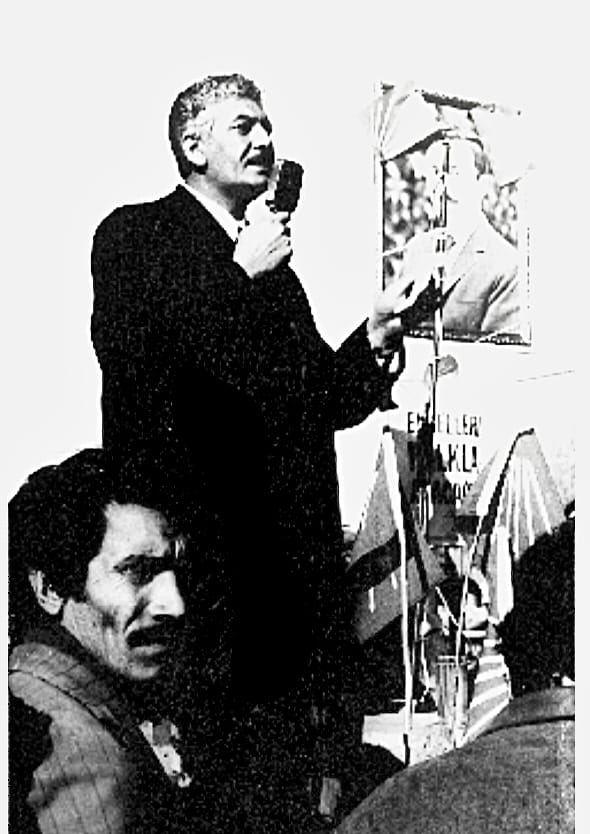
Hacı Ömer Şark had told the following anecdote about Nurettin Kirman's oratorical skills:
“It was towards the mid-1950s. It was summer. Our homes had moved to the Aladağ plateaus. One day, friends from Ağrı came to visit us at the plateau. During the conversation, one of them said, 'Last week, Prime Minister Menderes came to Kars. As party members, we went from Ağrı by bus to greet him. At a meeting, a young man from Iğdır named Nurettin Kirman gave a speech, oh my, oh my, he gave such a speech that Menderes and everyone there, we were all amazed.'
The success of a young man from Iğdır made me proud. I turned to my friends from Ağrı and said, 'What did you think Iğdır was? Your vegetables and fruits come from us. We also give you your political masters. Nurettin Kirman is the son of our coachman, but if the son of our agha or pasha were to take the podium, then you would see!'”
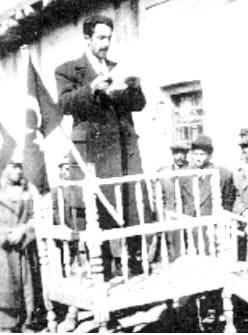
In the 1950s, there were two orators who shook Iğdır: The first was Nurettin Kirman, of Azerbaijani origin, known as "Bu Taylı," and the other was Mecit Hun, of Kurdish origin. Both of their podium speeches attracted great interest. I opened this topic to write a truth that is commonly misunderstood among the public. For some reason, my fellow Iğdır residents who remember the 1950s have comments in coffee house conversations like, "Nurettin Kirman and Mecit Hun had a fierce rivalry! One was in the CHP, the other in the DP, and they said everything to each other." It's time to clarify the truth. Mecit Hun and Nurettin Kirman only confronted each other once between 1950 and 1960: during the 27 May 1950 General Election speeches. Mecit Hun was the district chairman of the Millet Party, and Nurettin Kirman was the district chairman of the DP. Both were tall, with deep, confident voices that could stir crowds. Interestingly, immediately after the General Elections, the Ministry of Commerce appointed Nurettin Kirman and Mecit Hun as inspectors to investigate the abuses committed in PTSK-Birlik. The two friends had to go to Istanbul together to find and interrogate the former President of PTSK-Birlik, Eşref Başaran.
ALI YİĞİT NARRATES
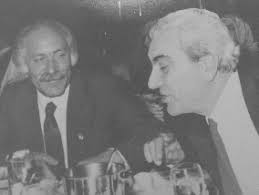
Abdürrezak Güneş, the President of the Chamber of Commerce, had undoubtedly endeared himself as the most respected person among the Kurds during that period (the 1940s and 50s). Meanwhile, young people from the new generation were rising, thus increasing the political influence of the Kurds in the city center. Four high school graduates were particularly prominent: Mecit Hun, Aziz Güney, Cihangir Turan, and Musa Malgaz.
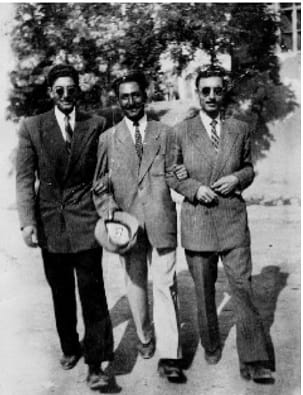
Abdürrezak Güneş had seen the talent in Mecit Hun and, when necessary, supported him, paving his way. When podium speeches were held, Abdürrezak Güneş would close his shop and go to listen to Mecit Hun with a large crowd around him. Abdürrezak Güneş's presence at the election rallies would cause the crowd to become enthusiastic and increase interest in the speech. This interest was instrumental in Mecit Hun's star rising as a new leader and his path being opened.
One day, Timur Necilli and Abdürrezak Güneş were sitting and chatting. Mecit Hun and Nurettin Kirman were walking arm in arm a little further away.
Timur Necilli asked:
“Mr. Abdürrezak, will ours deceive yours, or will yours deceive ours?”
“By the grace of God, ours (Mecit Hun) will defeat yours!” he replied proudly.
(This conversation took place before the 27 May 1950 General Elections)
ALI YİĞİT NARRATES
“The two powerful orators of the 1950s were Mecit Hun and Nurettin Kirman. Mecit Hun was the district chairman of the Millet Party. (Mecit Hun became the CHP District Chairman in 1958.) Nurettin Kirman was the DP District Chairman. In the 27 May 1950 elections, the two orators confronted each other. Although their parties were different, they loved and respected each other without fail.
On such an election day, the two orators confronted each other. First, Nurettin Kirman took the podium. He spoke harshly against his friend Mecit Hun. After he stepped down, Mecit Hun took the podium. Mecit Hun also gave a harsh and merciless speech against the DP and Nurettin Kirman, and then stepped down from the podium, tired. Nurettin Kirman was standing near the podium. Mecit Hun, who had just stepped down from the podium, went and took Nurettin Kirman's arm as if nothing had happened:
“My dear Nurettin, let's go have something to drink. We're very tired!”
Nurettin Kirman jokingly didn't want to give his arm:
“Heartless man! You've been tearing me and my party down all morning, and now you come and say, 'Let's go have something to drink.'”
The two friends laughed and walked away arm in arm.
(Dear readers! As can be understood from these accounts, there was never any animosity or rivalry between Nurettin Kirman and Mecit Hun. In fact, when Nurettin Kirman resigned from the DP District Presidency (1953), he and Mecit Hun briefly fought together as Independent Democrats. In later years, since Nurettin Kirman never became the DP District President again, there was no political rivalry between them. Nurettin Kirman was martyred in 1957. Mecit Hun became a CHP member in 1958. This false perception was deliberately created by certain segments of the public, with the aim of attributing Nurettin Kirman's martyrdom to Mecit Hun. The real purpose was quickly understood. Nurettin Kirman and Mecit Hun were very good friends before, during, and after the 1950 elections.)
EKİNCİ NEWSPAPER July 23, 1955
OWNER AND WRITER: CENGİZ EKİNCİ
FAZIL BAYKAL BECAME CHP IĞDIR DISTRICT PRESIDENT
The Iğdır CHP district congress was held, and Fazıl Baykal was appointed as the district head in the administrative board elections. Fazıl Baykal was one of the 1950 DP Kars candidates and was among those shifted from the Democratic Party when CHP members, as everywhere else, took their place in the government in Iğdır.
KARS NEWSPAPER January 2, 1953
OWNER: FUAT ARASLI
RIZA YALÇIN ELECTED CHP DISTRICT PRESIDENT

On Wednesday, December 24, 1952, with the election of Rıza Yalçın, one of the most beloved merchants in the region and former mayor, to the CHP presidency, mass resignations from the DP began in the Iğdır district, central sub-district, and local branches. A report in the DİL newspaper (a single-page daily newspaper published by Mecit Hun. Mücahit) published in Iğdır stated that approximately 600 DP members sent a letter containing their collective resignations to the DP Kars Provincial Administrative Board. Nurettin Kirman, the DP District President, also resigned. Most of those who resigned from the DP joined the CHP, while others joined the Millet Party.
After CHP Deputy Rasim İlker's speech, it was announced that the new administrative board president would be elected. Upon this statement, all delegates and even the audience began to shout "Rıza Yalçın! Rıza Yalçın!" in unison. To such an extent that no one was in favor of a secret ballot, and the delegates stood up and unanimously and enthusiastically elected Rıza Yalçın as president.
Rıza Yalçın, moved by the favor and trust shown to him by the people of Iğdır, came to the podium and delivered a short speech, stating that he was always ready to sacrifice his life for the people of Iğdır and that, as party president, he would serve as a slave to the people of Iğdır, and he said:
"Let the ignorant who do not want to believe in the existence and power of the CHP be ashamed when they see this magnificent scene! The People's Party will live! Because it was founded by Atatürk, continued by İnönü, and supported by the noble Turkish nation.
By working hand in hand, we will surely succeed in this great cause. I thank you all again and again for the favor you have shown me."
After this speech, which concluded with continuous applause, the administrative board election was held, and Hacı Gulam Parlar, Hasan Tezel, Hasan Çetinel, Hüseyin Yaycı, İsa Yiğit, Kurban Akar, Ali Işık, and Abdullah Armağan were elected to the Administrative Board. Following this, after the election of the 9-member advisory board and the delegates who would go to the provincial congress, the congress decided, amidst enthusiastic demonstrations, to send a telegram of respect to General President İsmet İnönü and concluded its session.
Bağır Aras, one of the well-known merchants of our district, had previously given one of his buildings to İş Bank. This time, he also gave the building adjacent to the same building to the CHP.
On Sunday, May 3, 1953, CHP District Administrative Board President Rıza Yalçın, along with Administrative Board Members Bağır Aras and Mehmet Ali Kutlay, who visited Hakveyis village, were welcomed by the villagers with expressions of love and affection.
KARS NEWSPAPER January 5, 1953
OWNER: FUAT ARASLI
CHP MEMBER TALAT TUFAN WON THE PTSK UNION PRESIDENCY
Today, CHP member Talat Tufan won the presidency of the Cotton Agricultural Sales Cooperatives Union with a large majority in the elections held among the parties.
The case of Rahim Yedigar, the former director of the Iğdır PTS Cooperative, who was deemed primarily responsible for the embezzlement related to the cooperative with his friends and sentenced to two years in prison for embezzlement, was appealed and pursued by his lawyer Tevfik Araslı in the Court of Cassation in Ankara. It was reported that this case was overturned on its merits by the Second Criminal Chamber of the Court of Cassation, concluding that the crime was not embezzlement. (...)
KARS NEWSPAPER
OWNER: FUAT ARASLI
MEHMET GÜLTEN DP DISTRICT PRESIDENT January 29, 1953
The DP has fallen into a very bad situation in Iğdır. The number of citizens resigning from this party is increasing day by day. Among them, today, many prominent merchants of Iğdır, Hacı Ekber Çöllü, Ali Yardım, Timur Demirci, and many others whose names have not yet been disclosed, have resigned. Mehmet Gülten has been appointed as the DP President.
DİL NEWSPAPER January 27, 1953
OWNER AND WRITER: MECİT HUN
MEHMET GÜLTEN DP DISTRICT PRESIDENT
Upon the dissolution of the Democratic Party district administrative board, the temporary administrative board, consisting of Mehmet Gülten, Naci Güneş, Süphan Güneş, Hacı Nağdali Parlar, Kadir Günde, and İsmail Çınar, met among themselves yesterday and appointed Mehmet Gülten as president.
By bringing Sadık Tezel in place of Timur Demirci, who resigned from the temporary board, the board was ensured to have 7 members.
Nurettin Kirman, the president of the dissolved administrative board, claiming that the provincial committee acted unfairly, stated that he applied to the general administrative board for the resolution of the dispute in accordance with the regulations and refused to hand over the party files and documents. Some members of the temporary board, whom we consulted for information on this matter, stated that Nurettin Kirman was notified to hand over the documents.
DİL NEWSPAPER April 10, 1953
OWNER: MECİT HUN
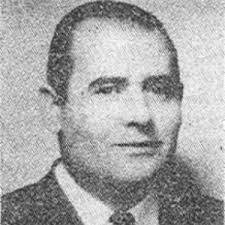
WRITER: CHP KARS DEPUTY SIRRI ATALAY
As you enter the Grand National Assembly meeting hall, on the left side are the tables and chairs of the Ministers. Our three fugitives (Abbas Çetin, Veyis Koçulu, and Latif Aküzüm) can be seen in front of these rows on some days.
They come in turn and explain things to the Ministers. The Ministers pretend to listen out of politeness. Our fugitives constantly look at the listeners' box! Everyone knows why. If there is a compatriot from Kars among the listeners on any given day, the three fugitives are in front of the Ministers' row that day.
One day, a compatriot listening to the Assembly observed the same strange scene. He told it with a laugh with the following anecdote:
“A man who has made a living from taking bribes pokes his head into the office of a new judge. The judge gets angry. The briber says, ‘Judge, swear at me if you want! It will only take a minute. Let those outside think we are talking, and I’ll fill my pockets.’”
KARS GAZETESİ August 17, 1953
OWNER: FUAT ARASLI
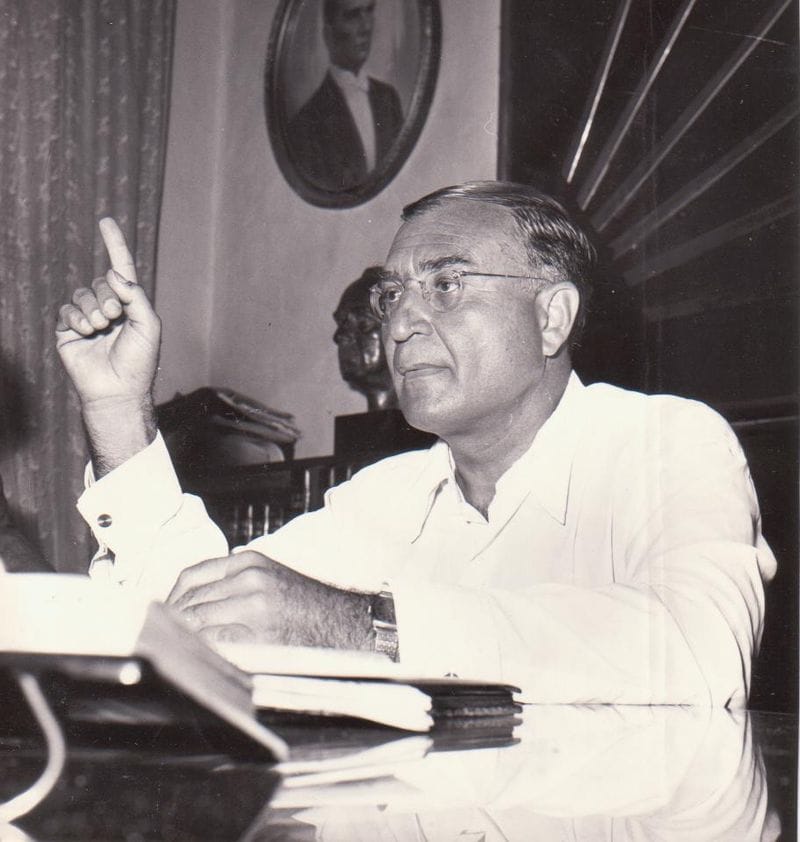
CHP SECRETARY GENERAL KASIM GÜLEK IN IĞDIR
(…) A very crowded delegation, led by Iğdır CHP District Chairman Rıza Yalçın, met CHP Secretary General Kasım Gülek in Kiti village, and thus, with a convoy of 10 cars, they arrived in Iğdır at 6 PM. Amidst the shouts of "Welcome! Long live! Hail!" from hundreds of Iğdır residents, they went to the city park. After a short rest, a banquet for 100 people was given at Bağır Aras's house. This banquet, attended by DP members as well, continued in a friendly atmosphere until late at night.
Dear readers!
After a long and tiring read, I would like to bid you farewell with another Hamit Hun anecdote:
THE TELEVISION BOX
Hamit Hun is watching TV in a coffeehouse with a relative who comes from remote mountain villages and does not speak Turkish. The villager is encountering TV for the first time.
The man stares at the TV box in amazement. He cannot comprehend how these people are put inside this small box. A distinguished-looking man appears on the screen. The villager asks curiously:
“Who is that man?”
“Prime Minister Süleyman Demirel…”
The man is surprised both by Demirel's ugliness and by his being put in the box:
“What is he saying?”
“He is begging, saying ‘take me out of the box.’”
Then Bülent Ecevit appears on the screen. He speaks and speaks with his fluent Turkish. The villager asks out of curiosity. He is surprised to learn it is Ecevit.
“Poor man, how he begs to get out of the box.”
Then a belly dancer appears on the screen. She sways her hips from side to side. The villager likes it.
The villager leans towards Hamit Hun:
“Forget the others! What do we need to do to get this woman out of the box?”
DEAR READERS!
IN THE FIFTH SECTION, I WILL DISCUSS THE 1954 GENERAL ELECTIONS
SINCERELY,