A Brief History of Iğdır Municipality
This article provides a brief history of Iğdır Municipality, classifying its periods and detailing key figures and events.
Dear Readers:
It's not my fault. Unfortunately, there has never been a serious study written about the history of Iğdır Municipality. I don't know why our beloved Iğdır, which hosts many valuable academics, historians, and research writers within its cultural fabric, has neglected this topic.
In 2002, when I published my book "IĞDIR SEVDASI" (Love for Iğdır), I added a section to the preface titled "What Can Be Done Next?" and listed the issues I saw as lacking in Iğdır. In the 21st place, I emphasized the need for a study on "The History of Iğdır Municipalism."
The "List of Iğdır Mayors" that we encounter here and there is either subjectively written or contains many errors due to a lack of serious research.
In this article, I will try to provide a brief history of Iğdır Municipality.
CLASSIFICATION OF IĞDIR MUNICIPALITY'S HISTORY
When discussing who served as mayors in our city from November 14, 1920, the date Iğdır was incorporated into the borders of the Grand National Assembly (BMM), to the present day, a correct classification is necessary.
It would be a correct approach to consider this classification as follows:
FIRST PERIOD: APPOINTMENT OF MAYORS (1920-1938)
- District Governors and Mayors appointed with the approval of Kâzım Karabekir Pasha (1920-1926)
- District Governors and Mayors appointed with the approval of Ali Rıza Ataman (1926-1932)
- District Governors and Mayors appointed with the approval of Hüsnü Bingöl (1932-1938)
SECOND PERIOD:
- Mayors elected by the Municipal Council, which was chosen by the "Open Ballot-Secret Count" election system, from among themselves (1938-1950)
- Mayors elected by the Municipal Council, which was chosen by the "Secret Ballot-Open Count" election system, from among themselves (1950-1960)
- Mayors directly elected by public vote through the "Secret Ballot-Open Count" election system (1960-Present)
- Mayors elected by the Municipal Council in accordance with the Municipal Law, in cases where the elected Mayor could not take office due to conviction (sentence) or was suspended from duty (1973/74 and 2013)
Dear Readers:
Between 1920 and 1930, I frequently had to visit the National Library to access documents that I hoped would shed light on the political and social life of Iğdır. Reading and evaluating Ottoman (Old Turkish) texts requires considerable effort and time. It is a fact that researchers and academics need to intensify their archival work.
Due to time constraints, I was mostly able to work on the issues of the Hakimiyet-i Milliye newspaper covering the years 1920, 1921, and 1922.
The Hakimiyet-i Milliye newspaper is the continuation of İrâde-i Milliye, which was published in Sivas in the days following the Sivas Congress. It began its publication life in Ankara on January 10, 1920. Initially published twice a week, the newspaper continued as a daily from February 6, 1921. It was published as a single sheet with front and back pages. I found a news item about Iğdır in issue number 300 of the Hakimiyet-i Milliye newspaper dated September 22, 1921. In this issue, a congratulatory telegram was sent to the Presidency of the Grand National Assembly of Turkey, signed "Pasha," regarding the Sakarya Victory.
Below, I present the front and back pages of issue number 300 of the Hakimiyet-i Milliye newspaper dated September 22, 1921, for your attention:
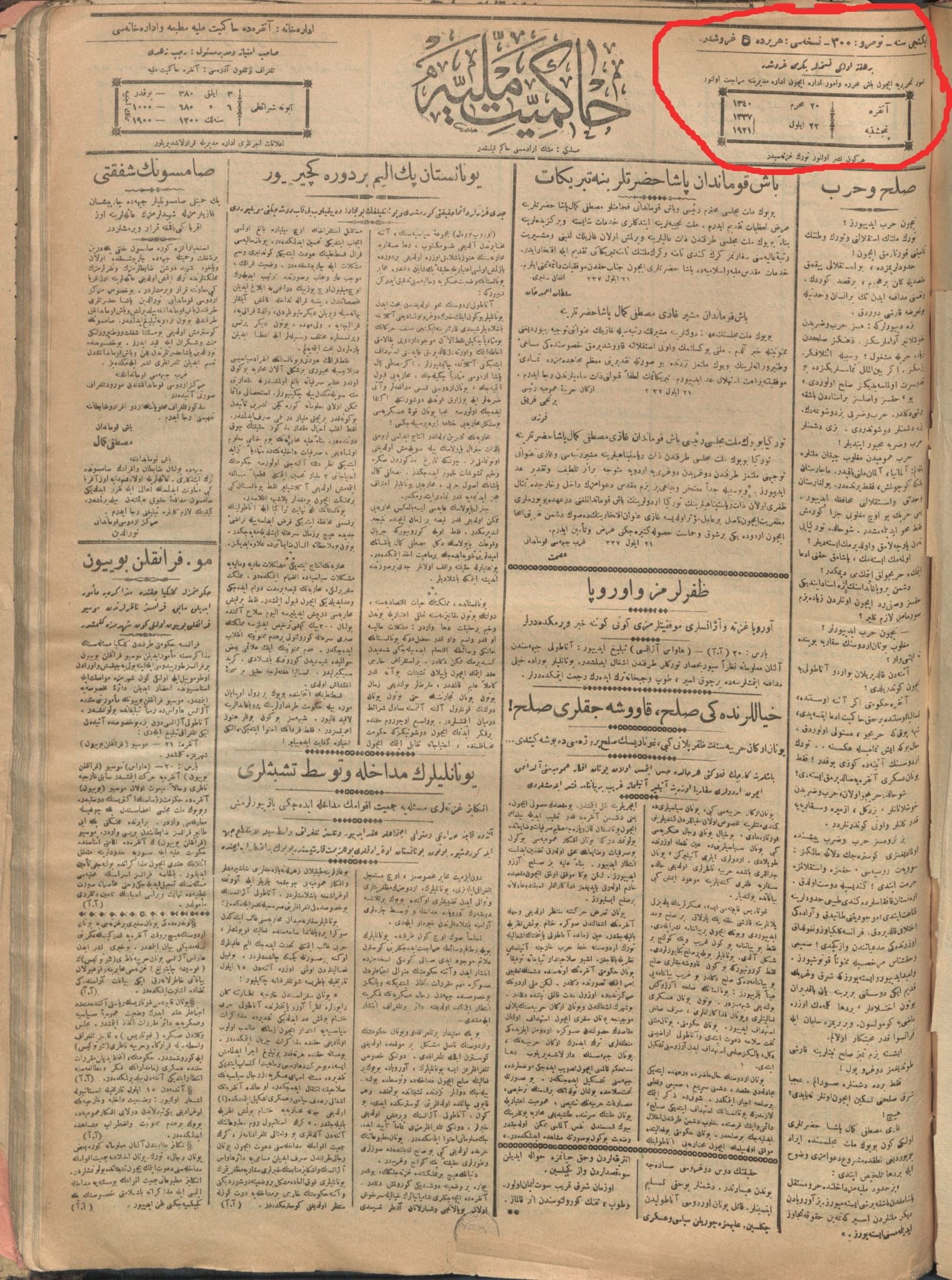
The text marked in red reads:
Second Year – Number 300 – Each copy costs 5 kuruş everywhere.
Copies from a week ago cost twenty kuruş.
For editorial matters, contact the Editor-in-Chief, and for administrative matters, contact the Directorate of Administration.
1340 20 Muharram Ankara
1338 (1921) 22 September Thursday
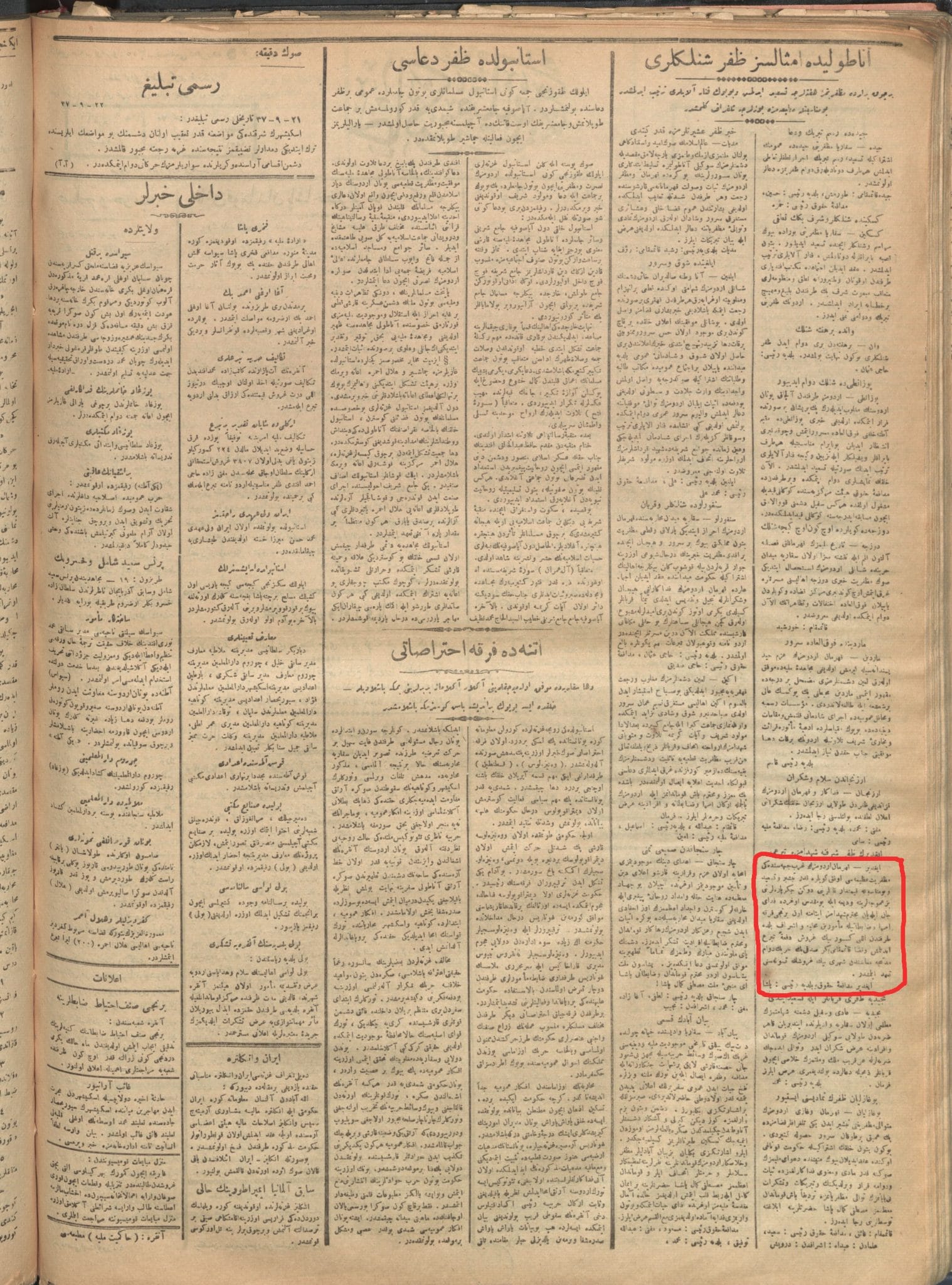
The section I have framed in red contains the following statement:
"The great victory of our heroic army on the western front was announced and celebrated even in small villages. On this occasion, over fifty thousand kuruş were donated by the commanders and officers of the Eleventh Division, local officials, and town notables to the orphans of our esteemed martyrs who shed their precious blood and sacrificed their loved ones for this sacred cause. District Governor Bekir Sıtkı Bey pledged to deduct one thousand kuruş monthly from salaries for the duration of the war. Iğdır Defense of Rights and Mayor Pasha."
We understand that the "Pasha" mentioned refers to a member of the family who adopted the surname "Ekinci" in 1934, meaning "Pasha Ekinci."
In the telegram sent, Bekir Sıtkı Bey is mentioned as the District Governor (Iğdır Kaymakamı). Indeed, we know that Bekir Sıtkı Bey was the District Governor of Iğdır in those years. How do we know? From Ali Rıza Ataman's speech in the First Assembly.
WHO IS ALI RIZA ATAMAN?
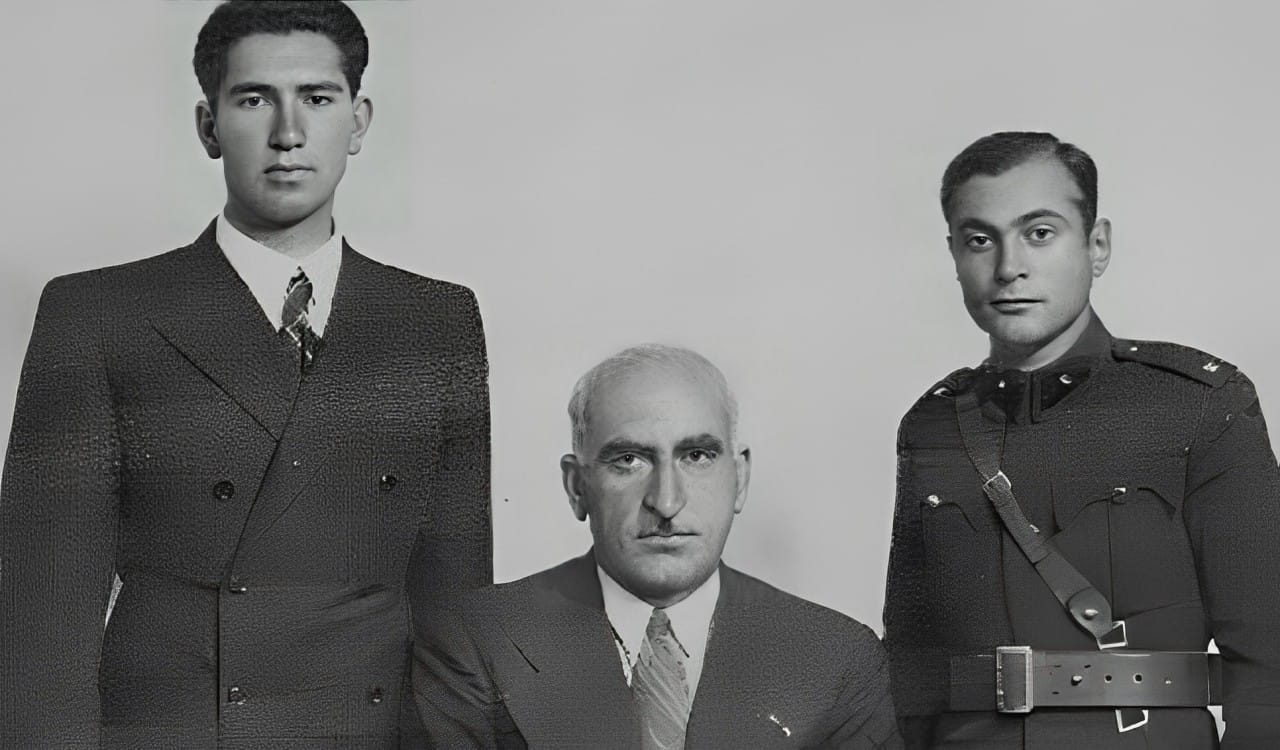
Ali Rıza Ataman and his family undertook important duties in the recent history of Iğdır. I would like to provide some brief information about Ali Rıza Ataman and his family:
Ataman Family Genealogy
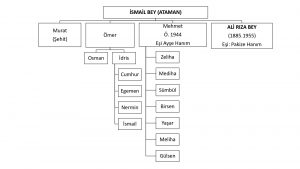
Genealogy of the ATAMAN Family, who undertook important duties in the history of Iğdır in the 20th century
Ali Rıza Ataman is the youngest of İsmail Bey's four sons. The brothers, in order of age, are Murat, Ömer, Mehmet, and Ali Rıza Beys. Ali Rıza Bey was born in Kağızman in 1885 and passed away in Iğdır on June 19, 1995, at the age of 70.
The four brothers completed their education in Russian schools and graduated from high school. Therefore, they could speak Armenian and Russian very well. During the years of the National Struggle, the three brothers, who actively fought in Kağızman under Armenian occupation, were exiled to Siberia by the Armenian Government. After 3.5 years of exile, the brothers returned to Kağızman and continued their struggle from where they left off.
When the Kars National Council was declared, Ali Rıza Bey assumed the position of Minister of Interior in the government. When the government members were arrested by the British and exiled to Malta, Ali Rıza Bey found a way to escape from Batumi during the journey and returned to Kars. In consultation with Kâzım Karabekir Pasha, he organized the National Struggle forces, gathered armed forces consisting of militia and soldiers around him, and resolutely continued the fight against the Armenians.
The Armenians captured Mehmet Bey, who had escaped from exile, and imprisoned him in Kars Castle; his family was also kept under house arrest. Mehmet Bey was released after being imprisoned for approximately 8 months. Without losing time, he took his family and joined the National Struggle forces.
The war continued with full intensity for six months. Finally, on September 28, 1920, by order of Kâzım Karabekir Pasha, the National Struggle forces under the command of Ali Rıza Bey and his brothers occupied Kağızman, and the soldiers under Karabekir Pasha's command occupied Sarıkamış.
The National Struggle forces under Mehmet Bey's command pursued the Armenian units all the way to Gümrü; simultaneously, the militia forces under Ali Rıza Bey's command advanced towards Iğdır. Finally, on November 14, 1920, together with the forces in Iğdır, the town center of Iğdır was liberated from Armenian occupation.
When the Assembly of Deputies convened on April 23, 1920, Ali Rıza Bey went to Ankara as the Kars Deputy for the First Term. He was not willing to serve as a deputy for the second term and continued to live in Iğdır.
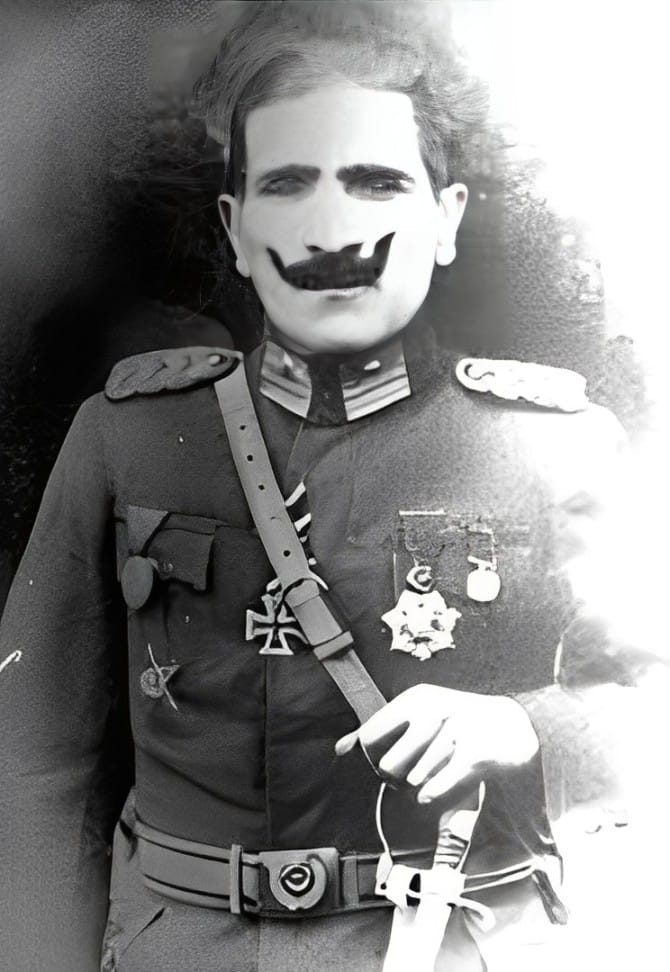
Ali Rıza Bey's family is settled partly in Iğdır and partly in Kağızman. Ali Rıza Bey, who was involved in trade, imported and exported with Iran and Russia for many years, and also established a ginning factory in Iğdır, managing its operations with his nephew Osman Ataman. In the 1930s, he also served as the President of the Community Center (Halkevi) and as Mayor.
Ali Rıza Bey married Pakize Hanım, an elegant and very well-educated lady, and had a very happy marriage.
Ali Rıza Bey's nephew, Osman Ataman, was a student in a Russian middle school when the war broke out. Therefore, his education was interrupted. Osman Ataman, who served as mayor in Iğdır in the 1940s, married Güzin Hanım in 1944 but had no children.
Osman Ataman, who spoke Armenian and Russian very well, served as an interpreter representing the Turkish side in protocol meetings for many years.
The most distinctive feature of the Ataman family was their orderly lifestyle and constant hospitality. For example, the Shah of Iran stayed at Ali Rıza Bey's house in Iğdır for 3 days during his trip to Ankara in 1934. In addition, Ali Rıza Bey's close friend Kâzım Karabekir Pasha was frequently hosted at their house in Kağızman. Marshal Fevzi Çakmak, ministers, and deputies of the period were also among the guests.
ALI RIZA ATAMAN'S SPEECH IN THE FIRST ASSEMBLY
NOVEMBER 7, 1921 (1st Term, 2nd Legislative Year. 106th Session, Agenda 8/1)
(Note: Ali Rıza Bey (Ataman) is a Kars Deputy but resides in Iğdır. Iğdır was part of the Beyazıt Sanjak in those years. It has no connection or relation to Kars. Ali Rıza Bey, probably because he was a Kars Deputy, was experiencing difficulties with the local administration in Iğdır. He was living in a house vacated by Armenians (or rather, a mansion-like house), but the Iğdır Regiment Commander forcibly settled in this house. Disturbed by this situation, Ali Rıza Bey complained to Iğdır District Governor Bekir Sıtkı Bey. The following parliamentary speech is related to this. Mücahit)
(…..)
Gentlemen, don't get any ideas. Friends, my intention is not to praise myself. Only friends who know me well know that if there is a man who removed a quarter of the cornerstone of Russian despotism, it is I, your humble friend. Likewise, it was I who, by not bowing to the British, was ready to be sent to Malta and worked with an organization against Armenia. But here I could not defend my right, because there was a Turkish officer in front of me, and after thinking, I did not know what to do. I left angrily, straight to the telegraph office, and thought that this district also has a District Governor. Let me appeal to him once. I went to his house, knocked on his door, and a woman came out. I asked if the District Governor was home. No, she said. From there I went to his office. District Governor Bekir Sıtkı Bey was sitting in the garden. There were people, there were officers. After greeting him,
"District Governor, the Regiment Commander entered my house, forcibly seized my belongings, I request that the necessary action be taken."
"Come, come sit."
"How can I sit? I am telling you my problem, I appealed to you as the District Governor of the District. Now it seems you are a bandit leader. Because I am complaining about a bandit to you, and you tell me to come sit," I said.
When I said this, he stood up, attacked me, and shouted to the gendarmerie, "Hold him, hit him."
OSMAN BEY (Lazistan): You should have killed him there.
ALI RIZA BEY (continuing): Don't be surprised, I couldn't do that either. Because there was a military matter involved, and if I had taken one step towards the District Governor, believe me, the people would have crushed him like mud under their feet. That's why I controlled my anger again. From there I went to the telegraph office and sent a telegram to the Eastern Front Command, saying that the Regiment Commander had forcibly settled in my house, and I had received this treatment from the District Governor. I requested that an investigation committee be sent in the name of the nation's well-being. Two days later, I received a telegram saying that orders had been given for an investigation. But I had no right, I should have remained silent. The investigation committee came from Erzurum. As soon as they arrived, they understood the matter. The investigation continued for two days. Regiment Commander Fazıl Bey is still in my house, and I am sleeping outside in the reception room. District Governor Bekir Sıtkı Bey was dismissed. This was a great success for me. The Investigation Committee asked the Commander to stay in my house, saying it was our custom for centuries. When I said, "God forbid," they kissed my eye and said, "He is also a soldier." I said, "What am I, they also gave me a regiment command, I don't think I have served less than Fazıl Bey." The committee could not evacuate my house and said that from now on it was a matter for the court, and they would submit this investigation file to the court. While I was waiting for a court decision days later, I received a summons stating that I was suspected of insulting the District Governor. I had become a suspect without knowing it. I have more to say, but I don't see the need, I won't say it. I leave it to your Esteemed Assembly to decide how much of the humiliation inflicted upon me falls to your share. The Three Sanjaks separated from this homeland and were liberated from despotism and rejoined the new homeland. (….)
(Note: Here I want to inform my readers about Elviye-i Selase. In the past, instead of a provincial structure, there was a Sanjak. The other name for Sanjak is Liva. The Arabic plural of Liva is written as Elviye. The word "Selase" also means "Three" in Arabic. Thus, the word Elviye-i Selase means "Three Sanjaks / Three Livas / Three Provinces." These three provinces are Batumi, Kars, and Ardahan. Iğdır is not included in this definition.
Batumi, Kars, and Ardahan were left to Tsarist Russia after the 1877-78 war, also known as the 93 War. During this period, Iğdır was already within the borders of Tsarist Russia. All three provinces were re-incorporated into Ottoman lands with the Treaty of Brest-Litovsk signed on March 3, 1918, but according to the Armistice of Mudros signed on October 30, 1918, the Ottomans had to evacuate this region. According to the provisions of the Moscow Treaty of March 16, 1921, and the Kars Treaty of October 13, 1921, Batumi was left to Georgia, and Kars and Ardahan to Turkey.
There is such a reality: Those living within the borders of Elviye-i Selase experienced a cultural conflict when these lands were re-incorporated into the Ottoman (more accurately, the Grand National Assembly) borders. Those born and raised within the borders of Elviye-i Selase sometimes faced serious discrimination against bureaucrats trained in the Ottoman understanding and culture. Ali Rıza Bey believes that the forced seizure of his house by two Ottoman soldiers, the Regiment Commander and the District Governor, working hand in hand, was a form of "discrimination." He wants to emphasize this with the last sentence. The people of Iğdır, having been under Tsarist Russian rule since 1829, faced a much harsher situation of "discrimination" and "neglect" than the provinces of Elviye-i Selase. Let's not forget that even before 1829, Iğdır was not within the borders of the Ottoman Empire. It was under the administration of the Erivan Khanate, meaning in a sense, the Qajar Dynasty of Iran. Therefore, in the years after 1920, the word "Ottoman" was frequently used in the daily life of Iğdır, intending to emphasize the cultural difference rooted in centuries and the alienation from the central government. Mücahit)
ALI RIZA BEY (continuing): They left the podium and gave explanations, saying the machine was broken. I say the machine is not broken, the mechanic broke the machine. (cheers) If the mechanic is good, the machine will be good. (cheers, applause)
(Note: In this speech, Ali Rıza Bey alludes to Mustafa Kemal with the word "mechanic." Later, fearing he would be killed, he left Ankara, settled first in Kağızman and then in Iğdır, and never returned to Ankara. Mücahit)
(….)
Although the first article of the Basic Law states that sovereignty belongs unconditionally to the nation, no, gentlemen, conviction belongs unconditionally to the nation. (cheers, applause). I have not invited any ministry for explanation. Because my intention is not to criticize the Government. The Government has also been elected by our own friends. Only, for some reason I do not know, District Governor Bekir Sıtkı Bey, although dismissed, has been reappointed to Iğdır. For what reason was this man reappointed to such an important place bordering Armenia?
(….)
So, gentlemen, my first proposal is that a committee be sent for this District Governor. Secondly, this District Governor and officials should be temporarily removed from office, at least until the committee arrives. Because they do not need to remain in office legally and by law. The necessary measures are now up to your Esteemed Assembly."
FIRST PERIOD: APPOINTMENT OF MAYORS (1920-1938)
Iğdır was part of the Erivan Khanate between 1747 and 1828. The Erivan Khanate was responsible for paying taxes first to the Zand Dynasty and then to the Qajar Dynasty (Iran), but it was independent in its internal affairs. When the Qajar Dynasty was defeated by the Russian Empire in the wars that lasted between 1826 and 1828, it lost its rights over the Erivan Khanate in accordance with the Treaty of Turkmenchay signed on February 10, 1828, and thus Iğdır (Sürmeli Region) was incorporated into the borders of Tsarist Russia. In these years, Kars and Ardahan were under Ottoman rule. When the Ottoman Empire was defeated in the 1877-78 Russo-Ottoman wars, Kars and Ardahan also came under Russian rule. When the Russians withdrew from the region with the 1917 revolution, a political vacuum emerged.
Iğdır (Sürmeli Region) is not shown within the borders of the Mîsâk-i Millî (National Oath) adopted by the last Assembly of Deputies convened in Istanbul on January 28, 1920. Therefore, Iğdır's inclusion within the borders of the Grand National Assembly Government on November 14, 1920, actually emerged as an unintended and unexpected situation. It was desired that the Aras River be the natural border; thus, Iğdır was included in the BMM borders, albeit unwillingly. It is precisely because of this that the commander of the Eastern Front, Kazım Karabekir Pasha, visited Iğdır 1.5 years after its incorporation into the homeland.
Kazım Karabekir Pasha, in his war memoirs titled "İstiklal Harbimiz" (Our War of Independence), gives the following date regarding his arrival in Iğdır:
"We are entering the fourth year of the Greek occupation of İzmir on May 14, 1335 (1919). (...) On May 14 (1338), we came to Iğdır from Kağızman by car in 7 hours."
The year 1338, given according to the Rumi calendar, corresponds to 1922 in the Gregorian calendar. However, Iğdır (Sürmeli region) should have had special importance as it was the only piece of land not within the borders of the National Pact but incorporated into the homeland. From the very first years, Iğdır was treated as a "stepchild," and its richness in land and people, and its geopolitical importance, were overlooked. This approach and attitude almost still continue today.
"PASHA EKİNCİ" AS TOLD BY HAMZA AYGÜN (From the book "Iğdır Sevdası")
Pasha (Ekinci) Bey, one of Iğdır's first mayors, was from Başköy (Aralık district). Pasha Ekinci, father of Fikret Ekinci, a military officer who held important positions during the 1960 Coup, had a very high organizational and leadership ability. His most important characteristic and greatest contribution to the people of the region was more spiritual; he mobilized his authority and financial power to gather war orphans and took them under his wing. Many valuable individuals for the country were raised from this group of children, known as "Pasha Bey's Orphans" among the people.
He made great efforts to protect girls, especially those aged 12-16, from the harassment and attacks of ill-intentioned people. Most of these girls were personally married off by Pasha Bey and reunited with their families.
Rıfat Ilgaz and Ali Çavuş, valuable sons of the homeland who were among the military forces that liberated Iğdır, married from this "orphan girls" school and settled in Iğdır. Ali Çavuş was the soldier who first raised the Turkish flag on the Municipality building during the Liberation of Iğdır. He was awarded the Medal of Independence for this heroism. After marrying, he was given a vineyard and a house and settled in Iğdır.
Ali Ilgaz's children, Kemal and Yusuf, contributed greatly to Iğdır as civil servants.
When the government issued the "Law on the Exile of Aghas and Beys" (1926), several individuals from the Iğdır region, such as the leading figures of the Torun Family and Pasha Bey from the Azerbaijani community, were subjected to exile. Pasha Bey was sent into exile in Tokat. This loyal son of the homeland, who had rendered great services to Iğdır, passed away in loneliness during his years of exile in an undeserved manner.
When Pasha Bey was sent into exile, the "Orphanage School" he had founded was disbanded. Only 10-15 of these students managed to find a way to continue their education at Kâzım Karabekir Pasha's school of the same name. But soon after, Karabekir Pasha was dismissed, and the school also closed.
Many important figures from the Azerbaijani-origin Celayir tribe in Başköy were also exiled to İzmir. Similarly, some individuals from Hasanhan village were included in this convoy of exiles. As a strange twist of fate, the children of these "exiled families" had the opportunity to study in the cities they went to and later played important roles in Turkey's destiny. One of them is İsmet Sezgin, a politician whose father was from Hasanhan village.
POLITICAL CHRONOLOGY OF IĞDIR (Surmalu Uyezdi) REGION
- Semi-Independent Erivan (Revan) Khanate (1747-1828)
- Paid taxes to the Zend Shiite Kurdish State between 1751-1794.
- Paid taxes to the Qajar Shiite Turkic State between 1794-1828.
- Russian Tsarist Administration (1828-1917) / Surmalu Uyezdi (District) affiliated with Erivan Governorate
- Transcaucasian Democratic Federative Republic (April 22, 1918 - May 28, 1918)
- Republic of Armenia (May 28, 1918 - until the General Elections of June 21/July 23, 1919)
- CIVIL WAR (Kaça-Kaç): August 1, 1919 - November 14, 1920
- Grand National Assembly (November 14, 1920 - October 29, 1923)
- Republic of Turkey (October 29, 1923)
Şefi Bey (Öcal), one of the notables of Sultanabat, recounts an incident he experienced, confirming the high density of the Armenian population in Iğdır center in his memoirs:
"During the Russian administration, we lived in Sultanabat village, a little further from the Iğdırmava neighborhood. I was a child. I was attending the Russian primary school in Iğdırmava. I was the only Turkish student in my class. All the rest were Armenians. Among our classmates, there were even young men of 15-16 years old, almost with fuzz on their upper lips. This situation was not unusual under the conditions of that day. (Source: IĞDIR SEVDASI)"
IĞDIR'S FIRST TEMPORARY DISTRICT GOVERNOR: NUMAN EFENDİ
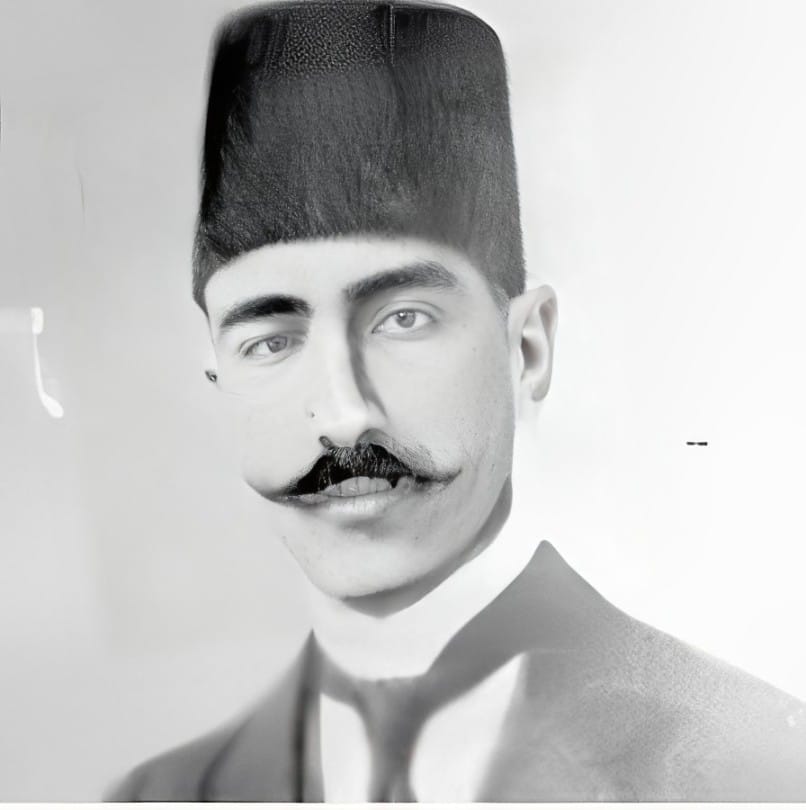
In the days following the incorporation of Iğdır and Kulp (Tuzluca) in the Sürmeli region into the homeland (November 1920), Kazım Karabekir Pasha decided to attach these two settlements as "kaza/district" to the Beyazıt Sanjak. He requested the Mutasarrıf (governor) of Beyazıt Sanjak to send temporary District Governors for Iğdır and Kulp. Under these circumstances, the Mutasarrıf of Beyazıt Sanjak appointed Numan Efendi, one of his assistants, as the temporary District Governor of Iğdır.
In November 1920, Iğdır city center was almost empty. The Armenians, who constituted the majority of the city, had crossed the Aras River. The Azerbaijanis living in Iğdırmava and Sultanabat had taken refuge in Iranian Azerbaijan due to the Kaça-Kaç (August 1919). It was difficult for them to return to Iğdır in the middle of the winter of 1920. In the spring of 1921, Azerbaijanis returned to Iğdır (Sürmeli region) in convoys. During this process, temporary District Governor Numan Efendi appointed İbrahim Ağa (Yiğit), the eldest son of Ali Mirze Bey, as Mayor. There is a reason for this. Numan Efendi is a member of the Geloylu Tribe. The leader of the Geloylu Tribe, Ahmed Şemo, is Ali Mirze Bey's son-in-law. Under these circumstances, Numan Efendi appointed İbrahim Ağa, his respected leader Ahmed Şemo's brother-in-law, as Mayor. In the winter months of 1920, the population in Iğdır city center was small, and municipal services were limited.
WHO IS NUMAN EFENDİ?
Numan Efendi is a member of the Geloylu Tribe living in the Beyazıt Sanjak. He was born in Erciş (1885), where his father Hoca Yusuf served. He continued his schooling at Erzurum High School. After graduating from Istanbul Mülkiye (Faculty of Political Sciences), he came to Beyazıt at the age of 25 and served first as deputy mutasarrıf and then as mutasarrıf for 7 years. When the Russians occupied the Beyazıt Sanjak during the First World War, he was captured and exiled to Siberia.
Numan Efendi, who spoke seven languages, was a highly enlightened person. Numan Efendi's name in official records appears as "Numan Feridun Es," "Numan bin Yusuf," or "Numan Dündarzade." Today, the family of Numan Efendi's brother Abdurrahman Bey has adopted the surnames "Ertuğrul" and "Dönder."
A brief chronology of Numan Efendi's life:
1885 Erciş
1903 Erzurum High School graduate
1908 Istanbul Mülkiye (Political Sciences) graduate
1910-15 Deputy Mutasarrıf of Beyazıt Sanjak
1915-17 Exiled to Siberia
1918-1920 Deputy Mutasarrıf of Beyazıt Sanjak
1920-21 Temporary District Governor of Iğdır
1921-24 Deputy District Governor of Iğdır
1924-26 Administration of Abandoned Properties (Milli Emlak) / Acting District Governor
1926-1929 Exiled to Balıkesir (Agha and Bey Exile Law)
1929 Lawyer in Iğdır
1930 Deceased (Killed in Iğdır as a result of gunfire while returning home at night. This is recorded as one of the most significant murders in Iğdır's 20th-century history, along with the murder of the late Nurettin Kirman.)
THE PEOPLE'S MEMORY RECORD THAT ALI MIRZE BEY'S SON İBRAHİM AĞA WAS IĞDIR'S FIRST MAYOR
YAŞAR AYDIN NARRATES Iğdır Sevdası book
In the years when the Republic was founded, Ali Mirze Bey's eldest son, İbrahim Ağa, served as mayor for a short period. İbrahim Ağa was a very brave and leading figure. With a strong tribe behind him, he was independent-minded.
While Ali Mirze Bey was in Iran due to the Agha and Bey Exile Law, İbrahim Ağa fell victim to a family tragedy.
HACI ÖMER ŞARK NARRATES Iğdır Sevdası book
After the liberation, the district center was occupied by Kurds. The first mayor was İbrahim Ağa, son of Ali Mirze Bey, who took office by appointment.
ALMAS YANCAR (MEHMET YANCAR'S MOTHER) NARRATES Iğdır Sevdası book
Ali Mirze Bey's son, İbrahim Ağa, was around 35 years old when he passed away. He was married and also engaged to my aunt. İbrahim Ağa had studied at a Russian school and had served as Iğdır's mayor for about 1.5 years.
ALI YİĞİT (SON OF HACI İSA YİĞİT) NARRATES Iğdır Sevdası book
Ali Mirze Bey, as the leader of the Sakan tribe, was loved and respected in the region. His son İbrahim Ağa was also a leader and brave, not falling behind his father.
After the Liberation, İbrahim Ağa decided to settle in Iğdır. He opened a haberdashery store and entered trade, quickly establishing himself among those around him with his leadership and skill. İbrahim Ağa, who was generous and had a strong social charisma, also had very good relations with the bureaucracy.
In those years, mayors were appointed by the district governor, who held the civil administration, rather than by election. Thus, İbrahim Ağa served as Iğdır's first mayor in 1920. With the implementation of the Law on the Exile of Aghas and Beys (1926), issued by the government and applied throughout the Eastern region, Ali Mirze Bey and his family were forced to flee to Iran, and İbrahim Ağa also left Iğdır center and went with his father.
DISTRICT GOVERNOR BEKİR SITKI BEY
When it was published in the Official Gazette on July 18, 1921, that Iğdır and Tuzluca (Kulp) were attached to the Beyazıt Sanjak, Bekir Sıtkı Bey was appointed as the District Governor of Iğdır. Numan Efendi continued his duty as Deputy District Governor. The Azerbaijani population in the city center was steadily increasing. Bekir Sıtkı Bey appointed Pasha Bey (Ekinci) from among the notables as Mayor.
Ali Rıza Ataman, who served as a Deputy in the First Assembly, had settled in a magnificent house vacated by Armenians in Iğdır center. As I mentioned earlier, the Regiment Commander forcibly seized this house. The military-origin district governor also remained indifferent. Ali Rıza Ataman brought this situation to the Assembly. For this reason, Bekir Sıtkı Bey was first dismissed from his duty and then reappointed. This situation repeated several times.
In his work "İstiklal Harbimiz" (Our War of Independence), Kazım Karabekir Pasha uses the following expression regarding the district governor when he visited Iğdır for the first time on May 14, 1922:
"On May 18, I am in Iğdır. In the afternoon, I toured the government building, municipality, barracks, and hospital. Neither the district governor nor the mayor knows how many houses and how many people there are in the town... The district governor said 100-150 houses.. I said, 'There is a fifty difference, fifty percent means something significant, you can find out the truth by counting them one by one, which would take an hour at most.'
The district governor is a graduate of Mülkiye-i Şahane (Political Sciences) but very quiet and inexperienced, his office full of cobwebs, I gave him some advice. The head of the conscription branch said there were 305 houses in the town, and the mayor said 400. I asked how many prisoners there were, again no one knew the correct answer. However, there were 7 prisoners. I could not get the correct answer to these simple questions anywhere. The streets were very dirty when I first arrived. I had warned the district governor and the mayor, this time I found them clean. I told those concerned that official and private residences should also be kept clean and that they should be closely interested in every living and non-living thing."
The District Governor described by Kazım Karabekir Pasha is Numan Efendi. Probably, Numan Efendi was acting as a substitute for Bekir Sıtkı Bey, who was dismissed by Ali Rıza Ataman.
Bekir Sıtkı Bey is of military origin. He is not a Mülkiye graduate. After completing his duty in Iğdır, he served as the Gendarmerie Commander in the Beyazıt Governorship.
KÂZIM KARABEKİR PASHA'S FALL FROM GRACE
Kâzım Karabekir Pasha, along with his friends, founded a party called the Progressive Republican Party (Terakkiperver Cumhuriyet Fırkası) on November 17, 1924, which included some former members of the Committee of Union and Progress. On February 16, 1925, the Sheikh Said Rebellion broke out. Mustafa Kemal closed the Progressive Republican Party on June 3, 1925, on the grounds that it "supported the rebellion by appealing to religious sentiments." After the İzmir Assassination plot to kill Mustafa Kemal was uncovered in 1926, it was decided to arrest all deputies of the closed Progressive Republican Party and search their homes. Kâzım Karabekir Pasha was one of those detained.
When Kâzım Karabekir Pasha fell from grace, Ali Rıza Ataman gained importance in Iğdır. Ali Rıza Ataman decided who would be the district governor or mayor. Ali Rıza Ataman's influence continued uninterrupted until 1932, when Hüsnü Bingöl took office.
IĞDIR IN STATE YEARBOOKS (SÂLNAME) OF 1925-29
"Salname" is the name given to works prepared by official and private institutions in the Ottoman Empire and in the early years of the Republic of Turkey to collectively show the events that took place during a year. In later years, these works would be called "Annuals."
According to the Salname published in 1925-26, the civil administration in Iğdır:
District Governor: Âkif Rahmi Bey
Finance Director: Ahmed Zühdü Bey
Mufti –
Judge Vehbi Bey
Public Prosecutor Salih Zeki Bey
According to the Salname published in 1926-1927, the civil administration in Iğdır:
District Governor İhsan Bey
Finance Director Muhammed Hüseyin Bey
Judge Abdurrahman Bey
Investigating Judge Salim Bey
According to the Salname published in 1928-29, the civil administration in Iğdır:
District Governor Maksut Bey
Finance Director Eşref Bey
Judge Abdurrahman Bey
Public Prosecutor Mehmet Nuri Bey
Investigating Judge (Treasurer) M. Salim Bey
Government Doctor M. Kemalettin Bey
Post and Telegraph Director Zeki Bey
As can be seen from the information in the Salname, the district governor changed every year between 1925-29. The name of the mayor is not listed. In those years, the District Governor usually also assumed the duty of Mayor.
MUNICIPAL LAW
The first Municipal Law in Turkish history was published on April 3, 1930. The Municipal Law was published in the Official Gazette under the following heading:
Law Number : 1580
Date of Acceptance : 3/4/1930
Published in Official Gazette : Date : 14/4/1930 Number :1471
Published in Düstur : Series : 3 Volume : 11 Page : 80
According to the Municipal Law, the public does not directly elect the Mayor (this situation continued until 1960). Voters first elect the Municipal Council, and the assembled Municipal Council then appoints one of its members as Mayor. In other words, mayoral elections are two-tiered.
Here I would like to add a short note: Since the Municipal Law was first enacted in 1930, statements such as "so-and-so was elected Mayor" in Iğdır between 1920-1930 do not reflect the truth.
The question is: From 1930 onwards, were mayors in Iğdır determined by two-tiered elections? Our answer would be "No." Until 1938, no mayoral elections were held in Iğdır. Let's quickly look at the period between 1930-38:
When the Municipal Law was published on April 3, 1930, it was decided to hold municipal elections in September of the same year. On August 12, 1930, the Free Republican Party (SCF) was founded under the leadership of Fethi Okyar. The SCF quickly began to organize. As the 1930 elections approached, there were no branches of either the Republican People's Party (Cumhuriyet Halk Fırkası) or the Free Republican Party in Iğdır. Therefore, no municipal elections were held in Iğdır in September 1930. Only 502 electoral districts were determined across Turkey.
In the elections held in these constituencies where both parties had branches, the Free Republican Party, despite being newly established, won 24 municipalities. Meanwhile, undesirable events occurred in İzmir. The Free Republican Party was closed down.
Elections continued to be held every four years, but no elections were held in Iğdır. This situation continued until 1938.
Hüsnü Bingöl started his duty in Iğdır in 1932 and took control of the civil administration. In those years, there was no CHP in Iğdır, but there was a Community Center (Halkevi) that acted like a branch of the CHP. Hüsnü Bingöl appointed Ali Rıza Ataman as the Mayor of Iğdır between 1934-1938.
IĞDIR COMMUNITY CENTER (HALKEVİ)
The Iğdır Community Center was opened on February 23, 1934. District Governor Nedim Bey was also present at the ceremony. Ali Rıza Ataman was the President of the Community Center. Ali Rıza Ataman was also the Mayor during these years. Let's not forget that since the mayor was appointed, there was no municipal council in the modern sense. Ali Rıza Ataman continued this duty until 1938.
Between 1938-1940, Hüseyin Saydam, and in 1940, Osman Ataman were elected Presidents of the Community Center. In the 1930s and 40s, during the single-party era, Community Centers undertook an important role. They had many branches. With their various activities, they were, in a sense, the most important propaganda tool of the single-party era. Hüsnü Bingöl decided who would be the President of the Community Center, with the approval of the CHP. This situation continued until 1940.
Two events in 1934 increased Ali Rıza Ataman's prestige and importance in Iğdır. Reza Shah Pahlavi entered Turkey through the Gürbulak border gate on June 10, 1934, for his visit to Turkey, stayed at Ali Rıza Ataman's house, and remained in Iğdır for three days.
Iğdır and Tuzluca, which were part of the Beyazıt Province, were connected to Kars by a decision dated June 14, 1934. This situation emerged as a favorable development for Ali Rıza Ataman, as he was a former Kars Deputy.
To better understand who the mayors were, it is useful to briefly look at when and by whom the CHP and Democratic Party (DP) organizations were first established in Iğdır:
CHP ORGANIZATION IN IĞDIR
The organization of the CHP in Iğdır did not happen as early as generally thought. In a report prepared by CHP General Headquarters inspectors regarding Iğdır in 1941-42, there is a statement that reads:
"It is 184 kilometers from Kars. It has 1,500 houses and a population of 9,605. There are 50 villages attached to the district center. The district has two sub-districts named Taşburun and Aralık, and 16 villages attached to these sub-districts. There is no party organization in the district. But a party organization needs to be established in this district."
The CHP Iğdır district organization was established in September 1946. At the congress held on October 12, 1946, Resul Taner was elected district chairman. When Resul Taner passed away from a heart attack in 1950, Bağır Aras temporarily served as district chairman.
(Note: Without a doubt, Bağır Aras was the most loyal and generous member in the history of Iğdır CHP. When the CHP District Organization was established, he donated his own property to the party. Not only that, but whenever the party was in trouble, he provided financial support and hosted CHP delegations from Ankara in a magnificent manner at his home. When the CHP district chairmanship became vacant for some reason, he served as temporary district chairman. He was modest and self-sacrificing. He knew how to control his ambition. He was not eager for Provincial Council Membership, Municipal Council Membership, Mayorship, or Deputy position. His death also occurred in an interesting way in 1958 at a CHP party meeting held in Erzurum. CHP Chairman İnönü had come to Erzurum. Bağır Aras suffered a heart attack and passed away while giving a speech in the presence of İnönü. His grave is in Erzurum. May God have mercy on him! Mücahit.)
The party's second congress was held on December 24, 1952, at the Aras Cinema hall, and Rıza Yalçın was elected district chairman. The CHP's third congress was held on July 21, 1955. Fazıl Baykal was elected district chairman. Later, at the congress held on August 19, 1957, Musa Turan became district chairman. When Musa Turan voluntarily withdrew from politics, Mecit Hun was elected district chairman at the district administrative board meeting (October 1958).
DEMOCRATIC PARTY (DP) ORGANIZATION IN IĞDIR
The Democratic Party began its organizational efforts in Iğdır in 1947, and in 1948, Nurettin Kirman became the first district chairman. The DP Kars provincial administrative board dissolved the Iğdır district organization in January 1953. Mehmet Gülten was temporarily elected district chairman. The Iğdır district congress was held on April 25, 1953, at the city cinema. Nağdali Parlar was elected district chairman. The DP's next congress was held on February 6, 1955, and Feyzullah İnan was elected district chairman. The next congress was held on November 25, 1956. Nağdali Parlar was appointed district chairman. The Kars DP Provincial Administrative Board came to Iğdır in June 1957. This time, Eşref Kaya was appointed as the DP District Chairman. The DP's Iğdır congress was held on August 9, 1958. Eşref Kaya was re-elected district chairman. When the May 27, 1960 coup occurred, Mecit Hun was the CHP district chairman, and Eşref Kaya was the DP district chairman.
NOTE: In the 1940s and 50s, in district chairmanship elections for both CHP, DP, and other parties, as a rule, the district administrative board was elected first. The district administrative board would then convene and appoint one of its members as the Chairman of the District Administrative Board, i.e., the District Chairman. This also applied to municipal elections. First, the municipal council was elected. The municipal council members would convene and appoint one of their members as mayor (until 1960).
ELECTION OF MUNICIPAL COUNCIL AND MAYOR IN IĞDIR BY ELECTIONS (1938-1960)
As we saw earlier, between 1920-1938, the position of mayor in Iğdır was either assumed by district governors, by individuals appointed by district governors from among the notables, or by Community Center (Halkevi) Presidents. In other words, no municipal elections were held in Iğdır until 1938.
The decision of who would be the district governor was made successively by Kâzım Karabekir Pasha (1920-1926), Ali Rıza Ataman (1926-1932), and Hüsnü Bingöl (1932-1942). In this sense, we can accept that real municipal governance in Iğdır began in 1938.
By 1938, the mayor was Ali Rıza Ataman, the President of the Community Center. The CHP did not yet have an organization in Iğdır. During the single-party era, the Community Center, in a sense, assumed a mission similar to that of the CHP District organization.
In 1938, municipal elections were held in Iğdır. There was a rivalry for the mayoralty between Osman Ataman, a native of Kağızman, and Rıza Yalçın, an Azerbaijani notable. With the open support of Hüsnü Bingöl, Osman Ataman was elected mayor. This situation caused discomfort among the increasingly wealthy and powerful Azerbaijani community in Iğdır city center. In those years, there was a handful of Kurdish families in Iğdır city center.
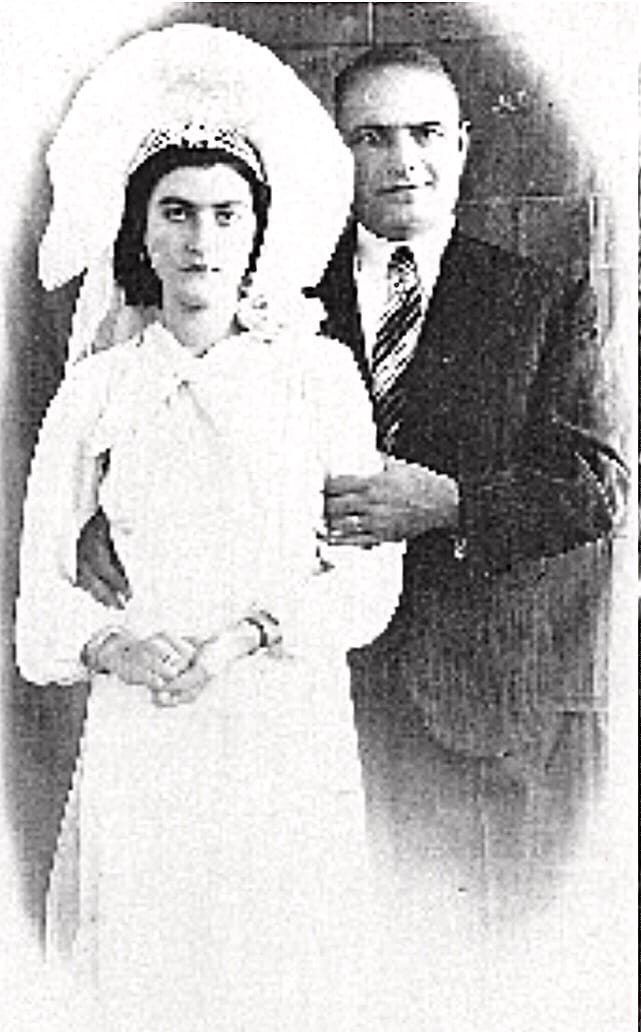
In October 1942, municipal elections were held for the second time in Iğdır. It was a single-party era. The CHP organization had not yet been established. Two candidates participated in the elections: Osman Ataman and Rıza Yalçın. Osman Ataman was supported by Hüsnü Bingöl and state institutions. Azerbaijanis gathered around Rıza Yalçın.
There was an interesting election method: "Open ballot, secret count." My readers might wonder why such an election system was in practice. There were two reasons: First, literacy rates were low. Second, and most importantly, those who were literate could still read and write Turkish written in Arabic script (old script). The Latin script, which came into use in 1928, had not yet been fully adopted or widespread.
Voting proceeded as follows: The voter would go to the ballot box. First, they would have their name checked in the voter register. They would show their ID, sign next to their name on the list, and receive a sealed ballot envelope. At the ballot box, they would cross out the names of candidates they did not want on the list of municipal council candidates, or even write in names they wanted to be on the list, and then place this list in the sealed envelope and put it in the ballot box. All these procedures had to be done openly in front of everyone. Because of this, the observers at the ballot box could see which names the voter marked, and by putting a cross next to the names on the list they held, they could calculate who would be elected as municipal council members even before the ballot box was opened.
After voting was completed, the ballot boxes were collected, taken to the municipality building, and the votes were counted only in the presence of those assigned to the election board (closed to the public). Inevitably, "fraud" would enter the picture.
As a result, the municipal council members who received the most votes would convene and elect one of themselves as mayor. In other words, the public did not directly elect the mayor. This situation continued until 1960.
In the 1942 elections, voters lined up on election day and either crossed out the names of the people they wanted to be on the municipal council or left them untouched, as they wished. When the election ended, the ballot boxes were taken to the municipality building. While the votes were being counted, the public was not allowed inside, adhering to the principle of "secret counting."
Rıza Yalçın's observers at the ballot box had marked how many votes each member received because the votes were cast openly. Rıza Yalçın, realizing he was clearly ahead even before the vote counting was completed, celebrated. However, Hüsnü Bingöl intervened. The ballot boxes were secretly swapped, and the ballot counting committee, which conducted the secret vote count, declared Osman Ataman the winner. Rıza Yalçın and his supporters were extremely unhappy because they knew that fraud had been involved. Rıza Yalçın, in a sense, lost the 1938 and 1942 elections due to fraud.
The first multi-party local election of the Republic of Turkey (excluding 1930) was held on May 26, 1946. Since neither the CHP nor the Democratic Party organizations had yet been established in Iğdır at this date, the election was between individuals.
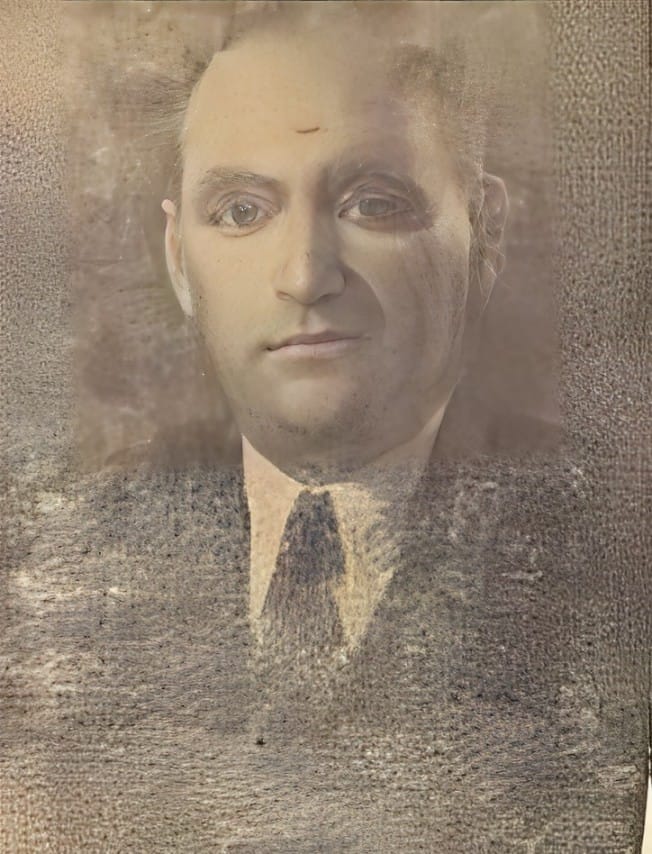
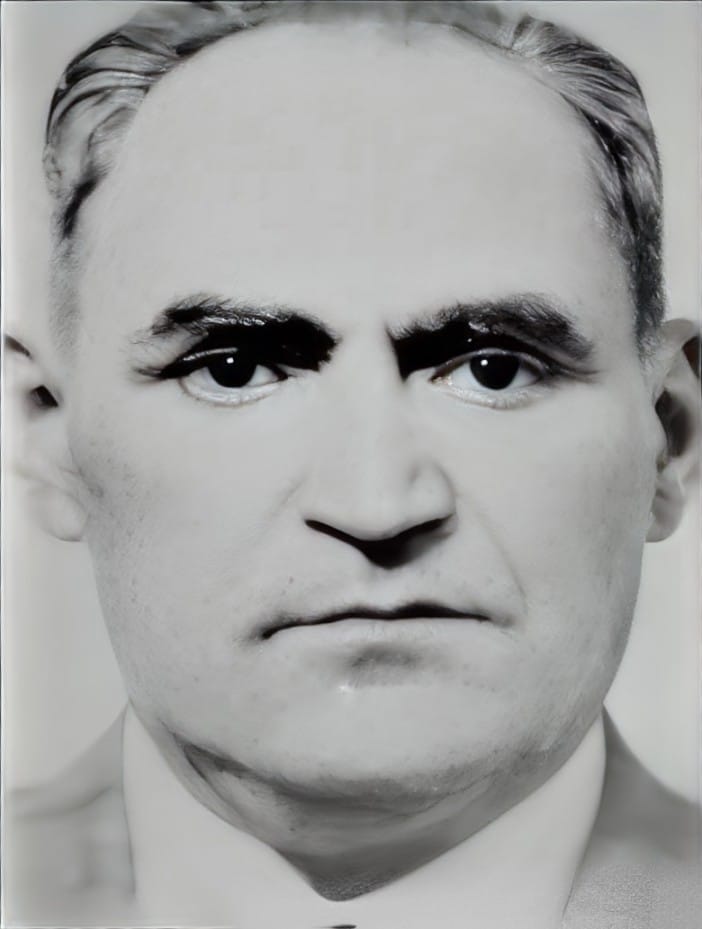
In the May 26, 1946 elections, Rıza Yalçın was lucky because Iğdır District Governor Sadık Artukmaç and Hüsnü Bingöl were at odds. Sadık Artukmaç, in his memoir "A Life Story," recounts his observation regarding the municipal election as follows:
"On May 26, 1946, municipal elections were held. The mayor of Iğdır was Osman Ataman. Ataman's opponent was a sympathetic, intelligent, and visibly hardworking gentleman named Rıza Yalçın. During the election, Osman Ataman and Rıza Yalçın were mayoral candidates. Osman Ataman appeared to be extremely confident of winning, believing the state was behind him. Rıza Yalçın, on the other hand, insisted that he would definitely win the election but requested that there be no interference from the government and thus the district governorship, as there had been in the past. He emphatically stated that in previous elections, there had been interference through various means, and even though he had won, they had made Osman Ataman win, and therefore, as district governor, he asked me not to take sides. I unequivocally stated to him that there would be no interference in the election whatsoever, and that incidents such as ballot box snatching or alteration would never be tolerated or permitted. Indeed, the election was held in a neutral environment. The ballot boxes were placed in the municipality building. The election board did its duty. Since the counting was not completed, it was postponed until the next day. For this reason, the ballot boxes were taken into custody in the municipality building. Rıza Yalçın - I will never forget - in a very excited state and demeanor, blockaded the municipality building with his men. So that no one could enter and the ballot boxes would not be changed as before. In addition to our police measures, Rıza Yalçın's men also performed their duty. The next day, the vote counting was finished. It was understood that Rıza Yalçın and his team had won the election by a large majority."
MIR ALI URAL PERIOD
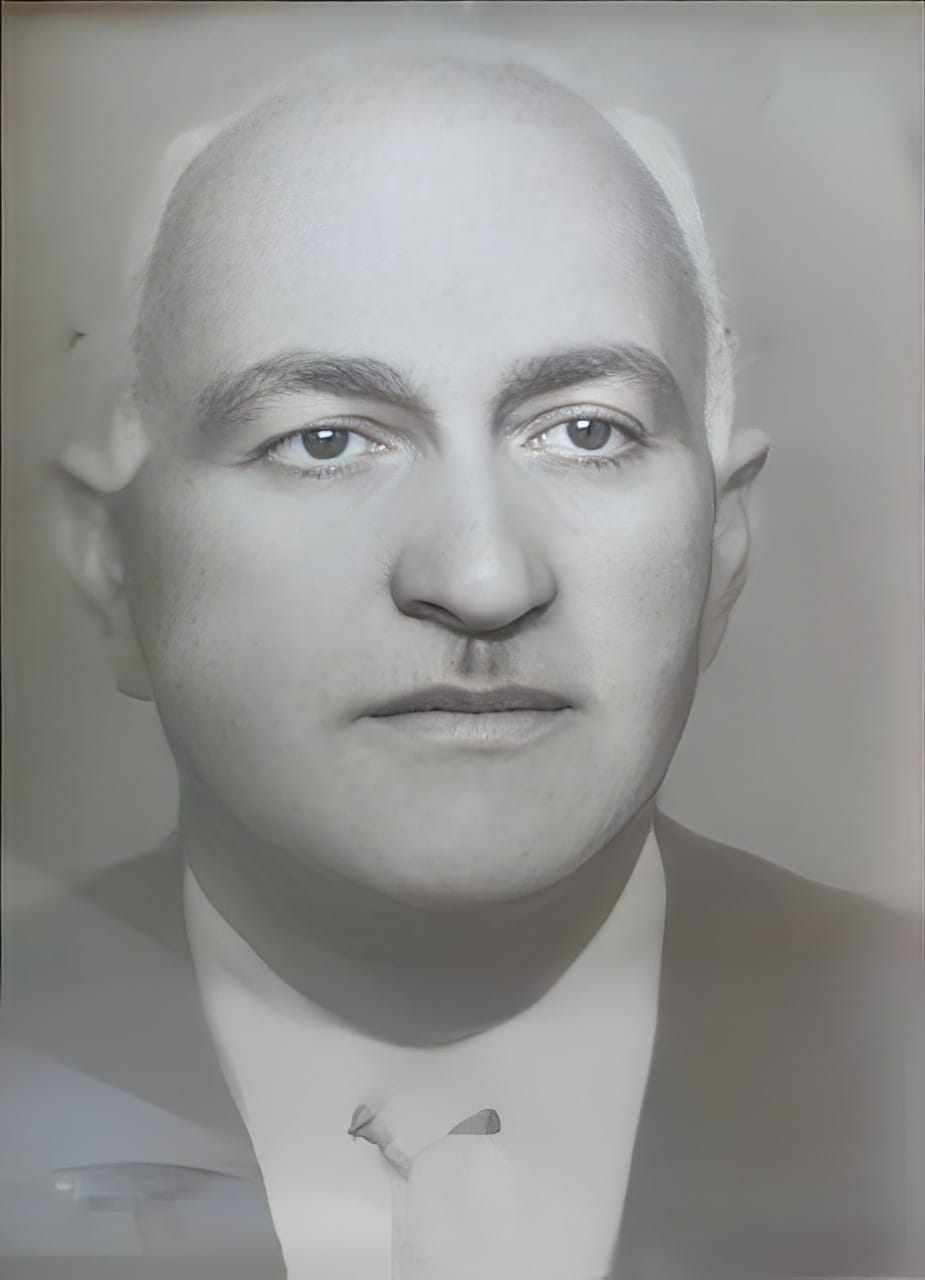
In the 1950 local elections, a change occurred: the "Secret ballot, open count" system was introduced instead of the "Open ballot, secret count" system. After all, literacy rates had increased. The public was now familiar with Latin letters.
For the first time in Iğdır's history, parties participated in the municipal council and mayoral elections held on September 3, 1950. While local elections across Turkey were between the CHP, Democratic Party (DP), and Nation Party, in Iğdır, since the Nation Party organization had not yet been established, local elections were between CHP and DP candidates. The CHP candidate was Mir Ali Ural, and the DP candidate was Nurettin Kirman. I would like to remind you again that in these elections, the mayor was not directly elected by the people, but by the council formed by popular vote, which then chose one of its members as mayor. In the election, the CHP gained the majority in the municipal council. Mir Ali Ural was elected mayor by the municipal council.
1955 MUNICIPAL ELECTION AND FAZIL BAYKAL
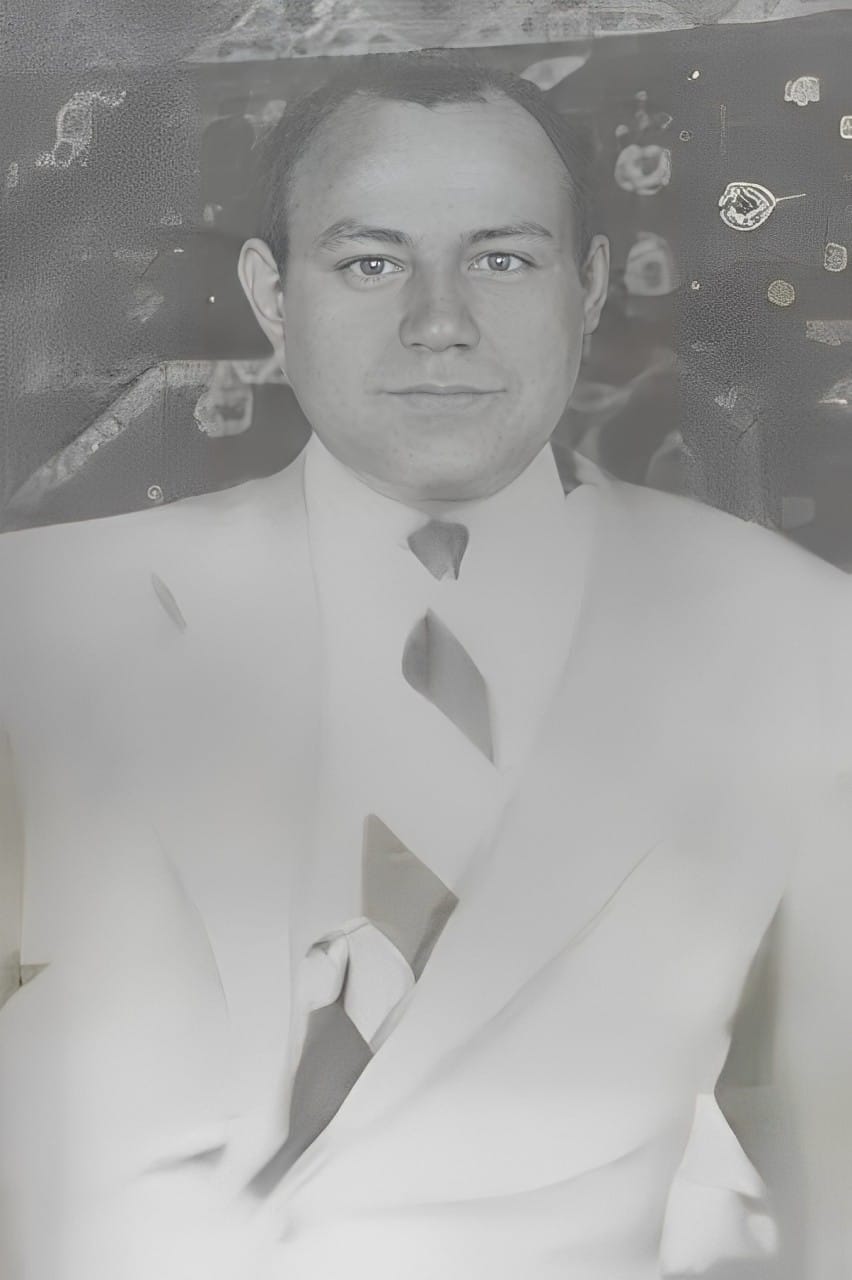
On November 13, 1955, municipal elections were held across Turkey and in Iğdır. The CHP boycotted the elections to protest the ruling Democratic Party (DP). Thus, in Iğdır, the DP and Independents entered the elections. The DP candidate was Nurettin Kirman. Independents gathered around Fazıl Baykal and Mecit Hun. Since the CHP did not enter the election, Mayor Mir Ali Ural supported the Independent group. The Independents won the elections. Mir Ali Ural won municipal council membership from the Independents list. At the municipal council meeting, Fazıl Baykal was elected mayor (February 1956). Mecit Hun became his deputy.
I need to explain a situation that frequently occurred between 1950-60 to my readers. In municipal elections, the public elects the municipal council, and the municipal council then convenes and appoints the mayor. The municipal council meets every February to discuss the budget. After the budget discussions, the mayor either receives approval to continue or is dismissed in the vote. Thus, mayors take the budget discussions in February quite seriously. As if this were not enough, municipal council members could also convene whenever they wished and dismiss the mayor by holding a vote of no confidence. If the district governor or governor deemed this no-confidence motion justified, they would approve it, thus paving the way for the election of a new mayor.
Fazıl Baykal served as mayor for one year. However, a year later, in February 1957, at the activity report evaluation meeting, he failed to receive a vote of confidence from the council and was dismissed from the mayoralty, and Mir Ali Ural became mayor again. In 1957, parliamentary elections were held, but no municipal elections. Thus, Mir Ali Ural continued as mayor until the 1960 Military Coup.
1960 MILITARY COUP
When the 1960 Military Coup occurred, Mir Ali Ural, like all mayors, was removed from office. Osman Ataman temporarily assumed the mayoralty. For a while, a talented young man named Adnan Gürcan, who had served as a marriage officer in the municipality, acted as mayor for a three-month period. Later, the district governor continued to serve as mayor until the 1963 elections.
1963 ELECTION
With the adoption of the 1961 Constitution, the election legislation regarding local administrations changed. According to the new law, mayors would be directly elected by the people. In 1963, mayoral elections were held in a single stage for the first time. The election was between Mecit Hun of the CHP and Hüseyin Akbulut of the Justice Party (AP).
HÜSEYİN AKBULUT NARRATES THE 1963 ELECTION (Iğdır Sevdası Book)
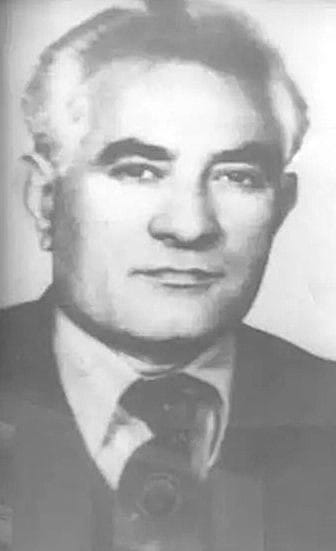
During my university years, I wasn't very interested in politics. After coming to Iğdır as a veterinarian in 1961, I started my duty with great enthusiasm and determination. Iğdır was a small place after all, so my speech and behavior attracted the attention of some politicians.
One day, AP District Chairman Hacı Nağdali Parlar and Sadık Tezel Bey came with an offer for me to be a mayoral candidate in the local elections in November 1963. I immediately accepted. Facing me were the late Mecit (Hun) Bey from CHP and Yakup Tuncer from YTP.
When Yakup Tuncer fell out with his party's Administrative Board and withdrew his candidacy, the political arena was left to me and Mecit Bey.
Mecit Bey had been very well known in the region since 1950, loved by everyone, whether Azerbaijani or Kurdish.
I should add, without forgetting, that there was also an independent candidate in those elections. This gentleman, from Kayseri, who came to Iğdır and opened a shop, was distributing chocolates to everyone to win the election. In fact, at one point, they teased him, "We don't understand you! Hüseyin Akbulut has distinguished and respected politicians like Sadık Tezel and Nağdali Parlar behind him. Mecit Hun is someone who can get votes from everyone, whether Azerbaijani or Kurdish. But you, who are you relying on to participate in these elections?"
He would answer, "I've done my calculations! These elections will be very contentious. Maybe one will kill the other. One will go to the grave, the other to prison. And I will be the mayor!"
The election campaign began with excitement and enthusiasm. Everything proceeded within the rules of courtesy and etiquette. There was no cursing or offending. Everyone paid attention to this even in harsh podium speeches.
Interesting events occurred on voting day. According to rumor, Mecit Bey's mother voted for me! And my sister-in-law accidentally voted for Mecit Bey!
Mecit Bey received 1700 of the votes cast. I was elected mayor at the age of 34, receiving close to 2000 votes.
HÜSEYİN AKBULUT NARRATES THE 1968 ELECTION (Iğdır Sevdası Book)
The second elections were in 1968. This time, the CHP put forward an Azerbaijani candidate against me: Rıza Karasu. Also, Yakup Tuncer ran from another party. In short, all candidates were Azerbaijani. I won the elections again.
With the intervention of the March 12 Coup, the next elections were postponed until December 1973.
DECEMBER 9, 1973 MUNICIPAL ELECTION
In the municipal elections of December 9, 1973, Hüseyin Akbulut from the Democratic Party, Hacı Akyüz from the National Salvation Party, Turan Atasever from the Justice Party, Ali Işık from the Republican People's Party, and Yakup Tuncer from the Nation Party competed. Hüseyin Akbulut won the elections with 41.6% of the votes, but he could not take over the mayoralty due to a six-month sentence. The assembled municipal council elected Mecit Hun as mayor. Two months later, the municipal council reconvened and this time elected Cemalettin Güneş as mayor. When the Ecevit Amnesty was issued on May 15, 1974, Hüseyin Akbulut returned to his duty. It should not be forgotten that even for a short period, Mecit Hun and Cemalettin Güneş assumed the mayoralty "ASALETEN" (in their own right) in 1973/74 by the election of the municipal council.
DEFINITIONS OF "ACTING" (VEKALETEN) AND "IN ONE'S OWN RIGHT" (ASALETEN) MAYORALTY
Since Hüseyin Malk's election as "Asaleten" Mayor in 2013 is a recent event, I would like to clarify the confusion in my readers' minds using this example:
When the Court of Cassation dismissed Mehmet Nuri Güneş from the mayoralty in 2013, the then civil administrator (Governor), in accordance with the powers granted to him by the Municipal Law, warned the Municipal Council to convene urgently within a period not exceeding one month and elect one of its members as "Asaleten" mayor. In such situations, groupings are formed among the Municipal Council members according to their political views, and potential candidate names are mentioned. In Municipal Council elections, it is possible to have more than two candidates in the first round. If no result is obtained in the first round, a second round is held. If still no result is obtained, this time the election is concluded in the third round without requiring an absolute majority.
To manage the voting process, one person is appointed as President from among the members. I believe this person was Çiğdem Yılmaz in the 2013 elections. An absolute majority is not achieved in the first and second rounds. (Absolute majority means a majority achieved with one more than half of those participating in a vote). Consequently, in the third round, two candidates compete: Hüseyin Malk and Atalay Sever. In the election held, Hüseyin Malk received 13 votes, and Atalay Sever received 11 votes. Thus, Hüseyin Malk was elected "Asaleten" mayor between October 11, 2013, and March 31, 2014.
The point to note here is this: When Mehmet Nuri Güneş was elected Mayor in 2009, Hüseyin Malk was elected Acting Mayor at the Municipal Council Meeting. Since Hüseyin Malk's duty falls under the definition of "Acting," the duty he undertook during this period does not mean mayoralty. However, in the vote held in the Municipal Council on October 11, 2013, since Hüseyin Malk was elected "Asaleten," he earned the title of Mayor this time.
Similarly, Mecit Hun and Cemalettin Güneş were successively elected "Asaleten" Mayor in 1973-74.
ELECTION OF A NEW MAYOR BY THE MUNICIPAL COUNCIL
It is useful to look at Article 93 of the Municipal Law. The article reads:
Article 93 – (Amended: 20/3/1997 – 4231/4 md.)
"In cases where the mayor is absent from his duty station due to leave, illness, or official duty, the mayor assigns a council member to act as acting mayor during this period.
In cases where the mayoralty becomes vacant or the mayor is suspended from duty, the governor ensures that the municipal council convenes within ten days. In this meeting, the Council, by secret ballot with an absolute majority of those present and from among its own members, elects a mayor if the mayoralty is vacant, or an acting mayor if the mayor has been suspended from duty. The term of office of the newly elected mayor is for the remainder of the term of the mayor he replaced; the acting mayor serves until a new mayor is elected or the suspended mayor returns to duty."
As clearly stated in the article above, if the mayor (reis) is absent for a short period due to illness or travel, the person previously appointed as "Deputy Reis" acts on his behalf. For example, if the Mayor is going to travel to Ankara, the Municipal Council does not convene to elect a new mayor for this; the person in the capacity of Deputy Mayor carries out the duties until the Mayor returns. For example, in the 1950s, Mecit Hun served as deputy to both Fazıl Baykal and Mir Ali Ural.
I would like to give two examples of this situation, based on news published in the Yeşil Iğdır newspaper of the time:
NEWS 1
Municipal Council Held Its First June Meeting June 3, 1957
Yeşil Iğdır Newspaper
The Municipal Council held its first June meeting. After the roll call conducted by Acting Mayor Mecit Hun, the issue of whether to accept the 60 thousand lira given by İller Bankası for the construction of a bathhouse for a short term was discussed.
NEWS 2
Municipal June Meeting Continues June 14, 1957
Yeşil Iğdır (Hasan Karalar)
The June meetings of the Municipal Council are continuing. In this context, during Wednesday's discussions, after the report on municipal expenditures was read, Acting Mayor Mecit Hun stated that there were urgent matters to be discussed and that he would read the application of two fellow members.
NEWS 3
((Local elections were held on December 11, 1977. Hüseyin Akbulut won the election. The Municipal Council convened on January 2, 1978, and elected Talat Tufan as acting mayor. The elected acting mayor was elected "VEKALETEN" (acting). Mücahit)
MUNICIPALITY HELD ITS ORDINARY MEETING JANUARY 3, 1978
Yeşil Iğdır Year: 23 Issue: 6354
Our district's Municipal Council held its post-election meeting and elected and assigned new personnel. The meeting was held on December 30, 1977, at 2 PM in the Municipality palace. Mayor Hüseyin Akbulut, opening the first speech, welcomed the old and new members gathered in the municipal council elected by the citizens and wished the meeting to be beneficial and auspicious for our district.
The council, attending the meeting with one absence, conducted a roll call. 25 participating members were identified by name. At the start of the election, Vahap Akar and Aydın Ural were elected Council secretaries with 26-26 votes.
Servet Akyıldırım and Yasin Doğuş served as vote counting members. Rahim Akyüz was appointed as Council President with 25 votes, and Ali Yüce with 22 votes. (...)
TALAT TUFAN, nominated as a candidate, won the acting mayoralty with 22 votes, while Settar Çoşkun received only 3 votes. Later, Yasin Doğuş with 15 votes and Hüseyin Sürmeli with 13 votes were elected to the council.
***
Mecit Hun's Acting Mayoralty in the examples above does not mean he was the Mayor. If the mayor is unable to take office due to a sentence or has been suspended from duty, the municipal council convenes at the request of the district governor or governor and elects one of its members as mayor. Mecit Hun and Cemalettin Güneş were elected mayor in 1973/74 in accordance with this situation. Likewise, Hüseyin Malk also served as Mayor by Council decision in 2013.
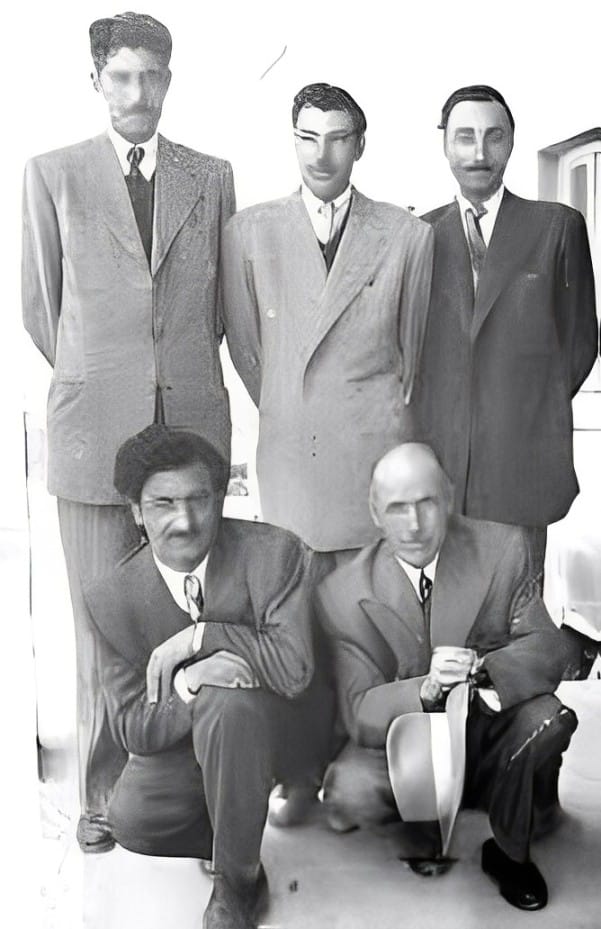
(Seated from left to right) Cemalettin Güneş, Sait Zor
HÜSEYİN AKBULUT NARRATES THE 1973 ELECTION (Iğdır Sevdası Book)
In 1973, within the ranks of the AP, to which I belonged, an opposition against Chairman Demirel had risen. The opposition movement led by Ferruh Bozbeyli and Faruk Sükan quickly affected the Kars organization as well. Politicians like Ziya Ayrım, Latif Aküzüm, Musa Doğan, İsmail Alaca remained loyal to the general headquarters. I and almost the entire Iğdır AP district organization - among whom were names like Sadık Tezel, Zöhrap Makinist, İsmail Gödekli, Enver Güneş, and Talat Tufan, who formed the backbone of the party - took part in the opposition front with Deputy Abbas Çetin.
We formed the district organization of the newly established DP (Democratic Party). Since political conditions developed in my favor, I became a parliamentary candidate from the DP in the October 1973 elections. However, I did not win.
This time, I decided to participate in the local elections held in December (1973) and became a candidate. Facing me were names like Hacı Akyüz and Turan Atasever. I won the elections again. An application was made to the District Election Board on the grounds of irregularities during voting. When the Election Board dissolved all DP members, the CHP automatically won 24 Council memberships. The members then elected Mecit (Hun) Bey as president among themselves. This situation lasted for two months. The Provincial Election Board found our objection justified and returned the presidency to me.
| Iğdır Municipal Council Convened
Yeşil Iğdır Newspaper December 31, 1973 |
President Hüseyin Akbulut Did Not Attend the Meeting
The Iğdır Municipality, which had been headless for over a month, has finally started its activities thanks to our winning fellow citizens.
The 24-member Municipal Council, which won the Municipal elections on December 9, 1973, convened on December 29, 1973, at the invitation of the Governorship and elected its organs.
In the election held, Mecit Hun was elected Acting Mayor, Cafer Yaycılı and Feridun Aras were elected Council members, Hüseyin Günaydın and Eşref Başaran were elected Deputy Council Presidents, Bayram Seran and Temel Ural were elected Council Presidents, Ahmet Iğdır was appointed to the finance objection committee, and Ekber Gökçe to the finance appreciation committee.
Hüseyin Akbulut, who won the mayoralty in the same election, could not start his duty due to a six-month sentence, being on sick leave for 2 months.
During this period, the mayoralty will be carried out by Acting Mayor Mecit Hun.
We wish the newly elected acting mayor Mr. Mecit Hun and his friends to be beneficial and auspicious for our district and our nation, and we wish them great success.
| POEM
İbrahim Sever January 28, 1974 |
Let's not cry "Ayhavar!" (Oh, help!)
The municipality is boiling,
The pen is playing again,
While order was found,
Things went bad again.
It had slept for years,
The future of our city,
Just as it stirred a little,
They changed the governor.
While Mecit HUN, worthy of mayoralty,
Was acting mayor,
Things were getting right,
Fate turned against us again.
They broke the members,
Wrote to our district,
Some sigh "hu,"
Some cry "ay havar."
To take it from a capable person,
Because of personal gain,
Don't harbor hatred for him.
It's a pity for this district,
Have mercy, friends,
Don't fall for the clamor,
Let no wails be heard.
For the future of the city,
Don't harbor hatred for him.
Let him manage affairs,
Let all sorrows end.
To bear a heavy burden,
Requires skill.
Pity this homeland,
May it not get worse than this.
I am İbrahim Sever,
My heart is full of worry,
I beg of you,
Don't stray from the right path.
Let Mecit HUN be acting mayor,
Let all affairs find order,
May he who does not love his homeland,
Even if he were my father, be damned.
AYDIN URAL NARRATES (Iğdır Sevdası Book)
(Note: Aydın Ural is the son of Mir Ali Ural, former Mayor of Iğdır.)
Mayor Hüseyin Akbulut had been sentenced to six months for an alleged crime committed before the 1973 local elections. Therefore, it was doubtful whether he would participate in the elections again. No one knew what the legal implications would be, or rather, what his situation would be if he were re-elected mayor. For this reason, there was a lively lobbying effort among the Democratic Party executives, of which I was also a member, to agree on a new candidate just in case. I was one of the names considered for mayoral candidate.
One day, we were sitting in Hacı Hüdaverdi Aras's store, evaluating the latest developments together. At that moment, we saw the district judge entering Hacı Zöhrap Makinist's shop, which was directly across the street. Soon after, Hacı Zöhrap Makinist invited us to his shop and wanted to make a situation assessment.
Hacı Zöhrap Makinist asked the judge openly and clearly:
"If Hüseyin Akbulut is re-elected mayor, what will his legal status be?"
The judge answered this question without much thought:
"He can participate in the election, but if he wins, he cannot be mayor. He can only start his duty after completing his six-month sentence," he said.
After the judge left, we re-evaluated the situation among ourselves and created the following slogan for Hüseyin Akbulut to run again:
"Hüseyin Akbulut will hang up his jacket, and we will vote for him!"
This was an emotional decision, and indeed, we kept our word and re-elected Hüseyin Akbulut as mayor.
Since it was impossible for Hüseyin Akbulut to start his duty immediately, we needed to elect an acting mayor for a six-month period. We sat down and discussed it, and we decided to elect Cemalettin Güneş as acting mayor because his wife was Azerbaijani, so he would not engage in factionalism.
Cemalettin Güneş was sitting down for dinner at Süphan Güneş's restaurant. We surrounded him as a delegation; the council members explained the decision to him. Cemalettin Güneş turned to us and said, "It won't be me! It will be Mecit Hun."
That evening, we barely managed to persuade Cemalettin Bey to become acting mayor. Six months later, Hüseyin Akbulut completed his sentence and took over the mayoralty.
ATAMAN YALÇIN NARRATES (Iğdır Sevdası Book)
Hüseyin Akbulut had won the mayoralty, but there was a short-term legal impediment for him to start his duty immediately. We, the council members, had to convene and elect a new mayor.
We gathered at a club. The DP had 10 council members, and the CHP and AP together had 20. There was also Cemalettin Güneş from the Nation Party. At the meeting, we started bargaining to distribute the mayoralty and council membership among ourselves. In the end, Mecit Hun's name was accepted as mayor. (...) At the next meeting, Cemalettin Güneş was elected Mayor.
SALİH ŞIKTAŞ'S ARTICLE IN YEŞİL IĞDIR NEWSPAPER
March 29, 1974
Dear Governor Alaattin Öskiper,
Dear District Governor Emin Ergin,
And Dear Acting Mayor Cemalettin Güneş
I would like to ask you a question in the presence of the public.
Why is Iğdır Municipality acting arbitrarily and not paying its debt for the official advertisement published in Yeşil Iğdır Newspaper until today? Please answer?
***
MAYOR CEMALETTİN GÜNEŞ
Cemalettin Güneş belongs to the prominent "Güneş" family of Iğdır. The family tree is as follows:
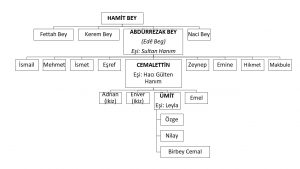
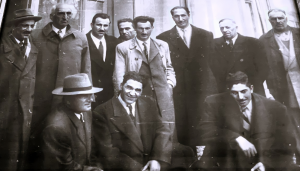
(Year 1952) Standing from left to right, second Ali Rıza Ataman, fourth Cemalettin Güneş (hands in pockets), fifth Musa Doğan, seventh Ahmet Armağan (father of Hacı Ferzende and Yusuf Armağan); Seated from left to right, first Osman Ataman, third Mecit Hun
Abdürrezak Bey served as the President of the Iğdır Chamber of Commerce for a long time until his death on December 16, 1955. Cemalettin Güneş's wife, Hacı Gülten Hanım, is the daughter of Iğdır's former Mayor and Deputy Rıza Yalçın.
Cemalettin Güneş was born in Iğdır in 1927. After graduating from Iğdır Middle School, he enrolled in Erzurum High School but returned to Iğdır before completing high school. He was involved in trade for many years. In 1962, he and his partner Ali Karasu bought the factory belonging to the Cotton Agricultural Sales Cooperative (PTSK). From this date, he continued his commercial life as a factory owner. The partnership ended in 1979, and the factory, which produced gin (cotton fiber separation from seeds) and flour, was equally divided between the two partners.
Cemalettin Güneş served on the board of directors of the Iğdır Exporters Association, established in 1970.
Cemalettin Güneş also had an interest in politics. He became the founding district chairman of the Nation Party in Iğdır, which was established on June 13, 1962, and whose General Chairman was Osman Bölükbaşı. He served as a Municipal Council Member in the 1963, 1968, and 1973 elections.
In the December 9, 1973 Local Elections, Cemalettin Güneş ran for municipal council membership from the Nation Party. Only Cemalettin Güneş was elected from the Nation Party. Hüseyin Akbulut from the Democratic Party won the elections but could not take office due to a criminal impediment. He remained a fugitive to avoid going to prison. In the spring of 1974, the Municipal Council, in a second meeting, elected Cemalettin Güneş as Mayor. Cemalettin Güneş continued this duty for 5-6 months. Hüseyin Akbulut benefited from the 1974 Ecevit Amnesty, but his return to duty was delayed by a few months.
Cemalettin Güneş valued friendship and loyalty. Knowing that Hüseyin Akbulut was unjustly accused, he would somehow deliver his salary to Hüseyin Akbulut, who was a fugitive.
Cemalettin Güneş passed away on December 21, 1986.
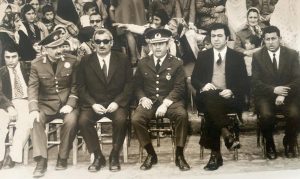
Third from left, Mayor Cemalettin Güneş (wearing glasses), fifth from left, Iğdır District Governor Emin Engin, sixth from left, Iğdır November 12 Primary School Principal Paşa Akyıldız
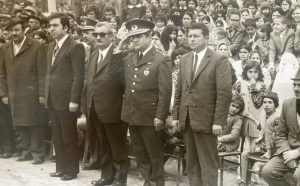
First from left, the late Vahap Akar, second Iğdır District Governor Emin Engin, third from left, Mayor Cemalettin Güneş (wearing glasses), fifth from left, Iğdır November 12 Primary School Principal Paşa Akyıldız
***
TEMEL URAL NARRATES
(Our Iğdır always embraced individuals with strong common sense and who valued brotherhood. One of these names was the late Abbas Ural. His son Temel Ural presented a glimpse into his family's life in a short interview. Mücahit)
My Family
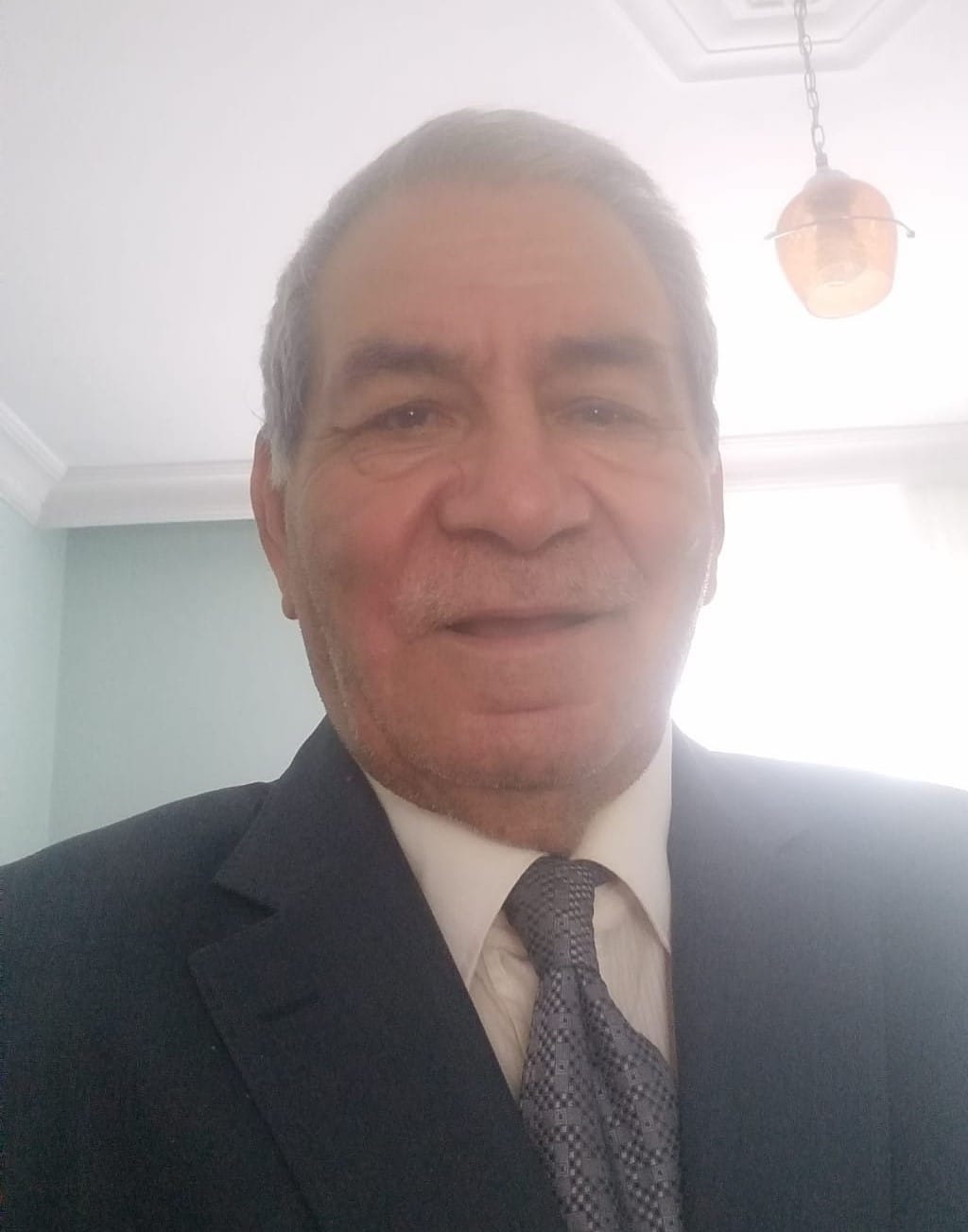
I was born on April 15, 1946, in Ağaver village, connected to Iğdır Center. My father's name is Abbas, and my mother's name is Bani. I belong to a family of eight siblings, four of whom are girls. The siblings in order of age are: Temel, Hanım, Hatice, Hüsniye, Songül, Atabey, Yusuf, and Yunus.
My grandfather İbrahim lived in Canfeda village, which is now within the borders of Armenia. My father and his brother Gaffar were also born in that village. Canfeda village is on the banks of the Aras River, within the current borders of Armenia. It is across from Ağaver village.
When the pressures of the communist regime increased, ten families living in Canfeda village gathered, crossed the Aras River in 1937, took refuge in Turkey, and settled in Ağaver village. My father and his brother Gaffar were among those who came. (My father was born in Canfeda in 1901 and passed away in Iğdır in 1976. His grave is in Iğdır Asri Cemetery.)
I am married. My wife Mehtap Hanım is from a Sultanabat family with the surname "Abatay." I have three sons: Uğurcan, Oğuz, and Ahmet Melik. Uğurcan and Oğuz are university graduates. Ahmet Melik is continuing his Mechanical Engineering education in Bolu.
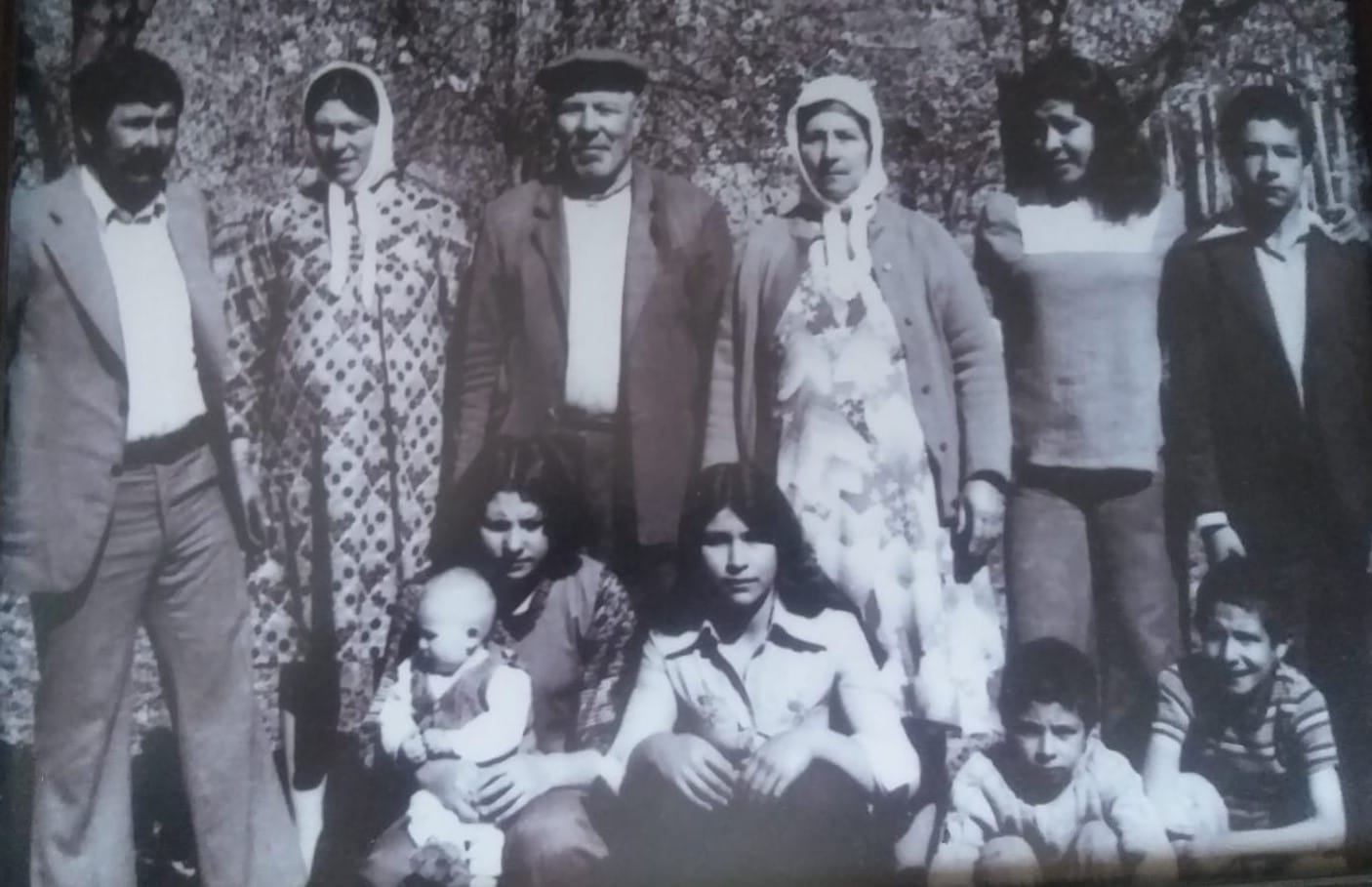
(Standing from left to right) Temel Ural, Hanım, Abbas Ural, Bani Hanım, Hatice, Atabey; (Seated from left to right) Hüsniye, Songül, Yunus, Yusuf
My Education Life
I completed primary school at November 12 Primary School. After graduating from Iğdır Middle School, I went to Kars for high school education. I graduated from Kars Alparslan High School in 1967. In those years, I could not continue my university education because my family's financial situation did not allow it. My father had an accident with a tractor and was injured. As the eldest son in the family, they needed me. Soon after, I was conscripted into the army. I served as a corporal for 24 months in Davutpaşa, Istanbul.
We were engaged in agriculture. The soil of Ağaver village was fertile. We cultivated cotton, sugar beet, wheat, barley, and melons.
My Political Days
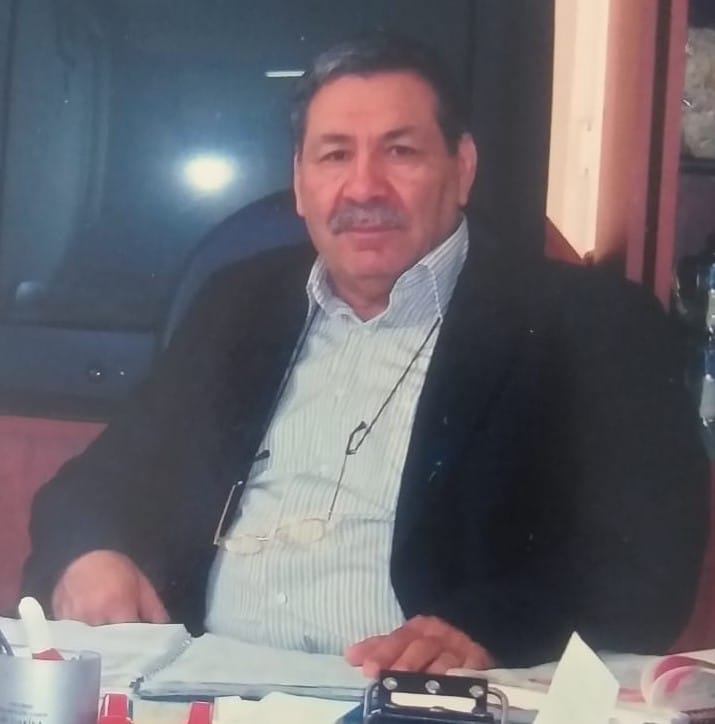
My father was a CHP member since the 1950s. He remained a CHP member until his death. I remember, it was the 1957 elections. I was a child. Most of the residents of Ağaver village voted for the Democratic Party (DP). My father had found a way to win them over to the CHP.
We had a vineyard. My father took a crate of grapes and went to the village coffeehouse. He placed the crate on a table:
"Whoever says 'I love İnönü' can come and eat as many grapes as they want!"
My father knew that the villagers would not vote for the CHP; he at least wanted them to say "I love İnönü." The villagers looked at the grapes with appetite but did not come and eat them just to avoid saying "I love İnönü."
In later years, my father was continuously part of the CHP Executive Board during Mecit Hun's district chairmanship. There was a strong bond of trust between Mecit Hun and my father.
1973 Municipal Elections
It was the 1973 local elections. I was also elected to the Municipal Council from the CHP list. Hüseyin Akbulut, the candidate of the Democratic Party, whose general chairman was Ferruh Bozbeyli, won the elections, but there was an impediment to his taking office.
As far as I remember, Hüseyin Akbulut, when he was mayor in the years before the March 12, 1971 coup, allowed a road construction in favor of Hacı Nağdali Parlar, and in later years, this action was brought to court with the allegation of "corruption." On the days when Hüseyin Akbulut won the election (December 1973), the court concluded, and Hüseyin Akbulut, Hacı Nağdali Parlar, and some council members were sentenced to 2 years in prison.
Hüseyin Akbulut became a fugitive to avoid going to prison. On such a day, we, as the Municipal Council, had to convene and elect a new mayor as required by law.
Since the municipal council members elected from the Democratic Party were dissolved by the District Election Board, only the CHP, Justice Party, and Nation Party council members attended the first meeting. I served as secretary. Mecit Hun was elected Mayor by a majority of votes.
2-3 months passed. The Democratic Party appealed to the District Election Board. When the District Election Board accepted the appeal, the council members elected from the Democratic Party returned to their duties. Since the majority was with the Democratic Party, it was decided to hold a new election. This time, Cemalettin Güneş was elected Mayor. When the "Ecevit Amnesty" was issued in May 1974, Hüseyin Akbulut's sentence was dropped, and he returned to his duty as mayor.
Mecit Hun, a Man of Common Sense
I had the chance to get to know Mecit Hun closely through party work. He was a man of common sense. He made an effort to avoid emotional decisions. I will never forget that his son Selahattin was beaten by the Ülkücüler (Nationalist Action Party youth wing). Tensions were at their peak in Iğdır. At the party meeting we held, Mecit Hun insisted that we act calmly and emphasized the importance of staying away from provocateurs. He was right. The slightest provocation could have dragged Iğdır into a deeper internal conflict at any moment.
My Business Life
I was involved in trade in Iğdır for a while. I worked in transportation. In 2000, I settled in Istanbul. My brother Atabey went to Germany. Together, we ventured into import-export business. I acquired significant capital, especially by shipping food to Georgia, Iran, and Azerbaijan. Due to this success, I was awarded the Special Award of the Istanbul Exporters' Chamber.
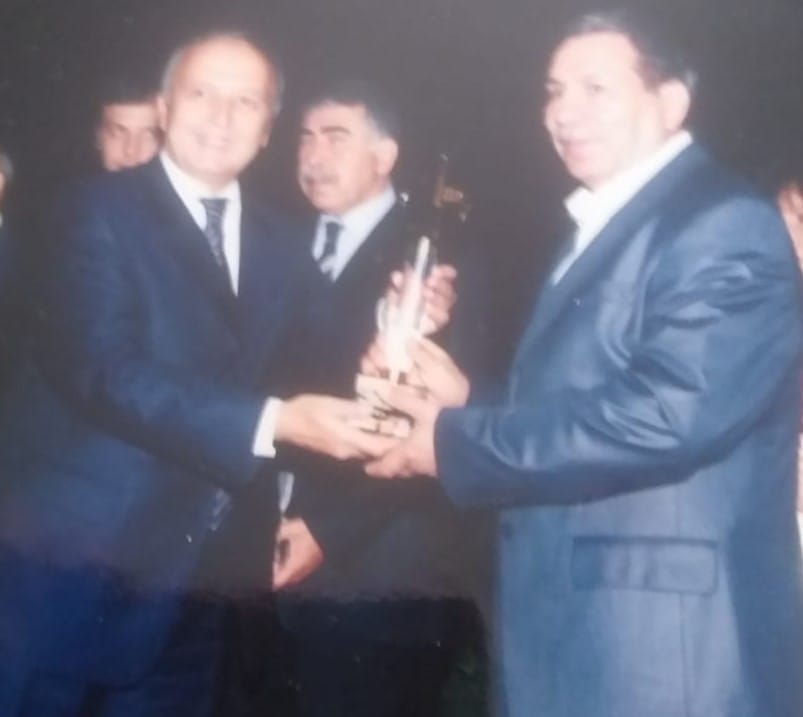
My Days in Iğdır
Those were tense years in Iğdır, marked by right-left clashes. I was sick. I was passing near the place where "Iranians' Restaurant" used to be. Ülkücüler (Nationalist Action Party youth wing) blocked my way.
"Are you a leftist?"
"Yes!"
I understood that they were ready to attack me. Pointing to Ali Işık's coffeehouse directly across the street, I suggested:
"Instead of fighting, let's sit in that coffeehouse and discuss."
"Okay," they said and left. I waited in the coffeehouse, but no one came. That day, I realized that being right was no solution, and I decided to be more careful.
Oh, That Boraltan Bridge!
I recently went to an upholsterer. During our conversation, he asked where I was from. When he learned I was from Iğdır, for some reason, he couldn't help but ask, "Which party are you with?" I replied, "I'm with the CHP." The upholsterer sharply retorted, "Being from Iğdır and with the CHP doesn't quite fit."
"Why?"
"CHP General Chairman İnönü handed over 195 of our compatriots to the enemy on the Boraltan Bridge in Iğdır and had them killed."
I gave a sharp answer:
"The village where I was born is on the banks of the Aras River. There has never been a bridge named 'Boraltan' in Iğdır. Let's go and investigate, if there is such a bridge, I will give you whatever you want."
"You are mistaken, there is such a bridge. İnönü massacred our compatriots."
A little further away, there was a hammer on a table. I was so angry that I was tempted to grab the hammer and hit the man on the head. Then I calmed myself down:
"Calm down, Temel! You are 78 years old. Are you going to become a murderer at this age?"
***
A MAYOR AT THE CROSSROADS OF IĞDIR BECOMING A PROVINCE: ALI AĞRI
(Dear readers, Mr. Ali Ağrı, who witnessed a historical turning point for our Iğdır and played a primary role as the Mayor of the period in the process of Iğdır becoming a province and the opening of the Nakhchivan Bridge, summarized the events he experienced and the difficulties he faced for us. Mücahit)
My Family
My father's name is Mehmet. (Mehmet is the son of Süleyman.) My father was a farmer. My mother's name is Mahçure. My family was settled in Iğdırmava.
I was born in Iğdır on 05/07/1949. I belong to a family of six siblings, two of whom are girls. The siblings in order of age are Taliye (girl), Akil, Fadıl, Abboş, Safiye, and Ali. My wife's name is Leyla. I have two sons: Their names are Mehmet Doğan and İbrahim Sinan. Mehmet Doğan is a Judge; İbrahim Sinan is a Bank Manager.
My Education Life
I completed November 12 Primary School and Iğdır Middle School. Since there was no high school in Iğdır at that time, I attended high school in Kars, at Alparslan High School. Among my friends from that period, I can name Atila Hun and Rahim Bağcı. I graduated from high school in 1968. I enrolled in Nişantaşı (Istanbul) Private Dentistry College.
After completing my dentistry education, I was appointed to Kağızman Health Center. Later, I completed my military service as a reserve officer at Ağrı Military Hospital. After military service, I continued to work at Ağrı Hospital. Although I was full of desire to go to Iğdır and serve in those years, unfortunately, Iğdır was in the grip of ruthless terrorism. I had to postpone my plan to go to Iğdır.
Between January 5, 1978, and November 12, 1979, the CHP was in power. With the support of Kars Deputy Doğan Araslı, I had my appointment transferred to Lüleburgaz. While I was about to start my duty in Lüleburgaz, the September 12, 1980 Military Coup occurred. I needed to get permission from the Martial Law Command to start my duty. I went to the Commander. He was being capricious and making it difficult for me to start work. I said in a polite tone, "Commander, it is not possible for me to return to Ağrı. Please allow me to work here," and thus I started my duty in Lüleburgaz. I spent that winter in Lüleburgaz. In the spring, I resigned and went to Iğdır. I opened my own private practice.
My Political Years
My interest in politics began in high school. As the '68 Generation, we were, in a way, in the thick of events. This situation continued until 1980. After September 12, new parties were established in Turkey. This time, in accordance with the conditions of the period, I was in close contact with political parties. Turgut Özal founded the Motherland Party (ANAP) in 1983. In Iğdır, Ali Karasu established the ANAP organization and became the founding district chairman of the party. During such a period, I also became a member of ANAP. Later, Kadir Işık became the district chairman.
My Mayoralty
Local elections were held on March 26, 1989. I became the ANAP Iğdır Mayoral candidate. Among my rivals were Hüseyin Akbulut from the True Path Party (DYP), İlhan Zor from the Social Democratic Populist Party (SHP), Hasan Gürel from the Democratic Left Party (DSP), and Şamil Altıntaş from the Welfare Party. The election was mostly between me and Hüseyin Akbulut. I won the election with 35% of the votes. The success I achieved against a charismatic and political giant candidate like Hüseyin Akbulut was quite significant. This election, in a sense, meant the end of the Hüseyin Akbulut era in Iğdır.
The distribution of votes was as follows:
Motherland Party Ali Ağrı 3.200 %35,03
True Path Party Hüseyin Akbulut 2.714 %29,71
SHP İlhan Zor 2.509 %27,46
Democratic Left Party Hasan Gürel 390 %4,27
Welfare Party Şamil Altıntaş 323 %3,54
Difficulties I Faced in Iğdır Becoming a Province
Iğdır was connected to Kars. Kars Deputies did not want Iğdır to become a province. Especially Azerbaijani-origin Deputies believed that if Iğdır became a province, this would divide Azerbaijani votes in Kars and lead to an unfavorable situation. Some also opposed it, saying, "If Iğdır becomes a province, Ardahan will also want to be one, which is unacceptable."
I called Salih Aktürk, the SHP Mayor of Ardahan:
"Iğdır will become a province, but they are putting Ardahan in our way as an obstacle. You also become a province, and we will support you."
Thanks to this initiative, Ardahan also became a province.
To make Iğdır a province, I frequently took the district chairmen of the parties in Iğdır and the presidents of NGOs like the Chamber of Commerce with me to Ankara and lobbied.
My Friendship with Heydar Aliyev
The Soviet Union disintegrated on December 26, 1991. The Republic of Azerbaijan was established with a referendum held on December 29, 1991. Heydar Aliyev was elected President of the Republic of Azerbaijan on October 3, 1993. Heydar Aliyev had previously been the President of the Nakhchivan Autonomous Republic.
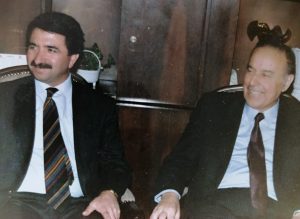
When Heydar Aliyev visited Iğdır, I hosted him at my home. Over time, a special and strong friendship developed between us.
Who Built the Nakhchivan Bridge (Bridge of Longing)?
Unfortunately, people's memories can be forgetful, and their hearts ungrateful. Here, I want to convey a truth as it is. I personally had the Nakhchivan Bridge, which in a sense changed the destiny of our Iğdır, built by President Turgut Özal. This fact is not well known or is deliberately ignored. I would like to detail how this bridge, which is of historical importance for Iğdır, was built:
It was the days when Armenians occupied Karabakh and began genocide. While these massacres were happening, President Turgut Özal was in the USA. Due to these events, Turgut Özal made an unfortunate statement in the USA: "Azerbaijanis are Shiites; they are close to Iran."
Of course, this statement was unacceptable to us.
When Turgut Özal returned to Turkey, I took opinion leaders and NGO presidents with me and went to Ankara. We appeared before Turgut Özal. Kars Deputy İlham Aküzüm and Hacı Abdulhasan (Ebulhesen) Yıldız Bey, the owner of the Star Royal hotel, were with me. While Hacı Abdulhasan Yıldız and I were chatting, Turgut Özal, who was originally from Malatya himself, suddenly interrupted and turned to Hacı Abdulhasan Bey, saying, "Hacı, you speak just like people from Malatya."
Abdulhasan Bey replied:
"Mr. President, I have a factory in Malatya."
"What kind of factory?"
"A yarn factory."
While the conversation continued in this direction, İlham Aküzüm interjected:
"Mr. President, the people of Iğdır are upset with you!"
This time, Turgut Özal turned to me:
"Mr. Mayor, why are you upset?"
"Mr. President, in the USA, you made a statement to the effect that 'Azerbaijanis are Shiites, they are close to Iran.' We, with our Azerbaijanis and Kurds, are the founding elements of the Republic. It is true that our sect is Shiite, but we are Turks."
Turgut Özal asked, "Is there a journalist among you?" When he received the answer "No," he complained: "Oh, those journalists! I didn't say that. They distorted my statement."
I interjected:
"Mr. President, in this situation, you need to win our hearts. We want you to build a bridge between Iğdır and Nakhchivan. Our compatriots are in a difficult situation. We will help them."
Turgut Özal adopted a serious demeanor:
"Call Cengiz for me immediately!"
The "Cengiz" he referred to was Cengiz Altınkaya, the Minister of Public Works and Settlement. I had a very good relationship with Cengiz Bey. I had received his help on many issues for the municipality. When Cengiz Bey arrived, I spoke:
"Mr. Minister, you will build a bridge; we will support Nakhchivan."
The Soviet Union had not yet disintegrated. Cengiz Bey turned to Turgut Özal and said, "As you command, Mr. President!"
Turgut Özal asked for a map. They began to work on determining where the bridge should be built on the map. I found this strange and intervened:
"Mr. President! The bridge will be built in Dilucu, but we are trying to determine the location of the bridge on a map in Ankara."
"Mr. Mayor, do you have another suggestion?"
"Mr. President, I am returning to Iğdır tomorrow. Let an official from the Ministry come with me, and we will determine the location in Dilucu together."
The President turned to the Minister, "Cengiz, did you hear that?"
The Minister, "Understood, Mr. President!"
"Cengiz, I want you to finish this bridge by spring."
The next day, I went to Dilucu, Iğdır, with an official from the Ministry of Public Works and determined the location for the bridge. The bridge was opened to service in June 1992 by Prime Minister Demirel and Heydar Aliyev, President of the Nakhchivan Autonomous Republic. With Demirel's special interest and help, Iğdır became a province on June 3, 1992. Thus, I, who was elected Mayor when it was a district, now gained the title of Mayor of Iğdır as a province.
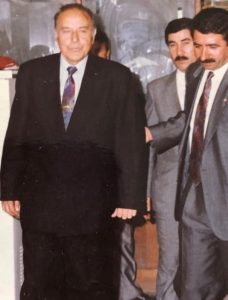
With the opening of the Nakhchivan Bridge, a new era began in Iğdır. Iğdır met with wealth and money. Heydar Aliyev frequently sent his assistant to me, requesting food aid. We immediately fulfilled these requests to the best of our abilities. Our Governor Şemsettin Uzun also acted sensitively in this regard, providing the necessary support, and together, hand in hand, we delivered truckloads of flour and food to Nakhchivan. I should also add that the construction of the Nakhchivan Bridge, in a sense, accelerated the process of Iğdır becoming a province. Iğdır's strategic importance could no longer be denied.
Bayburt had become a province before Iğdır. One day, I was chatting with Bayburt Deputy Ülkü Güney. When he heard that we wanted to become a province, he said, "Mr. Mayor, forget about becoming a province, there's not much difference between being a province and being a district!" This kind of assessment annoyed me. I believed I had the right to respond to these words, which saw Iğdır as less important than Bayburt:
"Mr. Deputy, it is a mistake to compare Iğdır with Bayburt. Bayburt is in a central location surrounded by other provinces. If you look at the map, you will see that Iğdır borders three states. There is no other city in Turkey that borders three states. Iğdır has strategic importance."
The Deputy paused at my explanation:
"Is that really so? Then Iğdır needs to become a province. I will support you in this matter with whatever I can."
***
Years passed like this.
Before concluding my words, I would like to draw your attention to a bitter truth about our Iğdır. Iğdır has always failed in terms of respect for labor and loyalty. Although I took primary responsibility for Iğdır becoming a province and the opening of the Nakhchivan Bridge and successfully completed these tasks, an incomprehensible indifference developed towards me in the 1994 Local Elections, and I lost the election.
In the 1994 elections, I ran again from ANAP. Ali Asker Aşırım from DYP, Abdulvahap Akar from the Welfare Party, and Independent İsmail Aba were the other candidates. Ali Asker Aşırım won the election.
In the local elections on March 28, 2004, I ran from the AK Party. The other two important candidates were Nurettin Aras from MHP and Hasan Alagöz from SHP. Nurettin Aras won the elections.
***
A MAYOR IN PRISON: YAŞAR AKKUŞ
As I write this article today (July 26, 2024), Iğdır Mayor Yaşar Akkuş is in prison in Erzurum due to an injustice he suffered as a result of slander. In this article, I will briefly note Yaşar Akkuş's family and his rising political career. I hope he will be released and among us as soon as possible.
Yaşar Akkuş's Family
Yüzbaşılar (formerly Alut) is a village connected to Iğdır Center. It is about 11 km from the center. It is one of the villages where the Brukan (Brukî) tribe lives most densely. Its soil is fertile. Its people are engaged in farming and animal husbandry.
Yaşar Akkuş was born in this village on December 12, 1981. His father's name is Mehmet, and his mother's name is Türkan. Mehmet Bey is engaged in farming and animal husbandry. He grows wheat, sugar beet, watermelon, and alfalfa.
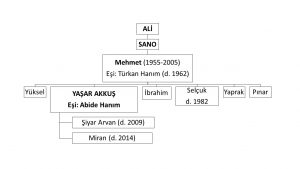
Mehmet Bey is from the Brukan (Brukî) tribe. Türkan Hanım belongs to the Hesepêxas sub-branch of the Redkan tribe from Murşitali village. She is the niece of the late Mecit Yılmaz, who was the unchanging headman and notable of Murşitali village for a long time.
Yaşar Akkuş belongs to a family of six siblings. The siblings in order of age are Yüksel, Yaşar, İbrahim, Selçuk, Yaprak, and Pınar.
Education Life
Yaşar Akkuş completed primary school in Yüzbaşılar village and middle school in Iğdır Middle School. He completed high school at Akhisar High School. He took university entrance exams. He began his education in the Local Administrations-Local Government Department at Niğde University.
Yaşar Akkuş is warm-hearted. He does not accept remaining silent about the injustices in his country. He participates in student protests. Hearing this, his father, fearing that his son would one day face trouble, sought ways to bring him to Iğdır. He wrote that he was ill. He wanted his eldest son to take over the family business.
Yaşar Akkuş left his formal education unfinished and returned to Iğdır. He learned the truth but did not want to break his beloved father's heart. On the one hand, he continued his university education by taking external exams, and on the other hand, he tried to contribute to the family economy. He successfully passed his differential courses and graduated from Niğde University.
Yaşar Akkuş is a determined and talented businessman. He is versatile. With his cheerful face, positive demeanor, constructive human relations, and trustworthy character, he quickly succeeded in business life. He was involved in import, export, car dealership, car rental, carpet trade, agriculture, and animal husbandry. He ventured into the construction sector. In 2005, he founded the Iğdır Car Dealers Cooperative and served on its management. His network continuously expanded. He gained the love and trust of the people. He did short-term paid military service and returned to his work.
Political Life
Yaşar Akkuş does not neglect his duty to his people. He established the first Village Youth Commission of Iğdır HADEP, to which he belonged. Until 2005, he served as the Secretary and President of HADEP-DEHAP Youth Branches. He actively participated in neighborhood and village commissions and in the party's election campaigns.
He became the provincial chairman of Kurdi-Der, the Kurdish Language Research and Development Association (Komeleya Lêkolîn û Pêşvexistina Zimanê Kurdî), established to academically research and develop the Kurdish language in Turkey. He also contributed to party activities by taking responsibility for the supreme commission in referendum and presidential elections.
Marriage and Abide Akkuş Hanım
Yaşar Akkuş married Abide Hanım on September 14, 2003. Abide Hanım is not a stranger. Abide Hanım's father, Mehmet Sıddık Bey, and Yaşar Akkuş are first cousins. Abide Hanım's mother, Fatma Hanım, is also his aunt's daughter. They have two sons. Şiyar Arvan was born in 2009; Miran was born in 2014.
Abide Hanım
Abide Hanım was born in Yüzbaşılar village on December 22, 1983. Her father's name is Mehmet Sıddık, and her mother's name is Fatma. She belongs to a family of five siblings.
Abide Akkuş completed primary school in the village, and middle and high school in Iğdır. She studied Child Development in higher education. She worked as a teacher in various villages for 12 years. In the March 31, 2024 elections, she entered the Municipal Council from the DEM Party in the first place and won. She was appointed Deputy Mayor at the Municipal Council Meeting. Abide Hanım is still continuing this duty.
Yaşar Akkuş, Mayor of Iğdır
Yaşar Akkuş is 33 years old. Relying on his leadership and creativity skills and his experience in public relations, he applied for the Iğdır Mayoralty in the 2014 Local Elections. The party preferred another name. This situation did not cause resentment in Yaşar Akkuş. He continued his political work with the same determination. In the 2018 parliamentary elections, he worked as a candidate nominee but could not make it onto the list.
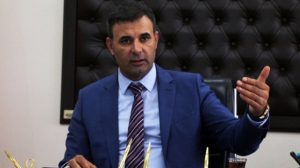
In the 2019 elections, the opposite situation occurred. With a demand from the grassroots, Yaşar Akkuş became the HDP's Iğdır Co-Mayor candidate in the March 31, 2019 local elections. He emerged victorious from the election. He became Mayor at the age of 38. Halis Güney was appointed Deputy Mayor at the Municipal Council Meeting.
The distribution of votes was as follows:
HDP (Peoples' Democratic Party) Yaşar Akkuş 22.268 %50,1
MHP (Nationalist Movement Party) İsa Yaşar Tezel 20.733 %46,6
Slander, Arrest, Trustee
Yaşar Akkuş started his work with great enthusiasm and desire. The Governor of the period seemed to have been specially assigned to remove Yaşar Akkuş from his duty. He set up a trap from all sides, employing secret witnesses and conspiracy methods. He succeeded.
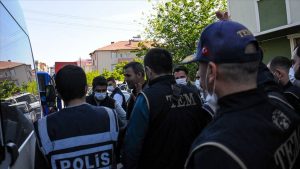
In the operation organized on May 15, 2020, Yaşar Akkuş was detained, arrested, and transferred to Erzurum H Type Closed Penal Institution. A trustee was appointed in his place. The governor, who implemented insidious plans, assumed the trustee duty. His wish had come true. He had successfully fulfilled the mission assigned to him.
Deputy Mayor Halis Güney was briefly arrested, and when released, he went abroad.
Courts and Punishment
On May 26, 2021, Yaşar Akkuş participated in the hearing held at the Iğdır 2nd High Criminal Court via the Audio and Visual Information System (SEGBİS) from the Erzurum H Type Closed Penal Institution where he was imprisoned. Despite Yaşar Akkuş's categorical denial of the accusations against him, he was sentenced to 7 years and 6 months in prison on charges of "being a member of an armed terrorist organization." Undoubtedly, this is a political decision. In fact, it is the will and resolute stance of the people of Iğdır that has been imprisoned.
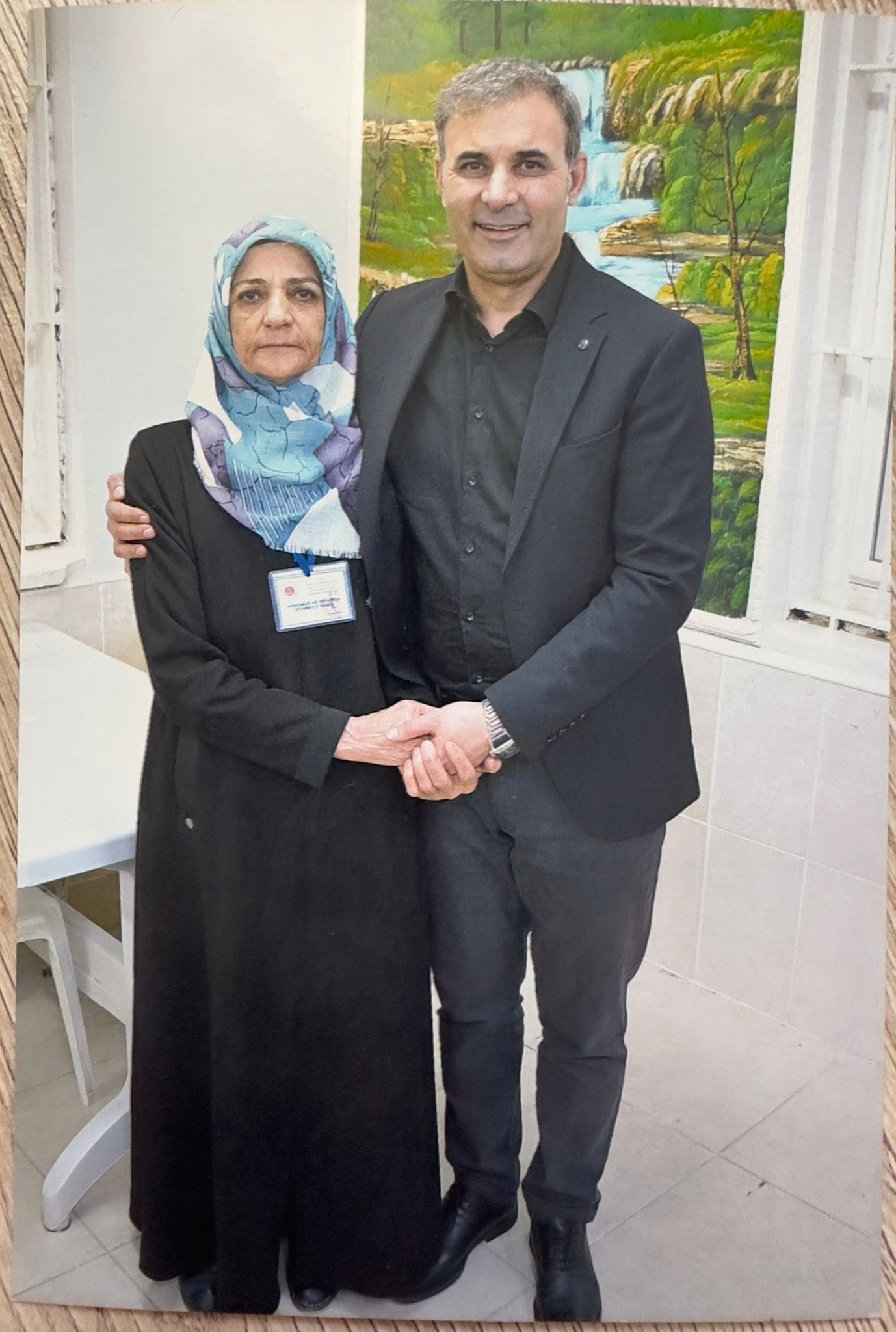
Heart Attack and Surgery
Yaşar Akkuş suffered a heart attack while in prison. He was hospitalized. The examination revealed that the arteries leading to his heart were blocked. First, an angioplasty was performed, but the desired result was not achieved. This time, he underwent open-heart surgery. However, due to body inflammation, he had two more surgeries in a row. At a young age, he fought for his life.
Prison Days
Yaşar Akkuş tries to keep his spirits high in prison. Reading books is his greatest pleasure. He strives to learn Russian and English. Of course, in his heart and soul, there is a desire to reunite with his family, his people, and the city where he is mayor as soon as possible.
Yaşar Akkuş, admiringly caressing the strength, courage, and hope of a plant sprouting from between the concrete in prison
***
ALI ASKER AŞIRIM
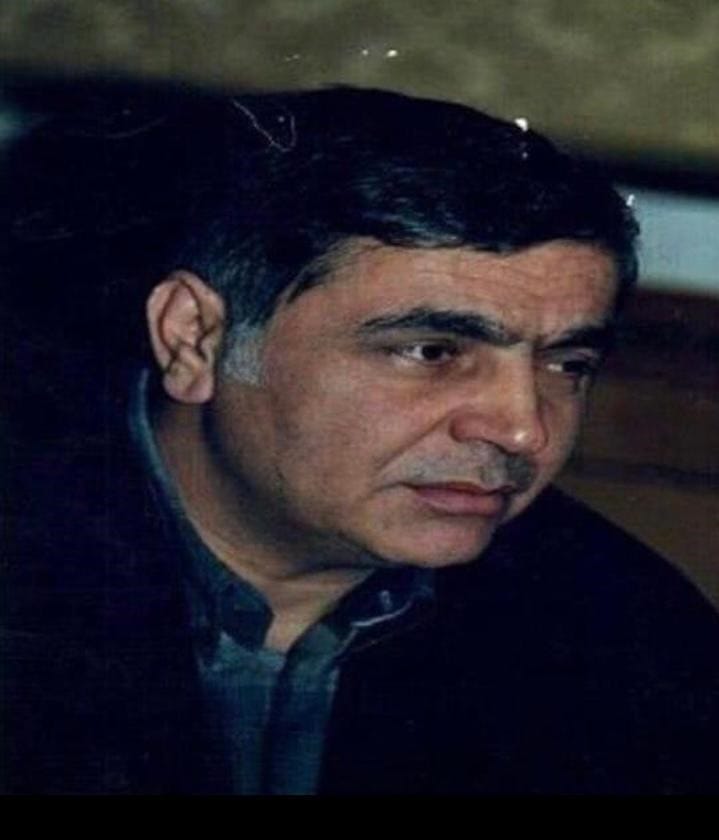
Born in Iğdır in 1954. Father's name is Ali Hüseyin, mother's name is Safiye. Ali Asker Aşırım is a graduate of Erzurum Atatürk University, Faculty of Agriculture. He was elected Mayor from the True Path Party in the local elections on March 27, 1994. Ali Asker Aşırım, who continued his life in Ankara after his mayoralty, passed away on October 31, 2008, due to an illness.
NURETTİN ARAS
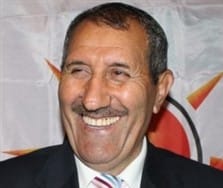
Born in Iğdır on March 6, 1954. Father's name is Hudaverdi, mother's name is Gülü. He completed his primary, middle, and high school education in Iğdır. After high school, he went to Germany and received language training at the Goethe Institute. Then he continued at Erlangen University Sports Academy. He graduated from Istanbul University, Faculty of Letters, Department of Geography. In 1980, he was appointed as a Geography teacher in Iğdır.
Aras, who won the Iğdır Mayoralty twice in a row from the MHP in the 1999 and 2004 elections, was unsuccessful in the 2009 Local Elections when he joined the AK Party. In the 2011 Turkish General Elections, he was nominated as the AK Party's 2nd-row parliamentary candidate from Iğdır and lost. Subsequently, in the November 1, 2015 elections, he became the 1st-row candidate from the Justice and Development Party and entered parliament as a deputy from Iğdır.
Nurettin Aras is a member of the Interior Commission, the Turkey-Azerbaijan Friendship Group, and the Turkey-Iraq Friendship Group. Aras, who speaks intermediate German, is married and has 4 children.
MURAT YİKİT
Born in Aralık district of Iğdır province in 1979. After completing his primary and secondary education in Doğubayazıt, Çorum, and Ağrı provinces, he completed his high school education in Aralık district, at Aralık High School.
In 1996, he began his higher education at Dokuz Eylül University Faculty of Law. He graduated from the same faculty in 2001. In 2003, he started his profession as a freelance lawyer in Iğdır.
He served as the founding provincial chairman and congress provincial chairman of the Democratic Society Party (DTP), established in 2005, for 3 consecutive years.
In later years, he served as a congress delegate and chairman of the disciplinary board in the Peace and Democracy Party (BDP). In the elections held in 2014, he was elected mayor of Iğdır from the BDP.
Murat Yikit is married and has one child.
HÜSEYİN MALK
Hüseyin Malk was born in Iğdır in 1962. He completed his primary, middle, and high school education in Iğdır. Malk, who dropped out of university in his second year, was first elected as a HADEP Iğdır Municipal Council Member in the 1999 local elections.
He served as his party's group spokesperson for five years. He actively participated in the 2002, 2004, 2007, and 2011 local and general elections for the party he belonged to. In the 2009 local elections, he was elected as an Iğdır Municipal Council Member from the DTP, the party he belonged to.
Following the arrest of Mehmet Nuri Güneş, who was elected Mayor in the 2009 local elections, on January 21, 2010, he was appointed acting mayor on February 1, 2010.
Hüseyin Malk, who served as acting mayor until October 11, 2013, was appointed mayor in his own right by election in the municipal council on October 11, 2013. Malk, who worked as a trade manager in various fields in Iğdır for 25 years, is married and has 3 children.
MEHMET NURİ GÜNEŞ
Born in Iğdır in 1953, Mehmet Nuri actively served in HEP, DEP, ÖZDEP, HADEP, and DEHAP, respectively. Mehmet Nuri Güneş, who was a founding member and congress delegate in the DTP, received enough votes to be elected as a deputy three times in the elections held between 1995-2002, but he could not enter parliament because the party he belonged to failed to pass the election threshold in those elections.
He was successful in the 2009 Local Elections, running from the DTP, and was elected mayor of Iğdır. Subsequently, Mehmet Nuri Güneş, who later joined the BDP, was detained as part of the gendarmerie's KCK operation on January 21, 2010. The 8-year and 9-month prison sentence given by the Erzurum 2nd High Criminal Court was approved by the Court of Cassation on October 7, 2013, ending his mayoral term.
Mehmet Nuri Güneş was elected Mayor of Iğdır from the DEM Party in the March 31, 2024 Local Elections. He is married and has three children.
***
CONCLUSION AND MY RECOMMENDATIONS (MÜCAHİT ÖZDEN HUN):
NAMES WHO SERVED AS IĞDIR MAYOR BY APPOINTMENT BETWEEN 1920-38 (My recommendation is to prepare a plaque containing the names below and hang it on the honor wall of the mayoralty. Since district governors often also assumed the duty of mayor between 1920-38, it is unfortunately not possible to accurately provide the start and end dates of the terms of office of the valuable individuals I have listed below. These names are not my personal opinion but the living collective memory of our Iğdır.)
- İbrahim Ağa (Yiğit) (Son of Ali Mirze Bey)
- Pasha Bey (Ekinci)
- Hanlar Bey (Öcal)
- Muhtar Bey (Aydın)
- Ali Rıza Bey (Ataman)
MAYORS ELECTED BY DIRECT POPULAR VOTE OR MUNICIPAL COUNCIL VOTE BETWEEN 1938-2024 (My recommendation is to hang the names below with their pictures in order on the honor wall of the mayoralty)
- Osman Ataman (1938-1942 / 1942-1946)
- Rıza Yalçın (1946-1950)
- (Mir) Ali Ural (1950-54 / 1957-1960)
- Fazıl Baykal (1955-1957)
- Hüseyin Akbulut (1963-1968) / (1968-1971) / (1973-1978) / (1978-1980)
- Mecit Hun (December 1973-March 1974) Municipal Council Election
- Cemalettin Güneş (March 1974-July 1974) Municipal Council Election
- Orhan Ağırkaya (1984-89)
- Ali Ağrı (1989-1994)
- Ali Asker Aşırım (1994-1999)
- Nurettin Aras (1999-2009)
- Mehmet Nuri Güneş (2009-2013) / (2024-Present)
- Hüseyin Malk (2013-2014) Municipal Council Election
- Murat Yikit (2014-2019)
- Yaşar Akkuş (2019-2024)