Hurç Cemile
This article tells the tragic story of Hurç Cemile, a young girl who survived the Ağrı Dağı Rebellion by living with bears, and her eventual return to human society in Iğdır.

Dear Readers,
(NOTE: This article was previously published, but I am re-publishing it at the request of readers.)
“Hurç” is a Kurdish word. It means “bear.” Needless to say, Cemile is a female name. In this case, the Turkish equivalent of the title is “Bear Cemile.” This name might not mean much to you at first. Is it an insult, or a folk idiom used to describe a hairy woman like a bear? You might consider many possibilities, but unfortunately, as you will see only when you read the article, none of your assumptions will be correct.
I first heard the name “Hurç Cemile” in 2000 from my late Aunt Gurci (Selçuk), who was 90 years old, during an interview for my book “Iğdır Sevdası” (Love of Iğdır). She had recounted what happened in detail. As she continued speaking, she would occasionally succumb to an indescribable pain and emotion that wrenched her heart, and with difficulty, she would try to wipe away a few accumulated tears from her dry, faded eyes with the hem of her dress, without letting me notice.
In the following days, when “Hurç Cemile” came up during my interview with the late Turgut Sungar in Ankara, I realized that the story was not only a much-discussed topic among tribes but also in Iğdır of a bygone era. When I returned to Iğdır, I gathered information from the elderly and learned a great deal about Hurç Cemile.
GURCİ SELÇUK’S ACCOUNT
Gurci Selçuk
It was the summer of 1930. The Ağrı Dağı Rebellion was ongoing. The Turkish Army surrounded Mount Ağrı on all sides. Among the fighters on Mount Ağrı were over a thousand civilians. When the soldiers attacked, the fighters broke through the encirclement and crossed into Iran, but the women, children, and elderly civilians they left behind were not so lucky. General Salih (Omurtak) Pasha’s order was clear: “Not a single living thing shall remain on the mountain! If necessary, do not waste bullets, finish them off with bayonets!”
The soldiers obeyed the order flawlessly. The slopes of Mount Ağrı were covered with massacred civilians. There was no need even to dig graves. The dead bodies were left in the open field for wild animals.
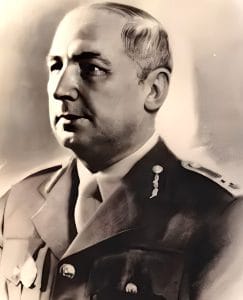
General Salih (Omurtak) Pasha
When evening fell, wolves and bears emerged from their hiding places. A female bear took with her a one-year-old girl whose mother had been killed, and who was hiding among the rocks out of fear. She climbed to a cave inaccessible to soldiers and left the little girl among her own cubs.
As time passed, the little girl grew up imitating the bears. She ate whatever they ate. She sat and stood like them, and her voice resembled theirs. She was stark naked. Since Mount Ağrı and its surroundings were declared a forbidden zone (1930-1953), there were no people around. Wild nature began to reign. The wild girl walked on all fours like bears, and when necessary, stood up on two legs to peer into the distance. She was accustomed to eating raw meat. She had a deep, roaring voice like a bear.
The Girl Who Grew Up With Wild Animals
When the Democratic Party came to power, the ban on the Ağrı Dağı Region was lifted (1953). Some of the Gêloî tribe, who had settled in villages like Karakuyu, Taşlıca, and Aliköçek, returned to their ancestral villages at the foot of Mount Ağrı: Adetli, Karahacılı, Kolukent, and Korhan. In short, Mount Ağrı was reunited with humankind after 23 years.
The Adetli, Karahacılı, Hıdırlı region was entirely covered with human-height reeds. It was home to all kinds of wild animals, especially wild boars. Many villagers who returned to their villages would later die in wild boar attacks in subsequent years. Snakes and scorpions had already made their homes in the crumbling village houses. Korhan was full of deer herds. Bears and wolves reigned on Mount Ağrı.
It was not easy for the new villagers to adapt to the wild nature that had taken root on Mount Ağrı. One day, shepherds grazing their sheep flocks in Korhan, never without their weapons, saw a human-like creature on the hill. It resembled neither a bear nor a wolf... They did not want to open fire and kill it. Whenever they led the flock towards the hill, the wild-looking, stark naked humanoid creature watched them with curiosity. Eight shepherds were grazing a giant flock. Since the surroundings were full of wolves, there were also many dogs. They decided to set a trap and catch this wild animal (!).
One day, the wild-human reappeared on the rocks. The dogs attacked. Sounds of struggle and shouts were heard from afar. The shepherds followed the dogs and climbed the hill. The wild creature was throwing the dogs as it caught them, fighting them like a bear. The eight shepherds slowly approached the wild creature. They fired bullets into the air to scare it. They all jumped on it together and tied its hands in front with a rope. And what did they see? There was a woman in front of them! The wild-human roared incessantly, its voice echoing in the rocks. The wild woman struggled to free herself, but she was caught now, and escape was impossible.
The shepherds took the wild woman to the flock. They tied her feet so she wouldn't escape. They offered her bread, but she didn't eat it. They offered her water in a zinc bowl; she only dipped her tongue in and tried to drink like a dog. She didn't know how to drink water like humans. The shepherds tried to solve the mystery of the incident. Who was this creature, what was it, why was it living alone here?
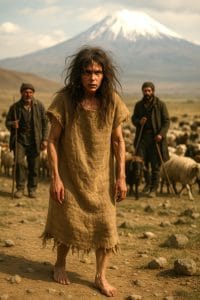
Hurç Cemile
When the shepherds cut a lamb and chopped its meat, the wild woman groaned as if indicating her hunger, asking for meat. A shepherd handed a piece of raw meat to the wild woman. The wild woman ate the meat with appetite. It was clear she was hungry. Soon, the shepherds began to understand what the wild woman wanted from her tone of voice. The wild woman softened in response to the mercy shown. The dogs also got used to her. She no longer saw anyone as an enemy. The shepherds also untied the rope on her feet so as not to torment her. The woman moved away a little, relieved herself, and returned to sit at the foot of the rock.
One of the shepherds was a religious scholar who had received madrasa education. He sat down for prayer. He opened his hands and prayed to Allah. “Oh Allah! Help this helpless servant who lives with us! Do not withhold your wisdom and blessings from her!”
The religious scholar said that the wild woman being naked was a sin. First, they tried to cover her private parts with a lambskin. The wild woman threw off the lambskin every time. The shepherds, at the insistence of the religious scholar, repeatedly did the same thing, but the wild woman also rejected the lambskin in the same way. One of the shepherds had an idea. He brought one of the empty sacks (made of linen) they had. He made holes in the closed side of the sack. They forced the wild woman's head through the hole in the sack, and her arms out through the holes opened on the sides. The wild woman resisted, trying to tear the sack, but she was also exhausted. She accepted the clothing given to her. She fell into a deep sleep at the foot of the rock. They tied her feet again at midnight so she wouldn't escape.
The Hoca untied the rope on the wild woman's feet and sat beside her. He recited a few surahs from the Quran. He raised his hands to the sky and pleaded with Allah:
“Xwedê, ez mirovekî reben im. Comerdiya û qenciya xwe ji wî afirandî xwe ra eyanbike!” (Oh Allah! I am a poor human. Show your generosity and kindness to this creature!)
“Heger azadî dila wî ye bila dîsa here ser çiyayên!” (If freedom is in her heart, let her return to the mountains again!)
The next morning, when they woke up, they saw the wild woman sitting at the foot of the rock. If she had wanted to, she could have run away, but she had chosen to stay with the shepherds. Her fearful eyes had softened, and she looked around like a deaf and mute person. When the flock moved, she followed them from 20-30 meters away. The shepherds were generous. They found a bowl from which she could comfortably drink water and milk. There was always meat to fill her stomach. In this way, they spent the entire summer together on the mountain. Autumn was now making itself felt. Snow would fall soon.
The shepherds began to make their way towards the Iğdır plain to take the flock to the village. The wild woman also followed them. The flock began to travel from one end of the Iğdır city center to the other. On such days, traffic would stop, and shopkeepers would watch the flock with curiosity and admiration. In those years, traffic was nothing more than a few phaetons and horse-drawn carts anyway. The flock exited the other end of the city and headed towards Karakuyu village. When they looked back, they couldn't see the wild woman. Two shepherds returned to the city; they searched everywhere but couldn't find the wild woman. They returned to the village in despair.
Some ignorant youths, seeing this creature walking on all fours, half-naked and dressed in a sack, managed to put a leash around the wild woman's neck and paraded her from neighborhood to neighborhood, announcing, “Bear woman! Bear woman! 25 kuruş to see her!” Later, they brought her back to the city center. The young man holding the leash dragged the wild woman behind him, pulling her amidst the strange glances of the shopkeepers. No one intervened. They couldn't make sense of what was happening.
The youths brought the wild woman in front of the Municipality Building. The crowd surrounded the wild woman; some tried to touch her, some kicked her, some imitated her. Mayor Mir Ali Ural, seeing what was happening from his office, quickly came down. He dispersed the crowd. He took the leash from the youths' hands and removed it from the wild woman's neck.
One of the shepherds, upon hearing the news of the wild woman's whereabouts, returned to Iğdır, appeared before the Mayor, and recounted what had happened. Mir Ali Ural was a worldly, experienced man. He was a humanist who wouldn't harm an ant. He reassured the shepherd:
“She is now under the protection of the Municipality. Don't worry at all! She is our child.”
Mir Ali Ural had a small wooden hut built in a corner of the Municipality garden. As the shepherd had said, she was given raw meat every day, and her water was placed in a deep bowl in front of her.
Days passed like this for a while. Every morning, when Mir Ali Ural came to work, he would first stop by the hut and jokingly ask: “Lady Bear! When will you consult with us?”
Loving words were effective. The wild woman's communication with people increased; she tried to speak with them by making strange sounds.
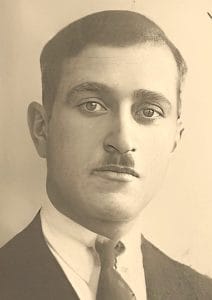
Iğdır Mayor Mir Ali Ural
One day, as Mir Ali Ural was about to enter the Municipality building, he saw one of the municipal police officers picking up a stone and threatening the wild woman. He secretly approached the officer from behind. He grabbed the stone in his hand and spoke harshly:
“If I see you scaring this poor creature again, I will hang you upside down by your feet from one of these elm trees! I'm not joking!”
The entire town learned of Mir Ali Ural's protection and compassion. The wild woman also slowly emerged from the hut and began to wander the streets. Some offered her watermelon, some showed their friendship with a smile. The smell of meat reached her nose. She stopped in front of a butcher shop. The butcher was Kurdish. He gave her meat until she was full. The wild woman made it a habit to go to the same butcher every day. The butcher tried to talk to her. He taught her the phrase “Ez bircîme! Goşt!” (I'm hungry! Meat!). Whenever she was hungry, she would go to the butcher and say in a strange tone, “Ez bircîme! Goşt! Goşt!”, and the butcher would put the meat he had set aside for her in a bowl in front of her.
Then one day, a man from one of the mountain villages appeared. He came before Mir Ali Ural. With tears in his eyes, he recounted what had happened. Mir Ali Ural listened to the villager with great respect. The villager explained:
“Mr. Mayor, the events are long. I'm sorry to tire you. This wild woman is my sister. Her name is Cemile.”
Mir Ali Ural became curious about the villager's definitive statement:
“My friend, tell me everything from the beginning so I can understand it well.”
“My name is Hasan. I am a member of the Elemıho Tribe. It was the last days of the Ağrı Dağı Rebellion. The soldiers unexpectedly attacked from all sides. The men resisted for a few days with their weapons. Airplanes were coming from everywhere, bombing and leaving. No more food or weapon aid was coming from Iran. The lives of the fighters and civilians were becoming increasingly difficult. One day, the fighters held an emergency meeting. I was a young man of 17-18. One of the fighters spoke, ‘Let's break through the front, or they will either kill us all or capture us.’”
Bıro Heski Telli strongly objected to this statement:
“We will resist until death! There are 1500-2000 civilians here. Will we hand them over to the soldiers? Let them die by my sword, by my bullet, rather than by the Turkish soldier's bayonet and bullet. I will kill them with my own hands and then go to Iran, but I will return and take my revenge.”
Two different views had emerged. There was no time to lose. Bıro Heskî Telli, as if mad, began to slaughter his own relatives with the sword he held. They stopped him with difficulty.
“Soldiers do not touch civilians. They are coming to kill us. If we also leave the region, there will be no problem.”
Bıro Heski Telli was convinced by this explanation.
İhsan Nuri Pasha and his wife Yaşar Hanım had already sought refuge in Iran months earlier. Immediately afterwards, Sheikh Abdülkadir had also crossed into Iran with his fighters. When two important figures of the leadership cadre disappeared, Bıro Heskî Telli took command. The remaining fighters were able to resist for a few more weeks. The soldiers were now very close. One evening, Bıro Heski Telli gathered his company commanders. He lined them all up in a single row.
“We are completely surrounded on all sides. We must cross into Iran tonight, or tomorrow we will all die. Now tell me which company will go first, break through the encirclement, and we will follow them?”
There was no sound from the company commanders. The silence lasted a long time. Finally, Ferzende stepped forward. “I will break through the encirclement with my company (60 people). Follow us!”
I was a fighter in Nadir Bey's company, the son of Kör Hüseyin Pasha. That evening, all the fighters crossed into Iran without being caught, wounded, or killed. However, on this side, we had left thousands of civilians to their fate alone. Among them were my mother and my one-year-old little sister.
A few days later, we heard that the soldiers had captured Mount Ağrı and massacred all civilians. I had to cross the border and find my mother and sister, no matter what. I passed through secret paths and reached the “hill of death.” Everywhere was filled with corpses. I looked at every woman's face, trying to see if it was my mother. Finally, I found my mother. Wild animals had torn her stomach. Her throat had been cut with a bayonet. I recognized my mother by her clothes and the tattoo on her face. I searched for my sister Cemile, but I could find neither her clothes nor her body. I dragged my mother to the foot of a rock. I covered her with piles of stones. Since I was afraid of being caught, I couldn't stay long and returned to Iran.
Recently, while chatting in the village, someone said there was a wild woman in the Iğdır Municipality garden. They had found her on Mount Ağrı. I involuntarily came to Iğdır. I approached the wild woman. As soon as I saw her little finger, I knew she was my sister Cemile. Once, when my mother was grinding wheat in a hand mill, Cemile's little finger got caught between the two rotating stones and was half-cut.”
Mir Ali Ural raised his hands to the sky and prayed, muttering something. His eyes were watering, but he didn't want to show that he was crying. They went to the wild woman's hut together. Mir Ali Ural, in his sweet voice, said, “Oh Cemile Hanım! Look, your brother has come!”
The villager approached his sister, spoke to her, but was very saddened when he learned she didn't know the language. He pleaded with the Mayor, saying he wanted to take his sister to the village with him. Mir Ali Ural accepted his request with great affection. He reached into his wallet. He pressed some money into the villager's hand: “You'll need it! If you have any problems, come to me!”
The villager respectfully kissed Mir Ali Ural's hand, took his sister Cemile by the arm, and they left the garden together. The people of Iğdır, learning the story, empathized; their hearts were filled with an incomprehensible feeling of pity because human tragedy had no ethnic origin or sect.
The villager bought clothes for his sister Cemile and wanted her to wear shoes. Cemile resisted everything and opposed it. Walking barefoot was more natural for her.
They rode in a tractor wagon for quite a distance. Then they got off and started walking. Soon they reached the village. People surrounded them. Since the villagers knew what had happened, what stood before them was not a wild woman, but the very embodiment of a failed rebellion. They cursed the so-called fighters who, during the rebellion, did not think of or protect civilians, leaving them to their fate and fleeing.
“If they had died fighting, they would have been greater heroes for us. At least they would have left a spiritual epic for the next generation. Cemile's sin is not on the Turkish army, but on the shoulders of the fleeing Kurdish fighters. Not a single company leader was wounded, killed, or captured. They fled without resisting. This is a disgrace! Those who calculate to save themselves when cornered should not pursue a cause.”
Cemile stayed in the village for a while. This village on the mountaintop reminded her of her old days and loneliness, and she was bored. She felt more comfortable and free among the people in the city. One midnight, without anyone noticing, she set off towards Iğdır, whose faint lights were visible from a great distance. She came and entered her hut in front of the Municipality.
The next day, the municipal police informed the Mayor of the situation. Mir Ali Ural came to the front of the hut: “Oh Cemile, welcome! You have a place on our heads and eyes!”
Cemile, in this sweet tone of voice, tried to love humankind and embrace life for their love and trust.
Mir Ali Ural tried to educate, civilize, and socialize poor Cemile for a full year. Despite all his insistence, he could not fully tame Cemile. She did not sleep in a bed, but on the floor. Whether it was summer or winter, she refused to use pillows or blankets. Her speech consisted of a few sentences.
Years passed. It was 1959. One morning, as Mir Ali Ural was going to the Municipality, one of the municipal police officers approached him, tearfully: “Hurç Cemile is dead!” Mir Ali Ural's heart also ached. Hurç Cemile was buried in the İdirmava cemetery. A large stone was placed at her head, but there was no inscription on it.
TURGUT SUNGAR’S ACCOUNT
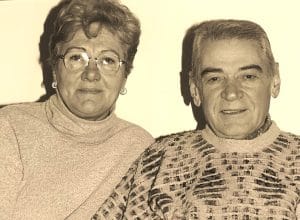
Turgut Sungar and his wife Ayten Sungar
“Hurç Cemile” – somehow, during the years of the Ağrı Dağı Rebellion, a little girl had taken refuge alone in a cave. Due to ongoing conflicts and other fears, the little girl had apparently been trapped in this cave for many years. This girl, named Cemile, according to one rumor, had grown up under the protection of the bears on the mountain. Years had passed.
I was a young man of 18-20. One day, shepherds caught a semi-wild woman on the mountain and brought her to Iğdır. This woman was none other than this child named Cemile. Half-naked Cemile, with her demeanor and behavior, acted just like a bear, walking and sitting like a bear. The news that the “bear woman” had been caught spread rapidly in the district.
Every day, people flocked to the municipality garden, watching Cemile with curious eyes. Cemile wore a huge sack as clothing. Her head and arms protruded from the holes cut in it; Cemile would spend the night in the park in this state without getting cold.
When Cemile was hungry, she would go in front of butcher shops, extend a watermelon rind she used as a bowl, and plead with the shopkeepers, “Ez birçîme. Goşt, goşt!” (I'm hungry! Meat, meat!). She would eat the raw meat given to her. One day, a villager said he was Cemile's brother; he took Cemile with him to one of the mountain villages. However, Cemile escaped from there and returned to Iğdır.