Humanism, Karl Marx, Numan Efendi
This essay explores the unexpected connections between Karl Marx and Numan Efendi, arguing that both thinkers, despite their different paths, were rooted in humanist ideals, and examines the historical relationship between Kurds and Socialism.

HUMANISM, KARL MARX, NUMAN EFENDİ
Dear readers!
I cannot write short. This is a sickness of mine. There is no cure. I sincerely recommend that you overlook this shortcoming and set aside any boredom the length of this article might cause, and read this important piece to the end.
In this article, I will try to establish a connection between Karl Marx and Numan Efendi. Many of you may be hearing the name Numan Efendi for the first time. It doesn't matter! You will get to know him as you read.
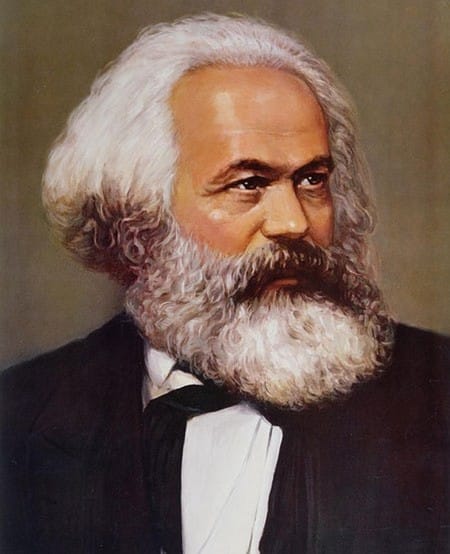
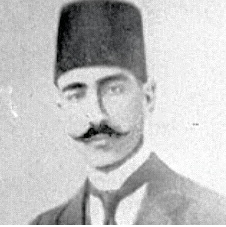
At first glance, the joint consideration of these two seemingly unrelated and distant figures might appear surprising, even absurd. However, as you read my article, we will see together that both thinkers and statesmen drew from the same root. The only difference is that while Karl Marx built a socialist thought system based on humanist ideas, Numan Efendi, despite carrying humanist sentiment with the same intensity in his heart, did not cross paths with Socialism and passed away before having the chance to know it. This was not his fault. All Kurdish intellectuals of his era had turned their backs on Socialism. Otherwise, everything could have developed along a very different trajectory.
SIMILARITIES BETWEEN KARL MARX AND NUMAN EFENDİ
Two different eras, two different worldviews, two different personalities... But the three sentences they converge on and articulate are the same:
- I hate all gods. (God remains silent while oppression reigns.)
- If your heart does not produce love, you are not a successful producer (a cause devoid of human love cannot succeed).
- Workers (people) of the world, unite! You have nothing to lose but your chains (hatred and animosity)!
The words in parentheses belong to Numan Efendi. The similarity is striking. The question might arise: did Numan Efendi read Karl Marx and imitate him? We will see whether this is true shortly, but first, it is useful to take a look at the relationship between Kurds and Socialism. But before delving into this detail, I would like to provide a brief overview of these two important historical figures.
KARL MARX
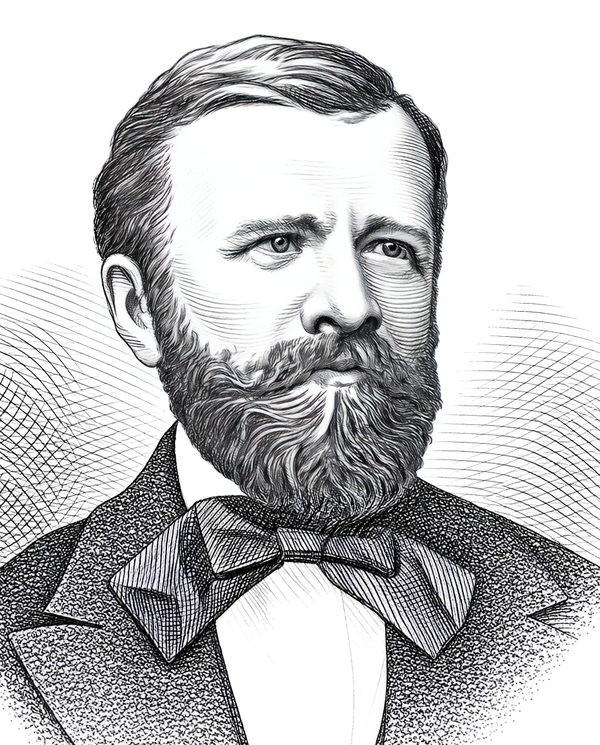
Karl Marx was born in Germany on May 5, 1818. He was the child of a Jewish family. His father was a lawyer. Karl Marx studied Philosophy and Literature at the University of Bonn. His grades dropped after he got involved in fights. His father then sent him to the more disciplined University of Berlin. He enrolled in the Faculty of Law but his area of interest was Philosophy. He particularly worked on the teachings of the famous German philosopher Hegel. In his doctoral thesis, he tried to prove the superiority of knowledge over theology, i.e., religion. He later settled in Cologne. He embarked on a career in journalism. His newspaper was shut down when he criticized state institutions in his writings. He got married. He settled in Paris. In 1848, unrest broke out among the poor people living in villages and cities across Europe due to industrialization and unjust exploitation. In the same year, Karl Marx and his friend Engels wrote the book titled "The Communist Manifesto." They argued that the salvation of humanity was possible by abolishing private property through a revolution and establishing a classless and stateless social order. The 1848 revolution was sweeping across Europe. Marx's ideas found resonance in these conditions and spread rapidly. When he was exiled from France, he was first exiled to Belgium and then to London, where he lived until his death. Marx drew from three different sources in forming his philosophical thought: Hegelian dialectics, French utopian socialism, and English economics. Marx was fortunate. The books of all the figures of the Enlightenment were at his fingertips. He would put one down and pick up another. Moreover, ancient Greek thought had revived, creating an opportunity to build a bridge between humanity's two distant pasts. He wrote with a single purpose: a happier and freer humanity without borders, passports, religions, oppressors, and oppressed.
Marx is one of the most influential figures in human history. He is the founder of socialist and communist thought. He passed away on March 17, 1883.
NUMAN EFENDİ (DÜNDARZADE)
Thousands of books and information about Karl Marx are available. He himself wrote nearly 30 books, expressing his thoughts and philosophy as he wished. However, Numan Efendi was not so fortunate. His book studies and notes were either burned, destroyed, or lost due to neglect three times:
First, in 1914, when the Russian Army occupied the Bayezid Sanjak, they exiled Numan Efendi, who was the governor, to Siberia, and his notes and documents left behind were scattered.
Second, in 1926, due to the Law on the Exile of Aghas and Beys, his house in Iğdır was raided, his house and notes were burned, and he was exiled to Bursa.
Third, when he was murdered in Iğdır in 1930, his notes and writings were lost due to neglect when his Albanian wife left Iğdır. Since he used code names in the articles he sent to Kurdish newspapers and magazines, it became impossible to access written documents.
Dear readers, Numan Efendi was not only the most important, perhaps the sole, representative of Kurdish enlightenment and a humanist worldview in the Eastern Anatolia Region, but also within the Kurdish movement, which was undergoing upheaval and struggling for a nation-state in those years. For this reason, I have included Numan Efendi alongside the word HUMANISM in the title of my article.
Numan Efendi had a worldview that transcended tribes and nations. There was no animosity or discrimination against Turks, Armenians, French, etc., in his heart. He was not a fanatic and uncompromising Kurdish nationalist. He adopted a modest life, far from the air of an urban Kurdish intellectual. He had no aristocratic family, powerful tribe, or wealth to lean on.
Despite knowing seven languages and reading hundreds of books, he was humble and his heart was open to everyone. During his years as a lawyer, most of his clients were of Azerbaijani origin. He did not charge money from the poor and victims. He was a courageous intellectual who did not remain silent in the face of injustice. Since our information about this important Kurdish intellectual is limited in terms of books or written documents, I want to give a detailed account of his life story, which has been verbally transmitted from generation to generation. The information you will read in detail below has been meticulously prepared as a result of long research and one-on-one interviews. Let us not forget that the greatest philosopher of all time was Socrates, but he did not write a single sentence. His students wrote down his thoughts after his death, reviving Socrates. What I am doing is a similar endeavor. My aim is to bring to light a forgotten and lost value.
NUMAN EFENDİ'S FAMILY AND EDUCATION
At the end of the 19th century, the Gêloî tribe lived divided between Tsarist Russia and the Ottoman Empire. There was a significant Gêloî population in the Bayezid Province, which remained within Ottoman borders. However, the true backbone of the Gêloî tribe resided in Iğdır and its surrounding villages under Tsarist Russian rule. Legendary leaders like Mıhe Kazak and Ahmed Şemo governed the tribe.
A tradition has long been established in the Gêloî tribe. If a member of the Gêloî tribe had 12 sons, he was obliged to donate one of his children to a madrasa. When Gelo had 12 sons, he donated his son Ceco to a madrasa in the Bayezid Province, which was within Ottoman borders, as there was no madrasa under Russian administration. Ceco received a strict religious education. His son Yusuf also followed in his father's footsteps. He became famous in the region as Hoca Yusuf. He had a son in Erciş, where he was assigned, and named him Numan (1885).
Numan was a diligent student. He continued his schooling as a boarder at Erzurum High School (1903). According to my late aunt Gurci, Numan Efendi graduated from both Erzurum High School and the Faculty of Political Science with top honors (as a twist of fate, 40 years later, another member of the Gêloî tribe, my father Mecit Hun, also attended Erzurum High School as a boarder and graduated with top honors).
My late father never spoke a word about his past. I didn't even know he had graduated from Erzurum High School. After his death, when I returned from America and conducted research for a book, I learned that my father had published four different newspapers in the 1950s. I was very surprised! I went through the most difficult days of my life until I obtained those newspapers. Just like Mecit Hun, the late Numan Efendi was a modest and humanist person who did not talk much about his past or flaunt his achievements.
While studying at or after graduating from the Faculty of Political Science, Numan Efendi became closely involved with the Kurdish Teavun and Terakki Cemiyeti (Kurdish Aid and Progress Society), founded in 1908. However, the worldview of the Ulema and urban Kurds in Istanbul soon failed to satisfy Numan Efendi, and somewhat disappointed, he returned to Bayezid Province, taking on the role of deputy governor. He explained this decision to his family members as follows: "I want to serve my people, be close to them, and enlighten them."
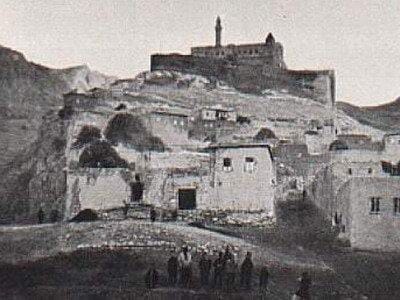
When World War I began, Numan Efendi was the Governor of Bayezid. He was captured by the Russians and exiled to Siberia (1915-1917). Numan Efendi, who was married to a prominent family from Bayezid, lost his seven children—four sons and three daughters—and his wife to Armenian committees in the same year.
NUMAN EFENDİ'S YEARS IN IĞDIR (1920-26 / 1928-30)
In the days following the 1917 revolution, Numan Efendi, who had escaped from his exile in Siberia, entered Anatolia via Syria after a arduous journey and, without delay, arrived in the Bayezid Sanjak. In 1920, he became the Deputy Governor of Bayezid. When Iğdır was included within the borders of the Grand National Assembly on November 14, 1920, he was appointed as interim District Governor of Iğdır, his knowledge of Russian being an advantage. From the very first day, Numan Efendi earned the respect and affection of the tribes and people in the region. He held a position above tribes and factions. He developed a special bond of friendship with Ahmed Şemo, the leader of the Gêloî tribe, and Kerem Bey from the Güneş family.
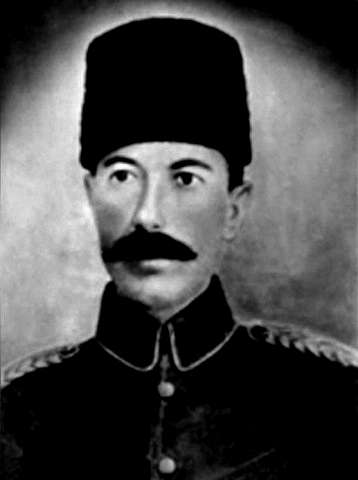
Meanwhile, he was the Iğdır representative of the secret Kurdish organization named Azadi (Freedom), founded and chaired by Colonel Cibranlı Halit Bey, who was serving in Erzurum. He secretly delivered reports he prepared regarding the general situation of the tribes in the Iğdır and Bayezid regions to Colonel Cibranlı Halit Bey. These reports played a decisive role in the Azadi movement's planning of the Kurdish rebellion. However, when Cibranlı Halit Bey was captured, the reports were destroyed. Numan Efendi was not arrested because he used a code name.
Ali Mirze Beyoğlu Hacı İsa (Yiğit) Bey recounts the following incident about how he delivered his special and secret couriers to Erzurum:
"I was going to Erzurum for some business. Numan Efendi, who was then the Land Registry Director in Iğdır, gave me a secret letter to deliver to Colonel Cibranlı Halit Bey. I hid this letter in my drawstring underwear against all dangers. When I arrived in Erzurum, I appeared before Colonel Cibranlı Halit Bey.
"I brought you a letter from Numan Efendi."
He took me to his private room and closed the door. Then, as if he had guessed where I had hidden the letter, he pointed to the next room and said, "Go and get the letter!" His foresight and sensitive demeanor deeply impressed me. After taking the letter, he looked at me: 'Numan Efendi is one of a kind in Kurdistan. Take care of him!'."
Shortly after this incident, Cibranlı Halit Bey was captured and executed.
Numan Efendi, who served as interim District Governor in Iğdır between 1920-23, became the Director of the Iğdır Land Registry Office when the permanent District Governor arrived with the declaration of the Republic in 1923. While continuing his duty as Land Registry Director, he also acted as deputy District Governor when necessary. However, one day an unfortunate event occurred; with the Law on the Exile of Aghas and Beys enacted in 1926, he was exiled to Bursa.
The exile unfolded as follows: One day, Numan Efendi went to visit the District Governor, whom he held in high regard. Since the District Governor was on inspection, he was asked to wait in his office. Numan Efendi saw a document on the desk marked "Top Secret." Curious, he read the document. It contained an order for the immediate and sudden arrest of eleven prominent Kurdish and Azerbaijani figures. Numan Efendi saw his own name on the list. He panicked. He immediately went home. The first thing that came to his mind was to send a message to Ahmed Şemo, whose name he had seen on the list. While preparing for his escape, he also wrote a letter to be delivered to Ahmed Şemo:

"Your name and Ali Mirze Bey's name are on the list of those to be arrested. Ali Mirze Bey should go to Iran, but you must not go to Iran! Hide for a while in Kırrê (on the slopes of Mount Ağrı). Gendarmerie Commander Captain Nuri (Berköz), whom I knew from my years as District Governor, is a close friend of mine. He cannot help any of you now, but after things calm down, give him the second letter I sent you; it will be helpful. I hope I will also go to Mount Ağrı, to Bıro Heski Telli."
As Numan Efendi was wondering how to deliver this letter to Ahmed Şemo, Hesene Tozo, a prominent figure from Kızılbaşoğlu who had decided to settle in the city center of Iğdır, came to visit him. Numan Efendi quickly summarized the situation:
"Inform Ali Mirze Bey and Ali Mahmut Bey that soldiers will soon come and arrest them. They should flee to Iran. And give these letters to Ahmed Şemo!"
Soon after, gendarmes cornered and arrested Numan Efendi at his home, exiling him to Bursa. In Bursa, he married Melahat Hanım, who was of Albanian origin. Melahat Hanım had an adult daughter named Semiha. This time, the state exiled Numan Efendi and his family to Balıkesir. Numan Efendi escaped from his place of exile and reached Mount Ağrı on foot. After the amnesty law enacted in 1928, he returned to Iğdır and began working as a legal representative (there were no lawyers in those years). In a sense, Numan Efendi was Iğdır's first District Governor, first Land Registry Director, and first Lawyer. He was murdered in the autumn of 1930. For readers curious about the details of this murder, I recommend reading the link (http://hunacademy.com/igdir-ve-agri-dagi-isyani-8/).
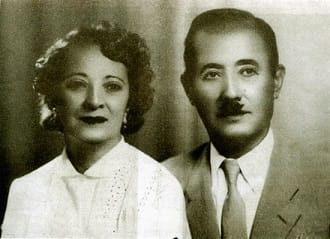
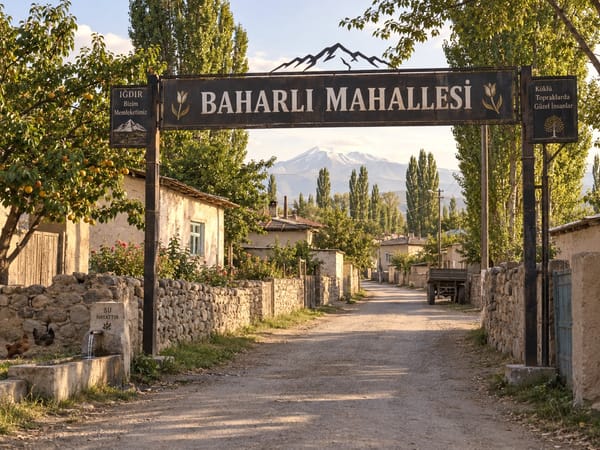
During the Ağrı Mountain Rebellion, Numan Efendi and İhsan Nuri Pasha, the leader of the rebellion, were in constant communication through special couriers. Numan Efendi was, in a sense, the voice of Mount Ağrı to the world. He was a Kurdish intellectual rarely seen among Kurds. He had modern ideas. He had a humanist spirit. He held a position above tribes and factions. He made special efforts to encourage tribes to settle in the city and send their children to school. After the Ağrı Mountain Rebellion, he personally took Ahmed Şemo's two sons, who had left Adetli village and settled in Baharlı neighborhood in Iğdır, to school and registered them (September 1930).
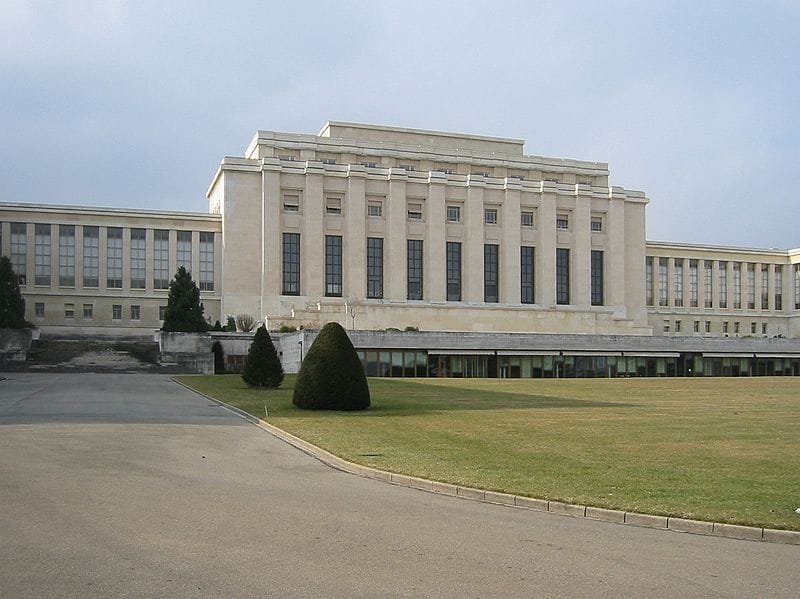
Through his impressive letters, he tried to make the world aware of the rebels' struggle and problems. His letters to the League of Nations (Cemiyet-i Akvam), an organization similar to today's United Nations, were effective, leading to the establishment of a camp affiliated with the League of Nations on the Iranian side to protect civilians fleeing massacres or struggling with hunger and disease during the most difficult days of the rebellion. The League of Nations brought together children whose families had been torn apart and sent them as refugees to member countries. I want to tell an anecdote. In the 1970s, the Malaysian Prime Minister, who visited Turkey, stated that his mother was a refugee girl who had fled the Ağrı Mountain Rebellion.
Numan Efendi tried to persuade the rebels to resolve the problems by negotiating with the state, but İhsan Nuri Pasha's rigid stance thwarted his efforts. Numan Efendi resided permanently in Iğdır. Hacı Abdullah Çoktin, son of Bıro Heski Telli, states:
"Numan Efendi was our kirve (a type of spiritual kinship). My father loved him very much. They were constantly in communication, but Numan Efendi never visited the camp on the mountain."
Numan Efendi was the first child of the Gêloî tribe to study in the Ottoman Empire. Therefore, when he came to Iğdır, he was received with great respect and affection by the tribal leader Ahmed Şemo. Ahmed Şemo's daughter, the late Gurci Selçuk, states in her memoirs:
"My father loved Numan Efendi very much. Every time he came to our house, he would be filled with love, welcome him with respect, and honor him with all he had. My father used to say about Numan Efendi: 'When he enters, my heart fills with pleasant feelings, as if I smell flowers.'"
Numan Efendi, in exile, found a way to escape from Balıkesir and, after a long journey on foot, reached the rebels on Mount Ağrı. He felt safe and at peace. The Governor of Bayezid, Lord İbrahim (the word 'Lord' was used in those years to mean 'Sir' under the influence of French culture), learned that Numan Efendi was on Mount Ağrı and sent him a letter with the help of the PTT Director. His aim was to persuade Numan Efendi to surrender. Numan Efendi replied to this letter in his own style:
TO LORD İBRAHİM BEY, GOVERNOR OF BAYEZİD:
DEAR SIR:
I received your letter dated February 21, 1928, sent through Mam (code name) from Gelê village. I forwarded the letter and telegram sent to Mehmet Bey to him. He will be here within two days. If he writes a reply, I will deliver it to you.
You write that you are making efforts for my surrender and pardon. I assume your conscience compelled you to make these efforts, and you were persistent in this regard. However, I do not recall making any application for my surrender or pardon.
In my opinion, prisoners consisting of criminals and offenders request pardon. Those who have committed no crime have no need to surrender.
You, who are knowledgeable about all stages of my life, are a witness that I have done no harm to anyone since my youth and have served the state honestly.
While I had no crime other than loving my country, the government, without needing any investigation, along with thousands of innocent people like me, without being brought to justice; applying the same procedures as those applied to murderers and looters, took me from my home and exiled me to the West.
After me, they exiled my family, without pity for the children, to another city different from the one I was in in the West. They plundered my house, my animals, and my crops.
My family and I were deprived of all living conditions. I cannot express the pain, humiliation, poverty we experienced, and the treatment we received from the police, gendarmerie, and immigration offices in the places we were exiled to. And even today, when I remember them, my whole body trembles.
To this, I must add new methods that do not conform to the understanding of justice, which no country, no period in history, and not even anthropologists who have studied them, have encountered, and which were applied only to us.
As if all this were not enough, they forced us to read Turkish newspapers full of articles insulting and humiliating us. In these articles, all our national feelings, our nation, our honor, and our past were insulted every day; thus, they controlled our emotions.
An unbearable, difficult-to-live situation, both physically and morally, was imposed on us. In such a situation, I escaped from the place of exile and, with God's help, walked for 47 days, crossing the mountains of Kurdistan, and reached Ağrı.
When we were exiled, they made us, the poor, pay for everything, including the train and other motorized vehicle expenses of us and the gendarmes who took us.
My heart bleeds as I want to tell you about the horrific and tragic situations of thousands of women, young girls, and children who received no help on the roads, and the suffering of hundreds who died every day from hunger, poverty, and ill-treatment.
They were treated so savagely that even the fear of death, which is normally terrifying, seemed like a way out for these poor souls. Moreover, after all these torments I was forced to endure, and this treatment I received, at the arbitrary will of the government, despite having no crime or sin, yes, after all that has happened, it would be meaningless and unqualified behavior to come and surrender and ask for forgiveness.
If the government truly regrets the atrocities it has committed, then it should send all those exiled back to their homelands, pay the penalty for their plunder and theft. Those responsible for the mass executions should be punished, and the necessary steps should be taken without waiting for the victims of all these practices to apply for surrender and pardon.
After my country has been burned and destroyed and turned into a ruin, it makes no sense whether I live here or somewhere else. You promise me to return to a position suitable for my former official duties and to live in any city I wish, but you forget the law that stipulates the dismissal and subsequent exile of all Kurdish officials.
Apparently, this appointment is only temporary, and new exiles will follow immediately. Since I do not believe in the honesty and sincerity of the government, I will not advise anyone to go and surrender. Geradeli Lezgî Ağa, Halit Bey's nephew, along with his villagers and 20 people, trusting the government's word, went and surrendered to the Vilayet and were pardoned.
Where are they now?
Were they not all savagely murdered? After experiencing these things, how can I surrender and give others a chance? When we fall into the hands of the government, no one can save us. They will carry out the death sentence.
The Governor may be the most honest and trustworthy person in the world, but he cannot do anything outside the orders of his superiors. He will kill those who surrender, citing the inadequacy of his own authority.
This game will be played.
I will not return to Bayezid until I see millions of Kurds, whose groans I witnessed with my own eyes, suffering the civilization of the twentieth century, and other Kurds who were forced to flee from Western Anatolia to Iran, Syria, and Mesopotamia, return to their countries and reintegrate.
No power or person other than my conscience can deter me from this path. I extend my thanks to PTT Director Halil Bey. I request the acceptance of my friendship.
February 22, 1928
SIGNATURE: Dündarzade Numan Hulisi
Soon after, on May 9, 1928, the Government issued an amnesty. Those who had been exiled returned. Numan Efendi also descended from Mount Ağrı and settled in Iğdır. His wife Melahat and stepdaughter Semiha also came to Iğdır. Numan Efendi rejected the duties offered by the state. He began working as a legal representative.
In those years, since there were no law school graduates in Iğdır, those with sufficient legal knowledge could serve as legal representatives (temporary lawyers). Numan Efendi became Iğdır's first legal representative. His door was open to everyone. He tried to protect the rights of the victims as much as possible. This was already in his nature. After the Ağrı Mountain Rebellion, Iğdır slowly began to undergo a transformation. The most striking aspect was the sale of real estate vacated by Armenians through auction.
This process did not proceed innocently. Mafia-like groups became involved. They threatened auction participants and bought real estate cheaply. The most prominent of these mafia groups was Çobankereli İshak and his gang, of Azerbaijani origin. İshak initially supplied materials to the military in Ağrı. Over time, his attention turned to auctions held by the state for real estate sales. For example, when a house was put up for sale, İshak would spread the word, "I will enter this auction." No one, out of fear, would make a bid or participate in the auction. Thus, İshak would close on houses and shops at his desired price. One day, Numan Efendi defended an Azerbaijani client in court who had sought refuge with him, fearing İshak Bey's threats, and won the case. A feud arose between İshak Bey and him. İshak Bey openly threatened Numan Efendi with death in the city center.
Independent of all these events, another incident occurred on the same day. Aziz Gökbakan, originally from Ağrı, had opened a drapery and shoe store in Iğdır. The wife of an officer from the regiment in Iğdır told her female friends that she had been verbally harassed in Aziz Gökbakan's shop during a shopping trip. This claim was immediately heard by all the regiment's officers. The harassment of an officer's wife deeply upset her husband.
It was October 1930. The Ağrı Mountain Rebellion had just ended. The soldiers' approach to civilians was suspicious and harsh. The officer whose wife was harassed decided to take revenge. Aziz Gökbakan's house was identified, and two soldiers were assigned to fire at the windows and door of his house under the cover of darkness when Aziz Gökbakan arrived home, as a show of force.
The soldiers identified Aziz Gökbakan's house, lay in wait behind a wall by the roadside, and waited for Aziz Gökbakan to arrive home. Coincidentally, Numan Efendi was also a guest at Aziz Gökbakan's house that evening. Aziz Gökbakan had a gas lamp in his hand. As they slowly walked towards the house together on the dirt path beside the ditch, the soldiers opened fire, targeting Aziz Gökbakan. Unfortunately, one of the bullets struck Numan Efendi in the heart. Aziz Gökbakan threw himself into the ditch with the gas lamp in his hand. It became pitch dark. Aziz Gökbakan crawled through the ditch and reached home. The soldiers did not fully understand what had happened but left the scene.
When Numan Efendi was shot and fell to the ground, one of the first to rush to his aid was the late Sait Zor (father of İlhan Zor). He recounts that day as follows:
"When I arrived at the scene, Numan Efendi was lying on the ground. A person named Recep from Bayburt was holding Numan Efendi's head in his hands, trying to calm him. Numan Efendi was disturbed because Recep from Bayburt was intoxicated. When he saw me, he said, 'Sait, take me in your arms!' When I asked, 'Did you have any enemies?', he said, 'No! only İshak had threatened me in the city center today!'."
Numan Efendi passed away in Sait Zor's arms (October 1930).
İshak Bey is not responsible for Numan Efendi's death, but such a belief arose among the people. Ahmed Şemo and Kerem Bey (Güneş) prepared a hit squad. İshak Bey was killed in the city center of Ağrı. Ahmed Şemo and Kerem Bey were arrested and imprisoned together in the same cell in Erzurum for one year.
Numan Efendi was 45 years old when he died. He was buried as a single grave in a part of the town that would later become a cemetery. Unfortunately, his burial place is unknown today.
Years later, the soldier from Urfa who had fired at Aziz Gökbakan and accidentally killed Numan Efendi confessed on his deathbed. He wrote a letter and sent it to the Iğdır Public Prosecutor's Office. He confessed that their aim was to kill Aziz Gökbakan, but they had accidentally killed someone else named Numan Efendi.
Since Numan Efendi held official positions such as District Governor and Land Registry Director, he had to use code names in his writings, and we know from the reports he sent to the League of Nations that he used different code names each time. While corresponding with the Governor of Bayezid, he used the name "Dündarzade Numan Hulisi," but in his letters to the League of Nations, he preferred the code name "Feridun Beg."
The League of Nations, an organization similar to today's United Nations, was founded on January 10, 1920. Its headquarters were in Geneva, Switzerland. These French-language writings drew attention to the oppression suffered by civilians during the Ağrı Mountain Rebellion. I would like to remind my readers that the archives of the League of Nations are in Geneva and are open to the public. They are not accessible online. Private correspondence and letters are collected under the title "Communications and Transit Section, 1919-1946." I spent days in the UNOG Library archives in Geneva, but perhaps due to French sluggishness, I was able to access only a limited amount of information. A good researcher needs to stay there for months and put in effort.
The information I obtained was that between 1929 and 1930, five letters were sent from Doğubayazıt district, the letters were written in French, and they mentioned expressing the difficulties of Kurdish civilians and refugees because there was such a phrase in the "Subject" section of the main entry catalog. The letters were sent under the signature of Feridun Beg. This information could be found in huge, old catalog books with torn covers. However, the original letters were in underground archives and had not yet been organized for public access.
Numan Efendi, who knew seven languages, used the following names in his correspondence: "Numan Feridun Es", "Numan bin Yusuf", "Numan Dündarzade", "Dündarzade Numan Hulisi".
My personal opinion and assessment is that Numan Efendi must have mailed his French writings under the name Feridun Beg from Doğubayazıt, which is affiliated with Ağrı, not from Iğdır.
KURDISH INTELLECTUALS IN THE AĞRI MOUNTAIN REBELLION
During the years of the Ağrı Mountain Rebellion, there were two Kurdish intellectuals who had received European-style civilian or military education in the foothills of Mount Ağrı or in the provinces and districts surrounding Mount Ağrı: İhsan Nuri Pasha and Numan Efendi. There is no third name.
Unfortunately, the esteemed Kurdish writer Mehmed Uzun, in his book "In the Shadow of a Lost Love," writes that the Kurdish intellectual Memduh Selim stayed and fought among the rebels on Mount Ağrı for two years under the code name İskender. This is not true. In my research in the region, I did not encounter the existence of a third educated Kurdish intellectual with the code name İskender or the name Memduh Selim, who had acquired urban culture. Mehmed Uzun, in a sense, became the writer of the romantic dreams and loves of aristocratic Kurds who went from exile to exile.
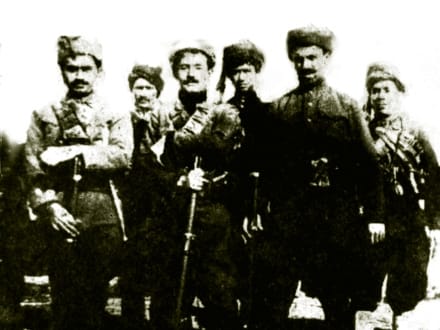
We will respect the fiction of the late Mehmed Uzun, but we must also write the truth. Most importantly, Mehmed Uzun, in his romantic and detached-from-reality novel, does not even mention the name of a very important figure like Sheikh Abdülkadir. Yet, the greatest military force was Sheikh Abdülkadir's own tribe and warriors. Moreover, the leadership of the Ağrı Mountain Rebellion changed hands four times: Bıro Heski Telli, İhsan Nuri Pasha, Sheikh Abdülkadir, and again Bıro Heski Telli (died 1932).
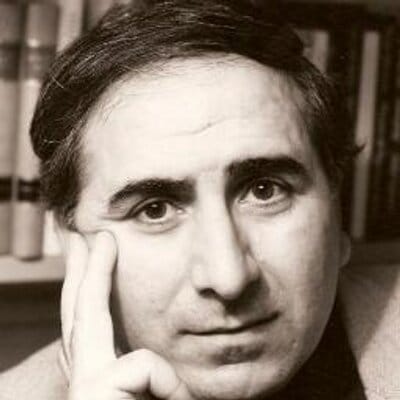
He provides no information about the historical reasons for the conflicts between the tribes on the Iğdır and Doğubayazıt sides that marked the Ağrı Mountain Rebellion, nor does he delve into them, because he did not conduct research in the region. Mehmed Uzun often takes us to the cosmopolitan world of city life in Istanbul, Aleppo, and Antakya, trying to win over the reader through romantic Kurdish nationalism. I respect the author's fiction and style, but my readers should know that what is narrated about the Ağrı Mountain Rebellion in Mehmed Uzun's book is far from reality. The relationships among Kurdish intellectuals are not as innocent and idealistic as stated in the book. There is a rivalry among them in terms of superiority and partisanship.
Some urban Kurdish intellectuals preferred the French Mandate, while others preferred the British Mandate. Ultimately, those who accepted the British Mandate gained prominence, and under British supervision and control, representatives of the Armenian Dashnak Party, urban Kurdish intellectuals, and Kurdish military officers met in Beirut and developed a joint strategy. There were no serious figures from the Kurdish ULEMA class among them. (Perhaps this is why Mehmed Uzun, who in a sense considered the ULEMA class "reactionary," may not have included Sheikh Abdülkadir in his book.)
Here, I would like to briefly remind the role played by the ULEMA class in the Kurdish cause. First, it is useful to list the important figures that come to mind. Names like Seyit Abdülkadir, son of Sheikh Ubeydullah, Sheikh Mahmut Berzenci, Molla Mustafa Barzani, Kadı Muhammed, Sheikh Abdülkadir (Leader of the Sakan Tribe/Ağrı Mountain Rebellion), Sheikh Sait, Seyit Rıza, Said-i Nursi have undoubtedly contributed much more to Kurdistan and the Kurdish cause than urban and aristocratic figures.
During the Ağrı Mountain Rebellion, the articles of the two newspapers that were barely published were personally written by İhsan Nuri Pasha. The newspapers were published with difficulty for a few issues. Their moral value was great, but their impact was limited because the local people were illiterate.
İhsan Nuri Bey, who graduated from the Harbiye Military School at high school level in Istanbul, joined the Ottoman army as a second lieutenant at the age of 17 in 1910, and his life was spent from front to front. He became a member of the Xoybûn Society while holding the rank of captain. The Xoybûn Society honored Captain İhsan Nuri Bey with the title "Pasha" and appointed him as "General Commander" of the Ağrı Mountain Rebellion. İhsan Nuri Pasha did not become a "Pasha" by following a military career path, so his intellectual level and ability to interpret world events were insufficient. He did not know diplomacy. He lacked the ability to negotiate with the Russians and Iranians. He had difficulty understanding the maneuvers, interests, and expectations of the great powers. During the years of the rebellion, İhsan Nuri Pasha knew Kurdish and Ottoman Turkish, and could read French with difficulty (in later years, he also learned Persian in Tehran). If we want to express the facts fully, İhsan Nuri Pasha was a high school (Harbiye) graduate and lacked political diplomacy skills.
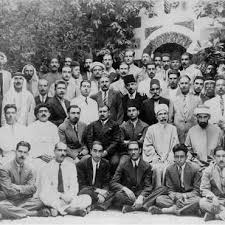
Bıro Heski Telli, whose education level was primary school or madrasa, was later honored with the title "İbrahim Pasha." Therefore, the title "Pasha" used during the rebellion has a symbolic meaning. The most educated among the rebels was Numan Efendi, who knew seven languages and was a graduate of the Istanbul Faculty of Political Science. Therefore, there is no doubt that the reports sent to the League of Nations under the signature "Feridun Beg" were written by Numan Efendi.
KURDISH PUBLICATIONS IN THE OTTOMAN PERIOD
First, I want to remind my readers of this: during the Ottoman period, there was no obstacle to using the word "Kurdistan" in a political sense. Especially after the Sheikh Sait Rebellion in 1925, the use of the word Kurdistan was banned in media and correspondence.
Let's take a look at the names of some Kurdish societies, magazines, and newspapers established between 1899-1923 (Ottoman Period):
- Kürdistan Newspaper began publication in Cairo on April 22, 1889.
- Kürdistan Azm-î Kavî Cemiyeti (1900) was founded by religious scholars. Religious books in Zazaki and Kurmanji were published.
- Kürd Teavun ve Terakki Cemiyeti (1908) (Kurdish Aid and Progress Society) was founded jointly by Kurdish religious scholars and intellectuals. Publications were made in three languages: Kurmanji Kurdish, Sorani Kurdish, and Turkish.
- Şark ve Kürdistan, published in Istanbul in 1908.
- Kürt Neşr-i Maarifî Cemiyeti (Kurdish Education Dissemination Society) 1910.
- Kürdistan Teşrîk-i Mesaî Cemiyeti (Kurdistan Cooperation Society) 1912.
- Roji Kurd; began publication in Istanbul in 1913.
- İstihlas-ı Kurdistan Cemiyeti (Cairo, 1915).
- Kürdistan Teali Cemiyeti (Kurdistan Advancement Society) 1918.
- Hetawi Kurd (Kurdish Sunlight - a Sorani word).
- Jin magazine; published in Istanbul in October 1918.
- Hêvî (Hope).
- Teşkilat-i İçtimaiyye.
- Kürdistan Teali Cemiyeti.
- Kürt Teşkilat-ı İçtimaiye Cemiyeti.
- Kürt Millet Fırkası.
- Azadi (Independence Committee).
KURDISH INTELLECTUALS OF THE OTTOMAN PERIOD (EARLY TURKISH REPUBLIC)
During the Ottoman period, individuals who established Kurdish associations, published Kurdish (Kurmanji, Sorani, and Zazaki) newspapers and magazines, and championed the Kurdish cause can be grouped into four main categories: ULEMA: Religious scholars such as Seyit Abdülkadir, son of Sheikh Ubeydullah, Said-i Nursi, and Sheikh Sait.
URBAN INTELLECTUALS: Urban and aristocratic intellectuals such as Celadet Bedirxan, Kamuran Bedirxan, Osman Sebri, Nurettin Zaza, Memduh Selim, and the Baban family.
MILITARY: Military figures such as Colonel Cibranlı Halit Bey and Captain İhsan Nuri (Most of these graduated from the Tribal Schools established by Sultan Abdülhamit. Cibranlı Halit Bey was among the first graduates of Kabataş High School. İhsan Nuri Bey received his education at the Tribal School in Erzincan.)
PROVINCIAL INTELLECTUALS: Intellectuals who came from modest families in Kurdistan and achieved significant higher education through their own efforts and intelligence. The most important representative of this group is Numan Efendi. Numan Efendi graduated from Erzurum High School with top honors. Since his father was a religious scholar, Numan Efendi also received madrasa education, but his personality was defined by humanism and a universal worldview. He supported Kurdish nationalism as long as it was meaningful and constructive, and when civilians were harmed, he invited the rebels to negotiate with the state to reach an agreement.
Kurdish societies were generally founded and managed by the children of Kurdish emirs, sheikhs, and tribal chiefs. Members of the Bedirxan family, in particular, held the belief that they were the natural leaders of a future Kurdistan. Among the Ulema, there were also those who supported a conservative view, such as Sheikh Mahmut Berzenci and Sheikh Sait. Numan Efendi thought differently from both these groups. His priority was neither a Kurdish state in the form of a nation-state, nor a French or British mandate, nor a Kurdistan in the form of an emirate/beylik. As a statesman who personally witnessed the Armenian Deportation, he kept his distance from the Hamidiye Regiments. Let us not forget that a significant portion of the aghas who participated in the Ağrı Mountain Rebellion aimed to somehow turn the rebellion into a negotiation with the Turkish government, guaranteeing Hamidiye ranks and salaries, and returning to civilian life.
Numan Efendi is far from such structures. He has a worldview based on peoples living together in peace, but with the obstacles to their identities removed: the political term for this at the time was Socialism, but in those years, not even the "S" of Socialism was uttered in Kurdish circles. In this sense, Numan Efendi's behavior and worldview align with Socialist thought, but for some reason, he does not want to voice the name Socialism because urban and aristocratic Kurdish intellectuals dominated the era, aiming for an Emirate (Dynasty) or Mandate-style Kurdistan under their own rule. It was certain that urban and aristocratic Kurds or the ULEMA would have no say in a Socialist Kurdistan.
WHY DID THE KURDS FAIL TO ESTABLISH A NATION-STATE?
At the beginning of the 19th century (1900), as Kurdish national consciousness rose, two solutions came to the minds of Kurds: either a conservative Kurdish State under the administration of the ULEMA, or an Emirate-style Kurdistan to be established by urban and aristocratic Kurds, but under their own rule. No one envisioned or proposed a Kurdistan in the form of a nation-state. There was an important reason for this: a nation-state required linguistic unity. There was neither linguistic nor religious unity among the Kurds living under Ottoman rule (Anatolia, Syria, Iraq). This reality was strongly felt during the Koçgiri, Sheikh Sait, Ağrı Mountain, and Dersim rebellions. Some researchers claim that different languages and religions emerged due to the imperialists' division of Kurdistan during World War I. These are ridiculous and pathetic claims. Kurmanji, Zazaki, and Sorani had continued their existence for centuries. The same applied to religious preferences (Sunni, Alevi, Shiite, Yazidi, Jewish, etc.). In short:
- The ULEMA could not establish Kurdistan because there were different sects and religions.
- Urban Kurds and aristocrats could not establish an Emirate-style Kurdistan because this required a mandate-style approach (coming under the administration of great powers). Although the Xoybûn Society aimed to establish such a Kurdistan under British control during the Ağrı Mountain Rebellion, it failed. An Emirate-style Kurdistan would cover a small area and would not reach the borders of political Kurdistan.
- A nation-state style Kurdistan could not be established because there was no linguistic unity.
Only one solution remained: Socialist Kurdistan. But there was neither a party nor a desire to champion this cause. From the very beginning, the Kurds never saw socialism as close to them and turned their backs on it.
Dear readers!
Now we come to revealing the MOST IMPORTANT PROBLEM of recent Kurdish history and the fundamental reasons why I wanted to compare Karl Marx and Numan Efendi...
KURDS AND SOCIALISM
I conducted research on the relationship between Kurdish magazines published and Kurdish intellectuals and Socialism during the 28 years from the newspaper named KÜRDİSTAN, which began publication in Cairo in 1899, to the Xoybûn Society, founded on October 5, 1927. As you know, the political map of Kurdistan has been physically close, even intertwined, with Tsarist Russia and, from 1917 onwards, with the Soviet Union, to the extent of being neighbors. This proximity was further reinforced by the establishment of the Kurdistana Sor autonomous region in Lachin in the Soviet Union. In other words, Kurdistan was not a country in the middle of Africa. It was right next to the Soviet Revolution that shook and trembled the world. If we compare the Kurds with the Armenians, who lived intertwined or as neighbors, in terms of their relationship with Socialism, we encounter an interesting reality:
Armenian Socialists founded the Hunchak Socialist Party in Geneva in 1887. It became the first socialist party in the Ottoman Empire and Iran. The committee, which chose Eastern Anatolia as its area of operation, later moved its center from Switzerland to London. In those years, the Kurds had no such initiative or idea.
Another Armenian party was founded: the Dashnak Society. It was established in Switzerland in 1899, mostly by Armenian intellectuals and revolutionaries of Caucasian origin (Tsarist Russia). Its aim was to establish an independent Armenia. Its original name was "Dashnaktsutyun," meaning Unity / Federation.
Why did Kurdish intellectuals keep their distance from Socialism during this period? It is truly thought-provoking that there was not a single Kurdish intellectual who had individually assimilated socialism and produced works, let alone establishing a socialist association or party. How is it that during such a sensitive period when oppressed peoples clung to socialism with all their might, seeing it as their salvation, not a single Kurdish intellectual wrote a single article? The real reason behind the failure of Kurdish rebellions must be sought here. The Kurds failed to grasp the SPIRIT OF THE TIME.
None of the prominent leaders of the Xoybûn Society, such as Celadet Ali Bedirhan, Kamuran Ali Bedirhan, Nuri Dersimi, Ekrem Cemilpaşa, Memduh Selim, İhsan Nuri Pasha, and others, had any interest in socialism. While the whole world was undergoing a profound upheaval with socialist thought, the Kurdish intellectuals' turning their backs on this reality and failing to grasp the spirit of the time was a loss for the Kurds. If these intellectuals had cooperated with the Socialist Armenian Hunchak Party instead of the Armenian nationalist Dashnak Party in the Xoybûn Society under British control, or if they had established an independent Communist/Socialist Kurdish Party, they would have cooperated with the Soviets and had a say in the Comintern. During the Ağrı Mountain Rebellion, they would have received logistical support from the Soviets, and it would probably have been possible to establish a socialist Kurdistan, but this was not the preference of aristocratic Kurdish families like Bedirxan, who wanted to establish an Emirate/Dynasty type of Kurdistan.
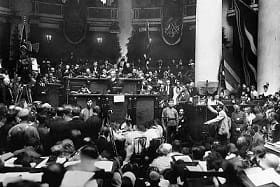
Since the Soviet Union regarded the Ağrı Mountain Rebellion as a British project supporting the rebellion to reach Baku oil, it repeatedly bombed Mount Ağrı with its aircraft during the rebellion, the Red Army crossing the Aras pushed back Kurdish forces from Aralık, and when necessary, allowed Turkish soldiers who could not hold their ground against the rebels to cross the Aras and seek refuge in the Soviet Union. Moreover, in the Comintern (the organization to which Socialist and Communist parties were members), the Soviet Union presented the Kurdish Rebellion as a reactionary movement, isolated the Kurds from the socialist dynamism developing in the world, and moreover, since it evaluated the rebellion as a "reactionary" uprising, this epithet remained a "black mark" on the Kurds. (I remember that in the discussions we had with Turkish socialists in the 1970s, the strongest argument put forward against us was their statement that the Comintern considered the Kurdish rebellions reactionary.)
Likewise, in the 1937-38 Dersim Rebellion, Socialists had no presence or struggle. While the oppressed nations of the world benefited from the rising dynamism of socialism, the Kurds missed this opportunity.
When 49 Kurdish intellectuals were arrested in 1959, socialist thought had just begun to awaken among the Kurds. When the Workers' Party of Turkey was founded in 1961, some Kurdish intellectuals struggled within the TİP and became acquainted with the principles of Socialism with a delay of almost 100 years. In this sense, when we evaluate, the first true Socialist in the history of Kurdish Socialism is Mr. Kemal Burkay.
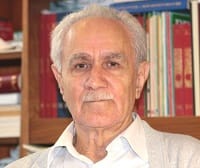
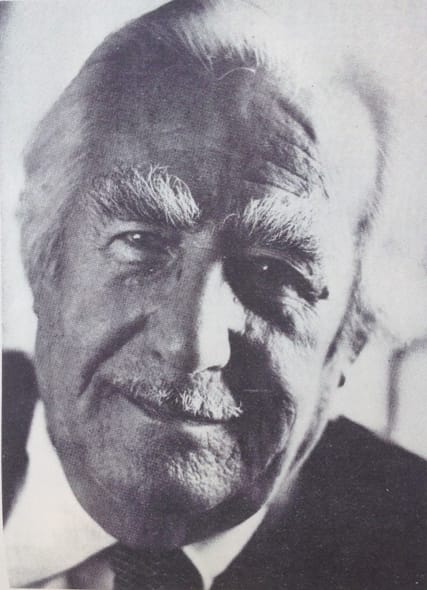
The famous Kurdish poet Cigerxwîn, who moved from Turkey to Qamishli in 1946, joined the Syrian Communist Party in 1948. However, he soon left the Syrian Communist Party in 1957 and joined the Syrian Kurdistan Democratic Party. Here, he continued his political activities as a member of the central committee. In this sense, Cigerxwîn does not fully fit the definition of a stable socialist, even individually.
The Mahabad Kurdish Republic was established in 1946 under Soviet control. It was expected that in such a process, at least some Kurdish groups or intellectuals, due to their proximity to the Soviets, would establish Socialist or Communist Kurdish parties and initiate a new era, but this never happened.
Another interesting point is that after the collapse of the Mahabad Kurdish Republic, Molla Mustafa Barzani, along with approximately 500 armed men, crossed into the Soviet Union via the Turkey-Iran border. During his years there, he studied in Moscow. He stayed in the Soviet Union for 11 years. In 1958, he returned to Iraq. The KDP initially leaned towards socialism but soon continued to be a nationalist and conservative organization. In short, neither the Kurdistan-a Sor established in Lachin nor Molla Mustafa Barzani's 11-year stay in the Soviet Union helped the Kurds establish a Socialist party.
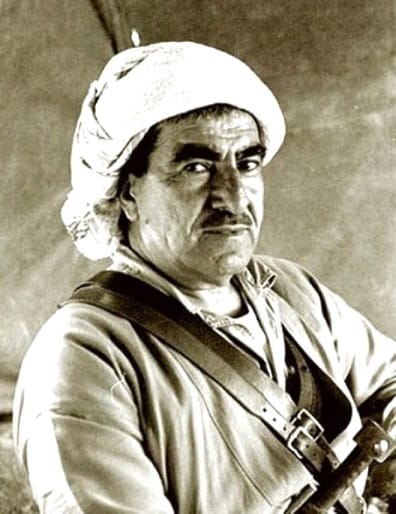
Molla Mustafa Barzani
In 1975, Celal Talabani, who left the KDP, founded the Patriotic Union of Kurdistan. Talabani stated that the PUK would be a socialist party and would distance itself from the KDP's tribal line. However, neither could he become a socialist party nor could he distance himself from the reality of tribalism. The conflict between the KDP and the PUK was not ideological. It had two reasons: 1. The PUK saw the KDP members as living in the mountains, uneducated, and prioritizing tribalism, while they saw themselves as an urban society open to the benefits of the modern world. 2. There was also a linguistic separation between the Kurmanji-speaking KDP and the Sorani-speaking PUK. In other words, their conflicts were not ideological. If an independent Kurdistan state were established in Northern Iraq today, this state would have a federative structure consisting of Sorani and Kurmanji-speaking regions. Currently, Sorani is being tried to be given de facto official language status, but it will not yield results because the Kurmanji language developing in Turkey will play a decisive role on the Kurmanji-speaking population in Northern Iraq, bringing Kurmanji to the forefront.
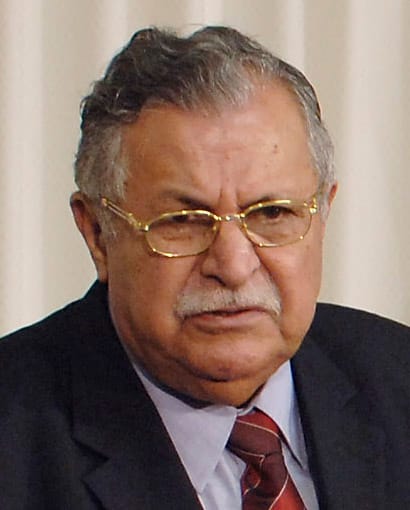
Celal Talabani
In the 1970s and 80s, Kurdish parties with socialist programs began to be established for the first time, but 100 years had passed. In this sense, a paradox occurred in the Kurds' acquaintance with Socialism. During the years when they could have benefited from Socialism, they turned their backs on it, and from the 1980s, when Socialism began to collapse, Kurdish Parties placed socialist thought at the center of their ideologies, hoped for salvation from Socialism, and a strange paradox occurred. In 1990, while the whole world witnessed the collapse of Socialism, in these years, the Kurds entered a race to discover socialism.
KARL MARX AND NUMAN EFENDİ
The most important reasons that pushed young Karl Marx towards socialism were his witnessing people living in poverty, the unjust long working hours of workers and children, and ruthless exploitation. In this quest, he formulated scientific socialism and proposed this system as a path to salvation for humanity.
Numan Efendi did not have the chance to encounter socialism, but he witnessed what happened in the Ağrı Mountain Rebellion and the Zilan Valley, just like Karl Marx, not as a Kurd, but as a humanist, and rebelled. He directed his rebellious feelings not only towards the Turkish government but also towards his friends who led the rebellion, accusing them of knowingly sending civilians to their deaths.
Kurdish intellectuals (this tradition still continues) declared what happened in the Zilan and Ağrı Mountain Rebellions as a genocide aimed at suppressing the Kurdish freedom struggle, rather than a humanitarian dimension, and brought the issue to the attention of the United Nations. Interestingly, even England, which in a sense planned the Ağrı Mountain Rebellion, did not consider what happened a genocide in the vote and remained silent.
In the spring of 1930, İhsan Nuri Pasha and the Xoybûn Society sent messages via courier to the Kurdish tribes in the region, announcing that an independent Kurdistan would be established within that year, that they had reached the final stage, and urging everyone—men, women, and children—to set out for Mount Ağrı. Discussions arose among tribal leaders about whether to go to Mount Ağrı, some declared others traitors, and even murders were committed. The tribal convoys heading towards Mount Ağrı had to pass through the Zilan Valley. Unfortunately, civilians became targets of planes and machine guns and were massacred. Numan Efendi was angry with the leadership cadre for this strategic military mistake. He gradually severed his ties with them. The interesting thing is that later generations saw İhsan Nuri Pasha as a hero, deified him with the title "Eagle of Ararat," but overlooked his military mistake.
The Turkish Government, by agreement with Iran, neutralized the Helikan Tribe and Mala Bozo, who were providing logistical support to the rebels from the Iranian side. Salih Pasha surrounded Mount Ağrı with 60,000 soldiers. Numan Efendi made a final effort, repeatedly conveying to the rebel committee through couriers that the rebellion should be ended by agreement with the government, otherwise they would be responsible for civilian casualties, but they still hoped that British planes would attack Turkish soldiers at the last moment.
Events proved Numan Efendi's foresight correct. The Zilan Valley filled with civilian corpses, the rebel committee members and their leaders saved their lives by fleeing to Iran without suffering any losses, meaning without resistance, while the civilians living in tents on the mountain were abandoned to their fate. Soldiers, obeying the order "no living thing will remain," massacred civilians wherever they caught them, and the corpses left in the open became food for wild animals.
THE SILENT SOCIALIST NUMAN EFENDİ
Dear readers!
Based on Numan Efendi's life, I have presented you with a cross-section of 20th-century Kurdish history. I have read the vast majority of books from this period. However, what happened during that period is still idealized, and self-criticism is avoided. As long as Kurdish emotionality continues to precede Kurdish logic, the troubles will not end, and mental confusion will persist. Some parties still stubbornly continue armed struggle with the dream of establishing a nation-state, turning their backs on reality. Since the era of Socialism has ended, the only option before the Kurds now is to struggle for DEMOCRACY within the countries they live in, together with the peoples they live with, and in this context, to compensate for a 100-year loss. The Kurds, who missed the opportunity of Socialism 100 years ago, are now turning their backs on Democracy. In this sense, those who invite Kurdish youth to armed struggle and want to make them believe that a Kurdistan will be established in this way will have to account for it in the future.
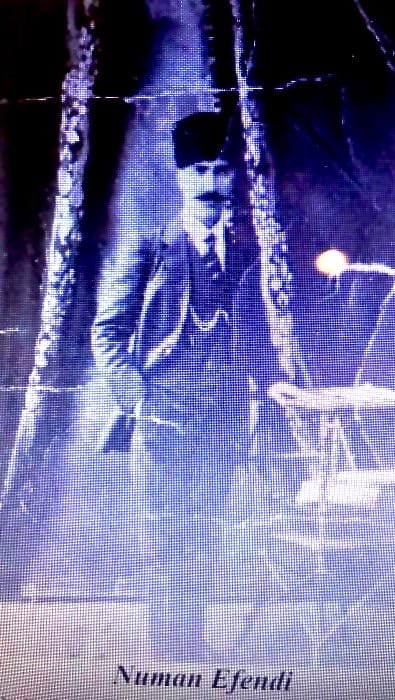
I respectfully bow before the memory of Numan Efendi, who, throughout his 45-year life, never compromised his humanist values, stood firm, expressed what he knew courageously, remained among the people and championed their cause, and did not harbor hope for solutions in plans devoid of logic, accepting him as the first "Silent Socialist" of the Kurds despite the unfortunate circumstances of his time, and burying this Kurdish intellectual, whose grave is unknown today, in our hearts.