Mirze Akıncı: The Social Democrat Teacher Targeted for Assassination
This article tells the tragic story of Mirze Akıncı, a beloved social democrat teacher assassinated in Iğdır in 1980 by shadowy forces during a period of political turmoil in Turkey.
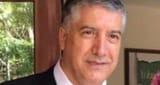
The year is 1980. Turkey is slowly but surely drifting towards a military coup. Gladio, Ergenekon, and similar shadowy forces had joined hands to implement a plan devised by a higher intelligence. The route to be followed was clear: to escalate unrest and murders in Turkey to the highest level, creating a sense of despair and chaos in the hearts and minds of the people. Thus, when the army seized control of the civilian government, it would be seen as a "savior," and the coup would succeed.
For the plan to succeed, it would be easier to kill individuals who were loved and respected in society, who were moderate, and who had no ties to extremist right- or left-wing groups. The shadowy forces sent a secret directive to their affiliated gang members in every province and district to prepare a suitable list in this regard. The Iğdır gang, tasked with this job, quickly prepared a list and delivered it to the higher intelligence. The person who would implement the dark plan glanced at the list on the table. He already knew most of them due to his position. He sat in his chair and lit a cigarette. The list of those to be killed was ready, but the hitmen had not yet been determined.
In those years, the youth in Iğdır were divided into right and left (or, if we were to use the terms they used for each other, Communist-Fascist). The shadowy forces had strong and reliable men within both factions. The important thing was to reach the right people and assign them as hitmen. Gang members who had infiltrated the innocent youth devoted to socialist and Ülkücü (Nationalist Action Party-affiliated) ideologies, when assigning tasks saying, "Today we will kill a Fascist or a Communist," the innocent left-wing and right-wing youths
regarded this as a sacred duty and implemented the dark plans without questioning them.
Iğdır was an ideal place for carrying out high-profile murders:
1. Ethnic discrimination and animosity between Kurds and Azeris continued to exist vividly in the district.
2. Conflicts and killings between Ülkücü and socialist groups had sharpened existing blood feuds and feelings of revenge.
3. Mehmet Ali Ağca, the hitman who killed Abdi İpekçi, had come to Iğdır to cross into Iran and was safely hidden there under the control of shadowy forces. Soon, he took charge of the hit squad and targeted the names on the list one by one.
After completing their preparations, the hitmen took action. One of the names on the list was Mirze Akıncı, a teacher loved by all segments of society, full of peace, and with a humanist spirit. Mirze Akıncı, a member of TÖB-DER (an organization of revolutionary and left-leaning teachers), was put under close surveillance.
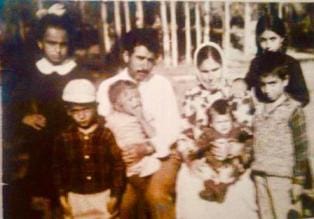
MIRZE AKINCI'S FAMILY PORTRAIT
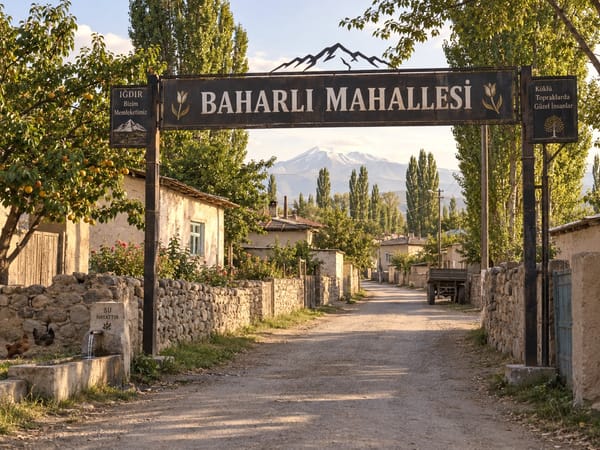
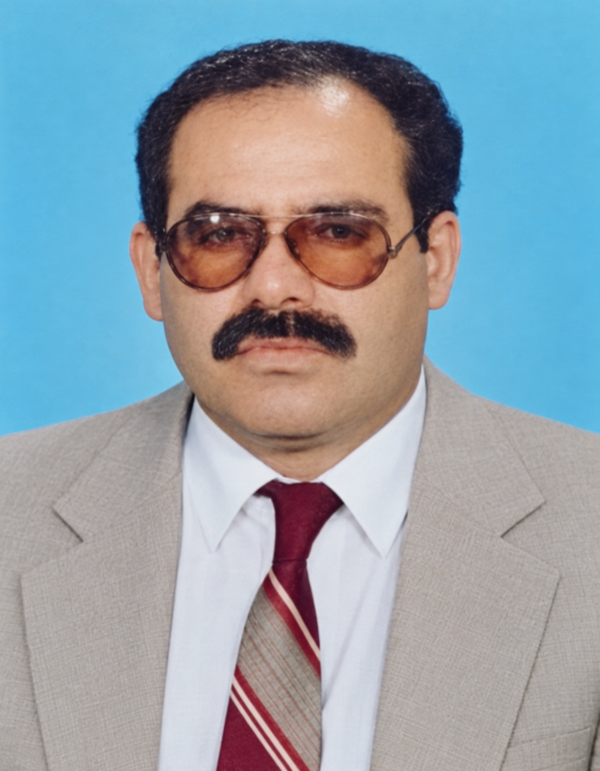
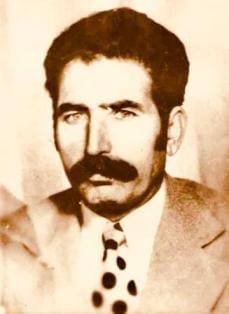
With his handlebar mustache in vogue at the time, his colorful eyes, his reassuring facial expression, his intellectual gaze, and above all, his distinct and striking innocence, Mirze Akıncı was, of course, unaware of all these plans. Although the escalating terrorist incidents in the country sometimes created a feeling in his heart that he needed to be careful, he was in a state of carelessness, thinking, "Until it's my turn." For many years, he had neither been threatened nor received threat letters. Every morning after breakfast, he would leave his house and walk slowly from his home on Melekli Street in Baharlı Neighborhood to his school.
The late Mirze Akıncı was born in Melekli village in 1932. His father's name was Mehmetali and his mother's name was Hanım. His original surname was Alkoç. His grandfather had come from Eleşkirt district of Ağrı and settled in Melekli village. They were of Kurdish origin. His father was a farmer. Although his own surname was Akıncı, his brother's name was registered as Süleyman Mirzeoğlu. Mirze Akıncı completed primary and secondary school in Iğdır. He graduated from Dicle Village Institute in Ergani district of Diyarbakır. His first place of duty was Trabzon. After completing his military service in Sivas, he was appointed as a teacher to a school in Aralık. In later years, he had his transfer to Iğdır. He served at Kurtuluş Primary School (14 Kasım Primary School). He was serving as a principal when he was martyred. He was the father of 7 children, 4 of whom were girls. His children's names were Nuray, Feyyaz, İrfan Yavuz, Nursel, Nigar, Nilgün, and Oğuz. Based on the family tree published on E-Devlet, his wife and mother-in-law are from Yerevan. They are of Armenian origin.
AND THE YEAR 1980
For many years, Mirze Akıncı, who simply went from home to school, unexpectedly received direct threats. He couldn't make much sense of this because he was not involved in any extreme political movement. On April 8, 1980, hitmen came to Mirze Akıncı's house to kill him. His wife looked out the window to see who was knocking on the door. She saw two young men with guns in their hands. When his wife shouted, "Teacher, don't open the door!" to her husband who was going to open it, the panicked hitmen left. From that day on, my father decided to carry a gun.
DAY OF MARTYRDOM: APRIL 28, 1980
My father woke up very early that morning. His daughter had given birth. It was his first grandchild. He held the baby in his arms. He gently touched the baby's cheeks with his handlebar mustache. He was filled with excitement to return home in the evening and share the family happiness together.
My father did not like violence and was not very keen on carrying a gun. That day, he did not take his gun with him when he left the house. Mirze Akıncı, as usual, headed home at 5 PM when school closed. A water canal ran near his house. A huge elm tree stood along the canal. When Mirze Akıncı was 300 meters from his home, the hitmen, hidden behind the elm tree, attacked him from behind. The hitmen threw Mirze Akıncı, severely wounded by bullets, into the water canal and fled the scene.
There were two hitmen: Ersin Zorluer and İnayet Adar. Ostensibly, they were part of the Ülkücü (Nationalist Action Party-affiliated) faction, but they had no connection to Ülkücü ideals or thought. They were killers used and assigned by shadowy hands.
Those who came to the scene after hearing gunshots found Mirze Akıncı in the water canal. He was not yet dead. He was breathing with difficulty. He passed away before reaching the hospital.
THE FATE OF THE HITMEN
Shadowy forces have an indispensable tactic: use and discard. Mirze Akıncı's killers also experienced this fate. Immediately after the September 12, 1980 coup, they were apprehended and tried under martial law. In those years, the martial law commander of Erzincan-Erzurum was a right-wing Colonel from Iğdır. He took over the case file. Soon, despite confessing to the murder, the two killers were acquitted due to insufficient evidence. In their statements, they said they killed Mirze Akıncı because he was a "Communist and a Traitor to the Homeland." Allegedly, Mirze Akıncı was secretly collaborating with Russia.
In later years, the hitman named Ersin Zorluer was caught many times for drug trafficking and even gained notoriety as a drug lord. The most tragic aspect of the incident is that the young men who killed Mirze Akıncı were once his students!
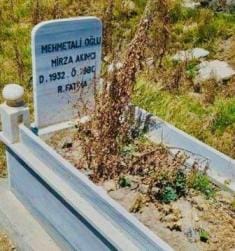
Mirze Akıncı, a martyr of democracy, was buried in Melekli village.
HIS DAUGHTER NİGAR AKINCI TALKS ABOUT HER FATHER AND FAMILY
"When my father came home, the Cumhuriyet newspaper would be rolled up in the left pocket of his jacket. He would lie down on the divan, sip his tea, and meticulously examine and carefully read the newspaper. To relieve mental fatigue, he would turn to the puzzle section and try to solve it with determination. We had a huge library at home. He enjoyed reading all kinds of books. Perhaps because of this, I grew up with a love for books and became a good reader and researcher. Occasionally, I would sneak into my father's library and pick out books. The first book I read was Fakir Baykurt's novel, Yılanların Öcü (The Revenge of the Snakes). Later, I remember reading Kemal Bilbaşar's novel, Cemo."
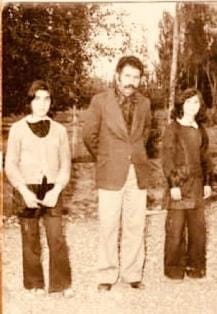
In 1981, I attended Erzincan Health Vocational School as a boarding student. Soon after, my elder sister and her husband, Yakup Eğrice, were exiled to Palu district of Elazığ. My brother-in-law was detained in the Military Building behind our house, then transferred to Erzurum, where he served 4 months in prison. My elder brother İrfan Yavuz attended high school in Tunceli, and my elder sister Nursel attended high school in Istanbul as a boarding student.
Currently, I am working on a book about the lives of approximately 400 teachers who were killed and martyred in the 1970s and 1980s. I want to dedicate this book to my father and to teachers like him who were unjustly martyred."
EPILOGUE
Dear readers! With Mehmet Ali Ağca's arrival in Iğdır, the activities of shadowy forces and their hitmen accelerated. In the same year, Tuncer Demirel, a TÖB-DER member teacher, was shot and killed by Mehmet Ali Ağca himself while sitting in a club. The real target was Mecit Hun, but Mecit Hun was not there that day. This time, on July 17, 1980, the shadowy forces martyred Nihat Tırpan, who had come to Iğdır for a holiday with his German wife and son. As people of Iğdır, we embrace these names, killed by hitmen and shadowy forces, as our MARTYRS OF DEMOCRACY. May their souls rest in peace!
NOTE: I have not yet completed my work at the National Library regarding the late Hacı Vahap Akar, so I plan to prepare it as the next article.