The Dimdim Castle Resistance and a Kurdish Reality
This article explores the historical dimensions of the Dimdim Castle resistance, a significant event in Kurdish history, and its enduring lessons for the future.

Dear Readers:
Dimdim Castle is located in western Iran, near Lake Urmia in the province of West Azerbaijan. This castle, of great importance to Kurdish history, became one of the symbols of Kurdish resistance in the early 17th century as part of the struggle between the Ottomans and the Safavids. The Dimdim Castle resistance, based on historical fact and immortalized as an epic in Kurdish oral tradition, was a historical event that took place between the Safavids and the Bradost tribe, resulting in heavy losses for the Bradosts and having long-lasting effects.
In this article, while attempting to present the historical dimensions of this unforgettable resistance and heroism, I will also try to shed light on the future in terms of "historical lessons" by bringing to light a reality that has continued among Kurds to this day.
To understand the Dimdim Castle resistance and place it in a correct historical perspective, it will be necessary to consider the conflict and rivalry that has existed between the Shiite and Sunni sects since the 7th century.
SHIITE AND SUNNI CONFLICT IN HISTORY
Shiite and Sunni conflicts have arisen throughout history due to political, religious, and social reasons. In this context, the source of the conflict between the Shiite and Sunni worlds is generally attributed to the Karbala Incident.
Karbala Incident (680):
- The Battle of Karbala is one of the events where the Shiite and Sunni divide became most pronounced.
- Imam Hussein (grandson of Prophet Muhammad) and his family were killed in Karbala by the army of the Umayyad Caliph Yazid.
- This event began to be commemorated as a day of mourning in the Shiite tradition and deepened the Shiite-Sunni schism.
The Safavid State was a Turco-Iranian dynasty founded in what is now Iran, which made Shiite Islam the official religion of the state. The Safavids left deep marks in the region in religious, political, and cultural terms and played an important role in the spread of Shiite Islam.
Characteristics of the Safavid State
- Founder: The state was founded in 1501 by Shah Ismail. Shah Ismail was the leader of the Safaviyya order in Ardabil and became a political power with the support of the order.
- Capital: The first capital was Tabriz. Later, the capital was moved to Isfahan.
- Official Sect: Shiite Islam was declared the official religion of the state by the Safavids. This deepened the divide between the Shiite and Sunni worlds.
- During the reign of Shah Ismail, the Safavids established dominance in Azerbaijan, Iran, Eastern Anatolia, and Iraq.
- The rivalry between the Ottomans and Safavids intensified, especially in the struggle over Eastern Anatolia and Iraq.
When Yavuz Sultan Selim ascended the throne, a large part of Anatolia adhered to the Alevi and Shiite sects. This situation caused discomfort for Yavuz Sultan Selim.
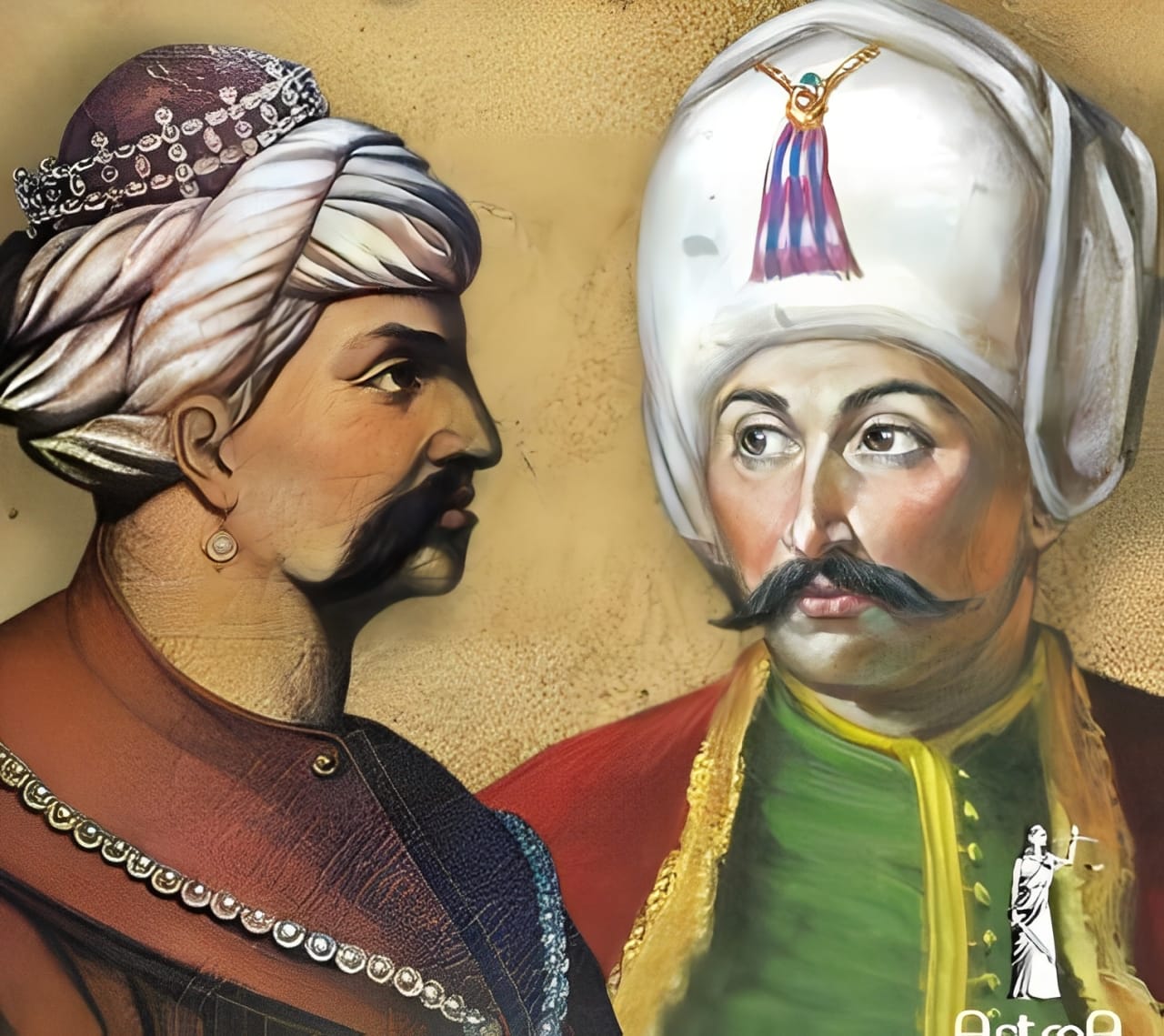
With the help of Idris-i Bitlisi, Yavuz Sultan Selim gained the support of the Sunni Kurds, declared war on the Safavid State, and defeated Shah Ismail in the Battle of Chaldiran in 1514, halting the expansion of the Safavids (and in a sense, the Shiite sect). (Note: The Battle of Chaldiran took place in the Chaldiran plain near the city of Maku in present-day Western Iran. It has no connection with Chaldiran in Van province.)
MUKRI PRINCIPALITY
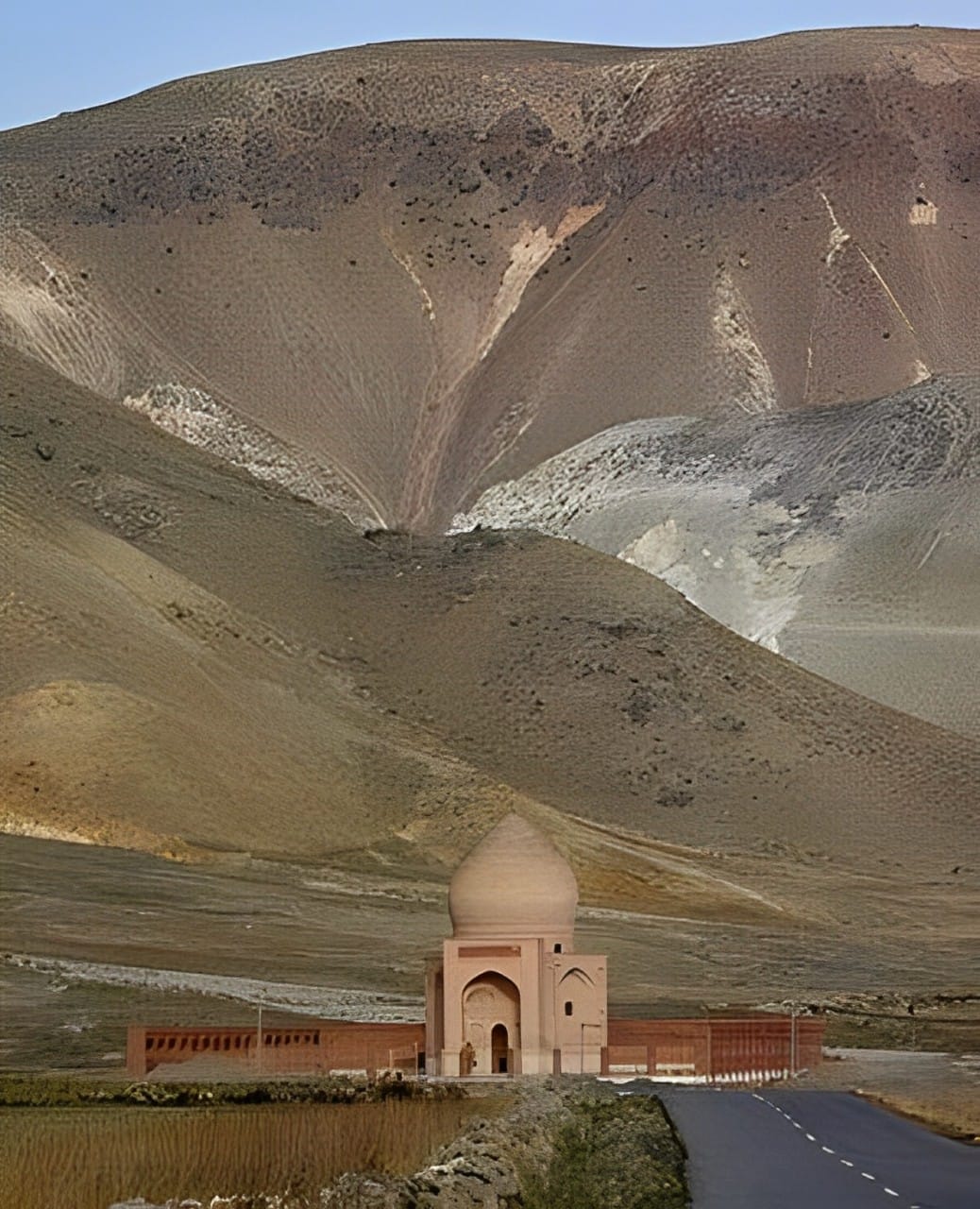
The Mukri Principality was established in the late 14th century in the West Azerbaijan region of Iran. The principality's origins lie with the Mukri tribe. The Mukri Principality was one of the important local powers in the region before the Safavids came to power in Iran. It adhered to the Sunni sect. Its people spoke Sorani.
(Note: The Mukri tribe was one of the most important forces that established the Mahabad Kurdish Republic in 1946. The family of President Qazi Muhammad held a respected position within this tribe. Interestingly, the borders of the 17th-century Mukri Principality and the 20th-century Mahabad Kurdish Republic overlap.)
As the Safavids gained power and the Shiite sect was accepted as the official religion, pressure on the Mukri Principality increased. The Mukri Principality, in a sense, formed a buffer zone between the Shiite Safavid and Sunni Ottoman States.
As a Sunni Kurdish principality, the Mukri Principality fought alongside the Sunni Ottoman Empire. Sunni Kurdish principalities, opposed to the Safavids' Shiite propaganda and governance in the region, chose to fight against the Safavids with the support of the Ottoman Empire.
After the defeat at Chaldiran, Kızılbaş revolts, incited by Shah Ismail, broke out in Anatolia. The first revolt was started in 1519 by Sheikh Celal, who lived in the Bozok district of Yozgat. For this reason, the Kızılbaş revolts that emerged in Anatolia throughout the 16th century are referred to as "Celali Revolts." The Ottoman State suppressed these revolts with bloodshed. The Kızılbaş sought refuge in the Safavid State. Those who sought refuge in the Safavid State from Anatolia were called "Celalis."
Yavuz Sultan Selim, with the help of Idris-i Bitlisi, tried to settle Sunni Kurdish tribes on the Ottoman-Safavid border. During this process, the Bradost tribe, near the city of Sulaymaniyah, settled around Lake Urmia. Similarly, Sunni Kurds were settled around Mount Ararat. (These would later go down in history as the "Celali Tribe").
BRADOST TRIBE
The Bradost tribe broke away from the Ako (or Akoyî) tribe, which was settled in and around Sulaymaniyah, and came to settle in the Urmia region. The Ako tribe spoke Gorani.
The Bradost tribe, settled around Lake Urmia, spoke Gorani; their neighbors, the Mukri Principality, spoke Sorani. The Bradost tribe desired to expand its influence and establish a principality.
In the early 17th century, the Ottoman-Safavid rivalry intensified again. Ottoman Sultan Ahmed I was a fanatical Sunni. When he invaded Azerbaijan, the Safavid State responded by attacking the Sunni Kurds in the region. Among these were the Bradost and Mukri tribes. The Mukri Principality had a pragmatic relationship with the Safavid administration. Thus, the Bradost tribe became the primary target for destruction by the Safavid state.
Encouraged by Yavuz Sultan Selim, the Bradost tribe, who came to the vicinity of Lake Urmia, strengthened the fortifications of Dimdim Castle, which was built around the 13th century but had been empty for many years, and settled there (1609). The castle was built of large stones. It was surrounded by strong walls, bastions, and moats for defense. Dimdim Castle was in a strategic location, especially for controlling the routes leading to the Southern Caucasus, making it a primary target.
DIMDIM CASTLE (KELAHA DIMDIMÊ) RESISTANCE
At the head of the Safavid State was Shah Abbas (full name Shah Abbas I). Shah Abbas, who reigned between 1571 and 1629, brought the Safavids to their golden age and made Iran a great power.
At the head of the Bradost tribe was Emir Han. His hand had been cut off at the wrist in a battle. Emir Han had good relations with Shah Abbas. In fact, when the Ottomans campaigned in Azerbaijan, Nakhchivan, and Yerevan, Emir Han appeared before Shah Abbas and declared his obedience and loyalty. Pleased with this, Shah Abbas gave an order. Jewelers fitted a hand made of red gold and adorned with jewels to Emir Han's wrist. From that day on, Emir Han's name became Emir Han Lepzerin among the people. (Lepzerin means "Golden hand/paw.")
Emir Han's power and strength grew day by day, he gained supremacy over the Mukri Principality, and even seized the property and provinces of several Kurdish emirs who supported the Ottomans. Emir Han became proud and arrogant due to the allegiance of many Kurdish tribes to him. Before Shah Abbas went to war against the Ottomans in the Southern Caucasus, he called upon Emir Han to join his army, but this time Emir Han cited his allegiance to the Sunni sect and did not fulfill this request.
The Emir of Tabriz made efforts against Emir Han in the presence of Shah Abbas. He claimed that Emir Han was contemplating rebellion and had built a high-altitude castle for this purpose.
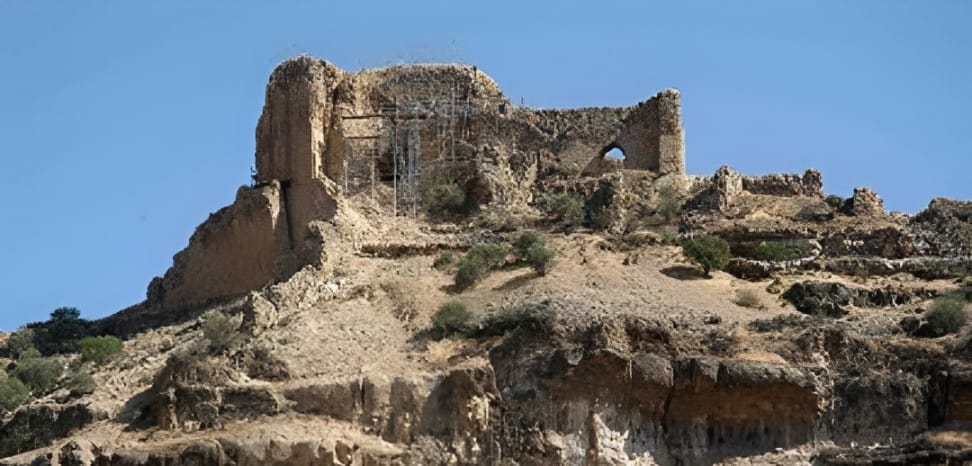
Dimdim Castle is located near Lake Urmia and 18 km southwest of the city of Urmia. It is situated between the Baranduz River and the Qasimlo Valley, near Balanc village.
(The ruins of Dimdim Castle have survived to the present day. However, the castle has been destroyed over time, and only some traces remain. Today, the castle is known as an important tourist and historical site in the context of the surrounding historical areas and cultural heritage.)
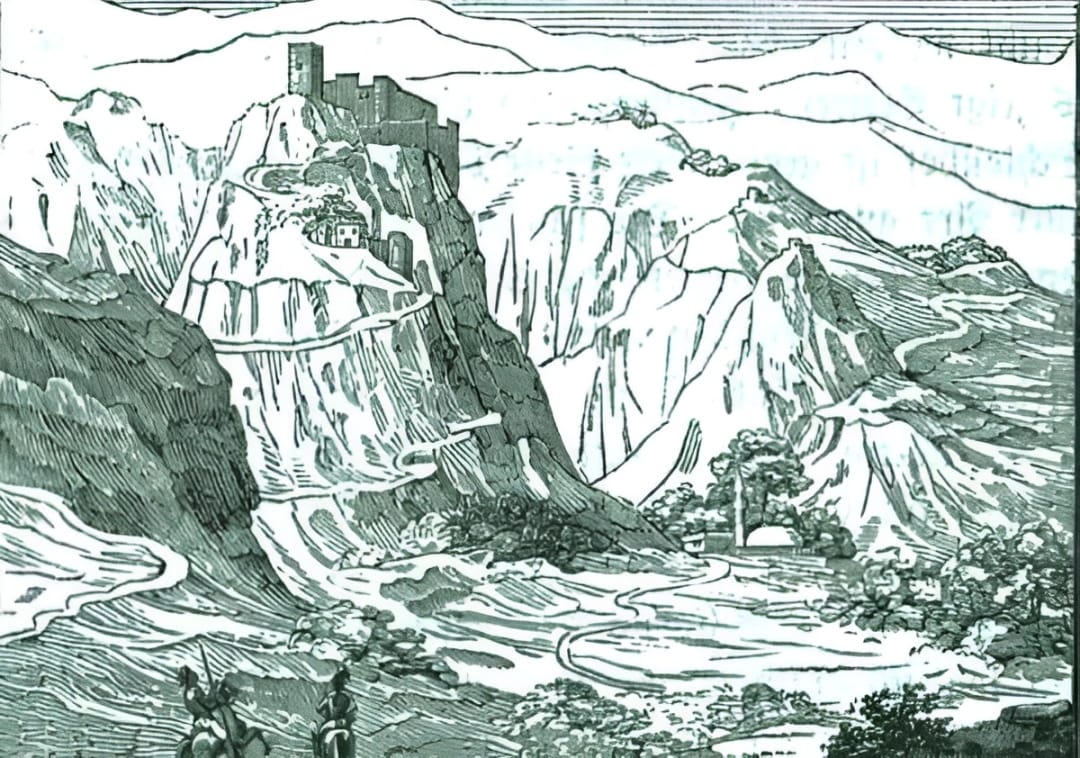
The castle is built on a high mountain, on a single, long, narrow rock. One end of the rock is narrow and gradually widens. It is impossible to climb the castle from bottom to top without stairs, as there is a wide valley on both sides (north-south). Because it is so high, there is no need for a citadel.
The main body of the castle is built in an east-west direction, with the eastern side being high and connected to the mountain range. A high bastion and gate are built on the eastern side. The western part, which is closest to the ground, is protected by a strong citadel. A gate is built on the southern side of the citadel, and from the gate to the ground, there is a very narrow path passing through the stones, wide enough only for a single horseman.
It is not possible to place ladders against the castle except for the eastern and western parts. On the eastern side, there is a bare rock rising from the base of the citadel. It is impossible to drill into it or excavate it. A very high bastion has been built on the rock, on the edge of the cliff, against the possibility of excavation. The bastion is actually like a castle and is connected to the main castle. Unless that bastion is captured, it is impossible to place a ladder against the castle. The castle's water is collected in a large pool, filled by rain and snowmelt. Inside the castle, on the southern side, there is a hidden water source.
According to Evliya Çelebi, the reason for the castle's name "DIM-DIM" is explained as follows: The rocks on the castle are on the edge of Lake Urmia. As the fierce waves of the lake hit the caves in the rocks, they make a "Dim-Dim" sound.
The Kızılbaş, who had problems with the Ottoman State, fled from Anatolia and sought refuge with the Safavids. In Iran, the Kızılbaş who came from Anatolia were known as "Celalis." In 1608-1609, Shah Abbas, wanting to use these "Celali" Kızılbaş who had sought refuge with the Safavids against the Sunni Kurds, wanted to settle them in the Urmia and Salmas regions. Realizing this, Emir Han severed his ties with Shah Abbas.
Approximately twenty thousand Celalis (Kızılbaş), fleeing from the Ottoman Grand Vizier Kuyucu Murat Pasha (1606-1611), sought refuge in Iran. Shah Abbas wanted to settle about 8,000 of them among the Bradost Kurds. The insecurity created by these unruly Celalis wandering in Safavid territory and Shah Abbas's desire to use them as a threat against the Kurds, stating that the lands of disobedient Kurdish emirs would be given to the Celalis, created fear in Emir Han, leading him to seek refuge in Dimdim Castle and revolt against the Safavids.
The Safavid State declared war on Emir Han. Dimdim Castle was besieged by 30,000 cavalry, 10,000 of whom were Anatolian Celalis (Kızılbaş). A small cannon, brought by ship via the Black Sea, was placed opposite the bastion outside the castle. Shah Abbas even sent 7,000 copper coins as aid for the casting of new cannons. Within forty days, three large cannons and a culverin were made. (Culverins are heavy and large cannons, usually designed to damage walls and destroy enemy defenses.)
Emir Han's cavalry and infantry units attacked the artillery several times. However, many Kurds were killed by the Kızılbaş (Celalis).
The siege dragged on. Those in the castle suffered from lack of water. Due to drought and low rainfall, the water in the pools had significantly decreased. The remaining water had also become foul. Only animals could drink it. The castle inhabitants' water needs were barely met by a source created in a secret compartment of the castle. If this source were captured, the castle inhabitants would have no choice but to surrender.
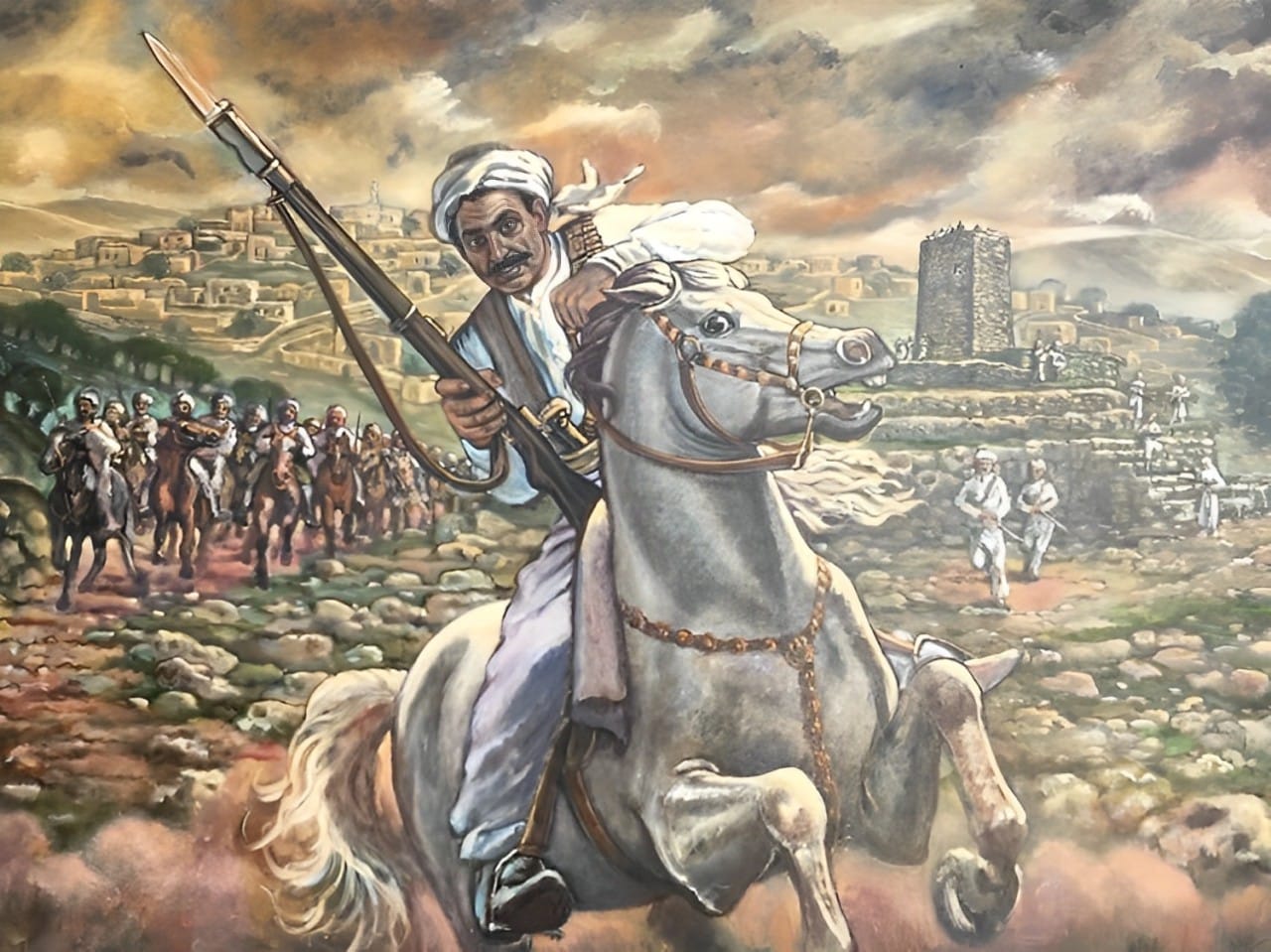
Some of the castle inhabitants, under siege and suffering from water scarcity, left the castle and sought refuge with the Safavids, showing the Safavid soldiers the location of the well-camouflaged water source. This was considered an "act of betrayal" by Emir Han.
The Safavids brought sapper masters to capture the water source. Tunneling began.
Meanwhile, Emir Han occasionally left the castle with his soldiers and fought heroically against the Safavid units. A historian who witnessed the event wrote:
"The Kurds attacked every position from night till morning, fighting with determination. Their bullets rained down like hail on our soldiers in the positions. Two or three times during the day, they attacked the positions and fought very fiercely."
Although the castle walls were pounded by cannons for a month, it was not possible to breach them.
Those in the castle realized that excavation was being carried out towards the water source. At night, they attacked the excavation site. The sappers fled before they could continue digging. This situation continued for three months. Struggling with thirst and hunger, the Kurds were forced to evacuate over a thousand civilians, including women and children, from the castle two or three times.
At noon on March 14, 1610, the Safavids captured the water source leading to the castle and blocked the waterway with mud bricks and mud. The desperate Kurds fought heroically but could not recapture the water source. Two weeks passed. Emir Han and those in the castle had to make do with the foul water in the pool.
It was at such a time that it rained heavily. Thanks to the continuous rain for three months, those in the castle no longer needed water.
The Safavids deployed sappers. The base of the bastion was undermined. One side of the castle collapsed. Soon after, the Safavids captured the three bastions surrounding the castle. Thereupon, the Kurdish warriors took refuge in the castle where Emir Han was.
The Kurds resisted, hungry and thirsty, but continued to fight until the last man. Emir Han was captured and beheaded (July 1610).
After the Battle of Dimdim, the Safavids exiled most of the Bradost tribe to Khorasan. Those who remained gradually began to speak Sorani or Kurmanji instead of Gorani due to cultural interaction.
The Dimdim Castle resistance was seen as a great tragedy for the Kurdish people and has been immortalized in Kurdish literature and folk tales.
***
Six years passed after Dimdim Castle fell into the hands of the Safavids. In 1616, Ulugh Bey, a relative of Emir Han, entered the castle through a breach with forty to fifty men, killed the Kızılbaş soldiers responsible for guarding the bastions, and captured the castle. The Safavids soon regrouped and attacked the castle. Dimdim Castle, which remained in Ulugh Bey's hands for nine days, once again came under Safavid rule.
CONCLUSION
The Dimdim Castle resistance also reveals an internal conflict that is prominent and still ongoing in Kurdish history. The Sorani-speaking Mukri Principality did not come to the aid of the Gorani-speaking Bradost tribe. Furthermore, the Kurmanji-speaking Celali Tribe, which was gaining strength in the Mount Ararat region during those years, also did not support the Bradost tribe, i.e., the defense of Dimdim Castle. All of this happened in the 17th century.
The most important conclusion we can draw from the DIMDIM Castle resistance is the reality that any political movement that disregards or belittles the linguistic, sectarian (Shiite/Alevi/Sunni), and religious (Yazidi, Muslim, Jewish, Christian) differences among Kurds is doomed to perish in isolation.
Interestingly, there are similarities between the Armenian Musa Dagh Resistance in 1915 and the Bradost Kurds' Dimdim Castle Resistance.
(Similarly, in 73-74 AD, Jews fighting against the Roman Empire's occupation forces carried out a historical resistance on Masada Mountain by the Dead Sea.)
Musa Dagh Resistance (1915): During the Armenian deportation by the Ottoman Empire, Armenians living on Musa Dagh near Samandağ district in Hatay resisted by taking refuge on the mountain instead of being deported. The resistance lasted approximately 53 days, and they were eventually rescued by Allied forces' ships.
Dimdim Castle Resistance (1609-1610): A group belonging to the Kurdish Bradost tribe in Iran revolted against the Safavid administration and resisted in Dimdim Castle. This struggle ended with the Safavid army capturing the castle. The resistors were killed.
In both cases, the primary goal of the resistance was survival and a struggle for honor. In both resistances, the peoples showed great sacrifice to protect their living spaces and identities. Furthermore, both events represent an asymmetrical struggle against a more powerful authority. The Musa Dagh incident became a symbol of the Armenian people's will to resist. The Dimdim Castle resistance also continued to live on as a great epic of heroism in Kurdish culture.
In terms of their outcomes, both are remembered as tragic but heroic resistances.