The Democracy Test
This article explores the concept of democracy through a mathematical lens, proposing a formula to assess how closely a political system aligns with democratic ideals, drawing parallels with Euler's and Maxwell's groundbreaking formulas.

Dear Readers:
Our country is heading for a new election. President Recep Tayyip Erdoğan, exercising the authority granted by the Constitution, decided on Friday, March 10, that the elections would be held on May 14. This decision was published in the Official Gazette and came into effect. I would like to begin my article by wishing that the elections will be beneficial for our country.
The purpose of elections is to make democracy functional. That is, democracy does not exist for elections; elections exist for democracy. Therefore, we must ask the following question: How close or far will we be from the goal of "democracy" with the political structure that will emerge as a result of the upcoming elections? Do we have a mathematical formula to test this?
The purpose of this article, albeit briefly, is to draw my reader's attention to such a formula, and to open a discussion on a suitable formula to test how close or far the political structure resulting from the election is to democracy.
The most important endeavor in the history of science is to explain the relationship between two different values with a mathematical formula. For this reason, before addressing the topic of "The Democracy Test," I would like to give you two examples from the world of mathematics and physics to help us draw an analogy:
THE WORLD OF MATHEMATICS: EULER (pronounced *oyla*) FORMULA
Leonhard Euler (pronounced *leonhard oyla*) is a Swiss mathematician, physicist, astronomer, geographer, logician, and engineer. He is considered humanity's greatest mathematical genius.
The famous French mathematician Laplace (pronounced *laplas*) (1749-1827) said of Euler: "Euler is the master of us all."
The famous German mathematician Gauss (pronounced *gaus*) (1777-1855) expressed his feelings as follows: "Nothing else can take his place."
You might ask why Euler is considered the greatest mathematician. For many years, it was assumed that there was no relationship or correlation between trigonometry and exponential (logarithmic) expressions, and it was believed that it was impossible to combine these two different worlds of mathematics into a single formula. Euler gifted humanity with the formula that overcame this impossibility.
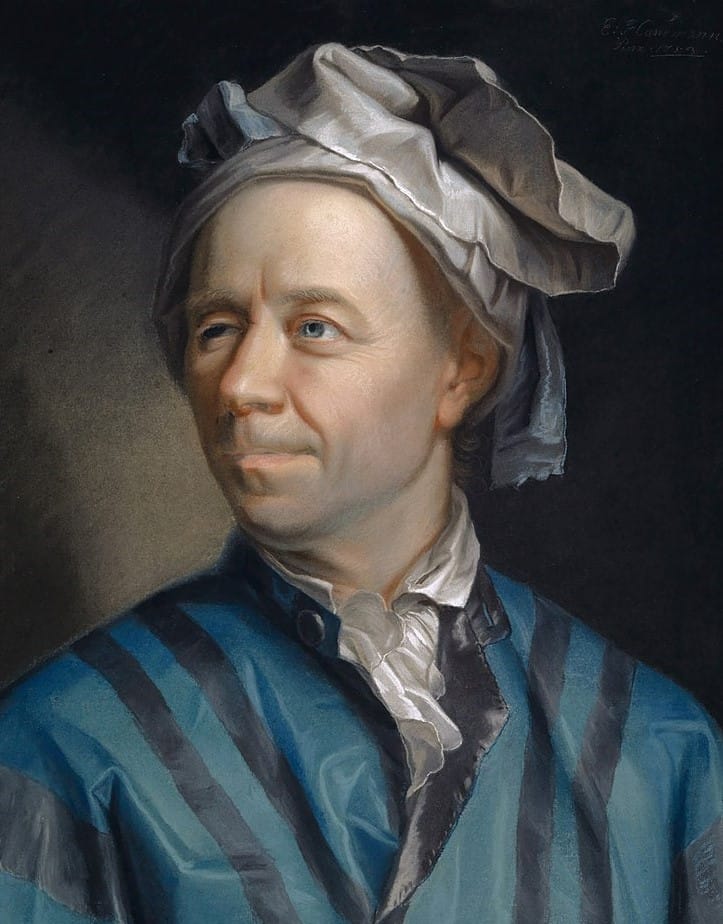
Euler was born on April 15, 1707, in Basel, Switzerland. His father was a friend of the famous mathematician Bernoulli (pronounced *bernuli*). Euler received his first mathematics lesson from Bernoulli. He started Basel University at the age of 13. He decided to become a mathematician instead of a priest. After being rejected by Basel University, Euler continued his career in 1727 in St. Petersburg, the capital of Tsarist Russia. In 1731, he became the head of the Mathematics Department.
In 1741, he started working at the Berlin Academy. He rejected offers from Basel University, which had once refused him employment. In 1766, he returned to St. Petersburg. In 1773, he lost his wife in a house fire. He lived for many years with near-blindness. He died on September 18, 1783, from a brain hemorrhage. Euler's tomb is today in the Alexander Nevsky Monastery in St. Petersburg.
***
After this brief explanation of his life, it is time to write Euler's famous formula:
Euler's Formula, in its general form, is as follows:
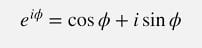
It is noteworthy that the left side of the formula is an exponential (i.e., logarithmic) expression, and the right side is a trigonometric expression. This equality, which connects two different areas of mathematics, is considered the most important formula in the history of mathematics.
THE WORLD OF PHYSICS: MAXWELL (pronounced *meksvuel*) FORMULA
Just as combining two different fields into a single formula in mathematics occupied humanity for hundreds of years, similarly in physics, the question of whether it was possible to establish a relationship between magnetism and electricity preoccupied minds.
Experimentally, the English physicist Faraday (pronounced *faraday*) had determined that electric current had an effect on magnets, and magnets had an effect on electric current. Was there a formula that could unite these two different worlds?
The answer to this question would be given by Maxwell (pronounced *meksvuel*), one of the greatest geniuses in the world of physics, alongside Newton and Einstein.
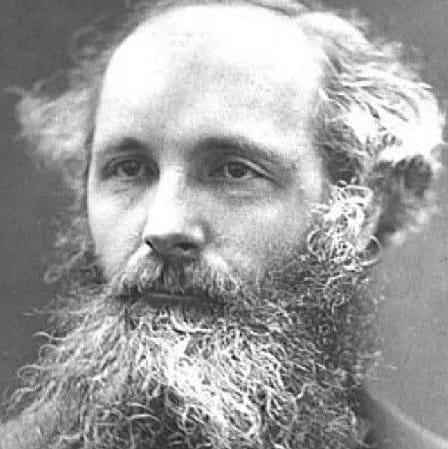
James Clerk Maxwell was born on June 13, 1831, in Edinburgh, the capital of Scotland. In 1841, he started at the Edinburgh Academy. He was humiliated and scorned in Edinburgh due to his rural accent and attire. During his academy years, he experienced loneliness and exclusion. He developed an interest in mathematics and published his first scientific paper at the age of 14.
Maxwell proved that electricity and magnetism, which appeared to be unrelated, were the same thing with his famous Maxwell's Equations. Maxwell also proved that electric and magnetic fields propagate in space in wave form at the constant speed of light.
Although they are difficult to understand, I would like to include the four Maxwell's Equations that fundamentally changed physics here:
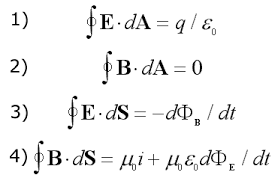
(These equations prove how electric charges and electric current create electric and magnetic fields, and also how an electric field creates a magnetic field.)
Thanks to these formulas, electricity and magnetism became interconnected.
NOTE: I would also like to remind my readers of this: Einstein proved the relationship between the mass and energy of an object with his famous E = mc² formula. Here, E represents energy, m represents mass, and c represents the speed of light. Einstein wanted to combine the theories of general and special relativity into a single formula but failed. His goal was to reach a single mathematical formula that would explain the behavior of quantum particles and celestial bodies.
POLITICAL SCIENCE: MONTESQUIEU'S (pronounced *monteskiyö*) LAW
The question of "what is democracy" has been debated since ancient Greece. For the first time, the French philosopher Montesquieu gave a clear answer to this question, explaining a good democracy with the principle of "Separation of Powers." According to this, if a balance is established between the legislative, executive, and judiciary, that is, if these three powers are independent of each other, then the best model of democracy is achieved.
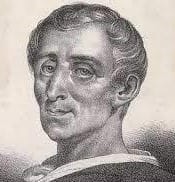
Montesquieu was born in Bordeaux in 1689. He studied law in this city. In 1708, he worked as a lawyer. In 1714, he was elected President of the Court of Appeals in the Parliament of Bordeaux. In later years, he traveled to Austria, Hungary, Italy, the Netherlands, and England. He withdrew into seclusion for his scientific studies. While focusing on natural sciences, he also examined social problems. Montesquieu died in Paris in 1755.
The question is: Is it possible to find a mathematical equivalent for a political definition like "democracy"? Can a formula be proposed that connects two different fields, namely politics and mathematics? We know that political science and mathematics are approaching and intertwining thanks to statistics. Is there more?
The mathematical formula for Montesquieu's "Separation of Powers" principle is as follows:
Legislative + Executive + Judiciary = 0 (zero)
Here, Legislative, Executive, and Judiciary are mathematical values, which are positive integers including zero.
This formula means: Three positive integers (including zero) will be added together so that the result is zero. There is only one answer to this:
Legislative = 0 (zero)
Executive = 0 (zero)
Judiciary = 0 (zero)
To elaborate further, the number "0" expressed in the equations means that each power (legislative, executive, judiciary) is completely independent. The sum of the three powers being zero indicates perfect democracy.
Currently, Turkey has a Presidential System. Since the President has the authority to issue Presidential Decrees (KHKs), he assumes some of the powers of the Legislative. Furthermore, considering the Executive's (President's) power to intervene in the Judiciary, we can say that the result of the Legislative + Executive + Judiciary formula is not "0," meaning we are moving away from Democracy.
Our hope is that the new elections will make the Separation of Powers formula functional. Will the proposed Enhanced Parliamentary System be able to achieve this?