Medet Serhat, Martyr of Democracy
This article commemorates Medet Serhat, a lawyer and advocate for democracy and Kurdish identity, who was assassinated in 1994, drawing on an interview with his wife, Yurdanur Serhat.
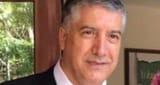
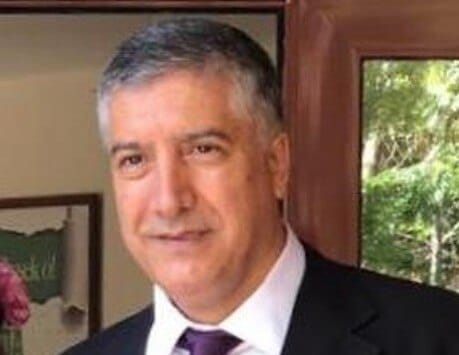
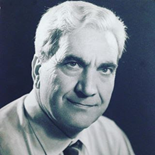
MEDET SERHAT, MARTYR OF DEMOCRACY
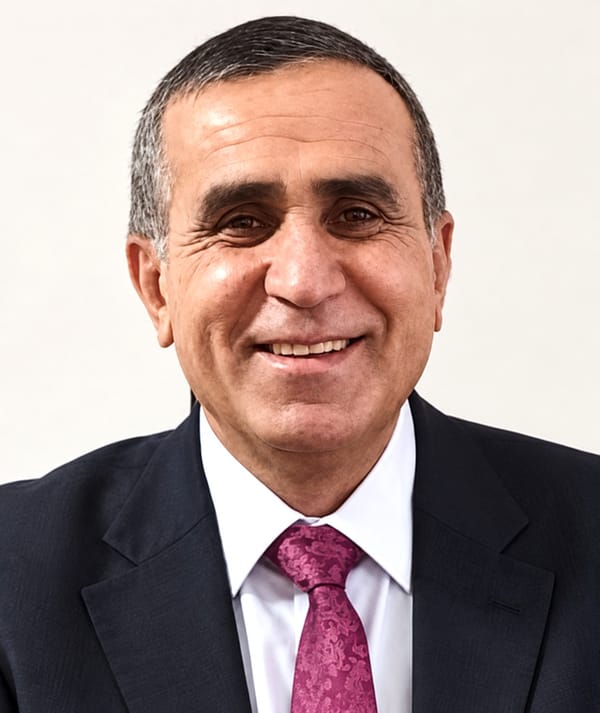
Lawyer Medet Serhat, a great man and my esteemed elder brother, an intellectual and democrat who embraced the struggle for democracy as a way of life throughout his political career, was brutally martyred on November 12, 1994, by dark forces entrenched within the state and ruthless assassins. Medet Serhat, one of the exceptional personalities raised in Iğdır and an unyielding fighter for the Kurdish identity struggle, dedicated himself to the Kurdish cause in his youth. In 1959, he was imprisoned along with Kurdish intellectuals known as the "49s," facing charges that could lead to execution. In the 1960s, he published the magazine Deng with Yaşar Kaya, steadfastly continuing his struggle. In 1977, he ran for MP from the CHP (Republican People's Party), and in 1979, he was a candidate for Senator from the same party. After the 1980 coup, he was subjected to intense and brutal torture. He did not bow to threats and pressure. They thought they could get rid of him by martyring him for his resolute and upright stance. However, today, his sacred memory and fighting spirit reside in the heart of every Kurd. May his soul rest in peace!
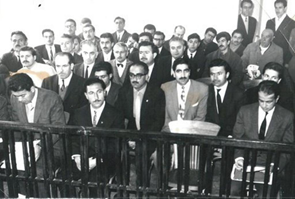
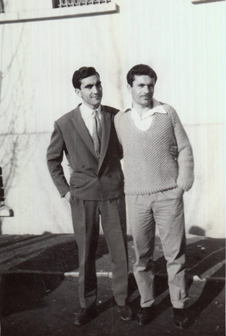
Lawyer Medet Serhat and Doctor Şıvan (Sait Kırmızıtoprak)
The article you are about to read below is based on an interview I conducted in 2000 with the late Medet Serhat's wife, Mrs. Yurdanur. I present to your attention the article I prepared that day.
THE BOOK "IĞDIR SEVDASI" (LOVE FOR IĞDIR)
NARRATED BY: YURDANUR SERHAT
YEAR: 2000
INTRODUCTION
Iğdır is a prisoner of an incomprehensible, blind fate: it loses most of its valuable children prematurely. Just when it should be benefiting from their skills and experience, it goes to bid them farewell on their last journey, handkerchief in hand, with sorrow. One of those who departed from us in this way was the late Lawyer Medet Serhat.
Medet Serhat, with his charisma, knowledge, and talent, was at the pinnacle of his profession. But one day, the car he innocently boarded was followed by a "white car" lying in ambush, cornered in a secluded street; death machines spewed blood. He is no longer with us...
Mrs. Yurdanur, with courage and fortitude, relived that moment, full of pain and trauma, for us.
YURDANUR HANIM'S LIFE
I was born in Zonguldak in 1940. On my mother's side, I am Caucasian. My mother's maternal side is Georgian, and her paternal side is Circassian. My father was from Malatya. (I have no information about his ethnic origin.) My grandfather was known as "Topuz Şakir" among the people because he was short and round. My father lost his parents at a young age and enrolled in a military boarding school. He only had a step-brother as a relative. When he passed away without having children, my father was left without relatives or anyone.
When my father was a student at the Military Rüştiye (junior high school), World War I broke out, and he was taken from school and sent to the front. While rushing from one front to another, he was captured by the British in Yemen. When he was released, he served on the Çanakkale (Gallipoli) front.
My mother's family came from the Caucasus and settled in Çorum. My mother married a renowned religious scholar named Ali Rıza Saman, who had interpreted the Quran, and moved to Istanbul. Soon after, my mother would witness the occupation of the capital by the French and British (March 1920).
Three years later (October 1923), when Turkish troops entered Istanbul, my father was serving in a military unit under the command of Refet Pasha. As fate would have it, my mother and father had lived in Istanbul during those years separately, without knowing each other.
After the war, my father left military service and went to Çorum as a teacher. My mother, who had divorced her first husband, returned to her father's house in Çorum with her daughter. My father and mother met and married in Çorum.
"My father is a soldier again"
In 1939, when the danger of war became imminent, reserve units were formed, and my father was conscripted again. When he went to Samsun and reported to his unit, his classmate from the Military Rüştiye, who was serving as a Lieutenant Colonel, said:
"Şükrü, we don't want you to leave Samsun," and they kept my father in an administrative position at the Military Recruitment Office. My mother, my two elder brothers, and I moved from Çorum to Samsun and stayed there until the end of the war.
One of my elder brothers had started working as a police officer in Istanbul. In 1947, the year I entered the second grade of primary school, my father passed away, and I went to live with my brother in Fatih, Istanbul.
INSTITUTE OF MATURATION (OLGUNLAŞMA ENSTİTÜSÜ)
I completed primary and secondary school in Fatih and continued at Cağaloğlu Girls' Institute (Olgunlaşma). After graduating from the sewing department, I wanted to become a teacher, but my family objected, so I gave up on my wish and started earning a living as a tailor.
POLITICS IN THE RELIANCE PARTY (GÜVEN PARTİSİ)
In 1967, when Turhan Feyzioğlu, a Kayseri MP, left the CHP and founded the Güven Partisi, an unexpected path to politics opened for me. When friends pressured my elder sister, who had been residing in Kayseri since 1952, to join the GP,
"I cannot help you with this. But talk to my sister in Istanbul, maybe she might be willing to work with you," she said. One day, I received an invitation to a meeting from the GP's Fatih district branch. The speeches during the meeting impressed me. Although a friend, seeing my eagerness to enter politics, gently warned me, "Politics begins where morality ends, why would you be eager for this?" I decided to play the hand I was dealt.
I became the head of the women's branch of the GP Fatih district. After getting a little warmed up to politics, I was elected as the head of the GP Fatih district. Due to my duty, I would go to the Parliament and meet with figures such as Turhan Feyzioğlu, Ferit Melen, Emin Paksüt, and Fethi Çelikbaş, who formed the party's leadership. Since I was not seeking any personal gain, I was taken seriously, and my work was appreciated.
MY MEETING WITH MEDET SERHAT
Meziyet Çınar (sister of Kâmuran and Celadet Bedirxan) was the head of the GP's Women's Branch. She often invited close friends to dinner at her home and organized discussion and conversation parties. Kurdish youth usually showed interest in these gatherings. Medet was among them.
My first meeting with Medet was at such a gathering. In the group of friends, Medet was described as "married but living separately from his wife, willing to divorce." Medet worked as a lawyer and stayed at Oğuz Bey's house in Balmumcu. Our friendship continued at a distance for a long time.
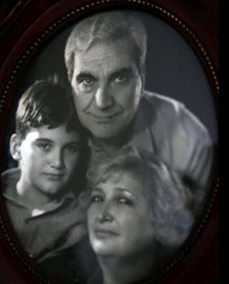
SENIHA HANIM
I never had the chance to meet Seniha Hanım face-to-face. I know she was originally from Gümüşhane. They met during the years when she worked as a lawyer in the same office as Ziya Şerefhanoğlu, when Medet, then a law student, visited there. This friendship later turned into a romance, and they lived together for about five years without being officially married. It was rumored among their friends that Medet married Seniha Hanım in defiance of Musa Anter and Eyüp Serhat, who told him, "Don't be with a woman so much older than you." (There was a 17-year age difference between Seniha Hanım and Medet.)
WAS THE GIRL FROM THE GÜVEN PARTİSİ THERE?
Medet confessed to me in later years, "Seniha forced you into my head. When I came home and said, 'I'm coming from Meziyet Ablam's place,' Seniha would ask in a cautious tone, 'Was that beautiful girl named Yurdanur from the GP there?' Because of this questioning, my interest and curiosity about you grew every day."
I was aware of Medet's closeness and interest in me. One day, as we were walking towards Taksim again, Medet – he was living separately from Seniha Hanım at the time –
"I made a wrong marriage. I want to remarry and have children," he said. This was a clear marriage proposal. I reacted to his words, saying, "Where did that come from! Look, we're good friends. You won't make a village for me, and I won't make a town for you!" As time passed, I realized my interest in Medet was growing. Finally, one day we got married and united our lives. We have a son named Rumet, born in 1978.
MEDET SERHAT WAS SWEET-TONGUED
Medet was handsome. And when he was also very gentlemanly and sweet-tongued towards the people around him, these two qualities increased his charm. During our holidays in Avşa, I sometimes encountered amusing situations. To a lady who came to our table, Medet would say, "My dear, my darling," and the woman would think this was a special compliment made to her and would be overjoyed; just then, when another lady came, Medet would again address her with the same innocence and beauty, "My dear, my darling," and the first lady, seeing that Medet paid this compliment to everyone, would be surprised and walk away disappointed. I would watch them and be amused.
POLITICS
Medet ran for elections as an MP from Kars for the CHP in 1977 and as a Senator candidate in 1979, but he did not win. Medet was the secretary of the Istanbul Bar Association. At the initiative of Bar Association President Orhan Apaydın, Medet became a member of the Peace Association, which included elite members such as Ahmet İsvan, Zühal Olcay, and Lâle Mansur. When the September 12 coup occurred, members of the Peace Association were arrested and sentenced to various prison terms ranging from 18 to 36 months. Medet found an opportunity to flee abroad and hid in London. The Peace Association case continued for nearly a year. When Medet returned, his sentence was converted to a suspended sentence without the need for arrest, and he was released.
A TRAP FOR MEDET SERHAT
Medet had a wide circle of friends. One of them was the owners of the "Cihanerler" company, which dealt in leather. This family from Antep had invited us to a wedding ceremony.
MEDET SLEPT ON MY LAP
High-ranking executives from institutions such as the Court of Accounts, the Council of State, and the Court of Cassation also attended the magnificent wedding ceremony held at the Bakırköy Holiday Inn hotel. The ceremony continued until late in the evening.
To go home, I, Medet, and Edip Bey's (the judge's) wife, the three of us, went out in front of the hotel together. As soon as our driver İsmail saw us, he pulled the car up to the front of the hotel. Medet impatiently threw himself into the back seat of the car without waiting for Edip Bey, so I was forced to sit in the back seat next to Medet, at the cost of disrespectfully leaving the woman alone.
When the car started, Medet said, "I feel very bad."
"Loosen your belt, you'll feel better."
Medet did as I said, rested his head on my lap, and immediately fell asleep.
A WHITE CAR OVERTOOK US
We had come from Bakırköy to Bostancı without any traffic problems. After passing Maxim, the driver sped up even more. Thinking we were approaching home, I instinctively opened my bag and took out the keys.
Medet continued to sleep on my lap. "I'll wake him up when we get home," I told myself. The car entered Noyan Street. When we turned left at the traffic lights and entered Ethem Efendi Street, a white car positioned itself on our left. As our driver slowed down to turn into the small street on the left, the white car also parked right at the mouth of this street. We were forced to stop and waited for the road to clear again. With tired eyes, I stared at the car, waiting for it to clear the way. Medet was sleeping on my lap.
The rear door on the driver's side of the white car opened, and a well-dressed young man emerged.
MEDET DIED ON MY LAP
He had a short-barreled machine gun in his hand. He approached the driver İsmail. He fired a single bullet at his head. As İsmail threw his head back and then leaned forward as if to straighten up again, the young man pulled the trigger a second time, and İsmail silently slumped to the side.
The young man turned to us in the back seat. Medet was still in a deep sleep. The young man pointed the gun at Medet and pulled the trigger continuously. I leaned over Medet's head to save him from the hail of bullets. I would later realize that I was too late in this action when I learned that Medet had been hit by bullets that entered his eye and reached his brain during the first salvo.
The young man continued to spew the death machine on us. With every shot of the gun, I screamed, "Ay ay ay!" I was wounded, but I was conscious. I watched what was happening with helpless eyes. The young man stopped firing and got into the back seat of the white car.
Since it was a dead-end street, the car had to move our car out of the way to exit. Indeed, when the white car pushed from the front, our car, whose engine had stopped, slowly started to move backward. The young man got out of the car one last time and continued to spray bullets through the front window.
I was leaning over, trying to see if Medet was breathing. The bullets hit the back upholstery. If I hadn't leaned over Medet at that moment, I would have been the target of the bullets.
The white car sped away. Our car also crashed and stopped with a thud. Medet had died in his sleep, his head on my lap, unaware of everything that had happened.
Severely wounded, I shouted as loudly as I could, "Help! Save us!" Every evening, this street would be full of cars. On the day of the incident, there were only three cars. The young people ran to Bağdat Street and asked for help. A police minivan arrived at the scene. The police asked for my help to open the door from the inside, but I couldn't press the button due to the bullet wound that entered my finger and exited my nail. With difficulty, they opened the door and carried Medet to the minivan. I took Medet's bag from the trunk and got into the minivan. It was then that I first realized Medet had passed away.
THE YOUNG MAN
I had seen the young man who showered us with bullets from a distance of 1.5-2 meters. His facial features, his appearance, were strongly etched in my memory. "Was it Çatlı?" they asked me, showing me pictures of Çatlı. No, it was definitely not Çatlı. Çatlı's face was short, but this one's was longer and more shapely. He had beautifully cut hair. He was wearing a vested suit in gray or light green.
14 of the bullets that rained down on us hit me. All my internal organs except my heart and kidneys were damaged. Since my stomach was completely shattered, they made a stomach from my large intestine. Similarly, my gallbladder and spleen were also damaged and removed. 12 cm of my large intestine, which was hit, was cut and removed. 8 separate stitches were put in my small intestine. My lung was operated on in the same way. One of the bullets that hit my arm traveled through my body and, by great luck, passed millimeters away from my heart!
I had been discharged from the hospital. One day, I went to the hospital for a check-up. The doctor was surprised to find me standing upright: "My God, I can't believe it! If you hadn't called and said you were coming, I would never have believed that you were the woman who was in a coma with fourteen bullet wounds a few months ago."
MEDET SERHAT IN ZİNCİRLİKUYU CEMETERY
Medet was born in 1934. He was 60 years old when he passed away. While I was in a coma in the hospital, a funeral ceremony was held for Medet at the Şişli Mosque. According to reports, his compatriots, friends, and a wide section of the public attended the ceremony.
THE KILLER YOUNG MAN: TEVFİK AĞASOY
After I was discharged, the police came to my house and gathered information about the details of the incident. When they conducted an investigation and learned how the ambush was planned, they said, "If we had been here, we couldn't have done anything against the perpetrators in such an intense attack."
About 1.5-2 years passed. One day, I was sitting in front of the TV, watching the news. A young man named Tevfik Ağasoy was brought before the camera as a confessor. As soon as I saw his face, my whole body and arms began to tremble:
"Yes, this was the young man who shot at us, I had no doubt about it!"
One day, the dark organization invited Tevfik Ağasoy on the pretext of a secret meeting and eliminated this young man, whom they found dangerous because he knew important secrets. Tevfik Ağasoy's grave is also in Zincirlikuyu, two rows below Medet's grave. Whenever I go to Medet's grave, I recite a Yasin prayer for Medet and his grave neighbors. Then I turn to Medet and say to myself, "Medet, look, Tevfik Ağasoy, who shot you, says, 'I killed Medet, but my aunt also sent a Fatiha for me.'"
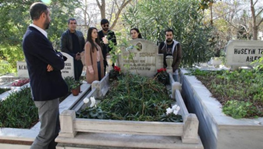
The late Medet Serhat, Martyr of Democracy, in his Eternal Resting Place