Once Upon a Time in Kurdistan, Garzan
This article delves into the history of the Garzan region and the prominent Kurdish leaders Bişarê Çeto and Cemilê Çeto, drawing on the personal narrative of Yıldıray (Burhan) Akgül.
Dear Readers:
Life is full of surprises. You embark on a journey, and while chatting with someone sitting next to you, a dark page of history inadvertently comes to light. Or, while relaxing and enjoying the sun at a holiday destination, an ordinary conversation with someone you least expect gains depth, bringing you face-to-face with a period you've always been curious about.
Such a situation happened to me: a friendship developed between me and Mr. Yıldıray (Burhan) Akgül, whom I met in Marmaris. One topic led to another, and suddenly, an important page of Kurdistan's history appeared before me in all its glory.
As our conversation continued, interesting events and anecdotes about the historical figures of an era, the brothers Bişarê Çeto and Cemilê Çeto, and the Mala Faro family, were recounted one after another.
INTRODUCTION
Until the first half of the 19th century, semi-independent principalities ruled in Kurdistan. Independent in their internal affairs and possessing their own judicial systems, the only obligation of these principalities was to pay taxes and provide soldiers to the Ottoman Central Government.
The concepts of "Nation-State" and "Centralized State," which deeply influenced Continental Europe with the 1789 French Revolution, forced the Ottoman Empire to take serious steps. With the Tanzimat Edict declared in 1839, significant regulations were introduced, especially in taxation, military service, and justice. Accordingly, taxes were to be collected centrally, military service was to be centralized, and judicial proceedings were to be based on the same principles.
Kurdish principalities had two options: either declare their independence and establish their own states, or adapt to change. The Kurdish Principalities initially tried to become independent states. They failed and were disbanded one by one. The principalities disappeared, but the Central Government also failed to achieve its goals. Thus, a new page opened in the history of Kurdistan. The tribes and tribal confederations that created and sustained the principalities began to act to fill the political and military power vacuum that emerged throughout Kurdistan. During this process, inter-tribal and intra-tribal conflicts accelerated. Local sheikhs also filled the void in the judiciary.
The Kurds moved away from the state experience and understanding they had gained through the principalities. When the peoples of the Balkans, the Middle East, and the Caucasus began to struggle to establish their nation-states, the Kurds, whose minds and physical integrity were shattered, had neither the political will nor the motivation to make such a breakthrough.
In this period, which would last for more than a century, the only force that kept the Kurds alive was tribal leaders, aghas, and sheikhs. Kurds, who remained within the borders of the nation-states emerging on all sides, resisted the assimilation, genocide, and exiles implemented by central governments with their tribal identity and resistance.
Let's admit it: if it weren't for the tribes, the Kurdish identity would not even be mentioned today. Of course, the task of tribal leaders, aghas, and sheikhs was not easy. In this difficult period, where the political agenda changed rapidly and the ideals and impositions of nation-states exceeded their will and mission, they were, in a sense, caught in the middle. Sometimes they approached the central state, sometimes they moved away. There were no traitors. There was inadequacy and being behind the times. There were no culprits. There was the instinct and anxiety to continue their existence. They either remained spectators of the nationalisms of other nation-states that surrounded them, crushing the Kurdish identity like a steamroller, or they were deceived and took part in those movements. This was natural. There were no traitors.
In this difficult process, the Kurds found solace in their tribal heroes, trying to hold on to the future in their courage and independent stance.
The Garzan region also created its own heroes. The abandoned, historically backward, and civilizationally hindered or interrupted Kurdish people attributed meaning to the lives, resistances, and struggles of their tribal leaders; when they died, they mourned them and immortalized them in epics.
Sometimes this leader could be a brave man who died in a conflict after a raid, like Silêmanê Mistê or Emê Gozê; sometimes, he could be a hero like Bişarê Çeto, who rebelled against the Ottoman Government many times, but when the First World War started, he voluntarily went to the front and died fighting against the Russians; sometimes, he could be a leader like Cemilê Çeto, who rebelled against the Ottoman Government, but believed Mustafa Kemal's invitation letters during the National Struggle years and became silent, and was sent to the gallows despite being innocent.
As I said, there are no traitors, only Kurdish heroes who were tossed back and forth in the maelstrom of nation-state ideals. They swayed back and forth like a boat traveling on a rough sea. The klamlar (folk songs), stranlar (songs), and laments they left behind blossomed anew in the hearts of the new generation, making the heroes unforgettable.
I respectfully commemorate these heroes who lived in an unfortunate period of Kurdish history.
WHERE IS GARZAN?
In the late 19th century, the Garzan District, part of the Siirt Sanjak of the Bitlis Vilayet, was bordered by the Başur River to the east; the Kulb and Silvan district of the Diyarbakır Vilayet and the Beşiri sub-district to the west; the Rızvan sub-district to the south; and the Mutki and Sason districts to the north. The Garzan district, consisting of three sub-districts named Rızvan, Melfan, and Barınç, had one hundred and seventy-three villages.
Today, place names have changed. The Garzan (Yanarsu) Stream forms the natural border between Batman and Siirt provinces. This basin, irrigated by the Garzan Stream, is known as "Garzan." Siirt is to its east, and Batman to its west.
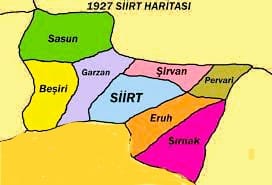
The Garzan region is located on an important route connecting the East to the Mediterranean and Anatolia to Mesopotamia. It has hosted many civilizations throughout history. Today, the two important districts of the Garzan region are Kurtalan, affiliated with Siirt, and Beşiri, affiliated with Batman.
YILDIRAY (BURHAN) AKGÜL NARRATES
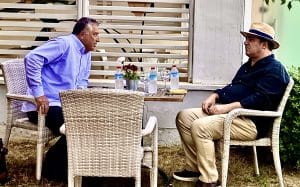
Mücahit Özden Hun and Yıldıray Akgül, chatting (2023, Marmaris)
I was born in Kurtalan on June 1, 1969. My actual birth date is 5-6 months earlier. My father worked as a municipal police officer in Kurtalan Municipality. The Mayor of Kurtalan was my father's paternal cousin.
My father's name is Selahattin, and my mother's is Belkize. My grandfather's name is Abde. He is popularly known as Heci Ebdi. Abde Bey is Cemilê Çeto's eldest son.
"BROTHERS" RESTAURANT IN MARMARIS
We are eleven siblings. In 1990, two of my brothers came to Marmaris. They worked in painting and construction. In those years, about 200 young people from our tribe were doing similar jobs, especially in Aydın Nazilli.
Gradually, our family settled in Marmaris. We wanted to establish a family business. We didn't have enough capital. My father sold our tractor in Kurtalan and eleven truckloads of barley from our own field to raise capital. We rented a restaurant for 40,000 Marks. We named it "Brothers."
Our employees were our relatives. In those years, Marmaris was just developing. So much so that businesses didn't even have cash registers yet.
One-third of our turnover came from tips. I would like to explain why: since we didn't have a commercial culture and had internalized Eastern hospitality, we were quite generous to our customers. We embraced them like family and took care of all their problems. We even looked after customers who fell ill or were hospitalized, ensuring their comfort. In short, those who came to us felt as if they had fallen into paradise. Customers reciprocated our friendliness and sacrifice, rewarding us with generous tips. Our bond of friendship was so strong that tourists, when their holiday ended and they were about to return to their countries, couldn't hold back their tears when saying goodbye to us. They would say goodbye by saying, "We will be back among you as soon as possible."
MY LIFE
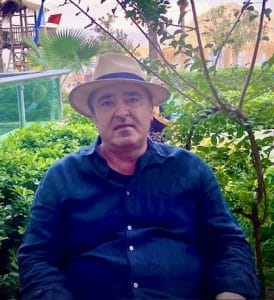
I completed my primary, secondary, and high school education in Kurtalan. My foreign language was French. I wanted to study Law. In my last year of high school, my father's financial situation was not good. I took a year off from high school to help my father.
After graduating from high school, I took the university entrance exams. I scored 126 points. Law was accepting students with 136 points. I was saddened. I registered at the two-year Education Institute in Siirt. I started studying in the Primary School Teaching department.
The political atmosphere was quite tense. My father was not keen on me continuing school under these circumstances. Also, I was a financial burden on the family. After continuing my education for one semester, I took a break. I came to Marmaris. For a while, I helped my father. I returned to my school in Siirt. I had to repeat the first year. This time, another misfortune arose. The two-year school had been extended to four years. That is, my friends who started school at the same time as me would graduate in two years, but since I had taken a year off, I would study for four years as a new student. This situation made me uncomfortable. I dropped out of school and came to Marmaris.
Most of our customers were Dutch. The Dutch are friendly people with strong human relations. They came for holidays but became very close with the shopkeepers.
I had a Dutch girlfriend. When she sent me an invitation, I went to the Netherlands. I thought we would get married. The girl started crying as soon as she met me at the airport. I thought she was crying out of joy. I would learn the truth on the second day. It turned out her father had stipulated, "I don't want you to marry a foreigner." That's why the girl was crying. I made it a matter of pride: "I came here with a thousand difficulties. Since your father doesn't want me, I don't want him either."
I rented a room in Rotterdam. I enrolled in a Dutch language course. In a short period of two months, I could speak broken Dutch. I was in a hurry because my money was running out. Knowing Dutch was essential to work in the Netherlands. I wasn't thinking of returning to Marmaris because my family hadn't wanted me to go to the Netherlands. I stayed in the Netherlands for six months, working various jobs. I improved my Dutch. I obtained a residence and work permit. I locked my belongings in my room and returned to Marmaris.
Since I knew Dutch, I could easily make friends with the Dutch. I had 3-4 Dutch girlfriends. When the summer season ended, I went to the Netherlands. One of the girls I met lived in Rotterdam. It was the days when I was about to return to Marmaris. She made an offer: "Don't pay rent for the room unnecessarily! If you want, you can leave your belongings with me."
Every winter, I would go to Rotterdam and stay with this girl. We were together for ten years. Since I had a residence permit, I qualified for Dutch citizenship. We had a son together. We named him Tim Faro. He took his mother's surname (Fangaster). He is now 23 years old. He finished school. He wants to come and work with me.
In 2011, I returned to Turkey. I wanted to get married. First, I looked for a girl among Kurdish families in Syria. There was even something like an engagement. For some reason, I gave up. This time I went to Iraq. I wanted to marry into the Barzani family. That didn't happen either. I married Hatice Hanım from my tribe in Kurtalan. From this marriage, I have two sons named Selahattin and İdris, and a daughter named Şekernaz.
***
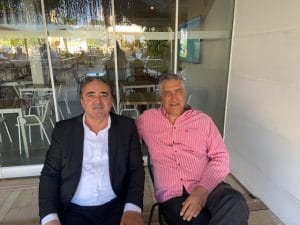
From left to right: Yıldıray Akgül and Mücahit Özden Hun
Our family owns four villages: Güzeldere, Aynqasır, Koha, and Magribe. The first oil in Turkey was found in Magribe village. The first pump is in this village and is still operating. We sold Magribe village thirty years ago.
In my childhood, few people knew Turkish. Village names were also Kurdish. Nobody knew their Turkish equivalents. When I was in middle school, our teacher said, "Everyone write the name of their village." I wrote, "Hırbemuse" (Musa's ruins). Our teacher curiously asked what this word meant. I replied, "It's the name of our village." He was surprised. I also became curious and asked my grandfather. I learned its Turkish name.
Similar incidents happened frequently. We would be sitting in a coffeehouse, drinking tea. A newly appointed teacher would come to the coffeehouse and ask, "Where is Güzelbahçe village?" Since we didn't know this name, we would look at each other and then say, "Honestly, there's no village with that name around here." The poor teacher would struggle for hours to learn the Kurdish name of the village.
The Turkish name of Aynqasır village is Konakpınar. The word "Aynqasır" is Syriac. It means "pupil of the eye."
FAROS COMPANY
I initially wanted to name my company "Abde." However, we are a large family. I thought I should choose a name that would encompass the entire Mala Faro family. By adding the English plural suffix "S" to the word "Faro," I found the name "FAROS" suitable. FAROS means Lighthouse in Greek. Also, Egyptian Pharaohs are known as FAROS in some languages. The name of a port city in Portugal is FARO. There is a neighborhood named FAROZ in Trabzon. The Faroe Islands, part of Iceland, also evoke a similar association.
Today, I own three hotels in Marmaris named "FAROS Premium Beach," "FAROS Contess," and "Grand FAROS."
PENCINARÎ TRIBE CONFEDERATION
My tribe's name is Pencinarî. The Pencinarî Tribe has a confederation organization consisting of seven tribes. I belong to Mala Faro.
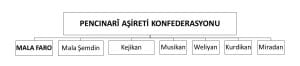
Pencinarî Tribe Confederation
The Pencinarî Tribe was previously governed by Mala Şemdin. They were the bravest family within the confederation. Their lineage is also the smallest. The most numerous is Mala Miradan.
Faro comes as an orphan from somewhere and joins the tribe. He is loved because he is brave and capable. He marries into the Şemdin family. Then he takes over the leadership. Whenever Mala Şemdin finds an opportunity, they do not forget to remind Mala Faro of this history by saying, "You are our orphans (sewî)."
Until 200 years ago, the Pencinarî tribe was settled in the Muş region. A armed conflict broke out between two tribes in the pastureland. 100 men and 1 woman died. The state intervened. It settled the Pencinarî tribe in 65 villages in the Garzan region. These villages were inhabited by Armenians, Christian Kurds, and Yazidi Kurds. They began to live together. The state also allocated pastures and treasury lands to our tribe. During the Armenian deportation, when the Armenians were removed, these villages remained with our tribe. Even today, Armenian names like Agop and Yorgo can be found in the old land deeds of the village.
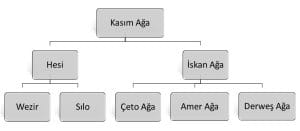
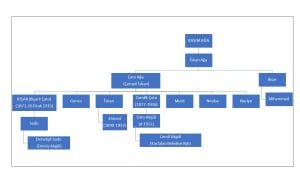
My lineage from my grandfather Faro to me is as follows:
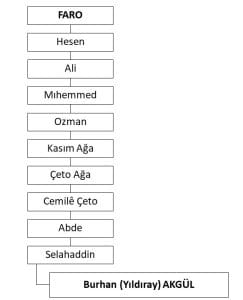
After Kasım Ağa, the family tree branches out as follows:
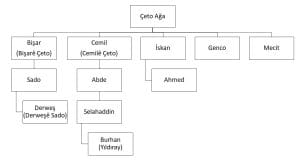
Çeto Ağa's lineage is as follows:
MY GRANDFATHER HACI ABDE (EBDİ)
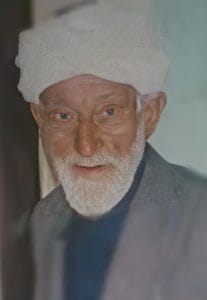
Hacı Abde Akgül
My grandfather Abde Ağa is the eldest son of Cemilê Çeto. Abde marries three times. He brings his first wife from Mala Mamet. For an unknown reason, Abde kills his wife. His second wife is the daughter of the Siirt Finance Director. She is Arab. She is my paternal grandmother. According to what they told me, they went with 40 white horses to bring the bride. Abde's third wife was a Christian Kurd. She was responsible for the household cleaning. Abde had two sons and one daughter from his wife from Siirt; and five sons and two daughters from his Christian wife.
MY FATHER SELAHATTİN AKGÜL
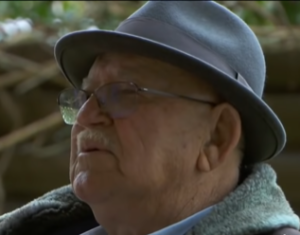
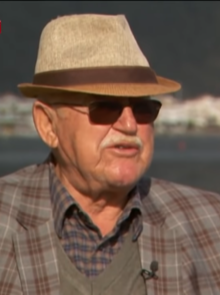
Selahattin Akgül
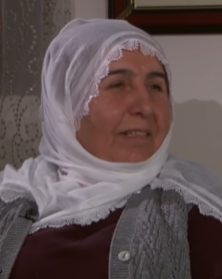
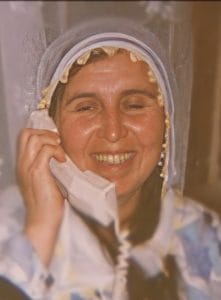
Şekernaz Akgül
When Cemilê Çeto was executed in 1926, Feremez became the leader of the tribe. Unable to withstand state pressure, our family migrated to Syria in 1936, settling in a village near Qamishli. My father, Selahattin Akgül, was born in Syria in 1942. My father attended school in Syria for 1 year. When he was 8 years old, our family returned to Turkey in 1950 after a 14-year absence. In later years, he married Şekır Naz Hanım from the Sılokî Tribe. They had 12 children. One daughter died at an early age.
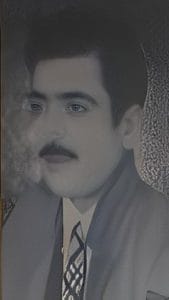
Selahattin Akgül
The people of Siirt settled in the villages and houses that were emptied during the Armenian Deportation (1915). To secure themselves, they strengthened their kinship ties by giving their daughters to our tribe. In later years, most of those who settled in these villages gave the power of attorney for their lands to my uncle and migrated to the West. We cultivated wheat, barley, and lentils on these lands. I also farmed between the ages of 16 and 21. I was involved in every task, such as plowing, sowing seeds, harvesting, and threshing. My father loved animal husbandry, but we did not go to the highlands.
Our family was settled in Kurtalan. My father bought the district's first black and white television (Sharp brand). Neighbors would curiously flock to our house to watch television. In my childhood, there was a cinema in Kurtalan. It was the district's only entertainment. We owned a bakery. We sold bread and büryan (a type of kebab). My father was both a civil servant in the municipality and involved in trade. He bought a BMC brand truck. He entered the trade business. He transported coal. My father also operated a local establishment. It was a frequent haunt for the district governor and district bureaucrats.
The reason for our success in Marmaris is my father's good commercial experience. My father was born in Tirbespiye village, affiliated with Qamishli in Syria. He stayed there for 8 years. His mother was Arab.
BİŞARÊ ÇETO
Born in 1871, Bişarê Çeto was the eldest son of Çeto Ağa. His father, Çeto Ağa (Çetoyê Îskan), who rebelled against the Ottoman Government, was captured wounded and sent into exile. Bişarê Çeto was also in Bitlis prison. Taking advantage of this, Çeto Ağa's brother Bişar's son Mıhemmed came to Aynqasır and took over the tribal leadership. When Bişarê Çeto was released from prison, he engaged in a leadership struggle with Mihemmedê Bişar. Mihemmedê Bişar's two sons ambushed Bişarê Çeto, but Bişarê Çeto killed both of them and took over the leadership of the tribe. Bişarê Çeto did not harm Mihmedê Bişar; he married his daughter.
Bişarê Çeto's name quickly spread throughout the region. His heroism, bravery, and mastery in using weapons were talked about everywhere. Dengbêjs composed dozens of songs about him.
When the First World War began, Bişarê Çeto went to the front with four hundred cavalrymen and fought against the Russians. He died in a clash with the Russians on January 26, 1915. Bişarê Çeto's grave is today 5-10 km from the Turkish border, in Iranian territory. In those years, this place was within the borders of the Ottoman Empire.
WEDDING GENEROSITY
Bişarê Çeto was a generous and open-handed person. One day, he went to Silvan with his friends. He was invited to a wedding he didn't know. Bişarê Çeto gave all the gold he had to the bride. When they went outside, they had no money to feed themselves.
CEMİLÊ ÇETO
When Bişarê Çeto was killed (1915), his brother Cemilê Çeto took over the leadership of the tribe. Born in 1877, Cemilê Çeto gathered the tribe that had dispersed after his brother's martyrdom. Even while Bişarê Çeto was alive, an unfortunate incident occurred. In an argument, Cemilê Çeto shot and killed his brother İskan.
Cemilê Çeto's wife, Siloyê Fattê, was from Dersim. Cemilê Çeto's children were brave and fearless. Among the people, there was an attribution for them like, "They took after their uncles."
Cemilê Çeto had 100 armed men, most of whom were salaried. He owned a flock of sheep numbering 5000. Some of his shepherds were Muslim, and some were Christian Kurds.
Cemilê Çeto took over the leadership of the tribe in February 1915. The Armenian Deportation occurred in the same year. During the deportation, the Mala Faro tribe helped the Armenians cross into Syria. They also hid and protected many Armenian families within the tribe. These Armenians still exist today with Muslim identities.
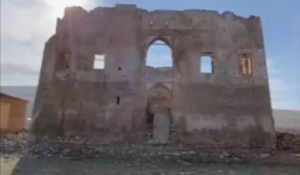
The current state of the mansion in Aynqasır that once hosted the leaders of the Mala Faro family
There was an Armenian Church in Aynqasır. They also protected the church. Our tribe took wives from Armenians, Christians, and Yazidi Kurds, in a sense, they became intertwined. Most of our employees were Christian Kurds. We entrusted our property to them. Just as the Ottomans called the Armenians "Tebaa-ı Sadıka / Loyal Community," we saw Christian Kurds in the same way.
As the Russians advanced on the Eastern Front, people from regions like Ağrı, Muş, Bitlis, and Van fled before the Russians towards Siirt, Garzan, and Diyarbakır. Cemilê Çeto settled the migrants in houses and distributed most of the grain and cereals in his granary to them.
An incident that caught my attention is told: There was an iron scoop to fill sacks with grain. The scoop was used so much that half of it melted away. This scoop is still kept within the family today.
When Cemilê Çeto ran out of wheat in his granary, he confiscated someone else's wheat. This man complained about Cemilê Çeto to the Sheikh of Norşin. Cemilê Çeto and the plaintiff appeared before the Sheikh together. Cemilê Çeto defended himself:
"I confiscated the wheat not for myself, but for the migrants."
The Sheikh found Cemilê Çeto to be in the right.
These were days of famine. According to what they told, during famine, people's eyesight would dim, and they couldn't see far. People ate whatever they could find, struggling to survive.
THE KILLING OF GENCO AND SILÊMANÊ MISTÊ
Genco is the fourth son of Çeto Ağa. He is the brother of Bişarê Çeto and Cemilê Çeto.
Silêmanê Mistê is from the Mala Dîbo branch of the Elikan Tribe in the Batman region. One day, Silêmanê Mistê, along with three friends, decides to raid the farms belonging to the Pencinarî and other tribes. They sit on Mount Kolik and discuss how to share the spoils. Then they attack. They take the animals they seized and quickly leave.
Cemilê Çeto, accompanied by his brother Genco, his nephew Ehmedê Îskan, and other tribal members, pursues them. In the ensuing clash, Genco and Silêmêna Mistê are killed. Genco is newly married. He still has henna from his wedding day on his hands. The bodies of Genco and Silêmêna Mistê are buried side by side in Aynqasır. (Genco has a daughter after his death)
Silêmêna Mistê's mother, Xatê, mourns for her son:
Şêwr û mişêwireteka giran danîn (They sat down for intense consultation and discussion)
Sê heb şade şûtên Silêmanê Mistê (Silêmanê Mistê's three hotheads)
Bavê Xelîl, Gula mala Dîbo hene (Halil's father, the rose of the Dîbo family is there)
Xwe berdaye Deşta Xerzan (He descended to the Garzan Plain)
Peşiya terş û talanê Xatimiyan (They cut off the herds and plunder of the Xatimis)
Peşiya terş û talanê Mala Keran (They cut off the herds and plunder of the Keran Family)
Ga û gamêşê nozde cotan ji Gola Modê (They took 19 pairs of oxen and buffalo from Lake Mut)
Peşiya terş û talanê Mala Faro (They cut off the herds and plunder of Faro's house)
Ji xata diya xwe re lawo (To his mother Xate, son)
Vê sibê diyarî anînê (They brought gifts this morning)
Xatê praises her son Silêmanê Mistê as the "Rose" of the Dîbo Family, a sub-branch of the Elikan Tribe. She describes him as a brave hero who raided neighboring farms and returned with spoils. She supports and praises her son's actions. However, the plundering is met with an attack led by Cemîlê Çeto, the leader of the Faro Family. Silêmanê Mistê is killed in the attack. In this lament, Xatê scolds her son Silêman, saying that plundering the Faro Family's farms was "ignorance." After her son is killed, she encourages her cousin Emê to avenge him:
Dibê: Xatê rebenê, termê Silêmanê Mistê (She says: Poor Xatê, the corpse of Silêmanê Mistê)
Bavê Xelîl Gula Mala Dîbo (Halil's father, the rose of the Dîbo Family)
Li serê Çiyayê Kolik (On the peak of Kolik Mountain)
Li Mexera Bênderokê mayê (Remained in the Bênderok Plain)
Were ha weylê (Oh, come on)
Xatê dibê, Emê lawo Memanî (Xatê says, Emê son Memanî)
Tu bala xwe bide Cemîlê Çeto (Look at Cemilê Çeto)
Bavê Feremez bi tan û niça îro (Feremez's father today with pushing and shoving)
Çi bi serêkekê te ve anî (What he brought upon your brother)
Tu bavê diya xwe bûyo lawo (May you be my father, son)
Şerê xwe bikin îro bi giranî (Fight your battle fiercely today)
Belkî Xwedê Teala siûd û îqbalê (Perhaps God Almighty will bring luck and fortune)
Ji te re li hevdû anî (To you)
Te heyfa Silêmanê Mistê Bavê Xelîl (You, Silêmanê Mistê, Halil's father)
Gula Mala Dîbo bi destê xwe hilanî (You take revenge for the rose of the Dibo family with your own hand)
Xatê is more saddened by the fact that her son Silêmanê Mistê's body was taken to Eynqasır village than by his death.
Heyfa min nayê li kuştina Silêmanê Mistê (I don't grieve for the killing of Silêmanê Mistê)
Bavê Xelîl, Gula Mala Dîbo (Halil's father, the rose of the Dibo family)
Heyfa min tê li vê hêyfê (I grieve for this pitiful situation that)
Çardara Silêmanê Mistê (Silêmanê Mistê's coffin)
Bavê Xelîl Gula Mala Dîbo (Halil's father, the rose of the Dibo Family)
Girêdane, dar nebû çar darên Gêncoyê Çeto (They tied it, there was no wood, Gêncoyê Çeto's coffin to one)
Eynqesra Bavê Şebo (They took it to Eynqasır of Bavê Şebo)
Lawo bi xwe re birine nav beyara (Son, they took him with them to the wilderness)
Gencoyê Çeto's mother also mourns at her son's funeral. Genco was wearing a suit and boots when he went on the attack. In an era when everyone wore sandals, wearing boots was a mark of honor. His mother, in her lament, praises him by saying, "Genco was going with his boots."
MUSTAFA KEMAL PAŞA AND CEMİLÊ ÇETO
In the days when Cemilê Çeto was strengthening his dominance in the region, he had the chance to meet Mustafa Kemal, who was assigned to the Eastern Front, face-to-face.
Mustafa Kemal, who completed the Gallipoli Campaign with the rank of Major, was promoted to Lieutenant Colonel on April 1, 1916. He was assigned to the Eastern Front to liberate Muş and Bitlis from the Russians. Lieutenant Colonel Mustafa Kemal, with a military unit of 10-15 men under his command, set off towards Siirt. To go to Siirt, it was necessary to pass through the Garzan Region.
Cemilê Çeto, with a militia force of 40-50 men, stood at a distance, watching Mustafa Kemal and his companions with binoculars. Realizing that an important Ottoman soldier was coming, he decided to meet the convoy. He moved towards Mustafa Kemal with his horsemen. Seeing a large group approaching them, Lieutenant Colonel Mustafa Kemal sent a horseman to them to find out who they were and what their intentions were. The soldier approached Cemilê Çeto and asked who they were. Cemilê Çeto introduced himself and said that their purpose was to meet the military commander. The horseman returned to Mustafa Kemal and explained the situation. Mustafa Kemal, unsure of the group's good intentions, went to Zoq, where there was a military outpost. Cemilê Çeto and his friends also went to Zoq. A conversation took place between them and Mustafa Kemal.
Next to Cemilê Çeto was his nephew Ehmedê İskan, renowned for his marksmanship. When they left Zoq, Ehmedê İskan turned to his uncle Cemilê Çeto and said, "Xwedê firsendê nede vî çavşînê, ew ê dawiya me bîne, (May God not give this blue-eyed man a chance, he will be our end)," and added: "Allow me! I will kill him on his way to Siirt."
Cemilê Çeto objected to the proposal: "You will kill a Lieutenant Colonel, and they will pile the world's soldiers on us."
THE NATIONAL STRUGGLE YEARS AND CEMİLÊ ÇETO
Mustafa Kemal convened the Erzurum Congress between July 23 and August 7, 1919. The Sivas Congress was next. Preparations were made. It was decided that the Congress would open on September 4. Mustafa Kemal needed Cemilê Çeto to ensure participation and consolidate his military power. He penned a letter (This text is included in Nutuk.)
Document 53
August 13, 1335 (1919)
To Cemil Çeto Bey, one of the Presidents in Garzan
Sir,
From the information I have received from those who came from that region, I learn of your efforts and sacrifices in protecting our beloved homeland against enemy demands, as indications of your strong and true loyalty to the exalted caliphate and our eternally living state. For this, I am very pleased and thank you.
In the telegraphic correspondence made before coming to Erzurum, I had stated my desire to come there at the first opportunity. But circumstances and events have not allowed it until now.
As you know and will learn henceforth, after the Armistice, the Entente Powers showed no respect for the rights of our state and nation, aiming to dismember our country and give its eastern provinces to the Armenians, to bestow the most prosperous places like Izmir from our western provinces to the Greeks, and to establish a Pontus Greek government on the Black Sea coasts. On the one hand, the British tried to deceive the people of Diyarbekir and its surroundings by giving them various forms. During my inspectorship of the Third Army, I decided to prevent these savage demands of the enemies. And I made the necessary initiatives for this. Some members of the government, held captive in Istanbul, proved ineffective in the eyes of foreigners due to their laxity in drawing strength from the nation. Naturally, our enemies were not pleased with my national and patriotic endeavors. They wanted to call me from Anatolia to Istanbul. However, since I decided to work with the nation and within the nation until the end, I immediately resigned from the military of my own free will.
It is known to you that Societies for the Defense of Rights have been established in all provinces of Anatolia and Rumelia. A congress was convened in Erzurum, composed of delegates from the Eastern Anatolian provinces and independent sanjaks. Thus, all the people of Eastern Anatolia united. They adopted resolutions for internal and external policy and also made an organizational regulation. I am presenting these to your esteemed person.
Within a few days, a general congress will be held in Sivas, composed of delegates from all the Western Anatolian and Rumelian provinces. In this way, the entire nation will come to a state where it can defend its rights as one body. A Representative Committee has been elected and accepted to represent the nation in a united state, both internally and externally, and I am also a member of this committee. God willing, the Assembly of Deputies will soon convene, and a strong government, sufficient to defend all the rights of the nation and the country, will come to power. Thanks to this unity and power shown by the nation, all foreign states, the British, Americans, French, Italians, in short, all of them, have begun to respect our homeland and nation. God willing, the outcome will be happy.
I have no doubt that the "Society for the Defense of Rights," formed by the unification of the societies in Eastern Anatolia, will save the independence of our state and the integrity of our homeland with its decisive efforts. Your esteemed person is one of the most important members of our Society. I am confident that with your zeal and effort, the organization in that region will be established in a short time in accordance with the provisions of the regulation I presented, and that the intrigues of the British, known for dismembering our nation and trampling our homeland under Armenian feet, will not be allowed.
I will temporarily go to Sivas to attend the Sivas Congress. After that, I will return to Erzurum. I kiss your eyes and send special greetings to all our citizens there, Sir.
Former Inspector of the Third Army
Mustafa Kemal
SHEIKH SAID REBELLION AND CEMİLÊ ÇETO
Sheikh Said began preparations for a rebellion. He sent letters to powerful tribal leaders in the region, inviting them to join the rebellion. He also sent such a letter to Cemilê Çeto. Cemilê Çeto was illiterate. He went to the Sheikh of Beykent village to have the letter translated. Cemilê Çeto asked curiously.
"What does the letter say?"
"Religion, caliphate, honor are being lost. Join us!"
The Sheikh gave his own interpretation, saying that the rebellion would fail. Although he regretted it in later years, Cemilê Çeto gave importance to the Sheikh's advice. If Cemilê Çeto had joined the rebellion, he could have quickly taken control of a large area.
The Sheikh Said rebellion ended in failure. Soldiers began to round up all the aghas and beys in the region, whether they had participated in the rebellion or not. Cemilê Çeto had not participated in the rebellion, and his relations with Mustafa Kemal were good. Despite this, he was forced to surrender on March 4, 1926. He was sent to the Independence Tribunal in Diyarbakır. Cemilê Çeto did not know Turkish. His interrogation was conducted through an interpreter. A death sentence was given. Cemilê Çeto was executed in July 1926 and buried in an unknown location.
CEMİLÊ ÇETO'S JUSTICE
The year is 1918. That year, Cemilê Çeto had 1200 sheep and four shepherds. The head shepherd was a Christian Kurd, the others were Muslim Kurds.
One day, the flock came to the village, but the Christian shepherd was nowhere to be found. Cemilê Çeto asked where the shepherd was. The Muslim Kurdish shepherds, as if by agreement, replied, "We don't know!" Cemilê Çeto suspected their attitude and statements. He had them tortured. They confessed: "We wanted to sell a few sheep from the flock, but we were afraid the Christian would report us to you. So we killed him." Feremez reached the body of the Christian shepherd. After burying the body, Cemilê Çeto executed one of the shepherds. He first hung the other two shepherds from a hook and then punished them by cutting the muscle tendons in their ankles so they would never herd again.
BLACK WHIRLWIND
One day, Cemilê Çeto was traveling with a relative. It was midday. Suddenly, a pitch-black whirlwind, kicking up dust and swirling, appeared before them. Cemilê Çeto drew his weapon and fired at the whirlwind. According to what they told, his relative was so terrified by this situation that he stayed in bed for days out of fear.
A PASHA IN SIIRT
The Sheikh Said Rebellion had just been suppressed. A Pasha came to Siirt. He asked the commander there: "Is there anyone here who opposes the state?" The commander replied: "There is Mala Faro here. They are as powerful as the state." The Pasha stepped forward: "Don't worry! I will deal with them in a short time."
The Pasha, with a cavalry unit of 150 men, set off from Siirt towards our village. The journey from Siirt to Aynqasır was 3-4 hours on horseback. The Pasha first arrived at Batas village (opposite the current Cement factory). He surrounded the village. He demanded they lay down their arms.
For Kurds, weapons are a matter of honor. The villagers objected, saying, "We are not guilty, why should we surrender our weapons?" When they refused to surrender their weapons, a conflict broke out. 4-5 people died on both sides. The Pasha was also wounded. The villagers captured the wounded Pasha and took him with them. The Pasha died and was buried in an unknown location. The state tried to find the Pasha's grave for many years but was unsuccessful.
XINAMÎTÎ GERM Û GERM (Kinship is hot, enmity is slow)
Cemilê Çeto had 5-6 wives. One day, one of his wives ran away while pregnant. Cemilê Çeto found out where she was. He sent one of his men to that village as an imam. He served as an imam for 1-2 years. One night, the imam, taking his assistant with him, killed the woman and her husband.
In tribal tradition, there is no rush for revenge. There is a proverb for this:
"Xinamîtî germ û germ, dijminîtî nerm û nerm." (Kinship is hot, enmity is slow)
The deceased woman had a daughter. In later years, she married an officer and settled in Antep. When registering herself, she registered herself as Cemilê Çeto's daughter. Years passed. They had no children. When the couple passed away, the court applied to Cemilê Çeto's family for the inheritance. According to what they told, the officer was a well-to-do person. He had shops, apartments, and orange groves. He left a large inheritance. Cemilê Çeto's relatives in Kurtalan claimed the inheritance.
FAMOUS PAINTER ÇEKO
These were the days when Cemilê Çeto was on trial for execution. His family was fleeing in fear. He had a newborn daughter named Nefia. Nefia's son, Çeko, currently lives in Sweden. Because they were afraid, they did not register Nefia as Cemilê Çeto's daughter in the population registry. Nefia was a Yazidi Kurd. She lived for 96 years.
FEREMEZ
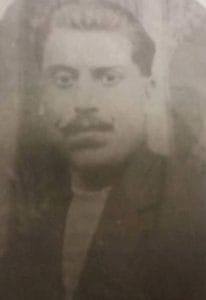
Feremez is Cemilê Çeto's son. When Cemilê Çeto was executed in 1926, Feremez became the tribal leader. The family was exiled to Niğde in 1926. In those years, due to the Exile Law, Kurdish notables were exiled to Western provinces. He remained in exile for two years. When an amnesty was issued, he returned to his village. Sheikh Selahattin from Bitlis was also exiled with his family. After the amnesty, on their way back to Bitlis, they spent the night in a Christian village called Koxa, 3 km from our village. Kamran İnan was born in this village.
Of Cemilê Çeto's sons, only Feremez knew Turkish. In 1936, during the Dersim movement, a Colonel visited Aynqasır. During the conversation, the Colonel confessed: "I heard from the generals. After Dersim, it will be Garzan's turn!"
Feremez, surprised, objected, "We are not guilty." The Colonel advised, "Flee from here!"
Feremez took the warning seriously and asked his family to prepare. The atmosphere was tense. His two brothers, Abde and İzzeddin, were soldiers in Siirt. When they realized they would participate in the Dersim operation, they deserted.
Feremez prepared to flee to Syria with his family. He went to Siirt and bought necessities like shoes and blankets. Everything seemed normal. He even met with the Governor of Siirt. When Feremez returned to the village, he told his mother, "There's no need to go to Syria! They welcomed me very well. Besides, we are not guilty!"
His other two brothers, Naif and Nesreddin, were in Güzeldere village. Just in case, they were sleeping and waking up in the reeds. 3-4 days passed. A regiment of soldiers set off for Güzeldere, and another regiment for Aynqasır, at the same time. There was an order to kill. With the help of informants, the soldiers found and killed the two brothers hiding in the reeds. The distance between Güzeldere and Aynqasır villages is about 1.5 hours on horseback. The other regiment also arrived in Aynqasır. Feremez met the soldiers. He prepared food. At that moment, a military courier from Güzeldere village told the commander that Naif and Nesreddin had been killed. Feremez was unaware of what had happened. The commander took Feremez and his brother Fehim with him and left Aynqasır. Feremez's mother gave a gold coin to one of the household servants and told him to follow the soldiers.
There is a village called Telan 10-15 km from Aynqasır. The military unit went to the outpost in this village. Meanwhile, the soldiers also caught the servant who was following them. They lined all three against a wall. Feremez kept asking, "What is our crime?" The soldiers did not listen to Feremez's pleas and shot all three. The graves of Feremez and Fehim are in Seyran village. Thus, four brothers were killed in one day.
According to what they told, when the soldiers came to Aynqasır, Sadoyê Bişar (Derwêşê Sado's father) was also there. Sado was a cautious person. He said, "The soldiers are coming. I don't trust them. I'm leaving," and walked away. Otherwise, he would also have been shot.
Feremez was married to Kör Hüseyin Pasha's daughter. The woman died due to a horse kick. Kör Hüseyin Pasha said he would give his second daughter to Feremez. However, this did not happen when Feremez was executed.
WHO IS THE AGHA?
When Cemilê Çeto was executed, Feremez emerged as the leader within the family. However, his brother Abde objected to this:
"I am older than you. You cannot be the agha!"
Feremez accepted:
"If that's what you want, you be the agha!"
Feremez was a man of the people. He had a princely demeanor. He was someone who mingled with the people, listened to their problems, and helped them. His door was always open to guests. Abde, on the other hand, was a quiet person who did not like to host guests.
Abde lived in Magibe village. Whenever guests came, Feremez would send them to his elder brother Abde's house. Abde, who disliked hosting guests, was forced to leave the aghaship to Feremez of his own accord.
EHMEDÊ ÎSKAN
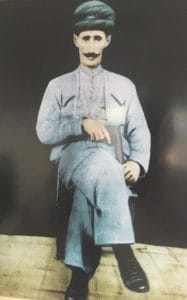
My grandfather Abde went to Syria with Ehmedê Îskan in 1936. They joined the Xoybun Society. They sided with Haco Ağa. Ehmedê Îskan would cross the border and raid Turkey whenever he had the chance. On such a day, Ehmedê Îskan was killed in a clash in Siirt. His head was cut off. It was impaled on a spear and paraded around Siirt. It is even rumored that the severed head was sent to Ankara.
Ehmedê Îskan's grave is in Ayıqasır. He has a body but no head. His son Halil passed away last year.
MARKSMANSHIP LESSON
Ehmedê Îskan was a sharp shooter. He was trained by Bişarê Çeto.
When Ehmedê Îskan migrated to Syria (1936), it was a French mandate. One day, French soldiers were practicing shooting near the village. The village elders had prepared a large feast. The French officer asked Sheikh Haco: "Do you have any good marksmen?" Sheikh Haco turned to those around him: "Who among us is a good marksman?" They replied: Ehmedê Îskan. Soon, Ehmedê Îskan was brought to the shooting range.
The French soldiers had placed the target 40 meters away. Ehmedê Îskan moved the target five times further. So much so that the target could barely be seen. The French soldiers laughed among themselves. Ehmedê Îskan asked for three bullets. When he hit the target with all three bullets, a deep silence fell over the area. The French officer couldn't help but say: "If I had ten men like him, I would go against an army."
In my childhood, my grandfather Hacı Abde used to tell stories. Adults would constantly practice marksmanship. So much so that when they came home, they couldn't sleep due to shoulder pain from the recoil of the gun.
EMÊ GOZÊ
Emê Gozê belonged to the Remo branch of the Alikan tribe. (Gozê is his mother's name.) The tribe, which ruled in the Garzan (Xerzan) region, was engaged in animal husbandry. Emê Gozê is one of the brave and young members of the tribe.
Emê Gozê and his men once attacked Ottoman soldiers in Bitlis Stream, seizing their weapons, money, and food. From that day on, Emê Gozê's reputation spread throughout the region.
Emê Gozê later regularly attacked postal carriages going from Diyarbakır to Siirt, seizing official salaries. The state held Bişarê Çeto responsible for these robberies. However, Bişarê Çeto was unaware of what was happening. The state warned: "Either stop Emê Gozê or you will be held responsible!"
Bişarê Çeto first approached him kindly. He sent a message to Emê Gozê: "You are robbing in my region. You are putting me in a difficult situation."
However, Emê Gozê did not listen to Bişarê Çeto. Thereupon, Bişarê Çeto, with his men, attacked Emê Gozê. They surrounded him. Ehmedê İskan said, "If we attack during the day, our losses will be heavy. Let's crawl forward at night." The attack took place at night. 20-30 people died on both sides. Bişarê Çeto's brother Mecit also died in this clash.
During this incident, one of Cemilê Çeto's men killed a 14-year-old boy with a dagger. Cemilê Çeto was angry about this incident. The man replied: "So many of our men have died, and you are blaming me."
This conflict between Emê Gozê and Bişare Çeto has come down to us in an epic manner through the narration of dengbêjs. This lament continues as follows:
“Gozê dibê; bila tirsa te tune be ji eskerê dewletê kurê xelkê ye. Gava xwîn bikeve erdê, terqîn bikeve tivingê, bira li bira nabe xweyi ye.Bila tirsa te tune be ji eskerê Eliyê Unis Qewmê Çiyê ye. Bila tirsa te tune be ji her sê zarê Çeto yek Bişar e, yek jê Cemil,yek ji Gênco ye.”
DERWÊŞÊ SADO (DERVİŞ AKGÜL)
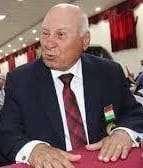

Derviş Akgül is the son of Sado, who is the son of Bişarê Çeto. Derwêşê Sado was born in 1934. His father Sado and relatives migrated to Syria in 1936, unable to withstand state pressures. He completed his primary, secondary, and high school education in Syria. He had the chance to meet famous Kurdish personalities such as Celadet Bedirxan, Ekrem Cemilpaşa, Qedrican, Cîgerxwîn, Osman Sebrî, and Haco Ağa. He was influenced by them and became devoted to the Kurdish national struggle.
When the Democratic Party came to power in 1950, Derwêşê Sado and his family returned to Turkey, to their ancestral lands. Derwêşê Sado became one of the founding members of the Kurdistan Democratic Party of Turkey on July 11, 1965. Together with his friends, he went to Hecîûmran in October 1970 and met Mullah Mustafa Barzani. Derwêşê Sado was elected Secretary-General of the Kurdistan Democratic Party of Turkey in 1973.
Derwêşê Sado was a history in himself. He took many secrets with him. In fact, he could have written down his important memoirs on the condition that they be disclosed after his death. I would like to tell a few anecdotes about Derwêşê Sado:
Masoud Barzani was going to England for education but had no passport. Derwêşê Sado was asked for help. Derwêşê Sado pasted Masoud Barzani's picture on the passport of a relative of ours in Aynqasır and sent him off from Istanbul to London.
After the 1975 defeat, Mullah Mustafa Barzani and his comrades-in-arms took refuge in Iran. Jalal Talabani was Barzani's Secretary-General. There was a deepening conflict between the two. Barzani summoned Derwêşê Sado from Lebanon: "I want you to prepare a report for me about Talabani." Derwêşê Sado understood that Talabani was preparing to establish a new party and would quickly start an armed struggle, and he reported this to Barzani:
"If Talabani forms a party, it will be your end. You must protect yourselves!"
Barzani gave Derwêşê Sado a large sum of money and asked him to bring weapons. Derwêşê Sado delivered the weapons and ammunition he bought in Lebanon to Barzani in Iranian Kurdistan via Syria and Turkey with 40-50 mules. These weapons saved the lives of the Barzani Family. For this help, Derwêşê Sado was honored with a medal of honor in later years.
Derwêşê Sado was among the founders of the Kurdistan Democratic Party of Turkey (TKDP). When Sait Elçi, the Secretary-General of the TKDP, disappeared in Northern Iraq during a visit, Derwêşê Sado was one of those who went to look for him. I heard from him: Derwêşê Sado saw Doctor Şıvan (Sait Kırmızıtoprak) as a talented person. Dr. Şıvan was popular in the region. If he had started an armed struggle, both Turkey and Barzani could have been in a difficult situation. Also, Dr. Şıvan had an independent personality. It was not possible for him to be influenced or managed by anyone. This was a clear threat. His killing became inevitable.
Derwêşê Sado succumbed to the Covid disease he contracted on October 2, 2020, and passed away.
CALIPHATE AND OTTOMAN TURKISH
The biggest mistake of the Republic was abolishing the caliphate and ending Ottoman Turkish.
The Republic of Turkey could have continued the institution of the Caliphate, just like in the Vatican. It would have been possible to mobilize the Muslims of the world with a fatwa. This was an important power. The Muslim population in Pakistan, Indonesia, Bangladesh, Malaysia, and India is over 1 billion. In addition, the cloak of the Prophet Muhammad and other holy relics are in Istanbul. If an Islamic "Vatican" had been established, Istanbul would have been flooded with tourists.
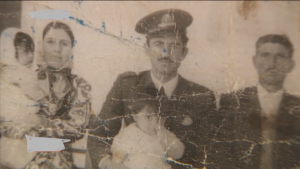
Şeker Naz Hanım and her husband Selahattin Akgül (Children: Mehmet and İdris)
With the alphabet reform and the prohibition of Ottoman Turkish, 500 years of history were, in a sense, buried in archives. The connection with the past was broken. However, people value their past. When the family tree was opened on e-devlet, the system was locked for three months because people were curious about their ancestors and roots.
THE DEATH OF TRADE
Turkey faced great difficulties when it expelled the Armenians and Greeks who knew how to trade. Even today, very few people in Turkey know and practice trade professionally. Trade is not just buying and selling; it is a culture in itself. Turkey's biggest problem is its backwardness in standardization. Standard means continuity in quality. Italians process marble bought from Turkey and sell it as Italian marble. Greeks process olives bought from Turkey and sell them as Greek olives.
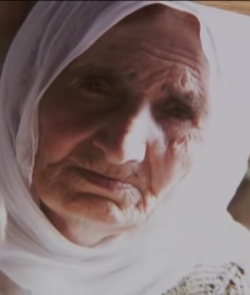
Şeker Naz Akgül's mother, Nefya Gül Hanım
THE WEIGHT OF THE RIFLE
My grandfather Abde Ağa was 86; I was 17, and my cousin was 23. Abde Ağa was fond of hunting. He had a double-barreled shotgun. One day when we visited him, he asked:
"Come on, young men, can you lift the shotgun by the stock without bending your elbow?"
At first, it seemed like an easy task for me. I tried to lift the shotgun in the position my grandfather described, but I couldn't even budge it. My cousin, despite all his efforts, could only lift it about an inch. Abde Ağa, despite being 86 years old, picked up the rifle and lifted it, adding:
"I've grown old. When I was your age, I would even put weight on the rifle."
Abde Ağa continued to recount his youth memories:
"Two friends would slaughter a kid, turn its stomach inside out, fill the meat into the stomach, cook it like that, and eat it all with pleasure."
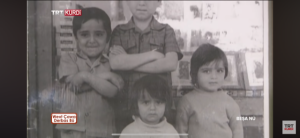
(From left to right) Yıldıray, Suat and İdris
THE SHEIKH'S INTERROGATION
Sheikhs used to have a certain authority in society. One day, a sheikh wanted to cross a river. A strong man carried the sheikh on his back to cross the river. Right in the middle of the river, the sheikh questioned him:
"Do you pray and supplicate? Do you fast?"
"My Sheikh, if I prayed and fasted, I wouldn't carry you on my back into the water. I thought perhaps if I carried the sheikh on my back, God would forgive my sins."
CHRISTIAN KURDS
Kurds suffered everywhere. In my opinion, Christian Kurds suffered the most throughout history. No one talks about their existence, no one writes about their drama. Most of the time, it is thought that Christian Kurds are Syriacs. No, there is no connection. 70% of Syriacs are Kurds. Kurds are one of the first communities to accept Christianity. We know that Prophet Abraham was Kurdish. Today, 300,000 Kurds live in Israel. In my opinion, Jesus Christ was also of Kurdish origin. There are no serious studies on this subject.
NOMADISM AND BRAVERY
Kurds adopted a nomadic lifestyle. Jews, Armenians, and Syriacs lived in cities. They had professions. They did not teach their professional secrets to anyone. However, the lives of Kurds in the mountains were mostly based on animal husbandry and plunder. Plundering also required bravery. Such were the conditions of the time. When they settled in the city, they became "bajarî," meaning "urban," and in a sense, lost their bravery and heroism. For this reason, it is impossible for the new generation to understand Bişarê Çeto, Cemilê Çeto, and many other Kurdish leaders. Sometimes ignorant, newly emerging politicians make simplistic and meaningless evaluations such as, "If Cemilê Çeto or so-and-so had not betrayed, Kurdistan would have been established." These poor people are unaware of Kurdish history and social reality.
Bişarê Çeto initiated two rebellions in the Ottoman Empire. When an amnesty was issued, they reconciled. The Ottoman Empire was a community composed of various religions and nations. There was no racism or craniometry. During the Republican period, racist and assimilationist policies were implemented against the Kurds. The Kurds were oppressed. Turkey, in a sense, indulged in the dream of "homogenizing" society in the style of Mussolini and Hitler, which was rising in Europe in the 1930s and 40s. In my opinion, Turkey should have been a country like the USA. Today, 60% of the US population is White, 20% Hispanic, 13% Black, and 6% Asian. There is no racism. Individuals are free. Everyone is pursuing a good and comfortable life.
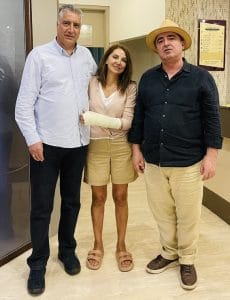
From left to right: Mücahit Özden Hun, Şeval Hun and Yıldıray Akgül