Tribalism and Social Reality
This essay explores the enduring presence and significance of tribal, clan, and lineage-based social structures in both modern and traditional societies, challenging the notion that such formations are exclusive to "primitive" cultures.

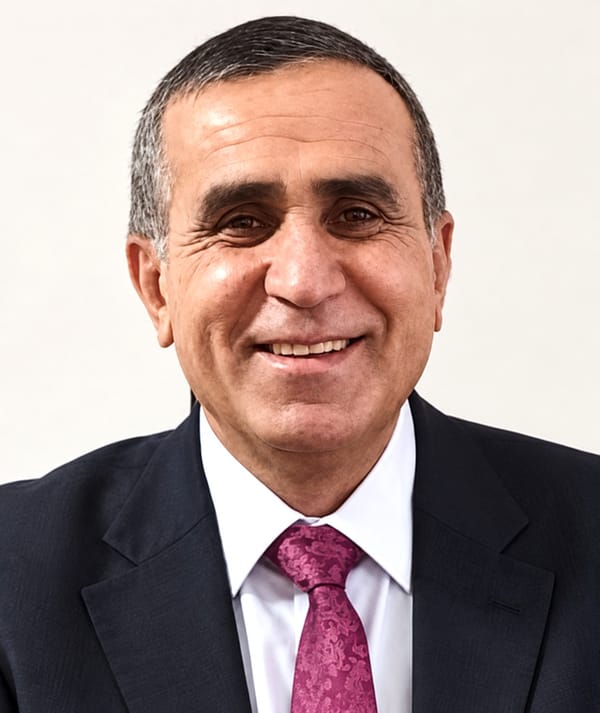
My dear brother Adnan Şur penned an impressive article on his Facebook page, rich in content and analyzing the formation of tribes. He extended his good wishes for my "Milletê Gêloî Confederation" project, which I announced a few days ago. I thank him. I shared this important article on my page to bring it to the attention of readers. I would like to express my gratitude in advance to my esteemed reader friends who commented before me, and to other friends who will comment, for expressing their own ideas on this matter and for contributing from a different perspective to a topic that is not often discussed.
The concept of tribe (aşiret) is, first and foremost, a social formation. It has been an inevitable stage in the development of humanity. I would like to draw the attention of my friends, who view tribalism as a path to "fascism" or a "medieval" understanding, to a particular point. Initially, I do not want to give examples from Turkey. I want to draw your attention to how this social status or formation, referred to as tribe/clan/boy/oymak (sub-clan) or similar names, still exists in modern societies, by giving examples from four different countries (America, France, Germany, Japan) where I have lived for many years. It is often assumed that the concept of "tribe/boy/clan/oymak" is a phenomenon that exists only in backward and primitive societies, and that supporting it is, in a sense, "reactionary."
If you live in Japan for a while and can speak fluent Japanese, you will notice that when you enter society, every Japanese person proudly associates themselves with a clan, and they even keep a genealogy of it in their homes. It is possible to observe that social solidarity and protectionism among members of the same clan still continue strongly. For curious readers, I especially recommend the book "Japan's Cultural Code Words" by Boye Lafayette De Mente. Today, behind each of the companies that introduce Japan to the world, such as Toshiba, Sony, Toyota, Mitsubishi, Honda, and Nissan, there is a Samurai family or clan. This hierarchy continues successfully. The ordinary Japanese person on the street knows which clan (tribe) they belong to and takes pride in it.
Now, let's turn to America, described as the most modern society in the world... Do the concepts of tribe/boy/clan still exist in America? Even asking this question might seem absurd and ridiculous at first. But when you delve into the essence of society, everything suddenly changes. If you are not part of the family tree called Mayflower, you have little chance of becoming a high-level executive in politics or economics. The Bush family, who governed America for 16 years as father and son, proudly boast of being members of the large Mayflower family (tribe). Most of the families that constitute the wealthiest stratum of American society and control the media and financial world are Jewish, and every Jew connects themselves to a clan/boy/tribe within the Jewish family tree. There is strong solidarity among them. Curious readers can find very valuable information on this topic online.
Now let's come to Germany... Today, there are approximately 3-4 million Turkish citizens living in Germany. When they learn German fluently and delve into the depths of German society, they will see that behind the biggest companies are families who proudly preserve an aristocratic, i.e., feudal, i.e., tribal/clan structure, identified by names like Freiherr, Graf, Edler.
Finally, let's come to France, where the first Bourgeois Revolution took place... Today in France, there is a very significant social stratum that proudly declares its aristocratic family lineage, such as duc (duke), marquis (marquess), comte (count), and baron. Although officially prohibited, these names find an important place in practice. The most powerful figures in the world of politics and economics are members of these families. By giving examples from four of the world's richest countries, I have briefly explained how important social organizations such as tribes/clans/boys are in daily life.
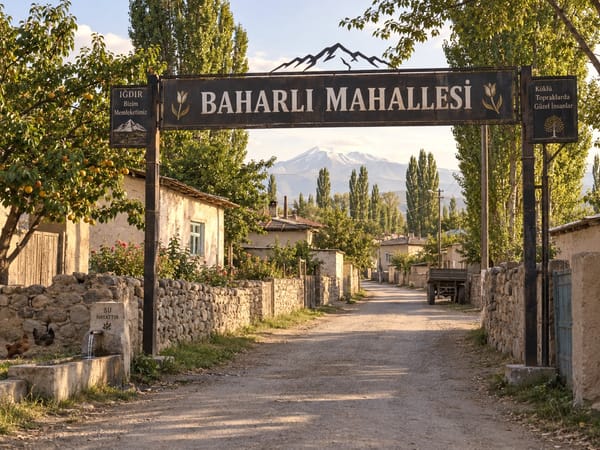
Let's turn to Turkey, or more specifically, to Iğdır... I do not see the need to write in detail the names of the Azeri tribes in Iğdır here. It is a known fact how social organizations and tribes like the Şöllüler, Bayatlar, etc., are in solidarity and even constitute a serious force in politics. Among the Kurds, there are three main branches: Celalî, Redkî, and Brukî. The Celalî tribe is a confederation. Tribes from the Iğdır region such as Xelkî (Helikan), Gêloî, Şemkî (Şemkan), Kızılbaşoğlu, Gıskî (Gıskan), Sakan, Motan, and Kotan are members of this federation. Every Kurd in Iğdır is definitely a member of a tribe. Whether they hate the concept of tribalism or reject it, people consider and evaluate that person in conjunction with the tribe they belong to. The famous Dutch anthropologist and Kurdologist Martin Van Bruinesse makes an interesting assessment regarding Kurdish tribes: "If Kurds had not lived in tribes, they would have been assimilated long ago. Kurdish literature also owes its existence to madrasahs." Paradoxically, "tribes" and "madrasahs," which are seen as "reactionary" by many Kurdish political formations today, constitute the cornerstone of Kurdish identity. A Kurdish political party, whose name I will not mention, which strongly claims to be against tribalism, for example, does not object to tribalism when the Raman tribe, with nearly 20,000 votes, collectively joins their party. However, it evaluates my "Milletê Gêloî Confederation" project, which I want to strengthen in terms of social solidarity and transform into a modern formation, as reactionary and "tribalism," and tries to alienate tribe members from me. Every social network established with good intentions and a correct vision, and meticulously woven, is an asset for humanity. I hope the "Milletê Gêloî" project finds success and raises valuable children for the region and humanity. Sincerely,