Can Abdullah Öcalan Become the Contemporary Idris-i Bitlisi?
This article explores two potential paths for Abdullah Öcalan's anticipated statement: a narrow call for disarmament or a broad initiative to integrate all Middle Eastern Kurds into Turkey's vision, drawing parallels with Idris-i Bitlisi.

Dear Readers:
Abdullah Öcalan's upcoming statement is eagerly awaited. Öcalan faces two options: The first is a narrow approach of "laying down arms"; the second is a comprehensive initiative encompassing all Kurds in the Middle East. THE FIRST PATH: A NARROW "GRADUAL AND CONDITIONAL DISARMAMENT" APPROACH In this scenario, the impact of Öcalan's statement will depend on three fundamental factors:
- His Influence Within the Kurdish Movement
Öcalan still holds significant symbolic importance as a powerful figure within the PKK and the broader Kurdish political movement. However:
- Developments after 2015 led to armed and political actors on the ground acting more independently.
- Especially the YPG/SDG structure in Syria has made it debatable how much Öcalan's individual decisions can influence dynamics on the ground.
- Let's not forget that the PKK leadership in Qandil has, in some cases, given limited responses to Öcalan's calls in the past.
If Öcalan directly calls for disarmament, it is unclear how much traction this will gain on the ground. The call he made during the 2013-2015 resolution process was not immediately implemented by the organization.
- The State's Stance and Proposed Roadmap
- If the state tries to manage the process by simply saying "lay down your arms," this call may not find full resonance within the PKK.
- If the state offers a roadmap for the political resolution of the Kurdish issue, this could make Öcalan's statement more effective. However, what is meant by "political resolution" must also be clearly articulated. The state has no clear explanation on this matter yet.
- Any change in Öcalan's prison conditions or an opening regarding political rights offered by the state could increase the impact of his call on Kurdish public opinion, but it would not be sufficient. The Kurdish public might fall into disappointment, saying, "Did our children die in the mountains for this?"
- The Reaction of Kurdish Public Opinion
- Although Öcalan's influence on Kurdish society is still strong, he is no longer the sole determining actor.
- Even if the political wing of the Kurdish movement (DEM Party and other structures) supports Öcalan's statement, there will be an expectation of concrete legal, economic, and political gains for it to find broad resonance in society.
- Regional developments (Kurdish dynamics in Syria, Iraq, Iran) have also created alternative paths for Kurds, so the era in which Öcalan was the sole determinant may be over.
How Effective Will the Statement Be?
- If the state presents a comprehensive solution plan, Öcalan's call will have a stronger impact.
- If the call focuses only on gradual and conditional disarmament and the initiative is not supported by political gains, this may not find full resonance on the ground. Recently, with the appointment of trustees, the state may try to create a new bargaining chip before the statement, but the real expectation of the Kurdish people at this stage is neither the end of the trustees nor the implementation of Kurmanji and Zazaki as mother-tongue education. The Kurdish people see these as a natural extension and part of universal human rights and law. Making these two issues a bargaining chip will not resonate with the public.
- Considering the different dynamics of the PKK and Kurdish public opinion, Öcalan's influence is strong but not absolutely decisive.
In short, Öcalan's statement will gain meaning depending on how "the state, political actors, and structures on the ground" react. THE SECOND PATH: A COMPREHENSIVE INITIATIVE I do not believe Abdullah Öcalan will remain within the "Narrow Scope" framework I explained above. He has a historical experience before him: the Ottoman Empire and Idris-i Bitlisi. Who is Idris-i Bitlisi? Idris-i Bitlisi (1455-1520) was a Kurdish statesman, historian, and scholar who held important positions in the Ottoman and Aq Qoyunlu states. Originally from Bitlis, Idris received a good education and grew up in the important centers of learning of his time. He first served the Aq Qoyunlu ruler Uzun Hasan and his son Yakub Bey, but with the rise of the Safavids, he sought refuge with the Ottomans.
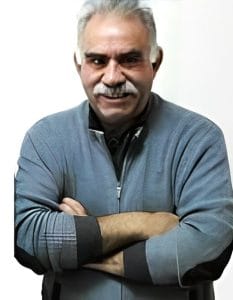

Abdullah Öcalan and Idris-i Bitlisi During the reign of Yavuz Sultan Selim, he played a major role in forging an alliance between the Ottomans and Kurdish beys. After the Battle of Çaldıran in 1514, he mediated an agreement between the Ottoman Empire and the Kurdish beys in Eastern Anatolia. During this process, many Kurdish principalities continued to be governed as autonomous structures loyal to the Ottomans. The alliance Idris-i Bitlisi established between the Ottomans and Kurdish beys was shaped by the political and military conditions of the time. In the 16th century, the Ottoman-Safavid rivalry made it possible to grant a kind of autonomy to Kurdish beys. Bitlisi supported the Ottoman's eastern policy, integrating Kurdish beys into Ottoman administration, thereby allowing the Ottoman Empire to establish dominance in Kurdish regions and enabling Kurdish beys to largely maintain their rule in their own regions, gaining power. Although today's conditions have a different historical and political context, Öcalan may be inclined to integrate all Middle Eastern Kurds into the vision of the Republic of Turkey. There are, of course, differences between the two periods for many reasons:
- Different Conditions: The Ottomans had the flexibility to grant autonomy to Kurds. Today, a centralist state understanding prevails.
- Different Roles: Bitlisi was a statesman and historian; Öcalan is the leader of an ideological movement.
- Political Ground: There is no major power struggle like the Ottoman-Safavid rivalry.
Despite all these adversities, Öcalan's ability to gather Kurds around a central power (the Republic of Turkey) through a conciliatory or new strategic move can only be possible with a change in current policies. This largely depends on developments in Turkey's domestic and foreign policy. Two main strategic paths stand out here:
- Effort to Gather Kurds Within Turkey's Sphere of Influence, Like Idris-i Bitlisi
If Öcalan calls for uniting Kurds around the Republic of Turkey, this requires a much more comprehensive and long-term process. For this:
- A consensus encompassing all segments of Kurdish society needs to be developed.
- The will of Northern Iraqi and Syrian Kurds to be part of a broad federal structure under Turkey's leadership is important.
- The state must demonstrate a will for a solution that includes not only security-based but also political and cultural rights.
Such an initiative can only succeed if supported by reforms that guarantee the political, economic, and cultural rights of Kurds. Whether the autonomy-based relationship model established by the Ottomans with the Kurds can be applied today is a debatable issue. However, if Öcalan moves in such a direction, it means he will pursue a strategy not only for armed struggle but also for the empowerment of Kurds within Turkey's political system.
- Focusing Only on Disarmament and the Release of Political Prisoners
If Öcalan makes a call focusing only on the PKK laying down arms, the release of political prisoners, and vague expressions like "equal citizenship," this would be a narrow strategy. However, what the state's response will be is uncertain.
- The PKK's disarmament can only be permanent if there is a guarantee for the democratic resolution of the Kurdish issue.
- While the release of political prisoners may pave the way for Kurdish politics, it may not provide a long-term solution for Kurds without structural changes.
This strategy may bring some short-term political gains but creates a limited solution for Kurds. CONCLUSION Which Would Be More Effective?
- If the state moves towards a long-term strategic solution, Öcalan's call for the integration of World Kurds with Turkey could have a stronger impact. This could bring to the agenda a system similar to the "strong autonomy or federation" model, not only for Turkey but also for Kurds in neighboring countries, as in the Ottoman period. (With the policy implemented by Idris-i Bitlisi, Kurds managed to maintain their strong presence in the region with semi-independent principalities for 200 years (1550-1850).)
- If the state's goal is only the disarmament of the PKK, Öcalan's focus on laying down arms may be sufficient, but this may not bring about a fundamental solution to the Kurdish issue.
In short, the impact of Öcalan's move depends not only on the call he makes but also on how the state responds to it and how Kurdish society reacts to this call. Depending on the content and scope of the call, Öcalan could either quickly become marginalized and insignificant, or he could play an important role at a historical turning point and establish himself in society and history as a historical figure like Idris-i Bitlisi. Of course, most importantly, it is to ensure the LASTING PEACE that has been desired in our country for many years. Sincerely, Mücahit Özden Hun 14 February 2025 18:20