Bullying and Revenge
This essay explores the intertwined concepts of bullying and revenge, drawing parallels between individual and state behavior, and reflecting on the legacy of actor Ray Liotta.

Dear Readers;

Ray Liotta and the Poster for "GoodFellas"
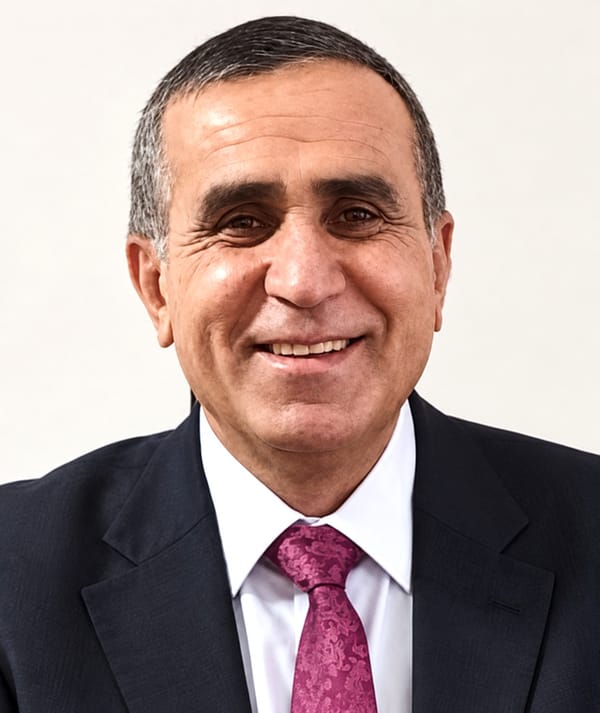
The news that American actor Ray Liotta was found dead in his hotel bed on May 26, during the filming of his last movie in the Dominican Republic, saddened me. Ray Liotta was 67 years old. By today's standards, that is considered a young age. Before explaining the profound impact Liotta's role in "Goodfellas" had on me, I would like to bring a reality we experience to your attention in the INTRODUCTION section:
(Note: The movie "Goodfellas" was released in Turkey under the title "Sıkı Dostlar" (Close Friends). This is an incorrect translation. In English, "Goodfellas" refers to gangsters, i.e., Mafia members.)
INTRODUCTION
Individuals and states often exhibit the same patterns of behavior. I suppose this should not be surprising. After all, individuals are the ones who establish states, aren't they? Humankind has perfectly reflected its own soul and personality traits in the functioning and structure of the states it has established throughout history, starting from the Neolithic period. Today, individuals and states increasingly find themselves caught in the vise of "bullying and revenge," choosing one of these two behaviors. This situation, in a sense, marks their future as their "destiny."
TO BULLY
There is a verb in English called "to bully." There is no exact Turkish equivalent. However, the verbs I will list consecutively will help us grasp the meaning. These verbs are: to bully someone, to act like a tough guy, to swagger, to oppress, to intimidate, to unfairly punish others by abusing one's power, etc.

"Bully," meaning bullying and threatening someone
I believe all of you have encountered such a situation, whether within the family, at school, in the neighborhood, at work, on the street, or in foreign countries. An individual who experiences bullying becomes excluded, withdrawn, develops an asocial personality, and unconsciously nurtures and cultivates seeds of revenge within themselves. It is, in fact, a trauma they experience. Often, they do not share the bullying they endure with anyone; they internalize it. When "bullying" reaches an unbearable point, the social hatred of the individual subjected to it also increases, and one day they succumb to the feeling of "revenge," taking it if necessary.
TYPES OF BULLYING
"Bullying" usually first appears within the family. One sibling threatening another, wagging a finger, or even hitting them is an example of "domestic bullying." Similarly, we should view one spouse inflicting violence or psychological pressure on the other as "bullying." Sometimes, a father bullies his own children. The children then conspire among themselves, collectively kill the "bully father," and dispose of his body somewhere. Similar incidents frequently occur in our daily lives.

A woman who was battered by her husband, a victim of bullying
The second possibility is a child experiencing "bullying" from neighborhood children, i.e., their peers. The third possibility is school life. "Bullying" perpetrated by schoolmates or teachers is also quite common in Turkey and around the world. Fourth, there is workplace bullying, which has now entered our daily lives as "mobbing." "Mobbing" encompasses meanings such as psychological violence, pressure, harassment, annoyance, or causing distress. In short, it means "intimidation" or "psychological terror." When discrimination based on ethnicity, sect, gender, etc., is added to "mobbing," such practices can push an individual into lifelong hatred.
A TEACHER'S BEATING
We were in the third grade of primary school. Mehmet was big and tall. He sat in the very back row. We lived in the same neighborhood.
One day, our class teacher was late. There was shouting, yelling, and laughter among the children in the classroom. The duty teacher, drawn by the noise, grabbed Mehmet, who was sitting quietly in the back, by the ear and dragged him out the door. As if he was responsible for all that noise! Through the open door, I witnessed him mercilessly slapping Mehmet's face and even kicking him.

The moment a teacher beats his student
Mehmet entered the classroom, gathered his belongings while crying, and headed home. After that day, Mehmet never came to school again. The "bullying" of the duty teacher had ended a student's school life.
Years later, when I was a university student, I saw Mehmet driving a horse-drawn cart. We greeted each other. The first words out of his mouth were: "Mücahit, I can't find that teacher." He showed me a knife he took out of a wooden box next to him: "I can't wait to stab him with this."
Years had passed, but Mehmet had not forgotten the "bullying" he had suffered; in a sense, he was living with an unnamed feeling of "revenge."
DISCRIMINATION IN SCHOOLS IN IĞDIR
In primary, middle, and high schools in Iğdır, it was once quite common for some racist Azerbaijani teachers to punish Kurdish students through ethnic discrimination. There are countless examples of this. The discrimination I experienced in the second grade of middle school aroused great hatred within me in those years, but I had no choice but to accept the injustice.
A story I heard recently deeply affected me: A Kurdish student, who commuted by minibus from Aşağı Çarıkçı village to high school in Iğdır, was competing for first place in school. To break the student's spirit, humiliate him in front of his schoolmates, and thus prevent him from coming first, a racist Azerbaijani teacher, on the occasion of the İstiklal Marşı (National Anthem) ceremony on Friday, used trivial excuses to grab the Kurdish student by the ear, take him to the school balcony, and punish him with a harsh slap in front of his friends.
After the İstiklal Marşı, the student, having also missed his minibus, walked crying from Iğdır to Aşağı Çarıkçı village in the dark of night. His heart and soul were filled with hatred and resentment against the injustice and humiliation he had suffered. He did not go to school for a while.
This student did not become the top student in school but went on to have a successful career in later years. He held important positions in the ministry. Even though years had passed, his confession that he still carried the resentment and anger within him when he recounted "that ominous moment" deeply affected me.
SCHOOL SHOOTINGS IN THE USA
On May 24, an 18-year-old American of Mexican descent named Ramos carried out an armed attack on an elementary school in Uvalde, a settlement near San Antonio in Texas, USA. Ramos, a high school senior, had planned to attack the high school he was not graduating from during the graduation ceremony, but security measures prevented this. So, he targeted a vulnerable elementary school. Ultimately, what mattered to Ramos was to take revenge on the "society" that had excluded him and prevented him from graduating.
Wearing a bulletproof vest and carrying two semi-automatic weapons, Ramos entered an elementary school. He randomly opened the door to a classroom. Inside were two teachers and students. Ramos leaned his back against the door and began to spray bullets at those inside. When he ran out of ammunition, he grabbed his second weapon. When he ran out of ammunition again, he calmly reloaded his weapon and again sprayed bullets at the students cowering in fear on the floor. A few children survived by playing dead. In the attack, 21 people died, including 2 teachers and 19 children. Although delayed, the police raided the school, and Ramos was killed. This incident was the 27th attack in schools in the USA in 2022.

Ramos, who murdered 21 people including two teachers, and his weapons
Alfred University investigates the causes of such armed raids in the USA. The primary reason that stands out is as follows:
"Spoiled and snobbish children mock an innocent child (later the killer) who is their classmate; they embarrass them in front of girls. Not only that, they bully them. The killer gradually becomes alienated from school, withdraws into himself, and begins to plan revenge on his friends (or rather, society). At the opportune moment, he puts his plan into action."
ISRAEL AND THE PALESTINE LIBERATION ORGANIZATION (PLO)
"Bullying" and "Revenge" can occur between individuals, as well as between states and organizations. The primary goal of the State of Israel, established in 1948, was to expand its borders and exert bullying over the Palestinian civilian population. Over time, this "bullying" caused a feeling of "revenge" to grow in the hearts of the Palestinian people. The Palestine Liberation Organization (PLO) emerged, fueled by this "Hatred/Revenge" sentiment that resonated with the Palestinian people. The "Black September" organization found the PLO inadequate. In later years, an even more radical organization named HAMAS emerged, which found both "Black September" and the PLO inadequate. (Unwise states, when completely eliminating a radical organization, sow the seeds for the emergence of a more ruthless organization; wise states, while eliminating a radical organization, pave the way for the emergence of more acceptable organizations or parties.)

Members of the Black September organization during their operation, raiding and murdering Israeli athletes at the 1972 Munich Olympics
THE SEPTEMBER 12 MILITARY COUP AND THE PKK
The September 12 Military Coup fell upon Turkey like an ominous meteorite. Tens of thousands of people were unjustly arrested, tortured, and many were sent to the gallows regardless of their political views.
The brief balance sheet of the September 12 Military Coup was as follows:
Approximately 300 people died, including 171 due to torture in prisons. 48 people (24 common criminals, 15 leftists, 8 rightists, 1 ASALA militant) were executed. 650,000 people were detained. 230,000 people were tried by military courts, and 1,683,000 people were blacklisted.
Worker and employer unions were silent. Civil servants were silent. Youth were silent. Society was silent. Society had bowed its head, resigned to the impending sword blow. The bullying of the coup plotters had permeated every capillary of society. No one dared to speak. It was in such a period that an action that "made a sound" shook Turkey.
On August 15, 1984, around 21:30, the PKK raided Eruh in Siirt and Şemdinli in Hakkâri. In these attacks, led by Mahsum Korkmaz, members of the organization carried out bomb and armed attacks on police stations and military lodgings. As a result of these attacks, a gendarmerie corporal lost his life in Eruh. Another gendarmerie officer, who was taken to Gülhane Training and Research Hospital, could not be saved and became a martyr.
Numerous weapons, ammunition, and supplies belonging to the gendarmerie unit were looted. PKK militants held both districts for a while, carrying out propaganda in the town square, local coffeehouses, and from mosque minarets. After the attack, PKK members returned to Northern Iraq.

On August 15, 1984, I was serving my military duty at Gülhane Military Hospital. That year, university graduates were offered two options: 20 months as a reserve officer or 8 months as a short-term private. I was among those who chose to be a private to get rid of military service as soon as possible. One day, I became unable to walk due to a fungal infection between my toes.
I was referred to Gülhane Military Hospital. I was told I needed to stay in the orthopedics department for 3-4 days. It was at such a moment that a newly graduated military doctor, who was preparing his doctoral thesis but did not know English, asked for my help in translating some books from English. Soon after, other doctors, hearing that I knew English, piled a heap of documents related to their thesis work on my desk. They kept extending my report stating that I "had not yet recovered."
It was on such a day that the news of the Eruh and Şemdinli raids began to spread by word of mouth. The young doctor whose thesis I was helping with said, "The PKK has started a rebellion in the Southeast. They have captured cities. The hospital is full of wounded. I feel sorry for the soldiers, but it served them right! These dishonorable people (the coup plotters) deserved this. There was no cruelty or bullying they didn't commit. What haven't I witnessed!"
I would like to state this as a fact: In 1984, the Eruh and Şemdinli raids were seen as "resistance against oppression" in Kurdish and Turkish public opinion, or at least in leftist politics, and psychological support was given. In those years, the PKK played the role of a "hero" against the "bully." No one can deny this reality. It was precisely because of this that leftist idol figures like Doğu Perinçek and Yalçın Küçük saluted PKK cadres in the Beqaa Valley, accompanied by Apo, in a parade-like atmosphere, and showered them with praise.
When the US invaded Iraq, it established an unlimited system of bullying. In response, the Al-Qaeda organization carried out an action for "revenge," executing the September 11, 2001, attack. When Al-Qaeda was destroyed, an even more radical organization named DAESH/ISIS emerged. You know the consequences as well as I do. (If you destroy an existing revenge organization, a more radical one will emerge. History proves this to us.)

Now, we are witnessing Russia's (the big brother's) bullying of Ukraine (the little brother). If, during this process, the Ukrainian people support the emergence of a specially trained organization to take "revenge" on Russia, we should not be surprised at all.
RAY LIOTTA AND "GOODFELLAS"
I recommend watching the movie "Goodfellas." There is an interesting scene in this movie: Ray Liotta (Henry in the film), whose girlfriend is harassed by a spoiled and thuggish neighbor, mercilessly punishes the bullying neighbor using the butt of a gun.
A similar scene exists in "The Godfather." Sonny (Godfather's eldest son), whose sister is subjected to physical violence by her husband, takes revenge by brutally beating his brother-in-law.
In the movie "Rambo-1," when we watched a war veteran (Rambo) who once served as a commando in Vietnam being unjustly detained, tortured, and bullied by a town sheriff for no reason, and then Rambo's "unstoppable revenge," perhaps all of us said, "The Sheriff deserved it."
We see a similar situation in the 1984 film "The Karate Kid." A boy named Daniel is having trouble with bullies at school. Daniel, who is frequently beaten by the bullies, one day meets an old man named Miyagi. Miyagi teaches Daniel karate so he can take care of himself. Thus, the Karate Kid takes his "revenge." The audience is also happy.
Liotta's unique role in "Goodfellas" is cited as one of the most important scenes illustrating the "Bullying-Revenge" dilemma, which is widely discussed in political literature.
Do not forget; BULLIES, THREAT-MONGERS, THOSE WHO WANT TO FORCIBLY SEIZE OTHERS' PROPERTY, THOSE WHO GAIN UNFAIRLY are growing like an avalanche around us. Without allowing feelings of "Revenge, hatred, helplessness" into your heart and mind, that is, without torturing yourself, you have a magical power to make these bullies give up: UNIVERSAL LAW AND JUSTICE. Even if you don't believe in the power of justice, keep believing.
While describing revenge against bullying, for Ray Liotta, who played one of the best roles in film history, we consider it our duty to say in English, "God rest his soul!"
A JOKE… A JOKE… A JOKE…
GREETING
The greetings of Turks and Kurds differ.
The greeting of two familiar Turks:
"How are you?"
"Thanks! I'm fine!"
The greeting of two familiar Kurds:
"Çawan î?" (How are you?)
"Hay, Xûdê ji te razî be! Xûdê îmane te kamil bike! Xûde zarê te mezin bike! Rehma Xwedê lê bavê te be! Bûktî û zavatîya zarokên xwe bibinî! Xûdê işê te rast bîne! Tu çawan î?"
(May God be pleased with you. May God strengthen your faith. May your children grow up healthy. May God have mercy on your father! May you live to see your children's weddings! May God make your work go well. How are you?)