The Tales of Zeliş and Abbas - Part 1
This is the first part of a collection of children's stories featuring Zeliş and Abbas, two children from Iğdır, exploring themes of friendship, kindness, and life lessons.

THE TALES OF ZELİŞ AND ABBAS
Hello, dear children! I haven't forgotten you. Until now, I've written for your fathers, uncles, maternal uncles, aunts, and maternal aunts. Today, I will write for you. Have you ever heard of La Fontaine's fables? I'm sure you have. If you like, I'll tell you a little about the writer named La Fontaine, and then we'll return to our own tales, our "nağıllar."
La Fontaine, who wrote the fables, was French. His real name was Jean de La Fontaine. He lived in the 17th century. He studied law and held various civil service positions. He didn't lead a very orderly life. Out of boredom, he took up writing. He read Eastern classics (Chinese, Indian, Arabic, etc.) and immersed himself in the world of animals. In his fables, he made animals and people speak, sometimes addressing biting, sometimes witty (funny) topics. His aim was to convey meaningful messages to people. Before long, his writings became works that both adults and children couldn't get enough of.
Remember that La Fontaine read Eastern classics, was influenced by them, and thus was able to write his famous fables (short tales). We don't need to imitate La Fontaine because our "nağıllar" (tales) are more original.
We have two heroes: Zeliş and Abbas.
Zeliş is a Kurdish girl. Her neighbors are Azeri. They have a son Zeliş's age. His name is Abbas. The tales here tell of the events that Zeliş and Abbas experience. At the end of each story, I've written "MORAL OF THE STORY." This means to draw a lesson and moral from the story.


These days, we are all in quarantine as a family. We can't go outside. We have to be together inside the house. I would be very happy if young people and adults read these stories to children and showed them the pictures. All of these stories took place in Iğdır. That's why these stories are precious to us. They are our own tales. I wish you all good reading.
ZELİŞ AND HER CAT
Children, as you know, Azeris are engaged in agriculture and Kurds in animal husbandry. Animals don't like very hot weather. In the past, all Kurds would go to the high pastures in the summer.
It is again time for the high pastures. The Kurds, fleeing the stifling heat of Iğdır, prepare to take refuge in the coolness of the mountains. The rich load their belongings onto tractors, and the poor onto oxen and donkeys, and set off. In fact, they all go to the same place. They unload their belongings either into deep valleys with gurgling snowmelt or onto flat areas on the hills. Those who have unloaded their burdens help each other, quickly setting up their black tents made of goat hair. Suddenly, the area fills with tents of all sizes. Some families also had a small white tent.
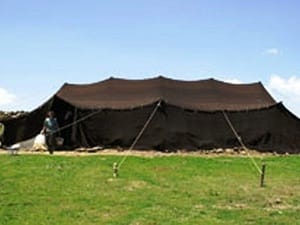
Zeliş is a little girl, 9-10 years old. Her eyes are sparkling black. Her hair braids, adorned with beads of every color, reach down to the middle of her back. She has a snow-white cat named Bobiş, who never leaves her side. They sleep together, wake up together, and even eat their meals together. When Zeliş gets a chance, she goes down to the water's edge, plays among the stones with children her age, and has a good time.
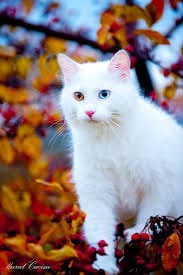
As the days pass, one day she lies down on the ground with her cat and starts building a house out of small stones. Zeliş suddenly sees the ground in front of her stir slightly. She is both scared and curious. What will emerge from the ground? Bobiş also can't stay still, wagging his tail rapidly, eagerly waiting to see what will come out of the hole.
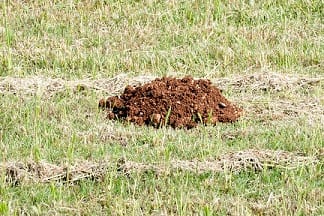
The pile of earth emerging from the ground grows bigger and bigger in a pyramid shape. With each movement of the earth, Zeliş and her cat are filled with deep excitement and fear. Bobiş is ready to dive into the pile of earth at any moment, moving his paws. When the pile of earth moves again, Bobiş can't resist, plunges his paws into the pile of earth with all his might, and pulls out a mouse-like creature he caught with his strong claws. It's a mole!
Zeliş has never seen a mole in her life. Bobiş, in one swift move, grabs the mole by its back and carries it away from the hole. Zeliş follows him. The cat has no intention of eating the mole! Bobiş releases the mole but doesn't take his eyes off it. The mole immediately starts digging the ground with its sharp claws. Just as half of its body disappears into the earth, Bobiş catches it by the waist and pulls it out, taking it to a distant spot again. Zeliş also follows Bobiş with curiosity.
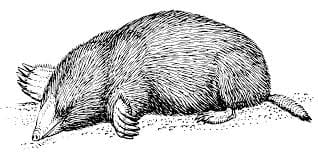
Zeliş wonders about the fate of this mouse-like animal, 9-10 cm in size, with eyes hidden under its skin, and a naked nose, tail, and feet. Bobiş releases the mole again. The mole starts digging the ground with all its might. Bobiş turns this into a game. Each time, he allows the mole to go a little deeper, and just when the mole thinks it has escaped, Bobiş, with a sudden move, plunges both paws into the hole, catches the poor mole, pulls it out, and destroys all its hopes of escape. Zeliş also enjoys this game.
Bobiş grabs the mole by its back again and takes it to a slightly more distant place. He releases the mole. This time, the mole doesn't move. Bobiş is relaxed. He turns left and right with joy. He even yawns at length, confidently. Seizing this opportunity, the mole quickly springs into action and starts digging the earth. This time, Bobiş allows it to go a little deeper. Zeliş enjoyed it when Bobiş caught and pulled out the mole again, just when the mole thought it had escaped.
Bobiş stares at the hole, ready to pounce. Bobiş waits patiently until the mole's tail disappears from sight, then plunges both paws into the hole with all his might, struggles, but in vain! The mole has gone deep and saved itself. Bobiş doesn't give up his stubbornness. He is sad about the toy he let slip away. Tirelessly, he plunged one or both paws into the hole repeatedly but got no results. Bobiş finally gave up his stubbornness, came to the mouth of the tunnel, folded his two hind legs, and defecated into the hole. He covered it with earth. With a heavy heart and full of regret, he left.
MORAL OF THE STORY: Those who play with the hopes of others eventually regret it.
ZELİŞ AND THE TURTLE
The shepherd who took the lambs to graze was sick that day. He didn't even have the strength to walk. Her mother made Zeliş a bundle (a small cloth containing food) and asked her to graze the lambs on the green hillside opposite. Zeliş was very happy with the news. Taking Bobiş and her dog with her, she gathered the lambs and slowly set off towards the hill. Since the lambs were docile and liked to walk in a group, they didn't give Zeliş any trouble.
As the lambs spread out into the meadow and began to graze peacefully, Zeliş did not stand idly by. She climbed the nearby rocks. Bobiş never left Zeliş's side. Bobiş dislodged small stones, hoping to catch a mouse or something.
Zeliş sat on the rock. She looked into the distance and at the oba (black tents). The surface of the rock was covered with dried brown moss. Zeliş had learned from her cousin. She poured a little water on the moss and began to rub it with a small stone. Soon, a colorful dye appeared. Zeliş painted all her fingers as if applying henna. She even dabbed some of the paint she had on her fingertip onto Bobiş's forehead. Bobiş looked comical!
Zeliş suddenly heard a deep hiss. She shivered. It was not a sound she was used to. She turned towards the source of the hiss. A turtle was stuck between two stones. It was trying to get out but didn't have the strength. It couldn't go backward either. The poor animal was motionless! It was making sounds as if crying.
Zeliş had seen turtles in front of their tents before. When dogs approached, it would pull its head in, and when the danger passed, it would slowly continue on its way. She knew it was harmless.
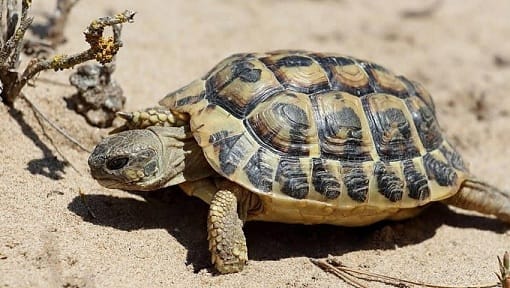
Zeliş first tried to move the stone using her strength but failed. She came back with her stick. She placed the stick between the stones like a lever and rescued the turtle. The poor animal had been fighting a life-or-death battle between the stones for who knows how long.
Zeliş put the turtle in her skirt and took it to the stream. The turtle drank its fill of water. It ate green grass and satisfied its hunger. Since Zeliş's hands were painted, these colors had also stuck to the turtle.
The black tents are surrounded by fences made of oak wood, woven with colorful threads and patterns. A few days had passed. Zeliş was sitting at the base of the fence, engrossed in a game. Bobiş was in a deep sleep on top of the storage pile (where beds are stacked).
A black snake was slithering towards Zeliş. Zeliş was unaware of this. Zeliş noticed the snake at the last moment. A turtle, from nowhere, cut off the snake's path and rolled onto the snake, making strange noises. The snake was also surprised! The snake was trying to free itself from the turtle's weight while also looking for an opportunity to bite it. But the turtle's shell was as hard as a rock. The snake coiled around the turtle, hoping to kill it by squeezing, but this was not possible.
A fierce struggle for dominance had begun between the snake and the turtle. Then, both rolled down like a ball. As the slope was steep, they gained even more speed. The snake and the turtle crashed into a rock together. Since the snake's back was broken, its muscles relaxed, and it left the turtle alone. The snake remained motionless, unable to move.
Zeliş informed her mother about what had happened. They all ran down together. The snake was dead. The turtle was slowly making its way towards the black tent. When Zeliş saw the turtle up close, she screamed:
"Mom, this is the turtle whose life I saved the other day! The henna color from my hand is still on its shell!"
MORAL OF THE STORY: Good deeds always come back to you as good deeds.
ABBAS AND THE BIRD CHICK
It was autumn. Primary schools had opened. Zeliş and Abbas were in the same class. Abbas was a chubby, plump boy. They both left home at the same time, walking along narrow and dusty roads to school. When school was dismissed, they returned home quietly, but with a secret feeling of joy inside them.
It was afternoon when the dismissal bell rang that day. Zeliş and Abbas started walking on the road they used every day. Turning into a side street, they saw a bird chick that had fallen from its nest. Abbas was a sensitive child. He put his bag on the ground. He picked up the chick, which was crying "giiik giiik" with its mouth open. He began to stroke it. The mother bird, having lost her chick, was angry. She flew around the tree, occasionally diving rapidly, making threatening sounds as if to say, "Don't touch my chick!"
BIRD CHICKS
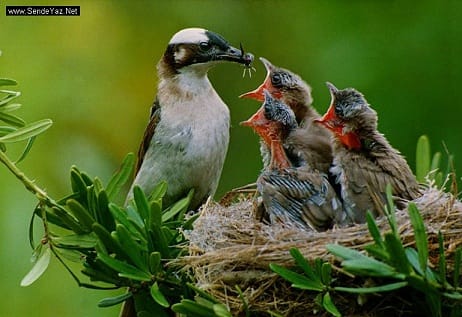
Abbas carefully looked among the branches to find the nest. Finally, he was happy when he saw the nest! Unfortunately, the nest was built on a very thin branch. If he climbed the tree and put his weight on the branch, it would break. They waited for a while, hoping that a tall uncle might come and put the chick back in its nest effortlessly. Since it was a small street, there was no one coming or going!
Abbas made a suggestion: "Zeliş, I'll put you on my shoulders, and you put the chick back in its nest!"
Abbas bent down. Trusting his weight, he hoisted Zeliş onto his shoulders. Zeliş reached out and put the chick back in its nest. Just then, the garden gate opened, and an old aunt with a cane came out into the street. Abbas, unable to bear Zeliş's weight any longer, audibly farted several times. Zeliş got down. Both of them grabbed their bags and quickly left. The old aunt looked at the children and shook her head in a bewildered way.
The next day, when school was dismissed, Abbas and Zeliş entered the same street again. Coincidentally, there was another bird chick on the ground. It had fallen from its nest. It was chirping loudly. Abbas and Zeliş knew what to do. Abbas put Zeliş on his shoulders, and Zeliş reached out and put the chick, which she held carefully in her hand, back into the nest. Just then, the garden gate opened again, and the old aunt from yesterday came out into the street with her cane. Abbas, barely able to bear Zeliş's weight, again couldn't help but audibly fart several times.
As Zeliş and Abbas tried to grab their bags and leave, the old woman shouted after them: "May a stone fall on your heads! Aren't you ashamed to come and fart in front of my door every day?"
MORAL OF THE STORY: Don't be upset if others don't know about the good you do.
ZELIŞ AND THE SQUIRREL
Have you ever seen a squirrel? They are the size of a cat. Some are light yellow, some are dark brown. Their undersides are completely white. Their eyes are large and bright. They have a long, bushy, curved tail. Since their hind legs are longer and stronger, they can jump very high, leap from branch to branch, and move around in trees without touching the ground. They live in wooded areas, parks, and forests. They especially love walnuts, hazelnuts, and acorns. They are thoughtful animals. They think of hard times and hide the nuts they collect in tree hollows.
Far from the oba, there was a deep valley called neval. It was full of various trees. It had all kinds of wild fruits: şilan (rosehip) fruit, wild berries, and much more... Whenever the shepherd came, he would always bring Zeliş şilan fruit.
One day, Zeliş went to her mother and said she wanted to go to the valley with the shepherd. Her mother, though reluctantly, agreed: "On one condition: you will not take Bobiş with you!"
The road was long. The shepherd spread a saddle blanket over the donkey. He tied it tightly with ropes from below and above. He seated Zeliş on the donkey and warned her to hold the rope tightly. Together, they set off.
It was sometime in the afternoon. Finally, they reached the deep valley. Oh, what a magnificent place it was! A clear and sparkling stream flowed in the middle. There were dozens of trees on its right and left. Zeliş, with delight, first dipped her feet into the shallow water. She found a few colorful stones and put them in her pocket.
Suddenly, her eyes caught sight of a squirrel climbing a tree. She was scared! The shepherd reassured her, saying the squirrel was harmless and didn't attack people. She couldn't take her eyes off the squirrel. Something had caught her attention: the squirrel was bringing something resembling a walnut in its mouth and hiding it in the hollow of the tree.
Squirrel

Curiosity got the better of Zeliş. She climbed the tree. She put her hand into the hollow. It was full of walnuts, acorns, and many other cone-like odds and ends. Zeliş carefully selected five or ten walnuts, put them in her skirt, and climbed down the tree. She started to crack and eat the walnuts with a stone.
The squirrel was very disturbed by the theft of its walnuts. It came close to Zeliş, quickly snatched the walnuts on the ground, and ran away. Zeliş had no choice but to fill her skirt with the walnuts on the ground. The squirrel circled Zeliş angrily, as if to say, "Give me back my walnuts!" Zeliş, ignoring the squirrel, ate all the walnuts with gusto.
The squirrel could not be expected to remain silent about this injustice. Her mother had prepared a food parcel for Zeliş. The squirrel grabbed the parcel from the ground and climbed the tree. Zeliş was very sad when she saw this. She wasn't hungry, but her mother had put bread and cheese inside her favorite scarf. She asked the shepherd for help. The shepherd, who knew what a mischievous animal the squirrel was, replied with a laugh: "It's taking revenge on you. It's impossible to catch it!"
An idea came to Zeliş. She found a walnut tree and carefully climbed it. She gathered a skirtful of walnuts and climbed down. She filled the squirrel's hollow with the walnuts. The squirrel, watching what was happening from the top of the branches with the parcel in its mouth, hid the parcel among the branches and descended into the hollow. It counted the walnuts inside. Zeliş had put more walnuts in the hollow than she had stolen. The squirrel, with joy, leaped to the branches at the top of the tree in one jump. It threw the parcel it was holding in its mouth down. Zeliş joyfully picked up the parcel from the ground. Her scarf was a little torn, but this had also taught her a lesson.
MORAL OF THE STORY: He who covets another's property suffers the consequences.
ZELIŞ, ABBAS AND THE STORKS
It was spring. It was time for the storks to arrive. Zeliş and Abbas were engrossed in a game of hopscotch in the garden. Suddenly, Abbas's eyes caught sight of storks approaching from a distance. Zeliş also stopped playing and, like Abbas, climbed onto the wall to watch the approaching storks. They were flying in a flock. They waited with curiosity, wondering where they would build their nests.
One of the storks separated from the group. It landed on a huge electricity pole a little beyond Zeliş and Abbas. There had been a stork's nest there last year. Was it the same stork?
Autumn, winter, wind, rain – not much was left of the nest. The stork tidied up the existing debris with its beak. It flew and landed in the middle of a field. It both satisfied its hunger with insects and gathered suitable debris. With its red beak, it carried the debris two or three at a time to its nest. Soon, it built itself a beautiful nest. Then another stork arrived. It also settled into the nest. They clacked their beaks together. It was clear they knew each other. The newcomer was tired. It sat down. The standing stork began to clean the head of the sitting stork with its beak.
Zeliş and Abbas had thousands of questions in their minds. They ran to Abbas's grandmother. The old woman was sitting, calmly looking around. When she saw the two children running towards her, she thought to herself: "Grandma Latife, tell us a story." But it didn't happen that way! Both children were out of breath. Zeliş asked:
"Oh, Grandma Latife! Why are there two storks in one nest?"
"Oh, my dear! One of them is male and the other is female. They will have eggs. They will raise their young together. That's why there are two storks in one nest!"
Abbas was also impatient to ask his question:
"Why do storks build their nests high up?"
"The biggest enemies of storks are snakes. Storks clack their beaks together, making a very loud sound. Everyone hears this sound from afar. Snakes also hear this sound and go towards the nest. Snakes climb the pole or tree, go to the nest, and eat the storks' eggs or young. That's why storks build their nests high up so that snakes cannot reach them!"
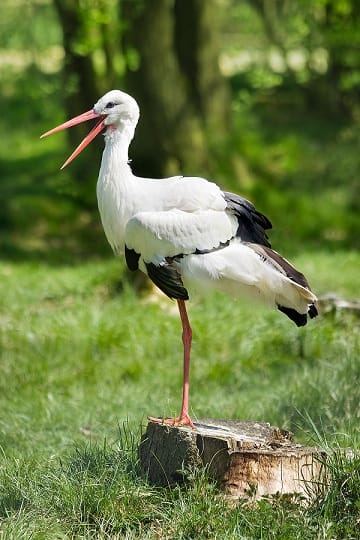
Stork
Zeliş's brother Mustafa rode his tractor to the village every morning and mowed hay with a harvester. In the evening, Zeliş told her brother about the storks. Mustafa smiled:
"When I mow the hay with the machine, dozens of storks come to the meadow and eat whatever they find among the mown grass."
Zeliş was very eager to see the flock of storks walking on the ground.
The next day, her brother took Zeliş and Abbas on the tractor to the village. The grass was as tall as a person, stretching endlessly. Mustafa started the hay-mowing machine. He began to mow the grass. The human-tall grasses, when cut at their base, fell side by side, one on top of the other. Soon, the storks began to arrive. First, there were five or six. Then the entire meadow was filled with storks. One stork caught a live snake with its long beak and was flying in the air, the snake writhing to escape.
Mustafa stopped the harvester. He called the children to him. "Be careful! I unknowingly mow the snakes' nests with the harvester, killing their young. That's why the female snakes get very angry and want to attack people to take revenge. Once, one wrapped itself around my leg. It couldn't bite me because I was wearing boots. I hit its head with the iron bar in my hand. When you're walking in the meadow, stay close to the storks. Remember, storks sometimes fly high, but they can see the snakes on the ground."
Zeliş and Mustafa were scared; they stood far from the harvester. The storks followed the harvester step by step. When Zeliş and Mustafa became overwhelmed by the sun, they squatted by the wall and started to eat their food parcel.
They didn't realize it, but a snake was slowly approaching them. It was a long, black snake. It was seeking revenge. In fact, the snake was right! Humans had destroyed their nest and killed their young. But Zeliş and Mustafa were not responsible for all of this.
One of the storks circling in the sky made a swift dive, caught the snake approaching Zeliş and Abbas with its talons, and flew into the air. The snake's head almost touched Zeliş.
The storks carried the snakes they caught to a rocky area, dropped them from above, and caused their spinal bones to break by hitting them against the rocks.
Zeliş and Mustafa both ran to Mustafa in great fear.
“I’d sacrifice myself for you, brother! Take us home!”
MORAL OF THE STORY: Every animal values its home and its young.
ZELİŞ AND THE MOUNTAIN GOAT
Have you ever seen a mountain goat? They roam freely in the mountains. Their numbers are steadily decreasing. Don't confuse a mountain goat with a wild goat. A mountain goat is a domesticated species of wild goat. It is not afraid of humans. On the contrary, it approaches humans, sitting and standing beside them.
Mountain Goat
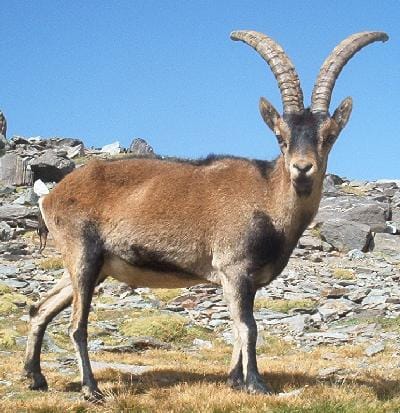
It was yayla season. Zeliş’s family had set up their black tent. Everyone was in a hurry. At such times, Zeliş didn't want to be in the crowd; she would hug Bobiş and disappear among the distant rocks, waiting for the hustle and bustle at home to subside. She would lie down at the base of a rock, and Bobiş would lazily lie on her skirt and fall asleep.
At one point, Zeliş felt a wetness on her ear. When she brought her hand to her ear, it brushed against a living creature. She flinched in fear. She saw an animal resembling a goat with huge horns. Since it had licked her ear, she thought it must be a harmless animal. She slightly closed her eyes, wondering what it would do. The mountain goat came down. It leaned its back against Zeliş and sat down. It started licking the cat's head. Bobiş was not bothered by this. On the contrary, it turned over, wanting its body to be licked too.
Zeliş offered a piece of bread she took from her pocket. The mountain goat ate the bread with relish. Thus, a friendship began between them. At that moment, one of the dogs also arrived. Zeliş scolded the dog, preventing it from approaching the mountain goat. The dog also sat beside them. While panting with its tongue out, it stared at this strange-looking animal. It knew it had no right to attack this animal, just like Bobiş, because Zeliş didn't want it to.
Dusk was settling. Zeliş returned to the tent. Her mother had set up the samovar and prepared the table. The shepherds, a little further away, had set up their own tables and were eagerly eating their meals.
Next to the black tent, there was also a white tent with a pole in the middle. Guests were hosted in this tent. When there were no guests, Zeliş loved to sleep there. Zeliş went to the white tent to sleep.
The weather was cool. Bobiş hid under the blanket. With the joy of warmth, it purred for a long time, then fell into a deep sleep. Zeliş woke up in the middle of the night to the shouts and calls of the shepherds. When she sat up in bed, she saw the mountain goat next to her bed. Since the dogs hadn't barked, it had also come in the middle of the night and lay down beside Zeliş. In the morning, the mountain goat ran away from the oba, disappearing among the rocks.
Zeliş was happy to be friends with the mountain goat. The mountain goat loved flatbread. Zeliş would secretly make a bundle full of bread and climb the rocks. Soon, the mountain goat would come to Zeliş, lean its back against her, and sit down. Zeliş would feed the mountain goat with the bread she took from the bundle.
One midnight, the oba was echoing with shouts and dog barks. Voices rose from everywhere: “Beware! A bear has entered the oba!” The shepherds grabbed their weapons and ran to the other side of the oba. The night was pitch black. The moon had disappeared behind black clouds. Thus, everyone mistook everything that moved for a bear.
Zeliş also woke up, listening to what was happening with the mountain goat and Bobiş beside her. Suddenly, the house dogs started barking in a terrible tone and even wrestling with a living creature. Zeliş had never seen the dogs so aggressive and fierce. When she poked her head out, she saw a bear a little further away, surrounded by dogs that dared not approach it.
The bear suddenly moved towards the white tent. The mountain goat, also awakened by the noise, had poked its head out. Seeing the bear running towards it, the mountain goat also ran towards it, butted the bear with all its might with its huge horns. The bear was stunned and rolled to the ground. The bear's roar shook the earth and sky. It struggled to get up, staggered, and disappeared into the pitch-black darkness of the mountains.
Bear

The household had also witnessed what happened. What surprised them most was the mountain goat fearlessly rushing forward to protect Zeliş. From that day on, the mountain goat became like one of the family. Everyone loved it very much and made sure it was comfortable.
It was time to return from the yayla. Loads were placed on oxen and donkeys. The caravan set off. The mountain goat followed them for a long time. Then it left them and climbed onto a high rock.
Zeliş, clinging to her grandmother on the back of the horse, kept turning back to look at the mountain goat. Finally, she saw it on the peak of the rocks. Zeliş began to cry: “Grandma, how will it live alone in the mountains? Why didn't it come with us?” Her grandmother was a wise woman. “Zeliş, we don't know, but it also has a family. It is used to living in those mountains. It cannot live in the village or the city. Because freedom is the most precious thing for it.”
MORAL OF THE STORY: When a choice arises between friendship and freedom, freedom prevails.
ZELİŞ AND THE SLED GAME
Winter had arrived. In the past, Iğdır used to get a lot of snow. From December until the end of March, there would be knee-deep snow on the ground. Children loved playing snowball fights and making snowmen. Sometimes they would also queue up to slide on the ice in Aunt Sımoş's garden.
One such day, an idea came to Zeliş. They had a shepherd who never refused her. She went to him: “Uncle Ömer, can you make us a sled? A big one! So four or five children can sit in it.” Ömer was surprised: “Who will pull the sled then?” Zeliş was deep in thought but immediately replied: “We'll tie it to our donkey.”
Ömer did not object to this idea. He attached three or four pieces of wood side by side. He nailed a plastic sack underneath so it would slide easily on the snow. He went into the barn. He came back carrying an old car tire on his shoulder. He drilled holes in both ends. He tied it to the sled with a thick rope. He took the donkey out of the stable. He put the tire around the donkey's neck. First, he tried it out. The donkey carried Ömer without difficulty. He handed the harness to Zeliş.
Donkey and Sled
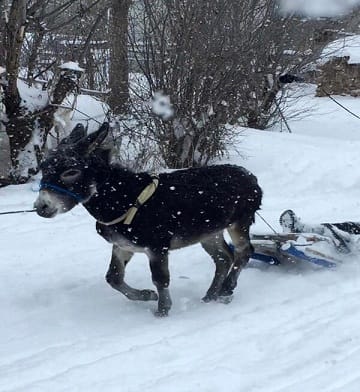
Zeliş sat Abbas next to her and gently hit the donkey with a thin stick. The donkey slowly started moving. They reached the main road. The neighborhood children, seeing this, surrounded them. They had never seen such a thing before. All of them wanted to ride the sled. Zeliş set a condition: two people would ride at a time, the donkey would take them from one end of the neighborhood to the other, but it would cost 25 kuruş. Abbas was collecting the money. Until late hours, almost no one in the neighborhood had not ridden the sled.
When evening came, Zeliş and Abbas counted their money. They had 20 liras and 75 kuruş. This was a lot of money. Zeliş went to Abbas’s mother, Aunt Gülsüm. “Aunt Gülsüm, if I show this money to my father, he’ll be very angry! What should we do with this money?” Aunt Gülsüm’s husband, Uncle Kelbayı, was sitting in a corner, listening to their conversation: “Oh, children! If I were you, I’d buy rubber shoes for my friends with that money. Most of your friends walk to school from the villages. Their shoes are torn, ragged, and full of holes!”
Zeliş liked this idea. The next day, she gathered her friends whose shoes were torn in class and brought them to Uncle Kelbayı’s shop. Uncle Kelbayı was a loyal and kind-hearted man. He took the children with him and led them to a distant shop. Each child found a pair of shoes that fit them. They all happily set off for their village. Uncle Kelbayı returned to his shop with a proud expression, holding Zeliş’s hand in one and Abbas’s in the other.
MORAL OF THE STORY: Money easily earned finds its true value when given to those in need.
ABBAS AND THE FRILLBACK PIGEON
One day, for some reason, Abbas became interested in raising frillback pigeons. He was doing this secretly from his family. Only Zeliş knew about it. One of Abbas’s friends had taken him to his house and shown him the frillback pigeons he raised. They were all beautiful, colorful pigeons, each more stunning than the last. Their aesthetic appearance made one fall in love with them. Their walk and flight enchanted people.
Because their tail feathers were large, they could do somersaults in the air, and the more skilled ones could even do 5-6 somersaults in a row. Frillback pigeons had a special characteristic: because they had a magnetic section in their brains, no matter how far they went from home, they could always find their way back. Thanks to the frills on their elbows, when released into the sky, they would rise very quickly and then begin their displays and games in the air. The most troublesome part was that their frills were long, so they got dirty quickly and required maintenance.
Frillback pigeon
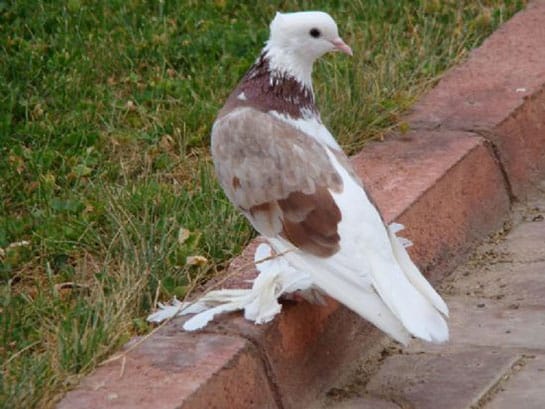
Abbas had set his heart on a frillback pigeon chick. “How much does it cost?” he asked. His friend answered without hesitation: “2.5 liras, but you’re my friend, bring 2 liras and I’ll give you a chick.”
Until Abbas returned home, all he could think about was the frillback pigeon and the 2 liras. This was a lot of money. He couldn’t ask his father for it. He called Zeliş. He told her what had happened. Zeliş couldn’t bear to see Abbas heartbroken. “Wait, I’m coming!” she said and ran home. She had a piggy bank that İş Bank had given to her father. The piggy bank was made of steel. It could only be opened with a special key from the bank. Zeliş inserted a small piece of wire into the piggy bank’s hole, and the coins fell out one by one. There was no money left in the piggy bank. They sat down and counted the money. There was 1 lira and 85 kuruş. Abbas said, “I’ll buy the pigeon with this money, and I’ll pay my 15 kuruş debt later.” It had happened just as he thought. His friend handed the young frillback pigeon to Abbas. He taught him what to do. He told him not to let it out until it got used to the house, otherwise, it would follow the other frillback pigeons and go with them and never return.
Abbas and Zeliş brought the pigeon home, hiding it. Abbas’s father had just built the house, but because he didn’t have enough money, he had left the kitchen part as a closed room. Entry there was possible from a small window outside. They brought a ladder and entered the small room. They put water and wheat in front of the chick. To prevent it from flying away, Zeliş covered the window with a curtain made of mosquito netting she had brought.
Zeliş and Abbas went to the young pigeon several times a day, changing its water and giving it various feeds. The pigeon chick accepted them like a mother, snuggled up to them, flapped its wings, and showed its joy.
As time passed, the young pigeon grew and became a colorful frillback pigeon. Abbas: “It’s time to fly the pigeon! I’m going to throw it into the air. Let’s see if it comes back!”
They were both very excited. They went to a distant part of the garden. Abbas excitedly threw the pigeon into the air. The pigeon first landed on a nearby wall. When Abbas approached, it didn’t flee. Abbas threw it into the air again. This time, the pigeon rose into the sky and disappeared in the distance. Abbas and Zeliş fixed all their attention on the sky, trying to see the pigeon. A long time passed, but the pigeon didn’t return. Abbas was on the verge of tears. Zeliş was also truly sad. They had put so much effort into it. Abbas: “Zeliş, let’s remove the ladder and the mosquito netting. My father shouldn’t see it.”
When Abbas climbed the ladder, he heard pigeon sounds from inside. And what did he see? His own pigeon had lured another frillback pigeon and brought it with him. Zeliş also quickly climbed the ladder. They were both very happy. Now, they began to wonder what they would do with this second pigeon.
The next day, Abbas told his friends at school that he wanted to sell a frillback pigeon. He sold the pigeon. He received 2 liras. He paid his friend the 25 kuruş he owed. With the remaining money, he bought plenty of feed for his own pigeon.
A few days later, he released his pigeon into the sky again. The pigeon first performed a show in the air, doing five or six somersaults. Then it flew towards the distant pigeons. Soon after, it returned with three frillback pigeons.
In those years, raising frillback pigeons had become a fad among children and young people. Everyone claimed that their own pigeon was stronger, that it seduced others and brought them home, and so on.
Abbas sold each of the three new frillback pigeons for 2 liras. Before long, Abbas had more than 200 liras. Only Zeliş knew this.
One day, his father fell ill. He needed surgery, but the doctor was asking for 250 liras. Abbas, taking Zeliş with him, went to his father and told him what had happened. He handed his father the 200 liras he had saved. His father embraced Abbas and Zeliş with love. He had his surgery and recovered from his illness.
MORAL OF THE STORY: Sometimes a person saves a pigeon’s life, and sometimes a pigeon saves a person’s life.
ABBAS AND THE WATERMELON
There was a slaughterhouse near Zeliş’s house. Sheep and calves were slaughtered there, and the veterinary doctor inspected the cut meats and distributed them to the butchers after stamping them.
Zeliş was 10 years old but didn’t know what was happening at the slaughterhouse. One day, when the shepherds fell ill, her mother called Zeliş:
“Take the bucket! Go with Abbas and get something for the dogs from the slaughterhouse. Abbas goes there every day. He’ll help you!”
Zeliş took the bucket, and they set off for the slaughterhouse with Abbas. Zeliş was excited to see something new.
While the sheep to be slaughtered were crying
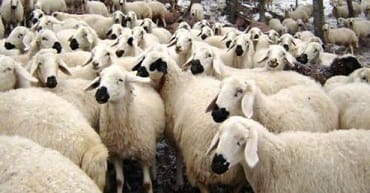
When they entered the area they called "Malmeydanı" (Animal Market), it was full of sheep and calves. Villagers were talking, bargaining, and a deep hum filled the air.
Zeliş was shocked when she entered the slaughterhouse building with Abbas. Dozens of slaughterhouse workers were lining up sheep and calves, laying them on the ground, instantly plunging knives into their throats, cutting off their heads, and throwing them aside. Zeliş used to hug a lamb that was to be slaughtered the next day during Eid al-Adha or Eid al-Fitr and cry. She would beg her father not to slaughter it. Of course, these efforts would be in vain.
But she was horrified by what she saw today! Her eyes were wide open, staring at what was happening. 20-30 sheep were crammed into a corner, waiting for their turn. They knew they were going to die because the smell of blood filled the air. The sheep bleated as if begging, but they couldn't move. The merciless (!) workers, who had been doing this for years, immediately laid down those they caught, and the flowing blood filled the gutter in the middle. Those who wanted would fill buckets with this blood and take it to their dogs. The beheaded sheep was hung on a hook, pushed to the next worker, who would skin the sheep and push it to his next colleague.
Unable to bear the brutality she witnessed, Zeliş went outside. She ran home. She got into bed and started crying. Her mother didn't understand what was happening.
Abbas soon arrived with two buckets full of blood: "Zeliş left and ran away. I filled your bucket."
Zeliş didn't eat for days. She would drink water occasionally, but despite all her mother's pleas, she wouldn't eat a single bite. She was rapidly losing weight. Her father became worried. He brought a doctor home. Abbas was also with the doctor. He explained what had happened to the doctor. The doctor shook his big head several times, saying, "Hmmmm!!" He pulled Zeliş's father aside: "Your daughter is in shock! She has a deep love for animals. She currently hates people."
The father was helpless: "What can I do? She's not even going to school."
The doctor whispered something into Zeliş's father's ear. Zeliş's father respectfully said, "Yes, doctor! I will do as you say."
It was afternoon. Suddenly, a large group of children entered Zeliş's room. They were Zeliş's classmates. One had a red rose, another a white rose, some daisies and flowers of different colors filled the room. They stood around Zeliş's bed and all together said, "Zeliş, we love you! Come to school tomorrow!"
Zeliş opened her eyes as if waking from a deep sleep. She was both happy and cried when she saw her friends. She sat up in bed. Abbas was not among them. Just then, someone kicked the door open. It was Abbas who entered. He had a huge watermelon in his arms. Everyone started laughing. Her friends had brought flowers, but Abbas had a huge watermelon! Zeliş also laughed. Her mother immediately prepared a low table. They cut the watermelon and ate it with pleasure. Zeliş had now forgotten that bad memory and was engrossed in conversation with her friends.
MORAL OF THE STORY: Only friends can make you forget the pain of cruelty to animals.
ZELIŞ'S NOWRUZ EGG
A few days later, it was Nowruz. There was excitement throughout the neighborhood. Mothers were cleaning their homes, wiping windows, and taking out carpets to wash them. Children had gathered and were talking about the Nowruz egg competition. Last year, a neighbor named Alican had won the egg tapping competition. The rule was: whoever broke an egg, took the broken egg. This wasn't much fun! Everyone would have Nowruz pocket money anyway. This year, they decided to change the rule. The loser of the race would pay 25 kuruş. Some families were poor. If they lost the game, they would carry the winner on their backs.
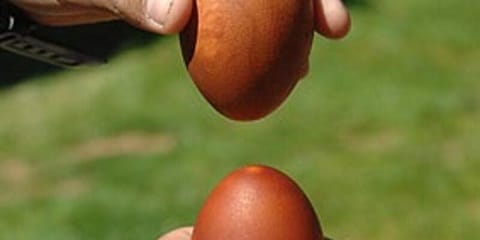
Nowruz egg tapping
In the evening, Zeliş went to her father and spoke as if begging: "Father, how can I win the egg tapping competition?"
Her father was an educated, intelligent man. He smiled. He remembered his own childhood. "Call Ömer to come!" Ömer was the shepherd of the house. There were two barns full of cows and bulls in the garden. Ömer came in his dirty clothes. Zeliş's father took money from his pocket: "Buy half a kilo of lime!"
Zeliş's father added water to the lime. He thoroughly coated the egg with lime using a brush. Towards evening, the lime on the egg had dried. He filled a small pot with pomegranate and onion skins. To avoid confusion, he first boiled the limed egg. The egg turned red. He took out the cooked egg. Then he put the other eggs in the pot. This time, he added some straw to the pot. A few hours later, all the eggs were cooked and left to cool on a cloth spread on the ground.
Zeliş stood next to her father, who was reading a newspaper: "Father, I want to try the limed egg." Her father smiled slightly again: "Bring both the limed egg and a few others."
Her father took one of the eggs in his palm. Zeliş also had the limed egg in her hand. When her father said, "Go on, hit it!" Zeliş brought the limed egg down on top of the egg in her father's palm. Zeliş's eyes lit up when she saw the egg in her father's hand crack. They tried a few more eggs, but each time Zeliş's egg was the winner.
The next day, towards noon, the neighborhood children gathered. First, two eggs were tapped, and the winner took their money and moved to the right. Zeliş was among the winners in the first group. This time, the winners tapped among themselves. Zeliş was again among the winners. In the end, Alican and Zeliş made it to the final. Both of their pockets were full of money. Who would hold the egg in their palm first? They flipped a coin. Alican would hold his egg in his palm, and Zeliş would hit it. The excitement was at its peak. Adults were also curious and had mingled with the children to see the final tap. Alican kissed his egg: "Come on, my lion!" he said, taking it in his palm.
Zeliş also affectionately kissed her egg. She approached Alican. Zeliş delivered a harder blow than usual. Alican's egg was shattered. Alican was on the verge of tears as he handed over the money in his pocket. He also made a serious claim: "Zeliş's egg is a stone. It's not an egg!" Zeliş quickly threw her egg at a stone on the ground in front of everyone. When the egg broke, Alican was embarrassed.
Ice cream shops opened every year on March 21st. Zeliş called out to her friends: "My pocket is full of money! Let's go eat ice cream." Everyone, losers and winners alike, followed Zeliş. When a child who had never eaten ice cream in his life touched the ice cream with his tongue and muttered, "How cold it is!" everyone laughed. Someone shouted from afar: "Oh, you fool! Ice cream is supposed to be cold!"
MORAL OF THE STORY: Even if you cheat, be generous!
ZELIŞ AND ABBAS CHASING THIEVES
Zeliş and Abbas were in the same class in elementary school. Every morning, they would set off together, walking slowly and arriving at school before the bell rang.
As usual, Zeliş and Abbas set off for school with their bags in hand. As they turned the corner, they saw an old woman sitting on the ground and crying a little further away. Zeliş rushed forward: "What's wrong, grandma?" The old woman laboriously raised her cane and pointed to the young man running away in the distance: "He stole my purse (o gedecüzdanımı apardı)." The thief's trousers and sweater were black.
The old woman whose money was stolen
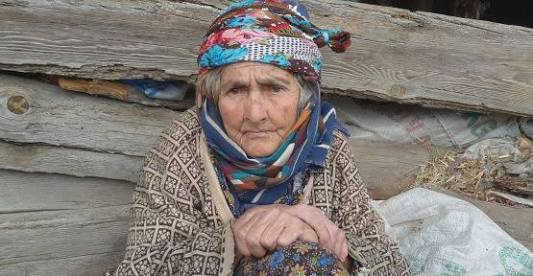
There was no one around. Zeliş and Abbas started running after the thief. Abbas was overweight. Zeliş gave her own bag to Abbas and started running faster. After crossing the bridge, she found a woman's purse by the side of the road. She picked it up and looked inside. It was empty. "He took the money and threw the purse on the ground!" she muttered to herself. She put the purse in her pocket.
Zeliş was lucky. A phaeton coming from another road was passing by. She couldn't stop them, but she sat on the iron bar at the back of the phaeton. When the phaeton arrived in the city, the thief was also walking slowly a little further away. He sat in a coffee shop. He lit a cigarette and exhaled contentedly into the air.
Iğdır was not a big city back then, but her father's workplace was far away. Zeliş entered the police station. She told them what she had seen. She also gave the old woman's purse to the police. Two plainclothes police officers took Zeliş by the hand and went outside: "Show us the thief!"
The thief was sitting in the same spot, smoking his cigarette. The police caught him from behind. Before he could say anything, the thief started shouting: "I swear I didn't do it!" One of the policemen laughed: "What didn't you do?" The police, Zeliş, and the thief got into a phaeton and headed towards the neighborhood. On the way, they saw Abbas. They took him with them. As the phaeton turned the corner, the old woman was still lying where she was. She was tired from sadness and crying. The phaeton stopped in front of the old woman. One of the policemen introduced himself: "Madam, I am a police officer! Did this man steal your purse?" The old woman looked at the thief with narrowed eyes full of hatred: "It was him! It was exactly him! I had 150 liras in my bag. He pushed me to the ground. He took my purse and ran away!"
The police searched the thief. They found 150 liras tucked into his sock. They gave the purse and the money to the old aunt. The old woman was very happy! She prayed for everyone! She got up and started walking towards her home.
The police and the thief got into the phaeton. Just as they were about to leave, Zeliş shouted from behind: "Police uncle, we're late for school! The teacher won't let us into class!" The police laughed. "Sit with us, we'll go to school first."
The phaeton stopped in front of the school. One of the policemen took Zeliş and Abbas to their classrooms, introduced himself to the teacher, and praised Zeliş's heroism.
The teacher was very happy with this news: "Children, let's all applaud Zeliş and Abbas!" A storm of applause erupted in the classroom. Zeliş and Abbas were both embarrassed and very happy.
Coincidentally, that evening, Zeliş's uncle arrived from Istanbul. He had brought a lapful of toys for Zeliş. Zeliş's father leaned into Zeliş's ear with a sweet voice: "You helped the old aunt, and God sent you your reward."
MORAL OF THE STORY: Those who help the elderly receive many blessings and abundance!
ZELIŞ AND ABBAS AT THE WATERHEAD
In the past, there wasn't much water in Iğdır. One had to wait in line to water vineyards and gardens. It was spring. It was Sunday. Apricot and peach trees had blossomed, filling everywhere with a beautiful scent. Zeliş and Abbas entered a neighboring garden. They were walking and trying to catch butterflies. Then a huge ditch appeared in front of them. It was flowing with abundant water. One of the neighbors had also opened a small ditch and was watering his field with the water flowing from the large ditch to the small ditch.
Zeliş and Abbas placed a stone in front of this small ditch and cut off the water. They didn't even know why they did this. There was no longer a single drop of water in the small channel. Suddenly, they heard a man's roaring voice from a distance: "Who closed the water to my channel! I will smash their brains with my shovel!"
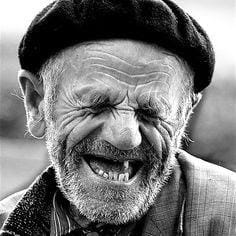
Zeliş and Abbas hid behind a tree in fear. The man who came had torn trousers. He was shirtless. He had rolled up his trousers to his knees and was walking around with his huge bare feet. His right foot was limping. Swearing, he opened the channel that Zeliş and Abbas had closed, and the water flowed back into the small channel.
Angry villager
The man didn't leave immediately. He wanted to punish whoever had done this evil (!) to him. In his anger, he hit the ground with the shovel in his hand and shouted: "Where are you, you sons of bitches, come out and face me?"
The man's eyes suddenly fell on the footprints on the ground. Since it had rained the day before, he could see which way the footprints went. He started following the footprints with a limp. When Zeliş saw the man coming towards them, she and Abbas started running. The man saw them. He didn't care that they were children. He wanted to punish them with the shovel, and there was no one around anyway; he had even decided to kill them.
Thank God, his limping leg prevented him from running. Zeliş and Abbas ran to the other end of the garden. At one point, Zeliş looked back, thinking maybe the man had given up. The man was coming even more angrily and determinedly.
In those years, the gardens were large. If you shouted, no one would hear you. Zeliş climbed the mud wall that appeared in front of them, but Abbas was overweight and didn't have the strength to climb. The man was getting closer and closer. Zeliş suddenly saw a hole under a neighboring wall, far from their wall. There was no water in it. Abbas ran towards the hole. The hole was not very big, but the bottom was muddy. Zeliş reached out her hand from the other side and pulled Abbas. Abbas barely managed to get to Zeliş's side, but he was covered in mud.
They started running again. The man climbed over the wall and continued to follow them, dragging his foot on the ground. There was a house ahead. Zeliş knew the owner of the house. Grandma Gülbahar was an old woman. During the day, she would go to her neighbors and spend time with them.
There was a garden toilet behind the house. Zeliş and Abbas entered the toilet, pulled the sackcloth cover, and hid. The man soon came near the house. He kept shouting and swearing revenge: "I will catch you and kill you! I will kill you!" The man wanted to enter the house, but the door was closed. He kicked the door, and the door opened all the way. He couldn't find anyone inside the house. He went outside angrily. There was a haystack in the distance. He took the pitchfork and stuck it everywhere in the hay. He looked at all the trees one by one, wondering if they had climbed them. Realizing that he wouldn't find them, he swore to himself and left.
A long time passed. Zeliş and Abbas secretly fled from there and went home. Abbas told his father what had happened. His father sighed: “Son, that neighbor of ours has been out of his mind since childhood. He committed a murder. They released him because he was mentally ill. God protected you! Don't go to those parts again!”
MORAL OF THE STORY: Don't be afraid! God always protects the innocent!
ABBAS AND FAT PAŞA
Fat Paşa was an elementary school principal. His greatest pleasure was to stand at the school entrance and harshly twist the ears of students who were late for school. One day, he pulled Abbas's ear too, hurting him. Abbas had not forgotten that pain.
That summer, Abbas had gone to his relatives in Alıkızıl village for a month. Upon his return, he couldn't stop telling Zeliş about his experiences:
“Alıkızıl is full of vineyards and gardens everywhere. Its watermelons were also very sweet. There's a huge canal in the middle of the village. The children would gather and swim in the canal.”
Zeliş asked curiously:
“Do you know how to swim?”
“It was very easy! When you wave your hands in the water, you propel yourself!”
Zeliş: “What else was there?”
Abbas: “There was a huge reed bed. The reeds were as tall as a house. Wild boars lived inside. One day I saw one of the boars from a distance?”
Zeliş: “How was it? (What was it like?)”
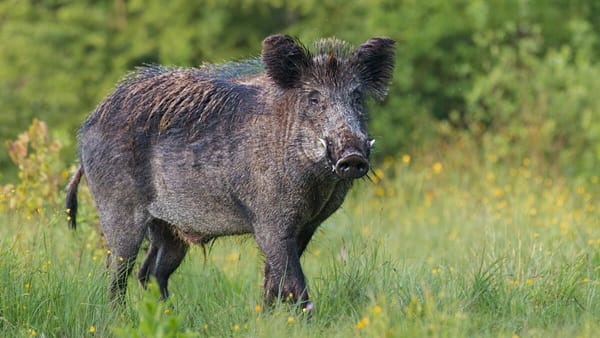
Abbas: “It was a little bigger than a sheep. It had huge ears and a small tail. It couldn't turn its neck.”
Wild boar
Zeliş couldn't make sense of it: “How?”
Abbas: “Remember, our principal Fat Paşa had an accident last year. They put a cast on his neck. He couldn't turn his neck. The boar couldn't turn its neck either, just like him.”
MORAL OF THE STORY: Pain goes away, but revenge remains.
ZELIŞ AND THE CHICKEN'S GIZZARD
Have you ever seen a chicken gizzard? It is made of very tough muscles. As you know, poultry like chickens and turkeys have beaks. It is impossible for them to chew what they eat in their mouths. They first send what they swallow to the proventriculus. The proventriculus softens them with its glands. Since hard-shelled seeds, stones, and lime particles do not dissolve, they first pass to the second stomach, called the gizzard. The muscles of this stomach are strong. It slowly grinds the food, turns it into flour, and sends it back to the proventriculus. Of course, this process takes a few days.
Zeliş's neighbor, Aunt Sımoş, was a very hardworking woman. She was especially knowledgeable about plants and trees. The best watermelons, cucumbers, peppers, and eggplants in the neighborhood came from Aunt Sımoş. Aunt Sımoş had a problem. In the spring, when she planted seeds, the neighbor's chickens and turkeys would dig up the buried seeds and eat them. Of course, this was not a pleasant thing! You would bend over all day planting seeds in the ground, and then the chickens would come and dig them all up.
Aunt Sımoş politely warned her neighbor, Aunt Gülsüm, a few times. Aunt Gülsüm said: “What can I do! Should I tie the chickens' feet?”
Aunt Sımoş realized that gentle methods would not yield results. Towards evening, she caught one of the neighbor's chickens. She cut off its head and threw it away. She dipped it in hot water. She plucked its feathers. She carefully removed the gizzard and put it aside.
Aunt Gülsüm would count her chickens and turkeys every evening and put them in the coop. That evening, she noticed one chicken was missing. She panicked! She walked around, thinking it might be in the garden. On a normal day, when she called out “Cluck, cluck!”, the chickens would immediately flock to her. But the lost chicken was nowhere to be seen.
She asked Zeliş's mother: “Could our chicken have gotten mixed up with yours!” They looked in the coop together, no, it wasn't there! Aunt Gülsüm became even more upset. This time she shouted from a distance to her other neighbor, Aunt Sımoş: “Oh Sımoş! Is our chicken there? I can't find it!” Aunt Sımoş replied in a brazen tone: “Your chickens don't usually come around here!”
Aunt Sımoş had actually given a meaningful answer because just yesterday they had had an argument about the chickens entering the garden. Aunt Gülsüm gave up hope and returned home. It was already dark, and she couldn't see anything.
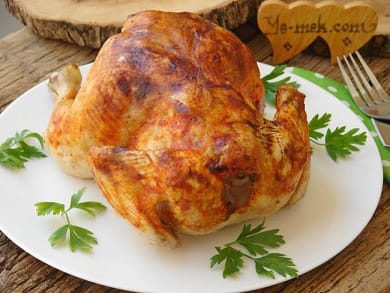
The next day it was lunchtime. Aunt Sımoş called Zeliş. Zeliş liked Aunt Sımoş. She was a generous, open-handed woman. Whenever she went, she would give her dried sunflower seeds, pumpkin seeds, and so on. But this time it was different! Aunt Sımoş handed Zeliş a tray. A huge roasted chicken was in the middle. The gizzard, the size of an egg, was cooked on a skewer but not cut in half. It looked like a small round ball.
Aunt Sımoş: “Oh Zeliş, my dear! Today is the anniversary of my late father's death. For my father's sake, take this chicken to your Aunt Gülsüm. Tell her that Aunt Sımoş had this chicken read by Molla Hüseyin, and they should eat the chicken first, and finally cut and eat the gizzard! Otherwise, the prayer will not be beneficial! Don't forget, bring the tray back immediately!”
Aunt Sımoş's roasted chicken
Zeliş didn't understand much, but repeating what she was told in her mind, she took the tray to Aunt Gülsüm's house.
The sweet, warm spring air filled the surroundings. The household had set up a table in the garden and were preparing for lunch. When Abbas saw Zeliş, he went to her. He helped her carry the tray! Zeliş told Aunt Gülsüm what she had been told. Aunt Gülsüm was happy with the news, saying, “May God accept it!” and placed the meat and gizzard from the tray on the table. Zeliş then took the empty tray and returned to Aunt Sımoş's house.
The household enjoyed the chicken. It was time for the gizzard. They cut it in half with a knife! And what did they see! The gizzard was full of watermelon, melon, and cucumber seeds! Aunt Gülsüm couldn't make sense of it, but Abbas was a clever boy: “Mom, these are the seeds Aunt Sımoş planted in her garden!”
The situation was clear. Aunt Sımoş had killed the lost chicken and fed it to them. She hadn't cut the gizzard, but had made sure they saw the seeds the chickens had eaten. From that day on, Aunt Gülsüm had to close off the side leading to Aunt Sımoş's garden with a large wire fence.
MORAL OF THE STORY: He who denies his crime pays the price.