Zeliş and Abbas – Part 2
This second installment of "Zeliş and Abbas" continues their adventures in the Iğdır highlands, exploring themes of friendship, nature, and community through engaging stories for young readers.
ZELİŞ AND ABBAS (PART 2)
Dear readers!
As I promised before, I will occasionally dedicate my column to children and young people (ages 6-18). Today, you will read the Second Part of Zeliş and Abbas. Soon, Zeliş and Abbas will be published as a book under the title IĞDIR TALES.
LET'S REMEMBER OUR HEROES


ICE CREAM DELIGHT
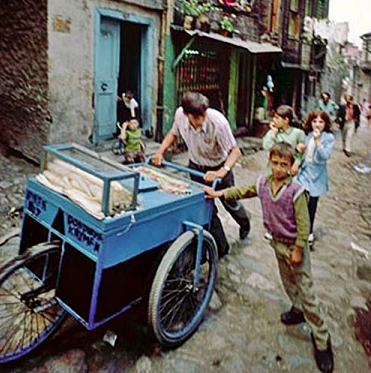
The street ice cream vendor pushed his cart along the dusty road, shouting in a loud voice, "Ice cream's here! Ice cream's here!" Zeliş and Abbas simultaneously ran out of the house and onto the street. Zeliş approached the ice cream vendor and excitedly asked:
"How much is one cone?"
"50 kuruş!"
Zeliş handed over her money and took a cone of her favorite strawberry ice cream. Abbas stood silently. Zeliş became curious:
"Abbas, why aren't you getting ice cream?"
"I only have 25 kuruş!"
Zeliş took 25 kuruş from her pocket and gave it to Abbas. Abbas then took a cone of plain ice cream.
As they walked home, enjoying their ice cream, misfortune struck: a bird's droppings fell onto Zeliş's ice cream. Zeliş was very upset. She threw her ice cream to the ground. Abbas was also very sad. He made an offer to Zeliş: "Let's share my ice cream. You lick it once, then I lick it once." Zeliş agreed. They happily finished the ice cream. Abbas then reminded her:
"Zeliş, I owed you 25 kuruş, but you ate half of my ice cream. So I don't owe you anything anymore!"
They parted ways, laughing.
MORAL OF THE STORY: Don't be sad if you don't have money, believe in luck a little!
BOBİŞ IS IN TROUBLE
Whenever Zeliş's cat, Bobiş, was bored, he would climb a tree, slowly approach the birds perched on the branches, and take great pleasure in it. Most of the time, the birds would notice Bobiş and fly away. Bobiş would then sit quietly, waiting for a new opportunity.
That day was laundry day. Zeliş's mother had placed a huge black cauldron on three large stones, filling its base with wood and dried dung. When she lit the fire, the wood first caught, and the large cauldron slowly began to heat up.
Just then, Bobiş had gotten very close to a bird on a branch. His feline mischief took over, and he pounced on the bird. The bird flew away, but Bobiş fell into the cauldron. The water was still lukewarm but was getting hotter and hotter. Bobiş first meowed loudly in a frightened tone, but there was no one around. He wanted to jump out, but being wet, he didn't have the strength to climb out of the cauldron.
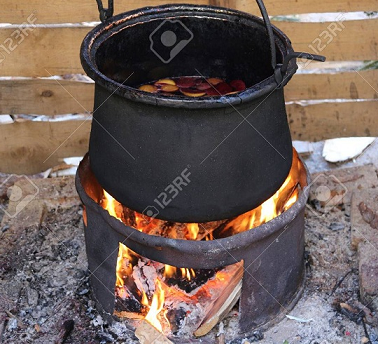
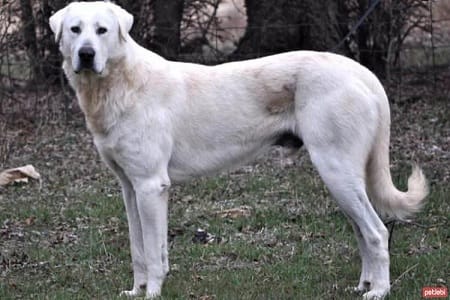
The water was now starting to get hot. Bıgır, the family's lovable dog, realizing Bobiş was in a desperate situation, grabbed Bobiş by the back and pulled him out of the cauldron. Bıgır's inner thigh was burned by the fire. Bobiş shook himself off. He went to Bıgır, who was lying on the ground, licking his wound.
Bobiş immediately ran towards the house, meowing loudly and at length to Zeliş, who was lying on the floor writing. Zeliş knew this was a warning of danger. She followed Bobiş. Together, they went to Bıgır. Bıgır occasionally whimpered as if crying, trying to lick the area between his legs. Zeliş understood it was a wound from Bıgır's singed fur.
Zeliş ran to Aunt Sımoş's house. "Oh, Aunt Sımoş! Our dog's leg is burned, what can I do?" Aunt Sımoş always had a remedy for every ailment. She took a bowl of yogurt. She poured some powdered spices Zeliş didn't recognize into it, mixed it well, and made it into a paste. "Apply this to the wound twice a day! It will be fine!"
Zeliş ran home with the paste in her hand. Bıgır's cries were getting louder. Zeliş applied the paste from the bowl to the wound. Bıgır initially didn't want his wound touched, but when Bobiş meowed angrily, Bıgır opened his leg and allowed Zeliş to apply the paste. Soon, Bıgır's whimpering stopped. He lay his head on the ground and closed his eyes with the peace of being relieved.
In the evening, Zeliş applied the paste a second time. Bıgır was now relieved. A few days later, his wound had healed, lightly scabbed over. Zeliş and Bobiş were happy about this.
Zeliş wanted to give something to Aunt Sımoş for her help. Since their Azeri neighbors didn't go to the yayla (summer pasture), tulum cheese was very valuable to them. Zeliş took a container from the kitchen, secretly slipped into the pantry, and squeezed five large blocks of tulum cheese into the container. Unseen by anyone, she went to Aunt Sımoş:
"Aunt Sımoş, my mother sent these cheeses!"
Aunt Sımoş was very happy. She didn't want to return the plate empty. She filled it with pumpkin seeds and gave it back to Zeliş. Zeliş and Abbas sat on the wall, eating seeds and engaging in deep conversation. Bobiş was busy catching the seed shells they cracked and threw in the air.
MORAL OF THE STORY: Some good deeds are invisible, some are visible.
WHAT WILL ABBAS DO DURING SUMMER VACATION?
It was the first week of May. Zeliş's family was preparing to go to the yayla. On such a day, a conversation began between Zeliş and Abbas, who had returned home from school, about how they would spend the summer. Zeliş joyfully explained her thoughts:
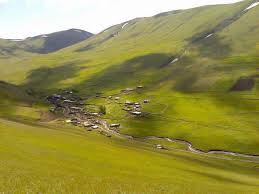
"This year, we're going to Güngörmez yayla. We've been there once before. The yayla is a lush green place between two mountains. A small stream flows through the middle. The stream isn't very deep. We take off our shoes and go into the water, collecting small colorful stones.
In Güngörmez, the morning sun didn't appear immediately. The sun would first illuminate the peak of the opposite hill, then the light would slowly descend. We would run to catch the light, trying to descend towards the tent with it. There's a castle on top of the mountain. I didn't climb it because climbing the mountain was difficult for me then. But this year, I will definitely climb the castle."
Zeliş was lost in dreams, describing her yayla days. Abbas listened to Zeliş with a sullen face. Zeliş noticed Abbas's low spirits but didn't say anything. At an opportune moment, she asked:
"Abbas, what will you do this summer?"
Abbas spoke as if about to cry:
"What will I do? First, my father and I will water the gardens. Getting in and out of muddy water is tiresome. Then I'll weed the eggplant, pepper, tomato, and cucumber gardens, cutting and throwing away the wild weeds. Mid-June is apricot and peach picking time. Climbing up and down the trees, up and down, leaves you breathless. I hate this job. We carefully pack the apricots and peaches we pick into crates, put them on a wheelbarrow early in the morning, and take them to the market. Some merchants load the apricots they collect onto trucks and take them to distant places. When I get home, this time I have to go to the garden and fill crates with ripe tomatoes and cucumbers because we have to put them on the wheelbarrow again early in the morning and take them to the market. When I come home in the evening, my back is bent double! In the mornings, when my father wakes me up, I never want to get out of bed."
Zeliş felt sad that Abbas would have to do such arduous work. Suddenly, a mischievous idea came to her:
"Abbas, you come to the yayla with us too!"
Abbas looked at Zeliş with surprised eyes:
"My father won't allow it!"
"Tonight, a doctor uncle and his wife are coming to visit us. When they arrive, I'll come to your house and ask for my book. When you go home, say, 'Mother, I'm very sick!' and lie down in bed, coughing constantly. Leave the rest to me!"
It happened as Zeliş said. The doctor and his wife came to visit in the evening. Zeliş left her house and ran to Abbas's house, saying she wanted to see Abbas. His mother spoke in a sad tone: "Abbas is very sick! He can't get out of bed!"
Zeliş returned home and told her mother, loud enough for the doctor to hear, that Abbas was very sick. The doctor stood up and said, "Let me see what's wrong with the child." Holding Zeliş's hand, they set off for Abbas's house. On the way, Zeliş pleaded with the doctor: "Doctor uncle, Abbas is faking illness. Please say, 'Going to the yayla will be good for his health.' I want Abbas to come to the yayla with us."
The doctor entered the house. The family stood up. They all went to Abbas's bed. Abbas was coughing continuously. The doctor took out his stethoscope, which he always carried, and listened to Abbas's lungs for a long time. Then he shook his head sadly: "Abbas has an allergy to tree pollen. There's no medicinal cure for it. The only solution is to go to a place like a yayla."
Zeliş was waiting for this opportunity: "We're going to the yayla next week, Abbas can come with us!" Abbas's father frowned and reluctantly agreed: "Let him stay for a month. When the pollen season ends in July, he can come back!"
Zeliş glanced at Abbas, who continued to cough feignedly. She took her book, and they returned home with the doctor.
MORAL OF THE STORY: Don't believe in the impossible! Everything is possible in life!
ON THE WAY TO THE YAYLA BY TRACTOR
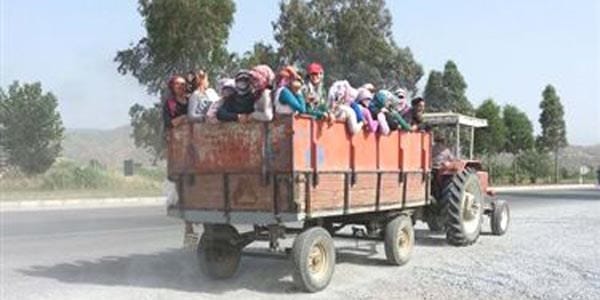
A week later, early in the morning, their belongings were loaded onto the tractor. Zeliş, her mother, her grandmother, and Abbas sat on a large mattress placed on top of the belongings. Bobiş also lay down between Abbas and Zeliş, looking around curiously.
Soon, the tractor left Iğdır and began to climb towards the mountains. The road was stony and dusty. Abbas and Zeliş invented various games, passing the time, oblivious to the journey. Suddenly, they felt the cold and put on their sweaters. Bobiş had crawled under a blanket and fallen into a deep sleep. The tractor arrived at Taşlıca village late in the evening. Zeliş's Aunt Gülizar lived in this village. They spent the night at her aunt's house. The next day, they set off again. After passing Sıçanlı (Paşapınar) village, Güngörmez yayla lay before their eyes in all its beauty.
Zeliş pointed out the mountains and the place where they had pitched their tent before to Abbas. There was a castle on top of one of the mountains. Zeliş spoke excitedly:
"I was scared to climb the castle when we first came, but this time we'll climb it together!"
At one point, Bobiş leaned into Zeliş's ear and meowed for a long time. This tone meant, "I need to poop!" The tractor stopped. Bobiş jumped down, quickly dug a hole at the base of a stone, did his business, and then covered the hole again. Zeliş and Abbas had also gotten off the tractor. They made a bouquet from the poppies around them. Then they all set off together.
The tractor stopped at the spot where the tent would be pitched. Neighbors from other tents came to help. Everyone knew what to do. A few hours later, a large black goat-hair tent and a white tent next to it were set up. Rugs were spread on the ground. The large tent was enclosed with a patterned fence. Zeliş and Abbas entered the white tent. A rug was spread on the floor. One bed was placed to the left of the pole, and another to the right. A huge horse saddlebag, woven with colorful thick ropes, was placed between the two beds. Bobiş immediately got into the saddlebag and happily turned from side to side.
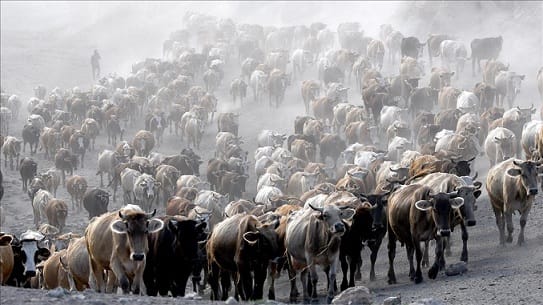
Zeliş's family made their living from animal husbandry. They had dozens of cows, calves, a donkey, a horse, and four dogs. The herd, under the watchful eye of the shepherds, had set off for the yayla days earlier.
Zeliş's mother immediately brewed samovar tea. They sat on floor cushions and drank their tea. Neighbors came one by one, saying, "Hûn bixêrhatin. Ser sera ser çava rahatin." (Welcome. You are welcome on our heads and eyes.) The visitors would have a short chat standing up, then ask permission and leave.
Abbas was eager to learn Kurdish. Zeliş asked him to repeat the sentence "Ez bircime!" Abbas made strange sounds. They laughed. Abbas asked curiously, "What does this sentence mean?" Zeliş replied, laughing, "I'm hungry!" Indeed, Abbas was hungry. Food and various cheeses were laid out on the table. Abbas loved lavash bread. He made a long wrap and began to eat it with appetite. Bobiş meowed irritably, as if saying, "I'm hungry too!" There was special food prepared for him. When Zeliş went to get the food, Bobiş ran after her. He was very impatient. Before Zeliş could even put the food on the ground, he jumped and knocked over the plate. He began to eat with gusto.
Zeliş's grandmother had a pair of binoculars. She wouldn't let anyone touch them. She looked into the distance with the binoculars. She cried out in a joyful voice: "Our herd of animals is coming too. They'll be here in a few hours!"
Towards evening, all the animals and four dogs arrived in front of the tent. The shepherds were also very tired. They sat down, drank tea, and ate their fill. Bobiş went to the dogs. They were very happy to see each other. Bıgır licked Bobiş's head for a long time.
MORAL OF THE STORY: A new life also recreates the spirit.
BEDTIME IN THE WHITE TENT
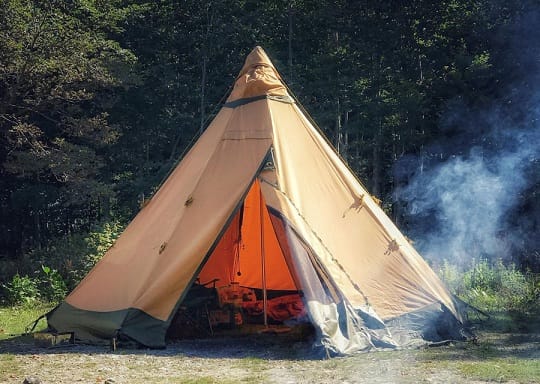
In the yayla, the air grew cold early. It was best to be in bed. Her mother hung a sailor's lantern on the pole of the white tent. Zeliş and Abbas got into their beds and started chatting. Soon, Bobiş also got into the saddlebag, but he poked his head out, looking at what was happening around him. Bıgır, because he loved Zeliş very much, stood guard at the tent door. At one point, Abbas asked:
"Are there wolves here?"
Zeliş replied, laughing:
"Of course! There are wolves and bears in these mountains. This is a yayla!"
A slight fear entered Abbas's heart; he imagined a wolf coming in and eating him while he slept. Zeliş, as if reading Abbas's thoughts, said: "Bıgır is a very strong dog! Wolves won't come out of fear. Our shepherds also have guns." Abbas felt a little relieved. He reached into his bag. He took out his books. At the very bottom was a plastic ball. Zeliş was surprised:
"Are you going to study?"
Abbas laughed. "These aren't textbooks. They're Texas and Tom Mix. Have you ever read them?"
Zeliş was hearing these names for the first time. She shook her head, meaning "No!" Abbas turned up the lantern light a little more. First, he showed her Texas. He opened the book. It was full of pictures. There were also texts in each panel. Abbas began to explain: "This one is called Çelik Blek (Steel Black). He's very strong. This is his friend, Professor. And this boy's name is Rodi." Zeliş looked carefully at the pictures shown. She took the book. She began to read the picture in each panel. She asked curiously:
"What are they doing?"
"They are patriots. English soldiers have occupied their homeland. They are fighting against the English." Abbas excitedly explained each page. Zeliş wanted to see the other book. Abbas picked up Tom Mix, turning the pages with the same enthusiasm: "This young officer's name is Captain Tom Mix. These are his friends, Konyakçı (Cognac-drinker) and Doctor. They are responsible for maintaining order in the American West."

Zeliş also turned the pages of Tom Mix, looked at the pictures, and read the texts, but neither Texas nor Tom Mix caught her interest. Zeliş wanted to change the subject: "Come, let me tell you a fairy tale."
Abbas, disappointed, put Texas and Tom Mix back into his bag. He lay down in bed, indicating he was ready to listen to the tale. Zeliş dimmed the lantern light, lay down in her bed, and began to tell: "Once upon a time, there was a king. He had three sons named Ahmet, Mehmet, and Mirza Muhammed. One day, he called his sons to him: 'My children, I am old now. When I die, I don't want a quarrel to break out among you over who will be king. So, I will give each of you a task. Whoever brings the most beautiful object in the world within three months will be king after me...'" As Zeliş spoke, she heard snoring. Abbas had fallen asleep. Bobiş, too, had turned over and fallen into a deep sleep. Zeliş turned off the light and also fell asleep.
MORAL OF THE STORY: Everyone's enjoyment of life is different.
CLIMBING KÖROĞLU CASTLE
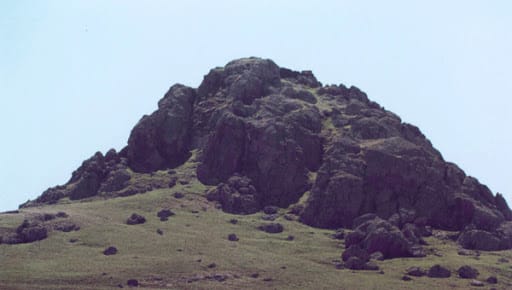
A huge mountain rose in front of the tent. On its peak was a castle visible even from afar. Its walls were made of black cut stone, abandoned to its fate for many years as no one had lived in it.
After breakfast, Zeliş pointed out the castle to Abbas.
"Come on, let's climb it!"
Abbas was already looking for adventure. He immediately agreed. Zeliş and Abbas took some water, bread, and cheese with them and began to climb towards the castle. The castle looked close from afar. But as they walked, the path never seemed to end. Since they were climbing uphill, they would get tired every now and then, sitting down to look at the encampment from a distance. There was a village far away. The surroundings were filled with black tents of various sizes.
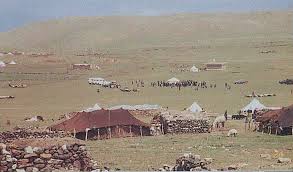
Cows and sheep grazed on the slopes of the mountain, and the braying of a donkey could be heard from afar. Bobiş followed them slowly, ten paces behind, hiding among the bushes to trap mice that scurried here and there, enjoying himself.
Finally, they reached the base of a huge rock on which the castle was built. Zeliş wanted to enter the castle from the back. The view was terrifying because the back of the castle was a cliff. It was very dangerous. The stairs were covered with small pebbles. Even an adult might struggle to climb here because the small stones would slide, pulling one towards the cliff. Zeliş was not heavy. As she stepped on the stairs, the pebbles on the ground didn't even budge. Abbas took a few steps and suddenly realized he was sliding towards the cliff. He lay down on the stairs, unable to move from fear. Zeliş had already climbed the stairs and entered the castle. Abbas shouted with all his might, "Zeliş! Zeliş!" When Zeliş saw Abbas on the ground near the cliff, she panicked. She slowly approached Abbas, took his hand, but Abbas was afraid to stand up. One of his feet was dangling in the void over the cliff. Realizing she was helpless, Zeliş shouted to Bobiş: "Run and get Bıgır!"
Bobiş ran down the slope towards the goat-hair tent at full speed. He was both running and meowing, meaning "There's danger!" Bıgır heard the sound and ran towards Bobiş. When Bobiş saw Bıgır coming, he changed direction and ran towards the castle. Bıgır, with his long legs, outran Bobiş with the speed of a panther and reached Zeliş. He was an intelligent dog. He understood that Abbas was crying and in danger. He grabbed Abbas by the trouser leg and pulled him towards himself with all his might. Abbas was saved, but he had never been so scared in his life.
Zeliş gave Abbas water and hugged him tightly. Abbas stopped crying and tried to calm down by taking deep breaths. Bobiş had only just caught up. He had a mouse in his mouth. The mouse was still alive. Abbas and Zeliş started laughing when they saw Bobiş like this. Zeliş shouted: "Bobiş, leave the poor little mouse!" Bobiş reluctantly threw the mouse to the ground. The little mouse played dead for a while, then suddenly darted away and disappeared among the bushes.
Zeliş walked around the castle to see if there was another entrance. Yes, there was an entrance gate between two huge columns. Although Abbas was reluctant, he followed Zeliş, and they climbed into the castle together. The view was magnificent! Even Iğdır could be seen in the mists far, far away. Mount Ağrı seemed even larger and more colossal. Zeliş picked up a small stone from the ground and carved "ZAB" in large letters into a castle stone. Abbas was curious: "What does this mean?" Zeliş immediately replied: "Zeliş-Abbas-Bobiş." Abbas liked it.
Abbas added: "Zeliş, write another B!" Zeliş asked curiously: "Why?" Abbas pointed to the dog sitting below, waiting for them: "For Bıgır!" Zeliş added another B to the end of the word. Laughing, they descended the stairs. Abbas gave all his share of bread to Bıgır. Bobiş, jealous, meowed for a long time. Zeliş also placed a piece of cheese in front of Bobiş. After sitting and resting for a while, they walked, sometimes running, towards the tent. Bıgır and Bobiş followed them at a slow pace.
MORAL OF THE STORY: Don't forget those who help you!
WOLVES ON THE SNOWY HILL
There was a patch of white on the top of the opposite mountain. Abbas asked what it was. Zeliş said: "Because the weather is cold here, the snow melts slowly. That's the last remaining patch of snow." Abbas was surprised: "Isn't it amazing to have snow in June?" Zeliş understood that Abbas was curious about the snowy hill. Taking Bobiş and Bıgır with them, they set off towards the snowy hill. Their grandmother called from behind: "Children, bring me some snow too!" Zeliş took a small plastic bucket from the kitchen and put their food inside. Abbas also took a stick made of oak wood. They set off together.
Abbas was going to see this side of the yayla for the first time. A clear stream flowed in front of them. Far in the distance, melting snow waters flowed down the stream. They crossed the stream by stepping on stones. They reached the area with wheat fields. Passing by mounds and irrigation canals, they began to climb the slope with difficulty. Abbas suddenly dropped to the ground: "I'm tired! I don't have the strength to take another step!" Bobiş was also happy about this news. He chased a butterfly that flew past him for a while. When he couldn't catch it, he came back in a bad mood. He lay down on the greenery. Bıgır also sat, his tongue hanging out, breathing, and keeping his eyes on the surroundings, alert to any possible danger.
Zeliş's grandmother had made delicious kılor (a type of pastry) yesterday. They ate it with pleasure. They drank water and continued on their way. When they looked back at one point, they realized how far they had come from the encampment.
They went near a flock of sheep. The dogs guarding the flock attacked. Zeliş picked up Bobiş. Bıgır growled deeply at the approaching dogs, meaning, "If you attack, the price will be heavy!" The other dogs merely barked. Abbas also held his stick in the air, ready to strike if the dogs came closer.
The shepherds, who were the same age as them, calmed their dogs by throwing stones from a distance. They spoke to Zeliş in Kurdish and asked where they were going. Zeliş said they were going to the snowy hill. She introduced Abbas: "He's the son of our neighbor in Iğdır. He's Azeri, he doesn't know Kurdish." One of the shepherds forced himself to say in Turkish, "My name is Ahmet." His tone sounded strange. They all laughed. Abbas also said his name. The other shepherd's name was Mehmet. They were brothers. This flock was theirs too.
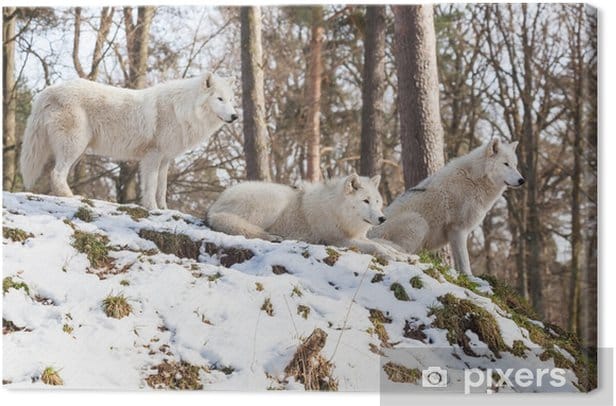
Ahmet said he knew a shortcut to the snowy hill and could help. They all set off together. After crossing two deep valleys and passing through rocks, they suddenly saw the snowy hill in front of them. The snow was slowly melting, and a thin stream of water flowed downwards. They all walked on the snow.
Bobiş's paws got cold, so he started meowing. Zeliş picked up Bobiş. Abbas and Ahmet played snowball. They ate snow to quench their thirst. Zeliş filled the bucket with snow. Far in the distance, three or four wolves appeared on the rocks. The shepherd pointed them out: "Wolves! Look, your dog is also uneasy."
Indeed, Bıgır kept his eyes fixed on the wolves. Last year, a pack of wolves had surrounded Bıgır, circling him to disorient him and then suddenly attacking to kill him. The shepherd had come to Bıgır's aid at the last moment by firing his gun into the air. Remembering that moment, Bıgır knew he wasn't alone, but recalling how cunning and dangerous wolves could be, he thought it best to get away from there as soon as possible.
Zeliş and Abbas also got scared when they saw the wolves. They quickly ran down towards the flock. After sitting and chatting for a while, Zeliş and Abbas stood up to go home. One of the shepherds gifted Abbas four stone wheels he had carved himself. Abbas was very pleased. Abbas asked Zeliş how to say "Thank you!" in Kurdish. Zeliş said, "Spas!" Abbas then forced himself to say "Spas!" to the shepherd and offered Ahmet his share of the kete. They waved goodbye in a friendly manner and parted ways.
When Zeliş and Abbas arrived home, they told their mothers what they had experienced. Their mothers also felt sad. From then on, Zeliş and Abbas's first task every morning was to put a bundle of food in the box and take it to Aunt Cemile. Aunt Cemile gifted Abbas and Zeliş each a colorful patterned wool sock she had woven herself.
One day, Abbas and Zeliş arrived at Aunt Cemile's house, pulling the cart, but Aunt Cemile was not in her usual spot. Her door was ajar. Zeliş called out several times, "Bîrkê Cemile! (Grandma Cemile!)" but there was no answer. Abbas opened the door and went inside. Grandma Cemile was lying motionless in her bed. Zeliş, frightened, ran towards home, shouting, "Mom, Grandma Cemile is sick! She's lying in bed!" First, one of the shepherds ran ahead. When Zeliş's mother arrived at Grandma Cemile's house, the shepherd sadly shook his head: "Grandma Cemile has passed away!"
The village's religious teacher and neighbors came. They buried the deceased in the village cemetery. That day, Zeliş and Abbas did not eat. They went to their beds in the tent and quietly fell asleep.
MORAL OF THE STORY: It's hard to know what anyone is going through in this world.
THE DHIKR-PERFORMING DERVISH
In the yayla, there would sometimes be dervishes wandering around, sometimes in groups, sometimes alone. They carried a drum-like musical instrument called a def. The dervishes' hair was long and unkempt. They paid no attention to their appearance or clothes. They were covered in dust and dirt. They were wanderers. They would travel from encampment to encampment, playing the def and performing dhikr. Their purpose was to endure hardship, discipline their egos, and remind people of spirituality and worship.
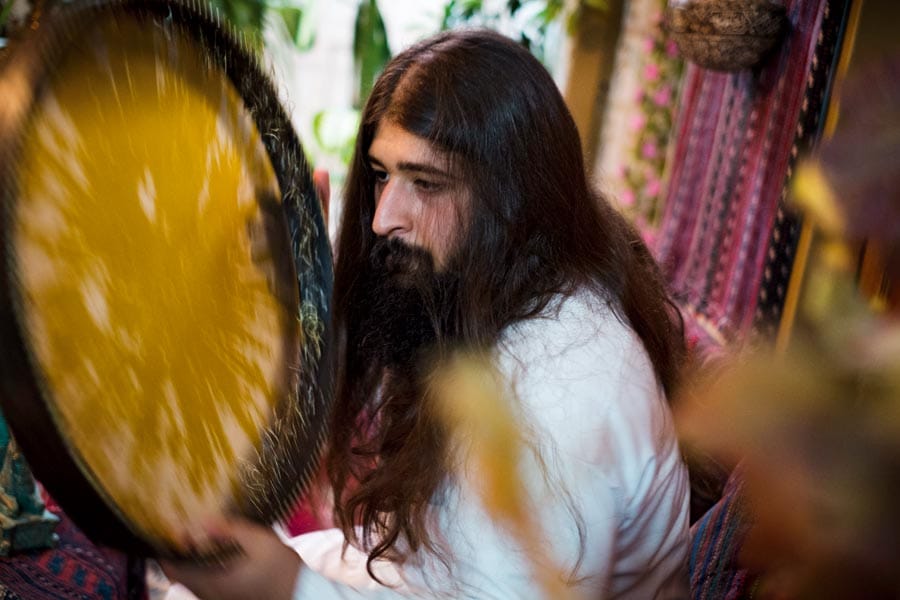
One day, a dervish came to the goat-hair tent with a def in his hand. The interesting thing was that the dogs didn't even bark at the dervish. Abbas was very surprised by this. The dervish stood in front of the goat-hair tent, greeted those inside, and then asked permission to perform dhikr. He was offered a place to sit, but he refused, sitting on the ground instead. When silence fell, he struck the def and recited Kurdish hymns and difficult-to-understand prayers.
Abbas leaned into Zeliş's ear:
"Who is this man? What is he doing?"
Zeliş relayed what she knew. Abbas continued to ask:
"Why are they so unkempt?"
Zeliş didn't know the answer to the question. She went to her grandmother and whispered in her ear. She ran back: "They believe they need to look ugly and unkempt for their inner world and souls to be clean."
After finishing his dhikr, the dervish stood up, refusing everything offered to him. He walked fearlessly among the dogs and went to the next tent.
MORAL OF THE STORY: Even dogs respect those who discipline their ego.
UNCLE ÇERÇİ (PEDDLER)
There were no grocery stores in the yayla. The most missed thing was fruit. Knowing this, merchants would bring 5-10 donkey-loads of fruit, dried nuts, and fabric pieces from Iğdır, selling them in the yayla in exchange for cheese and butter. The arrival of the peddler in the yayla was an event. The children in the yayla would run alongside the donkeys tied together with ropes, their eyes sparkling with the hope of getting a sweet treat, looking at Uncle Çerçi.
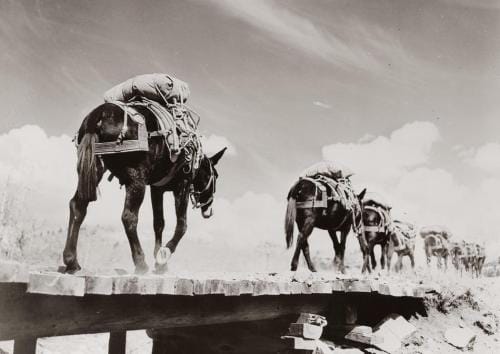
When Zeliş's mother saw the peddler coming, she asked him to stop. She offered him ayran. She learned what he was selling. There were apples, apricots, pears, tomatoes, peppers—everything. He also sold various sweets, hazelnuts, pistachios, biscuits, and colorful fabrics for women's clothing. Zeliş's mother was generous and open-handed. She bought a little of everything in exchange for butter and cheese. She also bought a few meters of fabric in different colors. The peddler, pleased with the cheese and butter he received, continued on his way. Zeliş's mother gave Zeliş about a kilo of sweets to distribute to the children. Abbas and Zeliş called the children in the encampment. The children rushed towards Zeliş and Abbas, raising dust, and shouted from every mouth, "One for me too! One for me too!" They showed each other the sweets they received, then put them in their mouths and sucked on them with relish.
Zeliş and Abbas hadn't eaten fruit for a long time. They sat in the white tent, eating hazelnuts and pistachios, and laughing as they imitated the children's shouts and cries. Bobiş was angry because he hadn't been given anything. On such days, he would come and gently bite Zeliş's foot or irritably scratch the ground. Zeliş put a few biscuits in milk and gave it to Bobiş. Bobiş wagged his tail in pleasure and ate his food with gusto.
MORAL OF THE STORY: Things you don't value will become valuable in time.
COLLECTING KUNI
"Kuni" is a Kurdish word. It is the name given to a type of shrub that grows on mountain slopes. It is about two spans tall. It has a very thick trunk, deep and strong roots, and thorny leaves. It was difficult to pull out of the ground because the thorns would not only cause pain but also itch for hours. Kuni was very valuable because it burned slowly and produced embers. In the yayla, kuni was mostly used when baking bread. After the bread-making process was complete, Zeliş's grandmother would then use the embers to make the delicious pastry known as "kılor."
Zeliş's mother gave the children, who were having breakfast, a task: "Today you will collect kuni. I will show you how to collect it."
Her mother took an adze. They walked quite a distance up the hill. Finally, they found a kuni. Her mother explained: "Don't touch the kuni with your hands! Its thorns are very sharp. Step on its root with your foot, you will see the roots. Cut the roots one by one with the adze! Be careful not to raise the adze too high. The harder and shorter you hit, the easier the roots cut. Then fill the sack with kuni. Put it in the cart and bring it."
Abbas and Zeliş immediately got to work. The work was divided. Abbas would cut the kuni, and Zeliş would put it in the sack. Bobiş, as if he understood the task given, ran around, found kuni, and meowed to inform Zeliş. Soon, the sack was full of kuni. At one point, Abbas's foot slipped, and thorns pricked his foot. Other than that, there was no accident.
They returned to the tent. After emptying the sack, they ate lunch. In the afternoon, they went out to collect kuni again. Abbas had now gained expertise. He sharpened the tip of the adze with hard stones, and with one blow, he would sever the kuni from its root. They brought another sack full of kuni. His mother was very pleased. "This much will be enough! Tomorrow we will make kılor for you too." His mother had already left the dough to ferment in a large basin the day before.
Zeliş and Abbas also started playing handball with a plastic ball. Abbas beat Zeliş every time. When the ball fell to the ground, Bobiş would quickly dart forward, catch the ball, and try to return it to Zeliş and Abbas by gently hitting it with his paw. A good idea came to Zeliş's mind. Abbas was heavy. If she threw the ball a little to the side, Abbas wouldn't be able to reach it. Zeliş threw the incoming ball a few meters away from Abbas. Abbas tried to gather himself and make a move, but since he couldn't move his body quickly, the ball fell to the ground. After that, Zeliş started winning all the games. Abbas got angry and blamed the ball.
MORAL OF THE STORY: Be curious to learn things you don't know.
THE ELOPING LOVERS
It was late afternoon. The cows had been milked, and dinner was set. Suddenly, the dogs began to bark at an approaching horseman. Zeliş's mother wondered who was coming. As the shadowed rider approached, she realized it was Gülizar's husband from Taşlıca village. The shepherds drove the dogs away. The guest dismounted his horse. He took his Mauser rifle from his shoulder and placed it beside him, then sat down at the table. He was hungry. After some small talk, the guest explained why he had set out:
"One of the shepherds eloped with a poor and orphaned girl. This caused unrest within the tribe. I'm going to take a shortcut and catch them. The tribal elders gave me the task of catching them."
The guest didn't want to waste time. He stood up. He slung his Mauser over his shoulder. With greetings and prayers, he left the tent. Abbas was very surprised when he understood what was happening through Zeliş's translation. Why were they forcibly eloping with the girl when they could have asked for her hand in marriage? They asked their mother this question. Their mother replied in a sad tone: "If the man doesn't have the bride price to pay, the only option is to elope with the girl." That evening, Zeliş's mother explained the tribal traditions at length.
When the children woke up in the morning, they saw a horseman and two people walking with difficulty behind him, coming from a great distance. Zeliş's grandmother looked at the arrivals with binoculars and murmured softly: "He caught the eloping girl and boy."
Soon, the horseman from last night and the two lovers passed in front of the tent. The girl and the shepherd had their hands tied, and the rope was attached to the horse's saddle. The young girl's feet were bare. Her feet were covered in blood. Zeliş and Abbas were very sad about this situation. Zeliş asked her mother for a pair of shoes she no longer used. Abbas ran and gave the shoes to the girl. He also put a handful of sweets in her pocket. The young girl was very happy.
MORAL OF THE STORY: Love is the most beautiful feeling, but it comes with a price.
SWIMMING IN THE POND
One day, the shepherd Ahmet came to Zeliş's house. He was the shepherd who had helped them when they went to the snowy hill. He had also gifted Abbas four stone wheels. Ahmet asked Zeliş's mother shyly:
"We, the village children, are going to block the stream today to make a pond and swim. Zeliş can't come because the children go into the water naked."
Zeliş, as usual, translated what was said to Abbas. In fact, both of them didn't want to be separated and were making plans for the day, but Ahmet had helped them. He was a good boy. Zeliş's mother allowed Abbas to go but strictly warned him: "If you don't know how to swim, don't go into the water!" Zeliş interjected: "Mother, Abbas learned to swim in Alıkızıl village, he knows how to do it."
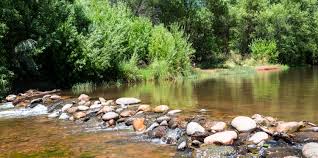
Ahmet and Abbas descended the hill silently, without speaking, and went to where the village children had gathered. They had chosen a suitable spot for the pond. They were busily carrying stones, trying to block the flow of water. Soon, water began to accumulate in the stream. Now the water was overflowing the stone dam and continuing on its way.
The children stripped naked and jumped into the water. Abbas also entered the water. When he put his foot down, the water reached his chin. Abbas was very surprised that the children had made such a beautiful pond in such a short time. He had no chance to speak Turkish with anyone, but they communicated with hand gestures. One of the children was deaf and mute. He would have his hands tied behind his back, throw a small red stone he showed everyone into the water, dive in, and retrieve the stone with his mouth. No one else could do this.
The water was cold, and it got even colder when they came out. It was best to stay in the water and swim to protect themselves from the cold. As Abbas swam, his foot hit something hard and metallic. He dove into the water and retrieved the metallic object. It was a round, metal object. He looked at it carefully but couldn't make sense of it. "This will be a nice gift for Zeliş," he thought. The sun was setting. The children started to get cold. Abbas and Ahmet put on their clothes and returned to the tent.
Zeliş had been sitting in the tent all day, sadly trying to weave a handicraft her mother had taught her. When she heard Abbas and Ahmet's voices from afar, she excitedly came out of the tent to greet them. Ahmet quickly explained what they had done.
Zeliş's mother had prepared a low table for dinner. The samovar was ready. They all sat down and ate their fill. The hot tea had done Abbas good. Suddenly, Abbas remembered the round metal bracelet he had found: "Zeliş, close your eyes and hold out your right hand!" Zeliş, curious about what would happen, did as she was told. She held out her right hand. Abbas took the bracelet from his pocket and put it on Zeliş's wrist. Abbas called out: "Okay! You can open your eyes now."
Zeliş was very surprised to see a bracelet on her arm. Zeliş's mother also became curious, took the bracelet in her hand, and examined it. "This is an antique bracelet! The heads of two snakes are joined. Sometimes, melting snow waters from the mountains bring down old coins and valuable items. This is very valuable! Zeliş, be careful not to lose it!"
Zeliş snatched the bracelet from her mother's hand and put it on her arm. She hugged Abbas and kissed him on the cheek. All the sadness she had accumulated throughout the day had vanished. Zeliş's grandmother also became curious. She also took the bracelet in her hand. "It's from very old times! Let's polish this a bit. Zeliş, boil some water and put soap in it!" Zeliş did as she was told. Her grandmother put the bracelet in the water, stirred it for a while, then took it out and wiped it with a thin piece of cloth. The bracelet was sparkling. Zeliş's grandmother spoke as if delivering good news: "This is a gold bracelet!" Zeliş put the bracelet on her arm and looked at it proudly. Abbas was happy that Zeliş was happy.
MORAL OF THE STORY: If you are patient, fate will surprise you with good things.
STORM, HAIL, RAIN
The yayla was not always innocent. Sometimes a very strong storm would blow, almost lifting the goat-hair tent into the air.
It was another stormy day. First, a light breeze blew. It scattered the dried grasses on the ground. A light dust cloud enveloped the area. Even a distant dust devil appeared. The wind spun around itself, carrying away collected paper and dry grass fragments.
Zeliş and Abbas ran to catch the dust devil and entered it. The dust devil moved quickly, and Zeliş and Abbas ran after it. Soon, a stronger wind began to blow. Their mother was experienced. She called out to the children, asking them to come back to the tent.
The wind turned into a fierce storm. It howled, trying to lift the black tent into the air as if to blow it away. Zeliş's mother asked everyone to hug one of the poles supporting the tent, preventing it from lifting. They struggled with the storm for about 15 minutes. Two thick ropes passing over the goat-hair tent were firmly anchored to the ground. They prevented the tent from flying away.
The storm suddenly lost its strength. Black clouds appeared behind the mountain. It was a harbinger of heavy rain. Lightning and thunder filled the air. Zeliş never liked such days. Bobiş had also hidden in the saddlebag in the white tent, securing himself. He hated rain.
Soon, the first raindrops began to hit the ground. Zeliş's mother knew the approaching danger. The front of the tent faced a slope leading up the mountain. When the rain intensified, the waters coming down from the hill merged, turning into a huge flood wave, flowing rapidly downwards.
Zeliş's mother called out to the shepherd, telling him to dig a long ditch a little distance from the tent to prevent the rapidly approaching water wave from entering the tent. The shepherd began to dig the ditch with a shovel, but he was not very skilled at it. Abbas was experienced in digging. He took the shovel from the shepherd and dug a ditch all around the front of the tent. Then he went ten steps further and began to dig a second ditch. Zeliş's mother couldn't understand this: "Abbas, isn't one ditch enough?"
Abbas, with difficulty, made his voice heard in the heavy rain: "If a lot of water comes, it will first hit the first ditch, lose its power, and the water that overflows the first ditch will gently enter the second ditch and flow downhill along the ditch without entering the tent."
Abbas was right. 10-15 minutes later, such a wave of water began to come down the mountain slope that those inside the house were seized with deep fear. Zeliş also hugged her mother, waiting anxiously to see what would happen. The first wave hit the first ditch Abbas had dug very hard, and the water even shot up about a meter into the air, but having lost its power, it calmly entered the second ditch and flowed down the channel without reaching the tent.
When the rain stopped, not a single drop of water had entered the tents. The tents of other villagers who did not know this technique were flooded. Abbas also tried to help them. The villagers were encountering such a technique for the first time. They all congratulated Abbas for his effort and diligence.
The rugs, which had been lifted for fear of getting wet, were spread out again. That evening, the cows were not milked. They drank samovar tea and ate their meal with the pleasure of having left this difficult day behind. Bobiş, realizing that things had calmed down, came out of his hiding place, yawned, came to the goat-hair tent, and meowed, asking for food.
Zeliş playfully scolded Bobiş: "You should have helped us too! You just disappeared into the saddlebag." Bobiş ignored what was said, ate his food with gusto, and lay down between Zeliş and Abbas, trying to get warm. Zeliş's mother was curious: "Abbas, where did you get the idea to dig a second ditch?" Abbas knew some tricks because his family was involved in agriculture. "Some vegetables don't need much water. Very little water should be given. We dig a second ditch in front of the large ditch. The overflowing water from here slowly flows into the field and doesn't harm the garden."
In the yayla, once it starts raining, it continues for a few days. Sometimes, it even hails with a sudden drop in temperature.

One day, Zeliş, Abbas, and Bobiş had gone far away by cart to collect kuni. Unexpectedly, hail began to fall. At first, Bobiş liked this. He even jumped, trying to catch the hailstones in the air. However, as the intensity and size of the hail increased, they abandoned the cart and started running towards the tent.
Some hailstones were almost the size of walnuts. It was a frightening sight. When the hail stopped, the mountains and hills were covered in white. Zeliş's grandmother warned: "If the piles of hail on the goat-hair tent remain there, they will slowly drip inside, wetting everything in the tent."
They didn't know what to do. Abbas again had a clever idea. He took the handle off the shovel. He nailed a wide piece of wood to its end. There were more than twenty crater-like depressions on the tent. Abbas placed the stick under the first depression on the tent and pushed with all his might, but when he couldn't manage, he asked the shepherd for help. The piles of hail in the first section, when pushed from below, filled the neighboring depressions. This time, they pushed the piles of hail in the other depressions from below, one by one, into the lower depressions and finally onto the ground. There was no hail left on the black tent.
Zeliş's grandmother was very happy with Abbas's invention. She opened her chest. She took out a handful of hazelnuts and pistachios. These were very valuable in the yayla. Abbas and Zeliş happily ate the nuts together in the white tent. Bobiş also wanted something to eat, attacking the hazelnuts on the quilt, trying to invent a game for himself.
MORAL OF THE STORY: Those who use their minds win in life.
JOURNEY TO THE WATER SPRINGS
In Güngörmez yayla, there were two water springs: Kaniye Şir and Kaniye Bello. "Şîr" means "Milk" in Kurdish. It was called Kaniye Şir because its water was white like milk. The reason for this was unknown, but for centuries the villagers had been drinking this water and using it in their cooking.
Zeliş and Abbas completed their preparations. Taking their cart with them, they set off. Bobiş, as always, indulged in comfort, sitting on a small cushion in the cart. Bıgır followed them at a slow pace.
Kaniye Şir was nearby. To approach the source of the water, they had built a path with huge stones through the swamp. Indeed, milk-like water gushed from the ground. Bobiş even thought it was milk and touched his tongue to the water, but neither its smell nor its taste resembled milk. Because water constantly flowed from the spring, a large swamp had formed around it, filled with various wild plants. Zeliş collected wild thyme and mint. She placed them in the cart. Bobiş was not very pleased with this. His space was cramped, and he had to tolerate these herbs whose smell he disliked.
They continued on their way. An old man was struggling to carry a tree trunk on his shoulder. Abbas immediately ran to help the old man, taking the tree trunk onto his own shoulder. The old man was very pleased with Abbas's help. He said something in Kurdish, but Abbas couldn't understand, so he couldn't reply. When Zeliş said that Abbas was Azeri, the old man started speaking Turkish. The old man knew Zeliş's family. He told a story:
"One day, I took 10 of my sheep to Iğdır to sell them. Sheep quickly lose weight after a long journey. So, I took my sheep to an empty garden I saw in the city center, thinking they would graze and recover a bit, so they wouldn't sell cheaply. The owner of the garden reported me to the police without warning. The police came and took me to the police station. They treated me harshly. They gave me a broom and asked me to sweep the police station yard. Zeliş's father was passing by the police station. He knew me. He asked in Kurdish, 'Uncle Hasan, what are you doing?' I told him what had happened to me.
Zeliş's father knew legal matters well. He entered the police station. He spoke very sternly to the police chief: 'You cannot make this old man you have detained work for your personal affairs. You are obliged to take his statement, keep him in custody for 24 hours, and bring him before the prosecutor.'
I heard the conversation. The police chief was annoyed, and he replied harshly: 'What's it to you! I'll do what I want!'
Zeliş's father applied to the Public Prosecutor's Office. Half an hour later, they brought me before the Prosecutor. He was a good man. After listening to what had happened, the Prosecutor released me. If Zeliş's father hadn't been there, they might have punished me and thrown me in jail.
Zeliş's father and I got into a phaeton and went to where the sheep were. In those years, taxis were scarce. My sheep were not in the garden. Everyone who came by had taken one of my sheep to their own home. I was on the verge of tears! Zeliş's father and I went back to the police station. Zeliş's father spoke even more harshly to the police chief, 'Because of your mistake, thieves have taken the old man's sheep. Your duty truly begins now. You need to find the sheep!'
The police chief, realizing that Zeliş's father was not an easy man, reluctantly got up, took the police with him, and went to the neighborhood in a Jeep. We followed them in the phaeton. With great difficulty, we gathered the sheep. I was happy. Zeliş's father had a large meadow. I grazed my sheep there for ten days. There was a small house in the middle of the meadow. I slept and stayed there.
Ten days later, I sold my sheep at the animal market for a good price. I stopped by Zeliş's father to thank him. He smiled. 'Uncle Hasan, you are our guest. I wish you a good journey!' he said."
Zeliş was proud of her father when she heard this. They had arrived in front of the old man's house. Abbas gently lowered the tree trunk from his shoulder and left it in front of the house. The old man went into the house. He returned with a papak (a type of hat) made of lambskin in his hand. He handed it to Abbas. "This is a gift from me to you! You seem like a smart and helpful child. Don't lose it. You'll remember me when you look at it." Abbas put on the papak. The papak fit perfectly on his large head. He was very happy. Together, they kissed the old uncle's hand and set off towards Kaniye Bello.
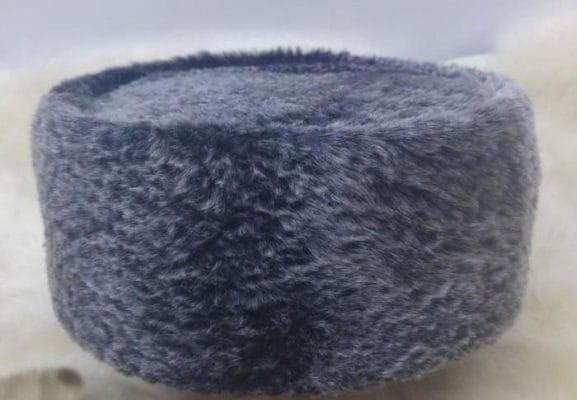
Abbas joyfully expressed his feelings to Zeliş: "They wear the same papak in the Sheikh Shamil game!" Abbas put on the papak and played the Sheikh Shamil game in the middle of the poppy field. They continued on their way, laughing.
They had a long way ahead of them. The surroundings were full of various plants and flowers. Abbas saw pieces of rock salt on the ground. He couldn't make sense of it: "What are these for?" he asked. Zeliş replied: "Animals need salt. They come and lick these salt rocks. They gain weight faster!"
A little further on was Kaniye Bello. Several village women were filling water. Zeliş spoke in Kurdish. A woman handed Zeliş a huge bunch of collected ışkın (wild rhubarb). When Zeliş placed the bunch of ışkın in the cart, Bobiş's space became even more cramped, and he became upset. Zeliş and Abbas drank their fill of the spring water that gushed from the ground. Zeliş also filled a canteen with water for her grandmother and hung it around her neck.
Now, dusk was slowly falling. Without delay, they set off towards the tent. Zeliş's mother and grandmother laughed when they saw Abbas with the papak: "It suits him very well!" they complimented. Abbas tied a fox tail, which had been in a corner of the house for a long time, to one end of the papak. He stood in front of Zeliş and showed off: "Look, now I look like Çelik Blek, don't I?" They laughed together.
MORAL OF THE STORY: Every help has a reward.
FOGGY HILLS AND WOLVES
In the yayla, sometimes a thick layer of fog would slowly descend from the top of the mountain. Wolves loved foggy weather the most. They usually attacked and harmed flocks grazing in the mountains. Shepherds, seeing the fog descending, would quickly bring the flocks to the encampment, in front of the tents, to protect them.
The fog slowly descended to where the tents were. Visibility became zero. The shepherds took their weapons and stood guard, ready to fire at any moment. The wolves had approached the tents so closely that their howling could be heard from inside. The best trap that wolves liked was to excite one of the dogs and make it attack.
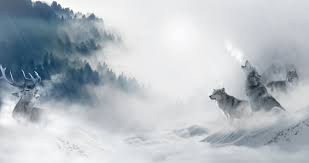
Dogs that foolishly attacked wolves never came back alive. Wolves would circle the dog, sometimes throwing dirt on it with their hind legs, and because they constantly circled, the dog would also keep turning to defend itself. After a while, it would get tired, and it would be impossible for it to break the circle and escape the wolves. The stronger wolf would suddenly attack, grabbing the dog by the throat. The dog would collapse to the ground, unable to breathe. Soon after, the others would also attack, tearing the dog to pieces.
Since Bıgır had experienced such danger before, he barked, warning the other dogs to stay by the tent and not attack the wolves. The fog was so thick that Zeliş, Abbas, and Bobiş, partly out of fear, sat next to their grandmother. Bobiş was the most excited, listening to the dog barks and wolf howls with fear.
Towards evening, the fog slowly disappeared. One of the shepherds from a neighboring tent announced, shouting, that two sheep had been carried off by wolves. The wolves had approached so silently and cunningly that neither the dogs nor the shepherds had noticed.
Zeliş and Abbas came out of the tent. Life in the encampment had returned to normal. The danger was gone. There was a huge rock a little distance from the house. The darkness of evening was slowly filling the encampment. Abbas and Zeliş climbed onto the rock, imitated wolves, and howled. Something unexpected happened: all the dogs in the encampment were barking and coming towards them. Bıgır ran to help Zeliş and Abbas. That day, they understood that for dogs in yayla life, the most dangerous animals were wolves.
MORAL OF THE STORY: If your enemy is cunning, they will surely harm you.
GEW (GREY) DONKEY
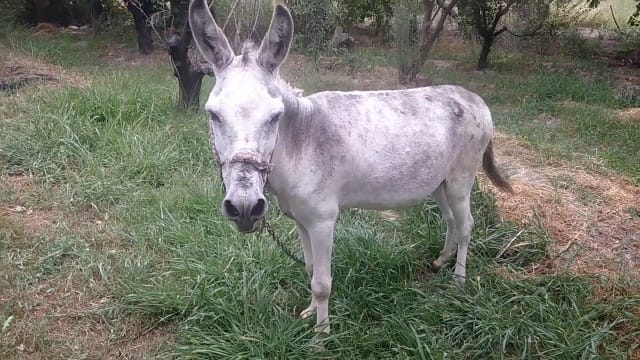
Zeliş's family had a donkey. Its color was grey and light blue, so everyone knew it as the Gew (grey) donkey. It was old. It was quite docile. For years, it had served this household, gone to the yayla dozens of times, and experienced many things.
Donkeys usually get restless when a stranger approaches them. They wouldn't let anyone ride on their backs, and if someone forced their way on, they would try to throw them off by bucking. Sometimes, they would get very angry and kick so hard with their hind legs that even big men would be knocked to the ground.
But the Gew donkey was not like that. It especially loved Zeliş. Knowing that the Gew donkey was old, Zeliş would sometimes go down to the stream and bring bundles of green grass. Abbas also loved the Gew donkey very much. He would hug its neck and even kiss it. The Gew donkey, as if affected by this affection, would get watery eyes, and a tear would roll down its hairy face. Zeliş rode the Gew donkey and commanded, "Come on, take me for a little ride!" The Gew donkey loved doing this. It started to take Zeliş up the hill. Abbas, Bobiş, and Bıgır also followed them.
Zeliş's mother called out: "Zeliş, bring the Gew donkey! Go and get water from Kaniye Şir!"
A saddlebag was thrown over the Gew donkey. The shepherd tied the saddlebag tightly with a rope. He advised: "The Gew donkey is very old! Let it only carry the water! Don't ride on it!" Two small, plastic, sealable jugs were placed inside each saddlebag. "Okay! You can go now!"
The Gew donkey had carried loads all its life. It was used to such things. Bobiş meowed. Zeliş placed Bobiş on the Gew donkey's back. They set off together. Kaniye Şir was not far. They filled the jugs and placed them in the saddlebag, then set off again to return to the tent.
The Gew donkey's load wasn't heavy, but it struggled to climb the hill. It would take a few steps, then rest. Zeliş was very sad about this. She would never again allow anyone to put a load on the Gew donkey. Abbas stepped forward: "The jugs aren't that heavy! I can carry one," he said.
Bobiş comfortably settled into the empty saddlebag from which the jug had been removed. That evening, they made and drank samovar tea with the water from Kaniye Şir. Their grandmother told interesting stories from her past, and the children listened attentively. Their grandmother's Turkish wasn't very good, but Abbas understood without difficulty. Unbeknownst to him, he had learned some Kurdish. Everything they were told seemed like a fairy tale to them.
"I was your age. We had gone to the yayla. One morning, when I woke up, I found a hairy animal sleeping next to me. I flinched in fear. I called my mother. She was also surprised. It was a bear cub. Either it had lost its way or its mother had died, leaving it orphaned. The bear cub had thought I was its mother and had gotten into my bed.
My mother put milk in front of it. It was very hungry. It ate bread, apples, everything. I gave it a name: Belangaz, meaning 'Poor Thing.' Belangaz sat and stood like humans. Wherever I went, it followed me. Three or four months later, it was taller than me, but it still saw me as its mother and did whatever I told it to do.
The dogs didn't attack it. They had accepted it as one of the family. One day, we set off for the mountains with Belangaz to take food to the shepherd. Because Belangaz was with me, I had no fear. As we crossed a huge stream, a pack of wolves appeared above. I was very scared. I wanted to reach the shepherd as soon as possible because there were dogs and weapons there. But we still had a long way to go. The wolves quickly descended. As they started to approach us, Belangaz stood up on its hind legs and roared very deeply and powerfully. The wolves stayed where they were. Belangaz threw a huge stone it picked up from the ground at the wolves. The wolves, realizing they couldn't deal with Belangaz, started following us from a distance. Soon, we had reached the shepherd."
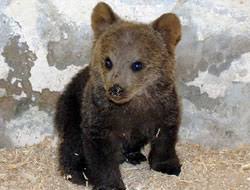
"That evening, we all returned to the tent together. As days passed, one day the weather turned cold, and the yayla season came to an end. We were going back to the city. It was impossible to take Belangaz with us. When we loaded our belongings onto the oxen and donkeys and left, Belangaz followed us. The shepherds would drive him away, but he would start following us again. He made crying sounds. When we crossed the yayla and descended into the plain, I saw Belangaz standing on his hind legs on a rock far away. He was roaring sadly. I cried a lot that day! I never saw Belangaz again. Sometimes animals are more loyal than humans. Love animals and don't harm them."
MORAL OF THE STORY: Love animals, whether they are old or young!
ABBAS RETURNS TO IĞDIR
A full month had passed since they arrived at the yayla. Now, Abbas had to return to Iğdır. Every three days, a tractor would come to the village, pick up its passengers, and return to Iğdır.
Zeliş's grandmother had made kılor kete the day before. Abbas also prepared his bag and took his papak. He slung his food bundle over his shoulder. First, he kissed the hands of his grandmother and Zeliş's mother. Then, in turn, he hugged and kissed Bobiş, Bıgır, and the Gew donkey. Finally, he hugged Zeliş. Zeliş was emotional: "Abbas, we couldn't go to the big valley. There were wild fruits and squirrels there!" But Abbas had to go. He placed the papak on his head. He climbed onto the tractor's wagon. As the tractor moved away, Zeliş, Bobiş, and Bıgır ran after it. But the tractor was fast. Zeliş was tired. Now, she could only see the dust raised by the receding tractor from a great distance. She returned home sadly. She got into bed, cried a little, then hugged Bobiş and fell asleep.
The tractor arrived at Taşlıca village a few hours later. As new passengers loaded their belongings, Abbas sat on a stone and watched them. Suddenly, a young man and a young woman appeared beside him. Both were smiling at Abbas. Abbas suddenly remembered. These were the eloping lovers who had been caught. They had gotten married. The young woman had a bag full of cheese in her hand. She offered it to Abbas. Abbas was sad because he couldn't speak Kurdish. He merely said, "Spas!"
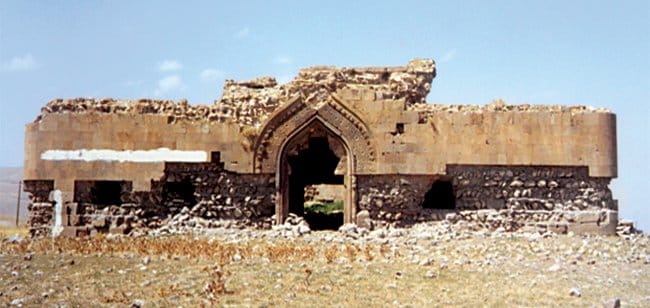
The tractor was about to move. He climbed into the trailer and waved to them. The tractor disappeared among the greenery and fields. It passed in front of the caravanserai. Since the journey from Iğdır had been towards evening, he hadn't been able to see the caravanserai. Iğdır now appeared far away through a light mist.
MORAL OF THE STORY: Good deeds are never forgotten!