The Sleeping Giant: Iğdır – Part 2
This essay explores Iğdır's "Century of Solitude" from 1920-2020, detailing its social upheavals, economic struggles, and unique historical position as a borderland region.

A CENTURY OF SOLITUDE (1920-2020)
In my previous article, I discussed the social upheaval Iğdır experienced during the century spanning 1900-2000, stating that Iğdır, having undergone so much change in such a short period, is a unique piece of homeland in Turkey. Waves of migration and the suffering endured left deep marks, overturning Iğdır's soul like a farmer's plow preparing the soil on a spring day; hearts were saddened, pains multiplied, and families were torn apart. Iğdır became a migration point; families would stay in Iğdır for a few years before migrating to the West, to big cities, to start a new life there. Those who remained, with heavy hearts and bodies weary from suffering, quietly but honorably continued their lives to build a new existence.
In the new era, while the Azeri population turned to agriculture, the tribes returned to their semi-nomadic lives. Since the Alagöz (Elegez) mountains, a favorite summer pasture for Iğdır's tribal communities during Russian rule, now lay within Soviet Union borders, and Mount Ararat (Ağrı Dağı) and its surrounding villages were declared a forbidden zone after the Mount Ararat Rebellions, Iğdır's tribes were forced to go to Zor, Gullık, Sinek, Güngörmez, and the Aladağ mountains remaining within Ağrı province.
In 1934, an opportunity arose for Iğdır. The Margara/Malkara (Alican) border gate opened. Trade with Soviet Russia began. Livestock was shipped from Iğdır, and in return, sugar, woven fabrics, machinery, and equipment were supplied from Soviet Russia. The wealthiest merchants of Eastern Anatolia (İsmail Şefkatli, Cevdet Ergin, Halef Boran, Reşit Keki) chose Iğdır as their center, their comings and goings intensified, and they found partners there, beginning to use Iğdır as a logistical hub. After fattening tens of thousands of sheep collected from Eastern Anatolia in Iğdır, they would transfer them to Soviet Russia at an opportune time. The merchants made large sums of money, but this wealth did not stay in Iğdır; it went to the West, especially to Istanbul. This was Iğdır's first loss of capital.
The Azeri population focused on cotton cultivation. Visionary entrepreneurs like Nağı Odoğlu and Resul Taner, while producing canned goods, also spearheaded the establishment of a ginning factory. There was a revival and capital accumulation in Iğdır. The brothers Hacı Nağdeli and Hacı Gulem Parlar entered the wholesale business, establishing close relations with Istanbul merchants and finding ways and means to bring goods all the way from Istanbul. They created a distribution network covering Eastern Anatolia, bringing rapid capital accumulation to Iğdır.
When the Margara bridge closed in 1939, Iğdır entered a period of stagnation. While the years of World War II shook the world, Iğdır passed through this difficult period relatively comfortably. Between 1945-47, when the fear of a Soviet Union occupation of Iğdır became a prominent issue, this situation caused panic among the wealthy, who fled their capital to Istanbul. In this way, Iğdır experienced its second major capital loss.
Iğdır, in a sense, hosted a way of life where money was earned but not kept there. There was no state support or incentive for capital to be converted into investment in Iğdır. Iğdır's entrepreneurs continued their investments in Iğdır with their own strength and resources. Iğdır grew cotton, but the state did not establish or facilitate a textile factory to process it. One of Eastern Anatolia's first cinemas opened in Iğdır in 1948. In the early 1950s, local newspapers became a part of daily life. Cultural vitality gained momentum. However, this cultural awakening could not gain a new dimension. It lost its importance and drowned within political conflicts and ethnic polarization.
Cotton farming, lacking state support, declined, and sugar beet cultivation was encouraged. Three sugar factories were established in different provinces with beets grown in Iğdır, but no factory was built in Iğdır itself. Iğdır grew paddy (rice) but had no factory to process it. Iğdır grew apricots and apples, but the entry of these products into the Turkish market was not encouraged. In terms of small ruminant breeding, Iğdır was far ahead of neighboring provinces, but it had no meat processing plant. Iğdır had to content itself with small businesses.
Until the 1970s, Iğdır could not go beyond being a production center where cotton was processed in ginning factories (separating fiber from seed and packaging) and shipped to textile factories in the West. The same was true for sugar beet. Despite everything, a considerable amount of capital accumulated in Iğdır. Just as Iğdır was about to initiate its industrialization and urbanization process, right-left conflicts struck Iğdır like a knife to its heart. Especially wealthy Azeri families left Iğdır and settled in metropolises. This was Iğdır's third loss of capital. Iğdır, unable to transform its accumulated capital into power in its own land, received no state support or guidance to overcome this misfortune.
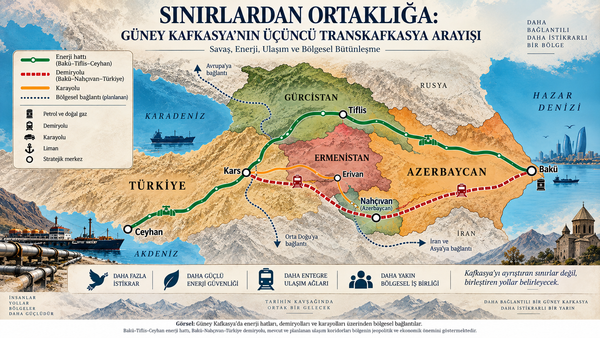
How strange it is that in any other country in the world, a province bordering three countries would be highly valued, its name and importance placed at the forefront in textbooks, daily conversations, and newspaper reports. However, Iğdır has always been deprived of this respect. Iğdır, unable to retain its own capital in its land and unaware of its logistical importance, has stumbled its way to the present day.
Turkey's easternmost point passes near the Dilucu Border Gate in Iğdır's Aralık district. In other words, Iğdır is the easternmost point of Turkey. However, in daily conversations, especially in political jargon, expressions such as these have always been used or continue to be used:
"Homeland from Edirne to Hakkâri"
"Homeland from Edirne to Kars"
"Homeland from Edirne to Ardahan"
But no one says, "Homeland from Edirne to Iğdır." Iğdır's existence is ignored, as if to say, "It is not one of us."
There is a reason for this:
When the Republic of Turkey was founded on Ottoman lands, three provinces (Kars, Ardahan, and Iğdır) that were not previously within the borders of the Ottoman Empire were included within the borders of the newly established Republic. Kars and Ardahan provinces, which were under Tsarist Russian rule between 1877-1920, had been within the Ottoman Empire's borders before 1877, so they quickly adapted to the newly established Republic. The Republic, in turn, experienced the pride and joy of seeing them back in the homeland.
However, Iğdır (Sürmeli Sanjak), having been under Tsarist Russian rule from 1828 to 1917, and under the rule of Iranian Khanates before 1828, had not known or recognized the Ottomans or Anatolian Turks for centuries (since 1735). It struggled to adapt to the newly established Republic, and the new Republic treated Iğdır like a stepchild. None of Iğdır's successes were highlighted, and none of its developments were supported. Accumulated capital flowed away from its grasp.
For years, Iğdır has lived an orphaned life in the shadow of Mount Ararat. If we evaluate the period between 1920-2020 as a "Century of Solitude," we would not be exaggerating at all. No one understood or could express why this was the case. Even today, our Iğdır continues to live with a vague and insignificant identity.
In my next article, we will collectively examine the dynamics that will enable Iğdır to escape its solitude and transform itself into a prominent provincial center for Turkey and the Caucasus.
Note: In my previous article, there were some inadvertent or careless spelling errors. The word "Yüzyıl" (century) was written separately. Also, the word "Altüst" (upheaval) was given with a hyphen in between. I thank my teacher Akay Aktaş for these corrections.