Peter Lerch: The Recording of Kurmanji and Zazaki in Latin Characters
This article discusses Peter Lerch's pioneering work in recording Kurmanji and Zazaki using Latin characters, highlighting his efforts to capture spoken language and develop a systematic orthography.
Dear Readers,
In 1787, a book was published in Rome: Maurizio Garzoni’s Grammar and Dictionary of the Kurdish Language. Garzoni presented Kurmanji words in Latin characters, explained the rules of the language, and offered a resource for those wishing to learn it. This work was one of the early and important examples of the systematic recording of Kurmanji in Latin characters.
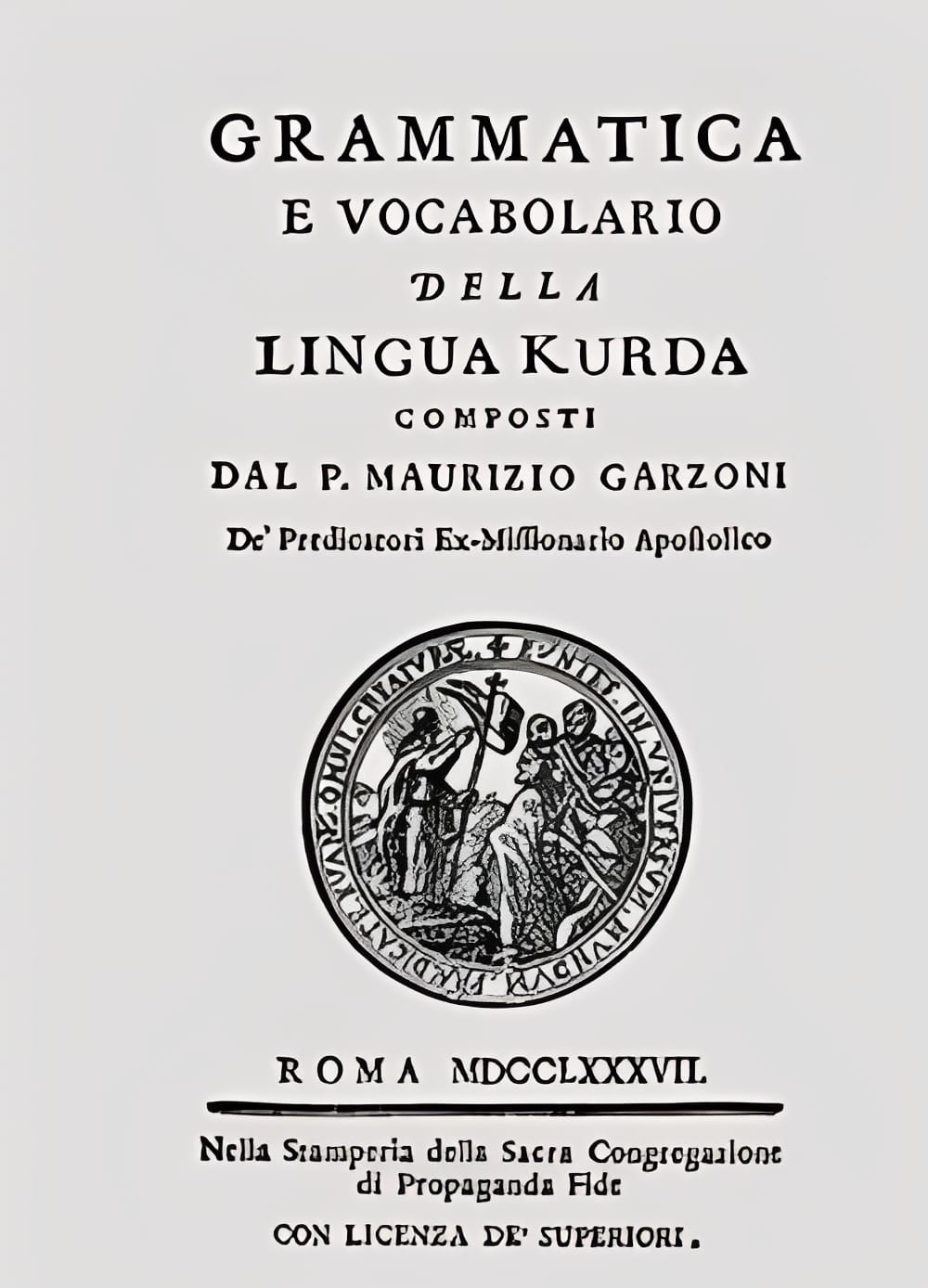
Here, we are not talking about the beginning of the written history of Kurdish, but about a pioneering linguistic study prepared in Latin characters. Approximately seventy years after Garzoni, Peter Lerch would contribute to this field from another direction. He would not be content with merely learning the meanings of words; he would investigate how people spoke in their own languages, how they constructed their sentences, and how they told their stories.
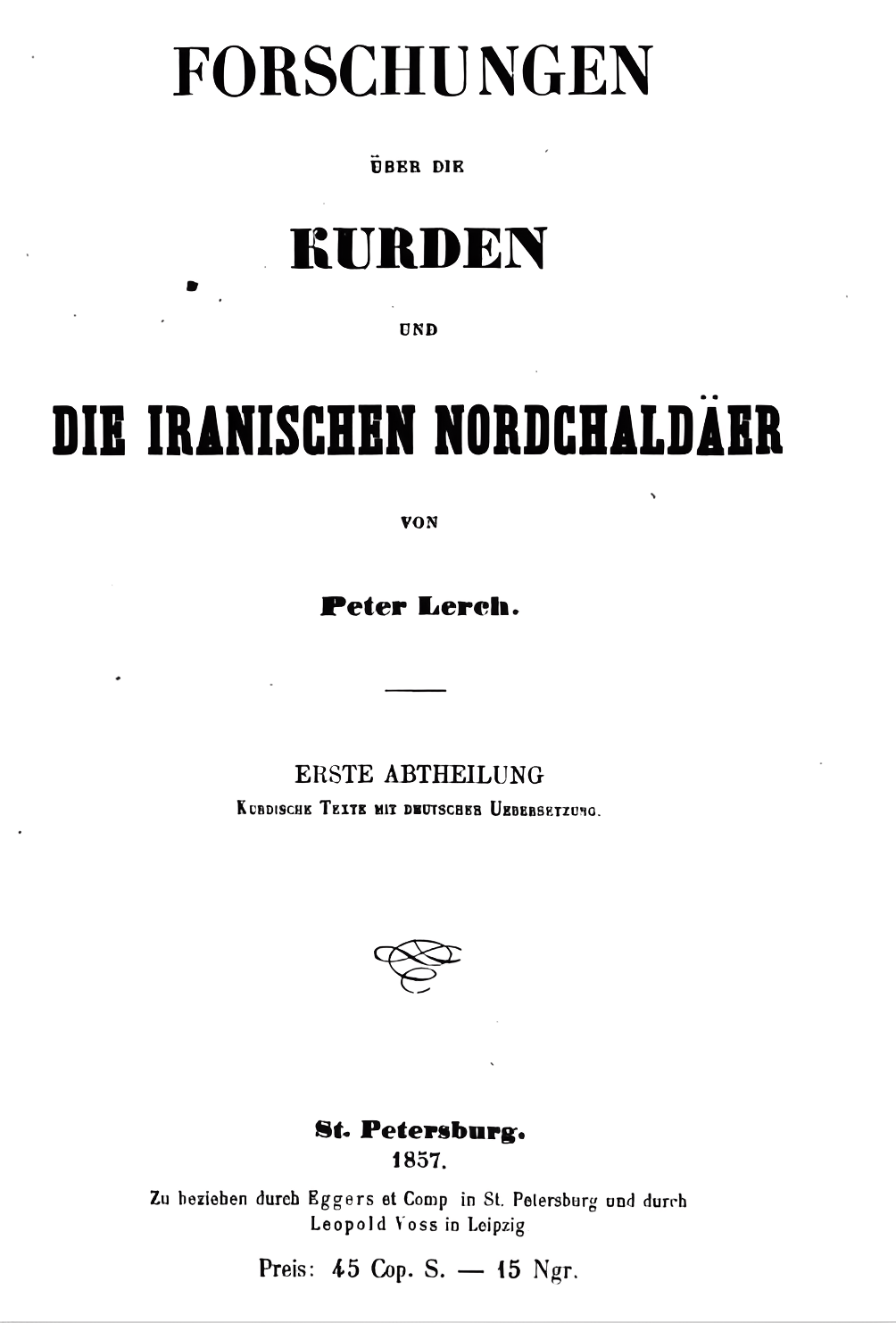
While preparing the work “Studies on the Kurds and Iranian Northern Chaldeans,” which I will publish soon, two aspects of Lerch’s work particularly caught my attention: his recording of what the Kurds narrated, and his work on a system to represent the sounds in these narratives in writing. To view his effort merely as a compilation activity would be to overlook this second aspect.
Who was Peter Lerch?
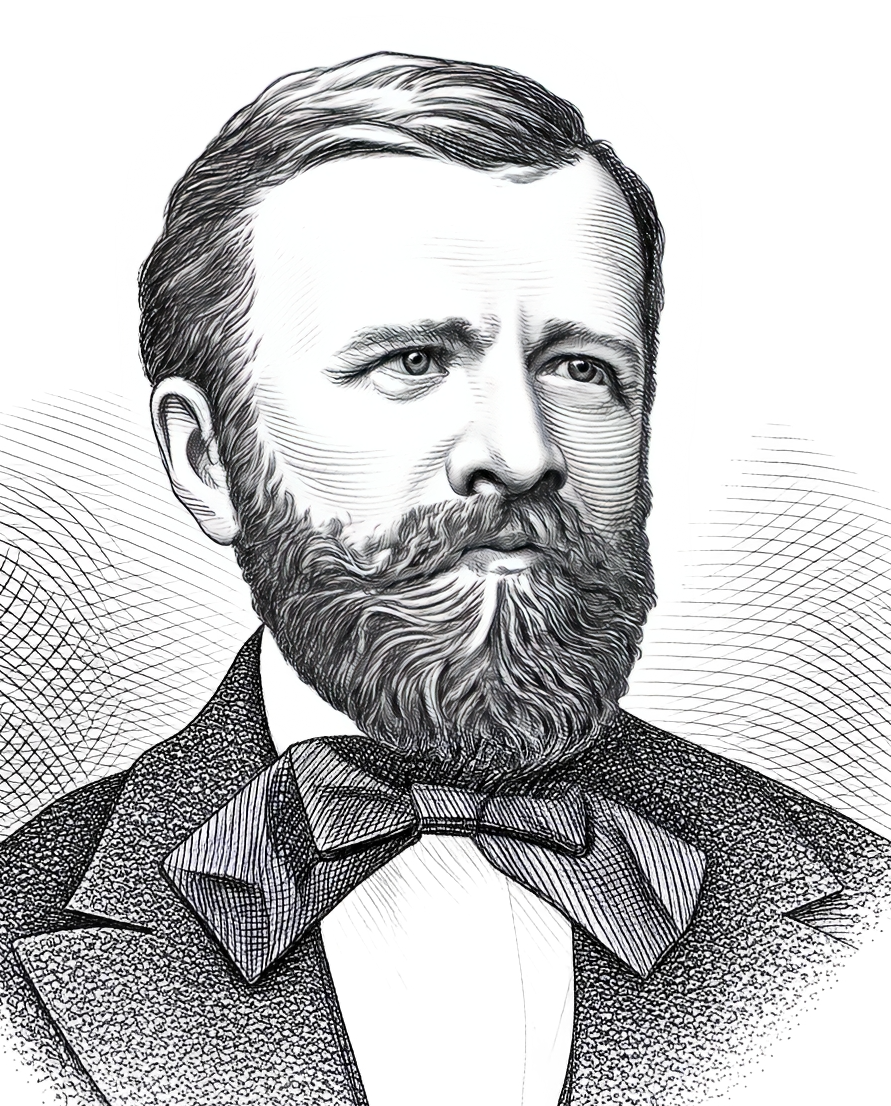
Peter Lerch was an orientalist working in Russia in the nineteenth century, meaning a scholar who researched Eastern languages and peoples. With the support of the Imperial Academy of Sciences in St. Petersburg, he studied the history of the Kurds, their tribes, their dwelling places, and their languages. Initially, he relied on historical sources, travelogues, and previous research.
However, there were questions that books could not answer. Reading what a word meant was not the same as hearing how it was pronounced. There were differences and contradictions among the records of previous researchers. Lerch believed that to evaluate these, he needed to work directly with people who spoke the language. He particularly needed long, interconnected narratives that went beyond individual words.
A newspaper article would provide him with this opportunity.
In December 1855, an article about Kurdish prisoners of war in Russia’s Smolensk region was published in the newspaper Nordische Biene. Through this news, the Imperial Academy of Sciences learned that Kurdish prisoners were located in the city of Roslavl. Subsequently, it was decided that Lerch, who was working on the Kurds, should be sent there.
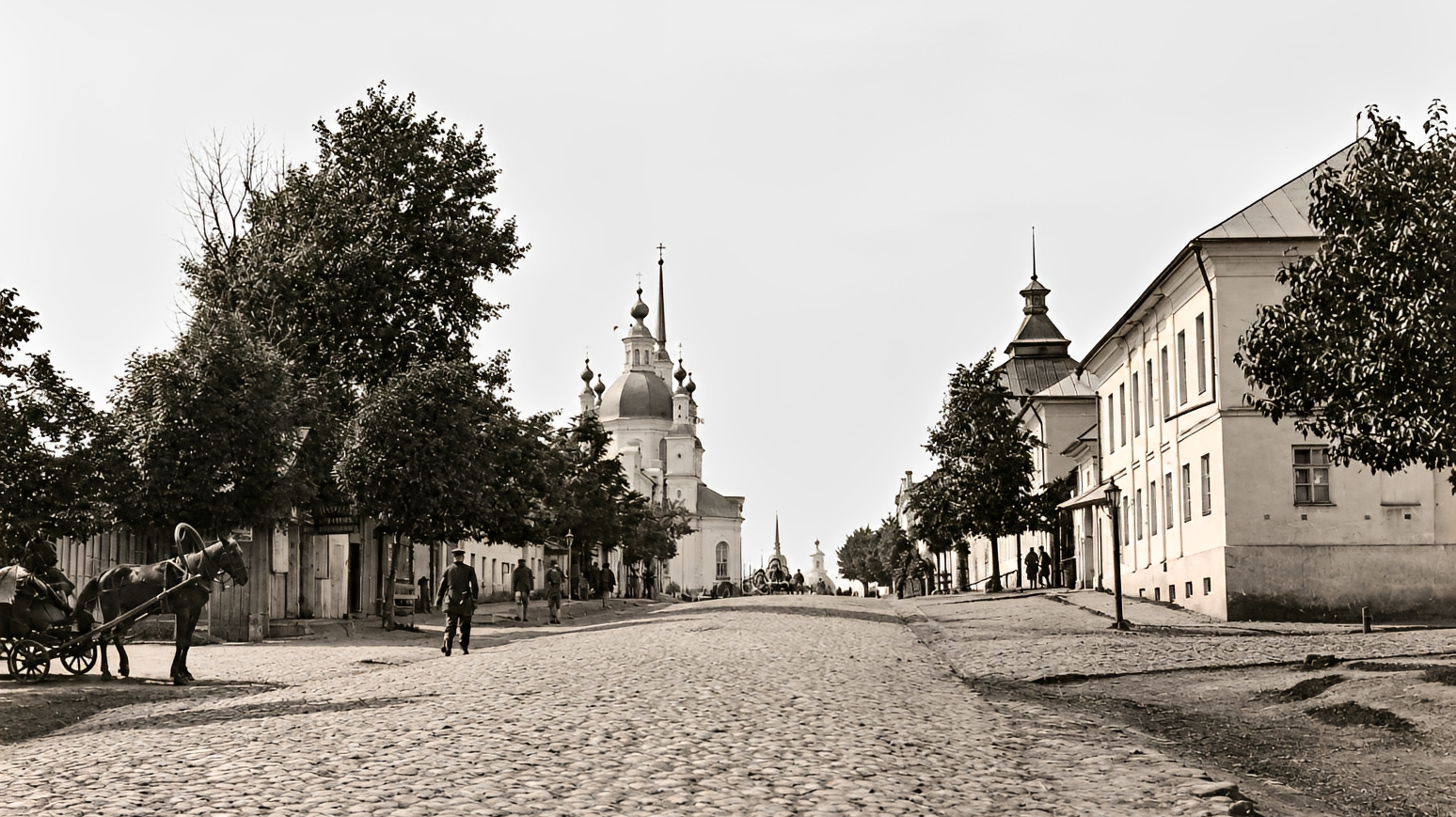
The place Lerch went for this research was not Kurdistan, but Roslavl in the interior of Russia. Ottoman Kurds, who had been taken prisoner during the Crimean War, were located there. Lerch arrived in the city in the spring of 1856 and, with the help of the local administration, began meeting with them on the very first day. He states that he initially encountered about fifty Kurds from various tribes. He worked with these people, who came from Mardin, Cizre, Diyarbakır, Muş, Urfa, Harput, and other regions, for about eleven weeks.
The presence of people from distant places in the same city provided an opportunity to listen to different forms of speech. However, we must not forget the reality behind this encounter. Those people had not come to Russia to teach their language. War had torn them from their homelands. The conditions of this captivity also played a role in the creation of the work we read today as a valuable scientific resource.
The interviews gradually turned into a mutual acquaintance. While Lerch tried to learn about the lives of the Kurds, they were curious about his world. Mehmed from the Rişvan tribe asked about family life, religious, and social relations in Europe. Lerch recounts that after eight weeks of daily interviews, he began to speak Kurmanji, and that their intimacy increased when he could speak with them in their native language.
Now, he no longer faced only people from whom he would gather information. There were people whose language he was trying to learn, whom he questioned, and who questioned him.
Initially, the common language of communication was Turkish. With the help of Turkish, Lerch learned Kurmanji and Zazaki words, trying to distinguish the sounds he heard. Then he moved on to sentences. He repeatedly worked on specific expressions with different people, compared their equivalents, and tried to understand how the language functioned. He began recording longer narratives after this preparation.
Among the individuals who contributed to his work, Mehmed, Hüseyin, and Hasan stood out. He listened to fairy tales from Hüseyin. From Hasan, who was born near Palu and knew both Zazaki and Kurmanji, he recorded texts in both languages. Hasan was the primary source person for Zazaki research, in particular. He recounted events from his environment, conflicts he participated in, and stories he knew. In addition to these, the compilation also included Nasreddin Hodja stories and fables that he translated into Kurmanji with Hüseyin.
Thus, not all texts were obtained in the same way. Some consisted of stories carried in the narrator's memory, some from events they experienced, and some from translations made together. Each provided information about the language, but knowing how each came about was also important.
A dictionary gives the equivalent of a word. A narrative, however, shows the word's place in life. How does a person recount a past event? How do they formulate a question? How do they address someone? Many features of language only become visible within such sentences.
Lerch specifically states that when recording texts, he tried to reflect the natural flow of conversation. The reason he prepared his translations as literally as possible was not only to convey what was narrated, but also to make them suitable for examining how original sentences were constructed.
Lerch had another question before him: which letters would he use to represent the sounds he heard?
In his initial studies, he utilized Sjögren's Russian, i.e., Cyrillic-based, alphabet prepared for Ossetian. However, when preparing his texts for publication, he turned to a system based on Latin characters. His aim was for his records to be usable not only in Russia but also by researchers in other countries. For this reason, he adopted the Standard Alphabet developed by Richard Lepsius.
There is an important distinction here. Lerch did not invent entirely new letters. But this does not mean that he did not work on the alphabet. Working on an alphabet for a language does not necessarily mean drawing never-before-seen letter shapes. Determining the sounds in the language, distinguishing them, and deciding which sign will represent which sound is also fundamental to this work.
Lerch focused precisely on this issue. When describing his initial work, he stated that he proceeded from the principle of using a single written sign for each simple sound. He then classified the sounds of Kurmanji and Zazaki according to his own assessment and presented them in a table using Lepsius's system. This was not haphazard note-taking, but an effort to establish a regular connection between speech and writing.
Moreover, he did not consider the signs he used to be immutable. In his initial writing, he did not show the "w" sound separately, but represented it with the letter equivalent to "u"; in his subsequent examinations, he realized the inadequacy of this and corrected this distinction in the new sound table. That is, he was not only recording, but also reviewing his recording method.
This is the most striking point: Lerch was not trying to adapt Kurmanji and Zazaki to Latin characters, but rather to use Latin characters in a way that would represent the sounds of these languages.
In this respect, it is appropriate to consider his work as an early adaptation of a Latin-based alphabet, and himself as one of the pioneers in the systematic writing of Kurmanji and Zazaki in Latin characters. His use of Lepsius's general system does not negate this contribution. Applying a general system to the sounds of a specific language also requires knowledge, attention, and preference.
Of course, a writing method to be used by researchers is not the same as a common alphabet to be used by society in education, literature, and daily life. Lerch's stated aim was primarily scientific research. Therefore, to say that today's alphabets are directly derived from his system requires separate proof. However, this distinction does not diminish the value of his work in the history of alphabets. His pioneering role lies in his effort to recognize sounds and consistently transcribe them.
Lerch's research reached readers in his work published in St. Petersburg in 1857–1858. The first part contained Kurdish texts and their German translations, while the second part included dictionaries and related studies. Thus, the interviews that began in Roslavl turned into a printed resource that other researchers could also use.
Lerch's writing and how he recorded the narratives can be seen more concretely in the following example from his work:
Lerch would later translate a Nasreddin Hodja anecdote he heard from a Kurdish prisoner into Latin and convey it as follows:
“Kurmándi” meaning “Kurmanji”
Temír leng digería, memlekéti xodá Nasirdín hat. Merú’i xodá be xodára gō ke: Temír leng hat, hér’e, tu imami gúnde méyi; bélki padišáh šuyúl ki ž te bipersí, duáb wi bidé. Xodá gō: pur rind debé. Qaúyi mezín tēkír, púri gíre, séri neká belíńd ke, ser tar ustúna tar merū bi zōr ki belínd diké, au xo be xóe bindáje, féni táderi deré di ki Temír leng. Temír ž durve dī, gō ke: ev te alamét ki té, dipersé. Merú’i Temír nezáni bu, duáb wi didé: bélki xodé’i gúnde, pur dušurmíš bu. Temír lwi hirs hāt, gō ke: ek váya hāt ézi bikužím. Merú’i padišé gō ke: adéle méke, mezé ke tutor merúye, páše bikužé. Temír gō: va laqardí rínde. Xodá hat hat, hat pēša Temír. Temír him hirs búye, him dekén’e, him ž ber xodá rā bu, him ikrámi diké: qáhve šerbét áni. Páše Temír debé: ai eféndim tutor qaúye. Xodá gō ke: sultaním, ev qaúye ševí’e, qaúye min íróe be arabán tē. Temír kénia, gō ke: tu kíe. Xodá gō ke: sultaním, ez xodé’i árdim. Temír hirs hat: ézi vía bikužím, ézi levyá íš ki bepersím, ézi páši bikužím. Asle Temír tetér bu; lepéšye tetéri rind bu, merú’i rind, táve wān puţúk būn. Temír gō: lehém ber min rind te dī. Xodá gō: me dī, ek táve wána puţúk nábé, dáha šuyúl naxoáze. Temír leng gō táve wána mezín biké. Xodá hém’a gō ke: padišāhím ez xodé’i árdim, že píšta wi beržér ek heíye ez mezín dekím, ek le píšta wi beržór heíye Xodé qarįšmíš debé, ez qarįšmíš nábim. Temír že we persé pur haz kir, gō ke: xodá Nasirdín tutor merūye záne; sōndxoár: ez te ber nādím, be merá em pévra hér’in.
This anecdote written in contemporary Kurmanji:
Temûr Leng digeriya û hat herêma Xoce Nasredîn. Merivekî Xoce ji Xoce re got: “Temûr Leng hat. Here, tu îmamê gundê me yî. Belkî padîşah tiştekî ji te bipirse, bersiva wî bide.” Xoce got: “Pir baş e.”
Xoce kulavekî pir mezin û stûr çêkir û danî serê xwe. Li ser çar stûnan rûnişt. Çar merivan ew bi zorê bilind dikir. Wî xwe li wan girêda û bi dîmenekî ku dişibiya konê mezin ber bi Temûr Leng ve çû. Temûr ew ji dûr ve dît û pirsî: “Ev çi nîşan e ku tê?” Merivekî Temûr, ku nizanibû, bersiva wî da: “Belkî Xoceyê gund e. Pir dîn bûye.” Li Temûr hêrs hat û got: “Gava were, ez ê wî bikujim.” Merivekî padîşah got: “Lez neke. Pêşî binihêre çawa mirovek e, paşê wî bikuje.” Temûr got: “Ev peyveke baş e.”
Xoce hêdî hêdî hat pêş Temûr. Temûr carna hêrs dibû, carna dikenî. Carna li pêş Xoce radibû, carna rêz lê digirt û qehwe û şerbet dida anîn. Paşê Temûr got: “Efendî, ev çi cure kulav e?” Xoce got: “Sultanê min, ev kulavê şevê ye. Kulavê min ê rojê îro bi ereban tê.” Temûr kenî û got: “Tu kî yî?” Xoce got: “Sultanê min, ez xwedayê erdê me.”
Li Temûr hêrs hat. Got: “Ez ê vî bikujim, lê pêşî ez ê tiştekî jê bipirsim, paşê bikujim.” Temûr bi esl Teter bû. Teterên li pêşiya wî xweşik bûn, lê çavên wan biçûk bûn. Temûr got: “Te dît ku hemû yên li ber min çiqas xweşik in?” Xoce got: “Min dît. Ger çavên wan biçûk nebûna, din tiştek nedima ku mirov bixwaze.” Temûr got: “Çavên wan mezin bike.”
Xoce got: “Padîşahê min, ez xwedayê erdê me. Ger li erdê çalek hebe, ez dikarim wê mezintir bikim. Lê ger bilindahiyek hebe, bila Xwedê pê ve mijûl bibe. Ez xwe lê naxim.” Temûr ji vê peyvê pir hez kir û got: “Xoce Nasredîn mirovan baş nas dike.” Paşê sond xwar: “Ez te bernadim. Em ê bi hev re herin.”
Turkish translation of this anecdote:
Timur, during a journey, came to Hodja Nasreddin's homeland. One of Hodja's relatives said to him, "Timur has arrived. Go, you are the imam of our village. Perhaps the Sultan will ask you something. Give him an answer."
Hodja said, "Very well." He made a huge and thick cap, and put it on his head. He sat on four poles. Four men were lifting him with difficulty. He had tied himself to the poles, and with this appearance resembling a large tent, he approached Timur.
When Timur saw him from afar, he asked, "What is that strange thing coming?" One of his men, not knowing what it was, replied, "He must be the village Hodja. He has gone completely mad." Timur angrily said, "When he gets here, I will kill him." One of his men said, "Don't rush. First, see what kind of person he is, then you can kill him." Timur replied, "That is a good point."
Hodja slowly approached and appeared before Timur. Timur would sometimes get angry, sometimes laugh. Sometimes he would stand up before Hodja, sometimes he would show him respect, bringing coffee and sherbet. Finally, he asked, "Sir, what kind of cap is this?"
Hodja said, "My Sultan, this is my night cap. My day cap is arriving today by carriage." Timur laughed and asked, "Who are you?" Hodja said, "My Sultan, I am the god of the earth."
Timur got angry again. "First I will ask him something, then I will kill him," he said. Timur was of Tatar origin. The Tatars around him were handsome men, but their eyes were small. Timur asked Hodja, "Did you see how handsome everyone around me is?"
Hodja said, "I saw. If their eyes weren't small, there would be nothing else to wish for." Timur said, "Then make their eyes bigger."
Hodja said, "My Sultan, I am the god of the earth. If there is a pit on the ground, I can make it bigger. But if there is a height, let God deal with it, I cannot." Timur liked this saying very much. "Hodja Nasreddin knows people well," he said. Then he swore, "I will not leave you. You will come with me."
THE EMERGENCE OF THE KURMANJI AND ZAZAKI LATIN ALPHABET
The value of such a record does not come solely from its antiquity. Knowing from whom, where, and under what conditions it was compiled is also important. This information helps us to examine past forms of speech and compare them with subsequent records.
We do not have a perfect example that alone represents all of Kurmanji or Zazaki. There are historical documents obtained from the speech of specific individuals. Lerch also noted that there were pronunciation differences among the Kurmanji speakers he interviewed. What makes his work valuable is that it preserves traces of this diversity.
When recounting the history of the recording of Kurmanji and Zazaki in Latin characters and the early alphabet studies in this direction, we must clearly acknowledge the pioneering efforts of European and Russian orientalists. Garzoni's grammar and dictionary, Lerch's texts compiled from spoken language, and his efforts to represent sounds in writing are important steps in this history.
They did not merely collect words. They strove to understand what they heard, distinguish sounds, correct orthographic preferences, and publish their work in a way that others could use. This patient effort has played a large part in the creation of the early linguistic documents we benefit from today.
My aim in preparing this book for publication is not only to bring a historical work to today's readers, but also to repay our debt of gratitude to the people who keep the memory of a nation alive through their narratives, and to the researchers who have carried these narratives into the future by recording them.
Sincerely, Mücahit Özden Hun
(ATTENTION: © Mücahit Özden Hun – HUN Academy / hunacademy.com. All rights reserved. It is forbidden to copy all or part of this article without permission, publish it by taking screenshots, or share it on other sites or social media accounts. For short excerpts, the author's name and hunacademy.com must be cited as the source. In case of unauthorized use, legal action will be taken under Law No. 5846 on Intellectual and Artistic Works.)