The Reality of the Nation-State and Turkey
This essay explores the concept of the nation-state, arguing that its emergence and evolution, particularly in Turkey, are best understood through the principle of "productivity" rather than class struggle, and concludes with anecdotes from Iğdır.
Dear readers!
In today's world, it is impossible to understand the domestic and foreign policies of Turkey or any other country without comprehending the reality and structure of the Nation-State. The term "Nation-State" frequently comes up in television debates and is used to interpret political events around the world. However, since the concept of the Nation-State and its origins are never discussed, viewers are left with only what they hear. I even believe that the experts participating in these debates use this concept without knowing its historical evolution and meaning.
KARL MARX AND THE THESIS OF CLASS STRUGGLE
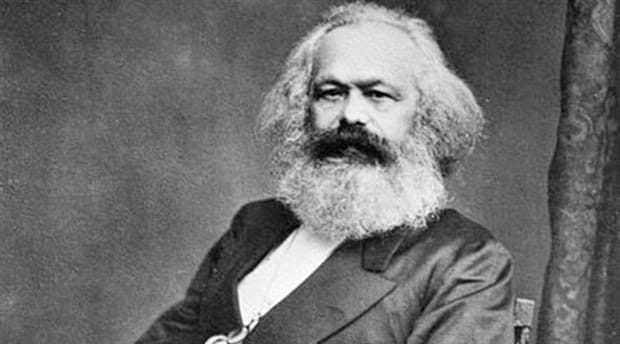
In fact, humanity had encountered the reality of the nation-state long before Karl Marx was born, with the French Revolution (1789). With the book "The Communist Manifesto," co-authored by Karl Marx and Friedrich Engels in 1848, humanity was introduced to a new concept (even if it had been partially penned by bourgeois writers before): the class struggle.
In "The Communist Manifesto," Marx explains historical materialism (i.e., the development of societies) as follows:
“The history of all hitherto existing society is the history of class struggles. Freeman and slave, patrician and plebeian, lord and serf, guild-master and journeyman, in a word, oppressor and oppressed, stood in constant opposition to one another, carried on an uninterrupted, now hidden, now open fight, a fight that each time ended, either in a revolutionary reconstitution of society at large, or in the common ruin of the contending classes.”
According to Marx or the Marxist view, humanity has passed through the following social stages:
-Primitive communal society
-Slave society
-Feudal society
-Capitalist society
He foresaw the subsequent stages as Socialist and Communist Society.
According to Marx, the engine of history is class struggles. I adhered to this thesis for many years, starting from my youth. However, as time passed and I lived in different societies, I began to doubt the validity of this thesis. Currently, I am completely opposed to the Marxist thesis that societies change and progress through "class struggle." In fact, Marx contradicts himself from the very beginning.
If there were no classes in Communal Society, meaning no class struggle, then what economic dynamics led to the emergence of Slave Society? Similarly, why did the Socialist System, where "class struggle" was suppressed or eliminated, collapse? These two questions refute the "Class Struggle" thesis and demonstrate that we need a more comprehensive thesis to explain the development of human society.
THE DYNAMIC OF CHANGE IN SOCIETIES IS THE PRINCIPLE OF "PRODUCTIVITY," NOT "CLASS STRUGGLE"
From its first appearance to the present day, humankind has instinctively adopted the principle of "Productivity." This principle is the reason for humanity's existence. No other living species instinctively possesses the principle of "productivity." I would like to elaborate on this point.
In fact, the principle of PRODUCTIVITY exists inherently in nature. For example, when we roll a stone down from the top of a mountain, the stone does not descend in a serpentine "S" shape or a zigzag resembling the letter "Z." Unless there is a serious obstacle, the stone rolls down in a path close to a straight line. Similarly, if you were to pour water from a hose down the same mountain, the water would not flow down in a straight line like the stone in the previous example. It would navigate around large stones, prefer inclined areas, and thus make its way down in the fastest possible manner. Here, the paths followed by the stone and the water are different. The reason for this is the structure of matter and the existence of a single path suitable for gravity. This is called the principle of PRODUCTIVITY. There is always an ideal path for the progress of societies. Humankind instinctively knows this and proceeds in that direction.
The success of primitive communal society was their learning to hunt and gather. There was no private property. Sexual promiscuity prevailed in society. People mated, reproduced, and brought new individuals into the world. However, who the parents of an individual were was not important. There was no prohibition on "close-kin marriage" as there is today. There was freedom for a mother's son, a father's daughter, or siblings to have sex with each other.
Since there were no classes, there was no social unrest. Hunted and gathered products were shared equally. Why did humankind, living a peaceful life, transform into a Slave Society? Marx cannot explain this with class struggles. He cites the emergence of the institution of "Marriage" as the reason. In other words, slave society, in a sense, emerges with the institution of "Marriage." In short, the institution of marriage is the prototype, or the first example, of the institution of "slavery."
Humanity foresaw that with the "Institution of Marriage," private property would be established, and humanity would become more productive. This foresight is correct. Since with the institution of marriage, women are reduced to the status of men's slaves, this understanding soon spreads throughout society. Society is divided into slave owners and slaves. Slave society emerges in the Neolithic period. Humanity learns to farm, domesticate animals, build houses, invent gods, construct temples, and form small villages around temples. As a price for women's enslavement, humanity makes great strides in many areas:


For example, the construction of the pyramids, whose secrets we still cannot unravel, the invention of writing, and the establishment of city-states and empires were achieved during the time of slave society. In other words, slave society is far more advanced than primitive communal society in terms of PRODUCTIVITY. The only difference is that while there was equality between men and women or individuals in primitive communal society, in slave society, this situation turned against women and a large portion of the population. In short, humanity achieved its social progress, which lasted for thousands of years, in a sense, by women's consent to become "slaves" imposed on them through the institution of marriage (Please let's not forget how much we owe to women!). Although this slavery agreement between spouses still secretly continues, contemporary societies are now aware of this, and this relationship has moved away from slavery and transformed into synergy and solidarity.
Now we come to another question: Why did humanity transition from slavery to the feudal system? Marx explains this through class struggles. This is not correct. In slave societies, there was no industry yet. The most important source of income was agriculture. I have two questions for you. First, imagine a piece of land belonging to a slave owner, and assume that you, as a slave, are producing on this land. My second question is this: Imagine a piece of land. Assume that you keep the product you produce for yourself, rather than giving it entirely to the slave owner. In which situation would you achieve a better result in terms of PRODUCTIVITY from this piece of land? Undoubtedly, you would achieve better results when you produce for yourself without the slave owner's whip. As the population increased in slave societies, increasing agricultural productivity became a necessity. The feudal system is the name of this transition. The king divides the country's lands among dukes and barons (or lords, etc.). He sets only one condition: 5% of the income will be given to the King. Dukes and barons also distribute their lands among the peasants, allowing them to plant whatever they wish. They neither harass nor whip anyone. They set only one condition: 5% of the produce obtained by the peasants will be given to the Duke or Baron. With the transition to the feudal society, there was an extraordinary increase in agriculture, and the growing population was prevented from starving. In other words, the feudal system was more advanced than the slave society in terms of productivity.

Soon after, a miracle we would call STEAM POWER emerged. Thanks to steam power, wheels turned quickly without the need for human labor, and the planning of complex systems became possible. The concept of the factory was born. Clothes woven by hand by thousands of peasants in the feudal era could now be produced quickly in factories. Furthermore, with the invention of the steam-powered train, products could be transported over long distances faster than by camels and ships. Peasants working in agriculture flocked to factories, thinking they would earn more money. They were right in their thinking. Thus, the transition to the capitalist system was made due to PRODUCTIVITY. As the number of factories increased, new job opportunities opened up, and agriculture took a back seat. Soon after, nation-states emerged with the French Revolution.
THE REASON FOR THE EMERGENCE OF NATION-STATES?
Marx falls short in explaining the emergence of nation-state structures. This is because Marx views world history through the lens of "class." If the problem was to open factories and get rich, capitalists (the rich) could very well have achieved this in "imperial" structures. Indeed, the first company founded on capitalist principles (based on shares) was the British company named The East India Company. Founded in 1600, when the British Empire was still governed by the feudal system, the company's assets in 1750 were worth approximately 8.5 trillion dollars in today's value. That is, it possessed more wealth than the combined assets of the world's five largest companies today.
1. Apple America Technology 1971 billion dollars
2. Saudi Aramco Saudi Arabia Energy 1956 billion dollars
3. Amazon America Technology 1592 billion dollars
4. Microsoft America Technology 1,546 billion dollars
5. Alphabet America Technology 1116 billion dollars
TOTAL 8 TRILLION DOLLARS

In short, capitalism could have continued its existence within empires (British, Ottoman, Russian, French, Spanish, etc. empires) even without the establishment of nation-states. So, why did nation-states emerge when humanity transitioned from the feudal system to the capitalist system? The answer lies again in the principle of PRODUCTIVITY.
What advantage did the establishment of nation-states provide to the capitalist system? I would like to define this very simply, including a childhood memory:
ALAATTIN'S GARDEN
One of our neighbors was Kelba İbrahim Bayat, of Azeri origin. Since his son Alaattin was my age, we spent most of our time together. We were involved in animal husbandry, while they were involved in agriculture, fruit growing, and viticulture. One spring day, after walking through Alaattin's gardens and cultivated fields, I prepared the approximately 40-50 square meters of soil in front of our house for planting. I haphazardly sowed vegetable seeds I had obtained from Alaattin. As the crops began to sprout towards summer, I noticed that the tomatoes in my planted field were large and plump, but the peppers and eggplants were small and withered. I brought Alaattin and asked him the reason. His first question was:
"You've planted the vegetables mixed. Did you give them all the same amount of water?"
"Yes!"
He smiled.
"Some vegetables need a lot of water, others less."
He took me to his fields. He asked a general question:
"When you look at our field, do you notice anything?"
At first, I was unable to answer. Alaattin continued:
"Look, I planted the tomatoes here, the peppers here, the eggplants here, etc. I separated them with earthen walls so that each vegetable section wouldn't receive the same amount of water. Before watering, I determine the water needs of each section. I give some sections less water, and others more. This way, we get the best yield."
Based on this example, I can explain my point better. Because I planted all the vegetables mixed, I had actually established an IMPERIAL structure where languages, religions, and ethnic origins were unimportant. According to the principle of PRODUCTIVITY, I should have planted these vegetables in separate sections, as Alaattin did. The effort to gather the same vegetables, that is, the same language-religion-ethnic origin, together, in a sense, means establishing a NATION-STATE. This is why empires rapidly disintegrated, and states were founded on the basis of language-religion-ethnic origin.

The nation-state process began with the French Revolution, lost its momentum in the early 20th century, but peoples who could not establish their nation-states, like the Kurds, continued their struggles. There is a concept called the Spirit of the Age. It is used to mean timing things correctly to be successful. Although the Kurds struggled a lot between 1900-1930, they could not establish their nation-state. The reason for this, as I mentioned earlier, was the difference in language-religion (sect) among the Kurds. In short, at the beginning of the 1900s, the Kurds living within the Ottoman Empire (Turkey-Syria-Iraq) consisted of different groups. If all Kurds, for example, spoke Zazaki and were Sunni, or spoke Kurmanji and were Alevi, then an independent Kurdistan would have been established at the beginning of the 1900s.
Today, Kurds (Kurmanjis, Zazas, Soranis, etc.) are located within different nation-states (Syria, Turkey, Iraq, and Iran). Just as a great deal of energy is released when we split an atom, civil war becomes inevitable when we split nation-states. If Kurds want both themselves and the nation-states they inhabit to be more productive, they should prefer to seek their rights within the existing structure and constitutional framework, rather than fragmenting the nation-state. I want to give an example: Although Yugoslavia was a Federal Republic established in 1946, hundreds of thousands of people died and millions were displaced in the civil war that began in the 1980s and lasted for years. As you can see, if hundreds of thousands of people die even in the transition from a Federal Republic structure to a nation-state structure, it means that establishing a Kurdistan Federal Republic or Republics by force of arms in Turkey, where there is no federal structure, will be costly for both Turks and Kurds.
When the nation-state named the Republic of Turkey was established, Mustafa Kemal was in a great dilemma. As I said before, for a nation-state to be successful, a single language, a single religion, and a single ethnic origin are mandatory. Mustafa Kemal had correctly foreseen that if he had granted autonomy to Kurds and Zazas in terms of language, Turkish would not be spoken throughout the country, and this would be an obstacle for the nation-state. What happened in the Sheikh Said, Mount Ağrı, and Dersim incidents were not rebellions, but rather military operations planned by Mustafa Kemal with the concern of creating a strong nation-state by making TURKISH the compulsory language of education in the mother tongue, and resistance movements that found a response among the local people against these attacks. Was Turkey the only one experiencing this dilemma? Of course not!
According to the constitution, the official language of France is French. Although languages such as Catalan, Basque, Corsican, and Breton, which are still considered independent languages by experts, are spoken in France (there are also local languages and dialects such as Occitan, Creole, and Martinique), these languages were banned after the French Revolution to create a strong nation-state structure. The banning of languages was a prerequisite for establishing a strong nation-state. In France, since 1999, these languages have been granted the right to education in the mother tongue, but they do not have official language status. Therefore, I do not find it historically accurate for Kurdish nationalists to attack Mustafa Kemal and criticize him for not keeping his word without understanding the structure of the nation-state. Mustafa Kemal's goal was to establish a strong nation-state. Different languages and ethnic origins were an obstacle to this. He did not harbor any special animosity towards Kurds. If there had been Arabs, Persians, Uzbeks, or Kyrgyz instead of Kurds, Atatürk would have banned these languages and adopted Anatolian Turkish.
We know about the gaffe made by our President. While watching the military parade in Baku, he received a strong reaction from Iran for reciting the Aras poem, which expressed the separation of North and South Azerbaijan by the Aras river with mournful verses. Iran was right. In this situation, Iran could have recited a poem about the separation of North Kurdistan (Turkey) and South Kurdistan (Iraq) and responded to Erdoğan. These are dangerous games.
The state of Azerbaijan, centered in Baku, has existed as a nation-state since the 1917 revolution and has been recognized as one of the 15 Soviet Socialist Republics. If the state of Azerbaijan, centered in Baku, were to propagate unification with South Azerbaijan, the region would turn into a battlefield involving Russia, Iran, Turkey, and Iraq. Let's not forget that when Masoud Barzani declared independence in Northern Iraq, Turkey amassed its troops on the border, the Iraqi central government took over border control from the Kurdistan Federal Region, and banned all civilian flights from the Kurdistan region. Iran did not stand idly by, declaring its readiness to provide all kinds of support to prevent the establishment of an independent Kurdistan. As you can see, the fragmentation of nation-states means regional WAR. Kurds in Turkey have missed THE SPIRIT OF THE TIMES. Instead of wasting time trying to achieve an independent Kurdistan, they should consider how best to benefit peacefully from the nation-state they are in. For Turkish Kurdistan, the goal should be education in the mother tongue (Kurmanji and Zaza) and the removal of obstacles to religious (especially Alevi-Yazidi) beliefs, and the acceleration of economic development.
THE END OF NATION-STATES
Just as empires disappeared and gave way to nation-states when they became an obstacle to the principle of EFFICIENCY, a similar situation now applies to today's nation-states. Especially the atomic bomb and arms race that nation-states have entered into to maintain their existence are an obstacle to the development of humanity. The principle of EFFICIENCY dictates that this situation must be overcome and humanity must start a period without weapons and wars. When every country gains a little strength, the first thing that comes to mind is to invest in armaments, especially atomic weapons, to protect its nation-state, which in a sense is an obstacle to humanity achieving a better standard of living.
With the results of the two atomic bombs dropped on Japan, and the Chernobyl and Fukushima nuclear power plant disasters in Ukraine and Japan before our eyes, humanity does not yet seem to have learned the necessary lesson. A regional or global atomic war is inevitable. However, only after such a massive catastrophe can humanity abandon the principle of the nation-state and begin a new era. In this new era, just as in the European Union, language, religion, and ethnic origin will exist but will become insignificant, the world will be governed by a single currency, and there will be a single Constitution above all laws. Over time, humanity will be able to preserve and develop its mother tongues while also communicating in a common language. This will be a period when wars end, weapons disappear, and space projects accelerate. Conflicts will not be between people and nation-states as they are today, but between humanity and nature (for example, building cities in deserts, underwater, in space).
The principles of the information society, which will initiate this era where language, religion, and ethnic origin are not important, have emerged and are making rapid progress. However, what is important is for an understanding that will eliminate animosity between states to take root worldwide. Just as the East India Company was the first sign of capitalism, similarly, the European Union is the first harbinger of such a future. It is no longer possible to foresee war between the countries of the European Union. However, for this model to be accepted worldwide, a short and deadly nuclear war seems inevitable. After such a brutal and destructive war, humanity will part ways with the concept of the nation-state, and a new social structure will emerge where a single currency will be valid and all states will be encompassed in peace. The principle of EFFICIENCY necessitates this stage.
ANECDOTES… ANECDOTES… ANECDOTES…
(Dear readers! I present to you a collection of Iğdır anecdotes and jokes that have not been published anywhere else.)
HÜSNÜ BİNGÖL IN HIS DREAM WORLD
In the old days, snow would fall in Iğdır for long periods, in large flakes. On such days, National Security Inspector Hüsnü Bingöl would half-open the curtain of his study and, in the bright light of his kerosene lamp, lose himself in the bitter and sweet memories of days gone by. When the emotions in his heart stirred even more, he would reach for his pipe, despite the doctor's prohibition, and, puffing smoke, look outside. It was one of those evenings again. The door was knocked rapidly. His daughter Şükran entered the room, startled:
“Father, there's a soldier uncle at the door!”
Hüsnü Bingöl was sad because his reveries and dreams were shattered, but he had to go to the door and find out what message the soldier had brought. He rose from his armchair and headed for the door. The soldier gave a sharp salute:
“Commander, as you know, the Russians have sent two agents to kill you. I was worried when I saw your window curtain open. If you close it, you'll be safe!”
Hüsnü Bingöl laughed bitterly:
“I was remembering the past and indulging in sweet dreams. Now, if I close the curtain, I'll move away from those dreams and return to the piles of papers on the desk. I'm tired! Don't worry, the pipe and tobacco will kill me soon, before the spies find time to kill me. So, relax! Return to your post!” (Hüsnü Bingöl died of a heart attack caused by excessive tobacco use on February 6, 1955.)
HÜSNÜ BİNGÖL’S BOOT
One afternoon, Hüsnü Bingöl put on a pair of boots he hadn't worn for a long time and, as always, walked down the busy street where the tradesmen were, to the Municipality Garden. There was an uncomfortable stiffness in one of the boots. While sitting at a table smoking a hookah, he called his assistant Durak, took off his left boot, and handed it to him.
“Durak, take this to our shoemaker Memerıza (Mehmet Rıza). There's a hard object inside, it's hurting my foot. Have him fix it!”
Durak returned shortly. First, he placed a piece of lead on the table. Hüsnü Bingöl didn't understand anything from this. Durak continued:
“Sir, your left boot was hit by a bullet, but it couldn't fully penetrate. Memerıza removed the bullet. He repaired the tear.”
As Hüsnü Bingöl put on his boot, he muttered to himself: “They weren't wrong! You never know what the enemy will do. This time they used their 'left' option. Let's see when it will be the right boot's turn?”
HÜSNÜ BİNGÖL AND BLIND HACİ
Once upon a time, there lived a man in Iğdır known as Blind Hacı. He was extremely jealous. He had built high walls around his garden on all four sides, wanting to hide his private life from everyone. Despite this, he couldn't relax and would constantly walk along the wall, checking his surroundings.
One day, a very stern and harsh woman named Arab Emine, whose soldier husband had committed suicide while serving as the Director of Tekel, appeared before Hüsnü Bingöl with her 10-year-old son. Blind Hacı had caught the child climbing the garden wall and had severely beaten him. No one dared to confront the troublesome Blind Hacı out of fear. Arab Emine complained in a tone of voice that conveyed the injustice she had suffered:
“Mr. Hüsnü, look at the state of this orphan child! Blind Hacı trampled him underfoot. Is this justice?”
Hüsnü Bingöl looked at the child and realized that he had indeed taken many blows.
“You go, I will hold Blind Hacı accountable for this!”
Hüsnü Bingöl immediately sent a phaeton and ordered Blind Hacı to be brought before him. Blind Hacı had heard Hüsnü Bingöl's name and even seen him from a distance, but had never had the chance to speak to him face-to-face.
When Blind Hacı entered through the garden gate, Hüsnü Bingöl signaled the soldiers to take him to the dungeon. He himself went to the dungeon. There was a hook on the wall.
Hüsnü Bingöl asked:
“Hacı, what is this hook for?”
“It's probably for hanging meat!”
Hüsnü Bingöl signaled the soldiers what to do. The soldiers lifted Blind Hacı and hung him on the hook by the back of his collar. Blind Hacı's feet dangled in the air. He struggled to free himself from the hook but failed.
Hüsnü Bingöl smiled bitterly:
“Would it be good for you to hang here for a few days?”
“Oh, Commander! I can't stand it, I'll die!”
Hüsnü Bingöl signaled for Blind Hacı to be taken down. There was a ring and a rope on the ceiling. Hüsnü Bingöl asked:
“Hacı, what are this ring and this rope for?”
“It's probably for hanging vegetables to dry!”
Hüsnü Bingöl signaled. The soldiers tied Blind Hacı's feet and hung him upside down. Hüsnü Bingöl smiled bitterly:
“Would it be good for you to hang here for a few days?”
“Oh, Commander! I can't stand it, I'll die!”
There were four shackles on the wooden floor.
Hüsnü Bingöl asked:
“Hacı, what are these shackles for?”
Hacı, having now learned what the tools meant, answered in a tearful voice:
“You'll lay me on the ground and tie my hands to these two shackles and my feet to these two shackles, and then you'll hit me under my feet with an oak branch!”
Hüsnü Bingöl smiled:
“When you were trampling a ten-year-old child under your feet, you weren't thinking whether your feet would hurt or not, so why are you scared now?”
“Ah, Commander, I hadn't seen these shackles then!”
NINO SEFER’S TEA PARTY
Nino Sefer, whose mental health was affected by an illness in his childhood, left his village when he grew up and spent most of his time wandering the streets of Iğdır as he pleased. He had no money in his pocket. His food and drink depended on the mercy of his fellow Iğdır residents.
One day, he sat on a stool in front of a teahouse. The teahouse owner, recognizing Nino Sefer, placed a tea on the table and, in a way that would please him, said, “Ay Sefer, welcome! This tea is on me!”
A fellow resident, seeing Nino Sefer sitting at a table and drinking tea, came to pull up a stool and sat at the same table, intending to tease him a bit. He ordered tea. At one point, he turned to Nino Sefer and asked a sudden question:
“Ay Sefer! I'm going to ask a question. If you know the answer, I'll buy you a free tea. Where does this sugar come from?”
Nino Sefer, sensing that he was being made fun of, gave a sharp answer:
“From your mother's a……”
“You didn't know!”
“Ay Sefer! Where does this glass come from?”
“From your mother's a…..”
“You didn't know!”
“Ay Sefer! Where does this spoon come from?”
“From your mother's a…”
“You didn't know!”
“Ay Sefer! Well, where do I come from?”
“From your mother's a..”
The man, feigning surprise, confessed:
“Ah, by God, now you've given the right answer!”
Nino Sefer, happy that he had answered the question correctly and eagerly drinking the free tea placed before him, made a request:
“The last question was very good. Ask the same question again!”
A PIECE OF BREAD
One morning, Nino Sefer rises from where he slept. He tightly fastens his trousers with a rope he uses as a belt. With heavy steps, he enters the street where the shopkeepers are. He bursts into a hardware store, extending his hand pleadingly: "A piece of bread!" The hardware store owner laughs and replies: "Oh Sefer! What would a hardware store have bread for?" Nino Sefer enters the next shop, extending his hand pleadingly: "A piece of bread!" The draper laughs: "Oh Sefer! What would a drapery shop have bread for?"
Asking around in this manner, he arrives in front of the bakery. He enters. Again, he extends his hand pleadingly: "A piece of bread!" The baker is generous. He hands a whole loaf of bread to Nino Sefer. Nino Sefer refuses to take the bread. "I only want a piece of bread." The baker shakes his head irritably, breaks the bread in half, and hands it to Nino Sefer. This time, Nino Sefer asks again: "What will you do with the other piece of bread?" The baker replies: "Nothing! It will stay on the counter!" Nino Sefer pleads: "Please give me that piece too!"
WHICH LEADER?
Hamit Hun and Mecit Hun are brothers. Since childhood, there has been a significant difference in their characters. While Mecit Hun takes his school life and assigned tasks seriously, Hamit Hun is the type of person who looks for opportunities to get rid of responsibilities as soon as possible, dislikes working, and perceives life as full of comfort and peace (which is actually what we all dream of).
The Hun brothers open HUN MANİFATURA in 1955. Since Mecit Hun publishes a newspaper, he entrusts the management of the shop to his brother. Things do not go well. Their venture ends with an unfortunate fire. In 1967, Mecit Hun opens Piknik Patisserie, entrusting its management to his brother, but soon the business is on the verge of bankruptcy. On such days, whenever Mecit Hun confronts his brother and asks about the accounts, Hamit Hun's heart fills with an inexplicable fear.
Hamit Hun is interested in politics but does not have a bigoted attitude. One day, he is sitting and chatting with his friends. The conversation turns to politics. Someone steps forward:
"In my opinion, the most important leader is Süleyman Demirel. The man recites all the numbers in the budget from memory."
Another expresses an opinion:
"If you ask me, the most important leader is Alpaslan Türkeş. When he speaks, one's heart trembles with fear!"
Another makes a different assessment:
"In my opinion, the most important leader is Bülent Ecevit. When the man speaks with his beautiful Turkish, one just wants to listen."
It's Hamit Hun's turn. Hamit Hun expresses his opinion without hesitation:
"The most important leader is our Mecit. On the one hand, he speaks with fluent Turkish like Bülent Ecevit, and on the other hand, he recites all expenses and accounts from memory like Süleyman Demirel, and then he finds my mistakes and fills me with fear like Alpaslan Türkeş."
JUST FOR A SECOND
Hamit Hun has a docile character and hates being held accountable. His wife, Fatma Hanım, on the other hand, has a habit of being stern and demanding accountability. Some days, Hamit Hun can't help but think, "How will I escape this torment?"
One day, a company performing illusion shows comes to Iğdır. They set up a huge tent and begin their sessions. One of the people watching the illusion show is drinking tea at the same table as Hamit Hun. He excitedly recounts what he saw:
"The man laid the girl on a table, cut her in half with a saw, and separated her. Then the girl came onto the stage as if nothing had happened and greeted us. Another time, he locked the girl in a box. He locked the box with a key. He even wrapped it all around with chains. When he commanded, 'Come out!', the girl appeared on stage. When he opened the box, it was empty."
Hamit Hun is interested in the girl disappearing in this way, and he leans into the ear of his friend, with whom he shares his secret:
"Can he make our Fatma disappear with an illusion trick?"
"He can! But the person who disappears comes back later!"
"That's fine! Even if it's just for a few seconds, I want to see Fatma disappear and feel a little relieved."
KINYAS HUN'S SORROW
If there was a person in Iğdır who stood out from everyone else with their "unique personality," it was undoubtedly the late Kinyas Hun. His assessment of the world and events was very different from us average people.
In the 1970s, the Iğdır-Ankara-Istanbul road was truly terrible. Since the roads were single-lane, there were many accidents due to careless overtaking. The roads were full of potholes. Also, the drivers were not professional. Those who drove horse-drawn carriages yesterday were now sitting in the driver's seat of a bus, showing off by swinging the steering wheel left and right. Those who dozed off on the road, those who took the wrong road, those who ran out of diesel and were stranded, those who burned the bus trying to heat frozen diesel in winter, those who tried to cross Kızıldağ between Sivas and Erzincan in February with summer tires and no chains... In short, accidents and deaths were commonplace and ordinary.
I was a student at Kabataş High School. The mid-term break, known as "15 tatil," had ended, and I had set off for Istanbul in the cold of February. Kinyas Hun and I were sharing the same seat. As the bus passed Erzincan and approached the hell called Kızıldağ, Kinyas Hun began to get restless. Trucks had overturned or slid far off the road. The bus was sliding and moving with difficulty. Kinyas Abi turned to me:
"Mücahit, do you know what's missing on these roads?"
Since I understood the question in a scientific sense, I gave many answers, from lighting methods, the dynamics and structures of tires, to the heating of the road surface with a grid system. Kinyas Hun shook his head from side to side in the negative each time. Finally, I couldn't resist and asked what the correct answer was. Kinyas Hun replied:
"There should be a small mosque, a washing slab for the dead, and a small cemetery every kilometer. Also, imams and mosques should compete with each other with signs that read, 'The best and cheapest dead are washed here with the most expensive Komilli brand soap. Our graves have been dug and are waiting for you. We would be happy if you choose us!'"
RUTTO YUSUF AFTER MEAT
Rutto Yusuf sets off towards Iran. He comes across a flock in the mountains. He goes to the shepherds. He is hungry. He drinks the fresh milk offered but is not full. "Tell me the truth! You slaughter and eat a sheep whenever you feel like it, don't you?" The shepherds look at each other and confess: "Once a week, we slaughter and eat a sheep. We store the remaining meat in a cold water pool at the bottom of the cave ahead, filled with melting snow. We tightly block the mouth of the cave with stones so that wild animals don't enter. This way, we eat meat every day for a week. We cut the hide into pieces and deliver it to the owner as if a wolf had torn it apart."
Rutto is happy with this news:
"Is there meat in the cave?"
"No! We ate the last piece yesterday."
“Then let's slaughter a sheep immediately and enjoy ourselves!”
The shepherds slaughter the sheep, light a fire, and make kebabs. Rutto eats his fill. He thanks them. Before jumping on his horse, he catches a sheep, throws it onto the horse, and ties it tightly. Rutto has both a Mauser and a pistol. The shepherds are too scared to make a sound. As Rutto prepares to ride off, he calls out to the shepherds:
“Tell your master that two wolves attacked the flock, one of them mounted. The mounted wolf also took the pelt and left.”
KURDISH-AZERI NEIGHBORS
A Kurd and an Azeri become neighbors. They buy two large gardens of the same size at the same time. A wall separates the two gardens. The Kurd's garden has two large barns, cows, and sheep. And, of course, the ever-present smell of animal manure… The Azeri's garden has all kinds of fruit trees and flowers. Especially in spring, when the flowers bloom, a wonderful scent fills the air.
In the evening, as the Kurd embraces his wife in bed, he chuckles slyly.
“Wife, we are so lucky! The wonderful scent of the flowers in the Azeri's garden covers up the smell of our animals' shit. Besides, I can climb over the wall at night and steal their apples, peaches, and apricots, but they can't steal our animals.”
The pious woman is not pleased with what she hears:
“You will account for this in hell!”
The man waves his hand in the air, as if to say 'it's nothing':
“Pffft, listen to what you're saying! Until then, Allah is Merciful!”
MILK MONEY
We held a tribal meeting. We collectively pledged our honor to abolish "Bride Price" and "Blood Money" from now on. Of course, this was a positive development.
Three weeks ago, there was a kidnapping in our village. I called to get information. The first question I asked was, "Was a 'Bride Price' taken?" The voice on the other end proudly said, "No!" I was very happy, thinking that our decisions were being implemented. The voice on the other end continued: "Only 'milk money' was taken!"
I was hearing the term "Milk Money" for the first time. "What is that?" I asked curiously. The voice on the other end said, "The girl's mother raises her with her milk, right? That's the equivalent of that milk."
"How much money was given?"
"The girl's family agreed to 40,000 TL after bargaining."
I was very surprised. I answered angrily:
"What nonsense! The groom's mother also raised her son with her own milk. What about her money?"
No answer!
RUTTO YUSUF AND TURKISH TEA
The year is 1947. Rutto Yusuf is in the office of National Security Inspector Hüsnü Bingöl to deliver news conveyed to him by spies in Iran. Tea is served. Rutto Yusuf, at the very first sip, angrily places the glass on the saucer:
“Hüsnü Bey! This tea has no taste!”
“I always drink Turkish tea!”
“Hüsnü Bey! Let me give you some smuggled tea, then you'll see what real tea tastes like!”
“I don't drink smuggled tea! Besides, this week is the second anniversary of Domestic Products Week!”
“Anyway, next week, when 'Domestic Products Week' is over, I'll bring you two packets of smuggled tea.”
THE UNKNOWN STRANGER
In the 1940s, there were no hotels in Iğdır. There were a few inns. A stranger comes to Iğdır. He enters one of the inns. The innkeeper greets his guest and shows him to his room. The stranger stays for a few weeks. One morning, when the innkeeper sees that the traveler has not woken up, he nudges him but realizes he is dead. He informs the police. As the police throw the body into the car and drive away, the innkeeper runs after them:
“The deceased stayed at my inn for two weeks. Pay my debt from the money in his wallet!”
The police find the suggestion reasonable. They take out the deceased's wallet. There is no money in the wallet, but there is a piece of paper with his father's name, date of birth, and his own full name written on it. The paper reads:
“Innkeeper brother! I have contracted a fatal illness. I love Iğdır. I wanted to die here. I have no money in my wallet to give you. Would you please also arrange my grave? I have written the necessary information for the tombstone on this paper.”
WHEN THE KURD AND THE AZERI FALL OUT
An Azeri and a Kurd, who had been inseparable since childhood, fall out over a trivial matter. The Kurd's path to the market passes in front of his Azeri friend's house. One day, as the Kurd walks slowly towards the market, he passes right in front of his Azeri friend's garden. His Azeri friend calls out to his wife: "Ay Gülsüm! Ask our kinsman! Does he have any dung to sell?" The woman then calls out to the Kurd walking on the road: "Ay kinsman! Semet says, do you have any dung to sell?"
The Kurd replies:
"A cartload is 200 liras. Gülsüm sister, for your sake, I'll take 100 liras, but if your husband makes up with me, I'll give it for free!"
Semet steps forward: "Ay kinsman! When did we fall out? Wife, you are a witness too!"
RIGHT-LEFT CONFLICT
In the 1970s, especially between 1975 and 1980, the right-left conflict was out of control. The district governor gathers the city's notables and asks them to control their children. The late Sheikh Hüseyin Balamir, to prevent his left-leaning son, who loved fighting and adventure, from getting involved in incidents, locks him in the shop. He pulls down the shutters. He goes home. His son spends the night in the shop, hungry and thirsty. Sheikh Hüseyin Balamir has forgotten that he locked his son in the shop. He takes a taxi early to Alikamerli village to attend a condolence visit. His son, realizing his father won't come, shouts as loud as he can from inside the shop:
“Tell my father to come and get me out of here! Otherwise, I will die of hunger.”
The shop neighbor is right-wing. He hears the voice but makes no sound. He mutters to himself: "You'd get out and ruin us, wouldn't you?"
KINYAS HUN'S SHOES
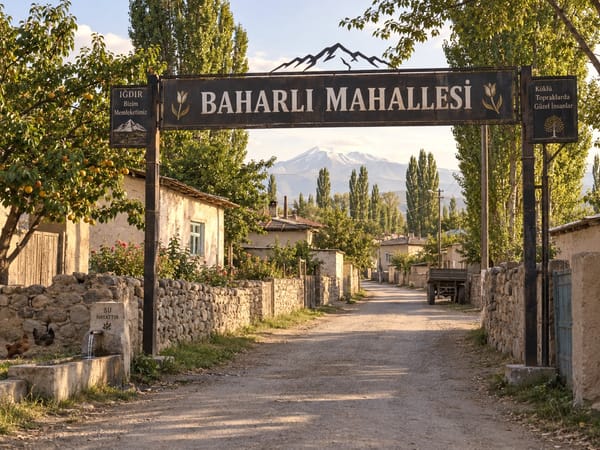
Before Kinyas Hun goes to the market, the entire household mobilizes. One sister irons, another cleans his shoes. Another searches for and finds his glasses. As Kinyas Hun leaves the house and steps onto the dusty roads of Baharlı Neighborhood, his spirits darken as usual. His perfectly clean shoes are soon covered in dust. As he continues on his way, a spring rain suddenly starts, short-lived but turning the ground into a sea of mud. Kinyas Hun this time continues his journey with great difficulty to protect his shoes from the mud. He takes refuge in the first coffeehouse he reaches. While sipping his tea, he ponders:
“Would it have been better for my shoes if it had rained first and cleared the dust before I set out, or is it better as it is now, walking on a dusty road first and then having it rain?”
While he is thinking about the answer to this question, a friend sits at his table. Kinyas asks his friend the question he couldn't answer. His friend thinks for a while, tries to come up with a solution, and gives the most reasonable answer that comes to mind:
“Brother, don't be so upset! Take off your shoes and give them to me. I'll wash them at that fountain over there and bring them back.”
SNAKE HOLE
An Azeri and a Kurd are neighbors. There is a wall between them. Everyone in the neighborhood knows that the Azeri neighbor torments his mother.
It is a spring day. One day, as he leaves his Kurdish home, he sees a snake basking in the sun at the base of the garden wall. He warns his household not to harm the snake: “It will sunbathe for a while and then return to its hole!”
The next day, the Azerbaijani neighbor calls out to his Kurdish neighbor in a fearful voice.
“There’s a snake at the base of our garden wall! What should I do?”
The Kurd comes and sees the snake. He warns his neighbor: “It’s sunbathing! Don’t touch it; it will return to its hole.”
The Kurd leaves. The Azerbaijani neighbor cannot calm down. He watches the coiled snake from a distance, a shovel in his hand. A long time passes, but the snake does not enter its hole. The Azerbaijani, with an exasperated air, brings the shovel down hard on the snake. The snake writhes once or twice and dies. As the Azerbaijani leaves to take the shovel to the shed, his beloved dog approaches the snake, sniffs it, and eats it with relish.
Since the snake was poisonous, the dog soon writhes and dies. Faced with this disaster, the Azerbaijani sits by his dog, weeping, cursing the snake endlessly. At that moment, the Kurd is returning from the market. When he learns what happened, he is very saddened. He tries to console his neighbor. The neighbor keeps repeating the same thing: “Oh, may you suffer, snake! Does one forget the hole one came out of?”
The Kurd does not miss this opportunity and addresses his Azerbaijani neighbor, who had tormented his mother: “If you forget the hole you came out of and cause pain to your poor mother, the snake will also forget the hole it came out of and torment you.”
APRICOT THEFT
One evening, as darkness falls, a Kurd enters an Azerbaijani’s apricot orchard. He climbs a tree he has set his sights on. Because it is dark, he unknowingly steps into human excrement at the base of the tree. He tries to clean his foot by rubbing it against the tree, then climbs the tree.
He is eating apricots and at the same time putting them into his shirt, which he has made into a bag. He climbs down from the tree. He disappears into the darkness. His house is a little far away. As he approaches home, he is seized by severe pain due to the apricots he ate. He has diarrhea. He barely makes it to the garden toilet. As he quickly unbuckles his pants and squats, the apricots he had filled his shirt with also fall into the toilet. The Kurd, both upset about having diarrhea and having his collected apricots fall into the toilet, mutters to himself as he buckles his belt: “There was shit in this business from the beginning! And it ended in shit!”