Are Turks Kurds?
This essay critically examines a book titled "Are Kurds Turks?" by A. Nazmi Çora, refuting its claims of Kurdish identity being Turkish and highlighting the author's linguistic and historical inaccuracies.

ARE TURKS KURDS?
The answer to the question is, of course, NO. I immediately apologize to my readers of Turkish origin. I know that when you read the title, you felt your pride hurt and that you were being disregarded. Perhaps you've already cursed me without even reading the article. You're right! Such a title carries a phrenological, racist, and fascist content. You must be wondering why I chose this title then. A racist author wrote a book titled "ARE KURDS TURKS?", and also mocked Kurdish languages and identity. I am angry!
I don't think I need to say that I am fond of reading. Especially in the last two years, my reading and writing activities have increased even more due to being confined at home because of the coronavirus. I wrote a few books, but I don't have the money to publish them right now! When I was working, I would save my money little by little, and thanks to Mr. Hasan İlhan, the owner of Alter Publishing, I was able to publish my books gradually. Apparently, I will have to wait a little longer to publish my books.
My reading is multifaceted. Recently, I came across the books of an author named A. Nazmi Çora, who has books in both English and Turkish. Born in Istanbul in 1947, A. Nazmi Çora graduated from Kuleli Military High School in 1967 as a Signal Officer. His later years were spent serving in the Army War Academy and NATO. I don't want to give more information about the author. Those who are curious can always find more detailed biographies on GOOGLE.
A significant portion of the author's books are about the KURDS. It is clear that he was specially trained to write anti-Kurdish articles and books. One of his books is titled: "ARE KURDS TURKS?". As soon as I read the title, as a Kurd, I muttered to myself, "Aha! A modern phrenologist-racist mentality after Nihal Atsız!". Since I don't like prejudices, I started reading the book. I realized I was right.
The author boasts about being Turkish but is unaware of Turkish grammar rules. The title of the book should have been correctly written as: "KÜRTLER TÜRK MÜDÜR?" (Are Kurds Turks? - with "müdür" as a separate interrogative particle).
I realized I was dealing with a Turkish phrenologist-racist who couldn't use his own mother tongue well. On the inside cover of the book, he wrote "KÜRTLER TÜRKMÜDÜR?" but this time he forgot to write the word "MÜDÜR" separately! Bravo to you, brave Turkish phrenologist-racist! The KURDS, who have reached the stage of statehood, desperately needed the advice and incredible absurdities of a valuable (!) phrenologist-racist like you. On behalf of the KURDS, I thank you for taking the trouble to remind us who we are.
We learn from the author's biography that he has traveled the world and published many of his works in English because he knows English. Thus, even before reading the book, he implicitly (covertly) sends us the following message:
"I know everything. I have world experience. I know English. I have published books on every subject. I am a good researcher. My conclusion is that Kurds are Turks. The poor Kurds are unaware of this. And I, as a writer and a brother (!) who loves Kurds, consider it my duty to convey the correct information to them."
Yes, after such an introduction, if you wish, let's discuss the theses of the phrenologist-racist gentleman and my answers together:
The author spews his hatred gently in the INTRODUCTION section. Because his mind is confused, he jumps from one thesis to another, trying to prove that Kurds are of Oghuz descent by citing the research (!) of the phrenologist-racist historian Yusuf Halaçoğlu. Let's set aside the racist delirium the author displays in the INTRODUCTION and start reading the book:
The author begins the first chapter in capital letters:
"KURDS, LIKE AZERIS, TURKMEN, KAZAKHS, KYRGYZ, UZBEKS, ETC., ARE MEMBERS CONSTITUTING THE TURKISH NATION... KURDS ARE ALSO TURKS... AND AS MUCH AS AZERIS, TURKMEN, KAZAKHS, KYRGYZ, UZBEKS, ETC., KURDS ARE ALSO TURKS."
The esteemed author shoves his main thesis into our eyes in capital letters. Now, the rest will be spent proving this thesis. Let's see what kind of eggs he will lay? Oh, by the way, I want to state this. No Kurd, provided their identity is respected, would be bothered by belonging to the Turkish race. The racist author would not dare to tell Kazakhs or Uzbeks, "Forget your language! Learn Anatolian Turkish like us!" because this would mean denying the language and identity of these Kazakhs and Uzbeks, and he would immediately get the answer he deserves, but he makes such a request from Kurds. Yes, sir! From now on, I will pressure the Geloylu Community, to which I belong, who speak Kurmanji 24 hours a day, to speak Istanbul Turkish 24 hours a day. As long as the phrenologist-racist author's heart is not broken! May his efforts not be in vain!
Furthermore, I promise the phrenologist-racist author: If Kurds are granted the right to speak in their independent languages (Kurmanji, Zazaki) and to education in their mother tongue, we Kurds will also accept that we are of "Oghuz descent" like Kazakhs and Uzbeks.
Look at the contradiction! Azeris and other Turkmens, Kazakhs, Kyrgyz, Uzbeks, who are of Oghuz descent, can speak in their own languages and receive education in their mother tongues, but our phrenologist-racist author portrays the right of Kurds, whom he claims are of "Oghuz descent," to speak in their own languages and to education in their mother tongue as a trap of imperialism.
The racist author presents the Elegeş Inscriptions as proof to demonstrate that Kurds are Turks. He proudly includes the following image in his book and tells us his tale.

If you wish, before listening to the author's tale, let me briefly provide information about the Elegeş Inscriptions: It is a Göktürk inscription carved on a tombstone erected approximately 100-150 years before the Orkhon Inscriptions. It is named after the Elegeş River valley where it was found. The inscription was discovered in 1888 by the Russian botanist Yelizaveta Klements. Russian scientists Klements, Oshurkov, and Vasily Radloff conducted studies on the inscription. The inscription, carved on the tombstone of a Turkish bey named Alp Urungu, is now located in the Minusinsk city museum within the borders of Russia.
The description of the stone with the Göktürk inscription is as follows:
"The inscription is on a dark gray, rough sandstone, measuring 320 x 66 x 20 cm, narrower at the top and widening downwards. There are vertical cracks and fissures on the stone. The inscription has 12 lines written lengthwise."
The subject of the text in the inscription is as follows: Alp Urungu, who died at the age of thirty-nine, expresses his sorrow in the inscription for being separated from his people, his son, his state, his relatives, his quiver, and the Turkish khagan due to his death. It's that simple and clear!
God forbid! We have considerable racists and phrenologists in every field of science. One of them is the historian and linguist Hüseyin Namık Orkun, who was tried for racism and Turanism in 1944. This gentleman made an extraordinary effort to translate the inscription. His sole aim was to prove that the word "Körtle" written in the inscription was "Kürt" (Kurd), thereby establishing the thesis that Kurds were once a Turkish tribe living in the Yenisei region. If only Kurds had come from the Yenisei region! Currently, all the tribes in Iğdır are engaged in plateau fights, busy killing each other. The Yenisei region is an endless plateau. At least we would have moved there and escaped these plateau fights!
In short, today we know with one hundred percent certainty that the word "Körtle" in the inscription has no connection with the word "Kürt". The poor racist author relies so heavily on this stone that I know he will be very upset when he reads what I have written.
Let's get to that sentence in the Elegeş inscription… Its original spelling is as follows:
“körtlä qan al uruŋu altunlïγ käšig […] bäldä […] toquz säkiz on yašda
uruŋu külig toq bögü tärkän a qaŋïm bäg ärdäm üčün”
Since our racist-phrenologist author loves English so much, let's also provide the English translation of this part:
"[I am] Körtlä khan, the Al Uruŋu. […] a golden quiver […] round my waist. I was seventy nine. O Uruŋu Külig Tok Bögü Tärkän! Because of the merit of my father, the beg"
The English above is a direct translation of the original text. The text beautifully rendered in English is as follows:
"I tied a belt bow in gold quiver from Kürtel-khan Al Urung at the age of seventy nine. My father Urung Külüg Toq Bögü Terikin, in the name of valor lords, came together."
The racist-phrenologist historian Hüseyin Namık Orkun went to great lengths to prove that the word "Kürtel" was "Kürt," and the author of the book, the phrenologist-racist A. Nazmi Çora, wrote a book based on this magnificent discovery (!).
KURDISH LANGUAGES
Our racist author this time tackles Kurdish. He writes and writes... Empty theses. On the one hand, he says "there is no Kurdish language," and on the other hand, he tries to prove the similarity between Kurdish and Turkish; even giving English examples... One cannot help but admire the author's absurd grammatical knowledge and his expertise (!) in Kurdish languages.
First, I would like to remind the phrenologist author of this: World languages are divided into classes. From a morphological perspective, Kurdish is an inflected language. However, Turkish belongs to the agglutinative language group. Languages are also classified according to their structure.
- Indo-European Language Family
- Semitic (Hamito-Semitic) language family
- Ural-Altaic language family
- Sino-Tibetan language family
- Bantu language family (Central and Southern African languages)
Kurdish languages belong to the Indo-European language family. Linguists further divide the Indo-European language family into sub-branches:
- Indo-Iranian branch
- Latin and Romance branch
- Germanic language branch
- Slavic language branch
- Greek language branch and others
Kurdish languages belong to the Western Indo-Iranian branch. In this group, it is also possible to list languages such as Persian, Balochi, Ossetian, Yaghnobi, Pashto, and Pamiri.
I have bad news for the author. It would be more accurate to use the phrase "Kurdish languages" instead of "Kurdish." Today, Zazaki, Kurmanji, Sorani, and others have attained the status of independent languages. For example, there are significant grammatical differences between Kurmanji and Sorani. As a brief reminder, I would like to mention a few:
- In Kurmanji, nouns are separated into masculine and feminine. There is no such distinction in Sorani and Persian.
- In Kurmanji, there are two different groups of personal pronouns based on past-present tense, transitive and intransitive verbs. In Sorani and Persian, there is only one personal pronoun.
- Kurmanji has an ergative structure. Sorani, Zazaki, and Persian do not have an ergative structure.
I do not intend to explain the above differences in detail. The author uses the general term "Kurdish." However, there are independent Kurdish languages. Just as an Anatolian Turk finds it difficult to understand Uzbek or Kyrgyz, independent Kurdish languages also find it difficult to understand each other. This is an indicator of the richness of Kurdish languages. Just as there are similarities between Slavic languages (Russian, Ukrainian, etc.) or between Latin languages or between Ural-Altaic languages, it is normal for there to be similarities between Kurdish languages, Persian, and other languages in this group.
The author states that the numbers in Kurdish languages are Persian and then asks in an arrogant tone: "Come on, count from one to ten in Kurdish without using Persian numbers!"
As you know, Turkish and Azerbaijani belong to the Oghuz language group. Uzbek belongs to the Uyghur language group. Both are ultimately within the Ural-Altaic language group. Let's see how numbers from one to ten are counted in Uzbek:
1 bir (One)
2 ikki (Two)
3 uch (Three)
4 to’rt (Four)
5 besh (Five)
6 olti (Six)
7 yetti (Seven)
8 sakkiz (Eight)
9 to’qqiz (Nine)
10 o’n (Ten)
Now it's my turn to ask: "Come on, count from one to ten in Anatolian Turkish without using Uzbek numbers!" I seem to hear your answer: "Uzbek and Anatolian Turkish are in the same language group." Sir, Persian and Kurmanji are also in the same language group.
Once a person decides to be a racist, there's no curing them! My dear man, because Kurdish languages and Persian belong to the same language group, they have the same number system. Similarly, because Uzbek and Anatolian Turkish belong to the same language group, it is natural for them to use the same numbers. What is so incomprehensible about this?
If you wish, let's take a look at how to count from 1 to 10 in Italian, Spanish, and Catalan, which belong to the Latin language group:
| ITALIAN | SPANISH | CATALAN |
| Uno | Uno | Un |
| Due | Dos | Dos |
| Tre | Tres | Tres |
| Quattro | Cuatro | Quatre |
| Cinque | Cinco | Cinc |
| Sei | Seis | Sis |
| Sette | Siete | Set |
| Otto | Ocho | Vuit |
| Nove | Nueve | Nou |
| Dieci | Diez | Deu |
As you can see above, in languages belonging to the same language group, numbers or words show similarities.
I know the phrenologist author is still not convinced. This time, let's compare Russian and Ukrainian numbers from the Slavic languages:
| RUSSIAN | UKRAINIAN |
| один | Один |
| два | Два |
| три | Три |
| четыре | Чотири |
| пять | П’ять |
| шесть | Шість |
| семь | Сім |
| восемь | Вісім |
| девять | Дев’ять |
| десять | Десять |
I hope our esteemed (!) phrenologist-racist author is now convinced.
The phrenologist and racist author mocks Kurdish languages and writes exactly as follows:
"KURDISH is actually 'NOT EVEN A MIXTURE OF LANGUAGES, BUT A DIALECT THAT IS A MIXTURE OF WORDS'!"
In my opinion, the real problem is the author's mouth! With his mouth reeking of ignorance, racism, and phrenology, he tries to belittle and deny Kurdish languages. These efforts are in vain.
The author knows English, so he tries to show the similarity between Kurdish and Turkish by giving examples in English, Turkish, and Kurdish. The phrenologist expects us to believe him because he knows English. Poor racist!
I am quoting the examples given by the author as they are.
Kurdish; Ez it we re dibejim .... Min jı wi re da ...
Turkish; Ben ona söylüyorum ... Ben ona verdim ...
English; I am telling him ... I gave it to him ...
Kurdish; Min sev heye ... Ez dewlemend bum ...
Turkish; Benim elmam var ... Ben zengin idim ....
English; I have an apple ... I was rich ...
The examples given in italics above belong to the author. The author uses the expression "Kurdish." There is no single language called "Kurdish." There are independent Kurdish languages such as Kurmanji, Sorani, and Zazaki. For example, in the second section above, the author uses transitive verbs in the past tense. In the Kurmanji language, in past tense transitive verbs, second-type personal pronouns, i.e., min, te, wî, wê, me, we, wan, are used. While there are two groups of personal pronouns in Kurmanji, there is only one group of personal pronouns in Sorani. That is, there is no "min" personal pronoun in Sorani. Since the author uses the "min" personal pronoun in the sentence above, it means he is dealing with the independent Kurmanji language. In other words, the author compares the independent Kurmanji language among Kurdish languages with Turkish and English. Therefore, his biggest mistake is using the expression "Kurdish" instead of "Kurmanji."
In the Kurmanji language, personal pronouns change when transitive and intransitive verbs are used in the present and past tenses. As you know, to understand whether a verb is transitive or intransitive, we need to ask the verb "what, what (object), who, whom" questions. If there is an answer to these questions, the verb is transitive; otherwise, it is intransitive. The author's aim is to prove that Kurdish (in this example, the Kurmanji language) does not belong to the Indo-European language group, but rather to the Turkic language group. Poor phrenologist, if I knew your address, I would send you a plastic skull to make you happy.
Let's explain the sentences above: First, I would advise the author to show respect for the Kurmanji language and write the sentences correctly:
The correct spelling of the sentences "Ez it we re dibejim .... Min jı wi re da ..." should have been "Ez ji we re dibejim.. Min ji wî re da". Similarly, the sentence "Min sev heye ... Ez dewlemend bum ..." given in the second example should have been written correctly as: "Min sêv heye... Ez dewlemend bûm..". In linguistics, even a "dot" or a "circumflex" is accounted for.
Let's consider English and German, which belong to the Indo-European language group:
Turkish: Ben okula gittim. (I went to school.)
English: I went to the school
German: Ich bin zur Schule gegangen
NOTE: English: to go: gitmek past tense: went
German: gehen: gitmek past tense: bin.....gegangen (bin: auxiliary verb)
Oh my God! In Turkish and German, verbs come at the end of the sentence. So, German must also be in the Ural-Altaic language group!!! Have linguists made a mistake, I wonder???
If you wish, let's expand the topic a bit. Let's take a look at noun phrases.
Turkish: İneğin kuyruğu (The cow's tail)
English: The tail of the cow
Kurmanji: Boçika çêlekê
Note: Boçik: Tail Çêlek: Cow Tail: Kuyruk Cow: İnek
What happened, sir? English and Kurmanji used the same rule. Turkish remained separate. It's not over yet. In the Kurmanji language, nouns are either masculine or feminine. The word "Boçik" is a feminine word, so it takes "a" at the end. The word "Çêlek" is a feminine word. Normally, it takes "a" at the end, but due to the noun phrase, the letter "a" undergoes inflection, so its suffix is written as "ê". There is no masculine-feminine distinction in Sorani and Persian. Are you confused, sir?
I think you need some language education. Instead of reading racist and phrenologist books, I recommend you read books on linguistics.
After telling many stories, the phrenologist author brings up the years of the War of Independence. He writes that Kurds did not participate in the War of Independence and constantly rebelled. If you wish, let's take a look at a chronological list of the rebellions during the War of Independence and whether the rebels were Kurdish (Kurmanji/Zaza) or Turkish (in parentheses):
- Ali Batı Incident (May 11, 1919 – August 18, 1919) (TURKISH)
- Ali Galip Incident (August 20, 1919 – September 15, 1919) (TURKISH)
- First Bozkır Rebellion (September 29, 1919 – October 4, 1919) (TURKISH)
- Second Bozkır Rebellion (October 20, 1919 – November 4, 1919) (TURKISH)
- First Ahmet Anzavur Rebellion (October 25, 1919 – November 30, 1919) (TURKISH)
- First Düzce Rebellion (April 13, 1920 – May 31, 1920) (TURKISH)
- Second Düzce Rebellion (July 19, 1920 – September 23, 1920) (TURKISH)
- Sheikh Eşref Rebellion (Hart Incident) (October 26, 1919 – December 24, 1919) (TURKISH)
- Kızılkuyu Incident (October 28, 1919 – October 29, 1919) (TURKISH)
- Apa Clash (October 28, 1919) (TURKISH)
- Dinek Clash (November 1, 1919) (TURKISH)
- Demirkapı Clash (November 15, 1919) (TURKISH)
- Second Ahmet Anzavur Rebellion (February 16, 1920 – April 19, 1920) (TURKISH)
- Kuvâ-yi İnzibâtiye (April 18, 1920 – June 25, 1920) (TURKISH)
- Third Ahmet Anzavur Rebellion (May 10, 1920 – May 22, 1920) (TURKISH)
- First Yozgat Rebellion/First Çapanoğlu Rebellion (May 15, 1920 – August 27, 1920) (TURKISH)
- Second Yozgat Rebellion/Second Çapanoğlu Rebellion (September 5, 1920 – December 30, 1920) (TURKISH)
- Zile Rebellion (May 25, 1920 – June 21, 1920) (TURKISH)
- Aynacıoğulları Rebellion (1918 – November 21, 1923) (TURKISH)
- Milli Aşireti Rebellion (June 1, 1920 – September 8, 1920) (KURDISH)
- Cemil Çeto Incident (May 20, 1920 – June 7, 1920) (KURDISH)
- İnegöl Incident (July 20, 1920 – August 20, 1920) (TURKISH)
- Çopur Musa Rebellion (in Afyon) (June 21, 1920) (TURKISH)
- Kula Incident (June 27, 1920 – June 28, 1920) (TURKISH)
- Konya Rebellion (October 2, 1920 – November 22, 1920) (TURKISH)
- Demirci Mehmet Efe Rebellion (December 1, 1920 – December 30, 1920) (TURKISH)
- Çerkez Ethem Rebellion (December 27, 1920 – January 23, 1921) (TURKISH)
- Koçgiri/Koçkiri Rebellion (March 6, 1921 – June 17, 1921) (KURDISH)
- Intikam Alayı Rebellion (July 1920) (TURKISH)
- Pontus Rebellion (December 1920 – February 6, 1923) (GREEK)
Dear phrenologist! Out of 30 rebellions during the War of Independence, 26 were instigated by Turks, 3 by Kurds, and 1 by Greeks. In other words, the greatest betrayal to Atatürk and the War of Independence was committed by TURKS, who sabotaged the National Struggle.
The racist author's entire pages are written with hatred and malice. A snake, as long as it has venom, will not be reformed; it will seek an opportunity to spew its venom. The state of mind of phrenologists is similar to this.
I would like to make an appeal to the Kurmanji and Zaza peoples from here: You must continue your struggle with determination for Zazaki and Kurmanji to be accepted as EDUCATION IN MOTHER TONGUE. Otherwise, a racist will emerge, write a book titled "Are Kurds Turks?", disregard you, mock your identity, and insult you. Remember that in the era of nation-states, the most sacred struggle is the struggle for the right to EDUCATION IN MOTHER TONGUE. The rest is secondary!
SECOND PART
ONE-DIMENSIONAL MAN
Oh, one-dimensional man! Stand up! You have been found guilty by the court of history. Your crime is causing humanity trouble after trouble by thinking in one dimension. Although science and art offer you the opportunity to think in multiple dimensions and universally, you push it away with the back of your hand, locking yourself into the one-dimensional thought system where you feel comfortable. There's not much I can do! Because of this mistake, I leave you alone with the chaos and unhappiness you have entered! No, if you want to look at yourself in the mirror with a different eye, you should read what I will write below and change yourself.
CHICXULUB IMPACT
66 million years ago, dinosaurs ruled the Earth. One day, some flying dinosaurs faced an unexpected catastrophe.
A 10 km diameter meteorite named Chicxulub (Chiksulub) fell where Mexico is today. 80% of living creatures were instantly wiped out. Most of the remaining ones disappeared over time by failing to adapt to new climatic conditions. Micro-organisms living in the seas continued their lives. They evolved, leading to the emergence of today's animal and human species.

The political and social structures of nation-states are always built on a balance. Every now and then, an unexpected event, just like the Chicxulub meteorite, deeply shakes society, causing minds to be restructured.
For example, on September 11, 2001, four American planes were hijacked by 19 terrorists who were members of Al-Qaeda. Two of the planes crashed into the two 110-story buildings of the World Trade Center, a symbol of New York. The buildings collapsed. The third plane targeted the Pentagon (Department of Defense) complex in Virginia. The fourth plane crashed en route while heading towards the capital, Washington D.C. 3000 people lost their lives in the biggest terrorist attack in human history. The memory of American society was reshaped after this attack.

The coup attempt carried out by the FETÖ terrorist organization on July 15, 2016, in Turkey also created a "Chicxulub meteorite" effect in the minds of the country's people. Today, we know very well that the USA was the country that provided logistical support to the FETÖ terrorist organization and would have benefited the most if the coup had been successful. After the July 15 coup, the memory of Turkish society was reshaped.
The FETÖ terrorist organization has infiltrated all organs and capillaries of the state like a gigantic octopus. Every week, news of "operations against FETÖ terrorist members" is not lacking on TV. Apparently, the FETÖ terrorist organization has the ability to regenerate itself, like a lizard growing a new tail after losing its old one.
On June 17, 2021, at 11 AM, a racist-phrenologist assailant named Onur Gencer attacks the HDP İzmir Provincial Headquarters building, which he had been scouting for a long time. After firing six bullets at Deniz Poyraz, who opened the door, he turns to closed doors to commit a massacre. The assailant cannot fully achieve his goal because he runs out of bullets. The assailant is so reckless that he kicks the head of Deniz Poyraz, who is lying dead on the ground, takes her picture, and sends it to someone via WhatsApp.

The killing of Deniz Poyraz has created a Chicxulub meteorite effect on the political agenda. The killing of Deniz Poyraz is a turning point in recent Turkish political life.
The investigation of the apprehended assailant is ongoing. However, I can easily say that we are facing a new "Mehmet Ali Ağca" incident. Mehmet Ali Ağca, who was part of the Ülkücü community, identified himself as an "Ülkücü" when caught, and claimed to have planned the assassination of Abdi İpekçi alone, was later understood to be a hitman for the "deep state" and "international intelligence." His aim was to create chaos in the country and pave the way for a military coup. He largely succeeded in this goal. The aim of the racist-phrenologist assailant who attacked the HDP İzmir Provincial Headquarters and planned a massacre can be explained as triggering polarization across Turkey, encouraging Ülkücü youth towards a fascist project, and enabling a fascism attempt similar to Adnan Menderes.
We must resist the second fascism attempt, which is intended to be implemented after Adnan Menderes, with the determination of İsmet İnönü. İsmet İnönü, who was subjected to lynching or assassination attempts in many provinces and was once seriously injured by a stone thrown at his head, despite all these obstacles, risked his life to attend the CHP's Kayseri Provincial Congress. The Governor of Kayseri sent a telegram to İnönü, asking him not to come to Kayseri. İnönü read the telegram, got angry, and said: "Buffoon! He probably thinks I am Said-i Kurdi!"
Mehmet Ali Ağca, by saying "I am an Ülkücü," cast a shadow on this community, but the bitter truth is that Ülkücüs did not criticize Mehmet Ali Ağca; on the contrary, they idolized him. As a result, some concepts in political literature began to be used incorrectly as if they had the same meaning. So much so that the perception that "Ülkücü" means "fascist" or "fascist" means "Ülkücü" has taken root in society. I would like to state that this perception is an injustice to true Ülkücüs.
Meanwhile, a brief note needs to be added: Mehmet Ali Ağca was smuggled out of prison by wearing the uniform of a soldier from Iğdır. He was hosted in Iğdır by individuals who identified themselves as Ülkücüs. He spent a large part of his time in a special section of a cotton gin factory on the road to Baharlı Mahallesi. In Iğdır, he planned an assassination attempt on the late Mecit Hun, the CHP District Chairman, to create chaos similar to Maraş and Çorum. If he had succeeded in this attempt, Iğdır would have suffered a great wound from Azeri-Kurdish conflict and mutual massacres. Mehmet Ali Ağca could not kill Mecit Hun, but after committing 2-3 murders in Iğdır, he crossed into Iran with the help of Ülkücüs. I would also like to add this: Mahmut Yıldırım, code-named "Yeşil," hid in the Tuzluca district of Iğdır for a long time, covering his tracks. Although what kind of events he managed during this period is currently unknown, I believe that all these unknowns will one day be brought to light.
WHAT IS THE DISTINCTION BETWEEN FASCIST – ÜLKÜCÜ – MAFIA – DEEP STATE – INTERNATIONAL INTELLIGENCE?
Today, I want to open a discussion on the definitions in the title that have been intertwined, albeit unintentionally, since the 1970s. I don't think any author has done this before. The five concepts above have been subjected to such misuse and distortion that using one word interchangeably with another has become common in daily news and newspaper columns. When the phrase "Ülkücü mafia" was added to this word confusion, the conceptual confusion increased even further. Let's examine these concepts in order:
FASCISM OR FASCIST CONCEPTS
To explain the origin of the word "fascist," we must first address what "Fascism" is. The word "Fascism" is derived from the Latin word "Fasces." (The word 'Fasces' is pronounced 'Fasis.') You will curiously ask what the word "Fasces" means. Its most accurate translation in Turkish means "bundle of rods." You might ask, what does this mean? There are also axes attached to the bundle of rods. In ancient Rome, the ax-bearing bundle called "Fasces" was carried by individuals whose duty was to protect the senior magistrates. Over time, this symbol came to mean broad governmental authority, i.e., "dictatorship" or "state power." This symbol, with some modifications, became the official state symbol of Italy from 1926 onwards. The triple meaning of the symbol, namely state power, public ownership, and unity, was used in Mussolini's propaganda.

After reviewing the etymology of fascism, we need to look at the conditions under which a political power is labeled "Fascism" in political terminology. First and foremost, I must immediately state that the term "Fascism" and "Racism / Ultra-nationalism" are like two sides of the same coin. That is, if someone is a "Fascist," we can assume they are necessarily "Racist / Ultra-nationalist." Mussolini spread the "fascist" ideology by targeting civilians, especially youth. He convinced civilians, but especially youth, using superior oratorical skills, that if a more inclusive new nation was created based on Italian citizenship, Italy would return to its glorious days of the ancient Roman Empire. The civilian organization he called "Blackshirts" embraced violence, transformed into a significant armed force overshadowing the police and military, and targeted communists and striking workers.

When the "Blackshirts" became a feared force in Italy, Mussolini turned this into an opportunity. In October 1922, the fascists led by Mussolini, a total of 26,000 people, decided to march from Naples to Rome. The King, to resolve the social crisis non-violently, appointed Mussolini as prime minister on October 31, 1922. The King offered his support to Mussolini to prevent a similar communist revolution in Italy as had occurred in Russia. Thus, Mussolini established the first fascist state in human history. Soon after, Adolf Hitler, Franco, and many others were inspired by Mussolini's fascist rule. Hitler established the SS Movement among the youth. Like Mussolini, he seized power by overshadowing the police and the army.
The most distinctive feature of all fascist regimes is that civilian armed groups (Blackshirts, SS, Falangists), locked around the leader (Duce, Führer, El Caudillo), are independent of the country's regular army, seize power, and push the army into the background. There has always been an unstated rivalry between the regular army and the civilian fascist forces under the leader's command. For example, towards the end of World War II, when it became certain that Nazi Germany would lose the war, members of the regular German army attempted to assassinate Hitler and planned to completely annihilate the civilian fascist SS.
While fascism was rising in the world in this way, it is also useful to look at the history of Turkey. Neither Mustafa Kemal Atatürk nor İsmet İnönü formed armed civilian groups independent of and above the army. Therefore, attributing "fascist" to these two statesmen is never correct. They may have adopted dictatorship or an oppressive system, but they were never "fascist."
ADNAN MENDERES'S ATTEMPT AT FASCISM
Adnan Menderes implemented the first attempt at fascism in the history of the Republic of Turkey. Having lost votes in the 1957 elections, Adnan Menderes completely silenced the opposition, even preventing the formidable İsmet İnönü from entering cities by using civilian armed groups, members of his own party's Ocak-Bucak organizations. He established the Investigation Commission to completely silence the press, and even planned for civilian fascist groups to attack some newspapers. Menderes was not content with this and, to diminish the army, said: "There is no great need for active-duty officers. The army can be managed with reserve officers, as in the USA."
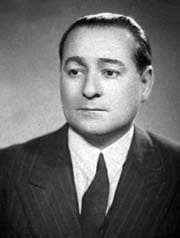
Adnan Menderes secretly armed party members in city and village organizations called Ocak-Bucak. Knowing that the lower ranks of the army were against him, Adnan Menderes, just like Mussolini, planned a civilian fascist uprising. When the May 27, 1960 Military Coup occurred, Adnan Menderes was in Kütahya. His aim was to quickly move to İzmir, seek refuge with the people, call on the Ocak and Bucak organizations to start armed resistance, and regain power in a Mussolini-style manner, but he was caught before he could seize this opportunity.
There are two incidents that prove Adnan Menderes's inclination towards fascism and racism:
Firstly; on the night of September 6, 1955, after some newspapers in Istanbul reported that a bomb had been thrown at Atatürk's house in Thessaloniki, members of the Ocak and Bucak organizations were secretly incited against minorities. In the incidents, primarily directed against Greeks, 73 churches, 8 holy springs, 1 synagogue, 2 monasteries, 4,340 shops, 110 hotels and restaurants, 21 factories, and 3,600 houses were attacked, and 1 priest was killed during the events. The police and law enforcement remained indifferent during the incidents. This incident was Adnan Menderes's first attempt at fascism. Adnan Menderes took no precautions despite being aware of this incident beforehand.
Secondly; Menderes's move to hang 1000 innocent Kurdish youths, using the events in Kirkuk as an excuse. The number 1000 was reduced to 50. In 1959, 50 Kurdish intellectuals and students were arrested to be executed. When one of the arrested youths died, 49 people remained. The "Case of the 49," which went down in history, emerged as a result of Menderes's racist and fascist attempt against Kurds after the Greeks. If the 1960 Military Coup had not happened, these innocent people would have been sent to the gallows.
Menderes, just like Mussolini, established the Fatherland Front based on fascist motifs. He launched such a propaganda campaign in favor of the Fatherland Front that the names of those who joined the Fatherland Front began to be read on the radio every night. The purpose of the Fatherland Front was to carry out an armed civilian uprising.
An interesting point is the similarity between Adnan Menderes and Juan Peron, who ruled Argentina almost at the same time and was an admirer of Mussolini. When a military coup was staged against Juan Peron, he took refuge in fascist Franco's Spain. Both Adnan Menderes and Juan Peron adopted a civilian fascist organization as a political strategy, stemming from populism.
I am against capital punishment. I wish no one had ever been executed in the history of the Republic of Turkey because executions lead to the emergence of different perceptions. No matter how wrong the executed person may be, empathy for the executed person arises in society. I would like to make a personal confession: I was disturbed by the execution scene of Saddam Hussein, who committed genocide against 5000 Kurdish civilians in Halabja using chemical weapons, and I said, "I wish he had received a life sentence."
Adnan Menderes and his friends are still considered "Heroes of Democracy" today because they were executed. This is not true. Adnan Menderes and his party had nothing to do with democracy. Adnan Menderes had a revanchist and vengeful spirit. Before even a year had passed since he came to power, he advocated the idea of arresting communists, stripping them of their citizenship, and exiling them abroad. Soon after, he wanted to send İnönü to the gallows with the lie of "Boraltan Bridge." He could not realize this project when he met with resistance from the soldiers. Adnan Menderes implemented an arbitrary administration, making Kırşehir a district or Adıyaman a province so that the opposition party would not win, then abandoning his decisions again, displaying an attitude that disregarded laws and saw himself above them.
The true hero of democracy is İsmet İnönü, who voluntarily abandoned dictatorial rule and unconditionally handed over power to the Democratic Party in 1950. İsmet İnönü, the Second Man of the Republic, served as the leader of the opposition party for ten years without succumbing to any inferiority complex, and despite lynching and assassination attempts against him between 1957 and 1960, he did not bow to pressure and oppression. I know I am one of the first writers to voice Menderes's passion for fascism and his project, who is deliberately portrayed as a hero of democracy through perception management. Unfortunately, because Adnan Menderes was executed, this aspect of him escaped public attention and was not discussed in the political arena.
ÜLKÜCÜLÜK (IDEALISM)
Ülkücülük can be defined as an attitude of selfless devotion to a certain ideal, enduring all kinds of difficulties for the sake of that ideal, and adopting this attitude as a worldview. The founding father of Ülkücülük is Ziya Gökalp. Although the word "ülkü" (ideal) was not in use during Ziya Gökalp's time. Ziya Gökalp used the word "milli mefkure" (national ideal) in the sense of "ülkü". Mustafa Kemal Atatürk was also influenced by Ziya Gökalp's idea of cultural Ülkücülük.
In the 1940s, with the rise of fascism in Europe, Nihal Atsız and his friends brought a new definition to Ülkücülük, imbuing it with a racist and phrenological meaning.
The Ülkücü movement has oscillated between Ziya Gökalp's cultural definition and Nihal Atsız's racist and phrenological definition of Ülkücülük. This confusion still continues. My personal opinion is that Nihal Atsız's racist-phrenological definition of Ülkücülük predominates in today's Ülkücü community.
MAFIA – DEEP STATE – INTERNATIONAL INTELLIGENCE
The three concepts in the title are intertwined. In addition to these definitions, the phrase "Ülkücü mafia" is also frequently seen in the media. It is a matter of debate into which of the above definitions names like Mehmet Ali Ağca, Sedat Peker, Alaattin Çakıcı, Mahmut Yıldırım (Yeşil), and Abdullah Çatlı, who were involved in the Ülkücü movement in their youth, should be placed. MHP leader Devlet Bahçeli defended Alaattin Çakıcı, who is known for his mafia organization, with these words:
"To call my fellow idealist Alaattin Çakıcı a mafia scoundrel, to accuse him of being the dark face of the underworld, is slander, vulgarity, and disgrace. My answer to Kılıçdaroğlu, who tries to create a perception in the public eye, and his collaborators nestled around him, is this:
- Alaattin Çakıcı is the son of an Ülkücü martyr.
- Alaattin Çakıcı is an Ülkücü who loves his country and nation.
- Alaattin Çakıcı is my comrade in arms."

Devlet Bahçeli did not defend Mehmet Ali Ağca and Sedat Peker, who are respected within the Ülkücü community, and parted ways with them.
WHO IS THE RACIST-FASCIST ONUR GENCER?
Who is the racist-fascist Onur Gencer, who attacked the HDP İzmir Provincial Headquarters with a gun and killed the young girl Deniz Poyraz?
Sometimes a picture is worth a thousand words.


The sentences uttered by Mr. Bahçeli, the MHP Chairman, at the group meeting on Tuesday are disheartening. Bahçeli, who declared the deceased Deniz Poyraz a terrorist, concluded his statement by saying: "She is a militia collaborator who was responsible for rural participation of the PKK and part of the chain that sent PKK sympathizers who wanted to go from the city to the mountains to terrorist camps."
I would like to ask Mr. Bahçeli: "We live in a state of law. If you had this information about Deniz Poyraz before, why didn't you file a criminal complaint with the prosecutor's office?"
FINAL WORD
With the killing of Deniz Poyraz, polarization, that is, the creation of a ONE-DIMENSIONAL MAN, is desired in society. We are left with the choice of being either a Kurdish nationalist or a Turkish nationalist. We will never allow this. Turkey is facing a second attempt at fascism. The Turkish and Kurdish peoples are being pitted against each other. My call is to everyone who loves Turkey:
"Let's be as brave as İnönü! Let's stand shoulder to shoulder on the front of democracy."