Turkish-Kurdish Power Throughout History
This essay explores the historical solidarity between Turks and Kurds, arguing that their combined strength has been crucial in various military and political struggles, from the Battle of Manzikert to the Turkish War of Independence, and suggests this alliance remains vital for future
Dear Readers!
As a requirement of universal ethics, no one has the right to desire war, incite any war, or create unrest in society by predicting war. I want to state at the outset of my article that writing this, knowing this truth, is quite difficult for me. For thousands of years, humanity has sought peace, yet for thousands of years, humanity has been unable to escape the clutches of war. This paradox will undoubtedly continue until the collapse of nation-states and the disappearance of values such as ethnicity, religion, and language. Currently, in dozens of places around the world, it is only a matter of time before terrible and destructive wars erupt from a small spark. Since one of these wars has been imposed on our country with a "crusader spirit" in recent months, it has become inevitable for us to make the right decisions now, anticipating the worst.
TURKISH-KURDISH ALIENATION
First, I will share a little-known truth, or one that ultra-nationalist and militarist circles of Turkish and Kurdish origin particularly wish not to voice. The actions of the PKK Terrorist Organization since 1984, and the deaths and suffering it has caused, have deepened the Turkish-Kurdish divide, significantly alienating the two nations from each other. This alienation continues day by day, and if a logical and diplomatic approach is not taken to this covert, unresolved war stubbornly pursued by the PKK, it seems certain that the "crusader" mentality will reach a stage where it exacts a heavy price from our state.
BLUE HOMELAND
I want to get to the main point: As you know, a new concept has been added to the terminology of international relations: "Blue Homeland." This refers to a country's continental shelf, meaning its territorial waters. For the past few years, in the Eastern Mediterranean, each country has, in a sense, declared a region as its "Blue Homeland" according to its own whims and expects other countries to respect these boundaries. The terrifying part is that the "Blue Homeland" boundaries declared by the countries bordering the Eastern Mediterranean overlap, with different countries claiming the same region. Especially in the last few years, parties have been trying to impose their demands on others through diplomatic and covert threats. At this stage, diplomacy has collapsed, and the situation has been left to its own devices. In this scenario, war in the Eastern Mediterranean stands before us as an inevitable reality.
War, at first, will seem to be between Turkey and Greece. I can almost hear ultra-nationalist Turks proudly saying, "We'll throw them into the sea again." However, this time Greece is entering the war scene with major powers behind it. US and French aircraft carriers are coming and going. Israel has deployed 60 of its planes to Southern Cyprus to side with Greece in a possible war and is ready for battle. Egypt, the United Arab Emirates, and above all, the European Union (Crusade) are behind Greece. Greece's membership in the European Union further strengthens its hand. Currently, everything is in Greece's favor. The war will not be on land, but at sea. If the Turkish naval fleet were only fighting the Greek naval fleet, I would not make this an issue and write this article. However, the situation is very different, and we must act knowing this grave reality.
First of all, hundreds of Greek islands, large and small, in the Aegean Sea, and also the Dodecanese islands next to us, which are forbidden to be armed according to the Treaty of Lausanne, are equipped with the heaviest weapons and missiles. Under these conditions, if the Turkish war fleet opens into the Aegean Sea, it will be caught in a three-pronged encirclement: First, missile attacks it will suffer while passing through the islands; second, the intervention of US and French aircraft carriers, Greek and Israeli warplanes; and third, Greece's own war fleet. I openly state: A naval war under these conditions would be a second naval defeat for our state, like the Battle of Lepanto. Let's not boast in vain; in a state of war, the Turkish naval fleet will become unable to maneuver in the Eastern Mediterranean.

I would like to make a reminder regarding the Battle of Lepanto: It is the name of the naval battle that took place on October 7, 1571, between the Ottoman Empire and the Crusader fleets (just like today), near Lepanto in the Gulf of Corinth. In this naval battle, which occurred during the reign of Selim II, the Ottoman fleet suffered great damage, and the Ottoman Empire's period of ascent ended, beginning its period of stagnation.
Especially with the declaration of 104 retired admirals, I do not give any chance for the Navy, whose morale has collapsed, to gain superiority in such a war. When the French aircraft carrier arrived in the region, our drilling ship Oruç Reis was pulled ashore under the pretext of "technical malfunction." While the issue of determining our "Blue Homeland" boundaries in the Eastern Mediterranean stands before us in its most serious dimension, diverting attention to other issues is treason. However, unfortunately, trivial matters occupy the agenda, and we are harming our morale with our own hands.
It seems that sooner or later there will be a reckoning in the Eastern Mediterranean. Considering the real situation on the ground, we can say that the Turkish Naval fleet will be insufficient. A naval defeat is, of course, a heartbreaking situation for our state and for us. Unfortunately, we can say that our air force is not in a position to cope with a long-term war against the US, France, Israel, and Greek fleets. Against our source of pride, the SİHAs (armed drones), Israel has equipped a Greek island close to Turkey with missiles. In such a situation, it will be difficult for our country to find allies. Russia and Iran have turned their backs on Turkey. Iran is struggling with its own problems, and Russia is planning the Ukraine war.
When our naval and air power is neutralized, only our Land Forces will remain. When our Land Forces intervene, the course of the war will change.
When the land war begins, Kurdish and Turkish soldiers will fight shoulder to shoulder. Do not imagine aid like armies or planes from the Turkic Republics spanning Central Asia. They will not even stir from their places. Their friendship consists of an annual round table meeting.
History has proven to us that whenever Turkish-Kurdish forces, who have made Anatolia their home, fought shoulder to shoulder, they were never defeated. Now, if you wish, let's delve into the depths of history and come to the present day by giving examples of Turkish-Kurdish military solidarity.
BATTLE OF MANZIKERT
The Battle of Manzikert took place on August 26, 1071, between the Great Seljuk Sultan Alparslan and the Byzantine Emperor Romanos IV Diogenes. I will not go into too much detail. When the Byzantine Empire saw the Oghuz Turks pouring into Anatolia, it launched an eastern campaign to put an end to this trend. The Byzantine army consisted of Armenians from the Sivas region, Turkic-origin Pechenegs and Cumans from the Balkans, as well as Slavic, Goth, German, Frank (French), Georgian, and Uz soldiers. The point I want to draw your attention to is that Turkic-origin Pechenegs and Cumans also sided with the Byzantines. The 200,000-strong Byzantine Crusader Army set off towards Manzikert.

Upon hearing in Aleppo that the Byzantine Army was moving east, Alparslan set off towards Manzikert via Diyarbakır with 30,000 warriors. Of course, Alparslan was unaware of the size of the Byzantine army.
Now, let's get to the main point: In the 10th and 11th centuries, there was a Kurdish state in Diyarbakır called the Marwanids (985-1085) (Kurdish: Dewleta Merwanî, Xanedana Merwaniyan) that ruled for over 100 years. The Marwanids belonged to the Shafi'i branch of the Sunni sect.
After the death of Nasir al-Dawla in 1061, his son Nizam al-Din Nasr became the head of the Marwanid state. Nizam al-Din Nasr, like previous Marwanid rulers, attached importance to construction. Today, the Ten-Arched Bridge over the Tigris River was built by Nasr in 1065.

Nasir al-Dawla formed an alliance with the Seljuk State. As a result of this cooperation, the Marwanids participated in the Battle of Manzikert alongside the Seljuks with 10,000 cavalry. Thus, Alparslan's army reached 40,000. During the battle, the Marwanid Kurdish cavalry took their place on the right flank, which was the most difficult task.
Sultan Alparslan was surprised, even disheartened, when he saw the 200,000-strong Byzantine army. Believing he would certainly lose the battle, he put on his white shroud and appeared before his army.

When the battle began, the Byzantine army advanced rapidly at first. Armenian soldiers, who had suffered oppression from the Byzantines, abandoned the Byzantine army and fled. This caused great disappointment in the Byzantine army. Since the Marwanid Kurdish warriors were positioned on the far right of the crescent-shaped attack formation, they tried to blockade the Byzantine army. At this stage, the Pecheneg and Cuman Turks in the Byzantine army, unable to withstand the Marwanid Kurdish attack, joined Alparslan. The massive Byzantine army was suddenly bewildered. Soon after, the Byzantine army dispersed and began to flee in disarray. Emperor Diogenes was taken captive.
Unfortunately, the information above is neither told to us in history books nor do the charlatan historians who appear on television mention the existence of the Marwanid Kurds. The Victory of Manzikert is the first victory won by Turks and Kurds fighting shoulder to shoulder.
BATTLE OF HATTIN (1187)
Hattin is the name of a region within today's Israeli territory. I had the chance to visit the region in 1994. From a distance, there are two huge separate hills, like the horns of an ox. Not far from the Hattin region, below, is Lake Tiberias (freshwater). There are no other water sources in the vicinity.
IMAGE: Battle of Hattin and the Hattin hills

During my middle school and high school years, Saladin Ayyubi was introduced to us as a Turkish commander. The president of the company I worked for in Paris explained during a conversation that Saladin Ayyubi was Kurdish. He stated that in Europe, Saladin Ayyubi was renowned not only for his courage but especially for his generosity in forgiving his enemies, and that the concept of chivalry gained importance with Saladin Ayyubi. In a book, the famous 19th-century Scottish writer Walter Scott writes how Saladin Ayyubi, disguised, secretly entered the tent of his enemy Richard the Lionheart and cured the English King with the doctor he brought with him.
In those years, since there was no Google, I remember going to the George Pompidou library and leafing through encyclopedias. All sources clearly stated that Saladin Ayyubi was of Kurdish origin. Just as the 10,000 cavalry support of the Marwanid Kurds in the Battle of Manzikert is not included in history books, similarly, Saladin Ayyubi is introduced as a Turkish ruler. A Frenchman knew Saladin Ayyubi's origin and the immortal legacy he left behind, but as a Kurd, I was unaware of this. I vividly remember being angry at the Turkish education system that ignored Kurds. I considered it pathetic that Turks claimed Saladin Ayyubi for themselves when they had dozens of great commanders.
Jerusalem is considered holy by three Abrahamic religions (Judaism, Christianity, and Islam). For Muslims, Jerusalem is the third holiest city after Mecca and Medina. According to the Quran, Prophet Muhammad ascended to Miraj from this city. For Jews, Jerusalem is the holiest city because, according to their holy books, King David of Israel built Jerusalem as the capital of the United Kingdom of Israel before Christ, and his son King Solomon established the First Temple within the city. For Christians, the holiness of Jerusalem is due to Jesus being crucified in this city, according to the New Testament.
In the First Crusade in 1095, Jerusalem fell into the hands of the Crusaders. This caused great disappointment among the Muslim population.
Saladin Ayyubi's grandfather, Shadi, was born and raised in the city of Dvin, which is now within Armenian territory, about 40-50 km from Iğdır. Let's take a look at Saladin Ayyubi's early life in his own words:
"First, I am Kurdish. I am from the Ramadi tribe. This tribe is one of the oldest and noblest Kurdish tribes. The settled place of the tribe is Western Azerbaijan. I do not have much information about our lineage before my grandfather Shadi's father, Marwan. Dvin, which we consider our cradle, was the capital of Lesser Armenia in the 10th century. They also called it Inner Armenia. My uncle Sherkuh and my father Ayyub were born in Dvin. In 1128, when Dvin was attacked by Turkmens, my grandfather Shadi took his two sons and wife and set off for Baghdad to save their lives from the brutal massacre of the Turkmens. Thanks to a friend of my grandfather Shadi in Baghdad, they gave my father the command of the city of Tikrit (Iraq)."
I don't think it's right to prolong this too much. In these years, the region of Aleppo and Damascus was under the control of Imad al-Din Zengi, of Turkic origin. When Zengi was defeated in a battle, he took refuge in Tikrit. In later years, this time Shadi and his family got into trouble with a dynasty in Iraq. On the night Saladin Ayyubi was born, the entire family fled Tikrit, went to Damascus, and took refuge with Zengi. Zengi then made his old friend Ayyub the castle commander in Damascus. One day, Imad al-Din Zengi, who had gained power, tasked Saladin Ayyubi and his uncle Shirkuh with conquering Egypt. Shirkuh conquered Egypt and brought it under Zengi's control. Shirkuh died in Egypt. Saladin Ayyubi succeeded him. When Imad al-Din Zengi also died, a struggle for the throne began in Damascus. Saladin Ayyubi went from Egypt to Damascus and took leadership of the Turkish and Kurdish communities.
He made preparations to capture Jerusalem. Saladin Ayyubi's army consisted of Kurds and Turks. There were very few Arab infantry. The battle took place in the Hattin region. The Islamic Army blocked the road to Lake Tiberias. They set fire to the bushes in the area. The Crusaders, parched with thirst in the July heat, could not endure any longer and were defeated. Saladin Ayyubi captured Jerusalem, prevented the shedding of even a single civilian's blood, and allowed those who wished to leave the city by paying a ransom.
In short, with Turkish-Kurdish solidarity, the Crusader army was defeated, and a new chapter in history was opened.
BATTLE OF CHALDIRAN (1514)
Sultan Selim I saw Shah Ismail, the Safavid ruler in the East, as a rival. The reason for this was sectarian conflict. It was known that Safavid sheikhs had many followers in Anatolia, that these followers frequently visited their sheikhs, brought gifts, and went to Iran to receive education from them. The Ottoman Empire viewed Shah Ismail's adherence to the Shi'a faith, his command over a large following in Anatolia, and his steadily increasing power as a major threat.
Kurdish rulers and beys of Sunni origin, through a delegation they sent, invited Sultan Selim to campaign against the Safavids. They stated that if the Sultan went on campaign, they would fight in the ranks of the Ottoman army and would accept the suzerainty of the Ottoman state after the victory. In a sense, Idris-i Bitlisi, of Kurdish origin, persuaded Sultan Selim I to go to war against the Safavids (Shi'ites). The war between the Shi'a Safavids and the Sunni Kurds had begun before the Battle of Chaldiran. If there had not been the guarantee of military support from the Kurdish beys, Sultan Selim I would not have dared to set off for Iran, and Anatolia would probably have fallen under Safavid rule. After the victory of Chaldiran, all Kurds came under Ottoman rule, and the Sunni Turkish and Kurdish alliance once again played an important role in history.
HAMIDIYE REGIMENTS
With the French Revolution, the concept of the Nation-State emerged. The Nation-State concept was built on the foundation of a single ethnic group, a single language, and a single religion. If there were other minorities or religious groups within the established Nation-State, their suppression or even denial became necessary, in a sense, for the survival of the Nation-State.
When the Greeks became an independent nation-state with the Treaty of Istanbul signed in 1832, this situation affected all peoples within the Ottoman Empire and caused them to take action to establish their own nation-states. Armenians living in Anatolia gained nation-state consciousness much earlier than Kurds, and at the end of the 19th century, they started this struggle by forming two major parties.
Sultan Abdülhamid, foreseeing that Armenians would establish a nation-state in Eastern Anatolia if not intervened, invited Kurdish beys to Istanbul and asked for their help. By granting various titles and ranks, he ensured the establishment of the Hamidiye Regiments. In later years, the Ottoman Empire, with the help of the Hamidiye Regiments, repelled the Armenians and prevented them from establishing an independent nation-state. This alliance went down in history as another example of Turkish-Kurdish solidarity.
BATTLE OF GALLIPOLI
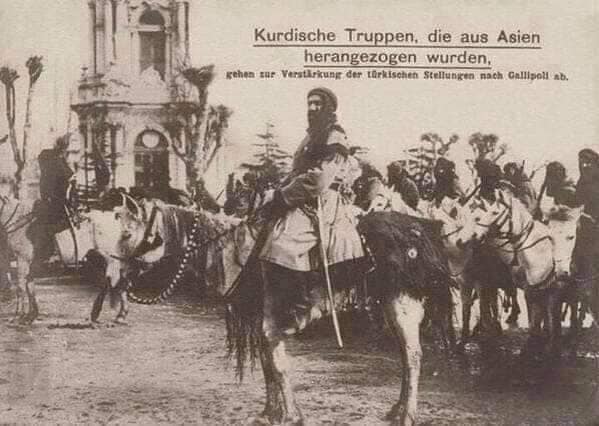
Turkish historians are very ungrateful. They have written a history as if only Turks participated in the Battle of Gallipoli. First of all, the Battle of Gallipoli took place during the Ottoman Empire. The Ottoman Empire and its army consisted of various nations and peoples. Kurdish Hamidiye units also took part in the Battle of Gallipoli.
Another weakness of Turkish historians is presenting Mustafa Kemal Atatürk as the greatest commander of the Gallipoli Campaign. Mustafa Kemal participated in the war as a Lieutenant Colonel and completed it with the rank of Colonel. Those who have served in the military know. In the military, everything proceeds within the chain of command. A Lieutenant Colonel takes orders from a Colonel; a Colonel from a Brigadier General; a Brigadier General from a Major General; a Major General from a General; a General from a Field Marshal, and finally, a Field Marshal from the Minister of War.
The plan for the Gallipoli Campaign was made jointly by German-born Field Marshal Liman Von Sanders and Minister of War Enver Pasha. Mustafa Kemal's name was far down the protocol list, so he did not participate in these meetings. Mustafa Kemal is undoubtedly a great commander. His coming to Erzurum, a place he did not know (he had no tribe or relatives), taking off his military uniform to start a civilian struggle, and crowning it with victory, is enough to make him one of the greatest leaders in world history, but unnecessary exaggeration only harms Mustafa Kemal Atatürk.
In short, Kurds also took part in the Battle of Gallipoli, enduring the hardships of the war alongside Turks. To say that only Turks participated in the Battle of Gallipoli is a historical ingratitude.
WAR OF INDEPENDENCE
The first step of the War of Independence was truly taken with the Erzurum Congress. Mustafa Kemal Atatürk asked for support from Kurdish notables to assist him, and Kurdish beys and aghas both participated in the Erzurum Congress and took part in the War of Independence. Undoubtedly, the Hamidiye Regiments, revived by Kazım Karabekir, rendered great services in defeating the Armenians in Eastern Anatolia. In short, Turkish-Kurdish unity also played an important role on the path to the establishment of the Republic.
Kurds, like other peoples, had the right to establish their own nation-state. However, Kurds were divided into four parts in terms of language and religion, and this division still continues: Kurmanji-Alevi; Kurmanji-Sunni; Zaza-Alevi and Zaza-Sunni.
If all Kurds at that time were, for example, Kurmanji Alevi or, for example, Zaza-Sunni, no one could have prevented the establishment of a Kurdistan Republic. I would like to give an example: When the Sorani-speaking Sunni Sheikh Mahmud Barzanji declared his kingdom in Sulaymaniyah, the Kurmanji-speaking Sunni Barzani family did not help Barzanji. If they had acted together, a Kurdistan State would have been established in Iraq in the 1920s.
In later years, a similar situation occurred in Anatolia. During the Koçgiri uprising, which was a Kurmanji-Alevi rebellion; the Ağrı Mountain Rebellion, which was a Kurmanji-Sunni rebellion; the Sheikh Said Rebellion, which was a Zaza-Sunni rebellion; and the Dersim Rebellion, which was a Zaza-Alevi rebellion, the parties did not help each other. It is true that Mustafa Kemal did not keep his promises to the Kurds in the Treaty of Lausanne. Mustafa Kemal, who was struggling to establish a nation-state, found no interlocutor when he saw scattered Kurdish leaders and groups, and consequently ignored them. Under these conditions, the Republic of Turkey was established as a nation-state. Considering the conditions of the time, this was a quite reasonable and acceptable situation.
Today, there is no point in looking back and demanding accountability. The most important element of being a nation-state is that the country consists of a single language, a single religion, and a single ethnic group. For this reason, Kurdish was banned throughout the Republican period, and the identity of Kurds was denied. Ostensibly, everyone became Turkish, but in essence, Alevis and Kurds created a religious and ethnic difference. In this way, we have come to the present day with policies of denial. We must accept that these denials were also a necessity for the formation of a nation-state. Let's not forget that dozens of countries like France experienced and continue to experience the same difficulties.
I would like to say that without the help of the Kurdish Hamidiye Regiments, Kazım Karabekir would not have had much chance against the Armenians. If Eastern Anatolia had not been saved, the transfer of soldiers and supplies to Western Anatolia would have become impossible, and the War of Independence would have gone in an uncertain direction. Speaking conscientiously and considering historical facts, Turks and Kurds established the Republic of Turkey hand in hand.
KOREAN AND CYPRUS WARS
Turkish-Kurdish soldiers fought together in the Korean War between 1950-53 and in the Cyprus Operations between July 20 and August 14.
FATE OF THE MEDITERRANEAN WAR
Although Turkey is not abandoning its demands, it has retreated in the Eastern Mediterranean. Research and seismic vessels have been withdrawn from the waters we claim as "Blue Homeland." Greece, which has never had so many allies behind it against Turkey, is seeking a small excuse and provocation for war.
In the event of war, our naval and air forces will be quickly neutralized. Then it will be the turn of the Land Forces. The Turkish-Kurdish solidarity, which has created miracles throughout history, will come into play, and the most important goal will be to seize the illegally armed Dodecanese islands and all of Cyprus. I think at such a stage, we should unilaterally terminate the Montreux Convention and become the sovereign power of our own waters. Everything may seem like a dream, but Alparslan's victory, who defeated the 200,000-strong Byzantine Army with his 40,000-strong army, was also a dream. Similarly, Saladin Ayyubi's success in defeating the Crusaders, who went to war with armored knights, with bare hands and conquering Jerusalem, was also a dream.
Throughout history, Kurds have never stabbed Turks in the back or been involved in such a calculation. I can even argue that in a possible Mediterranean War, even if illegal Kurdish organizations do not fight alongside the Turkish Army against the Crusader forces, they will end terrorism and choose silence. This reality may seem absurd and impossible, but history has always progressed by the emergence and overcoming of "impossibilities."
Turkish-Kurdish friendship and solidarity are invincible and eternal. Existing shortcomings will be overcome peacefully and with mutual understanding. Kurds will achieve progress not by relying on imperialist powers, but by developing solidarity with their Turkish brothers and overcoming their difficulties.
RAMADAN ANECDOTES & JOKES
Note: The following anecdotes and jokes are published for the first time.
PIDE QUEUE
Iğdır is the easternmost city in Turkey. Therefore, it is one of the provinces where iftar (breaking of the fast) occurs earliest. For example, while iftar is at 18:54 in Iğdır, it is at 19:56 in Istanbul. So there is an hour's difference. One day, a resident of Iğdır, who spent half of Ramadan in Iğdır, had to go to Istanbul. He queued for pide but the line was long. He frequently checked his watch. Thinking of Iğdır, he thought iftar time was approaching and he might be late. He tapped the shoulder of the person in front of him: "Sir, I am from Iğdır. My iftar time is almost here. May I go ahead of you?" The man replied very politely, "Of course, please do!"
The man from Iğdır was happy to have moved one place forward. This time, he asked the lady in front of him, then another person, and thus advanced quite a bit towards the front of the line. This time, there was another gentleman in front of him. He tapped his shoulder and asked to go ahead. The gentleman listened to what was said with a reasonable expression, and replied with a smile: "I am from Kars. We all have to wait for the iftar time in Istanbul. There is still an hour until iftar. Don't worry!"
The man from Iğdır thought to himself: "I've cut the queue in half with the advantage of being from Iğdır! The rest doesn't matter! Kars residents have always put obstacles in front of Iğdır residents anyway. Thank God we became a province and got rid of the Kars residents!"
MOSQUE BALCONY
In the years before loudspeaker systems, when the time came, mosque imams would climb the winding, arduous stairs inside the minaret and announce the iftar time by reciting the adhan (call to prayer) with their bare voices from the sherefe (minaret balcony).
The imam of a mosque in Iğdır was quite overweight. Climbing the 56 steps to the sherefe felt like torture to him. One day, he made a decision. He took a can of paint. After every eight steps, he wrote 1, 2... in sequence on the steps. When he reached the sherefe level, he drew a huge number 7 on the floor.
One day, the imam fell ill. A young imam, temporarily taking over this duty, climbed the stairs and reached the sherefe. He couldn't make sense of the numbers written on the steps. When the fat imam recovered and returned, the young imam asked curiously:
"Hocam, what do the numbers on the steps mean?"
"Hocam, as you know, Paradise has seven layers. I stop at each layer and pray. When I reach the sherefe, I feel like I am in Paradise."
"Do you also pray when you go down?"
"Hocam, is that even a question? What's the point of praying when going to Hell?"
ORUÇ
On a blessed day of Ramadan, a father, enraged at Oruç, the neighborhood rogue who eloped with his daughter, mobilized and, with the help of acquaintances, searched for Oruç and his daughter everywhere. He was so angry that, despite being a devout person committed to religious tenets, he forgot about Ramadan and smoked cigarette after cigarette. In the evening, he gave up hope and returned home. Sitting at the table, he raised both hands: "Oh Allah, today I missed both fasts. I will fast again for You. Forgive me! But if I catch that pimp Oruç, I know what I'll do."
IFTAR TIME
That year, Ramadan fell at the end of April. From our balcony, it was possible to see the sherefe and minaret of the Central Mosque. Those were my childhood years when multi-story buildings had not yet suffocated Iğdır. My father regularly fasted. My mother had prepared the table for my father, and my father had impatiently sat down. On windy days, we couldn't hear the call to prayer. The most accurate way to know it was iftar was to see if the lights of the sherefe were on.
When he didn't hear the adhan, my father asked my younger brother to go out to the balcony and check if the sherefe lights were on. If my father had said "the mosque lights," there would have been no problem. My brother didn't know what the word "sherefe" meant. There was a street lamp in front of our house. Since my father used the phrase "if the lights were on...", my brother concluded, "My father probably wants to know if the street lights are on." He ran inside: "Dad, the lights are on." My father then broke his fast. 5-10 minutes later, when the adhan was heard, my father shivered:
"Son! Are you sure you saw the sherefe lights on?"
"Yes, Dad! Even a stork had landed on it."
RAMADAN CINEMA
During Ramadan, cinemas did not close. In my childhood, I knew four cinemas: Saray, Aras, Serhat, and Güneş cinemas. I watched only one film at Saray cinema. It closed early. Aras and Serhat cinemas remained. For many years, these two cinemas competed to serve moviegoers. In later years, Güneş cinema opened. I was a regular at Aras cinema.
My cousin Hasan was quite devout in those years. He was 9-10 years old but never missed his prayers. He was careful not to commit sins and carried dozens of amulets.
One day, as neighborhood kids, we went to watch a Yılmaz Güney film. In those years, Yeşilçam films had an unchanging scenario. The protagonist would enter a bar. A belly dancer would be on stage. The protagonist would sit at a table. For some reason, the belly dancer would show interest in him. The crowd of "snobs" at the next table would get jealous, either taunting the protagonist or harassing the dancer. In the end, fists would fly, and the protagonist would knock down the "snobs" one by one, accompanied by our applause.
Hasan's only problem was convincing himself that watching the belly dancer was a sin. I was his closest friend. When the belly dancing scene began, Hasan would cover his eyes with his arms and whisper in my ear: "Tell me when the belly dancing scene is over!"
Yeşilçam producers, to make the film appealing, would exploit the weakness of Anatolia's adolescent youth, who were starved for sex, and would prolong the belly dancing scenes. Hasan would repeatedly ask in a pleading tone, "Hasn't it ended yet?" I always gave him accurate information.
It was Ramadan again. We went to the cinema. Hasan sat at the other end of the row, next to my brother Ahmet. Ahmet was unaware of Hasan's religious sensitivity. Hasan had not made any request to Ahmet about this either.
When the film started with a belly dancing scene, Hasan immediately covered his eyes with his arms, and every now and then leaned into Ahmet's ear, asking, "Is the scene over?" Ahmet understood this question as "Is the film over?" and replied "No!" each time. The cinema owner, intending to have an extra screening due to high interest, did not give a 10-minute break to save time. The film ended, but Hasan was still covering his eyes with his arms.
Walking down the street, Hasan explained: "I covered my eyes because of the belly dancer, so I couldn't watch the film. My money was wasted, but I earned a lot of good deeds!"
EATING RACE
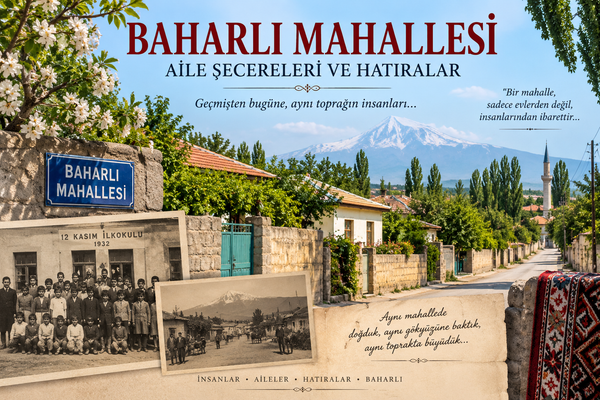
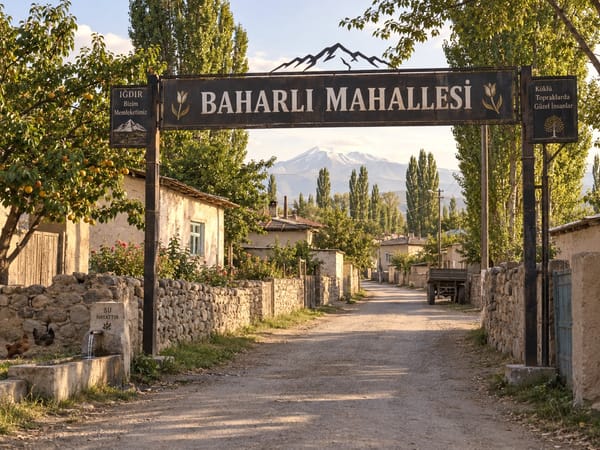
A Terekeme man is walking slowly towards Baharlı Neighborhood (November 14) for the approaching iftar time. His beloved Kurdish neighbor greets him with quick steps and passes him swiftly. The Terekeme says: "What's your hurry? There's still time for iftar. Slow down, let's walk together." The Kurd replies: "I don't know what happens at a Terekeme table, but at a Kurd's table, it's an eating race. If you're late, you won't find anything to eat!"
WORKER FROM TUZLUCA
In my childhood, during Ramadan, people would become calmer, enveloped in a sacred atmosphere, constantly praying to themselves and stroking their faces, hiding their anger, and striving to be forgiving.
İbrahim Abi, our patisserie partner, was harsh and merciless towards the employees. If he saw someone idle, he would give commands like, "Take a clean cloth and clean all the tables and chairs!" or "Take the bucket, draw water from the ditch – in those years, an open ditch ran through the middle of the city – and water the front of the patisserie and the road!" or "Wash the dishes again!" not letting them breathe.
It was Ramadan. Sweet sales were at their peak. Customers would queue up and buy baklava, şambaba, tulumba, and other sweets according to their wishes. To reduce the workload, İbrahim Abi had placed a newly hired worker from Tuzluca in front of the sweet trays. Another worker would quickly package the sweet-filled cardboard box handed to him and give it to the customer, while İbrahim Abi put the money in the cash register. Since the worker from Tuzluca was working in a patisserie for the first time, he naturally didn't know the names of the sweets. İbrahim Abi had only quickly told him the names of the sweets once, and the worker had nodded as if he understood.
İbrahim Abi was shouting: "One kilo of baklava!", "Half a kilo of tulumba!"... The worker from Tuzluca, due to the heavy workload, had neither the time nor the courage to turn around and ask which was şambaba, tulumba, or kadayıf. He acted on his own initiative, putting kadayıf instead of baklava, and tulumba instead of şambaba into the cardboard box, weighing it on the scale next to him, and handing it to the worker responsible for packaging.
The next day, complaints started pouring in. İbrahim Abi was almost going crazy. If it weren't for Ramadan, he would have crushed the worker from Tuzluca under his feet, but the sacred atmosphere of Ramadan caused him to suppress his anger. After iftar, when business slowed down, İbrahim Abi called the worker from Tuzluca to the back section. I was washing dishes. İbrahim Abi began to interrogate the worker:
"Haven't you seen baklava before?"
"No!"
İbrahim Abi was so angry that, for the sake of Ramadan, he only slapped him once.
"Haven't you seen şambaba before?"
"No!"
İbrahim Abi slapped him again.
"Where are you from?"
"From such and such a village in Tuzluca! I was a shepherd."
As the interrogation continued, the Garrison Commander entered the patisserie. İbrahim Abi ended his torturous interrogation and immediately moved towards the cash register to greet the important customer. The Garrison Commander said: "Sir, yesterday I sent my aide to buy baklava. You probably accidentally packaged tulumba dessert due to the crowd. It was very delicious. The other commanders also liked it very much. We, as the Garrison, want to make an agreement with your patisserie. We will buy 30 kilos of cookies and sweets every day. Is it possible for you to provide such an order?"
İbrahim Abi was overjoyed. From that day on, large packages went from our patisserie to the Garrison Command, and we earned exceptionally good money.
After the Garrison Commander left, İbrahim Abi called the worker from Tuzluca, told him that the wrong packaging had brought good luck, thanked him, and pressed a significant amount of money into his hand as pocket money. The worker from Tuzluca put the money on the table, cried, left the patisserie, and never returned. I never forgot the honorable stance the shepherd from Tuzluca showed that day.