Finite Infinity
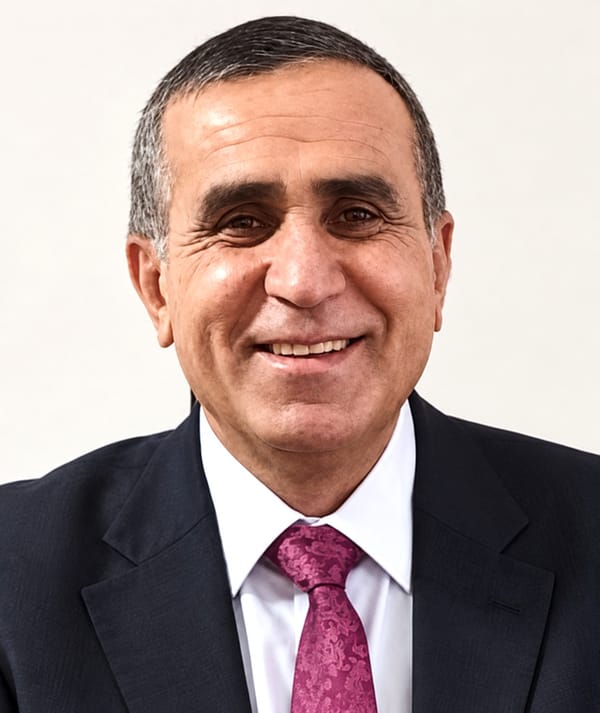
This essay explores the concepts of infinity and finitude through the lens of physics and philosophy, interspersed with anecdotes about Hamit Hun, a beloved figure from Iğdır.

mucahithun@yahoo.com
(I dedicate this article to my esteemed teacher Akay Aktaş, who always keeps my mind alive with his scientific questions.)
Dear readers!
My article today will probably not uplift your spirit. Perhaps after reading a few sentences, you will say, "This is not for me!" and give up. Don't worry! This behavior will not upset me. I understand you very well. Because the agenda imposed on you by daily life is different: the fear of Covid-19, the possibility of mutation, the vaccination process, work life, the burden of supporting a family, struggling with illnesses and depression, school life problems if you are a student, unemployment, love, revenge, mafia, political parties, the possibility of war, and endless troubles and hardships like these surround you. Despite knowing all this, the reason I am writing this article is to show the strength of my hope for the future of humanity.
THE CATHOLIC CHURCH AND THE INQUISITION
Europe was largely subject to the Catholic Church in Rome until October 31, 1517. Slavic peoples (Russians, Bulgarians, Ukrainians, etc.) outside Poland were subject to the Orthodox Church in Istanbul. The Protestant denomination was born in Germany on October 31, 1517, when the German clergyman Martin Luther rebelled against the practices of the Catholic Church. As you know, the Middle Ages began with the fall of the Western Roman Empire in 476 and ended with Sultan Mehmed the Conqueror's conquest of Istanbul (1453). In short, if we exclude the Orthodox Slavs (except Poland) and Greeks, all of Europe was Catholic throughout the Middle Ages. The Pope, residing in the Vatican, had extraordinary power because he collected taxes from all Catholic Emperors. It was also the Catholic Pope who initiated the Crusades. Orthodox Christians did not participate in the Crusades. Moreover, there was an internal conflict between these two main Christian denominations, Catholics and Orthodox, similar to that between Shiites and Sunnis in Islam. In fact, the Catholic Crusader armies burned and razed Istanbul, the center of the Orthodox Church, on their way, and established a Latin State.
After briefly summarizing this denominational difference in the Christian world, let's return to our main topic. In the 16th century, the Catholic Church was under twofold pressure. On one hand, there was the Protestant movement matured by Martin Luther, and on the other hand, the scientific movement initiated by the Italian astronomer, physicist, engineer, philosopher, and mathematician Galileo Galilei (1564-1642).
INFINITY
The word "Inquisition" comes from Latin, meaning "religious inquiry and judgment." The Catholic Church judged those who did not share its views in Inquisition courts. One of those who suffered from this judgment was Galileo Galilei. His claim was simple: the universe does not revolve around the Earth; only the Earth revolves around the Sun. The discussions that began in this way continued in subsequent centuries, and the idea of "the infinity of the universe" emerged. The concept of "infinity" was a daunting and difficult concept for scientists to grasp. As if this were not enough, it is claimed that the universe was created by an explosion called the "Big Bang," and this thesis is still being scientifically proven. This time, another question troubles scientists: "What was there before the Big Bang?"
Because the scientific world provided insufficient explanations regarding "Infinity" and the "Big Bang," religious views gained prominence and continue to exert influence today, arguing that the universe was created by "God" and that asking such questions is absurd because it questions God's authority.
FINITE INFINITY
Now I want to take you to another world. An average human body has 30 trillion (30,000,000,000,000) cells. Each human cell also has 100 trillion (100,000,000,000,000) atoms. In this case, an average human body has approximately 30,000,000,000,000,000,000,000,000 atoms. As you can see, if we consider the thesis of the Greek philosopher Democritus that "the smallest part of matter is the atom," humanity is ultimately composed of a finite number of atoms.
STRUCTURE OF THE ATOM
Studies on the structure of the atom gained momentum in the 19th century, and the first accepted view was that the atom consists of a nucleus and electrons revolving around it. This time, it was discovered that the nucleus consists of protons and neutrons. Then it was understood that protons and neutrons are also composed of smaller particles called quarks. Subsequent studies proved that the particles we call quarks are also composed of even smaller particles, and this division continues infinitely.
Let's consider a human being. We know that it is not infinite. It is a finite substance. However, the atoms that make up this human are composed of infinitely extending small particles. So, we humans actually carry trillions of infinities within us. There is no point in looking up at the sky and searching for infinity in the depths of the universe, because since every atom in our own body can be divided infinitely, we are actually FINITE INFINITE creatures. This situation, of course, also applies to a piece of stone, a piece of paper, etc. In short, finitude and infinity are intertwined in the universe. The existence of one makes the existence of the other inevitable. So, we can strut around as creatures composed of "infinite matter," that is, "infinite" ourselves, right?
Since the concepts of finitude and infinity are intertwined, today neither the infinity of the universe nor the great explosion called the "Big Bang" has any meaning left.
THE END
HAMIT HUN ANECDOTES…
WHO IS HAMIT HUN?
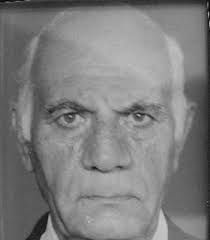
He is the eldest son of Ahmed Şemo, leader of the Gêloî Tribe. He was born in Iğdır in 1921. He began his secondary education at Kars High School and continued it at Istanbul Private Pertevniyal High School, but returned to Iğdır before graduating. He married Fatma Hanım, daughter of Newo Ağa, a notable from Doğubayazıt. He engaged in trade and animal husbandry.
Hamit Hun possessed a deep sense of freedom and tolerance. Among the people, in the hearts of the people, he was the indispensable Sultan of heartfelt conversations. A book or newspaper was never out of his hand. He knew the entire Ottoman poetry collection by heart. Sometimes a competent philosopher, sometimes a wizard of words who, with his deep and meaningful conversations, could momentarily take a person away from the troubles and hardships of the world. He enlivened and liberated Iğdır, which was stuck on the tip of his tongue, with his anecdotes and caricatures. One cannot help but think how boring Iğdır would be without Hamit Hun.
Hamit Hun passed away in Iğdır in 1997.
WHO IS FATMA HUN?

She was born in 1924 in the village of Kıraxtin (Gündoğdu), near Doğubeyazıt. Her father, Nebi (Newo) Ağa, was one of the leading figures of the Geloylu tribe. Fatma Hun describes an important period of her life as follows:
"Both of my brothers were docile and timid. This did not please my father. He wanted his sons to be active, strong-willed, and men of the community. He was sad that this dream did not come true.
Despite being a girl, I was active, going everywhere, in short, I was deeply involved with society. My father seemed to have found the 'son' he longed for in me. He never let me out of his sight, seating me at the head of the table in every gathering he attended. My father bought a horse and gifted it to me. I named the horse 'Yıldız' (Star). Yıldız was a magnificent horse, white up to its knees and red otherwise. It had received special training and was raised as a racehorse. My greatest pleasure was to mount 'Yıldız,' tucking my pistol on one side of my wide belt and my dagger on the other, with my rifle on my shoulder, my whip in my hand, and knee-high boots on my feet, roaming around.
I was as free as a bird. I felt as if I was the sole ruler of the mountains and plains. I would go to inspect our herd in the pasture, first warning the shepherds who failed to perform their duties, and if necessary, punishing those who underestimated me for being a girl with my whip. My father was proud of my riding and courage, and he would speak of me with praise everywhere.
My father valued his children's education. He even sent my brother to Private Pertevniyal High School for his secondary education. My school life began at Doğubayazıt Primary School with Leman, the officer's daughter. However, school did not captivate me. For me, reading meant punishing people. I had no intention of restricting the infinite freedom that the oba (nomadic camp) and the village had given me. As soon as I acquired literacy skills, I left school. Poor Leman was so attached to my friendship that she insisted and cried to her father: 'If Fatma doesn't come, I won't go to school!'"
(NOTE: The anecdotes and jokes you will read below are published for the first time.)
DELEGATE HUNT
In the 1970s, when the CHP (Republican People's Party) was determining its candidate nominees, delegate elections were held in every province under the supervision of a judge. During one such election period, a candidate nominee who knew Iğdır little came to Iğdır to hunt for delegates and introduce himself. When he realized that Hamit Hun was also a delegate, he met him and said that he had traveled all districts, including Kars city center, for a month and wanted to spend the last two days of the election in Iğdır. During the conversation, it was understood that they had mutual friends with Hamit Hun. Hamit Hun had a soft heart. He felt a desire to help the poor candidate nominee who had come from afar.
Hamit Hun knew all the delegates. Many of them lived in villages. They set off together by car. In every village they reached, delegates surrounded Hamit Hun, engaged in deep conversations, and sipped their tea in the village coffeehouse. In this way, there was no village they hadn't visited until election day.
It was the day of the delegate election. 80 delegates would cast their votes. The courtyard of the November 14th Primary School was full of delegates. Delegates lined up and cast their votes in the presence of the district judge. Since Kars elected five deputies, each delegate had the right to write five candidate nominee names on their ballot. Hamit Hun was hopeful for his friend because most of the delegates had promised their votes. Towards evening, the results were announced. The names in the top five were as follows:
Hamit Hun 75
Kemal Güven 65
Doğan Araslı 60
Hasan Yıldırım 50
Turgut Artaç 42
There was a surprising situation because even though Hamit Hun was not a candidate nominee, the delegates assumed he was and voted for him. Hamit Hun intervened. He went to the judge and said he was not a candidate nominee. The CHP delegate election was rerun. Unfortunately, his beloved friend could not make it into the top five.
As Hamit Hun walked home that evening, he couldn't understand the delegates' interest in him and was angry with himself: "If only I had been a candidate nominee!" he sighed. "I would have sent Mecit to the northern districts, and distributed Ali Yiğit, Übeyt Yerlikaya, and other friends to the southern districts. I would have definitely been elected!"
Hamit Hun arrived at his house, dreaming. Fatma Hun shouted from inside:
"Hamit, we've been waiting for you for two hours for dinner!"
"Fatma, don't even ask! I almost became a Member of Parliament, but the judge cheated!"
PEACE MEAL
There was to be peace between two tribes. A blood feud that had lasted for over 40 years was finally coming to an end. Since it was an important meeting, notables from as far as Doğubayazıt were invited. Hamit Hun was among the guests. As was customary, a low table was prepared first. Roasted meats were arranged in rows in the middle. Hamit Hun was in high spirits. He reached for one piece of meat, then another. If it weren't rude, he would even fill his pockets with meat. When his stomach felt like it would burst, he withdrew from the table. He went out onto the balcony. A man, with a pitcher in one hand and a towel in the other, was serving those who had finished their meal. Hamit Hun soaped his hands and rinsed them with water flowing from the pitcher. When he took the towel hanging from the man's arm and dried his hands, he leaned into the man's ear: "I hope the peace breaks soon. Another peace meal will be held."
CAT SCRATCH
It was the days following the 1980 military coup. Hamit Hun was sitting on a chair in the coffeehouse. On the chair next to him was a cat, nurtured and protected by the coffeehouse owner. As Hamit Hun was drinking tea, the cat suddenly scratched Hamit Hun's left hand. Hamit Hun flinched and called the waiter to remove the animal. The waiter came but could not hide his surprise.
"Brother Hamit, for some reason, this cat only scratches the hands of Kurds."
Hamit Hun replied:
"The poor animal is right! It sees the state catching Kurds and throwing them in prison, roughing them up, torturing them, gendarmes and police only beating Kurds, and the cat thinks, 'this must be a tradition!' and scratches me."
IF YOU ARE GOING TO FIGHT
As Hamit Hun walked home, dogs on both sides of the road were barking fiercely at each other but dared not attack. Hamit Hun walked between them and continued on his way. Soon after, two women from the neighborhood stood on both sides of the road, shouting at each other, and moreover, holding large stones in their hands. Hamit Hun hesitated for a moment, then continued on his way, passing between them. As Hamit Hun approached home, he saw two male neighbors he disliked, who had been fighting over water sharing for a long time, standing on both sides of the road with sticks in their hands, cursing at each other. Hamit Hun didn't want to miss the opportunity: "If you're going to fight, I'll wait, fight well, then I'll continue on my way!"
WEDDING INVITATION
Hamit Hun was invited to a wedding, but he made a mistake and set off for the wedding house empty-handed. As he approached the wedding house, one of the neighbors, in a panic, handed him a package: "Oh, my stupid head! I left the garden gate open. The donkey will run away!"
Hamit Hun entered the wedding house with the package in his hand. A young girl opened the package in front of the crowd, as per tradition. Inside were a gold necklace and a watch. The host was very happy. Hamit Hun looked for a way to leave the house before his trick was discovered, and whispered in the host's ear, "I left the garden gate open. Our donkey might run away. I'll be back in a bit!" Hamit Hun cautiously and quickly left the wedding house. Soon after, the neighbor who had given Hamit Hun the package arrived. He took out his handkerchief and wiped his sweat. He looked around but couldn't see Hamit Hun. He went to the host and spoke in a low voice:
"Did Mr. Hamit arrive?"
"He did! Thank him very much, he brought a necklace for the bride and a wristwatch for the groom. He went home because he left the garden gate open and the donkey might run away. He'll be back soon."
The neighbor hit his head with both hands and muttered silently:
"Look at that! He put me in the place of a donkey, and now he's worried about his own donkey!"
JOURNEY TO GÜNDOĞDU VILLAGE
As in every married couple, a tension had been ongoing between Hamit Hun and his wife Fatma Hun for several weeks. On one such day, Fatma Hun made a request: "Hamit, it's been years since I saw the village where I was born and raised (Kıraxtin/Gündoğdu/Doğubayazıt). I want you to take me there."
Hamit Hun, albeit reluctantly, obeyed his wife. They set off for Doğubayazıt and from there to Gündoğdu village. As Fatma Hun approached the village, she became excited. She pointed to a distant spring: "As children, we always drank water from that spring!" They traveled a little further. This time, Fatma Hun excitedly pointed to a rocky area: "As children, we always played hide-and-seek there." They traveled a little further. This time, Fatma Hun again exclaimed excitedly: "As children, we used to pick wild fruits in that valley." When Fatma Hun started speaking again with "As children," Hamit Hun sighed deeply and thought to himself: "If only you had remained a child! If only you had never grown up!"
JOURNEY TO ANKARA
A very dear friend of Hamit Hun was going to set off for Ankara in his private car. Hamit Hun also got excited, took a taxi to his house to get his bag: "Fatma, quickly prepare my small handbag, I'm going to Ankara." It took some time, but Fatma Hun handed the bag to Hamit Hun. Soon after, they set off for Ankara. The driver showed his skill and arrived in Ankara without a single stop. They settled into a hotel. When Hamit Hun opened the bag, what did he see? It was completely empty. There was only one page of writing. Since Fatma Hun was illiterate, it was clear that she had someone write this in a hurry. The paper read:
"Hamit, I am sending the bag empty. On your return, I want you to buy me three pairs of size 40 shoes in different colors, two scarves, two sweaters, and if possible, fabric for a dress."
IBRAHIM THE FARRIER
As Hamit Hun walked from the market towards his home on a dusty road in the midday heat, three daşka (horse-drawn carts) galloped past him one after another, kicking up dust everywhere. Hamit Hun moved away from the roadside and tried to shake the dust off his fedora hat. He set off again. This time he saw a phaeton approaching. The phaeton slowed down next to Hamit Hun. Ibrahim the farrier poked his head out:
"Come on, Mr. Hamit! Let's go together."
Hamit Hun considered himself lucky after the dust and smoke, and gladly got into the phaeton. Seeing that Ibrahim the farrier was in low spirits, he couldn't help but ask:
"Ibrahim, what happened? Is something bothering you?"
"Don't even ask, Mr. Hamit! Today, three daşkas came near my shop and asked me to shoe their horses. I shod six horses with great difficulty. While I was carrying the tools and hardware back to the shop, the three daşkas galloped away. So I got into the phaeton and went after them."
"I just saw three daşkas galloping away. So they were running away from you. The horses are innocent, I can't curse them, but I hope the three cart drivers soon kick the bucket (die)."
TEA IN THE HIGHLANDS
Hamit Hun is a tea addict. One summer, he visited a friend in the highlands. It was afternoon. He was lying on a floor cushion, sipping samovar tea. The area below the tent seemed to be immersed in pastoral beauty. Sheep, lambs, donkeys, cattle, horses tied to stakes and neighing occasionally, snow on the distant hill looking like a white cap, shepherds shouting from afar... Hamit Hun, feeling lyricism flowing into him, thought, "Oh Allah! I am grateful to you for creating such beautiful nature."
Dark clouds moved quickly in the highland. And so it happened! Within five minutes, thunder rumbled, lightning flashes like tree branches flickered here and there. Instantly, huge hailstones, like buckshot, struck the ground and the tent with full force. Everyone ran in different directions. Nothing remained of the pastoral scene. Hamit Hun, watching what was happening in astonishment, unconsciously reached for his teacup. The tea was still hot. He prayed: "Oh Allah! You turned the world upside down with the hail you sent, but you didn't cool my tea! What matters in this world is a hot tea! The rest is nothing!"
CAMEL
Hamit Hun had been afraid of camels since childhood. In his childhood, his father had camel caravans. Each time, one of the camels would inevitably chase Hamit Hun, persistently pursuing him until it caught him, lifted him into the air, and threw him to the ground.
One day, a neighbor who also had camel caravans invited Hamit Hun to his house for a good cause. Hamit Hun set one condition: "You must tie up the camels." The neighbor laughed and replied: "If you come with me, they won't touch you!" Hamit Hun entered the house, tidied himself up, and they set off with his neighbor.
Even before Hamit Hun entered the garden, the camels started grumbling. They raised their heads like cobra snakes from where they were sitting and looked left and right. One of them suddenly darted out and started running towards the neighbor and Hamit Hun. The neighbor tried to stop the camel with a bucket he grabbed, but the camel ignored it, caught the neighbor, and threw him into the air.
It was Hamit Hun's turn. Hamit Hun ran through the garden and barely managed to throw himself among the poplar trees. He thought he was saved, but in vain! The camel, with difficulty, tried to reach Hamit Hun among the not-so-thick poplars. As a last resort, Hamit Hun climbed the high garden wall and threw himself onto the middle of the dirt road. At that moment, a friend passing by came to Hamit Hun, who was lying sprawled on the ground, and couldn't understand his situation. He took his hand and helped him up. He helped him shake off the dust. He asked curiously: "Mr. Hamit, what happened?" Hamit Hun spoke in a panic: "A camel chased me. Never mind me. I fell from a two-meter wall. The camel caught the poor neighbor and threw him into the sky. I still don't know if the poor man has fallen back to earth."
SACRIFICIAL RAM
Eid al-Adha (Feast of Sacrifice) was approaching. Hamit Hun decided to go to the market in front of the slaughterhouse to buy a ram. The slaughterhouse area was packed. There was no one who didn't know Hamit Hun. A seller approached him:
"Mr. Hamit, the meat of this ram is very delicious. I'll even give you a discount!"
"Have you eaten the ram's meat?"
"No!"
"How do you know it's delicious?"
Hamit Hun started walking around. Another seller cut him off.
"Mr. Hamit! This ram's meat is like Turkish delight. You'll pray for me!"
"Have you eaten the ram's meat?"
"No!"
"How do you know it's delicious?"
Hamit Hun started walking around the square again. Hamit Hun finally went to a seller who was standing silently in a corner:
"Is the ram's meat delicious?"
"Mr. Hamit, since I haven't eaten its meat, I don't know if it's delicious or not. I can't lie."
Hamit Hun bought the ram, and his assistant threw the ram over his shoulder. The sellers who had previously wanted to sell their rams were annoyed by this situation.
"Mr. Hamit, why didn't you buy from us?"
"This seller guaranteed that I could return the ram if I didn't like its meat."
PIGEONS
Spring was approaching with all its beauty. Even the smell of the earth seemed to bring good news. On such a day, Hamit Hun was walking home. He saw the first stork of the year on a distant electricity pole. "After all, it's the symbol of our Iğdır! Welcome!" he sighed. He walked a little further. This time he saw hundreds of crows on the electric wires and poplar trees. "Crows are very necessary birds for the balance of nature. During farming season, they make the farmer's job easier by eating harmful insects. Let's welcome them too!" he sighed again. Hamit Hun walked a little further, and suddenly a flock of pigeons, whose origin was unknown, flew quickly over him from a close distance. At that moment, he noticed something falling on his beloved fedora hat. Seeing a huge pigeon dropping, he angrily shouted after the pigeons: "Storks and crows have a reason to come. But why did you come?"
THE CUNNING SHOEMAKER
As Hamit Hun walked, the sole of one of his shoes came off. He walked with difficulty and sat down in a coffeehouse. A familiar ten-year-old boy was working as a waiter. Hamit Hun called the boy: "Please, Ahmet! There are shoemakers behind the Military Recruitment Office, next to the butchers. Tell them to glue the sole!"
The boy ran to the shoemakers, gave the shoe to someone for repair, then ran back to the coffeehouse and informed Hamit Hun: "Uncle Hamit, the shoe will be ready in ten minutes! I'll go and get it!" The boy continued to serve his customers. Ten minutes later, the boy ran back to the shoemaker, brought the shoe with the sole glued. The boy, out of breath, said, "Uncle Hamit, the shoemaker asked for 40 liras." This was a very exaggerated price. Hamit Hun asked: "Did the shoemaker ask whose shoe it was?" The boy: "He did, Uncle Hamit!"
It was clear that the shoemaker was trying to extort money from a well-known personality in Iğdır. Hamit Hun took off both his shoes and gave them to the boy: "Tell the shoemaker that Hamit Hun wants 40 liras for two shoes!" Then he thought to himself: "If I add 30 liras to 40 liras, I can buy a new pair of shoes anyway."
JUST ONE SHEEP
Hamit Hun was sitting and chatting with a relative who traded in sheep. The merchant would buy thousands of sheep in the spring, fatten them in the highlands, and sell them in the autumn, earning large sums of money. In the middle of their conversation, the merchant's shepherd from the mountain arrived on a horse that was almost bursting from galloping. He dismounted and delivered grave news:
"My lord, dozens of wolves attacked the flock. They killed the dogs. We could only kill four wolves with our weapons. We ran out of bullets. The other shepherds also got scared and ran away. Right now, the wolves are killing the sheep one by one."
The merchant angrily stood up. He went to the Gendarmerie, who had mounted units, and asked for help. Hamit Hun made a request to the lone shepherd:
"It will be a bother for you! Set aside one sheep that the wolves killed but couldn't eat for me, and I'll come and get it later."
FIG SEED
Hamit Hun was sitting at a table in the teahouse, eating dried figs. One of his acquaintances from the mountain villages also came and sat at his table. He wondered what Hamit Hun was eating. Hamit Hun dismissed it with "Dried figs!" and offered the villager one from the packet. The villager took the first bite. He liked the taste. He asked what the tiny seeds were. Hamit Hun, instinctively, replied, "Fig seeds." Hamit Hun wanted to get information about the situation in the village. The villager explained:
"We had a yellow donkey, it suddenly disappeared. We searched a lot but couldn't find it. You remember the small spring in the valley, don't you? It used to fill a bucket in an hour, now it barely fills it in two hours. The stone of the flour mill is cracked, we need to replace it with a new one. The weather suddenly..."
As the villager continued his conversation in this vein, Hamit Hun thought to himself: "News that wouldn't fill a fig seed."
GOETHE POEM
Hamit Hun climbed a hill alone in the highlands, and as he looked at the greenery of the mountains, the clarity of the flowing water, and the animals grazing in the pastures, he was deeply immersed in lyricism. Suddenly, the famous poem "Beloved Proximity" by the German poet Goethe came to his mind. He recited it from memory:
I remember you, when the day's light strikes the waters,
I remember you, when the moon colors the mountains,
My eyes see you, when dust rises on distant roads,
In deep nights, when the traveler shivers on mountain roads,
I hear you, when the water rises with muffled sounds,
I listen to the silence in the fields when everything is quiet at night,
Even if you are far away, I am with you, you are with me.
Day breaks, stars light the sky, oh, if only you were here.
When Hamit Hun said, "If only you were here," his wife Fatma Hun suddenly came to his mind. He quickly changed the last line of the poem: "If only you weren't here! If only you weren't here!"
SLAUGHTERHOUSE
One day, as Hamit Hun was walking, he couldn't resist the insistence of a very dear neighbor and visited him for tea. Hamit Hun sat on the divan on the wide balcony. There was a large field in front of the house. His neighbor yoked two oxen to plow the field. He drove them to the far end of the field. When he shouted "Deh," the oxen moved on their own. When they reached the end of the field, the oxen turned back in an orderly manner and continued plowing the soil without missing a centimeter. Hamit Hun and his neighbor sat comfortably on the divan, drinking tea. Hamit Hun asked curiously:
"How did you teach these oxen to plow the soil by themselves?"
The neighbor chuckled slyly:
"They know very well what disaster will befall them if they make a mistake?"
"What do you do?"
"I show them a picture of the slaughterhouse!"
CARICATURE
Hamit Hun was sitting alone at a table, drawing caricatures of passersby on a piece of paper. A friend sat at his table. Seeing that Hamit Hun drew excellent caricatures, he ran to the grocery store, borrowed a pair of scissors, cut a piece of paper the size of a passport photo, and handed it to Hamit Hun:
"Uncle, please! I want you to draw my caricature on this paper too."
Hamit Hun did not break the man's heart and drew the man's likeness on the paper with two or three hand movements. As the man took the caricature and walked away happily, Hamit Hun asked curiously:
"What will you do with that caricature?"
"I'm getting an ID card. They want a picture. And photographers are so merciless! They say, 'One picture is not enough, you need to take at least 12 pictures,' and try to take all my money. May Allah bless you!"

SIRRI ATALAY
The year is 1975. One day, Senate President Sırrı Atalay comes to Iğdır. His friendship with Hamit Hun dates back to the 1950s. As they sit and chat, Sırrı Atalay interjects:
"Hamit, can you imagine? We've been together for exactly 25 years!"
Hamit Hun replies:
"Yes! For exactly 25 years, you've been sitting comfortably in your armchair in Ankara, giving orders left and right! And for exactly 25 years, I've been taking orders from Fatma Hanım and running around left and right."
KURDISH FIGHT
One day, in the middle of the city, a foreigner and a Kurd got into a fierce fight. The foreigner landed a hard punch. The Kurd staggered. The foreigner landed a second hard punch, and the Kurd continued to stagger. No one intended to intervene. The foreigner landed a third punch. The Kurd still continued to stagger. Hamit Hun called out to Ali Yiğit next to him:
"If only he would fall to the ground so we could count to nine!"
Hearing this, the Kurd laughed and respectfully addressed Hamit Hun:
"Uncle, I am deliberately not raising my hand; I want to see how many punches it takes for him to get tired and fall to the ground."