Political Oxymoron: Losing by Winning
This essay explores the concept of oxymoron in literature and politics, applying it to historical events like the Napoleonic Wars and the Kurdish struggle, and predicting a similar outcome for Ukraine's current conflict with Russia.

Dear Readers:
The war in Ukraine continues with full intensity right next to us. Before writing about it, I invite you to take a short journey through history and terminology.
OXYMORON
Oxymoron is a word frequently used in literature, formed by combining two Greek words.
The Greek word "OXYS" means "sharp"; the word "MOROS" means "dull (not sharp)." To give an example, we can consider the definitions Sharp Knife / Dull Knife.
As you can see, the expression Oxymoron contains two contradictory terms. Let's reinforce the meaning of the word Oxymoron with more examples:
"Deafening silence." : Since we expect that only a loud noise can deafen ears, we find it strange for "silence" to deafen ears, but the above expression is frequently used because it carries literary value in itself.
"Small crowd." : Here, since the word "crowd" already refers to a large group of people, adding "small" before it creates an oxymoronic expression.
"Living dead": In this expression, since the "dead" do not live, the word "living" placed before it again creates an oxymoronic expression.
Based on these three examples, I think you more or less understand what I mean. Many famous writers have included oxymoronic expressions in their books.
For example, Shakespeare, in one part of his work "Romeo and Juliet," writes: "sweet sorrow."
The word "sweet" means "tatlı"; the word "sorrow" means "acı." Placing the two words side by side gives a meaning like "Sweet Pain," which is an attempt at an oxymoron.
OXYMORON IN POLITICS
The oxymoron also finds its place in political terminology. The most commonly used oxymoron is "losing the war by winning." How can a country win a war but lose it?
The Battle of Waterloo is the best example of this. First, let's briefly talk about Napoleon. The French Revolution of 1789 ended empires, which had been the most important form of human governance for hundreds of years, and brought forth a new form of governance called the "nation-state." The French royal family was executed by guillotine. A new era began.
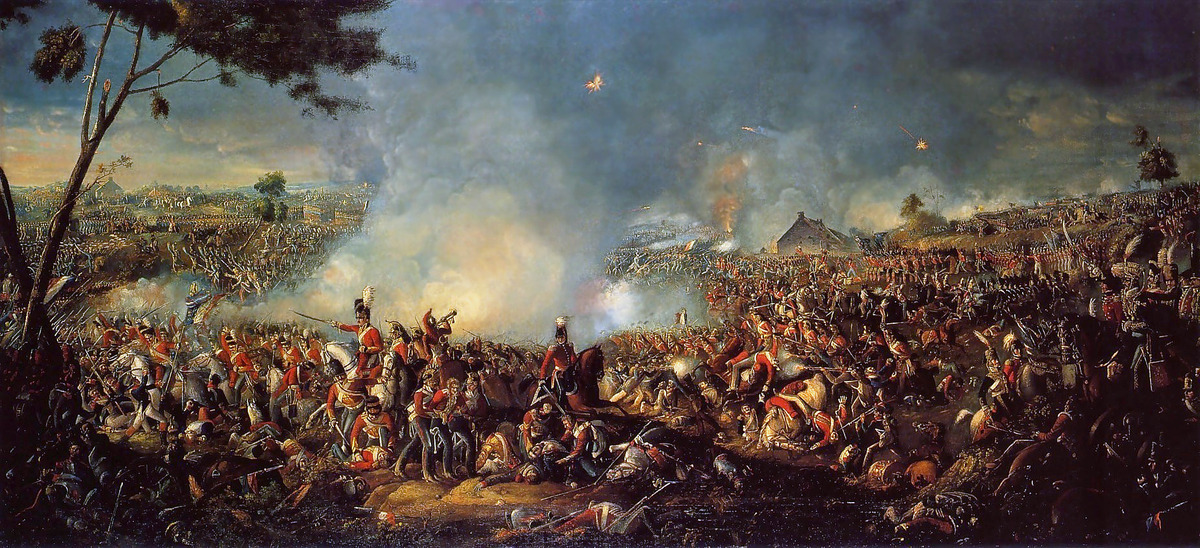
Napoleon's aim was to dismantle the empires in Europe and ensure the establishment of "nation-states" in their place. Many wars ensued. Eventually, emperors, seeing their thrones shaking in Europe, united. The two most powerful empires, England and Prussia, formed an alliance.
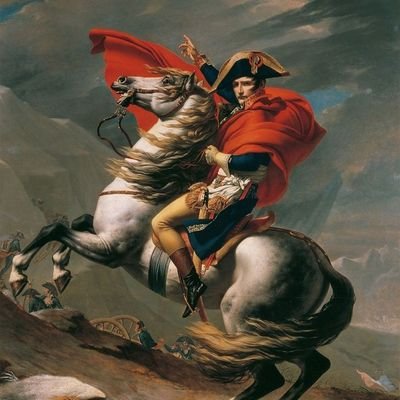
Napoleon's armies and the armies of the emperors clashed in Belgium at a place called Waterloo on June 16, 1815. Napoleon lost the war. He was arrested and exiled to the British island of St. Helena in the south of Africa. He died there of stomach cancer. His existence was forgotten for a long time. Finally, on December 15, 1840, his body was brought to Paris and buried with a grand ceremony at Les Invalides.
Napoleon lost the war, but it soon became clear that he had actually won the war. How?
THE REVOLUTIONS OF 1848
In 1848, Europe was shaken by "nation-state" revolutions. Uprisings and freedom movements swept through countries. Especially the empires of Italy, Germany, France, Austria, Poland, Romania, and Hungary were shattered. The "nation-states" that Napoleon longed for and dedicated his life to sprang up everywhere like mushrooms. During this period, Russia, the Ottoman Empire, the United Kingdom, and the Kingdom of the Netherlands were less affected by the uprisings.
The aim of the Reform Edict (Islahat Fermanı) issued in 1856 was to balance the effects of the French Revolution. The Balkan peoples, influenced by the nationalist movements spread by the French Revolution, were rebelling and seeking to declare their independence. The Ottoman Empire was forced to declare the Reform Edict to bind non-Muslim minorities to the country. However, all these measures were in vain. Tsarist Russia ended in 1917; the Ottoman Empire ended in 1918, and nation-states were established in their place.
Yes, Napoleon lost the Battle of Waterloo, but he had actually won the war because his desires were realized one by one in the following years.
KURDISTAN
Everyone now knows where Kurdistan is. The expression "Four Parts" has long found its place in political literature. Kurds live in Iraq, Iran, Syria, and Turkey.
Looking at the last 150 years, we see this: Kurds in each part have successively and independently experienced great suffering. In Iraq, Sheikh Mahmud Barzanji, Sheikh Ubeydullah, Mullah Mustafa Barzani are the first names that come to mind. All of them were subjected to massacres. The Anfal Campaign, where Kurds were buried alive, the Halabja attack where they were annihilated with chemical weapons, migrations, exiles, executions, and other atrocities are countless. In Iran, the names Simko, Qazi Muhammad, Abdurrahman Qasımlo, their brutal killings, and even the recent massacre of the Kurdish people by the Khomeini regime are remembered. In Turkey, the Sheikh Said Rebellion, the Mount Ararat Rebellion, the Dersim Resistance, executions, massacres, and exiles have been the subject of thousands of books. What has happened in Syria has been evident for years.
Do you know why I am writing all this? Although Kurds show diversity in terms of language, sect, religion, and culture, they have emerged as a new and unified nation through years of "shared suffering." If the four states had left the Kurds to their own devices, they would have been a fragmented structure with a weak national consciousness, and perhaps their assimilation would have been easier.
However, the four states cooperated (like CENTO) to annihilate the Kurds and suppress their rebellions with blood. Qazi Muhammad, Sheikh Said, and others, just like Napoleon, lost their final battles, but with the passage of time, we can easily see today that they won the war. The Kurds were always defeated, but a strong and unified national consciousness emerged. This is the "oxymoronic" character of Kurdish history.
UKRAINE
I will not delve into the history of Ukraine. Looking at recent times, we know since the years of World War II that the Ukrainian people were uncomfortable with Russian domination. The Ukrainian people did not resist the Nazi armies. They did not organize guerrilla warfare as in Belarus. It is even known that many Ukrainians voluntarily joined the Nazi ranks.
When the Soviet Union collapsed, Ukraine became an independent state, but its national consciousness was never strong. Ukrainian politics oscillated between Russia and the Western world. It could not establish its own distinct national identity and will.
We saw this clearly in the annexation of Crimea. In fact, if Russia had not invaded Ukraine, Ukraine would have continued to exist as a puppet state of the West in a sense. But now everything will develop in a different direction.
Russia will emerge victorious from this war and achieve its goals. There is no doubt about that! However, there is one thing Russia has forgotten: for the first time, the Ukrainian people are resisting the invaders, dying, and suffering. The Ukrainian nation, by losing the most important war in its history, is actually emerging strongly as a new "nation" on the stage of history for the first time. In this sense, Ukraine will be the real winner of the war. This is the "oxymoronic" character of Ukrainian history.