Black, White, and Gray: Hüsnü Bingöl – Part 2
This second part of the series delves into the family origins of Hüsnü Bingöl, exploring the lives of his father Abdülkerim Bey and his prominent relative Ali Ağa Şıxlınski, and their connections to Kurdish and Karapapak communities.
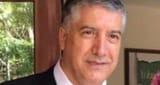
To understand the idealism and state of mind of a significant figure like Hüsnü Bingöl, who left his mark on his era and undertook important duties, it is useful to look at his family background and where he came from. Undoubtedly, a person's personality traits are largely determined by their family history and the lands where their ancestors lived. For this reason, in this article, I will briefly go back two generations to examine the lives of Hüsnü Bingöl's father, Abdülkerim Bey, and the apple of this family's eye, Ali Ağa Şıxlınski.
Furthermore, I want to include the cases of both Abdülkerim Bey and his contemporary, Eyüp Pasha, of Kurdish origin, son of Gulicevhar Ağa, as examples of how the Azerbaijani, Karapapak, Kurdish, and other Muslim populations living in Tsarist Russia found an opportunity to seek refuge in the Ottoman Empire to avoid fighting against it when the Ottoman-Russian war broke out. These two examples are important in reflecting the dilemma and state of mind of the Caucasian Muslims in terms of their faith.
ABDÜLKERİM BEY
Hüsnü Bingöl's father, Abdülkerim Bey, was born in the village of Şıxlı (Şıhlı) in the Qazax (Kazakh) region of Azerbaijan. The Kazakh region borders Armenia and Georgia. It is located at the northwestern tip of Azerbaijan. After the Treaty of Gulistan (1813), the region fell into Russian hands. The inhabitants there are strong, robust, and large-framed. One writer notes:
"When you look into their eyes, it is possible to understand that they are of Central Asian origin."
Since they made it a tradition to wear a papak (a type of hat) made of Astrakhan, or black sheep's wool, this people became known as "Karapapak." They are adherents of the Sunni sect. Two important figures of Azerbaijan were born in the Kazakh region: Azerbaijan's national poet Samed Vurgun and General Ali Ağa Şıxlınski, who gained fame as "the God of Artillery."
Let's continue our article by recalling two famous poems by Samed Vurgun:
AZERBAIJAN
The people know that you are mine,
My homeland, my nest, my dwelling,
My mother, my native country
Can the heart separate from the soul?
Azerbaijan, Azerbaijan
MOTHER
They buried you in the ground when I was very young
They cast me into life without wings
Look how the order of my life has been disrupted
Life without you is a dungeon for me, Mother
To understand Hüsnü Bingöl, it is useful to know Ali Ağa Şıxlınski, the most important name in the family he belonged to.
ALI AĞA ŞIXLINSKI
(Source: Əliağa Şıxlınski. "Xatirələrim". Bakı. 1984 / Translated into Turkish by Mücahit)
Ali Ağa Şıxlınski was born on March 3, 1865, in the Kazahklı district. He went to Tbilisi for his primary and secondary education, completing a two-year school in seven months. He enrolled in the Artillery department of the Military School in St. Petersburg. In 1886, he graduated first in his class. He served in the Far East wars. Due to his exceptional talent in artillery, he became known by the title "God of Artillery." He gained fame for the technique he developed for hitting invisible targets with cannons. He prepared the first Azerbaijani-Russian military dictionary. He created new terminology for Russian words that had no equivalents in Azerbaijani, which later entered daily use.
HASAN ALKAZAK
Ali Ağa Şıxlınski also drew attention with his mastery of horsemanship. In fact, this skill in riding horses is an innate talent unique to this family. The following anecdote is told about Hasan (Alkazak) Ağa, a relative of Ali Ağa Şıxlınski, who later settled in the Baharlı neighborhood of Iğdır (Gürbüz Alkazak):
"They released a wild horse into the field. While the young men displayed all sorts of tricks to catch the horse, Hasan Ağa broke away from them and, as the startled horse passed by, he virtually flew onto its back. He pressed his strong legs against the horse's ribs like a vise, took its long mane between his steel-like fingers, and struggled to control the horse. The wild horse, too, was doing its best to throw Hasan off its back.
Nuri Pasha, watching the events from a distance with curiosity, pulled at his whip as if to tear it in two with both hands, and commanded those around him:
"The horse will tear the young man apart. Help him!"
However, Nuri Pasha's command was lost amidst the roar of the crowd. Hasan anticipated all the horse's movements and took precautions. Hasan's stubbornness finally overcame the wild horse's stubbornness, and the horse accepted its master's strength and calmed down. Hasan approached the protocol, removed his kalpak (hat), and saluted respectfully. Nuri Pasha applauded the steel-like, sturdy young man standing and asked those around him.
"Who is this young man?"
İbrahim Ağa Vekilov:
"That young man is the nephew of Ali Ağa from the famous Şıxlınski family, one of the unwavering defenders of the Musavat party."
Nuri Pasha congratulated Ali Ağa:
"Such a hero can only come from such a family."
I AM TURKISH
Ali Ağa Şıxlınski writes in his memoirs: "I never consumed alcohol, I never gambled."
And he continues:
"Officers from the high command came to inspect our company. They carefully reviewed everything and were pleased that they found no errors. Later, I rode in the same phaeton with the inspecting officer. The officer suddenly smiled:
"Do you know, in St. Petersburg, it is said about you that you are a Tatar (Azeri). Apparently, people are masters at spreading false information. I saw with my own eyes and became convinced that you are an educated and civilized person. You have no connection with those semi-savage Turks. Apparently, your surname is also of Polish origin."
I replied with a smile:
"What they say in St. Petersburg is true. I am Turkish. As you can see, I am not savage either. My surname is related to the region where I was born, namely Şıxlı. It has no connection with the Polish language."
The officer blushed with embarrassment and did not utter a single word throughout the journey.
Ali Ağa Şıxlınski continues:
"Ağdalak Mehemmed Ağa has two sons: The elder son, Şıxı, is very intelligent. The younger son, Elikazak, is very brave. I was a descendant of Elikazak. Şıxı's children settled near Tbilisi, upstream of the Kura River. After the Treaty of Turkmenchay in 1828, both branches united and made a name for themselves in the region as the Şıxlınski family. My mother, Şahyemen Hanım, is the granddaughter of Molla Veli Vidadi, the famous 17th-century Azerbaijani poet."
GOLDEN SWORD MEDAL
When the Russo-Japanese War broke out in 1904, Ali Ağa Şıxlınski was a soldier in the Russian army. The war continued with full force. The Japanese gained the upper hand for a while. On April 29, only two cannons in the Russian artillery battery were operational. Ali Ağa Şıxlınski challenged 18 Japanese cannons with his strategy and tactics and achieved victory. He was awarded the rank of Lieutenant Colonel and a qızıl qılınc (golden sword).
ALI AĞA ŞIXLINSKI'S LAST WILL
- If I become bedridden, take me to the hospital.
- If I die in the hospital, do not take my body home; take it from the hospital to the cemetery.
- Do not publish an obituary in the newspaper.
- Ensure that the burial expenses are minimal. Place my body in a coffin covered with a white rug.
- Do not make any donations.
- Bury me next to my wife, Nigar Hanım. Write only Ali Ağa Şıxlınski on my tombstone. Do not write any dates. Baku 13.3.1942
Let's continue our article by commemorating Ali Ağa Şıxlınski, one of the most important figures in Azerbaijani history, with mercy.
The poet Dilsuz Bineva from the Kazah (Qazax) region describes him in the following quatrain:
Eliağa Şıxlinski, father of the cannon
His voice is heard everywhere
Brave son of the Azeri land
Raises your name, oh Qazax people!
Ali Ağa Şıxlınski loved to write poetry. I would like to quote a quatrain from his poem "MENİM," which he wrote for his wife Nigar:
MENİM
My nightingale in spring
My golden ear of wheat
My delicate rose in gardens
You are my fruit in orchards (Bar: Fruit)
SHORT-BARRELED CANNON
Ali Ağa Şıxlınski is famous for his short-barreled cannon, which he developed using his own method. In the summer of 1913, French General Joffre came to Russia with a delegation. His sole purpose was to see the effectiveness of this cannon. Ali Ağa Şıxlınski took his French colleagues to the firing range. Targets were set. Each shot hit the target. The French were astonished. Upon returning to their country, they also decided to build short-barreled cannons. The French quickly produced their own cannons. The French President was extremely pleased with these developments. The following year, French President Raymond Poincaré visited Russia and personally awarded Ali Ağa Şıxlınski the Legion d'honneur.
I WILL NOT LEAVE MY HOMELAND
In April 1920, the Bolshevik army attacked the Azerbaijan Democratic Republic. It was only a matter of days before the communists would capture Baku. On such a day, the Minister of Interior of the Musavat Government asked General Ali Ağa Şıxlınski:
"Your Excellency, are you planning to flee?"
"Why should I flee from my own homeland?"
"They will kill you."
The General replied without changing his posture:
"If those who come are intelligent people, they will not kill me, because I will be useful to them. If they are fools, then I cannot save my life anywhere. That is why I cannot leave my homeland at a time when my homeland needs me."
I DON'T NEED TEN MANATS!
During his military student years, Ali Ağa Şıxlınski went to the park with his friends. They stood in front of a device that measured punching power. His friends first invited Ali Ağa Şıxlınski to punch. He was not eager. His friends took turns testing their strength. When the scale showed five, five manats were won. Everyone tried their strength but could not reach this number. This time, they turned and pressured Ali Ağa Şıxlınski. He was forced to try the strength of his punch. He hit so hard that the device fell to the ground. The owner of the device was astonished.
"I have never seen such power! You won ten manats."
Ali Ağa Şıxlınski replied in a calm voice:
"I did not punch to win ten manats. I wanted you to know that sometimes there is human strength that can tear the device from its place."
ABDÜLKERİM BEY FLEES TO THE OTTOMAN EMPIRE
Abdülkerim Bey is a relative of General Ali Şıxlınski. They are from the same village. Courage and military discipline run in their blood. This characteristic would later pass to Hüsnü Bingöl.
The Şıxlınski family preferred military schools. Abdülkerim Bey became a Gendarmerie Captain in Russia. As the 1877-78 Ottoman-Russian war approached, he felt a disquiet. He did not want to draw his sword against the Muslim Ottomans. He and his brother sought refuge in the Ottoman Empire. They settled in the village of Poxan, attached to Ağrı. Hüsnü Bingöl's daughter, Şükran Bingöl, describes those days:
"My grandfather Abdülkerim, a Gendarmerie Captain in the Tsarist army, had three brothers. He was even awarded a medal of merit for his service and achievements. However, for reasons I do not know, one day, my grandfather, accompanied by his brother Şamil Bey, a graduate of the civil service school, requested political asylum from the Ottoman State. Thus, the two brothers went and settled in the village of Poxan in Ağrı."
The current name of Poxan village is Sarıdoğan. It is 15 km from Ağrı city center. Today, Karapapaks and Kurds from the Redkan tribe live together in this village.
On April 27, 1877, the Caucasian Russian army launched an attack from Akkilise - Gyumri and Iğdır. They entered Doğubayazıt. They quickly advanced into Ağrı. Abdülkerim Bey continued his duty as an officer in the Ottoman army, where he had sought refuge. When the Russians advanced towards Tutak, Abdülkerim Bey did not want the city where he served to be harmed. He put on his officer's uniform from the Tsarist Russian era and met the Russian soldiers in this state at the entrance of the district. Şükran Bingöl recounts:
"During the 1877-78 Ottoman-Russian war, my grandfather Abdülkerim was stationed in the Tutak district of Ağrı. The rapidly advancing Russian troops were burning and destroying the villages and towns they captured. When it was Tutak's turn, my grandfather pinned the medal of merit awarded to him by the Tsarist Army to his lapel and went out into the street. When my grandmother pleaded, 'Don't go out! They will kill you too!', my grandfather showed the medal on his lapel:
"Don't be afraid while this is here!"
The Russian soldiers entering Tutak, especially their commanders, saluted my grandfather, who stood upright by the roadside, with full attention and passed by. In this way, Tutak was saved from being burned and destroyed."
EYÜP PASHA OF KURDISH ORIGIN
Hüsnü Bingöl's father, a Russian Gendarmerie commander, sought refuge in the Ottoman Empire during the 1877 war. A similar event occurred among the Kurds living under Russian protection. To reflect an important characteristic of that period, I would now like to briefly mention Eyüp Pasha.
Eyüp Pasha (1843-1923) was the son of Gulicevher (Cafer) Ağa, a general of Kurdish origin in the Russian army. He himself held the rank of General. Gulicevhar Ağa passed away in 1877. Eyüp Pasha took over his father's duties. In 1877, the Russian army amassed 75,000 soldiers on the Ottoman border. In those years, Iğdır was under Russian administration, but Ardahan and Kars were within the borders of the Ottoman State. While preparations for war were being made, Eyüp Pasha formed a cavalry unit consisting of Caucasian Kurds and took up a war position on the Russian side.
The Ottoman army, on the other hand, consisted of 80,000 soldiers under the command of Ahmed Muhtar Pasha. Eyüp Pasha was not willing to fight against the Muslim Ottomans. He gave a letter to Mıhê Kazak from the Gêloî tribe, known for his horsemanship, and asked him to deliver it to Ahmed Muhtar Pasha. Mıhê Kazak arrived in Kars, appeared before Ahmed Muhtar Pasha, and presented Eyüp Pasha's letter. In his letter, Eyüp Pasha revealed the Russian army's war plan.
When the Russians attacked, they suffered heavy losses. Suspicions fell on Eyüp Pasha, who preferred to stay in the background during the war. Eyüp Pasha found an opportunity, leaving his position and properties in Russia, and sought refuge in the Ottoman Empire with his warriors and 600 households. The Ottoman Empire welcomed him, giving him the village of Küpkıran, attached to Ağrı, as a settlement. They allocated him a salary of about 1500 kuruş. Unfortunately, Eyüp Pasha's efforts could not prevent the Ottoman Empire from losing the war. With the Treaty of Berlin, Kars, Ardahan, Artvin, and Batum were ceded to Russia.
Eyüp Pasha and his son Resul Ağa took charge of the newly formed Hamidiye Regiments. In those years, two of the three Hamidiye Regiments established in the Ağrı region consisted of Kurds, and the third of Karapapaks.
KARAPAPAK EŞREF BAŞARAN
Speaking of the Karapapak people, it is impossible not to recall the famous anecdote written in Mecit Hun's memoirs.
Mecit Hun writes:
"One of the colorful figures of Iğdır is Eşref Başaran. Of Terekeme (Karapapak) origin, he came as an immigrant from the Caucasus with his relatives and settled in the villages of Mengeser and Yoncalı in Karaköse, and in the Baharlı neighborhood of Iğdır and the village of Pirço (Saraçlı) in Aralık district.
Despite being uneducated, he had an intelligent, enterprising, and sympathetic personality. He undertook various duties in Iğdır and managed to stay in the public eye continuously. His political life, which began with neighborhood headmanship, continued with municipal council and committee memberships, board membership and presidency of Cotton Agricultural Sales Cooperatives, and political party executive committee memberships. He established relationships with people from all walks of life and made new friends. His life was full of interesting and humorous events.
Eşref Başaran, who prided himself on being Karapapak, was serving his paid military service in the 'paid conscripts' company attached to the Infantry Regiment in Iğdır when a new commander arrived. To get acquainted with his surroundings, he gathered the company and lined them up in a single file. He ordered those of Azeri origin to step forward 5 paces, and those of Kurdish origin 3 paces. Only one person remained behind. This was Eşref Başaran. The commander asked:
"What are you?"
Eşref Bey got excited. Instead of saying 'Karapapak,' he said 'Alapapağım' (meaning 'my mottled hat'). The commander slapped him across the face.
"I don't want mottled, you will be one color..."
Eşref Bey, who told us this incident, had used the word TEREKEME instead of Karapapak ever since."
ACCOUNT OF FORMER KARS SENATOR MUZAFFER ŞAMİLOĞLU
Dear readers! Hüsnü Bingöl's family roots extend to Sheikh Shamil, the Eagle of the Caucasus. Unfortunately, there is a lot of misinformation about Sheikh Shamil's ethnic origin. I would like to convey what the late Muzaffer Şamiloğlu, former Senator of Kars, who was also of Karapapak origin and conducted the most serious research on this subject, said:
"When our plane landed in Medina, I was met at the airport by a man in Arab attire, whose name I later learned was Said Shamil. He embraced me with longing. His eyes welled up, and he emotionally kissed my cheeks.
"Welcome, Şamiloğlu!"
"Sir, I don't recognize you! Where do we know each other from?"
Said Shamil continued his speech without losing his sense of humor:
"Your height was enough!"
With my tall stature, curly hair, and the navy blue suit I was wearing, I was living my heyday.
Said Shamil continued:
"I am Sheikh Shamil's grandson. I am Kamil Pasha's son."
Said Shamil came to Kars in 1918. He described those days as follows:
'When the South-Western Caucasian Republic was established in 1918, I took my place in the struggle as a young man of 19-20. I had the opportunity to meet the Minister of Foreign Affairs Fahrettin Erdoğan, the Speaker of the Parliament Dr. Esad Oktay, and your grandfather Şamil Şamiloğlu.'
One day, he took me with him to the Islamic Arif Hikmet Library in Medina. He asked me to note down my lineage in a notebook there.
"Let it remain as a memory!"
For a few days, we spent time together and chatted with sincere feelings, like uncle and nephew.
In one of our conversations, Said Shamil explained why he left Turkey:
'I served on the founding committee of the Democratic Party (DP), established in 1946. DP Secretary General Osman Bölükbaşı promised, 'We will definitely get you into parliament as a deputy.' But due to political games, I could not be elected. So I got upset with them and came to Saudi Arabia."
Said Shamil was a cultured person who knew Western languages like French well.
Finally, when the day of farewell came, Said Shamil pulled me aside:
"Muzaffer Effendi, I was lazy and couldn't write a book about my grandfather Sheikh Shamil. All the books on the market are full of misinformation! I ask you to take on this task!"
I replied with a sincere feeling, "Okay!"
From that day on, I started collecting all the books about Sheikh Shamil. All seven books published on this subject in Turkey were incomplete and full of misinformation. Most writers wrote books about Sheikh Shamil from their armchairs, relying on their imagination and writing skills.
For 30 years, I made a serious effort to access all sources and information about Sheikh Shamil. I continued my research by going to Dagestan, Georgia, Moscow, Leningrad, and many other places. I made it my duty to visit every place where Sheikh Shamil lived and take pictures. However, sometimes I encountered unwanted obstacles.
Sheikh Shamil lived as a prisoner of the Russians between 1859 and 1869. He spent nine of these years in the Kaluga suburb of Moscow. Despite all my insistence, they did not allow me to approach the house where Sheikh Shamil stayed for nine years.
When Sheikh Shamil became very ill, Tsar Alexander II hosted him for two years at his farmhouse in Kiev. At the request of Ottoman Sultan Abdülaziz,
Sheikh Shamil went to Saudi Arabia in 1869 for the Hajj pilgrimage, via Turkey and Egypt.
Sheikh Shamil lived for two more years after becoming a Hajj pilgrim. He passed away in 1871 from prostate cancer. His grave is in the Jannat al-Baqi cemetery.
The second missing part of my research on Sheikh Shamil is that my request to visit Lake Ezan in the Andi mountains of Georgia was not fulfilled. When Sheikh Shamil realized that defeat was inevitable, he entrusted all his treasure to two warriors and had it buried in Lake Ezan. I wanted to take a picture of this lake no matter what.
One evening, I was at a table with the Prime Minister of Georgia. When I conveyed this request to him, he said, "We searched a lot but couldn't find it!" I understood what he was implying with these words. I replied politely:
"I don't want to go there for treasure hunting. I just want to take a picture of the lake."
The Prime Minister kept stalling me by saying, "Of course, we'll take you!" and never wanted me to go near that lake.
Sheikh Shamil's mother was Kumyk, and his father was Avar Turk. The difference between Kumyks and Karapapaks is this: those who engaged in agriculture and farming were called Kumyk, and those who engaged in animal husbandry were called Karapapak. His real name is "Imam Shamil." With the fabrication of some writers, the name "Sheikh Shamil" became widely known among the people. Karapapak families from the lineage of my Sufi grandfather fought against the Russians under Imam Shamil between 1834 and 1859."
HÜSNÜ BİNGÖL'S DISTANT RELATIONSHIP WITH SHEIKH SHAMIL
It is certain that Sheikh Shamil was Karapapak (Kumyk) on his mother's side. Şükran Bingöl recounts:
"According to the family tree prepared by my uncle Maksut, the grandson of my grandfather Şamil, my grandfather Abdülkerim's grandfather and Sheikh Shamil were brothers. Together,
They fought against the Russians in Dagestan. Many heroic legends were told about the years of resistance with Sheikh Shamil. One of those I remember was as follows:
A group of Karapapak warriors, including my grandfather, fleeing the Russian attack, were constantly changing their location. A moment came when they were badly cornered in a mountainous area. The unit had to pass through the passage held by the Russians no matter what. My grandfather stepped forward and said, "While I distract the Russians, you pass through the passage!" He secretly approached the passage, climbed onto a rock, and from there, pounced on a high-ranking Russian officer riding his horse. When chaos erupted, the Karapapak warriors managed to pass through the passage safely. My self-sacrificing grandfather also slipped away from among the Russian soldiers without getting hurt and reached the group that was waiting for him with curiosity."
HÜSNÜ BİNGÖL AND HIS FAMILY
Abdülkerim Bey made his second marriage to Cevahir Hanım. Cevahir Hanım was from the village of Karaşeyh, attached to Doğubayazıt. She was of Kurdish origin. She had relatives with the Sheikh Übeyt (Sheikh Hasan Barbaros) family in Iğdır. For this reason, in later years, Hüsnü Bingöl developed friendly ties with this family in Iğdır.
Şükran Bingöl continues to describe her family:
"When my grandfather Abdülkerim was promoted to the rank of Colonel, he moved from Ağrı to Erzurum. My father Hüsnü Bingöl (1892) and his siblings were born in Erzurum. The names of the siblings from two mothers are as follows: Hüsnü, Şükrü, Kamil, Hamit, Hürzat, Şakir, Yunus, Nizamettin, Zübeyde, and Huriye.
My uncle Nizamettin studied civil service. The remaining brothers completed their education at the Kuleli Military High School in Istanbul. My grandfather also married off his daughters to soldiers. So, we are truly a military family.
My grandfather Abdülkerim Bey retired with the rank of Colonel. He taught French and Russian at Erzurum High School."
NİZAMETTİN BİNGÖL
While Hüsnü Bingöl and his brothers were students at the War College, World War I broke out. The state closed all schools and hastily sent the students to the Eastern Front.
Nizamettin Bingöl, a civil service student, went to Erzurum. When the Russians attacked the Ottoman Regiment, which included Hüsnü Bingöl, Nizamettin Bingöl hastily jumped on a horse and wanted to inform his father about what was happening. When the horse he was galloping stumbled halfway, Nizamettin Bingöl tumbled head over heels and suffered a brain trauma. He continued his life with the salary he received from the state due to his permanent disability.
Hüsnü Bingöl acted loyally, taking his brother Nizamettin with him after the war and taking care of him. He became so attached to his brother that he voluntarily put aside the idea of marriage for many years.
A SOLDIER'S MOTHER DOES NOT CRY
Four brothers (Hüsnü, Yunus, Şükrü, and Kâmil), who graduated from the War College, wanted to visit their father's house and say goodbye before going to the front. Hüsnü Bingöl's mother, Cevahir Hanım, was constantly crying. Abdülkerim Bey was bothered by his wife's tearfulness and tried to console her by saying, "A soldier's mother does not cry!" The four brothers mounted their horses and rode away.
Hüsnü Bingöl later described that moment:
"In the morning, we got up and prepared the horses. My father was upright and proud, but my mother had collapsed at the door, sobbing uncontrollably."
Since it was considered bad luck for a soldier going to war to look back, we turned our backs on our parents and set off that way. My mother's sobs reached our ears. I couldn't bear it, and I glanced back to understand what was happening. I was astonished by the scene I saw at that moment. My father, too, had his head in his arms, turned slightly to the side, and was silently crying."
This was their last farewell. While the war continued, Abdülkerim Bey and Cevahir Hanım passed away in Erzurum. Since none of their children were home, strangers carried out their funerals.
YUNUS BİNGÖL
During the years of the Turkish War of Independence (October-November 1920), a rebel named Delibaş captured Konya and its surrounding districts. His aim was to put the newly established Ankara Government in a difficult position.
Şükran Bingöl recounts:
"During World War I and the National Struggle, three of my uncles were martyred. One of them was my uncle Yunus. My uncle Yunus was serving as a Branch Chief during the Konya Rebellion years. One day, the rebels raided the branch and wanted to seize the weapons. When my uncle resisted, the rebels left without achieving success.
My uncle Yunus had a fourteen-year-old daughter, a young son, and a Circassian maid who helped with housework. One day, while my uncle Yunus and his family were at the table, the Circassian maid secretly opened the door to the rebels, and the rebels who poured in martyred my uncle Yunus at the table. His daughter, who fled to the next room during the attack, came back with her father's pistol and killed two of the attackers. When she ran out of bullets, one of the rebels rushed forward and plunged the bayonet in his hand into the girl, cutting her abdomen from one end to the other. The girl, with her intestines spilling out, collapsed to the ground.
The Circassian maid, perhaps regretting this brutal massacre, hid the boy in the oven in the kitchen. The attackers searched everywhere for the child, and when they couldn't find him, they left.
The neighbors who arrived at the scene found the poor girl struggling on the ground. Before taking her last breath, she straightened up with difficulty and said, "Tell my uncles, I avenged my father!"
The child who survived the massacre grew up with my aunt. He could not recover from the psychological distress of the event for many years, and his body weakened. He contracted tuberculosis during his high school years and passed away."
HÜSNÜ BİNGÖL IN HINIS
Mecit Hun's mother-in-law, Zinnet Hanım, was from Hınıs. Mehmet Kakioğlu, a merchant of Bitlis origin, saw Zinnet Hanım one day when he went to Hınıs and married her. Their daughter, Hacı Safiye Alagöz, recounts:
"Hüsnü Bingöl was stationed in Hınıs at that time. My father and Hüsnü Bingöl met and became friends at my mother's wedding ceremony. Soon after, when Hüsnü Bingöl also married the daughter of Mehmet Ağa (Güner) from Hınıs, the two families became relatives in a way."
As a twist of fate, in later years, Mehmet Kakioğlu and Hüsnü Bingöl settled in Iğdır without knowing about each other and continued their friendship there.
Hacı Safiye Alagöz continues:
"Hüsnü Bingöl was among those invited to my mother and father's wedding dinner. During the meal, an interesting incident happened to him. Hüsnü Bingöl, hearing that Mehmet Kakioğlu, Fazıl Ağa's son, was getting married, took his place at the guest table in a sparkling navy blue suit. That day, the guests were served the famous dish of the Bitlis region, meatballs filled with melted butter. Hüsnü Bingöl was unaware that there was liquid butter inside the meatballs. He bit into the meatball with appetite. The melted butter spurted out like a fountain, covering his jacket from top to bottom. Since the stain could not be cleaned, Hüsnü Bingöl went to the tailor the next day and had a second jacket made from the same fabric."
HÜSNÜ BİNGÖL GETS MARRIED
Hüsnü Bingöl was serving in Hınıs with the rank of Senior Captain. It was at such a time that the door to marriage knocked. Şükran Bingöl describes how this love, which resulted in marriage, was born:
"My mother's (Münevver Hanım) family had come from the Caucasus and settled in Hınıs. Since they were of Karapapak origin, they even had kinship with my father's family. When my father was assigned to Hınıs as a Senior Captain, he had the opportunity to meet my mother's family.
My grandfather Mehmet Ağa (Güner) had a large farm in the village of Toprakkale, attached to Hınıs. Being fond of racehorses, he raised purebred horses and sold them in other provinces.
Mehmet Ağa invited my father to home feasts and showed interest in him. One day, he said, "Come, let's marry you off! My deceased brother has a daughter, let's take her for you!" My father initially resisted these insistences but then had to say "Okay!"
However, fate would soon bring another girl, my mother Münevver Hanım, into my father's life.
It was a winter day. My father was riding his horse in the town center of Hınıs.
My mother was a first-year middle school student. When school let out, the boys, for mischief, ambushed my mother returning home and started pelting her with snowballs. As my mother ran in fear, my father, riding his horse, appeared before her. She asked for help, saying, "Uncle, save me!" My father dismounted his horse and sent the young men away. He wanted to put my mother on his horse, but my mother, being shy and timid, refused the offer. They walked home. When my father asked on the way, "Whose daughter are you?" the brunette, green-eyed young girl flirtatiously replied, "Mehmet Ağa's." My father fell in love with my mother that day.
The interesting thing is that although my father frequently visited Mehmet Ağa's house, he never had the opportunity to see my mother, who hid herself from guests. When his friends heard about Mehmet Ağa's plan to marry my father to his niece, they pulled my father aside and advised him:
"Mehmet Ağa's daughter is more beautiful, why don't you want her?"
My father could no longer bear his burning love and sent word to Mehmet Ağa, asking for his daughter's hand. Mehmet Ağa firmly rejected the marriage proposal, saying, "Münevver is only 13-14 years old! I cannot accept this marriage!" When my father insisted on the marriage, Mehmet Ağa, left with no choice, agreed to give his daughter on the condition that they be engaged for two years. After getting engaged, my father went to his new duty station in Sarıkamış.
HÜSNÜ BİNGÖL IN SARIKAMIŞ
While my father was stationed in Sarıkamış, the Sheikh Said Rebellion broke out in the East (February 1925). In those years, a bandit nicknamed Altundiş Osman (Osman with the Golden Tooth) was terrorizing the region. He would take his men, raid villages, oppress the people, and take whatever was light in weight but heavy in value.
Altundiş Osman was a known and feared bandit in the region even before the Sheikh Said rebellion. Once, when Altundiş Osman was in a difficult situation, my maternal grandmother extended a helping hand to him and saved him from a significant trouble. For this reason, he owed a debt of gratitude to my grandmother.
Altundiş Osman raided Mehmet Ağa's farm. My maternal grandmother wrapped her daughter's engagement jewelry in a cloth and hid it under a stone at the entrance of the door. Altundiş Osman's men turned the house upside down but found no valuable loot.
Altundiş Osman, tired, came out of the house and sat on the stone in front of the door. My maternal grandmother looked at the stone with anxiety, fearing that the jewelry would break. She offered Altundiş Osman a chair, saying, "Oh, brother Osman! Sit comfortably like this!" but Altundiş Osman refused the offer, saying, "Thank you, sister! I'm comfortable!" When my maternal grandmother kept glancing at the stone underneath, wondering what had happened, Altundiş Osman became suspicious, lifted the stone he was sitting on, found the jewelry wrapped in cloth, and happily looked at the loot. My maternal grandmother rushed forward:
"Osman, you are a brave man! What you have in your hand is my daughter's dowry. I will not give it to you!" Altundiş Osman extended the jewelry to my maternal grandmother:
"Don't be afraid, sister! I won't take it!"
He left with his men.
THE END OF ALTUNDİŞ OSMAN
When my father came to Hınıs to see his fiancée, he was alarmed by the gravity of the situation in the region and, without hesitation, temporarily transferred his duty station to Hınıs to fight against bandits and gangs. The units under my father's command quickly established order in Hınıs and its surroundings, and even managed to capture Altundiş Osman and his men dead in a clash.
The district governor of Hınıs presented my father with a dagger for this success. The governor of Erzurum first offered money as a reward, but when my father refused the money, he also presented him with a dagger.
After Altundiş Osman was killed, the bandits planned to take revenge on my father. The most important issue they focused on was to kidnap my mother and strike a blow to my father's "honor"!
Such news reached Mehmet Ağa's ears every day. To avoid such a disaster, Mehmet Ağa hid his daughter in a different house and cellar every day. Realizing that he could not cope with this, he telegraphed my father, who was serving in Sarıkamış,
"Come and take your fiancée!"
My father came to Hınıs, married his young fiancée, and settled in the provincial center of Ağrı, which was a new province. My elder sister Fazilet was born in Ağrı in 1928. When Fazilet was nine months old, my father was assigned to Urfa.
THE DEATH OF FAZİLET
One winter day, my father and mother took Fazilet, put her in a spring carriage, and set off for Urfa. Near Hasankale, a severe blizzard broke out. They barely saved themselves from the deadly cold until they reached the town center, but nine-month-old Fazilet was stiff with cold. My father, in a panic, rushed to the first door he saw, pounding on it with all his might. A voice came from inside:
"Who is it?"
My father spoke in an insistent tone:
"A traveler! Open the door! We are freezing!"
In those years, no one wanted to open their door to a stranger out of fear. My father ran from one door to another. An old woman poked her head out of the window. My father asked, "Where is the headman's house?"
My father went to the described house and knocked furiously on the door. The small window above the door opened, and the headman's bearded face peered out.
My father:
"Are you the headman?"
"Yes!"
My father grabbed the headman's beard and commanded:
"Open the door immediately!" The helpless headman opened the door.
The headman hosted my father in a room, but the room was cold. Fazilet's condition was also not good.
My father commanded the headman:
"Do whatever it takes to set up a stove in the room!"
The headman, in his shirt and trousers, rushed about, trembling, set up the stove, and heated the room, but all these efforts were not enough to revive Fazilet from the cold she had caught. The next day, the caravan, after a long and arduous journey lasting days, arrived in Urfa. Fazilet, who could never recover, died in the hotel where they spent their first night.
Fazilet, according to what was told, was a beautiful girl. Her loss deeply shook my father. So much so that, since the window of the room where he worked in Urfa faced the cemetery where Fazilet was buried, he had the window bricked up and closed, thinking that he would prevent himself from remembering her and becoming sad every day.
ŞÜKRAN AND MÜJGAN BİNGÖL SISTERS
Şükran Bingöl was born in Erzurum in February 1932. She continues to recount her memories:
"My grandfather Mehmet Ağa said, 'Let her name be Fazilet!' My father, who did not want to pronounce the name 'Fazilet,' gave me the name 'Şükran.' Thus, my name in official records became 'Fazilet,' and in daily life, 'Şükran.' This situation caused many confusions throughout my life.
In elementary school, when 'Fazilet!' was called during roll call, I wouldn't respond, I would just look at my teacher with blank eyes. Over time, my teachers and I got used to the difficult situation. My sister Müjgân was born on October 29, 1935, in Mesudiye, Ordu."
HÜSNÜ BİNGÖL'S FATHER-IN-LAW MEHMET AĞA AND HIS FAMILY
Şükran Bingöl recounts:
"My mother's father, Mehmet Ağa (Güner), was from Hınıs. He had seven children, four sons and three daughters. My uncle Ziya Güner had dropped out of law school. He served as a lawyer in Iğdır. My uncle Cemal became a doctor. My uncle Alaattin was a banker. My uncle Muhittin, while a high school student, caught pneumonia on a winter day on the road while coming from Erzurum to Hınıs and passed away."
DEAR READER! IN MY NEXT ARTICLE, I WILL WRITE ABOUT HÜSNÜ BİNGÖL'S JOINING THE MAH AND HIS ARRIVAL IN IĞDIR.