My Symphony Teacher
This essay recounts the author's childhood memories, focusing on his extraordinary brother Ahmet and his formative experiences with his humanist primary school teacher, Mehmet Yılmaz.
MY SYMPHONY TEACHER
Dear readers!
There is a beautiful word we often use in our daily lives: "Humanism" or "Humanist." The meaning of this word is: a lover of humanity, non-discriminatory, treating people equally, carrying the melody of the universal symphony in their heart, harming not even an ant, a person with an open heart to everyone. I am very lucky. I knew such a person as my teacher for four years during my most important years in primary school. This distinguished personality was my late teacher Mehmet Yılmaz. I bow with respect before his memory.
Some of my readers may not know the meaning of the word "symphony." A symphony is the name of a musical composition written for an orchestra. The four-string violin is an indispensable musical instrument in a symphony.
MY BROTHER AHMET (HACI AHMET HUN)
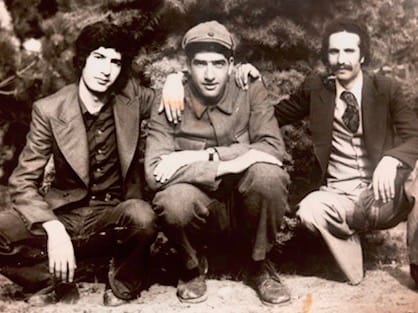
To describe my late teacher Mehmet Yılmaz, I must write about my primary school years. And while writing about my primary school years, my narrative would be incomplete if I didn't write about my brother Ahmet. Because two names left their mark on my psychological development during those years: my late teacher Mehmet Yılmaz and my brother Ahmet. If you'll allow me, let me first introduce you to my brother Ahmet.
My brother Ahmet is two years older than me. That's why we were often together during the day. Ahmet was a special and different child. Despite all my life experience, I know I would still struggle to define Ahmet. I have never encountered a person with such qualities and character before. You know, in primary school, when children are categorized, people or families use adjectives like: intelligent, clever, hardworking, lazy, naughty, bully, tough, shy, etc. When I think about which category I can put Ahmet into, none of these words, or a combination of them, seems sufficient. Ahmet was everything. Sometimes lazy, sometimes hardworking, sometimes a bully... But Ahmet had a strange, superior talent that no other child possessed. A hidden, extraordinary intelligence that revealed itself on very rare days! Everyone can be clever and intelligent, but none of us siblings possess the extraordinary intelligence that Ahmet used, albeit very rarely. I know many people who know my family will find what I'm saying paradoxical. I know many people who conclude, "If he were intelligent, he would have studied!" Perhaps I knew best that this was a misconception because I was the brother closest to his inner world.
Ahmet had a strange but extraordinary intelligence that emerged when a solution seemed impossible and everyone had given up. Yesterday, while reading foreign news, many companies that had spent millions of dollars on the coronavirus had decided that finding a vaccine was impossible and had ended their research. Just as it is now, at such a time when everyone in the world has given up on finding a cure for the coronavirus and the insolubility has come to light, if Ahmet's intelligence were in a microbiologist, he would have found a definitive solution to the coronavirus. I would like to tell you a few stories about Ahmet:
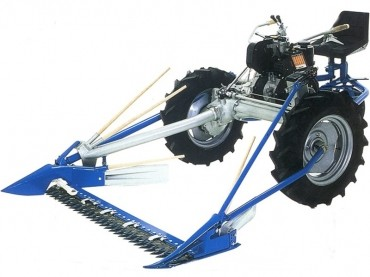
I was 6-7 years old. We had a Lombardini brand mower. My father was among the first to bring a mower to Iğdır. In later years, those who owned meadows and were well-off also started buying mowers. But initially, there were only 3-4 mowers in Iğdır. Therefore, when these machines broke down, it was quite difficult to find a mechanic or spare parts.
Before, grass was cut with scythes. I say this because I witnessed it: the scythemen were unbearable. They were unmatched at wasting time. Let's say one of the workers was going to sharpen the spine (iron) of his scythe with a stone, right? He would take the stone in his hand, swing it back and forth on the spine, and kill time as he pleased. After swinging the scythe for ten minutes and cutting grass, this time they would take a cigarette break and get lost in long conversations, forgetting their work. Especially when the lunch my mother prepared and sent was served, the scythes would immediately be thrown to the ground, and the lunch break ceremony would begin. First, they would carefully and slowly wash their hands, then meticulously spread out the low table and place stones around the edges, supposedly to prevent the wind from blowing it away.
Life would then proceed in 'slow motion' as in movies. They would chew each bite for a long time, and get lost in conversation about whatever came to mind. After the meal, the 'slow motion' continued. They wouldn't start working immediately. There would be a ten-minute break to digest their food, then the tobacco pouch would be passed around, and cigarettes would be slowly rolled. By the time the smoking session was over, it would already be evening. They always had one eye on their watches anyway. They wouldn't waste a single minute, throwing their scythes over their shoulders and heading home. Since they were paid by the day, this method was a good way to earn money. Believe me, the area ten scythemen cut in a day would not exceed 30-40 square meters. We had nearly 500 acres of meadowland in our villages of Karakuyu and Adetli. If it were up to the scythemen, all our money would have gone into their pockets. My father, probably for this reason, had bought a mower. He had no power to contend with the cunning of the scythemen. I had witnessed many times how he hated relying on scythemen.
I cannot pass without describing the scythemen's water-drinking ceremony. They would keep a pitcher hidden among the grass, placing either a handkerchief or a small stone in its mouth. Since the weather was hot, when one of the workers headed for the pitcher, the others would also throw their scythes to the ground, gather around the pitcher, and after a long conversation, return to their work.
Since these were the facts, the news that our mowing machine had broken down one day greatly upset my father. With great difficulty, they pushed and pulled the machine from Karakuyu to the garden of our house in Iğdır. In those years, a relative named Kadir Avcı operated our mowing machine. Having been a truck driver for many years, he had experience with machines.
Kadir Avcı went under and over the engine but couldn't fix it. My father stood on the balcony, waiting for the result with great anxiety. Meanwhile, I would like to remind my reader: mowing is difficult; if the grass is not cut in time, it dries out and becomes impossible to cut.
When Kadir Avcı couldn't fix it, this time the best tractor mechanic in Iğdır came. He also went under and over it but couldn't fix it. Moreover, he gave very bad news: "I think the valves or the piston might be broken!"
The late Mecit Şek was the sole authorized dealer for Lombardini brand mowers in those years. My father sent Ahmet to the late Mecit Şek, wanting to know if there was a new piston or valve. I also followed Ahmet. Uncle Mecit Şek greeted us with a smile and said that he currently had no pistons or valves and that orders took at least three weeks to arrive. When we brought this bad news to my father, he nervously scratched his head and sent word to someone to find scythemen.
After everyone had left, Ahmet and I were left alone with the mower. I would discover Ahmet's most important characteristic that day. Ahmet was 9 years old. He approached the machine. He started doing things he shouldn't. First, he opened the air filter. He cleaned its inside and put it back. Of course, he was doing this for the first time in his life. I heard the word carburetor for the first time that day. It means the heart of the engine. Its job was to mix gasoline with air to ensure the fuel burned.
Ahmet took a wrench, disassembled the carburetor, looked inside for a long time, trying to make sense of it. He blew through the right and left holes. He reassembled the parts and put the carburetor back in place. This time, he turned his attention to the spark plugs. He removed all of them. He focused all his intelligence and concentration on what a spark plug might do. He saw a rust-like layer at the connection points. This usually happened due to oxidation in humid weather. Ahmet first tried to scrape off the rusty layer. Then a better idea came to him. He brought hot water from the house and poured it over the white oxide layer; the white oxide melted and disappeared. He carefully put the spark plugs back in place. In those years, mowers were not started with a key. A rope was wrapped around a round pulley and pulled quickly. Ahmet did the same. He pulled the rope he had wrapped around the pulley, but his first attempt was an awkward pull; despite this, a sound came from the engine. He wrapped it a second time, and when he pulled with all his might, the engine started running smoothly. My father also came to the balcony at the sound of the engine. Ahmet explained what had happened. My father went to his room with joy. Ahmet might not have made such an attempt that day. Because he had never disassembled an engine before, had never seen one disassembled, and moreover, the best mechanics had not been able to come up with a solution. In short, Ahmet was a strange child created to solve problems that no one else could! When inspiration struck and he concentrated, he would always achieve the desired result in his work.
We experienced a similar situation with our ice cream machine. The ice cream machine suddenly stopped working. A burning smell rose from the dynamo. We shut down the circuit. Ahmet brought a dynamo repairman. The repairman smelled the dynamo: "The dynamo is burned out, it needs to be rewound," he stated. My father asked curiously: "How long will it take?" The repairman replied indifferently: "I have a lot of work, and besides, I don't have enough wire. Let me take the dynamo. I'll repair it and bring it back in 3-4 weeks." When the repairman said 3-4 weeks, my father's face changed. It was August. It was the peak season for ice cream sales. 3-4 weeks meant a significant financial loss. My father sent Ahmet to other repairmen, but some didn't know how to rewind dynamos, and others didn't have spare dynamos. A few repairmen also came to the pastry shop, disassembled some parts of the machine, and tried to understand the problem, but without success. We were in a desperate situation. My father again entered the pastry shop, scratching his head with an angry expression.
Inspiration struck Ahmet again. He bent down and reached into the engine compartment. Some wrenches were missing. He borrowed some from a craftsman and returned. He lay down on the ground again. I didn't know what he was doing, but I was holding a flashlight for him. He put his hand between the gears. With force and pulling, he removed two round gears. One of the teeth was broken, and a piece of iron was stuck in between, preventing the gears from turning. Since the dynamo shaft, the long iron rod passing through the dynamo, couldn't turn, the dynamo was strained, and the wires heated up but didn't burn. Ahmet had the broken gear welded. He lay down on the ground again and reinstalled the gears in the machine. It was time to flip the switch and see the result. As soon as he pressed the button, the dynamo started, and the ice cream unit began to turn perfectly. My father was also very happy with this news.
I have many memories of Ahmet's extraordinary talent, but one was particularly interesting. We had stables in the Karakuyu meadow. One of the cows was ill. It seemed to want to belch while standing but was blocked. Its body was trembling all over. My father sent a veterinarian. The veterinarian looked at the animal's mouth, teeth, and eyes. He named a disease and gave an injection. As he left, he said confidently, "It will be fine by tomorrow!" Before the veterinarian's car had even driven away, the poor animal collapsed to the ground from exhaustion, constantly trying to vomit but being blocked. The shepherds were trying to convince my mother to slaughter the animal before it died. My mother resisted this suggestion because she gave her cows various names and loved them like her own children.
Inspiration struck Ahmet again. He approached the cow. He called the shepherds for help. They put a long, thick piece of wood in the cow's mouth so that the animal wouldn't suddenly close its mouth. Ahmet rolled up his sleeve and put his arm into the animal's rumen. "There's something hard like a stone in its throat!" he said. He asked my mother to bring butter. He greased his hand, put it into the cow's throat, and greased around the stone. Since the stone was stuck in the animal's throat, he carefully moved it up and down, and at that moment, the cow belched, and the stone came out of its mouth on its own. The cow was relieved. Ten minutes later, it stood up. It drank water. My mother was overjoyed because her highest-producing cow had returned from the brink of death.
Ahmet was a strange child with a superior talent for solving problems that no one else could solve in difficult moments! He didn't constantly use this talent; his intelligence would kick in and solve the problem only when it was thought that there was no other solution left.
Since we're talking about Ahmet, I'd also like to mention Ahmet's "torque" power. The word "torque" is not used in daily life. If we express it in common language, it means "physical strength." The only difference is that "torque" means sudden, momentary power. Bodybuilders in gyms may have high physical strength, but their "torque" power can be very weak. I hope you will understand me better when I explain the incident.
As I said before, we had large meadows. The freshly cut grass was left to dry for a few days, then raked and piled into heaps. At the appropriate time, it was loaded onto a tractor wagon and transported to the garden where the stables were, and piled up in large haystacks called "lots."
It was time to transport the piled-up grass from the cut meadow to the garden with the tractor trailer. Six workers were assigned to this task. Two stood on the trailer, and the other four workers used pitchforks (şene) to arrange the grass neatly, so that the trailer would be loaded with the maximum possible capacity of grass.
We had rented a tractor from a relative in Karakuyu village. The Massey Ferguson tractor's key-operated starter system was broken. To start the tractor, a rope had to be wrapped around the pulley on the side of the tractor and pulled quickly. (The main purpose of this pulley was to be connected to a machine known as a thresher with huge belts, to activate the mechanism inside the thresher to break the wheat stalks thrown into it, and to separate the wheat stalks into straw and wheat grains.)
As I said, since the tractor didn't start with a key, the engine would stop every time it paused, and to restart the engine, a very long rope would be carefully wrapped around the pulley, and seven people, including the driver, would count "one, two, three" in unison and suddenly pull the rope. "Torque" is the name given to this sudden power. If the seven people didn't pull the rope at the same time, the pulley wouldn't turn. All the workers were mature, strong individuals. Despite this, for example, if six people pulled the rope instead of seven, the engine wouldn't start because they couldn't generate the "torque" power to turn the pulley. Sometimes, even when seven people pulled together, the engine wouldn't start, and the workers would blame each other.
Ahmet would start the tractor, which seven strong workers pulled with all their might, by pulling the rope wrapped around the pulley by himself. This meant an extraordinary "torque" power. (For example, "torque" power is a power needed by weightlifters. It has no value in wrestling and boxing.)
Dear readers! I cannot pass without adding something: One of the greatest heroes of the Gêloî tribe, my late uncle Mıhemmede Hêsen, had a son named Latif. The late Latif was as strong and powerful as his father. He was the Turkish Inter-Army wrestling champion. The late Latif (we knew and loved him as Letto) would pull this rope with one hand and start it. What strength, my God!
Now, confident that you know Ahmet better, I want to tell you about my own primary school years.
MY PRIMARY SCHOOL YEARS
The year was 1965. My mother took my hand and led me to 12 Kasım Primary School and registered me. Like every child starting a new school, I found the idea of getting up early every day, leaving my warm bed, and going to school unpleasant, and I secretly resented this imposition by adults. I had an undefined fear inside me and an unsettling anxiety. I was not eager to mingle with unfamiliar crowds. When there was such a nice game to play in the street, wearing black aprons and sitting in rows for hours was not a matter of reason or logic!
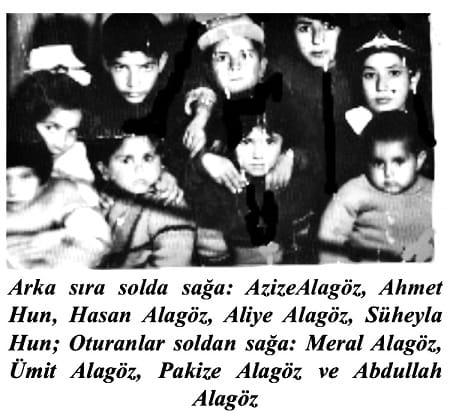
It was the day schools opened for education. No one took my hand and led me to school. I followed my elder brother Ahmet, who had started primary school a year before me, and set off. Ahmet was quite large and tall. I was poor, skinny, frail, sickly, timid, and shy. It was as if I hadn't grown enough to deserve to go to primary school.
My only consolation that day was that my street friend, our neighbor Kelba İbrahim Emmi's son Alaattin, had also started school with us. There was a bitter pain on his face too. As if, if you touched him, he was about to cry...
Our mothers put us behind Ahmet and returned to their work. They didn't need to come because this was Ahmet's second year. He would repeat the same class with us because he had failed. He had experience.
The three of us started walking down the dusty road together. Ahmet had a huge bag in his hand, as if he were going on a journey. I knew it was empty, but Ahmet carried this bag with pleasure. It suited his height and build. Alaattin and I, with our books and notebooks tucked under our arms, silently followed Ahmet, looking dejected.
In those years, the road from our house to primary school passed in front of the slaughterhouse. Alaattin and I huddled together like sheep being led to slaughter. Ahmet walked a few steps ahead of us with daring, assertive, proud steps, turning back occasionally to look at us, keeping an eye on us like a mother hen protecting her chicks.
Finally, we arrived at the school. The front of the school was filled with vendors selling honey, cotton candy, and pastries. Those with money excitedly lined up and bought what they wanted. I craved honey, but I had no money in my pocket.
We entered the garden. Most of the children were chirping. They were joking with each other, and some students were even showing off by doing pull-ups on the horizontal bar a little further away. I didn't understand why they were so eager to start school.
Suddenly, a military truck entered the garden. It stopped in front of the school gate. A soldier, jumping out of the front door, opened the back door of the truck and placed a four-step iron ladder in front of the door. Boys and girls of various ages carefully descended from the truck. Their clothes were perfect. Their hair was neatly combed, and their bags and shoes were sparkling new. Their cheeks were plump and pink, just like well-fed pigs, and their hands were clean and white. The girls had colorful butterfly ribbons and bows in their braids. They didn't even bother to look at us provincial students.
I understand, you probably think that because I was the son of Mecit Hun, an important dignitary of Iğdır, I had a brand new apron and sparkling shoes. You are mistaken! Being the youngest of four brothers, an unchanging rule applied in our house too. Our eldest, Atila, wore the newest clothes, socks, shoes, and shirts. His hand-me-downs went to my next brother Selahattin, then Ahmet, and finally it was my turn. Since Ahmet was large, even though there was a five-year age difference, Selahattin's clothes fit Ahmet perfectly. But Ahmet's hand-me-downs were four or five sizes too big for me. My apron, being the one Ahmet wore last year, had changed color from repeated washing, turning into a dull gray. They put Ahmet's old white collar, half-burned from ironing, around my neck. Since Ahmet's neck was thick, the collar kept turning around my neck. They had sewn a new apron for Ahmet, and he proudly wore a new, sparkling white collar. I had stuffed the toe of Ahmet's huge hand-me-down shoes with paper, and I was almost dragging my feet as I walked. I already had no desire to go to school. And the embarrassment caused by my appearance created discomfort within me, giving me a feeling of being excluded.
An old janitor, bent double and walking with difficulty, leaned his broom against the wall and vigorously swung the rope hanging in front of the entrance door from side to side for a long time. The sound of the bell filled the air. This was the bell for the start of class. The girl students lined up in the front. A teacher walked among the boy students, trying to straighten our line. Soon, a disciplined crowd stood ready in front of the school. The janitor raised the flag. A pot-bellied gentleman, whom I assumed was the principal, stepped onto the platform at the school's entrance.
"Welcome, children!"
"Thank you!"
"Now let's recite our oath: First I will say it, and you will repeat."
"I am a Turk"
The students' voices, "I am a Turk," shook the earth and sky.
The pot-bellied man continued:
"I am righteous, I am hardworking. My law is to protect my younger ones, to respect my elders, to love my homeland and my nation more than myself. My ideal is to rise, to go forward.
My existence shall be a gift to the Turkish existence. How happy is the one who says 'I am a Turk!'"
Since I didn't know the oath, I opened and closed my mouth, even if it was a lie. Ahmet didn't even care. He stood silently.
The flag was lowered from the pole. The janitor rang the bell again. It meant class was starting. The children shouted "hurrah" and joyfully pushed and shoved each other, rushing to the door. Alaattin and I hid behind Ahmet in fear, trying not to lose him. When he entered the hall, Ahmet quickly turned right. He knew where to go from last year. He walked with swaggering steps and entered the first classroom. He sat in the back row. Alaattin and I also settled in the back row, close to Ahmet. Ahmet warned us:
"We will sing this anthem every morning. You need to memorize it."
Alaattin spoke pleadingly: "Do you know it by heart? Teach us too!"
Ahmet confessed: "I tried for a year, but I couldn't memorize it."
Finally, the privileged students who came by military truck entered the classroom. They took out various notebooks, books, and colored pencils from their bags. They filled the front rows without even bothering to look at us provincials. There was a deep hum in the classroom.
Suddenly, a polite-looking gentleman with a tie entered. "I am your teacher. My name is Mehmet Adıgüzel. When I enter the classroom, you will stand up! I also don't like noise!" The class stood up with a great noise. The teacher arranged the students by height. Ahmet remained in the back row again. Alaattin and I changed places. In a distant corner, I saw my cousin Hasan Alagöz. I felt a little relieved. At least the number of familiar faces was increasing. After the arrangement by height was finished, everyone sat in their places.
Our teacher had a wooden ruler in his hand. "Everyone put their handkerchiefs and fingers on the desk!" Some were warned because their nails or hair were long. He warned those who didn't have handkerchiefs. After checking pencils, sharpeners, and erasers, the lesson began. Our teacher wrote a big "A" on the blackboard. He made us all repeat the pronunciation of the letter in turn.
Thus, months passed quickly. The first semester report card time arrived. We received our report cards from our teacher in turn. Whoever received their report card left the classroom joyfully, without knowing what their grades were. Alaattin and I did the same. Ahmet was experienced. As we walked, he looked at my report card. He frowned: Average, weak, average, average, weak... Alaattin's report card was no better than mine. But Ahmet hid his own report card from us: "You go home! I'll be there in a moment."
When I entered the house, my mother was waiting for us, ready. Her first act was to take the report card from my hand and look at my grades. The number of "weak" grades was more than the "average" ones. A harsh slap landed on my face. As if that wasn't enough, she dragged me to the backyard, shouting, "May my efforts catch up with you!" "Go to the stable, help the shepherds!"
Alaattin was lucky because his mother was illiterate. Most likely, his father, who would return from work in the evening, would beat him.
Ahmet came home very late. Since my mother had taken all her anger out on me, she didn't even feel the need to look at Ahmet's report card. Ahmet had been cunning. He had let me get beaten by my mother, while he himself was lying on the couch, enjoying himself.
We completed the year this way. Although our year-end grades were not encouraging, we barely passed to the second grade.
When I started second grade, I had gained experience. On the first day, everyone again sat wherever they wanted. Soon, a gentleman entered with a strange box in his hand: "Hello children! Welcome! I am your new teacher. My name is Mehmet Yılmaz. First, let's line up by height."
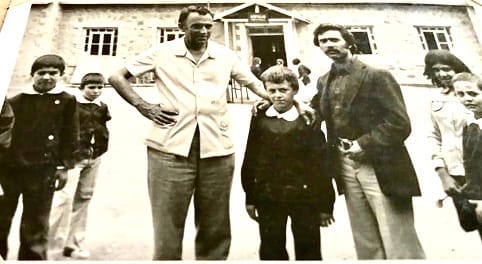
Ahmet again sat in the back row. His height was that of our teacher. All the other students were small. After the seating arrangement was finished, he took out his notebook. The student whose name he read would stand up and shout, "Here!" After the roll call was over, our teacher turned to the strange but magical box he had placed on the table. From it, he took out a musical instrument I had seen at some Azerbaijani weddings. It was a violin. He carefully took out its bow as well. He placed the violin under his chin. First, he tightened some pegs and loosened others. After tuning was complete, he lightly touched the strings with the bow. When he was satisfied with the sound quality, he played the violin, moving the bow sometimes fast, sometimes slow, sometimes up and down, sometimes down and up, and an unfamiliar melody echoed in the classroom.
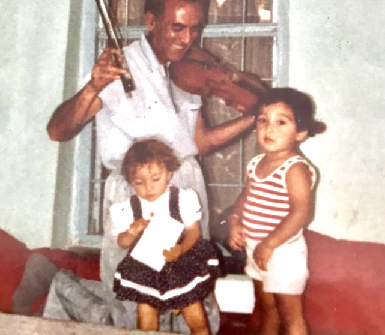
My ears, unaccustomed to any music other than saz, drum, and zurna, found this sound strange at first, but soon my eyes drifted out the window. Poplar trees shedding their leaves, birds looking for a sunny, warm place, the mixed sounds of "Pastry! Honey!" coming from outside... A strange sadness and joy settled over me. Most of the students were indifferently kicking each other, eager for the "absurd" music to end as soon as possible.
Our teacher checked our notebooks and books. Surprisingly, he placed his hand on my head. For a while, he kept his hand on my head, giving information about the rules. I couldn't understand why he had placed his hand on my head. Perhaps it was because I was the one listening to the violin sound most silently.
He hung a chart on the blackboard. He made us read the letters in turn. On the second day, he hung animal pictures on the blackboard. Pointing with a stick in his hand, he asked for the names of the animals. The class excitedly repeated them. It was the last lesson. Our teacher took out his violin again. This time he played a piece of music in a different rhythm. My soul again drifted away from the classroom, far, far away, to Mount Ararat and even beyond. A universal awe filled me. When the violin recital ended, we excitedly gathered our books and ran home.
Ahmet insisted on not studying. He didn't take any assignments seriously. Teachers, for example, would ask us to write "ALİ TOP AL" ten times on a notebook page, but Ahmet wouldn't care about the assignment. I never saw a pen in his hand. His notebook was completely empty. He didn't even bother to open the cover of a book. He sat in the back of the classroom, looking down on all of us, passing his time as he pleased. If someone from outside didn't see the white collar around his neck, they might even mistake Ahmet for an inspector supervising the class.
In the third grade, Ahmet failed again. While I continued to the fourth grade with my teacher Mehmet Yılmaz, Ahmet had fallen into the hands of a cruel teacher. Since Ahmet was repeating a grade, his height and appearance were twice that of his classmates.
The teacher had developed a habit. He held Ahmet responsible for all the noise in the classroom. One day, through the crack in the door, I saw the teacher call Ahmet to the podium, say, "Open your palm!" and hit his hands hard with a wooden ruler. Ahmet didn't complain about the situation. His hands no longer felt pain.
One day the teacher beat Ahmet terribly. Ahmet took his bag and went home before class ended, his face swollen and bruised. When school was dismissed, I couldn't find Ahmet. One of his classmates came up to me: "The teacher beat Ahmet badly! Ahmet went home!" When I returned home, I found Ahmet in bed. He was lying sadly. His face was bruised and swollen. Seeing Ahmet like this made me very sad.
According to Ahmet's statement, the Azerbaijani teacher did not like Kurds. That's why, for no reason, he called him over, and since he was short, he slapped Ahmet's face repeatedly without getting off the podium.
My father never interfered with his children's school life. My expectation was that my father would take Ahmet to school the next day and confront the teacher. No! He didn't even ask a question. But my mother was vengeful. She couldn't accept her son being beaten like this. She made a plan to have the teacher beaten by the shepherds. Our two shepherds would lynch the teacher by beating him with their sticks in the schoolyard.
My father would wake up early every morning, shave, and before leaving the house, he would always check the stable, inspect the general condition of the cows, and offer suggestions if necessary.
That morning, my father, as usual, went to the stable and checked the cows. One of the cows was sick. He wanted to leave, saying, "I'll send a veterinarian to vaccinate it in a moment," but the shepherds, hearing this, said, "Apê Mecit! This is not possible because we are going to beat the teacher who beat Ahmet in a moment." My father came home furiously, scolded my mother, and my mother's revenge plan was thus thwarted. My mother postponed her revenge plan for that day, waiting for an opportune moment.
Ahmet never went to school again after that day. He spent his time with the shepherds, helping with stable work. It was morning. My father was shaving. I was getting ready for school. When my mother told my father that Ahmet didn't want to go to school, my father quietly replied: "Naciye, it's not right to force someone to go to school. Let him do what he loves!"
Years later, I would understand that parental motivation was very important for a student to succeed in primary school. There was no effort regarding motivation in our home. We were ashamed and intimidated by my father; when he entered the room, we would stand up, fall silent, and leave the room at the slightest opportunity without saying a word. My poor mother spent her entire day milking cows, making yogurt and cheese, baking bread, washing clothes, ironing, and cooking, so she had no time to sit with us and chat, "Children, how is your school situation?" My elder brothers Atila and Selahattin were already away from us because they were studying high school in Kars.
Ahmet ended his education in the third grade of primary school. He never saw a school again. Sometimes, Ahmet, Hasan Alagöz, Alaattin, and I would gather to play football. The conversation would inevitably turn to report cards, school, and grades. When Ahmet heard our conversations, he would walk away from us with an incomprehensible sadness inside him. This situation would repeat itself at family gatherings. On report card days, my aunts and neighbors would flock to our house and ask about the children's academic performance. At such moments, Ahmet would sadly head towards the bazaar. I would feel and grieve his loneliness or regret because school life had failed to capture Ahmet's true talent and had excluded him.
However, years later, I would understand why Ahmet hated reading and writing. When the elders of our tribe who came to our house saw Ahmet, they would say, "Just like Ahmed Şemo!" Ahmed Şemo was my grandfather's name. Moreover, they had given Ahmet my grandfather's name. Ahmet was proud and boasted of being likened to my grandfather. There was only one problem: my grandfather was illiterate. Ahmet had decided not to be literate so that the resemblance to my grandfather would be complete. Of course, this was my personal assessment.
Since Ahmet dropped out of school, my psychological state became difficult. I also longed to wander around idly like Ahmet. I didn't like school, my classmates, or studying, and I considered all of it a meaningless endeavor. I hoped that our teacher would beat me too, and I would be saved from going to school like Ahmet. When my mid-term report card grades came back very low, my mother became anxious. She had understood my intention.
It was towards the end of the fourth grade. The classroom door suddenly opened. My mother entered. She placed a bucket of yogurt she was holding on the table: "I hope Mücahit passes his class, right?" she asked. My mother had openly offered a bribe. The teacher smiled. He thanked her for the yogurt.
My mother hadn't come in fancy clothes. She had come in her "migrant trousers," which she wore when going to the stable. One side was patched. Her hands were cracked and dirty. When my mother left, I could see her exiting the garden gate from where I sat. An undefined feeling of pity filled me.
Our teacher took out his violin, and as if he understood that my soul was plunged into darkness, he skillfully played a deeply emotional melody that filled my heart with sadness. For the first time in my life, I realized that my tears were flowing spontaneously that day. A determined voice rose within me: No, I will study! Because I had a teacher whom I loved and who understood my soul, and I had a mother who wanted her son to study by milking cows in the stables.
I flinched when my teacher called out: "Mücahit, tomorrow you will present the Battle of Mohács in class!" My heart felt like it would stop. I had never stood in front of the class or given a lesson before. Normally, students would stand up where they were sitting and answer questions.
I came home. There wasn't a single sentence about the Battle of Mohács in our textbook. Since there was no library in Iğdır or at school, I eagerly awaited my father.
My father's room was separate. Towards dinner, he would come home with a bundle of newspapers and magazines under his arm, sit at his desk, meticulously read the newspapers, and sometimes sit at his typewriter and write something, inserting carbon paper in between.
I begged my mother: "I have to present this lesson tomorrow, but I couldn't find any information anywhere." My mother entered my father's room and, in a pleading tone, said, "Mecit, the child has homework. He can't do it. Could you help him?" I heard these voices from the crack in the door. When I heard "Let him come!", I entered and, in a trembling voice, told him about the assignment. My father stood up, pulled out one of the black leather encyclopedias lined up in the library. He found the page he was looking for. "Everything is written here," he said. My father returned to his desk. I took the huge encyclopedia and left the room. I lay on the floor and read the text several times, and wrote about a page on the Battle of Mohács. I tried to memorize the text. I memorized it non-stop. I memorized it non-stop. This was my first attempt at memorization in my life. Not everyone had trouble with memorization like me. For example, my classmate, my cousin Hasan Alagöz, was very lucky with memorization because, by rule, they had been memorizing religious surahs at home since the age of 6.
The next day, when class began, our teacher's first words were: "Mücahit, come to the blackboard!" My heart felt like it would stop from excitement. I went to the front of the class. "Tell us about the Battle of Mohács!"
First, there was a slight stutter, but then the sentences flowed from my mouth like water. My teacher was also surprised. Because he didn't know most of this information either. The story I told contained expressions like: "One side of the Mohács plain was marshy, the other was hilly."
Normal school encyclopedias did not include such details. My teacher listened with admiration. "Well done! I want all of you to be like this," he said. Out of joy, he played a violin recital. I was truly proud that day.
In my subsequent exams, my grades started to be "Good" or "Excellent." From that day on, my father's Meydan Larousse Encyclopedias were always at my fingertips. I must also confess that I occasionally put Texas and Tom Mix comics between the encyclopedias.
The fifth grade continued with the same beauty. I graduated with good grades from my violinist teacher's class. Now, middle school years awaited me.
WHO WAS THE LATE MEHMET YILMAZ?
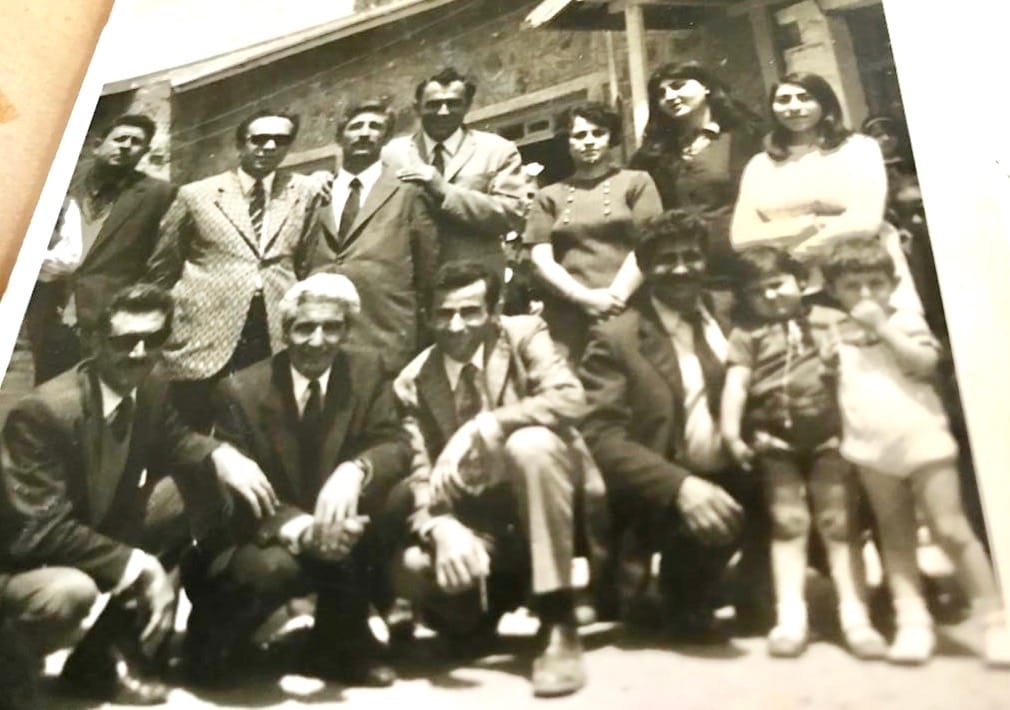
According to his birth certificate, he was born in December 1930. But for some reason, he had convinced himself that he was born in 1928. Because he remembered certain events, which led him to believe he was older.
His father's name was Abdürrahim. Because he had visited the holy city of Mashhad in Iran and the Shrine of Imam Reza, which are sacred places for Shiites, his father was known among the people as Meşe Abdürrahim. His mother's name was Züleyha. She was the daughter of a notable known as Uzun Haşim.
Mehmet Yılmaz completed primary school in Aralık (Başköy). In those years, children starting school were not all the same age. Mehmet Yılmaz started primary school at a late age. Moreover, when he graduated, he was much older than his classmates because he couldn't attend school for a year due to illness during primary school.
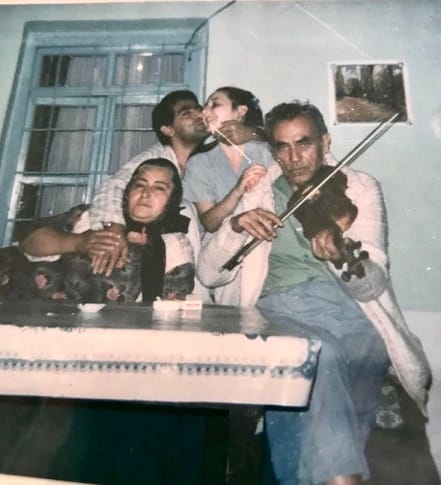
His father's financial situation was very good. He had over five hundred sheep. In a sense, he was in the position of an "agha," as the local people would say. Despite having no financial difficulties, he did not want to send his son to middle school because Mehmet Yılmaz's older brother had dropped out of middle school and returned. Fearing the same would happen to this son, he found it more appropriate to send Mehmet Yılmaz to herd lambs.
Of course, this situation created a bitterness in the heart of Mehmet Yılmaz, a primary school graduate, and he continued his life in a somewhat resentful state. In this way, he herded lambs for the family for three years.
One day, as young Mehmet Yılmaz was returning from herding lambs, a dust storm rose, making it impossible to see. Unable to see ahead, Mehmet Yılmaz fell into the water and appeared before his father, soaking wet. He was very angry. He muttered to himself, loud enough for his father to hear: "Other people have no property, no food, but they send their children to Cılavuz (Cılavuz Village Institute / KARS). We have everything, but I go to herd lambs. Is this fair to God?" His father, seeing his son angry and resentful, thought to himself: 'If I tell him to go to Cılavuz now, he'll say no out of anger! I'll get what I want!' His father hardened his tone even more to make his son say "no," shouting angrily, "Since you want to, I'll enroll you too!" Young Mehmet Yılmaz did not miss this opportunity: "Yes! I want to!" he said, thwarting his father's trap.
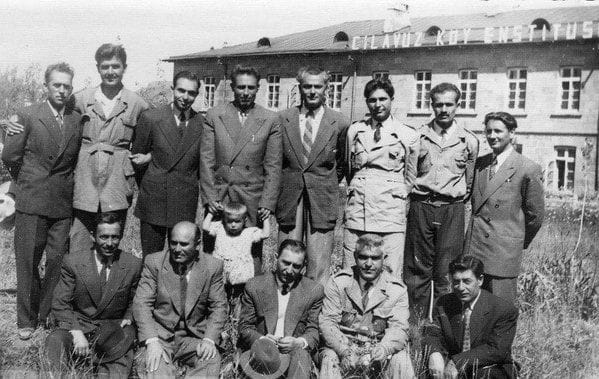
Mehmet Yılmaz set off the next day with 20 TL in his pocket. He registered for school and returned to Aralık. He eagerly awaited the start of the new academic year and soon began school. He graduated from Cılavuz in the 1948/49 academic year.
His first assignment was in Bilican Hamlet, Çukurca district of Hakkari. He served there as a trainee teacher and earned a certificate of outstanding achievement from the Ministry of National Education. Thus, his Eastern Service did not last long. This time, he was assigned to Hoşhaber village in Iğdır. Later, he continued teaching in Taşburun Sub-district. In 1959, he left his post for military service. The 1960 Military Coup occurred. A military junta education mobilization was initiated, and teachers were not kept in the army for long.
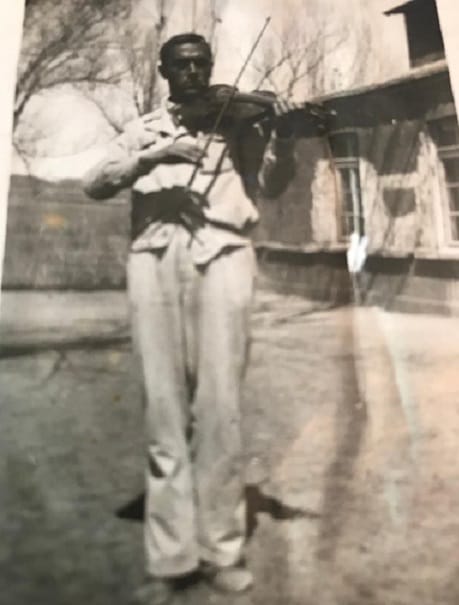
Mehmet Yılmaz was discharged early. He served as a Reserve Lieutenant for six months. Afterwards, he continued his teaching profession in Kazancı village for five years. In 1966, he was assigned to the 12 Kasım Primary School in Iğdır Center. He served as a teacher. In later years, he took on the role of principal. In his final years, he worked at Hürriyet Primary School, which was close to his home, and retired from there in 1982. Mehmet Yılmaz had six children. Their names, in order of age, are: Bertan Suphi, İrfan Zeki, Doğan Kemal, Rana, Muazzez, and Yasemin.
Mehmet Yılmaz passed away on 07.06.2014 at the age of 86. May his soul rest in peace, and may his place be in heaven!
Years later, no matter which city or country I visit, my first task is to find an opportunity to buy a symphony orchestra ticket and lovingly remember my esteemed teacher Mehmet Yılmaz, who made me love this magnificent music. May God have mercy on him!
ANECDOTE… ANECDOTE… ANECDOTE
Now, let's smile a little after this sad writing:
SHIRAZ ALMOND OIL
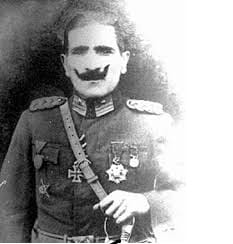
As you know, Rutto never disobeyed Hüsnü Bingöl. He would curl his mustache upwards just like Mr. Hüsnü, imitating him. One day, Rutto stopped by Mr. Hüsnü's house to deliver some news. The conversation continued, but Mr. Hüsnü couldn't take his eyes off Rutto's perfectly shining mustache, where not a single hair was out of place. He immediately changed the subject:
"Rutto, what do you put on your mustache?"
"Shiraz almond?"
"Where do you get it?"
"I buy it when I go to Iran."
Rutto reached into his pocket and offered a box.
"You keep it, sir! I'll get a new one."
Hüsnü Bey also applied Shiraz almond oil to his mustache, and in the afternoon, he took his lapdog and went to the Municipality garden for coffee.
The usual group of sycophants surrounded Hüsnü Bey. One of them, seeing his sparkling mustache, couldn't resist asking: "Sir, what oil do you put on your mustache? It looks magnificent."
Hüsnü Bey, with a touch of pride: "Shiraz almond oil!"
"Sir, where do you buy it?"
"Rutto brings it to me from Iran."
"Sir, didn't you say smuggling was forbidden...?"
Hüsnü Bey looked sternly: "Rutto didn't sell this to me for money, he gave it as a gift. You also go and bring goods from Iran and distribute them to the public for free, and I will not take action against you."