What is Postmodernism?
This article explores the concept of postmodernism, defining it as a post-modernity era that challenges established norms and values, and explaining its emergence through scientific, historical, and psychological examples.

Dear readers!
I want to remind you right away: Many paragraphs in this article are quite tedious. I had to write them, otherwise, it would not be possible for me to explain the concept of "postmodernism" to you correctly.
First, I want to define the literal meaning of "Postmodernism," a difficult word that you probably don't hear in everyday life. The word "Post" in Latin means "After." Therefore, the word "Postmodernism" is used in the sense of "After Modernism." I am writing the following article to introduce you to this important concept, which is currently largely confined to academic circles and whose meaning is not widely known by the average person.

Postmodern architecture: Guggenheim Museum
Humankind has been in a constant state of change since its existence. This change is not planned by humankind itself, as you might think. This situation arises as a necessary consequence of creation and natural laws. To better explain what I'm saying, I have to give an example from the world of atoms and molecules.
I assume my average readers know that the chemical formula for water, which we use every day, is H2O (H two O), meaning it consists of 2 hydrogen atoms and 1 oxygen atom. The water molecule is formed and can remain intact due to the attractive force between one oxygen and two hydrogen atoms.
I would like to ask a question: What happens when we put 10 oxygen atoms and 10 hydrogen atoms in a closed environment?
Short note: While you're thinking about the answer to this question, I'd like to make a reminder: We say that an atom has a stable structure when its outermost shell has an even number of electrons, such as 2, 8, 20, 28, 50, 82, respectively.
Oxygen has 8 protons (positive) and 6 electrons (negative) around it. So, an oxygen atom alone is positively weighted. The oxygen atom sighs "Ah!" and says, "If only I had 8 electrons around me, then I would have 8 protons and 8 electrons, and I would be in a stable state." Two hydrogen atoms approach the oxygen atom and, in a sense, "negotiate." The hydrogen atoms lend one electron each from their outer shells to oxygen. In this way, the hydrogen atoms also become stable because they will have 2 electrons around them. In short, everything in nature is based on the law of "being stable."
To better explain the word "stability," let's consider this example. Imagine a long, thin cylindrical object like a pencil. Is this cylinder more "stable" when we place it vertically on a table or horizontally? Of course, when we place it horizontally... If we place it vertically, the cylindrical object will fall over onto the table with the slightest vibration, but the reverse is not true.
Now let's answer the question: Since each oxygen atom needs two hydrogen atoms, 5 H2O (i.e., water) molecules will be formed, but 5 oxygen atoms will also remain alone. Although hydrogen and oxygen are inanimate, meaning they do not have the ability to think and plan like humans, they can come together and, in a sense, "agree" to create molecules.
Here I would like to make a note: The two most important properties of matter in the universe are the rules of "stability" and "symmetry." If there were no rule of "stability," atoms would not come together to form molecules, and since there would be no molecules, inorganic and organic life would not exist. The universe would be full of independent atoms like "noble gases." Everything exists thanks to the "covalent bond" that connects two atoms.
There are millions of different molecular combinations in the universe. Some molecules come together to form organic components, organic components form cells, cells form organs, and organs form living beings. Isn't it interesting? So, the creation of humankind, in a sense, came about through the "negotiation" between the billions of atoms that make it up.
Humankind, thus emerging, interacts with other humans, making implicit (tacit) "agreements" in a sense, thereby creating families, families create societies, and societies create the state. The French philosopher Jean-Jacques Rousseau wrote his famous book "The Social Contract" to evaluate this evolution and explain how the state came into being.
The "nation-state" structures we live in today are the most "stable" forms of human existence. However, we see that nation-states are now becoming "unstable" structures, necessitating the emergence of new forms of society. Societies, like atoms turning into molecules, are unconsciously forced by unknown powers to evolve towards a more "stable" state.
Humankind first encountered mythology. From mythology, it transitioned to religions. From religions, science was born. Now, something new is emerging from science, and we are experiencing this process. If you ask what kind of social structure will emerge at the end of this transition period, which we call "Postmodernism," I can at least say this: Nation-states are founded on concepts such as race, language, and religion. In the "Postmodern" era, concepts of race, language, and religion will be relegated to the background, and other values will emerge. We don't know exactly what these are yet because we are right in the middle of the transition period.
"Modernism" began with the age of discovery and, in a sense, began to disappear with the end of the First World War. A new era, which we currently call "Postmodernism," has begun in its place. "Postmodernism," just like "Modernism," first appeared in architecture and painting. However, with each passing day, the postmodern movement is destroying all the values on which classical society was built and creating new values. Thus, humankind will continue its journey by transforming itself to continue its existence on Earth.
I continue to give examples and ask questions to explain the concept of "Postmodernism."
As you know, in history class, the terms Before Christ (BC) and Anno Domini (AD) are used. The day Jesus Christ was born is called "Milat" (the beginning of an era). We are currently in the year 2021 AD.
Imagine the most knowledgeable people living in the world at the time of Jesus' birth. Did those knowledgeable people have more information about the "Dynastic Period" established by the pharaohs in Egypt in 3000 BC, or do we?
The first answer that comes to mind is probably that people living at the time of Jesus had more information about the "Dynastic Period" than we do, because for them, it was a period 3000 years before their time. We, on the other hand, are 5000 years away from the Dynastic Period. However, the correct answer is: The further humankind moves away from the "Dynastic Period," the more information it gains about the "Dynastic Period." This is a paradox, but it is an example that will help us understand the fundamental concept on which "Postmodernism" is based. In other words, postmodernism is a new era that resolves and clarifies the paradoxes of humanity.
I can even ask this question: Did people in primitive communal society (who lived 20,000 years ago) know more about dinosaurs, or do we? Of course, we do. Even though people in primitive communal society (hunters and gatherers) were closer to the age of dinosaurs on the timeline than we are, we have much more detailed knowledge about dinosaurs. In a sense, the further we move away from the past, the closer we get to the past and the better we understand it.
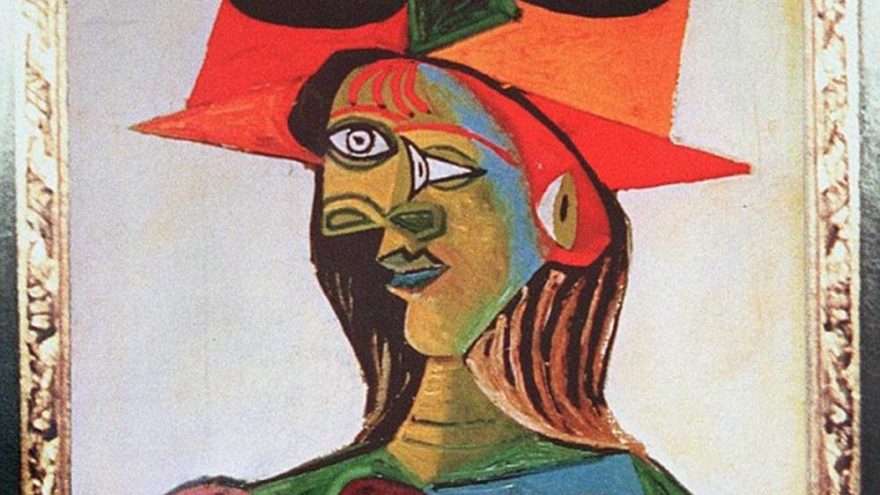
When answering the question, the assumption that history develops in a straight line, which "modernism" taught us, can lead us to the wrong conclusion. However, life follows a spiral, or winding, path, as the German philosopher Engels also stated. The concept of "modernism" viewed history as a "straight line"; whereas "postmodernism" takes a winding and spiral concept as its basis. Therefore, "postmodernism" is in conflict with our current values, meaning it seems absurd to us. Just like not understanding anything when looking at the paintings of the postmodern painter Picasso...
If you like, let's give an example from psychoanalysis: Is it easier to remember what you ate for lunch yesterday, or, let's say, a serious trauma you experienced at the age of 7 that continues to exist in your subconscious? We can answer immediately: It will be easier to remember the trauma. This means that the subconscious also stores events not in a straight line (linear) but in a spiral way.

NOTE: The subconscious is like an iceberg. The unseen part of consciousness (the subconscious) is larger, like the part of the iceberg below the water. In the postmodern era, the subconscious will shrink, and external consciousness will strengthen.
As can be understood from these two examples, the most fundamental element of the concept of "Postmodernism" is that it approaches the development of societies and history not as a straight line but as intertwined spiral structures.
After one last question, I will move on to the second part of my article.
The world population is currently around 7.6 billion. My question is: If the world population were 50 million, would humankind have had the chance to know motorized cars, electricity, television, the internet, space travel, genetic engineering, and medical advancements? The answer is: No. As the human population on Earth increases (contrary to Malthus's population theory), humankind progresses for the better or encounters inventions that make life easier. This situation appears as a paradox. And the concept of "Postmodernism" will help create a social structure that will make this paradox understandable.
HARBINGERS OF POSTMODERNISM
How do we know that the concept of modernism has collapsed, and that the nation-state and the classical family structure are the biggest obstacles to human creativity?
As the population increases, new inventions emerge, and the possibility of atomic war also gains strength. The threat of "atomic war" can be defined, in a sense, as modernism's resistance to change. The concept of "modernism" threatens humanity as follows: "Accept living with me. If you try to change me, you will experience atomic war and be ruined." However, there is a reality that "Modernism" forgets. Humanity has always transitioned from one era to another by paying a price. In this sense, if we say that atomic war will be inevitable for a complete transition to the "Postmodernism" era, we will be adhering to the rules of historical evolution.
"Modernism" believes that reality is not in the external world but in the inner world of man. Therefore, it turns to the psychological, to the individual's soul, to the subconscious. "Modernism" is now a very serious psychological threat to humankind. The reason why humanity is being dragged into depression and mental breakdowns all over the world is the values on which the concept of "modernism" is based, namely the phenomenon of the subconscious. The subconscious plays a primary role in the basis of all psychological problems.
The most serious psychological threat observed in the world today is the feeling of worthlessness and, as a result, struggling with depression. The person holds themselves responsible for this situation. They judge themselves and even hate themselves. Most psychological problems arise within the family values defined by the concept of modernism, meaning that the person begins to struggle with the feeling of "worthlessness" during adolescence, and this struggle continues until death. The concept of the nation-state and the family structure have collapsed. Nation-states have turned into prisons for citizens; families have turned into prisons, especially for adolescents.

NOTE: In this painting, the artist Edvard Munch tried to depict human existential suffering and the mental breakdown he was experiencing.
I would like to give an example from my childhood: I was born and raised in a semi-nomadic family. In those years, the concept of modernism had taken root in the West, but it had not yet knocked on the door of the tribe I belonged to. There was no one among the tribe members complaining about unemployment or depression because they had not yet encountered the basic concepts of modernity. Over time, the tribe members flocked to big cities like Izmir and Istanbul. They encountered the concepts of "modernism." Now, like all people in the world who have encountered "modernism," the tribe members are struggling with problems such as "worthlessness syndrome," "depression," and "fear of unemployment." This syndrome has emerged in all semi-nomadic societies in the world. When "modernism" imposed its values on people, such a result became inevitable.
Until the Second World War, those who escaped the psychological pressures of "modernism" in the West took refuge in Africa or societies where "modernism" had not yet knocked on the door. However, now all humanity is groaning under the psychological pressure of "modernism." We can clearly see this when we consider the number of antidepressant medications in use and suicide cases.
We must now stop viewing the four fundamental values on which "modernism" is based—liberalism, capitalism, rationalism, and science—as "absolute and indisputable" values. "Science" and "Scientificity" are dead. "Rationalism," or reason, no longer has any value.
In conclusion, I want to emphasize this: If you feel worthless, if you are filled with a lack of desire for life, if you consider yourself useless regardless of your profession, if you carry a feeling of hopelessness, if you constantly have fear of unemployment and career in your mind, if you desire your actions to be appreciated by others, if you experience anxiety (unexplained fear), if feelings of guilt frequently visit your mind, if you generate negative thoughts to yourself, then do not forget that you are in the clutches of the monster called MODERNITY and stop blaming yourself. For now, take the medications that "Modernity" offers as a solution, but do not struggle with yourself. For the transition generation, there seems to be no other way to escape psychological upheaval.