The Orkun Brothers in Our Hearts
This article celebrates the lives and legacies of Veli and Ali Orkun, two brothers who made significant contributions to the cultural and educational life of Iğdır and beyond, highlighting Veli Orkun's pioneering book on Iğdır's history and Ali Orkun's role in establishing the region's
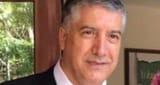
Dear Readers!
I know that some of my readers who follow my articles are not from Iğdır. In fact, even among those from Iğdır, very few have heard the names of the brothers Veli and Ali Orkun. To explain the importance of Veli Orkun to my non-Iğdır readers, I would like to add the following.
Veli Orkun served as the Director of Iğdır Secondary School for many years (1948-56). In later years, he was assigned to Istanbul. This was towards the end of the 1960s. Deniz Gezmiş, who had been expelled from Haydarpaşa High School where he was educated, was forbidden from attending state high schools again, so he enrolled in Private Bilir College. The director of the school, Veli Orkun, was also Deniz Gezmiş's history teacher.
In later years, Deniz Gezmiş, who became involved in political events and was executed, stated, according to his comrades, that the slogan "Fully Independent Turkey" formed in his mind under the influence of Veli Orkun's lectures. I hope you, too, are curious about this important figure who instilled such self-confidence in the youth. This article has been written to provide a brief and concise introduction to the Orkun brothers.
While Veli Orkun continued his duty as Secondary School Director in Iğdır, he wrote Iğdır's first book in 1955. Veli Orkun is a first for Iğdır in this respect alone and is Iğdır's honor. What did the people of Iğdır do to immortalize the name of Veli Orkun, who immortalized Iğdır with this book? Was an event organized? Was Veli Orkun's name given to schools, roads, parks, etc.? No!
For some reason, Iğdır has always betrayed its own history. I still witness this reality with a heavy heart: new generation youth, under the influence of political organizations, declare their grandfathers traitors, throwing their grandfathers' spiritual legacy into the dustbin of history. In this sense, Iğdır is ungrateful. As a researcher who deeply examines Iğdır's history, I can confidently state this sentence. In fact, many so-called writers and researchers of Iğdır origin ignore Veli Orkun's book and name when writing Iğdır's history. Some so-called writers even claimed they had never heard of such a book. Yet, it was probably on the shelves of bookstores. Much effort was made to make Veli Orkun's book forgotten. However, a spear cannot be hidden in a sack, and the sun cannot be plastered over with mud.
Veli Orkun dedicated himself to Iğdır, sending hundreds of young people to higher education institutions. Likewise, his brother Ali Orkun, together with entrepreneur Aziz Güney, opened the second cinema in Eastern Anatolia after Kars. I hope that in the eyes of future generations, the value of the Orkun brothers will increase further, and their names and works will become part of academic life. From here, I address students and academics preparing theses about Iğdır: theses written about Iğdır without reading Veli Orkun's book are, in a sense, incomplete.
I would like to share with you how I came across Veli Orkun's name. In 2000, while writing my book titled "Iğdır Sevdası" (Love of Iğdır), Veli Orkun's name frequently appeared in the newspaper "Pamukova," published by my late father Mecit Hun in 1955. In fact, Veli Orkun had published an article titled "Let's Get to Know Mount Ararat" in serial form in the Pamukova newspaper on February 18, 1955. Soon after, Mecit Hun announced good news to his readers in the Pamukova newspaper on April 28, 1955:
WRITTEN BY: MECİT HUN
“A NEW BOOK”
“A book titled 'History and Geography of Iğdır,' prepared by Veli Orkun, the director of Iğdır Secondary School and also a history teacher, is about to be printed at the Ülkü printing house in Kars. On this occasion, Veli Orkun, who has been on leave in Kars for a long time, will offer his work, which holds special value for Iğdır, for sale upon his return to Iğdır. We recommend 'History and Geography of Iğdır,' which brings together the historical transformations Iğdır has undergone from ancient times to the present day as a result of serious research, to all people of Iğdır.”
When I learned about the existence of such a book from the Pamukova newspaper, I set out to find it. It was not in bookstores. Its name was not even mentioned in university libraries. I went to the National Library. There was one copy of the book. In those years, the National Library was in a very bad state. The staff were unprofessional, and there was no possibility of photocopying. It was forbidden to take the book out anyway. It was impossible to sit and take notes. I cornered one of the employees. I slipped $200 into his pocket without anyone noticing. "You have a photocopy machine inside. If you make a photocopy of this book at a suitable time, I will give you another $100," I said. (I am ashamed to write this, but it is a fact: I lost a lot of money to state archivists while writing the book "Iğdır Sevdası").
The next day, the photocopy was ready. I used Veli Orkun's valuable book as a reference when writing my book "Iğdır Sevdası" and my articles, and I always cited the author's name as a reference. Some writers claimed that such a book did not exist and that I had fabricated this information. 17 years later, I went to the National Library again. The book had been destroyed. No one had this book anymore. Those who had the book preferred to hide it because they were uncomfortable with Veli Orkun's theses.
I called upon the Iğdır Governorship from my newspaper column to reproduce the photocopy I had as a book. The Governorship had previously printed thousands of copies of books by biased authors who distorted Iğdır's history on glossy paper, bought the books in bulk from the authors, enriched the authors, and worst of all, distributed these books containing incorrect information about Iğdır to libraries in Turkey and the world with its own hands.
Now I want to give my readers good news:
THE IMMORTAL BOOK OF THE LATE VELİ ORKUN, TITLED "HISTORY AND GEOGRAPHY OF IĞDIR," WILL SOON BE AVAILABLE BOTH ON THE WEBSITE AND ON BOOKSHELVES AS A BOOK.
Recently, by a great coincidence, I had the chance to meet Ms. Semra Fügen (Orkun) YILDIRIM, the daughter of the late Veli Orkun. This made me very happy. We have made two important decisions:
Firstly, Ms. Semra will upload this book to the Internet using her own means and make it available to readers worldwide;
Secondly, within approximately 6 months to 1 year, a paper edition of the book will be published, sent to all libraries in Turkey, and distributed to online bookstores to enable individuals to purchase it.
As you know, I had publicly called upon the esteemed Governor to reprint the most important book on Iğdır's history, and I had also stated that I was ready to do everything in my power for this. Of course, now I understand that our esteemed Governor had set aside my article and was busy with plans to appoint himself as a trustee to the Municipality.
If the esteemed Governor had only published this book instead of striving to become a trustee, he would have been immortalized in the hearts of the people of Iğdır. There are always beautiful sayings and aphorisms in history. As the famous writer Kafka said, ordinary people crawl up the stairs in a race for their careers. It would certainly be unfair to expect a vision from such people.
I welcome with great pleasure the brief information provided by Ms. Semra, the daughter of the late Veli Orkun, about her father's biography. While preparing the book "Iğdır Sevdası," I had the chance to speak with the cousins of the late Veli Orkun, but there were some errors and omissions in their accounts. With this article, Ms. Semra gives us the opportunity to correct much incorrect information. On behalf of all my fellow Iğdır citizens, I extend my gratitude and thanks to both Semra Fügen (Orkun) YILDIRIM, Veli Orkun's daughter, and Aynur Orkun ARAÇ, Ali Orkun's daughter. Now, I leave you with Ms. Semra's article first.
FROM THE PEN OF SEMRA FÜGEN (ORKUN) YILDIRIM: HER FATHER, THE LATE VELİ ORKUN (1914-1987)
Born in Gögye, Akhalkalaki in 1914, Veli Bey was the third child of Süleyman Ağa and Nazenin Vedadi. His father, Süleyman Ağa Vedadi, a descendant of the famous poet Molla Veli Vedadi, lived in the village of Şıhlı in the Qazakh region of Azerbaijan. Due to disagreements with his uncles, he migrated to the village of Gögye in Akhalkalaki, near Turkey, and settled there. Süleyman Ağa first married Hanife Hanım, the daughter of the Kemaloğulları.
When they had no children from this marriage, Hanife Hanım arranged for her husband, Süleyman Ağa, to marry Nazenin Hanım, who came from the Beys of Akhaltsikhe. From this marriage, they had three sons and three daughters: Raziyet Hanım, Ali Bey, Veli Bey, Hatice Hanım, Kerim Bey, and Şahnise Hanım, in order. Their eldest daughter, Raziyet Hanım, graduated from the first girls' high school (Girls' Gymnasium) opened in Baku by Zeynel Abidin Taghiyev in Azerbaijan. Her brother Kerim died at a young age.
The happy life of Süleyman Ağa and his family, who owned large lands and herds of animals, was turned upside down by the Armenian movements and raids following the 1918 Russian Revolution. Due to these events, the family went to live with Süleyman Ağa's sister Halise Hanım, who was married to Taşdemir Ağa of the Şimşiroğulları, living in Ardahan.
After a while, they returned to Gögye. However, Armenian threats and raids continued. For this reason, they left their possessions and moved to Ardahan again in 1922. Meanwhile, Süleyman Ağa passed away while living in a refugee camp. His grave is still in the Ardahan Martyrs' Cemetery.
The Republic of Turkey wanted to give Nazenin Hanım and her children a house in Kars, but Nazenin Hanım preferred the central village of Azat and its lands. Settling there, Nazenin Hanım continued her life by farming and raising animals, and she raised her children. Veli Bey, being very fond of reading, enrolled in the Erzurum Primary Teacher Training School as a boarder and continued his education. Ali Bey, on the other hand, farmed in the village. After graduating from the teacher training school, Veli Bey was assigned to Kayseri and began teaching there.
In 1938, he married Hikmet Hanım, who was also a teacher. After a while, Veli Bey went to Ankara Gazi Education Institute to continue his education. He graduated from the History and Geography department of Gazi Education Institute, becoming a History and Geography teacher. In the meantime, the surname law had been enacted, and he took the surname Gökçe. His adoption of this surname was entirely a result of his longing for his birthplace. Veli Bey took the surname Orkun after graduating from Gazi Education Institute. The Orkhon Inscriptions also influenced this.
His elder brother Ali Bey took the surname Babürhan first, then Orkun, in Kars. Veli Bey was assigned as a History and Geography teacher to Gemlik Secondary School in Bursa, and his wife Hikmet Hanım was assigned to a primary school. While living and working in Gemlik, Veli Bey first had a son, Ergun, and then a daughter, Semra Fügen. In 1947, Veli Bey wrote and published a book titled "History and Geography of Gemlik." Gemlik and its surroundings were a region where most immigrants were settled after the Balkan War. A year after his book was published, Veli Bey was assigned to Iğdır and had to leave his wife and children in Gemlik to go to Iğdır. A year later, his wife and children also went to Iğdır. Veli Bey, who served as the Director of Iğdır Secondary School from 1948 to 1956, also published his book "Sürmeli Çukuru," which contained the History and Geography of Iğdır, in 1955.
During his time in Iğdır, Veli Bey made significant educational and cultural contributions to the local people and became a respected and influential figure, loved and listened to by the community, and is still remembered as such. In his years in Iğdır, Veli Bey not only contributed to education as a teacher and school director but also pioneered the establishment of the first cinema in the city to promote the cultural development of the people, arranged for theater groups to come to Iğdır and perform, and tried to raise the cultural development and level of the people through various meetings and conferences.
He ensured that students who graduated from Iğdır Secondary School continued their education in schools such as Istanbul Kabataş High School, Haydarpaşa High School, Trabzon High School, and Kuleli Military High School, as there was no high school in Iğdır at that time. Most of these students later studied at universities and military academies, reaching high-level positions, and always visited Veli Bey in Istanbul to seek his advice.
Both of Veli Bey's books have been and are still used as reference books by many researchers (see: Google com.tr). Assigned to Istanbul in 1956, Veli Bey served as a History and Geography teacher at Istanbul Erkek High School, as well as an Assistant Director. During this period, he established the Bilgi Dershanesi (Knowledge Tutoring Center) in Cağaloğlu, Istanbul, and in 1960, he brought Private Bilir College into the education world as its founding director and partner. In this school, he embraced students from Kars and Iğdır, not withholding his help.
Veli Bey, who operated Bilir College until 1970, transferred his shares to his partner and left that year. After coming to Istanbul, as an active member of the Azerbaijan Culture Association, he served on the board of directors for many years and worked with Azerbaijanis such as Prof. Ahmet Caferoğlu, Salih Gence, etc., on various projects to help families of Azerbaijani origin get to know each other and become closer through social and cultural activities.
He also served on the Board of Directors of Istanbulspor Club for many years. In addition to his work as a researcher and writer, Veli Bey's poetry is seen as a hereditary trait. Besides poems satirizing the politicians of the period regarding the political events in Turkey, he also wrote poems for his beloved wife, children, and grandchildren. It is probably no coincidence that individuals from the Vedadi lineage are interested in education and training and have achieved unforgettable successes in this field. It must be a hereditary trait passed down from their great ancestors. His grandfather, the poet Molla Veli Vedadi, married his two sons to the two daughters of the great poet Molla Penah Vakıf. Today, both are remembered as two great poets of Turkish Literature in Azerbaijan.
Most of the families of these two great poets, who were Veli Bey's great ancestors, still live in Azerbaijan. Through the efforts of my husband and me, these families, divided in the 1990s, reunited and embraced each other with the same warmth despite 80 years of separation. After such a long time, they continue their relationships with love.
The Vedadis in Turkey continue their lives with different surnames such as Orkun, Babürhan, Babürşah, Abak, Öztürk. The families in Azerbaijan also continue their lives with surnames such as Vedadi, Müftüzade, Şıhlınski, Gayibov.
My father, Veli Orkun, brought very valuable people to our country through the students he raised and helped.
My mother, Hikmet Orkun, also served at Iğdır November 12 Primary School in the same years, contributing to Iğdır's educational life. Both my brother and I are graduates of this primary school. My mother, Hikmet Orkun, served for many years at Istanbul Oruç Gazi Primary School and passed away in October 1981.
My father passed away in September 1987, and my elder brother Ergun Orkun in September 1996, at a relatively young age.
As the youngest member of my family, especially with the contributions and encouragement of my husband, Prof. Dr. İbrahim Yıldırım, I continue the family website I established with my research on the Vedadi Family. Thus, I transfer information to the future generations of our country and our family.
Sincerely,
Semra Fügen (Orkun) YILDIRIM
Ret. English Teacher
23.06.2020 Istanbul


(Dear Readers! Now I introduce you to the late Ali Orkun, who, encouraged by the late Veli Orkun, brought the first cinema to Iğdır and operated it with the late Aziz Güney, through the pen of his daughter Aynur Orkun Araç. Mücahit)
HIS DAUGHTER AYNUR ORKUN ARAÇ TALKS ABOUT HER FATHER ALI ORKUN
He was born in Tiflis in 1326 (1910). He was the first son of Süleyman Ağa and Nazenin Hanım. At the age of 7, he went to Baku for his education. When the Bolshevik rebellion broke out, he and his elder sister were taken out of school. He lost his father at a young age. In 1922, they came to Ardahan.
Later, they settled in Azat village, a central village of Kars. There, he and his elder sister taught those who were illiterate, enabling the villagers to read. At the same time, he farmed. Later, he started working as a civil servant in the Directorate of Public Works. He married his first wife, Cilve Hanım, and from this marriage, two daughters, Yurdanur and Yurdagül, were born.
After losing his wife, he married his second wife, Abuhanım, and had two sons, Erdoğan and Ergezer. With the passing of Abuhanım, he married his third wife, Şeker Hanım. After Ersoy's birth, his brother Veli Bey, who was assigned to Iğdır, spearheaded his partnership with Aziz Güney in Iğdır, and he started in the cinema business. Aynur, Günnur, Erol, and Birol were born. The family settled in Iğdır.
In 1965, he left the cinema business and settled in Istanbul. He opened a laundry factory in Istanbul and later engaged in poultry farming. After retiring, he performed the Hajj pilgrimage. He was a much-loved, respected, helpful, and good-natured person in his community. He passed away in Bakırköy on March 8, 1994. He spoke Russian very well and could also speak Armenian and Georgian.
Sincerely,
Aynur Orkun ARAÇ
Ret. French Teacher


VELİ ORKUN'S ARTICLES PUBLISHED IN MECİT HUN'S PAMUKOVA NEWSPAPER
PAMUKOVA May 7, 1955
WRITTEN BY: VELİ ORKUN
ABOUT THE BOOK "HISTORY AND GEOGRAPHY OF IĞDIR"
With my small book titled "Sürmeli Çukuru: History and Geography of Iğdır," which I was able to produce after long efforts, I wanted to render a small service first to my homeland and then to my fellow citizens of Iğdır.
Exactly seven years ago, in the autumn of 1948, on the day my transfer order to Iğdır came, I was very upset, and I even went to Ankara to try and avoid coming. You can appreciate the sadness of coming from a region of Turkey with advanced civilization like Bursa to a place at the foot of Mount Ararat and on the border.
This beautiful corner of the country left very negative impressions on me in the first days I arrived. It was justified in creating this reaction. Because at that time, there was no potable water, no walkable roads, no hotels to stay in, and no decent restaurant to eat in within the town. Years passed quickly, one after another. In 7 years, the deficiencies mentioned above were successively eliminated. Iğdır made considerable progress materially. Many patriotic children like me, who witnessed this situation closely, were rightly pleased. I also decided to be useful in my own way to this heroic border town where I had breathed its air for 7 years and made many valuable friends.
I thought, Iğdır's material deficiencies are being addressed very well by the nation and the state. In time, all of today's shortcomings will disappear. Only one point remains overlooked: Iğdır's spiritual aspect and spiritual deficiency. I heard from many elderly fellow citizens that Armenians were claiming Iğdır, and even going further, claiming that the name "Iğdır" meant "Paradise" in their language. As a Turkish teacher and a history teacher, this news made my heart tremble. I thought long and hard. How can I refute this baseless claim? Here, esteemed people of Iğdır: The book "Sürmeli Çukuru: History and Geography of Iğdır," which many of you read and will read today, was written to lay bare the truths before the eyes of these treacherous and ignorant dreamers. My book targets three main points. Let me present them in order:
1- To respond to the unfortunate ones and yesterday's servants who want to claim the Aras basin, which has always remained Turkish from the moment humanity entered the stage of history until today.
2- To show the bewilderment of the factionalists and separatists (discriminators) who have been neglected for centuries and used as a weapon by some ill-intentioned ignorant politicians, turning brothers against each other and separating them.
3- It was written to present as a historical fact that the Aras region has always been at the forefront in terms of the spread of Turkishness in Anatolia and the awakening of national unity.
It is certain that there are many shortcomings in my book. Especially the events during the War of Independence and in later years have been covered somewhat briefly. God willing, I will try to compensate for these shortcomings with two more books I will write about Iğdır in the future. I would also like to point out that I now do not want to leave Iğdır, which I came to with sadness 7 years ago.
PAMUKOVA FEBRUARY 8, 1955
OWNER: MECİT HUN
WRITTEN BY: VELİ ORKUN
Mount Ararat is the fifth highest mountain in the world that can be climbed. From Mount Ararat, which constitutes the highest peaks of Turkey, it is possible to see the Caspian Sea, Kars, the Caucasus, the Elburz Mountains, and Bingöl. No definitive figure has been given so far regarding the height of Mount Ararat, whose field of view is so wide. Although geography books and many maps show a height of 5165 meters, in reality, the highest peak of Mount Ararat, Savaş Eri oluğu, is at an altitude of 5176 meters. Mount Ararat, which formed at the end of the Tertiary period and the beginning of the Quaternary period of the Earth's crust solidification and formation, was a volcano until recent times. Its last eruption occurred in 1840. This roar caused very violent noises, large landslides, and earthquakes strong enough to shake the world. The black sponge-like stones seen on its slopes and foothills today are the volcanic tuffs last ejected by Mount Ararat. Especially the large caves seen on its slopes are all traces left by this last tremor.
There are many legends and mythological tales about Mount Ararat. Leaving this aspect for another time, let's briefly explain the geographical situation of Mount Ararat. This elevation, which has been called "Ararat" since ancient times, was given the name "Ağrı" after the village of Ahura, located on its northern slope, was submerged during the eruption that occurred in 1840.
There are many peaks on Mount Ararat. The northern slopes of the mountain end in deep cracks and rocky areas in some places, and in gentle slopes and wide plateaus down to the bottom in others. The eastern and southern slopes are quite steep and covered with rugged areas that offer few passes. There are various climates and different weather conditions on Mount Ararat. As one goes from the foothills to the summit, the air becomes harsher and the winds intensify.
Various plant communities are encountered up to an altitude of 3500 meters. Above 3500 meters, mosses begin to appear. In the lower parts, there are bushes, reeds, and oak trees. The most common are short shrubs called "yavşan," which the locals use for fuel. The variety of plants is very high, and since no thorough studies have been conducted, the plant species have not been classified.
Mount Ararat is also quite rich in animal species. First and foremost are herds of edible animals such as wild goats, wild sheep, deer, and roe deer.
Large bears, wolves, foxes, rabbits, martens, badgers, wild cats, and squirrels are found. Large and venomous snakes, scorpions, and lizards not seen anywhere else in Turkey live here. There are many rumors among the people about snakes. Some have seen snakes with legs, horns, wings, and many other varieties.
Mount Ararat has been climbed 27 times by foreigners and 8 times by Turks to date. The first ascent was made by Russians in 1829. The second was made by German professor Frederik Parrot. Later, Russian astronomer Spaski Altonomof, then German geologist Herman Abich, and subsequently British scholar Syemoun climbed it. The separate studies conducted by these scholars still could not adequately understand Mount Ararat.
Our Border Mountaineering Brigade, located near Mount Ararat in 1934, has scheduled an ascent of Mount Ararat every August. In recent years, our officers in Doğubayazıt, and later American and French delegations, have succeeded in climbing Mount Ararat. We will soon announce another article about Mount Ararat to our esteemed readers in the same columns.