Mücahit Hun: The Serhat Region and Caucasus History Behind "Iğdır Sevdası" – Part 2
This interview with Mücahit Özden Hun delves into the political history of Iğdır, challenging official narratives and discussing the region's complex ethnic dynamics and historical events.

History of the Caucasus (2)
The second part of Faik Bulut's interview with Mücahit Özden Hun
Faik Bulut Researcher, journalist, writer Monday, February 21, 2022, 5:11
You will read information complementing the first part in this interview:
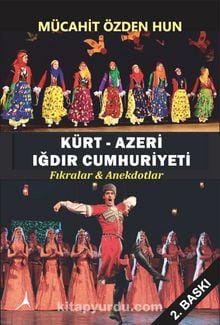
- In your book titled "Kurdish-Azeri Iğdır Republic," which narrates the political history of Iğdır, you tell the story of two intertwined brotherly peoples living in the region with a witty style. As far as I know, "Iğdır National Republic" or "Iğdır Executive Government" is claimed to have been established during a period of chaos, war, and ethnic conflicts in the region. It has also been asserted that this "Republican administration" was "a first" in the Anatolian geography. In your work "Iğdır 1919: Kaça-Kaç/Kırxın," you addressed the forced displacement, migration, and massacres that occurred in the region during wartime. You also argued that the alleged "Republican Government" was not real; you criticized some Turanist and chauvinistic views. Aside from the contradictory establishment dates, is it logical for such a "Republic" to consist solely of the Turkish segment?
Before answering your question, I need to make some corrections and reminders. First: The title of my book "Kurdish-Azeri Iğdır Republic" might be misleading at first glance. There was never an entity named "Kurdish-Azeri Republic" in the Iğdır region. I wanted to be a bit ironic with this title.
Here's why: Since Iğdır province (Sürmeli region) was not included within the borders of Misak-ı Milli, it was the region least prioritized by the Ottoman Empire or the armies of the Grand National Assembly. This indifference towards Iğdır continued during the Republican years.
READ MORE
In short, Iğdır was not valued by the central administration since the establishment of the Republic, it was overlooked, and the Kurds and Azeris living there were, in a sense, left to their own devices.
Despite having very fertile lands and its logistical importance (i.e., bordering three countries), this region has not attracted any serious investment. I named this "century-long loneliness" of Iğdır the Kurdish-Azeri Republic and wrote a book of anecdotes. Some of these anecdotes were compiled from the local people's narratives, and some were recounted by the protagonists themselves.
As I mentioned before, from 1950 onwards, the Azerbaijani Diaspora, fueled by Turanist and Azeri nationalism, became influential, initiating a process that led to the distortion of Iğdır's history. Without going into too much detail, I would like to summarize some important points:
After the Russian administration withdrew from the Sürmeli (Iğdır and its environs) region following the 1917 Russian Revolution, the ethnic and sectarian landscape that remained was as follows: Azeri, Yezidi, Kurdish, Sunni Kurdish, and Armenian villages; also Kulp (Tuzluca) where Azeris and Kurds lived together, Başkent (Aralık) where Azeris and Kurds lived together, and finally Iğdır city center where Armenians and Azeris lived together.
Especially in Iğdır, where the vast majority were Armenian, a city-centered committee consisting of Armenians and Azeris was established to manage municipal or similar social services due to the vacant Russian administration. Racist and Turanist writers exaggerate this committee, trying to attribute a political essence to it.
Hacı Ali Ekber Tufan resided in Melekli village. He had no connection with Iğdır city center. Through distortion, he is presented as the head of the social committee established in Iğdır city center.
If racist writers had mentioned the name of Şefi Öcal, who lived in Sultanabat village right next to Iğdır city center, they might have been more convincing. In short, there was neither a political formation nor a Republic named "Iğdır Executive Committee"!
With the establishment of the Trans-Caucasus Republic on April 22, 1918, this solidarity committee established in Iğdır city center automatically ceased to exist. Furthermore, if we consider that Armenians in the city center constituted the vast majority of the total town population in those years, the alleged distribution of "5 Armenians and 4 Turks" in this so-called government does not seem credible.
Even if we accept this as true, the mention of Hacı Ali Ekber Tufan from Melekli village, who had no connection with Iğdır city center, as the head of this committee also indicates that the information from that period has been seriously distorted.
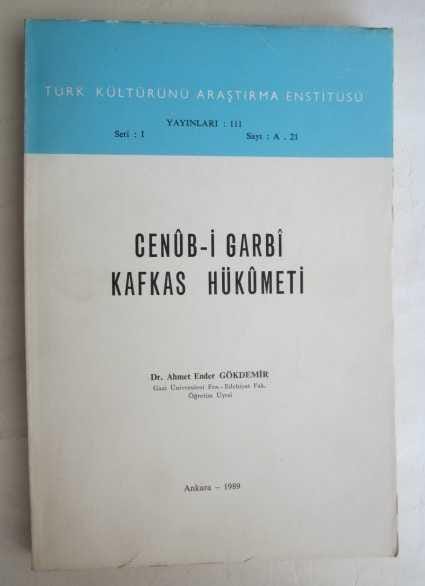
In the years 1918-1919, two republics were established in the Serhat region:
- South-Western Caucasus Provisional Republic (Capital Kars): Established: December 1, 1918, Dissolved: April 19, 1919.
- Aras Turkish Republic (Capital Nakhchivan): Established: November 22, 1918, Dissolved: June 26, 1919.
Kurdish tribes and notables supported both the South-Western Caucasus Republic and the Aras-Turkish Republic with the title of "General Staff." However, both republics remained on paper. The Armenians put an end to the Aras-Turkish Republic, and the British to the South-Western Caucasus Republic.
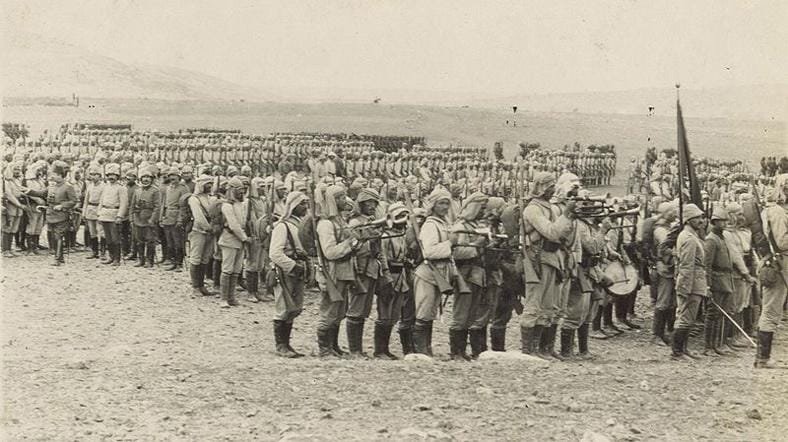
The Muslim population in Iğdır sent delegates to both republican governments. However, a republic centered in Iğdır or Melekli was never established. The claim that an "Iğdır National Republic" was founded with Melekli as its capital is entirely a distortion and fabrication.
Sometimes, this so-called Republic is said to have had thousands of soldiers. If the claim were true, then why would Bıro Heski Telli, tasked with commanding the Hamidiye Regiment, need to come from the Bayazıt Sanjak to save Melekli?
Unfortunately, the distortion and disinformation regarding Iğdır's history have continued for years. The South-Western Caucasus Republic, centered in Kars, and the Aras Turkish Republic, centered in Nakhchivan, could not have prevented the genocides in Iğdır in August 1919 nor participated in the siege of Iğdır (October 1920), because these republics no longer existed at those dates.
As seen above, the two Republics did not exist during Iğdır's most difficult moment, in August 1919. So, who were the leaders in Iğdır who fought and resisted Armenian forces between August 1919 and November 1920? Which local forces were there?
In Eastern Iğdır, under the command of Ali Mirze Bey, leader of the Giskan Tribe, the following forces united:
- Gêloî tribal militia force under the command of Ahmed Şemo (Hun);
- Redkî militia force under the command of Hacı Tahir (Muçu);
- Emere Besê (Ömer Bülbül from the Qedereşî clan of the Gelturan tribe) and Emere Nevo's son İsa (Turan) Gelturî militia force.
The most important center of Armenian forces and the military base of the famous Armenian General Dro was Taşburun. Therefore, the most difficult task fell to Ali Mirze Bey.
- In Central Iğdır, centered in Orgof (Suveren), there was the Zilan militia force under the command of Kerem and Fettah (Güneş) beys;
- In Western Iğdır, centered in Pernavut, there were Kurdish (Şemkî tribe and Yüceler) and Azeri militia forces under the command of Azeri Şamil Bey (Ayrım).
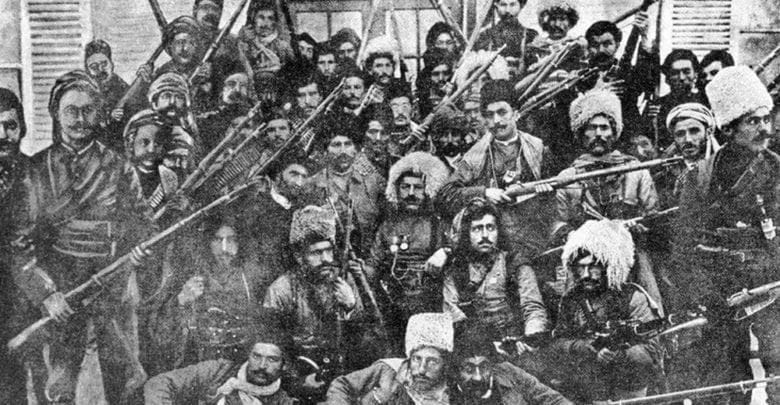
Since there was no Armenian settlement on the Tuzluca side, the civil war was not intense in this region. Moreover, the majority of Şamil Bey's military forces consisted of Kurds.
To ensure this unity, Şamil Bey made his second marriage to a woman from the Giskî tribe.
The civil war continued until October 1920. Priority was given to retaking the Kars and Ardahan regions from the Armenians, as they were included within the Misak-ı Milli borders.
Finally, in November 1920, the Hamidiye Regiments from the Bayazıt Sanjak and military units affiliated with the Grand National Assembly, along with the militia forces in Iğdır, besieged Iğdır as follows:
- Karakale-Küllük line: Ayrım militia force under the command of Şamil Bey (Ayrım), son of Hasanali Bey;
- Karakale-Tuzluca line: Hamidiye Regiment under the command of Resul Bey (Aslan), son of Eyüp Pasha;
- Küllük-Iğdır line: A cavalry company and 4 cannons under the command of Liva commander Abdulkerim Bey;
- Orgof-Erhacı-Halfeli line: Zilan militia force under the command of Kerem Bey (Güneş), son of Hamit Bey;
- Kültepe-Yarmalar line: Celali Hamidiye Regiment under the command of Sheikh Abdülkadir (Kotan);
- Karakoyun-Taşburun line: Celali Hamidiye Regiment under the command of İsa Bey (Konyar), son of Ahmet Bey;
- Karakoyun-Taşburun line: Celali Hamidiye Regiment under the command of İbrahim Ağa (Bıro Heski Telli);
- Taşburun-Hasanhan line: Celali (Gêloî, Giskî, Gelturî and others) and Redkî units under the command of Ali Mirza Bey (Yiğit).
The local forces on the Iğdır-Taşburun line were reinforced by military units under the command of 17th Regiment Commander Firuz Bey, stationed on the Karakoyun hills, and the Saraçlı Hamidiye Regiment under the command of Veli Bey of Gilesor, İsrafil Bey of Gerger (Retired Chief Physician İsrafil Gökçe), and Hüseyin Bey.
The division commander Cavit Pasha's headquarters was in Orgof (Suveren).
The military and local militias, having taken their positions systematically, waited for Kars to be liberated for a while.
However, minor clashes occurred. When the Armenian units realized they could not resist the besieging forces, they crossed the Aras, trying to defend Iğdır with a small force left behind.
Finally, after a 7-day ceasefire signed on November 5, forces advancing on Iğdır from three directions captured the region.
Iğdır was included within the borders of the Grand National Assembly (Misak-ı Milli) without a single shot being fired. (The martyrdom of a person named Mehmet Çavuş is fabricated information. His grave was found empty!)
As can be understood from the information above, the Hamidiye Regiments played a decisive role in Iğdır's inclusion within the borders of the Grand National Assembly. But for some reason, chauvinistic so-called historians and writers never mention the Hamidiye Regiments.
In short, the role of local Kurdish militia forces and the Hamidiye Regiments in Iğdır's inclusion within the borders of the Grand National Assembly has always been ignored by racist and Turanist writers, or documents have been distorted. This is their shame!
- What is the political environment you describe in your book titled "Political History of Iğdır"?
This book was written to analyze the political developments and underlying dynamics in Iğdır between 1945 and 1965. Iğdır experienced turbulent years during the transition from the single-party era to the multi-party era and the new process that began with the 1960 Military Coup.
When the CHP suffered a major defeat in the 1950 elections; politics in Iğdır reshaped in a way that affected ethnic balances.
The Democratic Party (DP) administration was in the hands of Azeris from the very beginning. As I mentioned earlier, due to Azeri Samet Ağaoğlu becoming a minister in the DP, Azeris flocked to the DP.
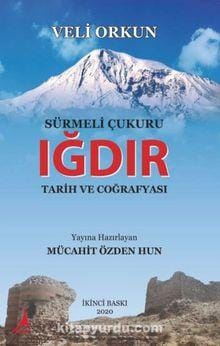
This book details three turning points whose effects continue to this day:
First: Abdurrezak (Edê) Bey, a prominent figure among Iğdır Kurds and the Güneş family, applied to be elected as a Member of Parliament from the DP in 1954. His name was initially included in the list, but the (Turanist-FB) Azerbaijani Diaspora vetoed Abdurrezak Bey.
This situation caused great indignation among Iğdır Kurds. Abdurrezak Bey then ran as an independent candidate. The Kurds in Iğdır united and supported him.
Abdurrezak Bey lost the election, but this also became the reason for factionalism to enter politics. In the same year, Mecit Hun was also expelled from the DP.
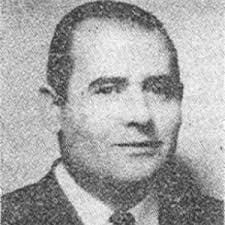
Second: CHP Member of Parliament Sırrı Atalay visited Iğdır for the 1954 election campaign. Azeris, members of the DP, claimed that Sırrı Atalay made derogatory remarks about Prime Minister Adnan Menderes in a speech and filed a criminal complaint with the prosecutor's office. Since parliamentary immunity did not exist in those years, a lawsuit was filed against Sırrı Atalay in Iğdır.
The targeting of Sırrı Atalay, of Kurdish origin (whose family came from Hınıs and later settled in Göle - FB), by Azeris was met with a backlash in Kurdish public opinion in Iğdır.
The trial lasted three years. When Sırrı Atalay was acquitted in the final court session in 1957, disturbances occurred in the city center.
He was enthusiastically carried on the main street on the shoulders of Kurds. This situation further accelerated ethnic polarization. Kurds turned to the CHP en masse. In this search, Mecit Hun also joined the CHP in 1958.
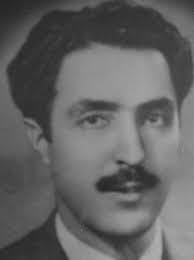
Third: The first person to establish the Democratic Party in Iğdır was Nurettin Kirman, one of the "Bu taylı" (i.e., the settled, original inhabitants of Iğdır) Azeris.
The Turanist and Azeri nationalist "O taylı" (immigrant) Azeris were not pleased with this. The internal reckoning continued for many years.
Becoming the DP District Chairman became a reason for rivalry between the "O taylı" (relatively wealthy immigrants from outside, i.e., Azerbaijan, Nakhchivan, and Armenia) Azeris and the "Bu taylı" (native Iğdır) Azeris.
When Nurettin Kirman was killed by the "O taylı" Azeris in 1957, the balance shifted. In the tense atmosphere, Terekeme (Sunni Azeri-FB) Eşref Kaya briefly took over the DP District Chairmanship.
However, after the 1960 military coup, the "O taylı" Azeris took control of the Justice Party, which was the continuation of the DP. During this process, the "Bu taylı" Azeris lost their political power and were assimilated into the (fanatic) "O taylı" Azeris.
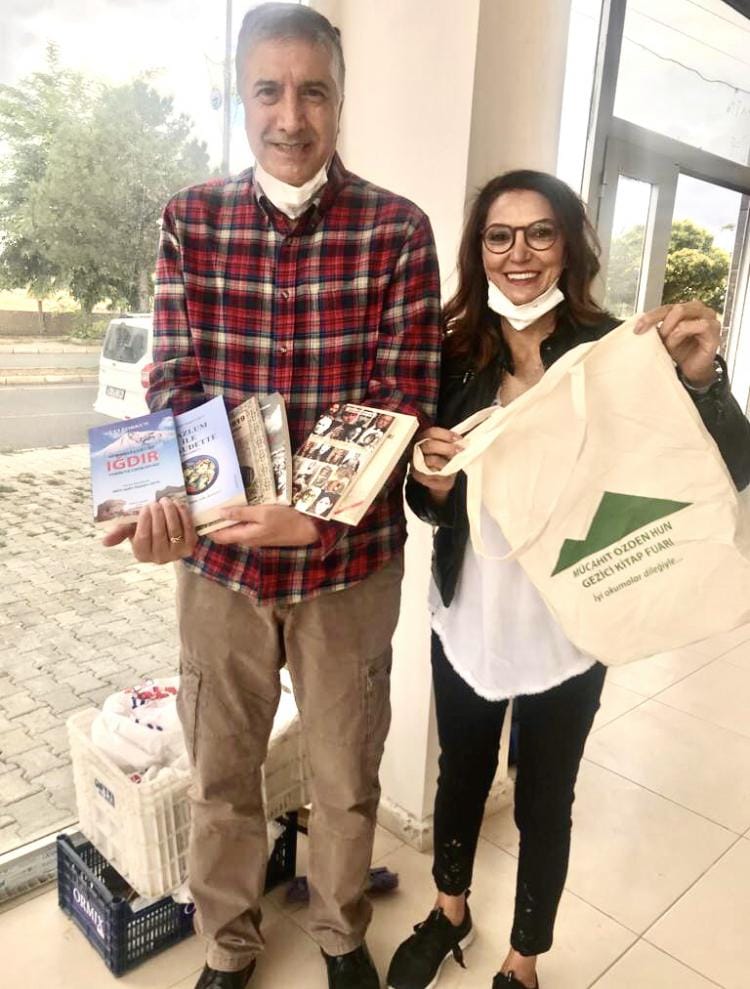
- Both my and Independent Turkish's readership profiles are diverse; they appeal to readers with almost all kinds of views. There will be those who embrace or oppose the narratives in your books or your views in this interview. This is because you sometimes use discourses/concepts close to the official historical theses and policies of the state. At other times, you oppose the discriminatory policies, oppression, and cruelty inflicted upon the people by the late Ottoman and Republican governments. What would you say to readers from different segments about this dual stance of yours?
First of all, I would like to thank Independent Turkish for giving me the opportunity to reach my readers through this interview.
Like the newspaper's name, my perspective on events is "independent." I conduct my field research, library, and document studies, and write down my views objectively.
I am never concerned with whether these align with or contradict official state theses. It is up to my readers to find such parallels or oppositions.
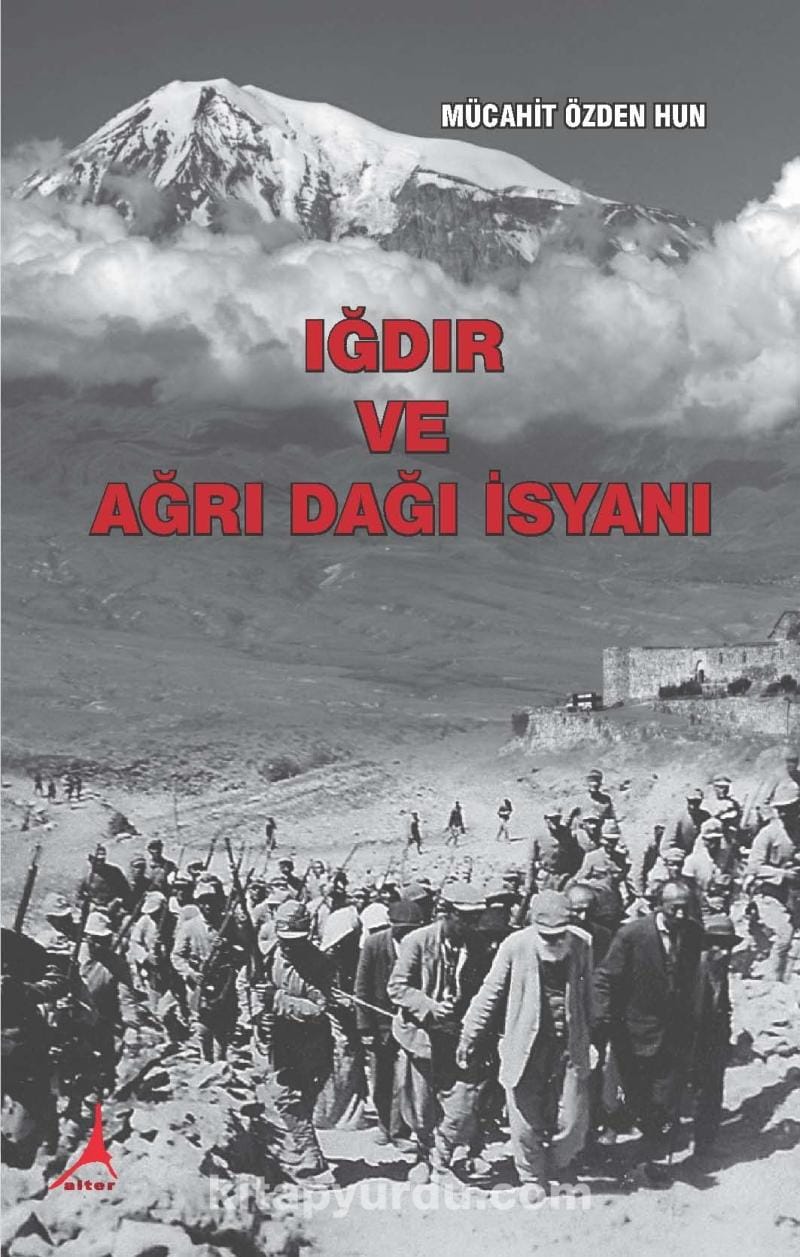
The author has different views and findings regarding the Ağrı rebellion. For this reason, he is criticized by some Kurdish circles.
For example, my book "Iğdır and the Ağrı Mountain Rebellion" has drawn criticism from many Kurdish historians who have not conducted field research.
Until today, the events of the Ağrı Mountain Rebellion have been presented to the reader in an idealized manner. However, the internal dynamics of this rebellion were very different.
No one took into account the two major tribal conflicts (Gêloî-Kızılbaşoğlu/Sakî-Qotî) that continued in Iğdır and Doğubayazıt before the rebellion. Yet, one of the warring tribes participated in the rebellion, while the other stayed away.
No one wanted to write that the Hoybun Society was founded by the British. In fact, a famous Kurdish writer romanticized the life of Memduh Selim, who had never set foot on Ağrı Mountain, by imagining him in the Ağrı Mountain Rebellion.
The leadership in the Ağrı Mountain Rebellion changed hands four times, but no one voiced this. According to them, everything began and ended with İhsan Nuri Pasha.
No Kurdish writer questioned how it was that when the forces loyal to Salih Pasha attacked, none of the high-ranking commanders were wounded, killed, or captured.
However, the foothills of Ağrı Mountain were filled with the bodies of civilians left behind and abandoned to death by these commanders.
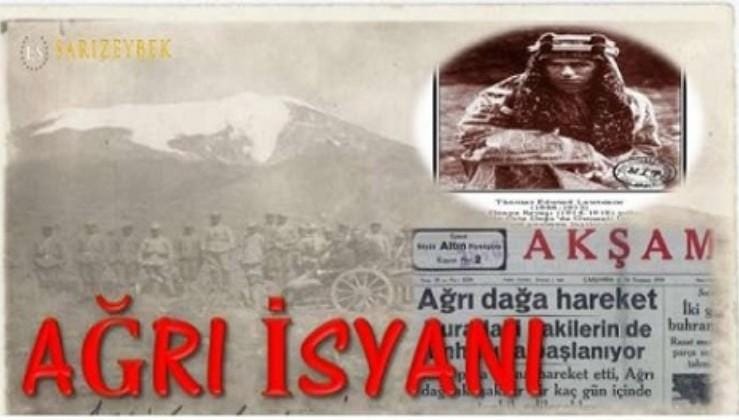
For example, I would have preferred that Ferzende Beg, the famous warrior of the Ağrı Mountain Rebellion, died resisting Salih Pasha's soldiers to protect civilians, rather than seeking refuge in Iran and being killed in prison with his eyes gouged out.
Despite many accounts and documents proving the presence of the famous British agent Lawrence on Ağrı Mountain, this reality has always been overlooked.
I would like to point out another aspect here: The Hoybun Society acted in coordination with the Armenian lobby in Europe and America; in 1930, it hoped that the Independent Kurdistan Republic, which had been declared earlier, would be recognized by the League of Nations and the great powers thanks to the Armenian lobby.
For this reason, it secretly sent messages to the tribal chiefs in the region, ordering them to go towards Ağrı Mountain with their families and animals, and to support the final move of the rebellion. Discussions arose among the tribal leaders about whether to obey this order.
Kinyas Kartal, a graduate of the Russian Military Academy and leader of the Brukî Tribe, as a soldier, saw this order as risky and refused to carry it out.
However, the other leaders of the tribe did not listen to Kinyas Kartal and set off towards Ağrı Mountain via the Zilan Valley. Unprotected civilians became targets of warplanes.
Yes, a massacre or genocide occurred in the Zilan Valley, but the question of who was responsible for it has always been overlooked.
Similarly, Kurdish intellectuals who wrote books about the Ağrı Mountain Rebellion, being generally left-leaning, often overlook the fact that Soviet Union planes bombed Ağrı Mountain while the rebellion was ongoing.
In fact, Soviet soldiers crossed the Aras river to help Turkish soldiers who were cornered by the rebels, and they recaptured Başkent (Aralık district) from the rebels.
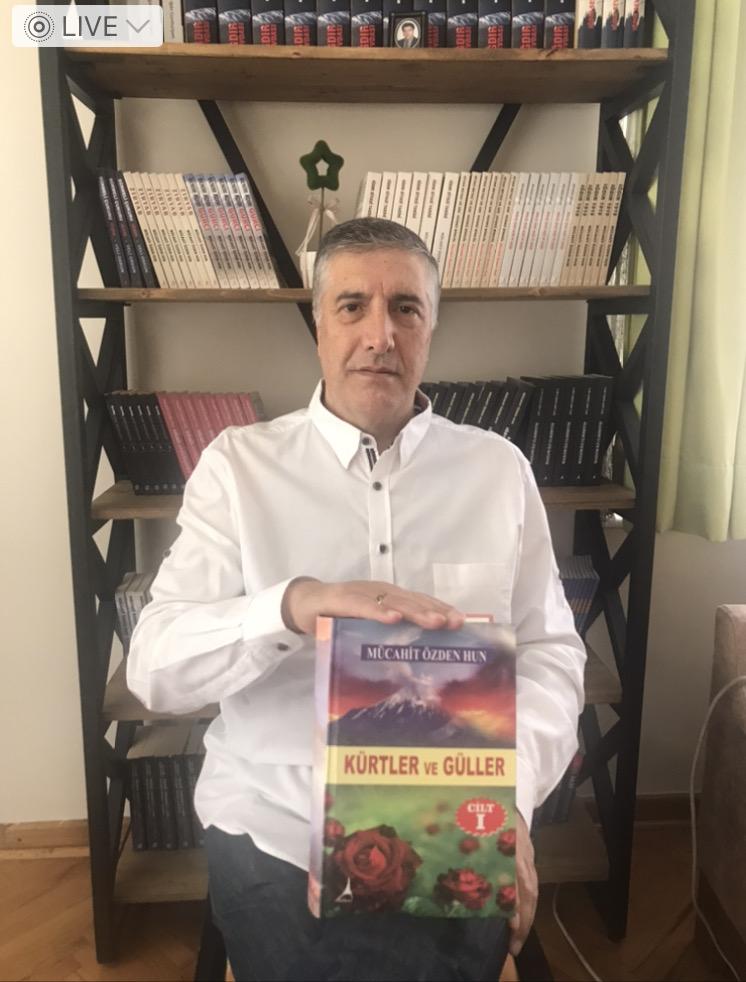
I exhibited a similar objective approach in my book titled "Black, Gray, White: Hüsnü Bingöl."
Due to Hüsnü Bingöl's unjust targeting, my grandfather Ahmed Şemo fell ill during court proceedings and passed away. My father, being marked, could not enroll in higher education.
Considering our family's realities, I should have painted a prejudiced and negative portrait of Hüsnü Bingöl.
However, considering the characteristics of the period and the difficulties faced by the young Republic, Hüsnü Bingöl, although he caused injustices here and there, especially during the Second World War years, thwarted the Soviet plan to retake Kars, Iğdır, and Ardahan with the counter-espionage network he established.
In this sense, what is important is not the harm suffered by my family members, but the sacrifice made to protect the integrity of the country. Hüsnü Bingöl fulfilled this sacrifice honorably without expecting any material reward.
Yes, when history is told correctly, it is full of painful truths from which lessons must be learned. It also takes courage to shed prejudices and excavate history.
A personal note:
Mücahit Hun's claims regarding the Ağrı Rebellion, such as the presence of the famous agent "Lawrence in that region," and even "the British establishing the Hoybun organization," as well as the Soviet Union's plan to retake Kars-Ardahan-Iğdır, are open to debate.
It is impossible for me to agree with a significant portion of them. This is because various local and foreign sources indicate the opposite of the claims mentioned.
A simple example: During the 1937-38 Dersim Incident, officials in Ankara could tell Soviet Union representatives, "The British are behind this incident!" while also telling Western diplomats, "The incident is a Soviet provocation!"
Indeed, looking at the secret correspondence between high-level British representatives in London-Istanbul (and Ankara)-Cairo-Baghdad-Bombay during and after the First World War, it will be clearly seen that the British administration was never in favor of granting autonomy or federal administration to the Kurds in any way.
On the contrary, it is documented that Britain suppressed such uprisings and demands; prevented the delegation of Sheikh Mahmud Barzanji, who set out to support Sherif Pasha, who represented the Kurds at the Paris Conference; and, more importantly, arrested and detained numerous members of the Hoybun organization in Iraq.
The reports of agents like Noel and Soane, advocating for limited political/administrative rights for Kurds in Iraq and Turkey, were also ignored by high-level British officials.
In this regard, it would be beneficial for our readers to examine the comprehensive papers presented at the symposium organized by Duhok University in late 2017 under the title "British-Kurdish Relations."
It is possible that this interview you have read may receive potential criticisms. In our opinion, it is a very valid method for those with opposing views to re-examine historical events through discussion to reach the truth.
Moreover: Prioritizing micro-history over macro-history and asserting that the former is more accurate may often not be a valid method.
In any case, I thank Mr. Mücahit for this interview, which is rich in background information.
*The opinions expressed in this article belong to the author and do not necessarily reflect the editorial policy of Independent Turkish.
© The Independentturkish
https://www.indyturk.com/node/474751/t%C3%BCrki%CC%87yeden-sesler/m%C3%BCcahit-hun-i%C4%9Fd%C4%B1r-sevdas%C4%B1n%C4%B1n-arkas%C4%B1nda-yatan-serhat-b%C3%B6lgesi-ve