Leadership and Ali Bonaparte
This essay explores the qualities of effective leadership, using historical figures like Napoleon Bonaparte as examples, and includes anecdotes about Iğdır.
My dear readers!
Most likely, there will be an early election this summer or autumn. The number of parties is rapidly increasing. Mr. Muharrem İnce, who has recovered from the COVID scourge, will soon establish the Homeland Party (Memleket Partisi), becoming one of the components of this party inflation. At such times, the question that most occupies the voter's mind is: Which leader or party should I vote for? When this question arises, it is not the party's staff, program, charter, or organization that comes to the forefront for the voter, but the characteristics of the LEADER. The definition of leadership may vary from culture to culture, but let us not forget that it has some unchanging and universal characteristics. I would like to briefly remind you of the components of good leadership:
1. CHARACTER: Character is the ability to gather people around oneself and direct them towards a goal. Difficult conditions reveal the strength of character.
2. CHARISMA: The ability to attract people to oneself.
3. COMMITMENT: One of the best things we can do for people is to enable them to give their best. Leaders are those who can see the hidden potential within the people around them. Being able to give hope and keep this feeling alive requires great talent.
4. COMMUNICATION: A leader must maintain strong and continuous communication with their team.
5. COMPETENCE: A leader must give their team the impression that they can overcome all difficulties.
6. COURAGE: Courage is the ability to do things one fears. There is no courage without fear.
7. AWARENESS OR FORESIGHT: A leader must be able to foresee possibilities in the near future.
8. FOCUS: After setting a goal, a leader must concentrate on the task at hand and achieve results.
9. GENEROSITY: A leader's forgiving nature makes them immortal.
10. INITIATIVE: A leader must have the ability to create alternatives when one path is closed.
11. LISTENING: A leader must first listen carefully to their team's suggestions, then make their own decision.
12. PASSION: A leader must carry out their assigned task with passion and commitment.
13. PROBLEM-SOLVING: A leader must create the impression that they can solve seemingly impossible problems.
14. RESPONSIBILITY: A leader must demonstrate that they are responsible for everything concerning their soldiers (or constituents).
15. SELF-DISCIPLINE: A leader must prove to those around them that they take their duty seriously.
16. SERVICE: A leader must prove that they exist to serve their people.
17. DETERMINATION: People follow determined leaders; they first commit to the leader and then to their vision. Some leaders strive for perfection before making a decision, but life is not perfect. A determined leader can progress on the path to perfection. The only measure of determination is action and taking initiative. A leader who believes in what they say and lives by it will always be successful.
18. LEARNING: A leader must prove that they are not all-knowing but are eager to learn what they do not know.
19. MOTIVATION: A leader must have the power to motivate their team.
20. SELF-CRITICISM: A leader must be aware of their weaknesses and strengths.
As you can see above, not everyone can become a leader. Some leaders may possess some of the above qualities, but throughout history, the number of leaders who possessed all or most of these qualities is very small. Three important names that come to mind are Saladin, Napoleon, and Mustafa Kemal. I do not find it necessary to add Sultans or Emperors who inherited their positions from father to son. They were born as "so-called leaders" by birth. Some were successful, while others caused the collapse of empires. However, the three names I mentioned rose to the top through their own strength, coming from middle-class families. Alexander, considered one of the greatest commanders in history, was, after all, the son of the King of Macedon. Therefore, even though he was a leader who surpassed his father, as a king's son, he received special education and always carried the words of a genius like Aristotle in his mind. That's why I didn't include him in the list. Genghis Khan and Tamerlane, without any reason, massacred civilians even after they surrendered, built pyramids of skulls, and burned and destroyed civilizations. We must also set aside these or similar names.
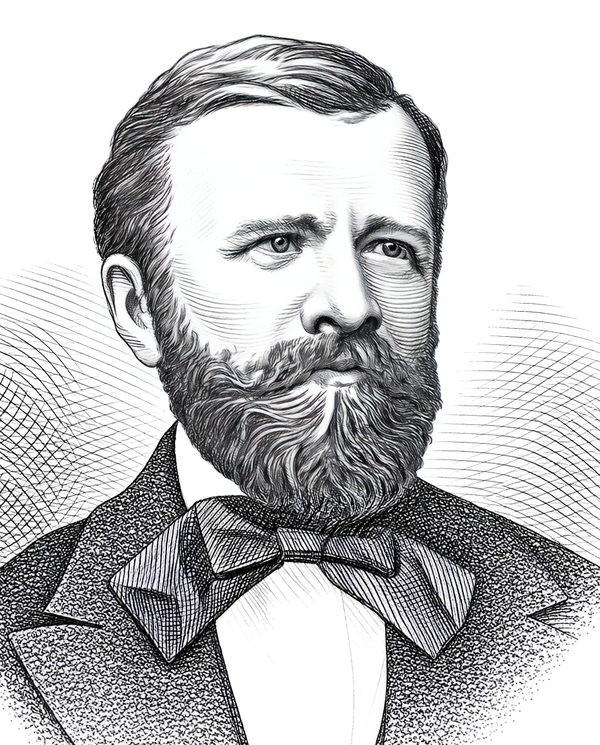
I would like to discuss Napoleon, one of the three leaders I mentioned above:

I do not intend to write a long article. I will only bring to your attention some prominent characteristics of Napoleon Bonaparte. I must also state that Mustafa Kemal Atatürk always kept books about Napoleon's life at hand and drew lessons from them.
CHARACTERISTICS OF NAPOLEON BONAPARTE:
- He was born in Corsica. The Corsican language is an independent language close to Italian. His father fought for Corsican independence. With the thought, "Corsica will need good soldiers to gain its independence," he sent Napoleon to a military boarding school in southern France. His friends mocked his accent. Napoleon spoke French with a Corsican accent until his death. Napoleon was also mocked for his height, which was 1.68 meters (Mustafa Kemal's height was 1.74 meters).
- He had a great deal of self-confidence. The British had captured the city of Toulon. The French army was struggling to retake Toulon. Napoleon told a high-ranking commander, whom he met through his lover Josephine, that if he were given the task, he could take Toulon in two days. The general, of course, laughed, but to not offend Josephine, he assigned this short lieutenant to take command in Toulon. When Napoleon arrived in Toulon, he gathered the generals and asked about their strategies. He questioned each of them individually. He established his authority by saying, "From tomorrow, what I say will be valid." He changed the position of the artillery unit. He attacked from a direction the British never expected. He captured the city of Toulon. This victory increased his fame.
- Napoleon was then assigned to the Italian campaign. Historically, only two commanders were able to cross the Alps, which connect France to Italy, with their armies. The first was Hannibal, who set out from Carthage with elephants, and the second was Napoleon, who pulled his cannons with horses. Napoleon lined up the generals and questioned them. He asserted his authority by saying, "From tomorrow, what I say will be valid." He lined up the soldiers. He questioned nearly ten thousand soldiers about their names, families, origins, and concerns. He instilled the feeling of "victory" in the soldiers like hypnosis. From that day on, Napoleon called his soldiers by their real names. This strengthened the feeling that the soldiers were valued, and their loyalty to Napoleon increased extraordinarily. In the attack carried out the next day, the Italians were routed. This time, he returned to Paris as the Conqueror of Italy. Higher positions and duties lay in his heart.
- The French Revolution had occurred. Paris was experiencing civil war. With the artillery unit he brought with him, he dispersed the rebels, and Paris found peace. He dissolved the French Assembly, which was in disarray and chaos. He became Consul.
- In later years, Napoleon consolidated his rule. His aim was to conquer all of Europe and break up empires. Napoleon was the founder of the world's first nation-state.
- Napoleon was the first in the world to implement secularism. Napoleon stated that he wanted to become Emperor solely to, in a sense, declare the secular order. Until those years, the imperial crown was traditionally placed by the Pope, who came from the Vatican. During the coronation ceremony, Napoleon took the crown from the Pope's hand and placed it on his own head. This was, in a sense, a message that state affairs and religious affairs were separated. Thus, secularism was born for the first time in the world by Napoleon's own hand.
- Napoleon was the first in the world to implement the first Constitution (setting aside the small-scale Magna Carta in England). The laws implemented by Napoleon, known as the "Code de Napoleon," are still valid today. Freedom of belief and the protection of women from the heavy domination of their husbands were also included in the Constitution. Napoleon placed the individual at the center of society. This also happened for the first time in world history. The phrase "Everyone is equal before the law" belongs to Napoleon.
- Napoleon granted pensions to the wives of fallen soldiers and sent their sons to military school free of charge.
- Napoleon was the first in the world to implement public education (accessible to everyone, not just the wealthy). Napoleon also implemented high school education after primary school.
- Interestingly, the systematic arrangement of streets and the numbering of houses in the world were Napoleon's ideas. The postal system worked flawlessly.
- Napoleon had the ability to dictate letters on different subjects to ten secretaries simultaneously. For example, he would say a sentence to the first secretary, then quickly move to the second secretary and say a sentence on a completely different subject, and after finishing with the tenth secretary, he would return to the beginning and continue from where he left off.
- Napoleon valued both his family members and his commanders, always praising and encouraging them. He gathered his family members around him by giving them titles such as King of Spain and King of Italy. Mustafa Kemal also gave important positions in the state to those of Thessaloniki origin. Similarly, Saladin appointed his close relatives to important responsibilities.
- Napoleon, whose entire life was spent in wars, neither he nor his General friends betrayed each other until his death. Finally, after the defeat at Waterloo, when he was exiled to the island of Sainte Helena by the British, his Generals wept bitterly and wanted to go with him. (Mustafa Kemal Atatürk did not possess this quality. He had Kazım Karabekir Pasha, who saved his life, tried for execution and then sentenced to house arrest. Similarly, he died estranged from İnönü. A reminder: There was a 112-year age difference between Napoleon and Mustafa Kemal.)
- Napoleon attached great importance to scientists. When he set out on the Egyptian campaign, he took France's most important scientists with him, thus laying the foundation of the science of Archaeology. Most importantly, the Rosetta Stone, which enabled the decipherment of ancient Egyptian hieroglyphs, was discovered.
- Napoleon respected the past. He addressed his soldiers gathered in front of the Pyramid of Cheops, saying: "Remember, 5000 years of history salute you."
- Napoleon fought the Battle of Cairo against the Mamluks. The Mamluks continued to use the cavalry warfare method developed by Saladin's uncle Shirkuh, routing the armies they encountered. Napoleon only stopped the Mamluk military attack with artillery, but he could not hide his admiration. He tasked his brother-in-law Murat with establishing a military unit similar to the Mamluks. Murat established the military unit. He achieved great successes in the Russian war. Thereupon, the Tsar ordered the establishment of a cavalry unit similar to Murat's military units. In this way, the Cossack army was formed. When the Cossack Army showed success in the 1877-78 Ottoman-Russian War, Sultan Hamid established the Hamidiye Regiments. What a journey!
- Napoleon escaped from the island of Elba in Italy, where he was first imprisoned. He reached the French coast. With a handful of soldiers, he set off for Paris. The well-equipped French army confronted him and wanted to capture Napoleon. Napoleon advanced alone towards the army and said these words: "If you want France to rule the world, join my side; if you want to live confined in Paris as a British colony, here are my hands, put on the handcuffs." Upon this speech, the army disregarded the orders of their Generals, carried Napoleon on their shoulders, and entered Paris in triumph.
- Napoleon was quite tolerant of the Islamic religion. On August 23, 1798, on the anniversary of the birth of Prophet Muhammad, Napoleon organized a religious ceremony in the city of Cairo and covered its expenses himself. Al-Azhar mosque was illuminated with a thousand candles. Napoleon walked through the crowd where verses from the Holy Quran were recited aloud. Even French cannons fired shots to celebrate the birthday of Prophet Muhammad. Napoleon was given the title "Great Sultan." From that day on, he began to be referred to by the name "Ali Bonaparte."
- Napoleon used and wrote the French language with extraordinary beauty. If Napoleon were alive today, he would have been awarded the Nobel Prize, just as Churchill received the Nobel Prize for his military writings.
- He encouraged and sponsored painting and other artistic works. He encouraged and rewarded the famous painter Eugene Delacroix.
- Napoleon was the founder of the world's first bank (Banque de France).
- Napoleon first introduced the French currency, which is still in use today.
- The idea of the European Union belongs to Napoleon.
- Napoleon was also the first to want to implement the Suez Canal Project. However, when the French scientist made an incorrect measurement, stating that the surface difference between the Mediterranean and the Red Sea was 10 meters, Napoleon abandoned the canal project.
- Writers such as Victor Hugo, Balzac, and Musset confessed that they began their writing careers influenced by Napoleon's charisma.
- Napoleon got furiously angry twice in his life. First, when the French army arrived in Moscow, he thought he would capture the Tsar. The Tsar and all the people of Moscow, helpless against the approaching Napoleonic army, migrated to Siberia and the East. The Russians set Moscow on fire with their own hands, destroyed all food products so that not a single grain of wheat was left, and poisoned the waters. Napoleon experienced great disappointment upon entering Moscow. He sat in the Tsar's armchair in his office and shouted furiously with all his might: "You shouldn't have fled! You shouldn't have fled!"
- The second time, during the Battle of Waterloo, Napoleon shouted furiously. When the battle began, Napoleon ordered the cavalry unit to attack the Prussian army, not the British. The cavalry unit did the exact opposite. The British, whose battle formation was designed to destroy cavalry attacks, completely annihilated the French cavalry unit. Napoleon, watching the battle through binoculars, shouted furiously: "Foolish man! I told you to attack the Prussian army. We lost the war! We lost the war!"
- He died of stomach cancer on the island of St. Helena in 1821. In 1840, his body was brought to Paris. Millions of French people attended his funeral. His ashes were buried in Les Invalides.
What I have written above is the shortest possible article about Napoleon. Napoleon was physically defeated by the united European army in the Battle of Waterloo in 1815, but ideologically he won the war. Soon after, all classical empires, including the Ottoman Empire, would disappear, and nation-states would emerge in their place. Today, the entire world is governed by the principle of equality before the Constitution and the law. We owe this to Napoleon Bonaparte.
ANECDOTES & JOKES
MODERN DAŞKA (HORSE CART)

Once upon a time in Iğdır, phaetons and daşkas (horse carts) were widely used. When the domestic Murat brand car came out, most phaeton drivers sold their phaetons and entered the taxi business. Real phaetons also disappeared as they could not compete with taxis. Daşkas proved to be more stubborn. They tried to adapt to changing conditions. For example, wooden wheels that frequently broke were replaced by car tires. This situation probably continued until the 2000s.
One day, a daşka with rubber tires took provisions to a Kurdish village. Children gathered around the daşka, looking curiously at the horse on one side and the tires on the other. Their minds were confused. One of them asked the cart driver:
"Uncle, is this car a taxi or a horse cart?"
The cart driver laughed:
"My car will slowly become a taxi!"
The even more confused child continued to question:
"Uncle, when you fill the horse with gasoline, do you put the metal nozzle of the hose into the horse's rear?"
I WISH THEY HAD ASKED ME
A Turkish-German from Iğdır would come to Iğdır every two years and catch up with his relatives. Each time he came, he found Iğdır a little more changed, liking some changes and being bothered by others. On such days, he would sigh and mutter to himself: "I wish they had asked me, I would have given them advice!"
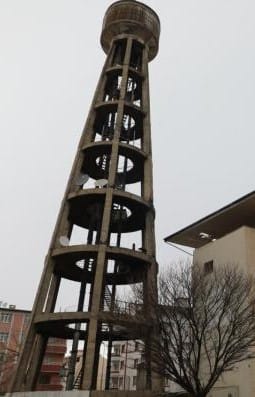
On his last visit to Iğdır, he saw that the magnificent water reservoir had been demolished. Childhood memories filled his heart because in his childhood, the word "water reservoir" was often used in conversations among the people.
"Our house is behind the water reservoir."
"Turn right before you reach the water reservoir!"
"May the water reservoir fall on your head!"
The Turkish-German from Iğdır went to the site of the demolished water reservoir with a friend, sighed, and muttered:
"I wish they had asked me before demolishing it!"
"What were you planning to do?"
"My business in Germany is not going well. I will return to Iğdır. I know the Nakhchivan gate will open again soon. It was very suitable for storing smuggled diesel!"