The "Kurdish Father" Motif
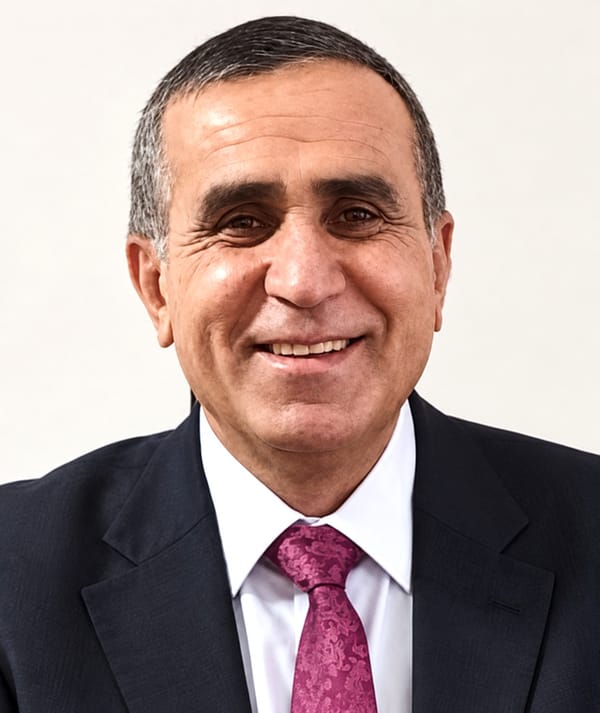
This essay explores the complex and often contradictory figure of the "Kurdish Father," drawing on personal observations and a compelling anecdote to illustrate his multifaceted nature.
Dear Readers:
In every culture, the "father" figure is unique. Understanding or defining why this is so is quite difficult. The "Kurdish Father" is the most challenging, complex, and interesting among all "father figures" in the world. I am not exaggerating. Please believe your friend on this!
You know, Nâzım Hikmet, in one of his poems, asks his painter friend Abidin Dino, deliberately putting him in a difficult spot: "Can you paint me a picture of happiness?"
Similarly, it is possible for you to ask an impossible question like, "Can you draw me a depiction of a Kurdish Father?" Believe me, grappling with this question far exceeds the descriptive and imaginative powers of even the most skilled writers.

I must confess that conveying such a social depiction, where hatred, love, exclusion, embrace, oppression, mockery, silent pride, punishment, reward, neglect, protection, tears, jealousy, revenge, and regret are intertwined—where all kinds of contradictions embrace each other, and thousands of motifs interweave like a Tabriz carpet—is no easy task for my esteemed readers.
In this article, I want to introduce you to the reality of the "Kurdish Father," who is both very distant and very close to us.
First, I would like to explain why I chose this topic and what conversation prompted it.
A WRITER'S SPACE
Every writer prefers a specific space for inspiration:
Some turn a corner of their home into a study. They adorn its walls with oil paintings that open their hearts and souls. They place photos of beloved family elders, and if they have one, a picture of their dog or cat, on the desk.
Some choose a cafeteria, some a quiet corner of a large museum, while others embark on long train journeys or seek refuge in the heights of mountains to reach the silence of their soul and the peak of their creativity.
Let's take a look at the habits of some famous writers:
Vladimir Nabokov, the Russian-American writer who rose to prominence in world literature with his book "Lolita," would first write his thoughts on index cards and place them in a box, what we call a card catalog. When new ideas came to mind, he would note them on a new index card and insert it. After this process was complete, he would write a paragraph from each index card. Then he would combine the paragraphs to form a chapter; he would complete his book by writing in this manner.


Nabokov would sit at his desk, placed in a corner of his house with a view of trees from the window, and first invite his muses by drawing sometimes meaningless patterns on his index cards. As his thoughts deepened, he would transfer them as short notes to the cards.

French writer Balzac
Some writers prefer crowded and noisy places. Balzac, the giant of French literature, would either settle in a corner of a noisy, quarrelsome tavern, never neglecting his wine, and immerse himself in his characters and creativity; or he would wake up in the middle of the night, down endless cups of bitter coffee one after another (50 cups a day), and bring his novel's characters to life with a 15-hour workday.
J. K. Rowling, the famous English author of the Harry Potter series, which children and adults never tire of watching, wrote her books at The Elephant House in Edinburgh. She confessed to a journalist interviewing her: "Without a doubt, the most ideal place to write is a Cafe."

One of the most extraordinary characters regarding writing habits is Dostoevsky. He would sit at his desk all night, jotting down the names of characters, their characteristics, and the plot of the novel in tiny script across two open pages of a notebook. From time to time, when bored, he would doodle a few pictures, and then go to bed towards morning. In the afternoon, he would stretch out on the sofa and dictate his novel aloud to his secretary (his wife), looking at the page he had worked on the previous night.

As a humble writer, I have my own habit among these great names. Sitting in a cafe early in the morning to write has been a habit for years. Although the COVID period caused me to postpone this habit for a while, for the past few months, the sweet joy of returning to the warmth of the cafe has filled me. When I return home, I rest my tired mind with a light sleep, then sit on the two-seater sofa and start writing while stroking my cat.
After the pandemic, I started looking for a new place for myself. "Simit Center" on Esat Street, not far from my apartment, soothed my soul. I began writing my articles in the place run by four brothers from Van, shoulder to shoulder.
SIMIT CENTER
And one day, Yusuf, the eldest of the brothers, came and sat at my table at my invitation:
"My name is Yusuf Olama. I was born in 1977 in Aktaş village (now a neighborhood) in the central district of Van. My father's name is Tevfik and my mother's is Sorgül. I belong to a family of nine siblings, seven of whom are boys. My siblings, in order of age, are Yusuf, Doğan Mehmet, Turan, Sevim, Fırat, Vedat, Servet, and Gamze. We are members of the Şemski tribe. My family tree continues as follows: Tevfik / Halis / Abdullah / Mele İbrahim.
If I'm not mistaken, our fifth ancestor migrated from Iran to Van. According to what they told me, one of our ancestors married an Azerbaijani lady from Tabriz, moved from Urmia to Tabriz. Later, for an unknown reason, they migrated to Van. My grandfather often spoke of his friendship with Armenian neighbors during my childhood. He even took an Armenian woman who was left alone during the Armenian Deportation as his wife.
One day, a feud arose between my father and his cousin. A tip-off about a weapon was made. Under these circumstances, my father realized he could no longer stay in the village, so he took my mother and me and migrated west, to Denizli. He started working as a construction worker. I started primary school under these conditions. I was about to finish the third grade when his cousin came to Denizli and they reconciled, and my father took my mother and me back to the village.
My father had now accepted working in the construction sector as a way of life. He went to Bodrum alone. He spent the money he earned as he pleased. My father would visit the village occasionally, and our number of siblings increased. One day, we learned that my father had gone to Cyprus. He had gained experience and started his own business with the capital he had saved. My father continued to neglect his family. He squandered the money he earned, acting as if he didn't have a wife and an increasing number of children left behind.
While my father was in Cyprus, I went to Tekirdağ, to a relative. I was 14 years old. I was trying to earn my living by working in a brick factory. While I was getting into and out of all sorts of difficult jobs at a young age, my father was earning big money in Cyprus and enjoying himself just as much. My father's indifference and cruelty caused anger and hatred to grow in my young heart. He would leave my mother alone in the village for 5-6 months and enjoy himself in Cyprus.
Time passed. This time, I went to my uncle's place in the Ulus district of Ankara. I started earning my living by selling simit. I would fill the simit tray, place it on my head, and start wandering from street to street. My biggest fear was getting caught by the municipal police. At first, I was easy prey, but over time, I gained the ability to run fast with the tray on my head.
In Ulus, there is a neighborhood known as "İsmetpaşa." It was a place where bars, nightclubs, and troublesome people roamed. In those years, two neighborhoods in Ankara had gained notoriety for being troublesome: İsmetpaşa and Çinçin. Both were competing to be "the most troublesome." According to rumors, İsmetpaşa was a step ahead.
I was a smoker. One day, I went to a master from Çorum who only produced simit: "I only ask for cigarette money from you. I will work for free. I want to learn the craft." The man from Çorum was loyal and kind-hearted. He apprenticed me to Pire Mehmet, a simit master from Kırıkkale.
Our simit workshop was on the ground floor of a building, producing under poor conditions. Today, the Ministry of Health and Agriculture would shut it down.

"Pire Mehmet" was a well-known and respected name in the simit world. He produced 12 sacks of simit a day. Each sack contained 700 simit. Pire Mehmet, 1.50 meters tall, always wore a suit and a white shirt. He was a quiet man. He would start work early in the morning, roll up his sleeves, occasionally take a sip of wine he kept under the counter, and continue working without a break until evening. I worked as a laborer for Pire Mehmet for two years. Slowly, I gained mastery. I started working as a master. I was earning good money.

Because I was doing the work of two masters alone, I eventually earned double wages. My reputation as a master was known around, and I kept receiving offers.
I rented a house and started bringing my siblings from the village one by one. They, too, started selling simit with trays on their heads, just as I had done. We were earning good money. Do you know what we did? We sent all the money to the village, to our father. He would show off with our money, go to every wedding, give expensive jewelry, and make himself loved.
I would protect my siblings who came to me and do my best to help them earn a living. None of my siblings had a school life. If my father hadn't demanded money from us, I could have educated my siblings with that money. My siblings, knowing my father's selfishness, grew up with a feeling of resentment towards him throughout their lives and kept their distance.
In 2004, I opened the current Simit Center with a partner from Gölbaşı. We only sold simit. There was no other place producing simit in the Esat area. We were earning good money. This time, with the money I saved, I bought a house on Turan Güneş Boulevard. I invested some of my money in land. We also had a shantytown house in Çukurambar. Soon after, my father appeared. He made us sell all these properties, took the money, and went to the village. Supposedly, he was going to buy land and do big things. Later, we learned that he had squandered the money we had saved with great effort. From that day on, our financial ties with our father were severed. With the money I earned, I married off my siblings and helped them become homeowners. I also helped my two sisters with their marriages. My father and mother come to stay with us in Ankara in winter; they return to the village in summer.
My father went on the Hajj pilgrimage. I visit the village occasionally. The strange thing is, my father, who seized our money and the blessings of his own children, is loved and respected as 'Hacı Tevfik' in our village and neighboring villages, so they greet me with praise and love, saying, 'Oh! Hacı Tevfik's son!' A strange feeling arises within me: on one hand, a father who ruined our wealth, left my mother alone to enjoy himself far away, and was indifferent to our schooling; on the other hand, a father loved and respected by the people...
Sometimes I blame myself. As the eldest of the family, I could have put distance between myself and my father and helped my siblings get an education. Currently, four siblings operate Simit Center as partners. Our biggest goal is to educate our children and take care of them. Ultimately, the only thing we will leave behind in this mortal world is the feeling of being 'a good spouse, a good father'."

THE KURDISH FATHER
Yusuf's narrative brought to life the "Kurdish Father" models I had witnessed in my mind. I want you to know that the definition of "Kurdish Father" you will read below is drawn from the social environment I have observed and lived in since my childhood.
The Kurdish Father; is Resilient, Self-Sacrificing: The Kurdish Father protects his children with a resilience that surpasses human imagination.
It's a winter day. In a village lost among mountains, far from the city center, a child slips while clearing snow from the roof and falls to the ground. He suffers a severe blow to the head. He is unconscious. The father loads his son onto a donkey. He ties him tightly. A thick layer of snow covers everything. Heavy snowfall continues. The donkey gives up halfway, unable to get up. The father carries his son on his back and reaches the city center on foot. He arrives at the hospital. His son is admitted to intensive care. The father's toes, gangrenous from the cold, are amputated. The father, ignoring his own misfortune, keeps muttering and asking, "Mısto çawan e? / How is Mısto?"
A father with no sons rents a house in Van for his five daughters to study. He works tirelessly to ensure his daughters receive higher education. Now, his daughters serve humanity in professions such as lawyers and doctors. His noble behavior has been etched into the minds of the people of the region as an exemplary act.
The Kurdish Father; is Cruel, Tyrannical:
The Kurdish Father is cruel. He withholds his affection from his children. He neither touches nor embraces nor kisses them. Praise, a kind word, never leaves his mouth. There are no rewards, only punishment, always punishment... For no reason, he takes his belt, locks the children in a room, and beats them one by one. He is the first to sit at the table, and food is served to him first. Every word of his is a command.

He sees his sons as servants for himself, as slaves who obey his words without question. He usurps their rights. If he wishes, he can even prevent them from going to school. In short, sons are insignificant beings, deprived of all rights, silently obedient to their father, ready to pursue the father's blood feud if necessary, dying or going to prison for it.
The Kurdish Father burdens his wife and daughters with the endless responsibilities of the house, barn, and garden. A daughter must marry whomever her father approves. The daughter's duty is to enrich her father with a bride price. Otherwise, she is excluded, marginalized, denied, and ignored.
A relative's child, unable to endure her father's cruel and endless beatings, sought refuge with my mother and stayed with us for weeks. A young girl who did not want to marry someone she disliked, unable to bear her father's tyranny and threats, chose to commit suicide by hanging herself in the barn.
The Kurdish Father; is Loyal, Full of Love:
The Kurdish Father is tender-hearted. When he is separated from his children or sees them after a long time, his eyes well up with tears. He falls asleep by the bedside of his child, who is burning with fever. He does everything he can for their education. He works day and night. He takes on the most difficult jobs. He is proud of his children who go to school. Seeing them study at home becomes a secret source of joy in his heart, and a spiritual happiness envelops his being. He puts everything he has into sending them to high school and university. He does not discriminate between his daughter and son. He sees them both as equal, loves and embraces them. He knows he exists in this world for them.
The Kurdish Father; is Indifferent, Uncaring:
The Kurdish Father sees his children as a burden. He neither pressures them nor shows them interest. The father is both present and absent. The children feel as if they are left in a void. They try to navigate the turbulent sea called "life" without drowning. There is a deep ache in their hearts: If only our father cared a little about us, took a little interest in what we do, or boasted about our success? But this waiting is in vain. The Kurdish Father is indifferent to his home, his wife, and his children.
The Kurdish Father: Mocks his son, makes fun of him:
The Kurdish Father sometimes mocks his son, makes fun of him, and humiliates him in the presence of guests or friends. He shatters the child's self-confidence. He speaks of his son's incompetence and clumsiness, stating definitively, "He'll never amount to anything!"
CONCLUSION
The Kurdish Father is the sum of all the things I have listed above. He both beats and loves; he both gets angry and cries; he is both indifferent and proud; he is both self-sacrificing and selfish; he is both jealous and generous.
In short, the KURDISH FATHER is a monument embodying contradictions; a unique son of Adam who "plays the role of a father."
IMPORTANT NOTE: Dear Readers! When the above article was published one day, I received criticism from dear friends: The general objection revolved around this argument: "These definitions and descriptions are not specific to a race, but are shaped by the instinct for life, the urge to perpetuate the species, which nature gives to every living creature, and the economic and social structure of the society in which it lives. I believe there would not be much difference if we replaced 'Kurdish Father' with Turkish, Persian, Armenian, or Georgian."
In response to these dear friends, I wrote the following text. I would like to present it to you here:
"Dear Readers! I just noticed your comments. The content is more or less the same... Our esteemed Professor Akay also confirms this in his second comment. Since your answers are along the same lines, I hope you will not consider it disrespectful if I give a single answer to both similar arguments.
First, let's clarify the definition of "RACE." The word "Ethnic" is a more accurate and appropriate usage than "RACE." The word "RACE" does not have a cultural and social dimension. Just as there are horse races and dog breeds, there are human races. According to the latest scientific studies, humanity is divided into five races:
- Caucasian Race: Caucasus, Mediterranean, Northern and Eastern Europe, North Africa, Anatolia, India
- Mongoloid Race: Chinese, Japanese, Eskimo
- Congoid Race: Blacks (Negroes) and African pygmies (short people)
- Capoid Race: Covers African races other than the Congoid Race
- Australoid Race
I can continue my writing by focusing on the Kurdish ethnic group:
As I stated at the beginning of my published article, the definition of father in the Kurdish ethnic group presents a complex structure. No other ethnic group has a father figure where such variable and different behaviors are intertwined. Let's take a journey around the world if you wish:
- American Father: An American father cannot beat his child; cannot scold him; cannot physically touch him (he can stroke his head); cannot interfere with his education and career; cannot mock him; cannot make fun of him; cannot force him to work; cannot give orders; he must even knock before entering his 7-year-old child's room. The father-child relationship is one-dimensional: The father holds himself responsible for the livelihood of his child and the home, working intensely. The child, knowing the value of the blessings offered by the free environment, takes on his own responsibility without burdening his parents. When the child turns 18, the father's responsibility ends. Children know this and leave home to pursue work or education. That is, relationships are not variable, complex, or intricate. After 18, children can marry whomever they wish. They are not obliged to get their father's approval. A child who breaks away from the family also has no material or moral responsibility towards their parents. They may not see their parents until they die if they wish. No one can curse this child.
- French Father: A French father cannot beat his child. Father and child are two friends. They can freely discuss any topic, including sex. The father gives his child freedom in education. He does not give orders to his child but sees it as his right to advise. Advice can never turn into coercion or direction. He can tell his child jokes but cannot mock him. The father expects his children to consult him about marriage, not as an obligation but as a gesture of honor. Meeting on important days after marriage and maintaining a sense of extended family are also among the expectations.
- Japanese Father: A Japanese father is proud of his child. He does not scold. He does not beat. As a last resort, stern verbal advice comes into play. Even hearing a verbal reprimand from a father feels like the end of the world for a Japanese child. The father does not withhold affection but expects unquestioning respect from his child. Children continue this endless respect for their fathers even after marriage and until their parents' death.
- Arab Father: An Arab father is not concerned with his child. He neither guides their school life nor worries about their other problems. The free child in Arab culture, unlike in America, is not aware of their responsibilities towards their parents, or their parents do not care. The father establishes his authority, but when he distances himself, the bowstring loosens, and the child finds himself in an uncontrolled life.
- Anatolian Turkish Father: A Turkish father is proud of his child. He touches, embraces, loves. He even sleeps and wakes with them, watches matches, but does not neglect to establish a slight authority. If he sees he cannot cope, he sulks but avoids physical violence as much as possible. He shows his self-sacrifice. The child feels safe. He always feels his father by his side. Therefore, he cannot develop an independent, individual personality. Even when the child turns 18, it is difficult to leave home. This situation is also difficult for the family. In fact, when an 18-year-old child goes to another city for university or to the military, family members and the child cry secretly or openly. The family is a cluster of emotions. This emotional intensity is not found in other cultures. A Kurdish father does not cry; a Turkish father cries. A Turkish father grieves a thousand times for his child who goes abroad; a Kurdish father does not grieve even once.
There is much more to write! As you would appreciate, patience is limited on a Facebook page. Sincerely."