Kurdish Intellectuals
This book by Mücahit Özden Hun evaluates the actions, thoughts, and views of 45 Kurdish intellectuals, from İhsan Aksoy to Mehdi Zana, including Gazi Muhammad and Abdurrahman Qasımlo.

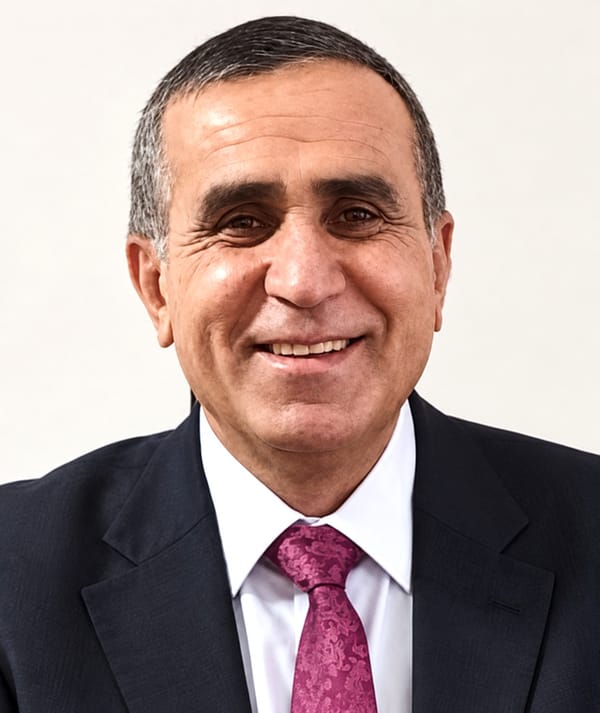
In this book, researcher and author Mücahit Özden Hun (b. 1958, Iğdır) evaluates the actions, thoughts, and views of 45 Kurdish intellectuals, starting from İhsan Aksoy up to Mehdi Zana. The 44th and 45th individuals are Gazi Muhammad and Abdurrahman Qasımlo.
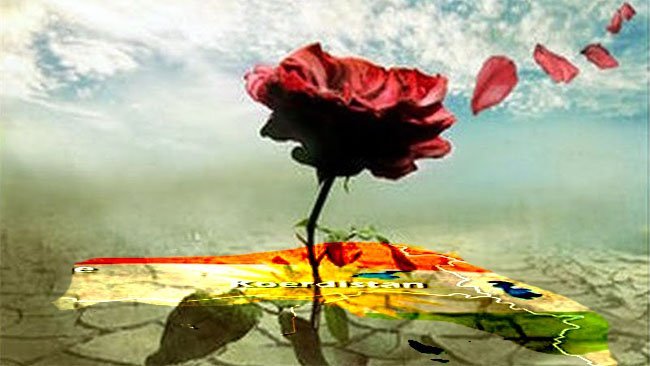
Mücahit Özden Hun published a book titled "Kurdish and Roses, Vol. 1" (Alter Yayıncılık, December 2021, 1306 pages).
In this book, researcher and author Mücahit Özden Hun (b. 1958, Iğdır) evaluates the actions, thoughts, and views of 45 Kurdish intellectuals, starting from İhsan Aksoy up to Mehdi Zana. The 44th and 45th individuals are Gazi Muhammad and Abdurrahman Qasımlo.
Personally, I find this book useful. It contains very valuable information about the thoughts and actions of 45 Kurdish intellectuals.
The 45 Kurdish intellectuals in the book "Kurdish and Roses" are: İhsan Aksoy, Kerim Aksoy, Rohat Alakom, Mahmut Alınak, Kovan Amedi, Ahmet Aras, Nizamettin Ariç, Mustafa Aslan, Mehmet Ali Aslan, Şükrü Barlık, İsmail Beşikci, Eyüp Bischof, Joyce Blau, Mehmet Emin Bozarslan, Cüneyt Bozkut, Sertaç Bucak, Kemal Burkay, Adil Çalbay, Veysel Çamlıbel, Mehmet Çetinkaya, Dengir Mir Mehmet Fırat, Ümit Fırat, İbrahim Güçlü, Mücahit Özden Hun, Cihan İpek, Aziz Kaya, Cevat Korkmaz, Feride Laçin, Recep Maraşlı, Ahmet Melik, Kendal Nezan, Sırrı Özbek, Ahmet Özer, Haluk Öztürk, Fevzi Paydaş, Sait Pekdaş, Ayhan Sakçak, Hüseyin Saracoğlu, Enver Sezgin, Kazım Taş, Aydın Uçar, Sedat Yurttaş, Mehdi Zana, Rojhilat Special Archive I Gazi Muhammad, Rojhilat Special Archive II Abdurrahman Qasımlo.
The analogy of roses is intended to convey that just as there are roses of various colors, Kurds also hold diverse thoughts and views.
As can be seen, individuals such as İsmail Beşikci, Joyce Blau, and Şükrü Barlık are also included in the book "Kurdish and Roses."
***
Mücahit Özden Hun summarizes the main purpose of his book under four headings: 1. To repair the intergenerational disconnect among Kurds. 2. To help Kurds understand other Kurds. 3. To help Turks understand Kurds. 4. To contribute to the transition of Kurds from emotional politics to politics that values common sense.
When Mücahit Özden Hun speaks of generations, he refers to five political generations. He states, "The Koçgiri rebellion, the Sheikh Said Rebellion, the Mount Ararat rebellion, and the Dersim resistance collectively form the first political generation."
The second political generation includes the 49ers incident, 1960, the Sivas Kabakyazı Camp, 1963, the 23ers incident, and Deng Magazine.
The third political generation includes the Revolutionary Eastern Cultural Hearths (DDKO) and the Workers' Party of Turkey (TİP).
The fourth political generation is defined by the Revolutionary Eastern Cultural Associations (DDKD), Özgürlük Yolu (Path of Freedom), Rızgari (Liberation), Ala Rızgari (Flag of Liberation), Kawa, Tekoşin (Struggle), Kurdistan National Liberators (KUK), and Apocular (followers of Abdullah Öcalan).
The fifth political generation includes the People's Labor Party 1990 (HEP), Freedom and Democracy Party 1992 (ÖZDEP), Democracy Party 1993 (DEP), People's Democracy Party 1994 (HADEP), Free Party, Democratic People's Party 1997 (DEHAP), Democratic Society Party 2007 (DTP), Peace and Democracy Party 2008 (BDP), Peoples' Democratic Party 2013 (HDP), Democratic Regions Party (DBP) 2014.
Rights and Freedoms Party 2002 (HAK-PAR), Kurdistan Socialist Party 1974 (PSK), Participatory Democracy Party 2006 (KADEM), Turkey Kurdistan Democratic Party 2014 (TKDP).
While preparing this list within a very complex network of relationships, Professor Mücahit seems to have overlooked the Kurdistan Freedom Party 2014 (PAK) and the Free Cause Party 2012 (HÜDAPAR). We should add these two parties.
Mücahit Özden Hun provides this general information in the introduction of his book, across the first 28 pages.
***
Several lists in the book "Kurdish and Roses" caught my attention. It might be useful to add a few notes regarding these lists. The first of these lists was prepared by the author Mücahit Özden Hun. On page 7, a list of publications by Kurdish intellectuals is provided. If these publications were listed one below the other, instead of side by side as they are on this page, and if the number of issues published, when and where they were published, and by whom they were published were specified for each, it would be a very useful endeavor.
I came across the second list in İhsan Aksoy's section. On pages 63-64, 12 rallies held under the name "Eastern Rallies" are mentioned. During the days these rallies were held, leaflets and brochures were distributed to the public. Collecting and examining those leaflets and brochures could be important. For example, how were the Syrian border, smuggling, minefields, etc., evaluated in the rallies organized in Hilvan and Suruç?
İhsan Aksoy, on page 65, speaks of "Eastern Nights." He provides a list of "Eastern Nights." I recall that during the days these nights were organized, leaflets and brochures were also published. Thoughts regarding "the East" and "Eastern Nights" were explained in these leaflets and brochures. It would be beneficial to find and examine those leaflets and brochures.
Between pages 67-72, İhsan Aksoy also provides a list of the founders of the Revolutionary Eastern Cultural Hearths (DDKO) in Ankara and Istanbul. He also lists the founders of the Diyarbakır, Batman, Silvan, Kozluk, and Ergani DDKOs. Some of these founders may have passed away. It would be very beneficial to complete the lists of founders with information such as their birth and death dates, where they were born, where they passed away, their occupations, and educational backgrounds.
Veysel Çamlıbel, in his section on pages 689-690, provides a list of the "49ers." In my opinion, it is very important to complete this list with information such as where the individuals concerned were born, where they passed away, their occupations, professions, and educational backgrounds.
I joined Atatürk University, Faculty of Arts and Sciences, as a Sociology assistant in late 1964. Veysel Çamlıbel was a student at the Faculty of Agriculture at that time. I believe he graduated about a year later.
Ümit Fırat, in his section on pages 788-794, provides a list of 179 people under the title "Friends Who Have Left Us." I believe this list needs to be updated. On the other hand, some deaths might have been overlooked while preparing this list. Information such as birth and death dates, where they were born, and where they passed away is certainly important. It would be very beneficial to complete this list with this information.
***
In the work "Kurdish and Roses," while Kurdish intellectuals are evaluated one by one, their relationships with their environment are broadly considered. For example, İhsan Aksoy, while describing himself, speaks of Eastern Rallies and Eastern Nights. He provides information about Yeni Akış Magazine and Uyanış Magazine. He evaluates İsmail Beşikci's article "The Formation of Underdevelopment in Eastern Anatolia, February 1971." He mentions Sennur Sezer.
Kovan Amed speaks of Wera Beaudin Saeedpure and the Roboski massacre.
Ahmet Aras talks about Denbej Şakiro, Naci Kutlay, and İsmail Beşikci. He mentions Kör Hüseyin Pasha and Nadir Bey. He speaks of Sheikh Said Efendi, Sürmeli Mehmet Pasha, and Abdülmelik Fırat. He refers to Yaşar Kemal, Evdilê Zeynike, and Edip Karahan. He brings up Mullah Mustafa Barzani, Kadri Can, and Ali Rıza Dalaman.
Mustafa Arslan provides information about İhsan Aksoy, Kemal Sevim, Ahmet Aras, and Ömer Polat. Mustafa Arslan, Ahmet Aras, Ömer Polat, Demir Pekol, Nazif Kaleli, Halit Güneş, Mehmet Ali Adıgüzel, Nizamettin Kaya, Cengiz Çamlıbel, Turgay Budak, Ali Kotan, Saliha Kotan, Sultan Aslan, Kadir Manga, Tuncer Sumer, Veysel Çamlıbel, Cengiz Baltacı, Mehmet Nakiboğlu… were students at Atatürk University in the late 1960s. Some were in the Faculty of Arts and Sciences, some in the Faculty of Agriculture, and some in the Faculty of Business Administration.
Friends like Mustafa Arslan, Ahmet Aras, Demir Pekol, Halit Güneş, Ömer Polat, Nazif Kaleli, Nizamettin Kaya, and Mehmet Ali Adıgüzel found a listening device in their dormitory room. This incident was also reported in the press at the time. This room was referred to as room number 85.
Mehmet Ali Aslan, in the section concerning himself, speaks of TİP and Yeni Akış magazine.
Şükrü Barlık speaks of Armenians, Ezidis, and Assyrians.
In my section, Halil Ağa, Hurşid Ağa, DDKO, Nazif Kaleli, Hüseyin Musa Sağnıç, Hikmet Bozçalı, and İhsan Aksoy are mentioned.
Cüneyt Bozkut talks about İbrahim Kaypakkaya, Mehmet Bayrak, Yaşar Kemal, and Açılım Magazine.
Sertaç Bucak describes Faik Bucak and Deng Magazine.
Kemal Burkay brings up Deng Magazine, Mustafa Çamlıbel, and Yeni Akış Magazine.
Adil Çalbay talks about Cemil Bayık.
Veysel Çamlıbel speaks about Seyadê Şame and Dr. Fuad. He mentions the 49ers, Şeresiyar Newspaper, and Socialist Mesopotamia Magazine. He commemorates Lawyer Bahhattin Eryılmaz, Lawyer Erdoğan Teomete, and Mustafa Özbay.
Mehmet Çetinkaya speaks of Ehmedê Xani, Cigerxwin, and Mullah Mustafa Barzani.
Ümit Fırat discusses his father's books. He brings up the article "Kurds, Their History and Social Organization." This article circulated hand-to-hand in Diyarbakır Martial Law Prison in 1971. He talks about Ahmet Arif, İsmail Beşikci, Orhan Kotan, and Zülküf Şahin. He refers to Iraq as "the sacred lands of modern times," criticizing the League of Nations and the United Nations. He mentions İhsan Aksoy. (x)
İbrahim Güçlü speaks of Necmettin Büyükkaya, DDKO, Sait Kırmızıtoprak, and Ali Beyköylü.
Cihan İpek brings up Dilan Cinema.
Cevat Korkmaz talks about Ayşe Şan and Nedim Dağdeviren.
Mahmut Alınak speaks of Meryem Xan.
Recep Maraşlı talks about friends like Deniz Gezmiş, Necmettin Büyükkaya, Kaya Müştakan, and Ali Beyköylü.
Kendal Nezan speaks of Şevket Beysanoğlu, Talat İnanç, Karl Brokelmam, Louis Neel, Heciyê Cindi, Kanate Kurdo, Daniel Mitterand, Kamuran Bedirxan, Temure Xalil, Amir Hasanpour, and Rojen Barnas.
Sırrı Özbek talks about Sıddık Bilgin and İhsan Aksoy.
Ahmet Özer speaks about Yılmaz Güney, Behçet Cantürk, Şefik Epözdemir, Kinyas Kartal, Celal Temel, Yaşar Kemal, and Açılım Magazine.
Haluk Öztürk spoke about Halis Öztürk, Hesene Mete, Fırat Ceweri, and Mehmet Uzun.
Fevzi Paydaş talks about Celal Paydaş.
Sait Pekdaş speaks of Mümtaz Kotan, Celal Talabani, Faruk Aras, Medet Serhat, and Ferit Uzun.
Ayhan Sakçak talks about Fikret Başkaya and Serhat Bucak.
Kazım Taş talks about Ahmet Aras.
Aydın Uçar talks about Ali Karahan and Nuri Dersimi.
Sedat Yurttaş talks about Selahattin Demirtaş, Hatip Dicle, Ahmet Türk, the Dicle Social Research Center (DİTAM), and Mehmet Kaya.
In "Kurdish and Roses, Vol. I," evaluations are also made about Gazi Muhammad and Abdurrahman Qasımlo.
***
Aziz Yağan published an article titled "Kurdish, Kurdish Movement and Kurdish Intellectuals." (nerinaazad, February 4, 2022) It is useful to examine this article. In this article, Professor Aziz Yağan's emphasis on the sounds (D) in "Kürd" and (T) in "Kürt" is very meaningful.
The researcher and author, Mücahit Özden Hun, should write an article on the function of intellectuals in a society like Kurdistan, which is divided, fragmented, shared, and whose language, culture, and democratic rights have been usurped, to be placed at the beginning of the second volume of his book.
I believe many people are awaiting the second volume of "Kurdish and Roses."
(x) The concept of "the sacred lands of modern times" caught my attention greatly. I feel the need to make a small evaluation on this matter. What makes Iraq, Syria, Iran, and Turkey "sacred," in my opinion, is their shared dominance over Kurdistan/Kurds. Kurdistan is not even a colony. If Kurdistan had been established as a Mandate (colony) of Great Britain or France, like Iraq, Jordan, Palestine, Syria, or Lebanon, it would have long since gained independence. The division, fragmentation, and sharing of Kurds and Kurdistan, and the usurpation and denial of democratic rights, language, and cultural rights in each part, has been the most enduring, most oppressive, and most destructive policy and practice of imperialism in the Near East and Middle East.
The most tragic aspect of this process, in my opinion, is the massacre carried out in Halabja on March 16, 1988. More than 6,000 Kurds were suffocated by poison gas in one fell swoop. This was a full-fledged genocide. However, the fact that even this genocide did not provoke any reaction in the world is perhaps an even more severe event. Indeed, this genocide did not cause any reaction in the world. No reaction developed in Paris, London, Berlin, Rome, Washington, Moscow, Ankara, or Cairo... neither by civil society organizations nor by states. Not even in Hiroshima, which experienced a similar process on August 9, 1945, or Nagasaki, which experienced it on September 4, 1945... Even under these conditions, the Saddam Hussein Regime was supported, and the Kurds were criticized. The understanding of "Oh, don't touch these states at all, let the 'sacred structure' not be destroyed or harmed!" persisted.
It should also be emphasized that on March 17-18, 1988, a protest march organized by civil society organizations took place only in Tel Aviv. Indeed, it was Israel that immediately announced this genocide to the world.
In these relationships, the fundamental principle to be defended should not be Human Rights, but the Right of Nations to Self-Determination.
Despite the word "nations" in its name, the League of Nations and the United Nations have always prioritized the interests of states over nations. The United Nations must also consider the interests of nations. For example, in Africa, with the Declaration on the Granting of Independence to Colonial Countries and Peoples, Resolution 1514 of December 14, 1960, the UN defended the rights of nations against states such as England, France, Germany, Italy, Belgium, Spain, and Portugal. It may have considered the interests of nations in other areas of the world, but regarding the Kurds, it has always defended the interests of the states that collectively oppress the Kurds and Kurdistan. The United Nations must also consider the interests of nations, including the Kurds. It should not be overlooked that Kurdistan is not even a colony.
https://m.nerinaazad1.com/tr/columnists/ismail-besikci/kurd-aydinlari