Cult and Human
This essay explores the concept of "cult" beyond religious contexts, examining its five core factors and illustrating them with examples like the Peoples Temple and Nazism, followed by a collection of anecdotes about Hamit Hun.

Dear Readers!
We are entering the week of Eid al-Fitr. I WISH YOU ALL A HEARTFELT EID.
I would like to remind you at the beginning of my article that there are Eid jokes awaiting you after a short piece. Sincerely,
CULT
Unfortunately, in the Turkish literary world, the word "cult" is approached within the framework of religious ideology, and even further, it is defined as a "deviant sect," and the matter is closed. However, without understanding the ideology and structure of a "cult," it is impossible to comprehend legal or illegal political organizations and parties.
The word "cult" inherently contains five fundamental factors:
- The word "cult" describes a group of people who follow a charismatic leader, an ideology, or a "charismatic leader-ideology" duo. The charismatic leader is treated as a "Prophet," or the charismatic leader declares himself a "Prophet." The "cult leader" knows everything; he has an answer to every question in the world. They skillfully use "brainwashing" tactics to unconditionally bind members to themselves.
- A "cult" is not a simple belief or sectarian system. A "cult" is a name given to a concept that forms a system of philosophical values, i.e., a political ideology or belief system, shared unquestioningly by a group.
- The "cult" leader establishes dominance over his members through a mechanism of "fear." He imposes on his members the feeling, through "emotional exploitation," that a disaster awaits them if they leave the "cult" movement. Members voluntarily adopt a robotic lifestyle with the perception, "We have a leader who thinks for us; we don't need to think or question."
- Assassinations, murders, chaos, threats, punishment, and even individual or mass suicides are among the fundamental building blocks of a "cult" structure.
- The "cult" leader instills a "utopian" future in the subconscious of his members, implanting the promise of "eternal freedom" if they make a little sacrifice. His biggest goal is to separate members from their families and alienate them.
TWO EXAMPLES:
- SECTARIAN CULT: THE PEOPLES TEMPLE
A person named Jim Jones founded the "Peoples Temple" cult. He promised a libertarian and egalitarian organizational structure. The number of members increased rapidly. He bought a piece of land. He gathered the members of the organization on this land. He made the cult members accept him as a prophet. He blackmailed the cult members by confiscating their passports and money. He gave them pseudonyms. He either beat those who opposed him to death, threatened them with death, or had them killed. And one day, Jim Jones ordered the cult members to drink a beverage containing cyanide. Over 900 cult members lost their lives. Jones then shot himself in the head, committing suicide.
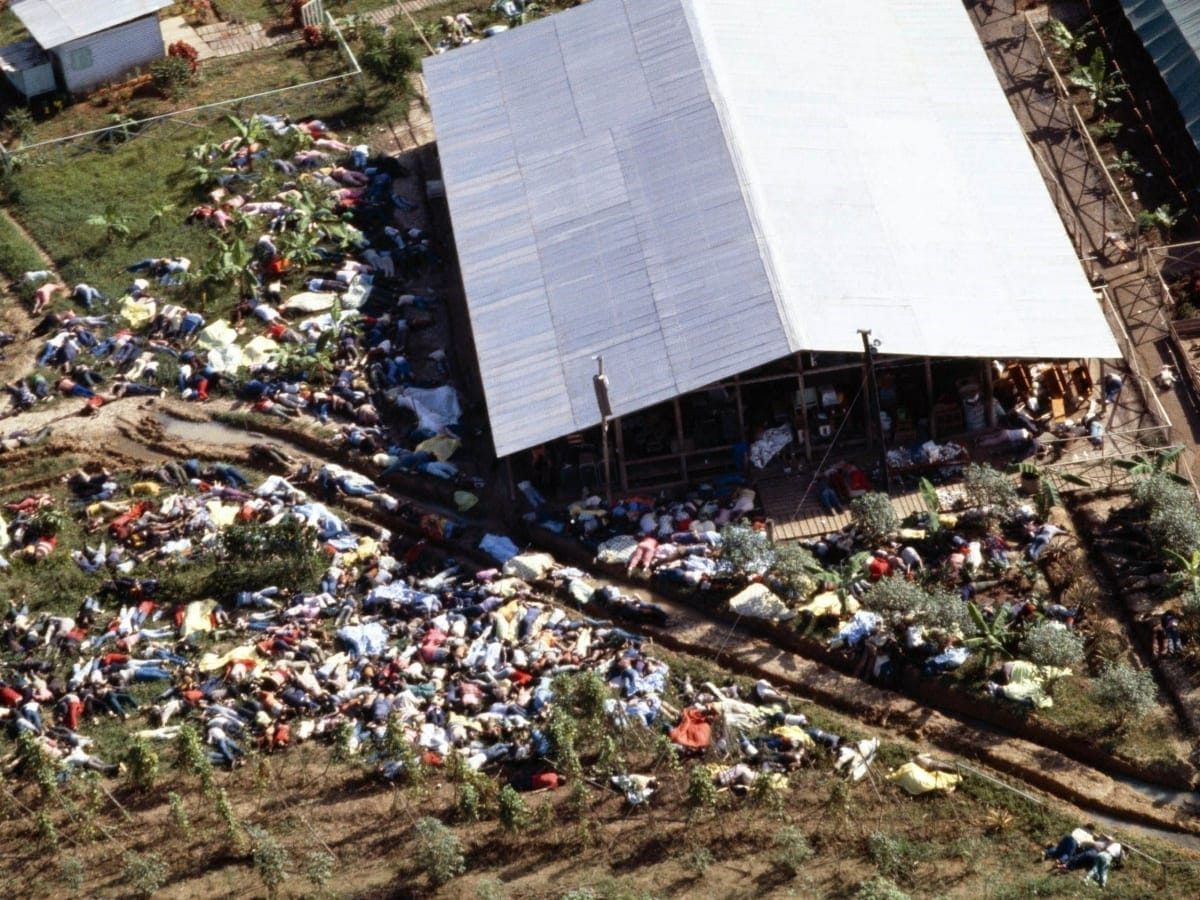
Mass suicide
- POLITICAL IDEOLOGICAL CULT: NAZISM
Hitler and the Nazi Party are a good example of this. Hitler is a savior and a new "Prophet" for the Germans. He is seen as a superior and perfect human being. Hitler established youth camps. He gathered boys and girls on secluded mountain slopes, had them set up tents to socialize, and thus controlled the minds of all young people through the manipulation of "being at one with nature." Not content with this, he made young people see their own families as enemies, and often praised those who executed their parents or relatives who resisted them as exemplary "members." Those who left the organization were punished. He ingrained thought patterns like "killing Jews is a good deed" into the minds of his members. Members accepted this command as a duty, putting aside their human emotions, and carried it out mercilessly, even with pleasure. As in every "cult" structure, Hitler and his close associates either committed suicide by drinking cyanide or by shooting themselves in the head.
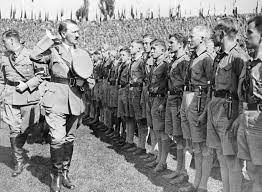
Hitler and the youth he hypnotized as a "cult"
CONCLUSION
If you are a member or supporter of a legal or illegal, sectarian or political "Cult" structure that possesses the characteristics mentioned above, it is YOUR PERSONAL RESPONSIBILITY to do what is necessary to save your individual freedom and human dignity.
EID JOKES…. EID JOKES…
WHO IS HAMIT HUN?
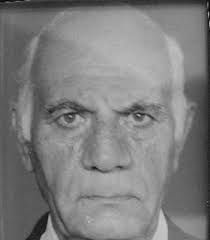
Born in Iğdır in 1921, Hamit Hun is the son of Ahmed Şemo, leader of the Geloî Tribe, and the elder brother of Mecit Hun. He left his high school education in Istanbul unfinished and returned to Iğdır, earning a living through trade. He passed away in Iğdır in 1997 and was buried in the Karakuyu Village cemetery. May God have mercy on his soul!
(Note: The following anecdotes are published for the first time.)
SOLAR ECLIPSE
A relative of Hamit Hun in the village meddled in every affair, intervened in all events to cause mischief, and gained even a small profit from it.
Newspapers reported that a solar eclipse would soon occur, and it could be clearly observed from many cities, including Iğdır. The villager, a relative, wondered what the "Solar Eclipse" everyone was talking about meant, and went to Hamit Hun, whom he believed would give him the most accurate information:
"Mr. Hamit! What is a solar eclipse? Who will hold the sun?"
"No one will hold the sun. The Moon will come between the Earth and the Sun, the Sun's light will not reach the Earth, and it will suddenly become dark during the day. As the Moon slowly moves, the Earth will become bright again."
"Why does the Moon suddenly come between the Earth and the Sun and cause trouble? Isn't it shameful?"
"If the Moon didn't come between the Earth and the Sun and cause trouble, how would it earn its living?"
THE CHANGED ANECDOTE
Ahmed Şemo valued the education of his two sons. He had prepared a room in the house for them to study. This small classroom had its regulars: İsmail Ağırkaya, Aziz Güney, Enver Güneş, Mehmet Hun, Mecit Yılmaz, Musa Malgaz, Hamit Hun, Mecit Hun… They studied and also joked around whenever they had the chance. Since Mecit Hun had forbidden jokes and banter, such things were either done when Mecit Hun was not around or whispered from ear to ear.
Years passed, Enver Güneş and Hamit Hun got married and had children. One day, the two childhood friends met in a gathering. The conversation drifted, and Hamit Hun, in a playfully accusatory tone, turned to Enver Güneş: "Don't believe what Mr. Enver says. He's unmatched at changing stories."
Enver Bey laughed and replied, "Mr. Hamit, where did that come from? Come on, prove it!"
Hamit Hun recounted:
"We were all elementary school students in different grades. We were eating at a low table in our house. Mecit often left the room because he was serving food. I leaned over to Mehmet (Hun), who was sitting next to me, and told him a joke:
The joke was as follows:
A man wearing glasses for nearsightedness, because he couldn't see up close, appeared before a judge. When he told absurd things, the Judge couldn't stand it and intervened: "Do your ears hear what you're saying?"
The man brazenly replied: "Your Honor, my ears and eyes suffer from the same problem. My eyes cannot see up close, and my ears cannot hear what is spoken near me. That's why I cannot hear what I say myself, but don't worry, I can clearly hear what you say."
When Mehmet, with a mouthful of food, burst into laughter, pieces from his mouth flew into the air and scattered over the table. Aziz Bey was next to Mehmet. Aziz Bey wondered what had happened, and Mehmet leaned over to Aziz Bey's ear and told him the joke. This time, Aziz Bey, who was drinking ayran, burst into laughter, sprayed the ayran from his mouth, and the table was covered with ayran. In this way, the joke was passed from ear to ear. Enver Bey was the last in line. The moment he burst into laughter, Mecit entered the room and, in a serious tone, asked Enver Bey what was going on. Enver Bey confessed:
"İsmail (Ağırkaya) told me a joke. I couldn't help but laugh."
Mecit asked:
"What joke?"
"A man went to court. Every time he opened his mouth, he farted. The judge finally couldn't stand it and asked: 'Sir, shall we take what your mouth says or what your backside says?'"
My joke wasn't like that. I don't know who changed it, but since Enver Bey was the last one, I suspected him. From that day on, I always approach what Enver Bey says with suspicion.
(I remember all our deceased elders with mercy and respect. May their places be in heaven!)
THE SHEPHERD'S WAGE
Hamit Hun didn't like animal husbandry and transhumance. But one day, influenced by a relative, he bought 5-6 weak calves, built a makeshift stable in a corner of the garden, and put them in it. He hired a shepherd. They agreed on a wage of 30 TL per month, with Hamit Hun covering his lodging, food, and drink.
At the end of the month, the shepherd asked for his money. Hamit Hun had sent all his money to his children in Ankara. He was penniless. As he walked thoughtfully from the neighborhood road towards the market, he saw two Terekeme neighbors about to attack each other with shovels, and he rushed forward:
"Don't do it! There will be an accident! What's the problem?"
One accused the other:
"He's stealing my water turn!"
The other denied it, but the first neighbor was not convinced.
At that moment, the call to prayer was heard. Hamit Hun took this opportunity to interject:
"At such a blessed moment, my conscience will not allow my two beloved neighbors to harm each other. A person can die from a shovel, and their whole life will be spent in prison. Is it worth it? Is it worth it?"
Both sides fell silent. Hamit Hun continued:
"As I understand it, the water turn is one day yours and one day his, right?"
Both neighbors said, "Yes!"
"I will tell our shepherd to stand by the water and not let anyone close the irrigation ditch. And you will put 1 lira in the shepherd's pocket. What's the value of 1 lira compared to spending a lifetime in prison!"
The two neighbors agreed and parted ways.
Hamit Hun thought silently as he went to the market: "Well, my Terekeme brothers came to my aid at the last minute for the shepherd's wage this month. Hopefully, my Azerbaijani brothers will come to help for the next wage."
LAMB SHISH
A renowned professor and scientist came to Iğdır to conduct research on Mount Ararat. The district governor hosted a banquet in honor of the scientist. Hamit Hun was among those attending the meeting. Unfortunately, at that time, Azerbaijani-Kurdish tensions had flared up in Iğdır.
As the professor ate the kebabs and bozbaş served to him, he praised the food and could not hide his admiration for Iğdır:
"If such a city were in the West, then you would see how Iğdır would gain value. Greenery, fruits, vegetables, delicious food, Mount Ararat…"
Hamit Hun was also nibbling on his favorite lamb shish. At one point, he spoke, quoting a proverb that meant 'it looks beautiful from the outside, but come ask me about its reality':
"Sir, its outside attracts you, but its inside burns us!"
The professor became curious:
"What is negative in Iğdır?"
"For a week, the people of Iğdır have been on edge due to Azerbaijani-Kurdish tensions. We have no peace left. Our eyes see neither Mount Ararat nor the greenery, vegetables, or fruits. Look, even this piece of lamb meat is hard to swallow."
After Hamit Hun finished speaking, he turned to the waiter:
"Son, I want you to bring me two more portions of lamb shish. Make sure it's well-cooked!"
GENEROCITY
The Azerbaijanis of Iğdır adhere to the Ja'fari school of Shi'ism. Mashhad and Karbala are sacred places for the members of Ahl al-Bayt. When addressing each other, those who have visited Mashhad are called "Mashhadi"; those who have visited Karbala are called "Karbalayi," using an honorary and sacred title.
One day, Hamit Hun was sitting in a teahouse, chatting with his close friends Mashhadi İbrahim and Karbalayi Cabbar. The conversation turned into a debate between the two Azerbaijanis about whether "Mashhadi" or "Karbalayi" was more sacred. Unable to convince each other, they asked Hamit Hun for help. Hamit Hun, as a Sunni Shafi'i, was not in a position to decide, but he did not leave the question unanswered:
"Whichever is more open-handed and generous, that one is more sacred."
The conversation changed direction, a lot of tea was drunk, and at one point, all three simultaneously moved to get up from the table. Mashhadi İbrahim and Karbalayi Cabbar raced to pay for the tea and prove their generosity, trying to stop each other, saying, "No, by God, it won't happen!" While they were trying to convince each other, Hamit Hun couldn't stand it and interjected:
"Well, let one of you pay for the tea today, and tomorrow we'll go to the restaurant together, and one of you will pay for the meal!"
COUNTING GOLD COINS
Ahmed Şemo's most trusted person within the tribe was Temıre Gulê (Aziz Güney's father). He had made it a tradition to entrust important belongings to him.
The year is 1931. After the murder of Numan Efendi, Ahmed Şemo was caught in a relative's house where he was hiding in the yayla (summer pasture), accused of instigating the murder of Azerbaijani İshak Bey in the city center of Ağrı. As the gendarmes took Ahmed Şemo away, he made a request to his relative:
"Go home! Tell Zeyno (his first wife) to hand over two tins of gold to Temıre Gulê. Let's see what my fate will be?"
Zeyno poured the two tins of gold onto the rug and asked her 10-year-old son Hamit to count the coins and fill two empty sacks. 6-year-old Mecit sat next to his elder brother. Mecit had not yet started school but was good with numbers, enough to solve his brother's math problems.
Hamit, being a child, coveted the gold, and at intervals, he secretly put a gold coin into his pocket. Mecit was carefully watching everything that was happening.
Finally, the two sacks were filled with gold coins. Medet Güney (Aziz Güney's uncle) put the sacks on the horse's back. Just as they were about to leave, Mecit went to his mother Zeyno and told her that Hamit had put some of the gold coins in his pocket. Zeyno caught Hamit and confiscated the gold coins from his pocket. Zeyno apologized to Medet Güney, who was ready to leave with the gold, saying, "Give me the sacks, I need to recount the gold and hand it over."
Medet Güney, unable to tolerate waiting another 2-3 hours, adopted an angry demeanor. At that moment, Mecit stepped forward:
"Mother Zeyno, we don't need to recount. I noticed that my brother Hamit put a gold coin in his pocket after every 50 coins. In the end, three gold coins remained, and he put those in his pocket too. If we count the gold coins in my brother Hamit's pocket, I will tell you the exact number."
The gold coins in Hamit's pocket were counted: 45 gold coins.
Mecit immediately did the math: (45-2)=43 43*50=2150 (number of coins in two sacks) 2150+45=2195 (total number of gold coins)
Mecit Hun gained fame as a math genius throughout his school years, completing primary, secondary, and Erzurum High School with top honors.
ORGOF (SUVEREN) DRINKING WATER
In the early 1960s and 70s, Iğdır's drinking water was supplied from the village of Orgof (Suveren), 15 km away. In those years, it was not difficult to meet the water needs of Iğdır district, which had a population of around 5000. Clean water from Suveren was transported to Iğdır through an underground iron pipe, 25-30 cm in diameter, pumped into a water reservoir tank approximately 40 m high, and distributed to the district.
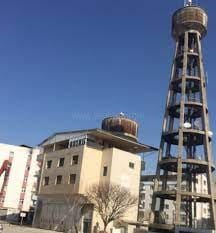
In 1965, two canals were built encircling Iğdır. Since one of the canals divided the Karakuyu pasture, the water pipe coming from Suveren had to cross the canal to reach Iğdır. As the canal was very deep, the engineers were forced to leave the section of the pipe crossing the canal exposed.
Villagers returning from the yayla, who set up their tents in the Karakuyu pasture, were tired of frog-infested well water and planned to drill the pipe to get clean water.
The villagers drilled the pipe with great difficulty but encountered an unexpected situation. Since Suveren's altitude was high (Suveren village is slightly above Karakuyu village), water gushed out of the drilled pipe like a fountain, meters into the sky. The pressure was so strong that it was impossible to even drink a handful of water, let alone fill containers and take it home. Municipal teams frequently came to try and repair it but could not find a solution.
It was the 1968 local elections. Short, overweight Süleyman Demirel was the leader of the Justice Party (AP) and Prime Minister.
Election speeches were being held in Iğdır. The first promise of every candidate who took the stage was to repair the drilled pipe. Moreover, each candidate had to explain their solution method and convince the voters. In short, the most important problem of the municipality in those years was the repair of the drilled water pipe.
On such a day, Hamit Hun and his friends were sitting in the teahouse, listening to the election speeches and discussing among themselves how this pipe could be repaired. A friend asked Hamit Hun:
"If you were the mayor, how would you solve this problem?"
Hamit Hun, known as a staunch CHP supporter, answered without hesitation:
"The country's situation is dire! The people are suffering from hunger. The Prime Minister is useless. If I were the Mayor, I would bring the chubby Demirel and make him sit on the hole in the pipe. That way, at least he would be useful for something."
KEFTAR
The word "Keftar," which I often heard in my childhood, means "Hyena" in Ottoman Turkish and Turkish. However, in some languages, and especially in the Iğdır region, "Keftar" is used for toothless elderly people.
The Hun family has a genetic misfortune regarding teeth. Their teeth start falling out at an early age.
These were the days when Hamit Hun had his teeth extracted and was preparing to get dentures. He made sure not to go out to the market until his dentures were ready.
Sırrı Atalay had a long political career, being continuously elected as a Kars Deputy for the CHP in every election since 1950 and as a Kars Senator after 1960. Around the mid-1970s, he came to visit Iğdır and his friends. Before leaving, he definitely wanted to see Hamit Hun. Hamit Hun's excuse was explained to him:
"It doesn't matter! Please tell him I invited him."
Hamit Hun, with his teeth extracted, was forced to go down to the city center. Sırrı Atalay made a joke at first sight:
"So, you've become a 'keftar' now, huh!"
"Honestly, what can I say, Mr. Sırrı! You became a political keftar, and I became a keftar at a young age due to a genetic defect. But very soon, when I put on my dentures, I will be like a young man again, but you will continue to live as a 'political keftar'."
IF MOUNT ARARAT ERUPTS
A Kurdish villager curiously asked Hamit Hun:
"What happens if Mount Ararat erupts?"
"God forbid! Very bad things would happen!"
"Like what?"
"First, there would be an earthquake."
"Forget that! What else?"
"Then smoke and gases would come out! They would spread rapidly."
"Forget that too! What else?"
"Ashes would scatter... Everything would be covered in ash."
"Forget that as well! What else?"
"Molten hot rocks, called lava, would flow down the mountain, melting and destroying everything in their path."
The villager stroked his beard with his hand:
"I wish Mount Ararat would erupt, so I could take a few buckets of hot rocks home. They say it's excellent for rheumatism."
NOAH'S ARK
A Kurdish villager asked Hamit Hun:
"Who was the first to climb Mount Ararat?"
"They say it was a Russian of German origin!"
"Did he see Noah's Ark?"
"They say he saw it and even went inside."
"What was inside?"
"What wasn't there! Everything you could imagine was there."
The villager slapped his leg hard and sadly:
"For two days I've been looking for hevrîng (sheep shears) in all the shops. Look at this situation! The hevrîng is on top of the mountain, inside the ark, and I'm helpless here. It's God's right!"
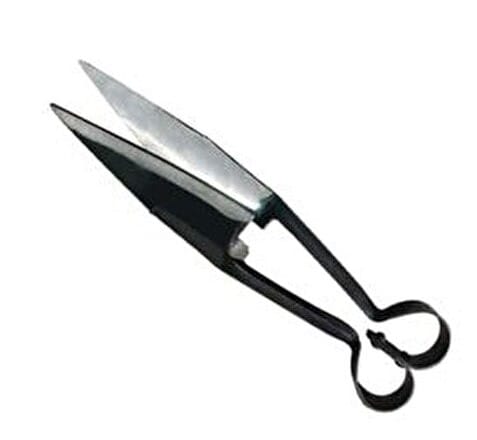
Hevrîng (Sheep shears)
ASKING FOR A DEBT
The mayoral elections were approaching. Mecit Hun was also a candidate.
A young man was silently placing leaflets, whose writings were blue because they came from an alcohol-based duplicating machine, on tables in teahouses, and quickly moving away.
Hamit Hun read the paper with curiosity. It read:
"Do not vote for the Kurdish nationalist and Communist Mecit Hun! He appears to be a very respectful, helpful, and gentlemanly person, but do not be fooled by this. He is a registered Kurdish nationalist and also a Communist agent. Moreover, he receives financial aid from Armenians. There are also suspicions that he is an Iranian agent. All of this is available in state records. It also saddens us that he is the leader of the Geloylu Tribe. PATRIOTIC CITIZENS OF IĞDIR"
As Hamit Hun burst into laughter, Mecit Hun sat at his brother's table:
"What happened, Hamit, why are you laughing?"
"They wrote good things about you! But something is missing."
Mecit Hun read the text, smiled, and then asked curiously:
"What's missing?"
"They should have added this: 'Mecit Hun has not yet repaid the money he borrowed from his brother Hamit Hun to pay for a taxi.'"
Mecit Hun immediately reached for his wallet.
AH OBLOMOV!
It was a mild spring day outside. Hamit Hun was lying on the divan on the balcony, with a pillow under his head, enjoying reading the book titled OBLOMOV, written by the famous Russian author Goncharov.
Oblomov is the son of a wealthy land aristocrat. He has a huge mansion, endless lands, and peasants in a slave-like status in the countryside. He doesn't need to work. He spends his time living alone in a house in a wealthy neighborhood of St. Petersburg. He has a servant named Zahar, who is extremely devoted to him. Oblomov, who doesn't get out of bed all day, repeatedly shouts:
"Zahaaar! Where are you?"
Zahar immediately appears before his master, hands clasped, and fulfills his wishes.
Hamit Hun, dreaming of Oblomov's comfortable and peaceful life, drifted into a light sleep. He was suddenly awakened by a harsh and commanding voice. His wife made a request:
"Hamit, it's not time to lie down! You're tall, change these light bulbs. Then tie the clothesline to the highest branch of the tree."
Waking from his sweet dreams, Hamit Hun muttered to himself:
"I've given up on the mansion, the money, even Zahar. If only they would leave a person alone for a few hours!"
NOAH'S ARK SYMPOSIUM
In the 1980s, Hamit Hun was invited to the "Noah's Ark Symposium" organized by the Ministry of Culture and Tourism in Doğubayazıt district. Hamit Hun knew Kurdish as his mother tongue, Turkish from school, and some Persian and Arabic from what he had learned from poems.
During the scientific meeting, a meal break was given. Hamit Hun, with his tray in hand, was looking for a seat at the tables when he saw a Far Eastern-looking lady alone at a table. He smiled and sat opposite her. The Japanese professor, an expert on Mount Ararat, politely bowed her head and greeted Hamit Hun respectfully, and Hamit Hun smiled back. Unfortunately, they had no common language to communicate.
To liven up the table, the Japanese professor pointed to the chicken on her plate with her fork and then made a "cluck cluck" sound. Hamit Hun was intelligent. He understood that the Japanese professor was saying, "I am eating chicken." This time, the Japanese Professor pointed to Hamit Hun's plate full of beef with her fork, gesturing as if to say, "What kind of meat is this?" Hamit Hun also said "moo moo." The Japanese Professor understood that it was beef. Both of them burst into laughter.
The translator, seeing Hamit Hun joking and laughing with the Japanese Professor from a distance, found an opportunity and leaned into Hamit Hun's ear:
"Mr. Hamit, I saw you speaking Japanese. The lady doesn't understand my English. Could you tell her to wake up at 5 AM tomorrow! There will be a Mount Ararat hike. Don't let her forget!"
Hamit Hun, even if jokingly, did not miss this opportunity:
"Don't worry! We'll sleep together, and I'll wake her up for the morning prayer."
COLD
Hamit Hun caught a cold and lay in bed with a fever. His wife applied cupping to his back. Hamit Hun was indeed seriously ill because the marks from the cups were pitch black.
A few days later, Hamit Hun, having recovered a little, went to the hammam. From the moment he undressed, those who saw the cupping marks on his back began to say, "Get well soon, Mr. Hamit." When Hamit Hun pulled his peştemal (bath towel) over himself and entered the steam room, those who saw the black cupping marks also offered their "Get well soon" wishes.
Hamit Hun got dressed and went out into the street. However, even his close friends he met did not offer "Get well soon" wishes. Hamit Hun muttered to himself, "How strange! How understanding and polite people are when they are naked; and how indifferent they become when they are dressed."