Covid Ward, Quantum Mechanics, and the Algerian Revolution
This essay explores the unexpected connections between a COVID-19 isolation ward, the principles of quantum mechanics, and the complex history of the Algerian Revolution, drawing on personal anecdotes and historical insights.
Dear Readers!
You might wonder what connection there is between the three different expressions above. For that, I ask for a little patience.
THE BOOK "CANCER WARD"
Every child is undoubtedly influenced by the family they are born into and grow up with. This was true for me too. My father (Mecit Hun) would come home every evening with a bundle of newspapers under his arm. He would shut himself in his room, meticulously read the newspapers, and stack each one he finished at the end of the table. This was a message to the household: "You can now take these newspapers if you wish." We would eagerly grab the newspapers and rush to the other room.
I was a child of 12-13 years old. My father was an idol to me. His newspaper reading, his typing on a typewriter, his careful turning of book pages, and the deep meditative state he entered while doing these things deeply impressed me.
My father was one of the first serious journalists in Iğdır and Eastern Anatolia. Between 1952 and 1955, he published the newspapers DİL, FIRILDAK (Iğdır's first and last humor newspaper), ŞARKIN DİLİ, and PAMUKOVA (the first serious intellectual newspaper of Eastern and Southeastern Anatolia). For this reason, buying and reading newspapers and magazines of every political persuasion was his life's hobby.
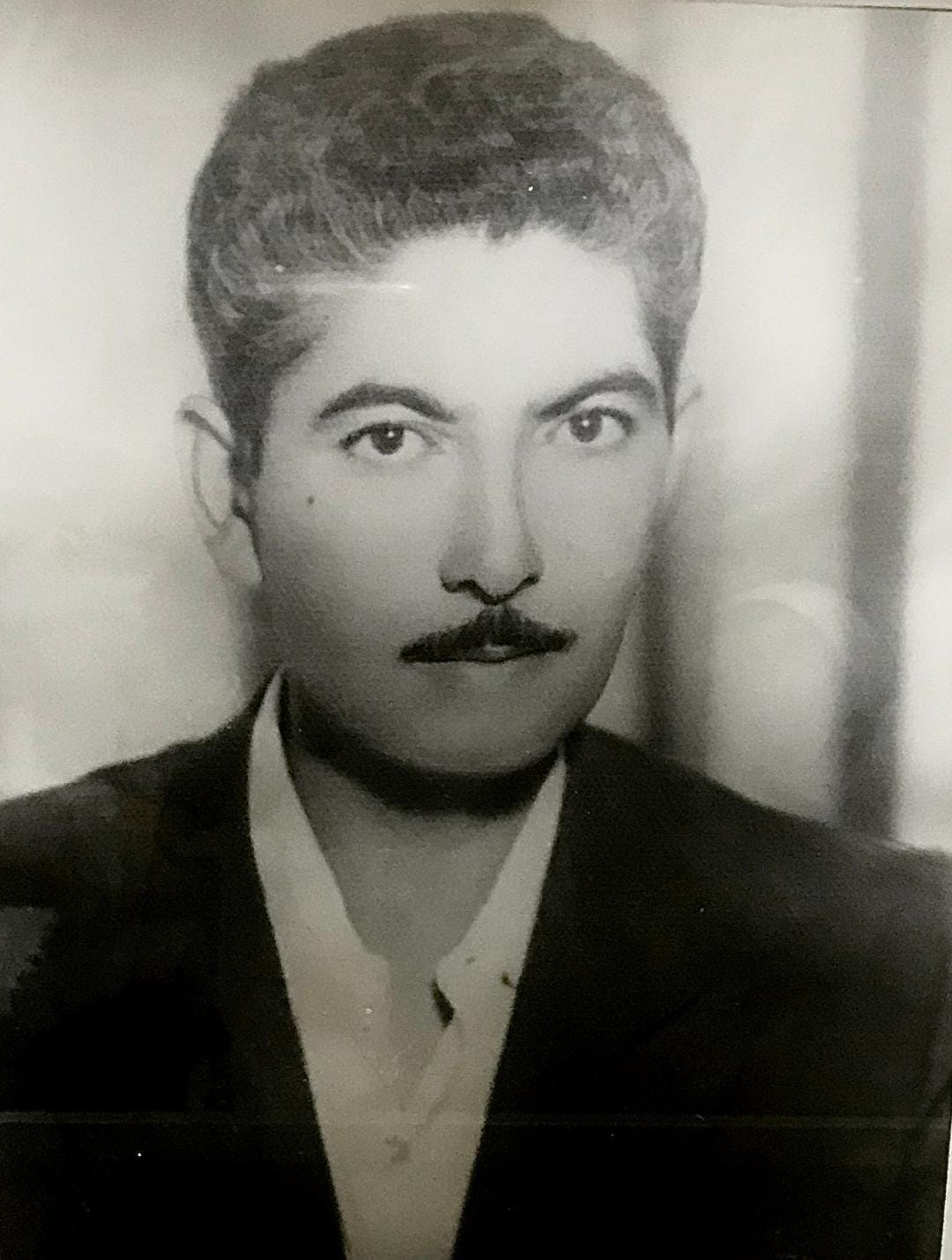
January 29, 2022, marks the 24th anniversary of the passing of my late father, Mecit Hun. I remember him with mercy!
My father also loved to read books. I think it was 1971. One day, my father came home with a book in his hand. It was the newly released "Cancer Ward" by the Russian writer Solzhenitsyn.
"Cancer Ward" was published by ALTIN KİTAPLAR YAYINLARI. With its special double cover and red thread bookmark, the book was captivating at first glance.
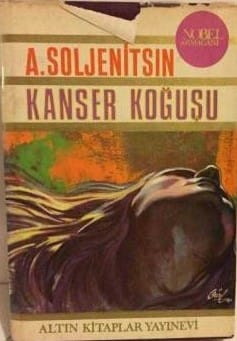
One day, when my father was not home, I picked up the book. I started reading. It talked about cancer patients and wards. After reading a few pages, I closed the book with a shiver, and from that day on, whenever I saw the book, I would flinch with a strange feeling. The reason for this was the depressing conversations among a handful of people who, despite being confined to a hospital ward due to incurable cancer and knowing they were left to die, had not lost hope of recovery.
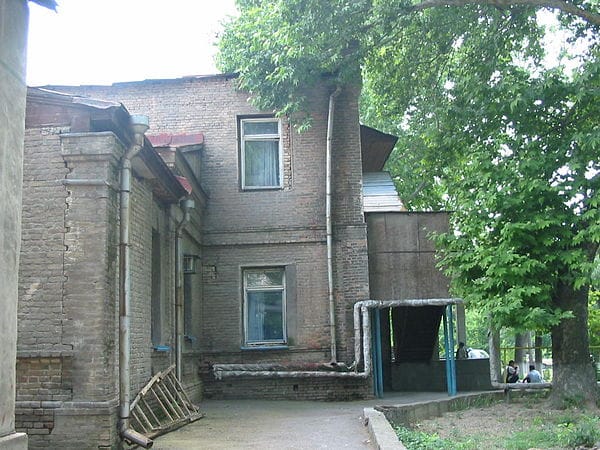
Years later, when I reread the book completely, I would understand that it was semi-autobiographical. Solzhenitsyn, exiled to Siberia by Stalin, contracted cancer and was confined to a cancer hospital in Tashkent with other prisoners like himself. Solzhenitsyn first serialized his experiences in the cancer hospital in 1954 in a newspaper in 1966.
When "Cancer Ward" gained interest, it was published as a book but immediately banned. At that time, there was a relentless psychological race and rivalry between the Eastern (Communist) and Western (Capitalist) Blocs. The British published the book without obtaining copyright from the author. Solzhenitsyn was awarded the 1970 Nobel Prize in Literature for "The Gulag Archipelago," "Cancer Ward," and his other works.
COVID WARD
On Monday, January 10, my wife Şeval and I came to Iğdır. A week later, I experienced something similar to a cold, and then at 3 AM on January 18, I had to go to the Iğdır State Hospital Emergency Room. The test revealed that I had contracted COVID. My wife and I were quarantined in the place where I was staying.
The room I was living in reminded me of Solzhenitsyn's "Cancer Ward." Today is my fifth day in the Covid Ward. As the exhaustion caused by COVID lessened, my hand finally met the keyboard.
QUANTUM MECHANICS
I don't know about you, but during times of illness and convalescence (recovery), my mind drifts to topics like philosophy, astronomy, sociology, and physics, and I find myself engrossed in "thought experiments" like Einstein. Quantum mechanics is one of my favorite subjects. If my reader permits, I would like to briefly explain the basic principles of quantum mechanics.
The world of physics needs to be evaluated by dividing it into three different universes:
- Macro universe (level of stars, galaxies, black holes)
- Normal universe (earthly level, i.e., people's daily life level)
- Micro universe (level of atoms, protons, electrons, quarks, neutrons, i.e., particles)
Humankind first dealt with the physics of the Normal Universe; with Galileo Galilei and Newton, we learned the fundamental laws of the normal universe; with Einstein's General and Special Relativity theories, the laws of the macro universe; and with Niels Bohr and Max Planck's quantum theory, the laws of the micro universe.
As you can see, each universe has its own laws. Without going into too much detail here, I would like to summarize an interesting law that exists in the micro universe, that is, in quantum mechanics, without using too much scientific jargon: "A particle can be in two different places at the same time."
This law is, of course, not valid in the normal universe, for example, in the world we live in. For instance, I would like to be both in the Covid Ward and outside at the same time, but unfortunately, this is a dream!
While thinking about these things, the question arose in my mind: can social and political events exist in two different places, independently, in a similar but not identical way, in accordance with the laws of quantum physics?
Suddenly, an anecdote from years ago in Paris came to mind. Actually, there's no particular reason for me to write this, but here, while killing time in the Covid Ward, the human mind enjoys jumping from one branch to another.
To make the anecdote understandable, I need to explain some terms.
KASBAH
What a strange name, isn't it? The Arabic word Kasbah (قصبة) means "fortress" or "citadel." However, the word Kasbah is used especially in the Maghreb (Algeria, Tunisia, and Morocco) to mean "inner citadel" or, more accurately, "old city."
As you know, cities were formerly surrounded by walls; thus, "fortress city" structures emerged over time. From the 19th century onwards, as walls lost their significance and due to population growth, "inner-city" areas lost their importance, and thus the development of new cities spilled outside the walls. For example, in Ankara, we have a tourist attraction known as "Kaleiçi" (unfortunately, there are no others!). People still live in the houses within the walls, meaning the "old city" still exists. Over time, Ankara began to grow beyond the "inner-city." The first district was named Ulus. Other districts were established later.
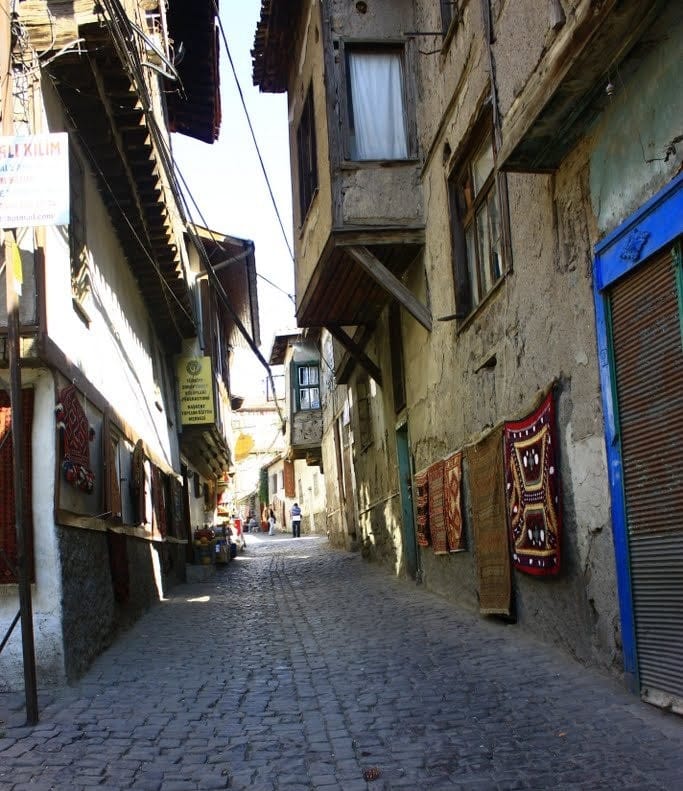
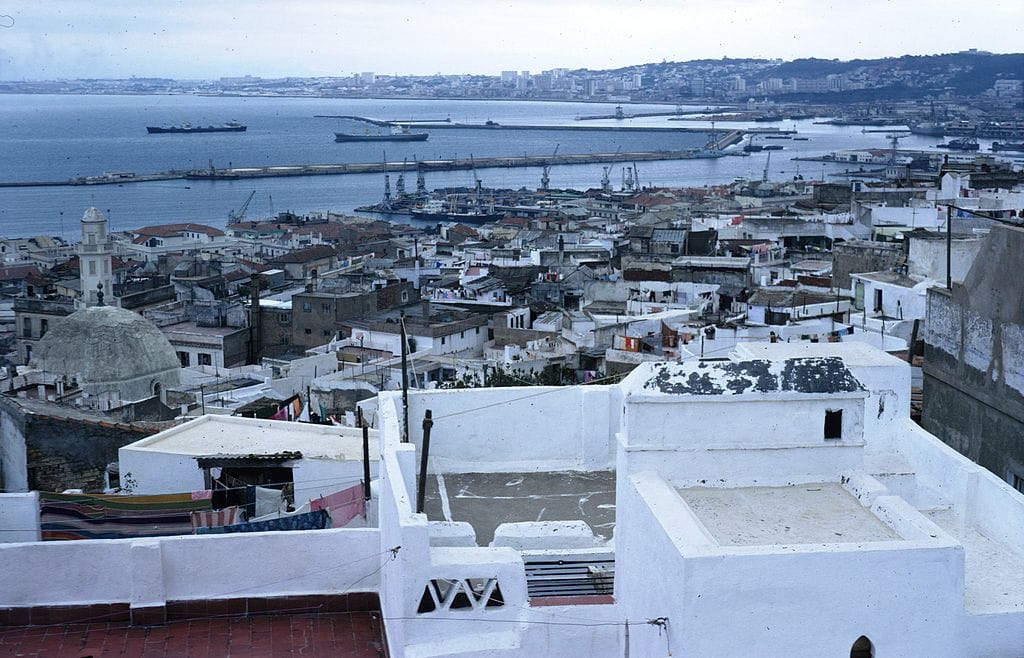
There is a state called Algeria in North Africa. The capital of the Algerian state is also Algiers. In the city of Algiers, the district around the fortress on a hill near the coast is popularly known as "Kasbah." With its narrow streets, intertwined multi-story buildings, and labyrinthine alleys, the Kasbah had long been famous as a place where outlaws hid and roamed freely.
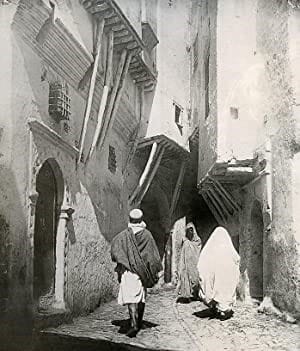
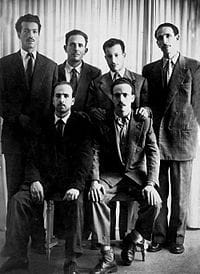
The six-person team that started the Algerian War of Independence was hiding in the Kasbah, planning the revolution there.
(Note: The Algiers Kasbah was declared a World Heritage Site by UNESCO in 1992.)
PIED-NOIR (pye nwɑr)
Algeria was a French colony for 132 years, between 1830 and 1962. An 8-year civil war or war of independence took place in Algeria between 1954 and 1962. Algeria gained its independence on July 5, 1962.
(Note: Turkey made a historical mistake. It did not immediately recognize Algeria's independence. However, after a 26-day delay, on July 31, 1962, Turkey officially recognized Algeria. The 26-day delay was etched into history as a black mark in Turkey-Algeria relations. Moreover, Algerians made it a tradition to hold innocent Turkish citizens like me accountable for it.)
When Algeria became a French colony, a significant Christian and white population from Europe settled in the northern coastal cities of Algeria. Their children grew up in Algeria. In this way, 6-7 generations of white and Christian French population multiplied in the northern cities of Algeria, forming a large population. When Algeria gained its independence in 1962, this white and Christian French population (10% of the Algerian population), for security reasons, rushed to metropolitan France in a panic. Millions of immigrants struggled to start a new life from scratch in metropolitan France in a desperate state.
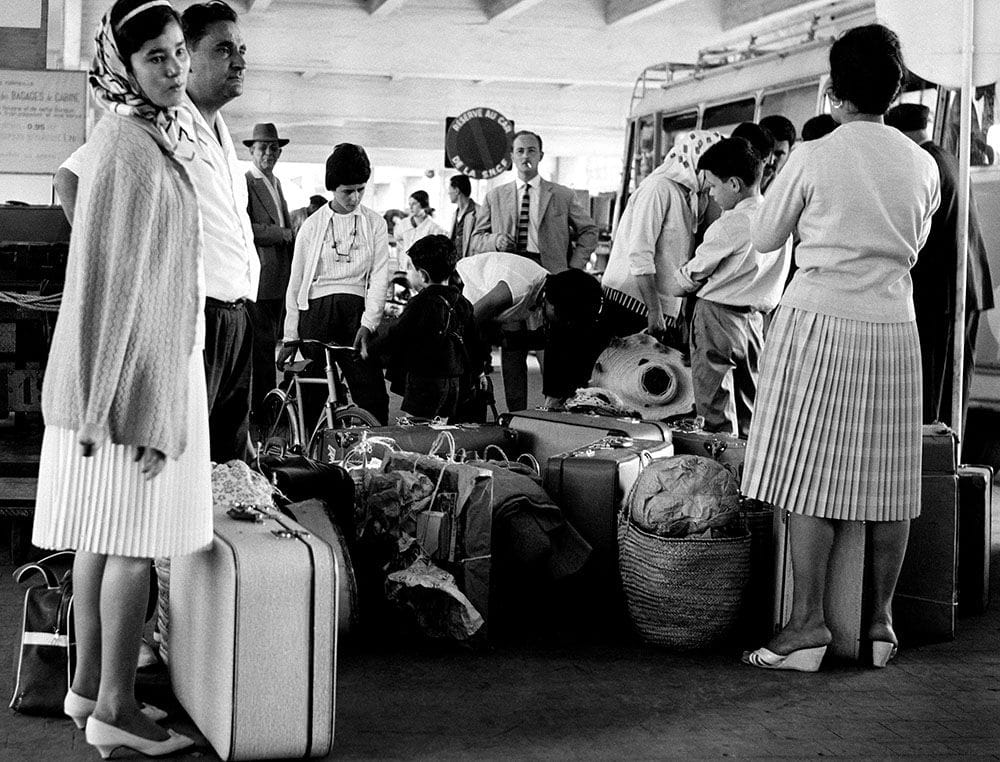
As you know, when Africa is mentioned, the adjective "black" comes to mind. For this reason, since these French immigrants came from Africa, European French people called them "Pied-Noir (black-foot)." Among the famous "Pied-Noir" names, we can count Albert Camus, Nobel laureate in Literature, fashion designer Yves Saint-Laurent, singer Enrico Macias, and philosopher Jacques Derrida.
HARKI
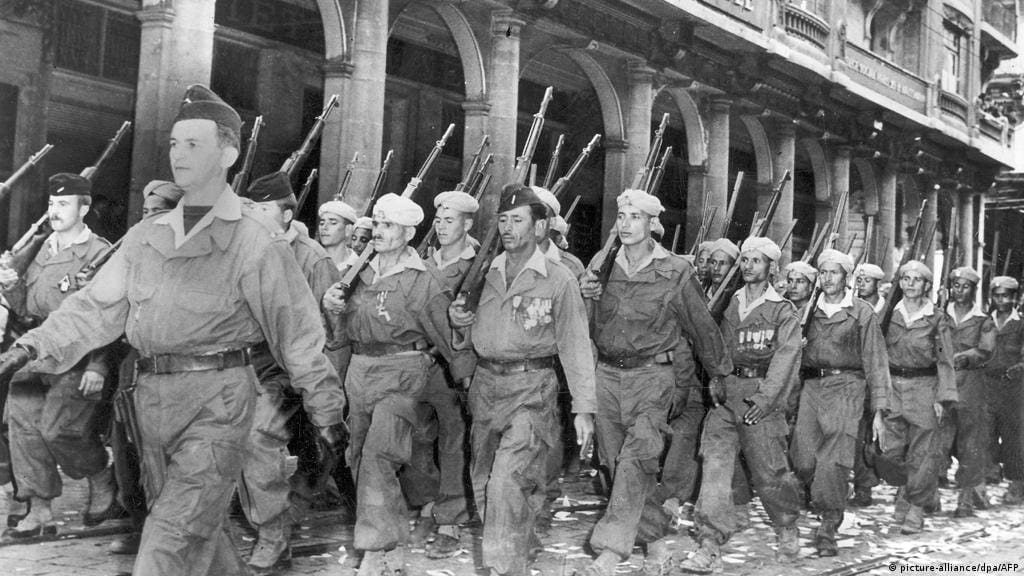
During the Algerian War of Independence (1954-1962), some of the local population sided with the French. It would be correct to list them as follows:
- 45,000 Harkis (military units composed solely of local inhabitants, wearing official military uniforms, and fighting against the FLN alongside the French army. A structure similar to the Hamidiye Regiments.)
- 60,000 conscripted local inhabitants (to fight against the FLN)
- 20,000 professional soldiers
- 60,000 local militia members (a structure similar to village guards)
- 50,000 state employees (local people working in government offices in French colonial Algeria)
The word "Harki" was initially the name given only to military units composed of local inhabitants fighting on behalf of the French Army. Over time, the word "Harki" was used for all the groups listed above, meaning "collaborator."
KABYLIA
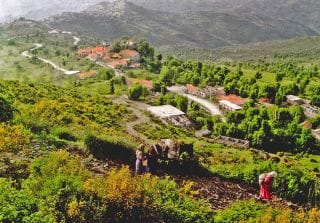
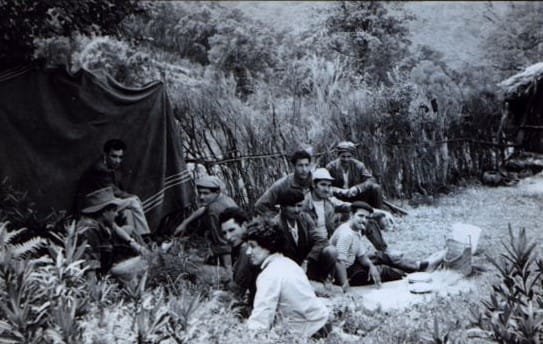
Kabylia is the name of the region starting south of Algiers, extending to Tunisia, and located north of the Atlas Mountains. It is a region densely populated by Berber tribes. Being a mountainous region, it served as the base of operations for the FLN (National Liberation Front) guerrillas during the Algerian War of Independence. The armed struggle, which began on November 1, 1954, as one of the important steps towards Algeria's independence, was ignited in Kabylia and spread throughout the country.
A CAFETERIA IN PARIS
The year is 1987. My years working in Paris... I was in an intense work rhythm. Concepts like morning-evening or weekend holidays had no place in my mind. I was single. And I loved to work.
Those were the days when I was drowning in computer software algorithms. It was late at night. I would leave work and walk to the St. Placide metro station, descend the stairs with tired and distracted steps, and get on the metro. After a 15-minute journey, I got off at the Port de Clignancourt station, the closest metro to my home. Thanks to the company's sponsorship, I was staying almost for free in social housing, known among the public as HLM (ash-el-em).
After exiting the metro, there was a cafeteria (café) right on the corner. It was the last place I could grab a bite before going home.
It was during the days when I had just moved to the neighborhood. Around 10 PM, I entered the cafeteria. I ordered a toast and tea. I took out Albert Camus' novel "The Stranger" from my bag and started reading.
The cafeteria's customers were mostly Black people and Arabs from former French colonies. I would later learn that the owner was also an Algerian Arab.
A waiter, an Arab-looking man in his 50s or 55s, was serving the tables. As he placed the toast and tea on the table, he started talking:
"What's that! Are you reading a Pied-Noir's book?"
I didn't understand anything he said, I mumbled:
"Camus's book!"
"I know! Pied-Noirs suffered a lot too!"
I didn't know what "Pied-Noir" meant. To be honest, it was the first time I had heard it.
"You look like a foreigner, where are you from?"
"From Turkey!"
The man at the bar, hearing the word "Turkey," interjected from afar with a mocking grin:
"Turkey betrayed Algeria!"
Then he continued, wagging his index finger from side to side:
"It shouldn't have! Algeria remained under Turkish rule for 300 years. Turkey did not recognize Algeria's independence. It betrayed its Muslim brothers."
I knew this detail, albeit vaguely, but I thought it had been forgotten. The bartender, having caught a Turk, was indulging in the pleasure of taking revenge for the past. The waiter turned to the bartender and interjected in an angry tone:
"Shut up! Mind your own business, you dirty Harki! As if you fought for Algeria's independence!"
I didn't know what 'Harki' meant either.
Meanwhile, I want to make a note: If you plan to go to a country whose language you don't know and live there for many years, you should carry a small notebook to jot down unfamiliar words. I had made this a habit.
I took out my notebook from my bag and wrote down the words: Pied Noir, Harki.
As I said goodbye and left, the waiter, trying to make up for the bartender's disrespectful outburst, called out kindly from behind:
"See you tomorrow! I'll be waiting for you!"
***
The next day, at the same time, I was sitting at the same table in the same cafeteria, eating toast and tea. In the meantime, I had learned what the words Pied-Noir and Harki meant.
When the place was quiet, the waiter sat on the chair next to me. He had a burn scar on the right side of his face. He fixed his eyes on me:
"What do you know about the Algerian Revolution?"
"To be honest, I've only read a few short articles. I don't know much."
"I am a former FLN member. I fought in the mountains as a guerrilla. After independence, there were disagreements. I fled to France, settled in Paris. Would you like me to tell you about the Algerian Revolution?"
"What does FLN stand for?"
"It's the initials of 'Le Front de Libération Nationale' (National Liberation Front)."
"Yes, I would like to hear about the Algerian Revolution from you."
"What is your name?"
"Mujahid!"
"A beautiful name. My name is Farid. (Pointing to his friend at the bar) His name is Said. Nice to meet you. I am a child of the Algerian Revolution. I will tell you everything, but not today! It's late! Cafeterias are quiet on Mondays. Try to come early, okay?"
"Okay!"
***
On Monday, I went to the cafeteria earlier, around 7 PM. The waiter asked me to sit at a table in the back, far away. The bartender, Said, was both tending the bar and waiting tables. Farid, the FLN member, sat next to me. He lit his cigarette.
"I joined the FLN in 1957. I was a young man of 17. First, I want to talk about 1954. I need to explain how the FLN was founded. I was 14 years old. I was born and raised in the Kasbah. The Kasbah is a district of Algiers. It is built on a hill. You should see it! Thousands of houses stacked on top of each other, winding streets, countless doors, terraces, stairs... Mostly Kabyles live here, and some Arabs, but everyone speaks Arabic. At home, we spoke Kabyle. My father came from Kabylia and settled in the Kasbah. So I knew three languages: Kabyle, Arabic, and French.
I was a street newspaper vendor. I would put a bundle of newspapers under my arm, leave the Kasbah district, and walk through the streets of the rich neighborhoods where the pied-noirs lived, selling newspapers.
One day, the sole of my shoe came off. I went to the shoemaker. He was an old man. While he was repairing my shoe, he was also asking me questions. Then I understood that he wanted to know what kind of child I was, whether I could be trusted:
"Let's make a deal! I will repair your shoe, I won't charge you, but you will take a package I give you to such and such an address. Agreed?"
"No problem!"
"But this package must not fall into the hands of the police or the army. Do you promise to be careful?"
"Yes!"
The package was not large. I tucked it inside my shirt. I walked through the narrow streets and stairs of the Kasbah and arrived at the said house. A man was sitting in front of the house, sewing something with a large needle. He blocked me from going up the stairs.
"I need to go to that house. Please let me pass?"
"I am the owner of the house. What do you want?"
I took out the package from my bosom and handed it to him. His facial expression changed.
"Disappear immediately! Don't tell anyone anything, okay?"
"Okay!"
From that day on, I regularly visited the shoemaker and delivered the packages he gave me to the same man. I would later understand that the FLN's leadership cadres were hiding in this house.
One day, I again put the package in my bosom and went to the FLN's safe house. The owner of the house was nowhere to be seen. I went up the stairs and knocked on the door. A gentleman in his 30s opened the door. He gestured for me to quickly come inside. He ordered me to sit on a chair. After glancing at the documents I handed him, he started talking to me:
"You know how dangerous your mission is, don't you?"
"Yes, sir!"
"What is your name?"
"Farid!"
"My name is Krim Belkacem! Where is your family originally from?"
"From the Kabylia region. We are Kabyle. We speak Kabyle at home."
"I am also Kabyle. Remember, you are now also a child of the Algerian Revolution. Do you swear to be loyal to your cause?"
"Yes, I swear!"
"Don't tell anyone, not even your family! You can go now."
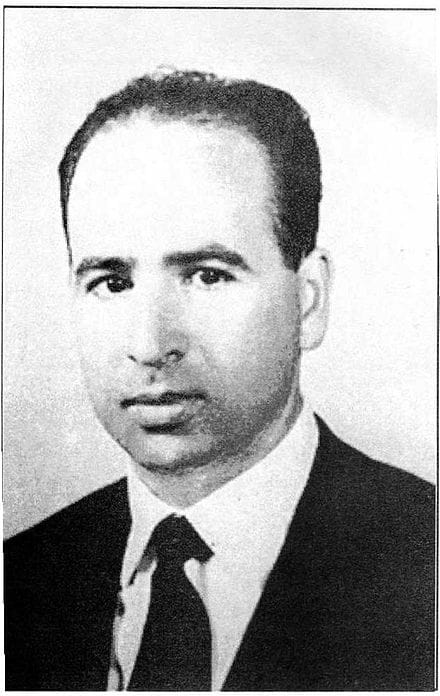
As I went down the stairs, I thought to myself about the name "Krim Belkacem." Since I was a street newspaper vendor, when I got tired, I would sit somewhere and read the newspaper. Krim Belkacem was wanted by the French police in Algiers. I had seen his pictures in newspaper pages. I want to give a brief information about Krim Belkacem. He was one of the six founding members of the FLN. Krim Belkacem initiated the first disciplined guerrilla movement. He became famous as the "Lion of the Mountains." From 1945 onwards, he first organized a group of guerrillas in the Kabylia region. By 1954, Krim Belkacem had 500 guerrillas under his command. In 1956, the French Army launched the "Blue Bird" operation against the FLN guerrillas. Krim Belkacem defeated the French army and seized their weapons. Thanks to these weapons, the revolutionary movement gained momentum. Krim Belkacem even wrote a letter to the French commander, sarcastically thanking him for the captured weapons. After this, Krim Belkacem settled in the Kasbah district and tried to spread the revolution to the city of Algiers. It is a fact that Krim Belkacem was the most important military strategist of the FLN. In a sense, Krim Belkacem organized the revolution. He made the most important decisions. In 1962, he participated as the head of the FLN delegation in the peace talks with the French in Evian and signed the peace agreement. However, shortly after the declaration of independence, he fell out with the Arab nationalist Ben Bella and was forced to leave Algeria."
Farid, lost in the past, was detailing how he joined the Algerian Revolution at a young age. I interjected:
"Is the Kabyle language different from Arabic?"
"Of course! Kabyle is a dialect of the Berber language."
My mind was confused. Before coming to France, the Algerian Revolution meant to me: Muslim people live in Algeria. They are all of Arab ethnicity. They all speak Arabic. These indigenous people revolted against French colonialism and gained their independence. However, the facts were so different...
I didn't want to continue my conversation with Farid without getting more information about Algeria. I asked for permission and left.
Since there was no internet in those years, it was almost a necessity for those who wanted to get accurate information to go to libraries. At a suitable time, I went to the famous library known as Centre Georges-Pompidou. I spent the day browsing books and encyclopedias. The following picture emerged:
There were two ethnic groups in Algeria: Berbers and Arabs. However, considering the spoken languages, there was a fragmented structure as follows:
Ethnic Origin Spoken Language
Arab Arabic
Berber Berber
Berber Arabic
The spoken Arabic had nothing to do with standard Arabic. It was an Arabic known as the "Maghrebi dialect." For example, it is almost impossible for someone who has learned standard Arabic to understand Maghrebi Arabic. Furthermore, there was no standard Berber language spoken by the Berbers living in North Africa. The language spoken by the Berbers in Algeria was Kabyle, a dialect of Berber. So, for example, it was not possible for a Berber living in Morocco and a Berber living in Algeria to understand each other. Things were getting even more complicated.
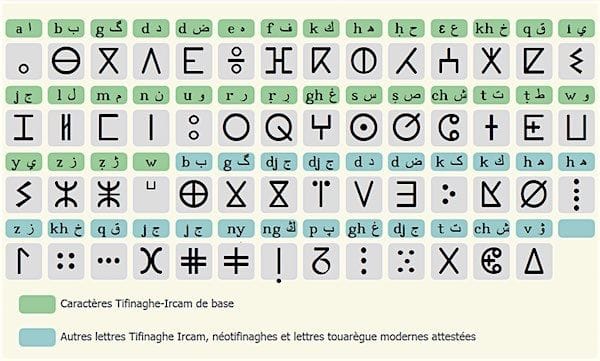
Kabyle in Algeria was written with three different alphabets. Initially, the Berber alphabet was used. Later, this was abandoned, and the Arabic alphabet was adopted. From the 20th century onwards, the Latin alphabet came to the forefront. Of course, this was the case for the Berbers in Algeria. For example, the Berbers in Morocco preferred to use the Arabic alphabet.
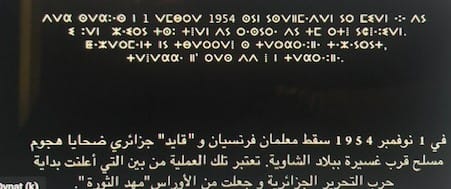
The confusion didn't stop there. French colonialists had forbidden the teaching of Arabic and Berber in schools and had done their best to make them forgotten. The use of Arabic was only allowed in madrasah education. Therefore, all local people knew French more or less. On the other hand, Arabs secretly put pressure on Berber, trying to suppress and make it forgotten. Go figure!
FIGHT IN THE CAFETERIA
After I thought I had enough information about Algeria, I visited the cafeteria again. Farid greeted me with a smile:
"We haven't seen each other for a long time!"
"I've been busy."
Farid sat at my table without being asked. He wanted to continue our conversation from where we left off. He needed someone to listen to him.
"Said, I'm going to chat with Mujahid for a bit."
"Okay!" Said reluctantly approved.
Farid began to speak:
"Krim Belkacem was put on the wanted list because he and a group of friends took action during the 1948 Constitution vote, and the police pursued him. Krim Belkacem hid in the mountainous region of Kabylia. At one point, he killed a few people who collaborated with the French. His fame spread, and the number of rebels around him increased. So, the Kabyles started the Algerian Revolution. The Arabs joined later."
He continued his speech, pointing to Said:
"Most of the Arabs became Harkis (collaborators)."
Said reacted to this verbal attack:
"There is no such people as Berber. Nor is there such a language! Algeria is Arab."
Farid angrily replied to Said:
"Where did the Algerian Revolution begin? In the mountains of the Kabylia Region... didn't it?... What does the Kabyle language have to do with Arabic? Moreover, the vast majority of those living in the Kasbah district of Algiers are Kabyle. The second leg of the revolution is the Kasbah district. Krim Belkacem assigned Abane Ramdane, who was also Berber, to create panic in Algiers by bombing the cafes frequented by the pied-noirs. Abane Ramdane settled in the Kasbah. He organized women. Through them, he detonated bombs in cafes. These attacks meant a psychological defeat for the French colonialists. The Arabs had no intention of making a revolution. They saw that the Kabyles would succeed in the revolution, and Arab intellectuals like Ben Bella took refuge in Arab countries, collected money, and took control of the FLN's leadership through money and diplomacy. The Arab cadres of the FLN tried and killed Abane Ramdane, a Berber-origin architect of the revolution, in 1957. When the Algerian Revolution succeeded in 1962, Ben Bella, who had the support of Iraq and Egypt, first exiled Krim Belkacem. Because I was Kabyle, I also had to flee to Paris in those years. The Arab nationalist government of Algeria strangled Krim Belkacem with a tie in a hotel in Frankfurt in 1970."
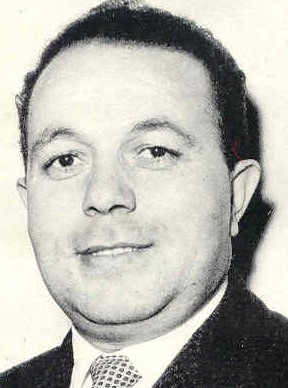
Farid spoke loudly:
"Said! Don't be an Arab nationalist for nothing! Answer me, what is the official language in Algeria right now (1987)?"
"French," Said replied.
"See? The revolution happened in 1962, 25 years have passed, and French is still the only official language in Algeria! If Arabs were so fond of their own language, Arabic would have been the official language of Algeria from day one. Arabs are cowards! The best thing they know how to do is be Harkis (collaborators/traitors)."
Said did not want to be outdone:
"Tell the truth! Didn't Harkis emerge from among the Kabyles?"
"They did, but they were Arabic-speaking Kabyles. Arabs assimilated them for centuries. They made them like themselves, they made them traitors too. Kabyle-speaking Kabyles are the true owners of the revolution. You are traitors!"
Said hurled the glass he was drying with all his might towards our table. The glass hit the edge of the table and shattered into pieces. Farid quickly got up and walked towards Said with his chair. The centuries-old tension turning into such a confrontation in a cafeteria in Paris scared me. I quickly left.
As a strange manifestation of history, Said, who collaborated with the French army in the Algerian Revolution, and Farid, a child of the revolution, had come together in Paris and opened a cafeteria jointly, but the reckoning in Algeria had not left their souls.
CONCLUSION
Arabic became the official language of Algeria in 1990, 28 years after the Algerian Revolution. The Arab government of Algeria banned Berber. In the early 2000s, Berbers revolted against the Algerian government to have their language recognized. Algeria recognized Berber as a national language in 2002. When the Berbers were not satisfied with this, Algeria, with an amendment to the Constitution in 2016, accepted that official correspondence could also be conducted in Berber. Today, the tension between the Berber and Arab ethnic groups still continues. Berbers are now continuing the struggle they once waged against French assimilation against Arab assimilation. How strange, isn't it?
All this reminded me of the Hamidiye Regiments, the Village Guard System, the Kurmanjis' disdain for Zazaki, even their desire to deny its existence, and many other events. Yes, social and political events, just like in quantum mechanics, can exist in similar ways in different places at the same time.