Copernicus's Dream and Iğdır
This essay explores the author's "Iğdır dream" of a prosperous, harmonious future for the city, drawing a parallel with Copernicus's revolutionary astronomical insights that emerged from his nightmares.
COPERNICUS'S DREAM AND IĞDIR
Once upon a time in Europe, there was a kingdom called Poland (today's Poland). In 1473, a child named Copernicus was born in a town called Thorn. In those years, all of Europe was devoted to the Catholic religion. The Papacy held absolute authority. Those who opposed it were tried by the Inquisition and burned at the stake. In those years, Catholic belief held that the world was flat and the center of the universe.
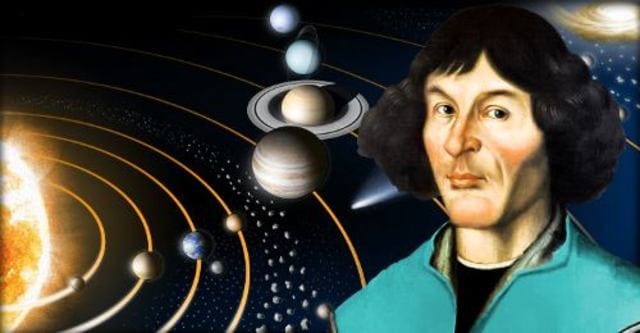
In his 20s, Copernicus began to have nightmares. Spheres would revolve around him, approaching and receding as if about to hit him. Each time, Copernicus would wake up in a cold sweat, not knowing what to do. This continued for weeks. Thinking he had sinned, and hoping for a solution, he went to the confessional booth, known as the "Sacrament of Penance," of the Catholic priest and knelt:
"Father, I've been having the same nightmare for months. I can't sleep. I want to confess."
"What kind of dream are you having?"
"Thousands of spheres, large and small, are moving around me, as if about to hit me. I wake up in fear and don't dare to sleep again."
"Yes, my son! It's clear you've sinned... If you want to be rid of your sins and find peace, make dozens of spheres, large and small, out of mud. You'll see, you'll gradually find peace."
Copernicus returned home. He eyed the area in his garden that he had used as a pool in his childhood, which was no more than half a meter deep and now empty of water. He made solid, concrete-like spheres and threw them into the empty pool. He continued this work for days. Seeing his nightmares diminish, he rejoiced and continued the task given by the priest with even greater enthusiasm.
One night, it rained heavily and ceaselessly until morning. Copernicus was saddened, thinking the spheres he had made would be ruined. His first act in the morning was to rush to the pool. He was astonished by what he saw: all the spheres were moving in the water. The interesting thing was that while the large sphere remained motionless in the center, the other smaller spheres revolved around it. Copernicus's mind was shaken by a great excitement at that moment, and a light dawned within him. He ran home. He sat at his desk. He drew a picture of the spheres he had seen in the pool. In the evening, he looked at the sky. He likened the stars and planets to the spheres in the pool. He thought that the large sphere in the middle was the sun itself. This time, the question came to his mind: the spheres in the pool move in water; do the planets in the sky also move in something, being spherical in shape? In those years, Newton had not yet been born, so he lacked knowledge of gravity or the gravitational pull between objects. Soon, he concluded that the planets and all celestial bodies were round and moved within a colorless, odorless substance he called ETHER. He had an extraordinary interest in mathematics. After a few months of work, he reached the following conclusions:
- The spheres or circles in the sky do not have a single center.
- The center of the Earth is not the center of the universe.
- All spheres revolve as if the Sun is in their center, therefore the Sun is the center of the universe.
Copernicus's heliocentric theory caused controversy in the Catholic Church. Soon after, an Italian named Galileo Galilei proved Copernicus right with his experiments. The Earth is an ordinary planet revolving around the sun, not the center of the universe as the Catholic religion claimed.
MY IĞDIR DREAM
For a long time, I, too, frequently saw Iğdır in my dreams, waking up in nightmares just like Copernicus. In my dreams, I saw Azeri-Kurdish conflicts, the PKK stealing the minds of the youth and taking them all to the mountains, illegal militia forces terrorizing neighborhoods and extorting money, youth addicted to heroin and drugs, endless brothels, unemployed and idle youth, streets smelling of shisha, the disappearance of spirituality, respect, and reverence, smuggling and arms trade becoming ordinary occurrences, mafia gangs, educated individuals who, despite their education, sowed discord within their own tribe and village, coveted the lands of their cousins, profited from the discord they created and from village return projects, pedophiles and child molesters, schemers, gossips, and false witnesses roaming around, tombstones being broken or graves being desecrated in the Asri Cemetery (Narınçoğlu), misogyny and violence against women becoming a daily habit, so-called writers constantly distorting Iğdır's history, gamblers documented as "thieves" by the Court of Cassation becoming provincial party leaders, and ruthless people destroying nature and tormenting animals. I would wake up in fear. Since there was no priest for me to confess to like Copernicus, I had to struggle with nightmares, even becoming reluctant to go to bed.
It was on such a day, while sitting in the National Library in Ankara, leafing through books, that a sudden light dawned within me. I took a pen and paper and drew a picture of Iğdır. Its people, free from ethnic and sectarian discrimination, were busy with their own work, their faces smiling, and their gazes full of friendship. My pen moved on its own, drawing high-speed trains on one side and dual carriageways on the other, creating large housing estates in Erhacı and around the University, satellite towns emerging, the city center of Iğdır shifting towards the University, vacant lands opening up for organic farming, brand names gaining nationwide fame for their jams and cheeses, the Armenian border opening, the Armenian Diaspora and war supporters being broken, the Alican bridge turning into a bridge of peace, Iğdır integrating with neighboring Nakhchivan and jointly undertaking educational and industrial initiatives, Mount Ararat becoming a global tourism center, colossal factories employing 3-4 thousand workers coming to life, the most important art awards finding their owners in Iğdır, five-star tourism facilities being established in Korhan, cable cars going back and forth to the summit of Ararat from all directions, Iğdır University transforming into a world-class research center, the airport serving as an international airport, fully equipped hospitals being established everywhere, education in the mother tongue being implemented, a youth devoted to Republican values looking to the future with self-confidence, and Iğdır proudly rising as the logistics and production center of Turkey and the South Caucasus.
Thanks to the nightmares Copernicus experienced, humanity came to know itself better. A new era began. I hope that thanks to the nightmares I have seen, Iğdır will also better recognize its potential and start a new period.
KURDISH-AZERI ANECDOTES
(These anecdotes are published for the first time. With my respects.)
BATHHOUSE PLEASURE
An Azeri and a Kurd neighbor decide to go to the bathhouse. The Azeri puts his loofah and soap in a plastic bag. The Kurd's hands are empty. When they reach the ticket booth, the enticing smell of the bathhouse excites them both. They quickly undress, open the huge, heavy wooden door, and enter the steam room. They find a basin each and sit facing each other. After catching their breath a little, the Azeri takes out his loofah and soap and washes himself thoroughly. The Kurd looks at his Azeri neighbor with envy. At one point, the Azeri neighbor complains:
"Don't even ask! No matter what I do, I can't get rid of the dandruff on my head."
"The solution to this problem is very easy," replies the Kurd.
"How?"
"You'll soap your head and face thoroughly, and then you'll wait for 15 minutes without opening your eyes. The soap will penetrate your skin and eliminate the dandruff."
The Azeri immediately soaps his head and face, props his elbow on his feet, and begins to wait for 15 minutes. The Kurd stealthily takes the loofah and soap and washes himself thoroughly. He then stealthily puts the loofah and the now smaller soap back in their place.
"Neighbor, you can pour water on your head now!"
The Azeri reaches for the dipper with great hope and washes his head. When he turns back, he sees that only a small piece remains of the large bar of soap. The Azeri mutters, half-angrily: "I understand, neighbor! With your method, both my dandruff and my soap are reduced!"
EAST-WEST CLAIM
One day, a Kurd and an Azeri are walking from their neighborhood towards the market when, for no reason, they bet 50 liras on which side is east and which is west. First, they try to convince each other. The Kurd points east and calls it west, but the Azeri correctly points west and calls it west. Their argument drags on, but they can't reach a conclusion. They agree to go to the coffeehouse and get the opinions of 20 people there. Whichever side the majority supports will win. When they arrive at the coffeehouse, perhaps because they don't trust each other, they both take out pen and paper. Together, they ask 20 people. Some confidently say, "This side is East, this side is West," and 10 people agree. Since half say West and half say East, there is no clear winner. They see a person approaching the coffeehouse in the distance. They go up to him. Now, whatever he says will determine the winning side. The man is blind. He cannot see. The two friends summarize everything that has happened to them. The blind man, acting cunningly, sets a condition: the winning side will give him 30 TL. The now exhausted bettors accept this condition. The blind man raises his stick and points to the East as West. The Kurd wins. Of course, he gladly gives 30 liras of his winnings to the blind citizen. So, the Kurd has won 20 liras. As the blind citizen walks away, he mutters to himself: "No matter which side I pointed to, I would have gotten my 30 liras anyway. Thanks to the foolishness of those who can see, blind people like me make a living, good or bad," and he continues on his way.
GARDEN WALL
Because the Azeri neighbor's chickens entered the Kurd's garden and the Kurd's sheep entered the Azeri's garden and caused damage, the two neighbors, the Kurd and the Azeri, decide to build a wall between their gardens. The Azeri acts generously:
"I will build a stone wall 1 meter high. You can complete it by building on top with mud bricks."
The Kurd accepts the proposal. The Azeri immediately gets to work and quickly starts building the wall. Since the Kurd doesn't know how to make mud bricks, he asks his friends in the city center. Everyone gives advice:
"First, you must prepare wooden molds! It would be good to go to a carpenter and order them!"
"You must find clay soil. You will mix it with water and add straw. Then you will knead and crush the mud with your bare feet. This way, the mud will become sticky."
"Don't forget! After pouring the mud into the molds, you must compact it well. Otherwise, the brick will be weak."
"After compacting the mud in the mold well, take a piece of wood and neatly scrape the top of the brick."
"Then you must remove the wooden mold and leave the brick as it is."
"First dry it in the shade, then put it in the sun!"
"You must turn the brick frequently so that each side dries!"
"If possible, put asphalt between the bricks when building the wall! The bricks will become like concrete!"
The Kurd carefully listens to all the advice given by his friends, returns home, and gets to work. He does everything perfectly as he was told, even finding asphalt to use as mortar. After the Azeri neighbor finishes the stone wall, it's the Kurd's turn. The Kurd, who has completed his preparations with great effort, starts building the wall and finishes it within a few days.
Finally, the two neighbors stand side by side. The Azeri praises his own wall:
"Mashallah, I built the stones like a castle wall."
The Kurd doesn't let the comment go unanswered:
"Is what you did even work? You didn't knead the stones, you didn't add straw, you didn't dry them in the sun, you didn't put asphalt between them. Just put the stone, throw mud on it, put the stone, throw mud on it! We Kurds have learned to build stone walls and houses this way since our childhood. Is this even work?"
The Azeri whispers in the Kurd's ear:
"You don't know the trouble I went through, my kinsman! The other neighbor had dumped stones in his garden to build a barn. I went through hell to steal them and bring them at night. The dogs caught me three times and tore me to pieces. We did it wrong. You were supposed to build the stone wall, and I the mud brick wall. I learned how to make mud bricks since my childhood. Should we tear down the wall and rebuild it? What do you say?"
KATIX (YOGURT)
The Azeri woman didn't know how to make yogurt. She went to her Kurdish neighbor. The Kurdish woman understood and spoke very little Azeri. The Azeri woman knocked on the garden gate. The Kurdish woman opened the door with a shy expression. The Azeri woman asked, "Oh, neighbor! Do you know how to make katıx?" The Kurdish woman knew that "katıx" meant yogurt because her husband sold yogurt in the market. So, she thought the woman wanted yogurt. She ran home. She returned with a large plate full of yogurt. The Azeri woman took the plate the Kurdish woman offered her but immediately added: "How do you make this?" The Kurdish woman, thinking, "She probably wants bread too," ran home. She offered the bread in her hand to her Azeri neighbor. The neighbor took the bread. Realizing she couldn't communicate with the Kurdish woman, she returned home. In the evening, her husband came home. When he saw the yogurt on the table, he got excited:
"Oh, wife! Did you learn how to make katıx too?"
"It was very easy to make! When a Kurdish woman who doesn't know Azeri and an Azeri woman who doesn't know Kurdish come together, katıx makes itself!"
CHICKEN MARKET
One day, an Azeri ties two identical chickens by their feet, leaves his house, and starts walking through the city center, shouting "Chickens for sale!" while swinging the chickens in his hand. He crosses the entire length of the busiest street in the city but still hasn't found a buyer. He reaches the wide area at the end of the street. Here, Azeri and Kurdish tradesmen are intertwined. The Azeri places the two chickens on the ground, sits in the coffeehouse right next to him, and orders tea. While sipping his tea, he continues to shout "Chickens for sale!" A Kurd approaches the Azeri, takes the chickens in his hand, and examines them: "Kinsman, how much is the price?" he asks. The Azeri replies, "40 liras." The Kurd hands over 40 liras and wants to take the chickens and leave. The Azeri says, "Wait, kinsman! Wait! If you buy both chickens, each one is 40 liras." He takes out his pocketknife, cuts the string tying the chickens' feet, and offers one of the chickens. The Kurd's spirits are dampened. The Azeri, feigning surprise, replies: "Kinsman, both of these chickens are the same. It doesn't matter if you take this one or that one! But if you want to take just one, then one chicken will be 60 liras." The Kurd is confused, hands over 60 liras, and walks away, swinging the chicken he bought in his hand. The Azeri seller mutters to himself:
"Oh, kinsman! Understand well! I will pluck you, and when you cook the chickens, you will pluck the chickens... That's how this business works!"
VICIOUS DOG
The Azeri neighbor comes to the Kurdish neighbor with a request:
"Oh, neighbor! Your dog attacks our guests. Would you mind tying up the dog?"
"Of course! I'll tie it up right away."
The Kurd ties up the dog, but the dog, fond of its freedom, sees being tied to a tree with a rope as torture. It whines and groans all night. The owner comes to the dog. The dog, overjoyed at the thought of being freed from the rope, starts licking its master. Its master says:
"Alright, agreed! I will free you from the rope. But who will save the neighbor's guests from you?"
RETURN FROM THE HIGHLANDS
In autumn, returning from the highlands, the Kurd asks his wife to put some cheese in a bag for their Azeri neighbor, but immediately adds:
"Put the rotten, spoiled parts of the cheese in the bag!"
The Kurd goes to his Azeri neighbor. He knocks on the door. He hands the bag in his hand to his neighbor: "I brought you some cheese on my return from the highlands." The neighbor gets excited, saying, "Thank you!" The Azeri neighbor whispers to his wife, "Bring one of the spoiled watermelons from the cellar," he says. The Kurd returns home with a watermelon under his arm.
When the Azeri opens the bag the Kurd brought, the foul smell turns his stomach, and he throws the cheese in the trash. When the Kurd cuts the watermelon, he sees that it is rotten and empty inside. Despite wanting it very much, he sadly throws the watermelon in the trash.
The next day, the Kurd and Azeri neighbors leave their homes at the same time to go to the market:
Azeri: "Oh, neighbor! I'm telling you, making cheese is a lot of trouble. We enjoyed yesterday's cheese. Thank you!"
Kurd: "Growing watermelon is also a lot of trouble. Yesterday, our family enjoyed the empty watermelon. Thank you!"
REPORT CARD
The children have received their report cards. They rush home with joy. The Kurd's son proudly hands his report card to his father: The father can read little: Mathematics Weak; Science Weak; Turkish Weak; Social Studies Weak... In short, all subjects are weak. The father joyfully gets up from where he is sitting, kisses his child on the forehead, and gives him 10 liras.
Soon after, the two friends meet in the street. The Kurdish child asks: "How much money did your father give you?" The Azeri child proudly says: "5 liras!" The Azeri child immediately adds: "Did your father beat you?" The Kurdish child proudly shows the money in his hand: "My father gave me 10 liras!"
Hearing this, the Azeri child rushes home and tells his father what happened. He is angry. His father calmly replies: "Son, since the Kurd's child goes to school, there's no one to look after the animals. His father is happy because when his grades are weak, they'll expel his son from school, and the child will become a shepherd. That's why his father gave him 10 liras."
ELECTION DAY
It's election day. The Kurdish neighbor votes for the CHP, and the Azeri neighbor votes for the AP. Late in the evening, the election results are announced. The AP wins the elections. The Kurdish voter is sad. The next day, as they walk towards the market together, the Azeri voter, overflowing with joy, consoles his Kurdish neighbor: "May Allah be pleased with the CHP! It's a very good party. Don't worry at all. If the CHP hadn't lost, we wouldn't have won the election. To thank you, I'll treat you to a Bozbaş today." The Kurd confesses in a sad tone: "If the CHP had won, I would have done everything in my power to take half of your usufruct land. But it didn't happen!"