Pride and Prejudice
This essay uses Jane Austen's "Pride and Prejudice" as a lens to examine contemporary Turkish society, particularly focusing on political discourse, xenophobia, and personal narratives of migration and resilience.
(Dear Readers! As I penned these lines, our country was grappling with forest fires and floods. We suffered great loss of life and property. My condolences to the families and our nation! I pray for God's mercy upon the deceased. Let us also not forget that our hearts are torn for every burned tree, every burned insect, and every animal swept away by the flood. It is impossible to bring back our dead and our burned forests. What is important is to foster a spirit of solidarity and strengthen our unity. While maintaining my belief that our government will address this issue with sensitivity, I wish to once again express my condolences to our country. Let us not forget that all disasters and sorrows experienced in our country flow into our hearts.)
Dear Readers:
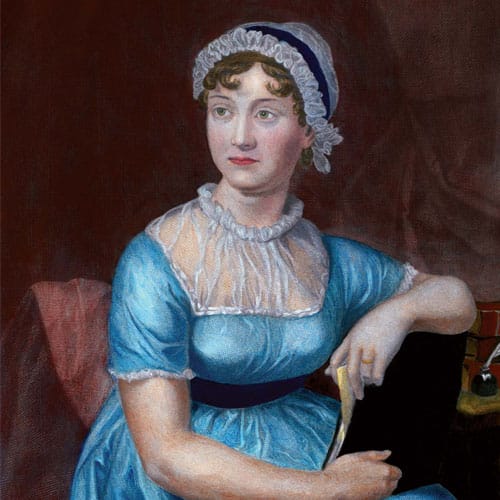
I chose the title in reference to the book "Pride and Prejudice," published in 1813 by the English female author Jane Austen (jeyn ostın), and considered by critics to be one of the most important works of world literature. (The original title of the book is "Pride and Prejudice" (prayd end precıdis)).
In this book, the author attempts to summarize the love and family relationships of the period under the projection of PRIDE AND PREJUDICE. I wanted to direct the same projection to the discussions taking place on TV screens in today's Turkey.
ÜMİT ÖZDAĞ'S PRIDE AND PREJUDICE
I am with my sister in Germany. The house is full of computers, tablets, and laptops of all sizes. Everyone puts on their headphones, retreats to a corner, and watches a program of their choice. Modern family relationships are, unfortunately, in a very different place from Jane Austen's time…
My sister sat next to me with her tablet computer, probably thinking I was curious about news from Turkey, and randomly selected a channel. On Habertürk, Fatih Altaylı was hosting his guests with his usual demeanor and an unserious posture, twirling a pen in the air with his right hand.
The topic was the events that erupted in Ankara's Altındağ district on the same day (August 13) and the Syrians who had become a central issue in Turkey's agenda. One of the guests was Ümit Özdağ, who had been running from one party to another and was finally preparing to establish his own party under the name "Ayyıldız." While an intelligent politician would be expected to utter calming words to society on such a sensitive day, Mr. Özdağ had succumbed to racism and hate speech, seizing the opportunity to garner votes for the racist party he was about to found. Shame on Mr. Özdağ and Altaylı! Going after a fire with gasoline was an unbecoming act for a statesman and a seasoned journalist. Gentlemen, was it absolutely necessary for you to appear on TV that evening?
Unfortunately, for racist mentalities, there is no concept of time and place. What matters is to fuel and manipulate social hatred. My personal opinion is that such a program, which spread hate propaganda on a day when events were still fresh, should have been immediately banned by RTÜK (Radio and Television Supreme Council).
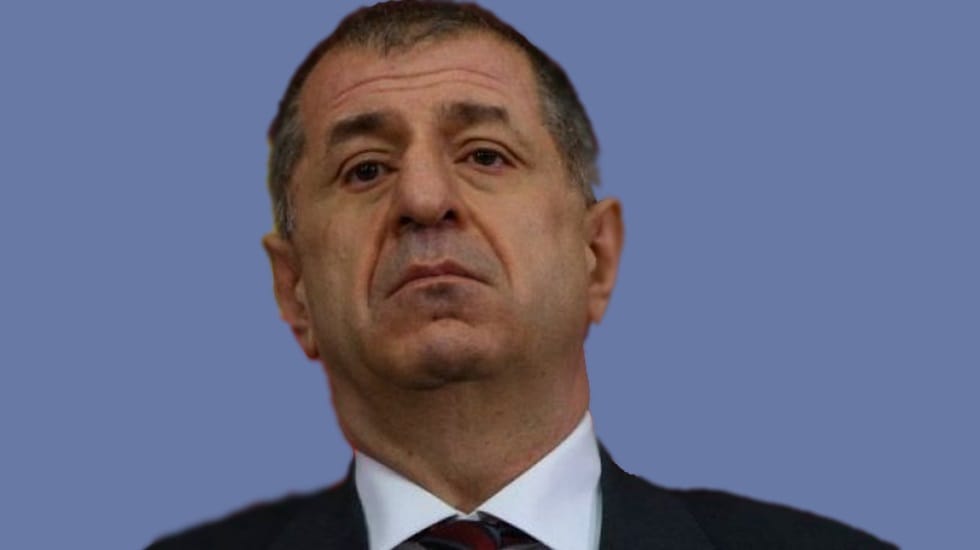
Fatih Altaylı and Ümit Özdağ engaged in a long racist exchange, illuminated by their PREJUDICES. Fatih Altaylı, who repeatedly bounced the Syrians in the air like the pen in his hand, finally confessed, as if about to devour them raw with a lion's appetite: "They call me a fascist for saying this. I don't care!"
No, don't care, sir! Because you already are!
Ümit Özdağ also seized the opportunity, speaking with PRIDE: "They tell me your family is also an immigrant (Balkan). My grandfather was a recipient of the Medal of Independence. I am ready to show his certificate. I ask those who criticize me as an immigrant: Does your grandfather also have a Medal of Independence? If so, publish his certificate so we can see it! (Mr. Özdağ means, 'Speak only as much as your Medal of Independence allows.')"
Mr. Özdağ! Perhaps you will hear it from me for the first time, but let me tell you: Being a muhacir (immigrant), göçmen (migrant), or mülteci (refugee) is not something to be ashamed of. You did not need to answer your reader who said, "You are also Balkan immigrants," by telling them with an EARTH-SHATTERING PRIDE that your grandfather had a Medal of Independence. It would have been more appropriate to say, "Yes, my great-grandparents were Balkan immigrants! And I am proud of it!"
There are many valuable Balkan and Caucasian immigrants or refugees, many of whom received the Medal of Independence, who served this country both during the establishment of the Republic of Turkey and in subsequent years. If you wish, I can remind you of a few names who were both Balkan immigrants and recipients of the Medal of Independence, like your grandfather: Mustafa Kemal Atatürk, Celal Bayar, Salih Omurtak, Cafer Tayyar Eğilmez, Mehmet Suphi Kula, Mehmet Nuri Conker, İzettin Çalışlar, Ahmet Zeki Soydemir, Ahmet Derviş, and many others.
Some prominent figures in Turkey whose families were Balkan immigrants: Tansu Çiller, Cem Yılmaz, Hülya Koçyiğit, Metin Oktay, Ahmet Necdet Sezer, Tarkan, Süleyman Seba, Ali Şen, Sezen Aksu, Can Bartu, Halil İnalcık, Zeki Müren, etc.
It's hard to understand why you are ashamed of your grandfathers being muhacirs! You applaud muhacir Naim Süleymanoğlu, but you bury your own grandfather in a dark well.
In the middle of the interview, a new definition was made for the terms "muhacir, göçmen, and mülteci." According to the Turkish Language Association, the meanings of these words are as follows:
MUHACIR: Immigrant
GÖÇMEN: One who leaves their own country to settle in another country
MÜLTECİ: Refugee
SIĞINMACI: A. A person who has taken refuge in another country or place, asylum seeker, refugee.
B. A person who stays in a foreign country for a certain period before seeking asylum.
However, Mr. Özdağ and Altaylı, who were caught up in racist delirium, did not want to use these terms for the Syrians who had taken refuge in our country. From where they sat, they invented a new definition: "Turkey's duty is to provide temporary protection. Syrians are people under 'temporary protection.' The war in Syria is over. Temporary protection has ended. Syrians should return to their country!"
As you command, sir! We will subject the Syrians to forced migration, or deportation, just as we did to the Armenians. The dead will die, and the survivors will reach the Syrian desert. Thus, we will get rid of them.
Mr. Özdağ, shame on your academic title! I don't understand how you deserve this title, or is this title sold in supermarkets? You are not a scientist, you have no academic perspective, your heart is full of hatred and animosity… In my opinion, YÖK (Council of Higher Education) should set a criterion and immediately revoke the titles of those who engage in racism.
Do you know why Mr. Özdağ was given the position of President at ASAM (Association for Eurasian Strategic Studies)? ASAM was financed by ÜLKER GIDA, founded by Sabri Ülker, a Crimean immigrant. Mr. Özdağ was chosen for this presidency because he was a Balkan immigrant. Similarly, Mr. Gündüz Aktan, who replaced Mr. Özdağ, was also a Balkan immigrant. His father, Bekir Suphi Aktan, was born in 1908 in the town of Serfiçe, Greece.
Mr. Özdağ! You will sit at the President's desk at ASAM because you are the child of an immigrant family, and yet you will try to hide your family's "immigrant" past. Remember, a spear cannot be hidden in a sack!
While Mr. Özdağ, with PRIDE, recounted his grandfather's Medal of Independence, Fatih Altaylı, originally from Van, listened with a sneer. I would like to ask Fatih Altaylı: What did your grandfathers do in the War of Independence? Do you have grandfathers who received the Medal of Independence? Publish their certificates immediately. If not, then you should not appear on screen again, and as Ümit Özdağ implied, you should be careful to speak only as much as your grandfathers' heroism allows and to be RACIST. Mr. Özdağ can be racist because, as he himself stated, his grandfather has a Medal of Independence. But what about you, Mr. Altaylı??

I know you will ask me the same question. I confess, my grandfathers do not have the Medal of Independence! It was not even possible because Iğdır was within the borders of the Erivan Khanate between 1747-1828, Tsarist Russia between 1828-1917, and the Trans-Caucasus and Armenian Republics between 1917-1920. While the Ottoman Empire was losing territory everywhere and shrinking into Anatolia, during such a difficult period, my grandfathers heroically resisted the Armenian forces in the civil war that erupted in the region, in the Sürmeli plain (Iğdır, Aralık, Tuzluca), without external help, alongside other militia forces for two years, and finally succeeded in incorporating Iğdır into the borders of the Grand National Assembly. What greater medal could there be than this!! This is my PRIDE.
By the way, I presented my RACIST side to the attention of my readers in my article titled "XENOPHOBIA: DOWN WITH SYRIANS!" You can read the article by clicking or copying the link. (https://igdirabakis.com/xenophobia-zinofobya-kahrolsun-suriyeliler.html/)
As can be understood from my statement above, based on the success of my grandfathers, I have also acquired the right to be "racist." However, I am determined to use this right to prevent racists from taking over our country. Let us not forget that remaining silent and adopting a neutral stance towards RACISTS during such a sensitive period will go down in history as a betrayal of human values.
The hate speech of Mr. Altaylı and Özdağ was unfortunately filled with RACIST messages coated in a chocolate of patriotism (!). It seems that on August 26, Turkey will meet a perfectly RACIST party. First, it will target SYRIANS, and then the KURDS (KURMANJI AND ZAZA) whom Mr. Özdağ has been specially training and specializing in for years, thus ensuring that votes will flow obediently to the RACIST party… Hitler also addressed the German people, saying, "I will save you from the Jews," and came to power. Who knows, Mr. Özdağ might also convince the voters by saying, "I will save you from the Syrians," and come to power. Let's hope for the best!!
As a citizen, I would like to file a criminal complaint with the Chief Public Prosecutor's Office of the Court of Cassation. The word "Ayyıldız" (Crescent and Star) is an expression that verbally summarizes our sacred flag. Giving such a sacred name, which evokes our common national values, to a political party should be prohibited. Just think, the word "Ayyıldız," which will be associated with racist rhetoric, will remain an irreparable stain on our sacred flag.
PART TWO
SISTER (ABLA)
(Dear readers! The story you are about to read is taken from real life.)
The year is 1927. Erzurum. It is a winter day. The cold and frost cut through human skin like a knife, the wind whistles from one end of the streets to the other, throwing everything into disarray. The inhabitants are holed up in their homes, completely cut off from the outside world. The streets are empty. A few horse-drawn carriages appear here and there, the drivers haphazardly swinging their whips, almost lost under the pile of blankets they have thrown over themselves. On the icy roads, horses or carriages sometimes slip, leading to undesirable situations.
On such a day, a horse-drawn carriage appears at one end of the street. It pulls over to the side of the road. A young woman gets out of the carriage. The carriage sets off again and drives away. The woman is trembling violently from the cold. She is meeting a big city for the first time. The frost cuts her eyes like a knife, preventing her from seeing ahead. She thinks she will freeze to death. Since childhood, she had felt cursed. She was unwanted anywhere. She had run away from her village of her own accord. If she were to collapse and die on a secluded corner of the pavement in Erzurum's blood-chilling cold, her body might only be discovered in the spring. She had neither identification nor any piece of paper indicating who she was.
The young woman was over 20 years old. For a while, she walked bent over in narrow, uphill streets. When her strength failed, she sat on the doorstep of a house. Hopelessly, she waited for the end her fate would bring her.
A woman in her 60s was passing slowly in front of the young girl. Her eyes fell upon the shy-looking young girl, bent over and helpless on the doorstep of the house:
"My daughter! Do you have no one?"
"No!"
"If you sit here like this, you will freeze to death! Come with me! You can stay with us. My daughter-in-law will give birth soon. You can look after the child!"
The young girl stood up without a word and followed the old woman. They stopped in front of a two-story stone-walled building.
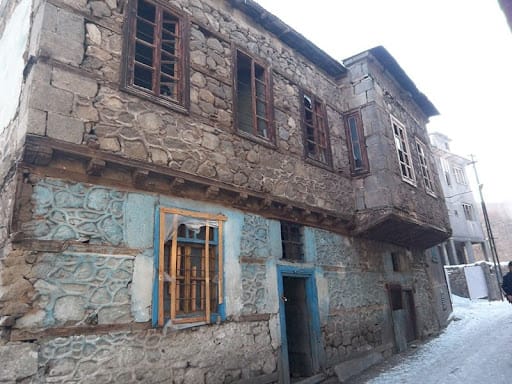
When the iron knocker sounded, the daughter-in-law of the house opened the door.
"Zinnet, I found this young girl on the street. Let her stay with us. She can help you with the housework!"
Reyhan Hanım placed the odds and ends she was carrying on the table. Her husband, Farız Bey, was sitting on the divan, silently reading the Quran. Farız Bey lifted his head from the holy book and carefully placed the Holy Quran on the windowsill. He turned his bright blue eyes to the new guest in his house:
"Welcome, my daughter! What is your name?"
"Mahide!"
Reyhan Hanım went close to her husband. She told him what had happened. Farız Bey was a gentle and pious character. He had learned from the holy books he read that helping people was the highest virtue. His family's financial situation was good enough to support another soul. His son Mehmet and his own brother Davut jointly operated Erzurum's largest textile shop.
Towards evening, a slender, wiry young man entered the house. His posture and demeanor gave the impression of a brave and fearless person. He sat at the table and ate his fill. Mahide, embarrassed by the man of the house, had fled to the next room. Mehmet Bey's mother, Reyhan Hanım, told her son what had happened. Mehmet Bey, the only male child of the family, listened to his mother without a word, nodding his head as if to say, "No problem!" He went and sat next to his father. They plunged into a deep conversation about business. Since Farız Ağa was getting old, he had handed over the shop affairs to his son and had immersed himself in the mystery of the spiritual world. As far as the weather permitted, he would visit the cemetery every day and recite surahs and prayers from the holy book for the deceased.
One day, Reyhan Hanım and her daughter-in-law Zinnet Hanım sat down with Mahide, who had now settled in their home as a servant, and spoke to her:
"Mahide, tell us about your life! What have you been through? Don't be afraid, we won't send you back. You are our daughter now!"
Mahide swallowed. She began to speak in a timid voice:
"I was born in the village of Hovvi Gamurç (Köprüköy). My father and mother died at an early age, leaving my brother and me orphaned. When my brother was 8-9 years old, he went to work as a shepherd for a well-to-do family. I stayed with my aunt for a while. I helped with the housework, but despite this, they saw me as a burden. When I turned 15, they married me to someone older than myself. My husband constantly abused me. I had no time to breathe from the beatings. I had two children in a row. Both died from neglect. My hair fell out from my grief."
Mahide untied her tightly wrapped headscar and showed her bald head, devoid of a single hair. She was ashamed. She burst into tears.
"From that day on, my husband's violence and beatings increased even more. I sent word to my brother. I told him, 'Leave me in Erzurum city center; if I'm going to die, let me die there.' My brother is a compassionate person. He first wanted to take me under his protection, but he was not strong enough. One day, he put me in a horse-drawn carriage and left me in Erzurum city center. God helped me; Reyhan Hanım saw me in front of a house and brought me to her home."
Reyhan and Zinnet Hanım were disturbed by what they heard. Their throats tightened. They wiped away their tears with their scarves. Reyhan Hanım spoke:
"Don't worry, Mahide! This house is yours now. You are not a stranger, but our daughter."
***
In the second month of Mahide's arrival, Zinnet Hanım gives birth to her first child (1927). A baby girl is born. They name her Muhsine. Mahide spends most of her time with the baby. Before a year passes, Zinnet Hanım gives birth to her second child (1928). Her second child is also a girl. They name her Nazire. Mahide now spends her time looking after two children. Farız Bey, born in 1863, passes away in 1931 at the age of 68. A year later, in 1932, Zinnet Hanım's third child is born. It is again a girl. They name her Naciye. Mahide acts as a nanny to the three girls as if they were her own children.
In 1935, Reyhan Hanım passes away. A year later, Zinnet Hanım gives birth to a baby boy in 1936. They name him Fetullah.
Mehmet Bey's closest friend is Reşit Keki, a relative from Bitlis. In those years, Reşit Keki is one of the wealthiest merchants in the East. He wants to engage in border trade with the Soviet Union. He plans to exchange livestock for sugar and textile products and market them in Turkey. He shares this idea with Mehmet Bey. Mehmet Bey makes his decision, transfers his share in the textile shop to his uncle Davut Bey in 1936, and prepares to go to Iğdır.
Before setting off for Iğdır, to distant lands, Zinnet Hanım sends word to Mahide's brother. When her brother arrives, Zinnet Hanım announces the family's decision:
"We will be setting off for Iğdır soon! We will take Mahide with us. Life happens! I want you to say your goodbyes before we leave."
The two siblings embrace each other in tears. Mahide comforts her brother:
"We are going far away, to the Russian border. Don't worry about me! They are both my mother and my father! If anything happens to them, let it happen to me too!"
A few days later, the Kakioğlu family sets off for Iğdır. When the Kakioğlu family first arrived in Iğdır, they rented a house belonging to a person named Obalı Hacı Nağdali, where the Governorship Building stands today, for about two years.
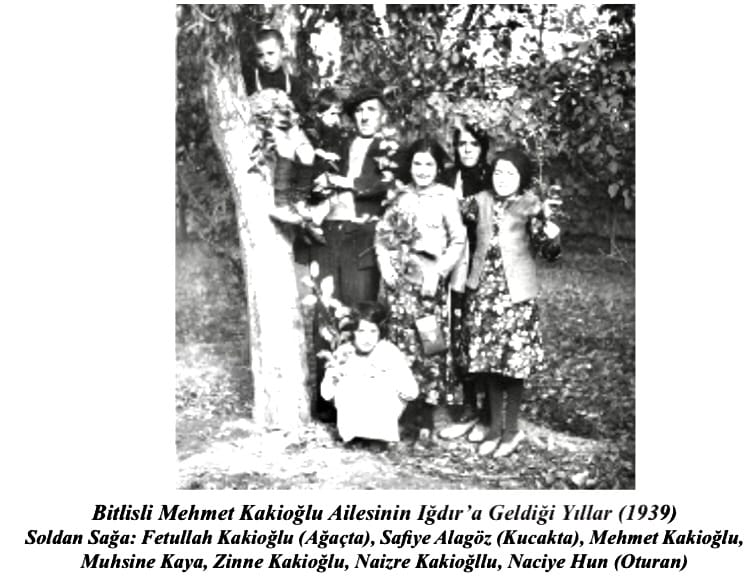
(Since this picture was taken for a settlement right application, ABLA (Sister) is not in this picture. All the children/young people in the picture grew up in ABLA's hands. NACİYE in the picture would later become Mecit Hun's wife, i.e., my mother.)
In this house, in 1938, the fourth daughter, named Safiye, was born. All five children grew up in the hands of ABLA. Mahide was known and called ABLA within the family.
Safiye Kakioğlu Alagöz, years later, recounts her memories of ABLA:
"After staying in Obalı Hacı Nağdali's house for two years, we moved to Aziz Gökbakan's house in İdirmava. This house, where I spent my childhood, was an Armenian structure built of pink stones. The houses of Bağır Aras and his wife Salto Halan were not far from ours. There was a narrow path between our houses. We would visit each other whenever we wished. As the youngest in the family, I would go everywhere, and not only that, I would listen attentively and with pleasure when the adults sat and chatted in the garden or on the balcony. Even after years, these conversations have remained in my memory without losing any of their vividness.
ABLA had become a part of our family, more like a sister than a servant. She was extremely meticulous about her clothes, cleanliness. She was a hardworking, skilled woman. Thanks to her, my mother was almost exempt from housework. She didn't wash clothes or dishes, clean carpets, or sweep the house. She spent most of her time with her bag in hand, accompanied by her three daughters, visiting friends and acquaintances. Among these were the homes of the town's judges, prosecutors, or high-ranking military officers, or close family friends like Hüsnü (Bingöl) Bey and Aziz Gökbakan. Hüsnü Bey's daughters, Şükran and Müjgan, were the same age as my sisters. They got along very well.
Anyone who saw my mother would think she was a carefree, untroubled bureaucrat's wife. ABLA would stay at home and look after Fetullah, who was still a child, and me, who was newly born. ABLA's sacrifice had earned her a privileged place in the eyes of all of us. Even my father was extremely respectful towards her. For this reason, there was a formal relationship between them. ABLA never removed the veil from her face in my father's presence until she died. My father never said anything that would hurt her feelings. He could get angry with anyone, but never with ABLA! When he was about to travel, he would first ask ABLA if she needed anything.
"Mahide! I'm going to Gaziantep tomorrow. What do you need!"
She would shyly but proudly say, 'My lady knows,' wanting my mother to decide.
ABLA would need things like shoes and dresses. When my father returned from his trip, he would first give her gift. He would also add trinkets and jewelry to the gift box. She would receive her gift with the happiness of a child, happy to have a family where she was loved and respected.
ABLA was extremely meticulous about the household items. She made sure everything was in its place. My mother had various kitchen utensils she had brought from Erzurum. Occasionally, neighbors would come and want to borrow tools like mortars and strainers, which no one else had at that time. My mother couldn't lend them to anyone for fear of ABLA.
In those years, there was no tap water. Drinking water was obtained by a primitive distillation method. For this, a square compartment made of wood was built in a corner of the garden. On top of it, a special cylindrical stone with a small hole at the bottom was placed. Three or four buckets of muddy water brought from the stream were emptied into it. A wide-mouthed pitcher was placed under the hole. The clear water, filtered from mud and sediment, would drip into the pitcher. This would be our drinking water. This huge black stone had to be cleaned every three days. ABLA would do this laborious task.
To obtain water for laundry and bathing, water was filled into a large barrel and left to settle for a few days. The mud and sediment would sink, and we would meet our needs with the partially clear water. Dishes were washed along the stream.
There was no electricity. A kerosene lamp burned in our kitchen, and a luxury lamp in the living room. A utility lamp was kept ready near the entrance door to greet a guest.
ABLA, who had contributed greatly to our family, passed away in our home in 1944 due to a sudden illness. She was buried in Iğdır. May her soul rest in peace."
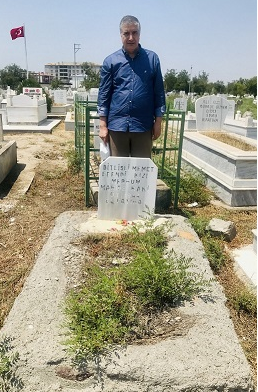
ABLA contracted an unknown illness. Every day she wasted away, the light in her eyes fading. She became skin and bones. On such a day, she closed her eyes to life. As the first family member to die, she was buried in the İdirmava Cemetery. Years passed. Mehmet Efendi and Zinnet Hanım also passed away. Both were buried side by side in the Narınçoğlu Cemetery (Asri Cemetery). Nazire Hanım, although not religiously permissible, obtained permission from the District Governor's Office and moved ABLA's remains from the İdirmava cemetery to the Asri Cemetery. Today, ABLA's grave is right next to the graves of Mehmet Bey and Zinnet Hanım, who had been her adoptive parents. May God have mercy on her! May her place be in heaven!
PART THREE
ANECDOTES & JOKES
(Note: The terms 'Azeri' and 'Kurdish' in the anecdotes and jokes do not imply ethnic discrimination; on the contrary, they summarize the fraternal relationship of Iğdır's two indispensable ethnic values. The following anecdotes and jokes are published for the first time.)
BUFFALO MAN!
Once upon a time in Iğdır, the Azeri population predominantly raised water buffalo (camış). (The Kurdish population preferred to raise cows, donkeys, sheep, and goats). In those years, there were many swampy areas in Iğdır. In 1966, a large canal was opened, encircling Iğdır. The aim was to drain the swamps that caused malaria. And so it happened. As the number of swamps decreased, raising buffalo became difficult or lost its importance. Since buffalo yogurt and especially clotted cream were delicious, when the number of buffalo decreased, the clotted cream business also, in a sense, ended its era. From those days, only the insult "Camış herif!" (Buffalo man!) continues to live on in daily life.
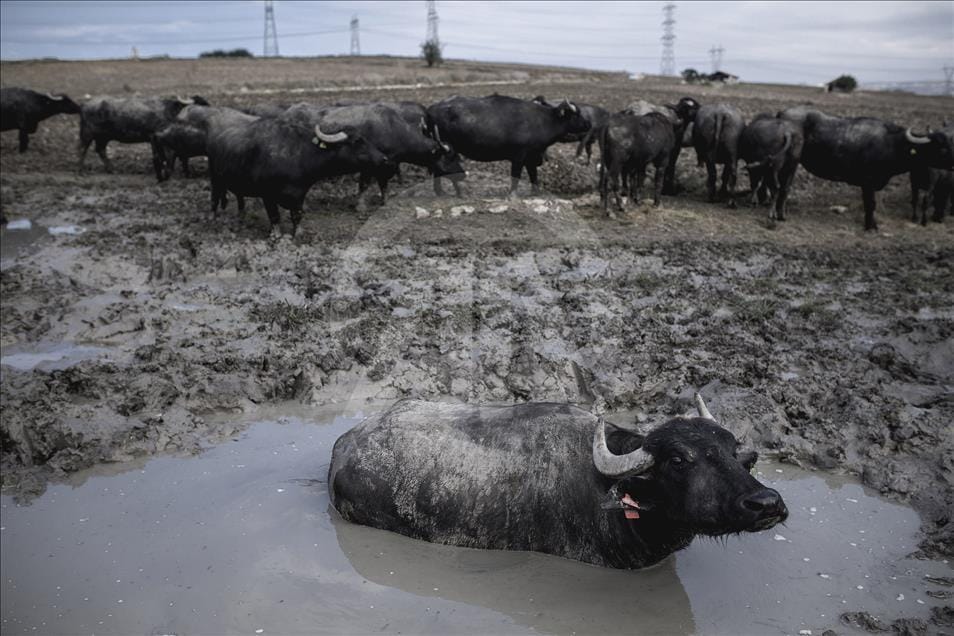
One day, a young Kurd is sitting in a coffeehouse with his Azeri friends, drinking tea and chatting. An Azeri is complaining about his lazy son. Every now and then, he interjects with "Camış herif!" and ends his sentence with "Camış herif!" The young Kurd, who has never seen a buffalo in his life, wonders what this word means. The old Azeri explains:
"A buffalo is a black cow. Buffaloes roll around in the mud all day long. Our son also rolls around in bed all day like a buffalo to avoid working. At least a buffalo gives milk; our son (gedenin) has nothing."
CUCUMBER THEFT
Two Kurdish shepherds, at dawn when sleep is sweet, enter an Azeri's garden to steal. Each has a sack (a bag woven from linen) in their hand. They disappear among the greenery. They hastily fill their sacks with the cucumbers they pick. One of the shepherds is a child of 14-15, the other a strong adult. When both sacks are full to the brim, the adult shepherd lifts the full sack and places it on the child's back:
"Kuro, zû bikeve rê!" (Come on, son! Get on the road quickly!)
He also loads his sack and sets off with quick steps. The child is almost crushed under the weight of the sack. He takes hesitant steps with trembling legs.
When the dogs bark, the homeowner woman comes out into the garden with a battery-powered flashlight in her hand and sees the young shepherd struggling along the garden wall. She calls out from a distance. The young shepherd, out of fear, leans the sack against the wall, abandons it, and runs away. The woman goes closer to the sack. She looks at the sack full of cucumbers and mutters to herself:
"What thoughtful people there are! I've been sick for a few days. I had neither the strength to pick cucumbers nor an empty sack! Bless him! He took the trouble to pick a sack of cucumbers for me! May God grant him a long life!"
AKAY AKTAŞ'S TREES
Two storks, who have returned to Iğdır, are chatting. One sighs and speaks:
"Last year there were two houses with gardens here. They demolished the houses, cut down the trees in the gardens, and built concrete buildings instead. If this continues, we will have difficulty finding tree branches to build nests."
"Don't be hopeless! Journalist Akay Aktaş is resisting to prevent the two trees in front of his office from being cut down. As long as he lives, there's no problem for now!"
(How about some American jokes too… What do you say?)
THANKSGIVING DINNER
American families value two important days: Thanksgiving and Christmas. In the American family structure, young people leave the nest from the age of 18. The biggest dream of parents is to sit at the same table with family members and eat on these two important days.
A husband and wife live in Phoenix, the capital of Arizona. Their son works in New York and their daughter in Chicago. For the approaching Thanksgiving, the father picks up the phone. He calls his son:
"Son! I'm fed up with your mother! She's been nagging me for 40 years. I've filed for divorce. We'll get divorced two days before Thanksgiving."
The son is very upset. He calls his sister. He explains the situation. Soon, the son and daughter decide to be in Phoenix two days before Thanksgiving and convey this decision to their parents.
The father sits on the sofa in the living room and calls out to his wife: "Honey, we managed to get the children to come here for Thanksgiving, but what lie will we invent for Christmas?"
LIE DETECTOR ROBOT
A man buys a robot. The robot's most important feature is that it can detect lies and slaps in response.
It's dinner time. The father asks his son:
"Son, where were you today?"
"At school!"
The robot slaps the child. The child composes himself:
"Okay! Okay! I'll tell the truth, I was watching a DVD at my friend's house."
"What DVD?"
"The Kung Fu movie!"
The robot slaps the child again. The child sheepishly tells the truth:
"Okay! Okay! We were watching an erotic DVD."
The father interjects angrily:
"What? An erotic movie? When I was your age, I didn't even know what erotic meant."
The robot slaps the father too.
Seeing this, the mother bursts out laughing:
"Well, he is your son!"
Upon this, the robot slaps the mother as well.