The Trap of Black Love and a Story
This essay explores the concept of "Kara Sevda" (Black Love) in Turkish culture, arguing it's a destructive psychological phenomenon, and illustrates its tragic consequences through personal anecdotes and a historical family story from Iğdır.

THE TRAP OF BLACK LOVE AND A STORY
Young people, I am speaking to you! In a sense, I am pleading with you: do not fall into the trap of Black Love. I understand, you haven't understood anything I've said. Of course, words like "aşk" (romantic love), "sevgi" (affection), "sevda" (passionate love) are expressions that remind us of the most beautiful aspects of life. They are like fundamental pillars that uphold life's beauty.
But I want to talk to you about the trap of BLACK LOVE (Kara Sevda). The culture of Black Love exists only in Turkey in the world. It is a psychological phenomenon that is difficult to understand and explain. It bothers me even more that psychiatrists in Turkey do not consider this issue, or even care about it. I hope that in the future, this topic will be seriously addressed, scientific studies will be conducted, books will be published, and young people will be kept away from this trap. While I express this well-intentioned wish, I see that the Black Love motif is fully exploited in TV series, capturing the hearts of young people and destroying them. Unfortunately, popular culture in Turkey imposes such an understanding that if young people have not experienced the feeling of Black Love, it implies a hidden sense of guilt, as if something is missing in them.
From our childhood years, the culture we grow up in unknowingly infects us with the disease of Black Love. You must have heard the stories of Kerem and Aslı, Ferhat and Şirin, Leyla and Mecnun. Mecnun means "mad, insane." The end for those afflicted with Black Love is madness. Their lives darken, their attachment to life diminishes, they become alienated from society and isolated. In the end, they contract a kind of mental illness and continue their lives in pain.
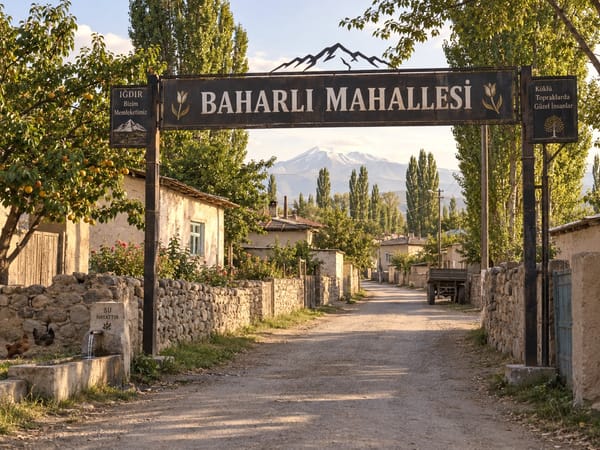
I won't go far. My early youth was spent in Baharlı Neighborhood (14 Kasım Neighborhood). I am a direct witness to at least 4-5 serious cases. There was a young man. His father was a shoemaker. He used to play on our football team. One day, he contracted the disease of Black Love. He stopped coming to matches. When we met on the street, he would smile reluctantly and then quickly walk away. The girl he loved was our neighbor. This young man was so consumed by Black Love that in winter, he would stand under the street lamp, cigarette in hand, his eyes fixed on the window of the girl's house. His only hope was for the girl to pull back the curtain and show herself to him, even for a second. He had never met the girl face-to-face, never spoken a word to her. Platonic love had slowly turned into Black Love, taking control of the young man's entire life. Day by day, the young man became more isolated from society and soon began to be treated as "crazy" in the neighborhood. Of course, this situation saddened him even more. Black Love had affected his being so deeply that he stopped eating and drinking, contracted pneumonia, and died at a young age.
Again, Baharlı Neighborhood... Another young man was married to a girl at his father's request, but he had lost his heart to another girl in the neighborhood. This married young man also slowly detached himself from society and his circle of friends. With a cigarette in his hand, he wandered day and night near the house of the girl he loved. This was a trap of Black Love. He was crushed under the weight of his intense thoughts and the impossibility of his love. He withdrew from society. When forced to speak, he adopted an irritable demeanor. Soon, he began to be treated as "crazy" in the neighborhood. His life had changed! He would live with this pain until the end of his days.
Again, Baharlı Neighborhood... A young man was in love with the neighbor's daughter. He would comb his hair with brilliantine every day, pacing back and forth in front of the girl's house thousands of times. Everyone in the neighborhood knew about it. The girl later emigrated to Germany with her family. The young man followed her to Germany. A few months later, he returned. He was broken and had lost all hope. His head bowed, he walked with difficulty and spoke to no one. He continued his life half-dead and detached from living.
Again, Baharlı Neighborhood... This time, a young girl, upon learning that the man she loved had gone to Germany, ended her life by drinking the poison used for spraying cotton in a cotton field.
Black Love exists only in Turkey (and among Bulgarian Turks). In Iran and Arab countries, there are, of course, feelings of love and affection among young people, but it is not Black Love. Young people can communicate, and they grow up learning from their families to frame love within a logical context.
Young people! If you see a girl or a boy from afar and fall in love, if you dare not share this platonic feeling with anyone, if you don't have the chance to meet the person you love face-to-face, if your nights and days, in short, your life revolves around this platonic love, then you have fallen into the trap of Black Love. Neither education nor career will matter to you. You will give up on everything. You will increasingly hate society and withdraw into yourself. Depression and Black Love await you. Please BE CAREFUL!!
A STORY..
ARAP EMİNE'S STRUGGLE FOR LIFE
Iğdır has changed so much over the years!
In the early 1970s, Iğdır, where I spent my early youth, was a modest, sweet town consisting of single-story buildings, with plenty of gardens and greenery. The number of main streets and roads was, of course, small. One day, when the late Notary Mustafa Şimşek built a three-story building, how surprised we were! It was the only and tallest building in Iğdır. To be honest, we would pass by the building with envy, looking at it with admiration, as if examining a 100-story building in New York, unable to hide our astonishment. We had actually seen tall buildings and skyscrapers in films shown at the Aras and Serhat cinemas, but seeing them in a film and seeing them in real life had a different effect on people.
Why did I write all this? In those years, we had a patisserie called Piknik Salonu. I was a hardworking child. I would wash dishes, settle accounts at the cash register, and especially in the summer months, I would go into the small booth set up in front of the patisserie, with "Maraş Dondurması" written on it, and sell ice cream in cones. I had also learned how to make ice cream. Believe me, it wasn't difficult at all! The most laborious and careful part was to extract the ice cream, which had reached its consistency, from between the slowly turning wheel using a huge wooden spoon. Once, I got the wooden spoon caught in the wheel and got quite a scolding.
With the money I saved, I bought a bicycle. As soon as my work was done, I would jump on my flashy bicycle with tassels hanging from its handlebars and tour the city. All the buildings in the town were etched in my memory. However, there were two buildings that caused a feeling of heaviness and gloom to awaken in my soul.
One of them was a two-story structure made of mud brick, behind the Asri Hamam (Modern Turkish Bath), which I believe is still in operation today. Its walls were ruined, and its windows had been removed. No one lived there. It felt as if mysterious events had taken place in this building at some point, and it had been abandoned because of them. Sometimes, I would take a dive with my bicycle into İdirmava, turning into the side street leading to Baharlı Neighborhood. The dirt and narrow road passed by the derelict building. As I approached the building, a cold sweat would cover my body, and unknowingly, I would pedal with all my might, throwing myself onto the main road leading to Baharlı Neighborhood in one breath.
Another mysterious building that aroused a vague sense of fear in me was an Armenian building made of cut stones, which once served as the Tekel (Monopoly) office. It was somewhere on the opposite corner of today's Migros. This building was also abandoned. Its windows were broken and covered with years of accumulated dust. The front facade stones were solid and magnificent as when they were first built. I don't know if the color of the cut stones was due to neglect or their natural color, but it was somewhat blackish. The broken windows, the black facade, and its abandoned state evoked a feeling in me similar to the scary stories told to put children to sleep early.
I had an aunt named Nazire. She lived alone in a small building in our garden. She had never married. She had received important marriage proposals but had rejected them all. She worked as a tailor and hairdresser, and whenever she had the chance, she was invited to homes to recite the Quran, which she had memorized countless times. Perhaps what made my Aunt Nazire so sought after was her famous coffee fortune-telling. Young girls, in particular, would gather in a house, place my aunt in the center, and take turns listening to their fortunes.
Every now and then, I would carry dung and wood for my aunt's stove. She would prepare tea for me and ask me to rest. The room would be filled with various women's dress fabrics. My aunt would sit at her old Singer machine, humming a song while pressing the pedal with her feet:
As I was going to Üsküdar, it started to rain
My clerk's jacket is long, his skirt muddy
The clerk woke up from sleep, his eyes heavy
The clerk is mine, I am the clerk's, what business is it of others?
How beautiful a starched shirt suits my clerk
While my aunt sewed dresses, I would browse through women's fashion magazines, mostly from Germany, on the coffee table. Women as beautiful as babies! When my aunt glanced at me, I would quickly turn the pages with a half-embarrassed feeling, as if I didn't care.
One such day, I asked my aunt about these derelict (abandoned) buildings. My aunt's face became serious.
"Who told you about those buildings?"
"I saw them when I passed by on my bicycle."
"It's not right for you to be curious about such things!"
"Why?"
"Terrible things happened there in the past!"
My instincts were right. What could have happened? My curiosity and interest grew.
"Aunt, why does no one live in the building behind the bathhouse?"
My aunt, who still saw me as a child, was unwilling to give me information on this matter. But all the shopping, cleaning the stove, and carrying wood and dung were my responsibility. She didn't want to break my heart.
"I heard it from Bağı Aras Emmi! A wealthy Azerbaijani family used to live in the house behind the bathhouse."
My aunt swallowed. She stopped pedaling.
"During the Kaça-Kaç (1919), the Armenians attacked one day and massacred the entire family! No one could go to their aid out of fear. Since that day, no one has wanted to live in that building. Only villagers who are going to sell their sheep in the animal market keep their animals in the lower floor of the building for one night."
I tried to imagine the murder and what happened. My fear was justified. I decided not to pass by that derelict building again. My curiosity continued:
"Aunt, you know, when you pass our patisserie and turn left, there's an abandoned Armenian house there. Why does no one live there?"
My aunt sighed deeply. She looked at me with sad eyes:
"It's not right for you to be curious about everything!"
I didn't insist.
Years passed. I had traveled the world and returned to Iğdır to write the book "Iğdır Sevdası" (Love of Iğdır) (2000). One day, I was a guest at the house of the family known as Arap Emine. Arap Emine had passed away years ago. She had left behind four children, three girls and one boy. None of the siblings, who were in their seventies, had married; they lived together. I found it strange.
At one point, I asked for their father's name. A deep silence filled the room. They wouldn't utter a word. My aunt Hacı Safiye, who had taken me there, understood the situation and tried to change the subject. This increased my curiosity even more. I pulled Hacı Kadir, the only male child of the family, aside.
"Hacı, what happened in the past?"
Hacı swallowed, trying to wipe away the tears that flowed from his eyes. It was clear that no one had asked this question for many years. I had stirred up a hidden pain in their hearts. Of course, I hadn't done it knowingly.
Once Hacı Kadir composed himself, he began to speak:
"My father's name was Seyit Rıza. He was a Gendarmerie Captain in the Ottoman army. Our family is originally from Iraq. My father and mother were born in Iraq, a province of the Ottoman Empire. My father, like his brothers, graduated from military school and then joined the army. When Iraq broke away from the Ottoman Empire at the end of the First World War, my father decided to stay in Turkey and then retired. His uncle was an officer in Sarıkamış. With the thought of being close to him, he came and settled in Iğdır in 1927.
My father was given the position of head of the Tekel (Monopoly) office. In those years, cigarette sales were handled solely by the Tekel administration. According to what they told me, my father was a soft-hearted and helpful person. All the grocers in the district would come to my father, take cigarettes in boxes, and when they left, they would say, 'Write it in the debt book!' This situation continued for a few years. Inspectors, seeing that no money was coming from the Monopoly office in Iğdır, came to Iğdır. They examined the books. For three years, my father had not collected a single kuruş from the tradesmen. He explained this situation to the inspector, but the inspector from Ankara, with a harsh and demanding attitude, scolded my father, accused him of theft, and took him to court.
It was the first day of the trial. The inspector and the prosecutor waited for my father to come to court, but no one came. They sent someone to the house. When my mother said that my father had left the house in the morning, their curiosity increased even more. There was a difficult situation to understand: 'Where was Captain Seyit Rıza?'
When one of the tradesmen said that my father had entered the Tekel building in the morning, the inspector went to the building with his team. The door was locked from behind. Since the curtains were closed, they couldn't see inside. Finally, they decided to break down the door. The inspector entered first. Upon seeing the scene, he screamed, 'God damn it!'
My father had committed suicide with his service pistol (April 23, 1930). His head was lying on the table, covered in blood. When the news reached home, my mother's screams shook the earth and sky. We were children. To be honest, I remember very little. According to what I was told later, Aziz Gökbakan, a businessman from Ağrı, took pity on my mother and took care of the funeral arrangements.
They washed my father on a washing board set up in the garden. We put him in the back of a horse-drawn cart and set off towards the İdirmava cemetery. My mother was wearing a pitch-black dress, her face darkened with hatred and resentment. According to what they told me, as the funeral carriage moved through the town center, tradesmen would come out in front of their shops, take off their hats, and show respect. But my mother, perceiving the respect shown as hypocritical behavior, was shaking the earth and sky with her screams:
'To hell with all of you! My husband committed suicide because of you. You didn't pay your debts! You wronged him!'
Some tradesmen, out of shame, went into their shops and disappeared from sight.
After my father's death, our family life completely changed. My mother became an angry and vengeful woman. If she could, she would have shot all the tradesmen. For years, neither my mother nor we could get rid of this pain in our hearts. The Tekel building where my father committed suicide was also left to its fate, and no one wanted to use that building again. My mother raised us with great difficulty. My father's suicide created such a deep trauma that we siblings all lived together, carrying our pain within us. We couldn't bring ourselves to marry and be happy."
Years later, I understood why I had been so scared of that building and why my heart had been filled with fear.